Chemistry - Chemical Bonding
 Call Kai
 Learn
Learn Practice Test
 Spaced Repetition
 Match
Match Flashcards
 Knowt Play
1/28

There's no tags or description
Looks like no tags are added yet.
Name | Mastery | Learn | Test | Matching | Spaced | Call with Kai | Chat |
|---|
No analytics yet
Send a link to your students to track their progress
29 Terms
[5.2.1.1 - Chemical Bonds]
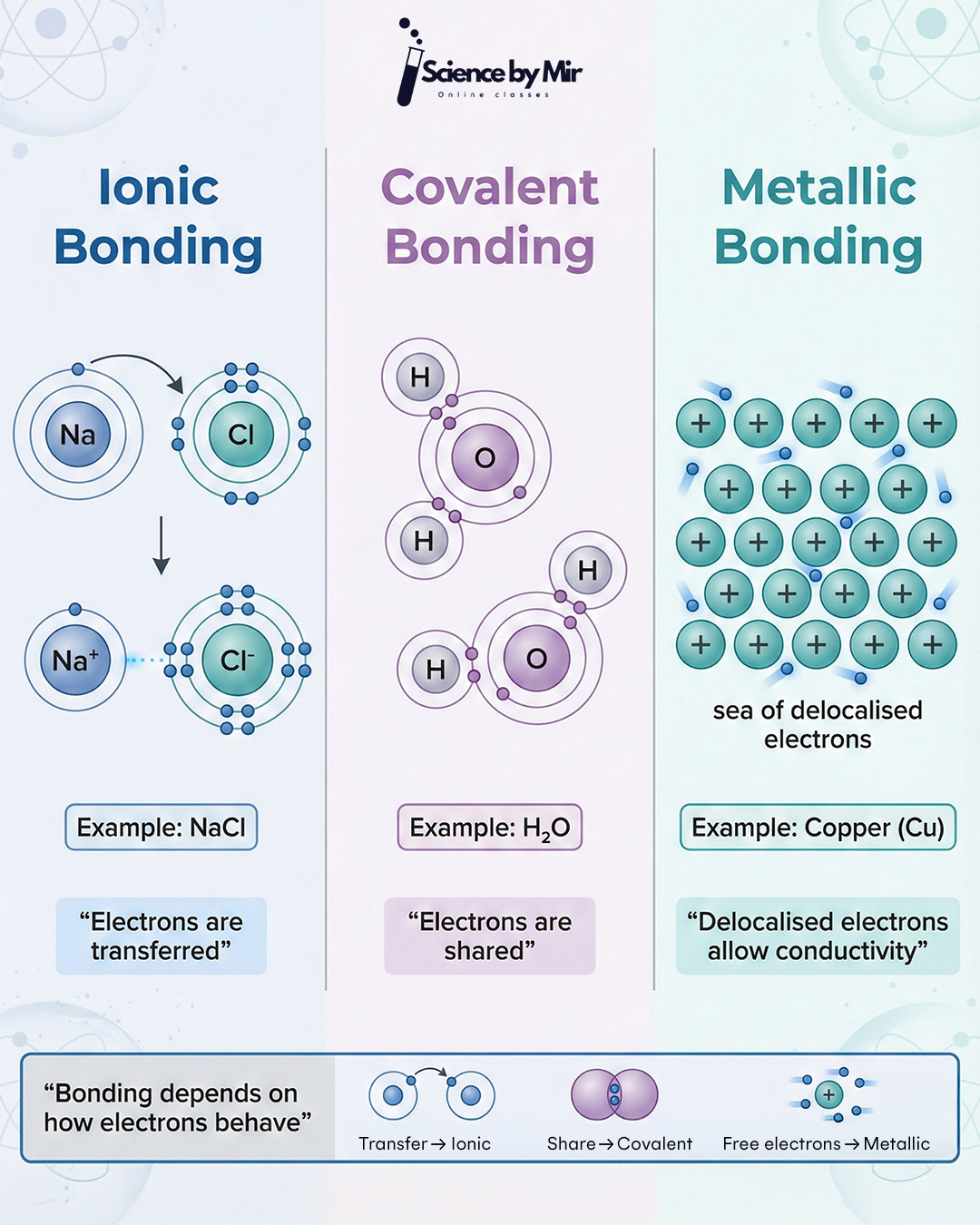
What are the three types of chemical bonding?
Covalent
Ionic
Metallic
[5.2.1.2 - ? Bonding]
What is the type of bonding which occurs between a metal and a non-metal called?
Bonding between a metal and a non-metal is called Ionic bonding.
[5.2.1.2 - Ionic Bonding]
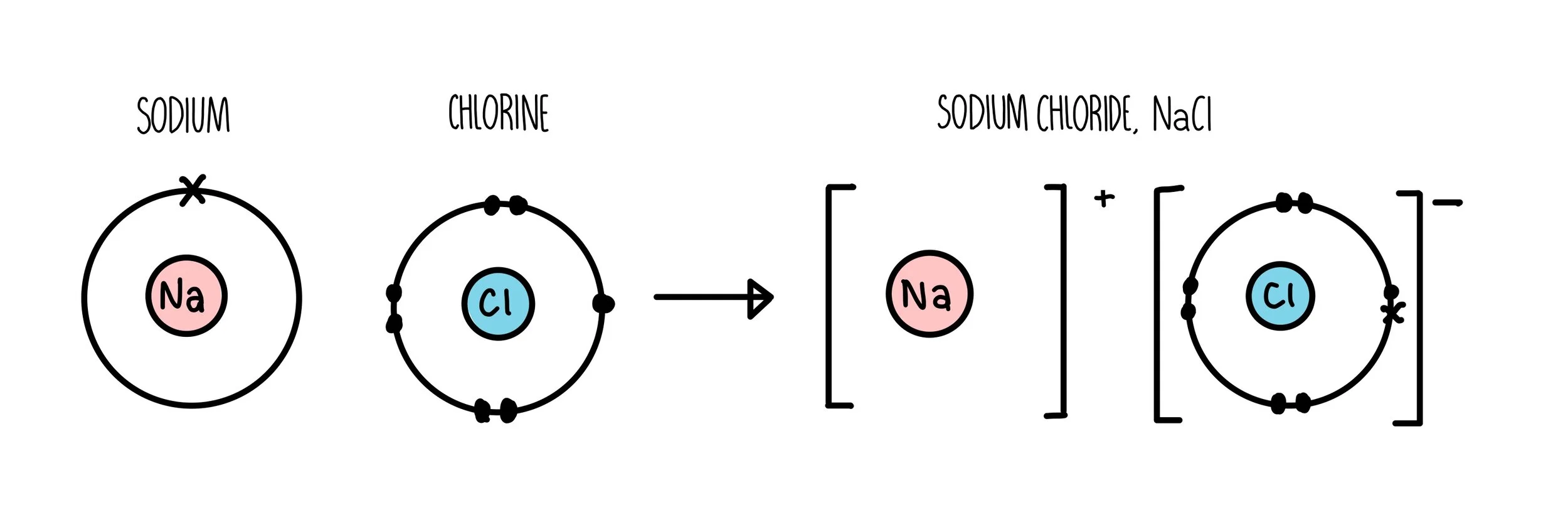
In ionic bonding, what is the loss or gain of electrons commonly called?
The loss or gain of electrons is commonly referred to as the transfer of electrons.

![<p><em>[</em><strong><em>5.2.1.3</em></strong><em> - Ionic Compounds]</em></p><p>How are ionic compounds formed?</p>](https://assets.knowt.com/user-attachments/f12a8757-1ab5-4ee0-b21d-b4a306c4b5ef.jpg)
[5.2.1.3 - Ionic Compounds]
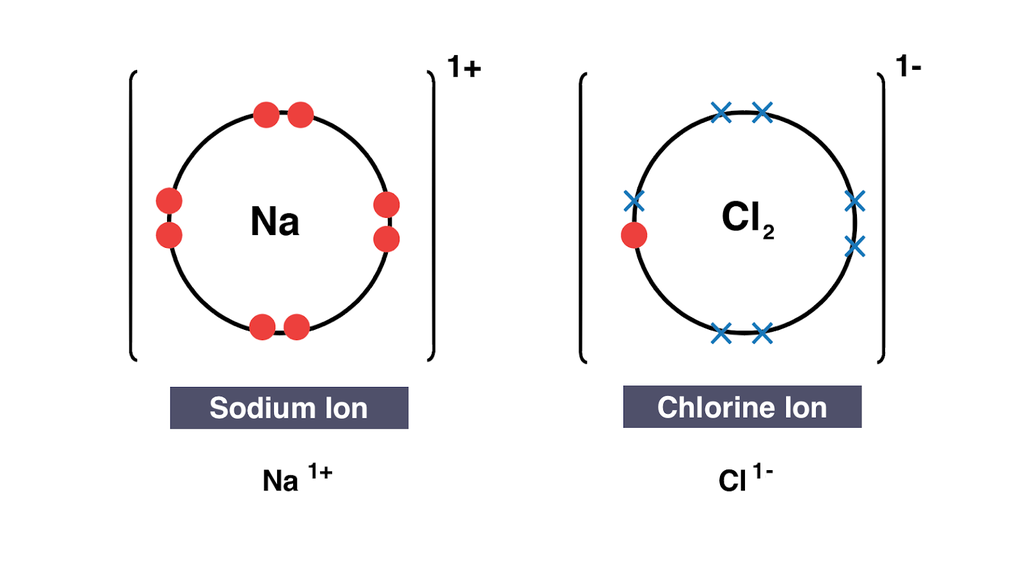
How are ionic compounds formed?
During the transfer of electrons, ions with opposite charges are formed. They are attracted to each other by electrostatic forces (ionic bond) and form an ionic compound.
[5.2.1.3 - Ionic Compounds]
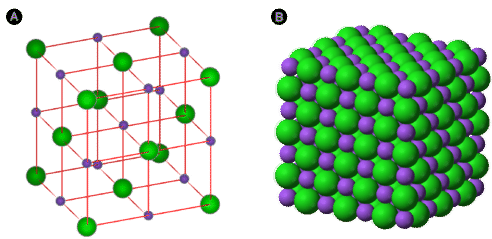
Ionic bonding usually created which type of structure?
Ionic bonding creates regular lattice structures which can be represented through Ball & Stick diagrams.
[5.2.1.3 - Ionic Compounds]
What are properties of Ionic Compounds?
High melting and boiling points.
This is because, in ionic compounds, there are a lot of strong ionic bonds which require a lot of energy (a lot of heat) to break.
Can conduct electricity (when melted or dissolved in water).
The regular lattice structure of ionic compounds means that they are fixed in their solid state and must be melted/dissolved so the ions can be free to move and conduct electricity
[5.2.1.4 - ? Bonding]
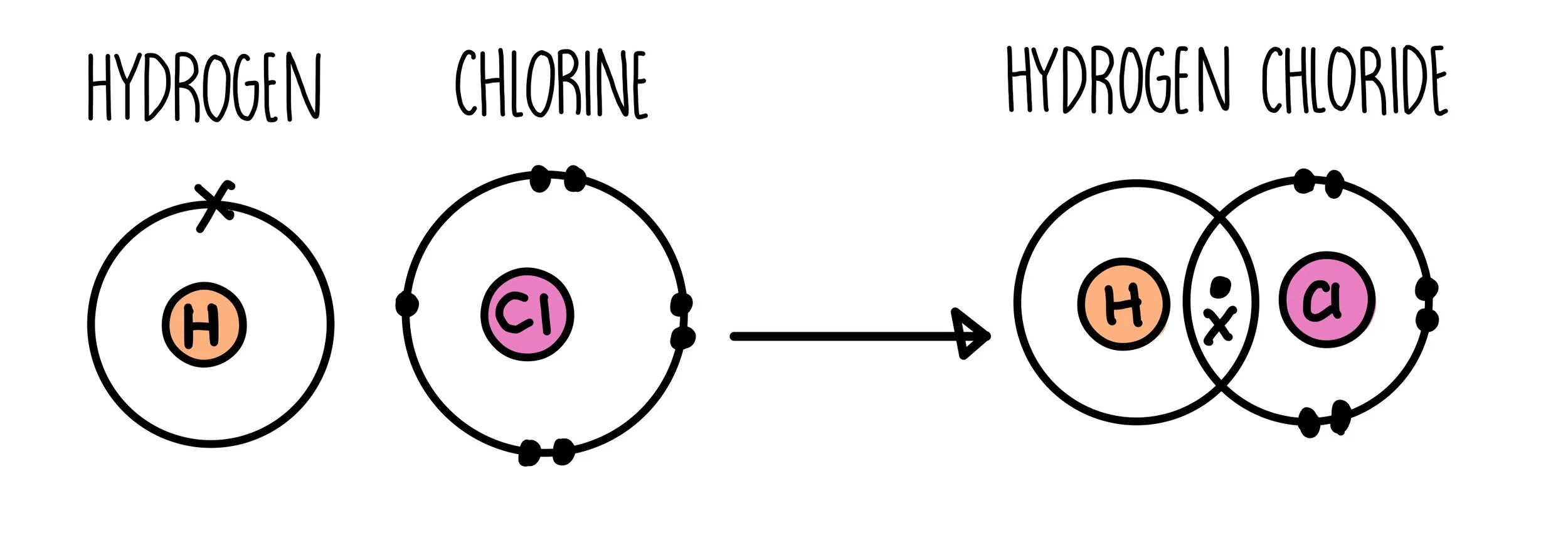
What type of bonding occurs between two non-metal elements?
Covalent Bonding.
[5.2.1.4 - Covalent Bonding]
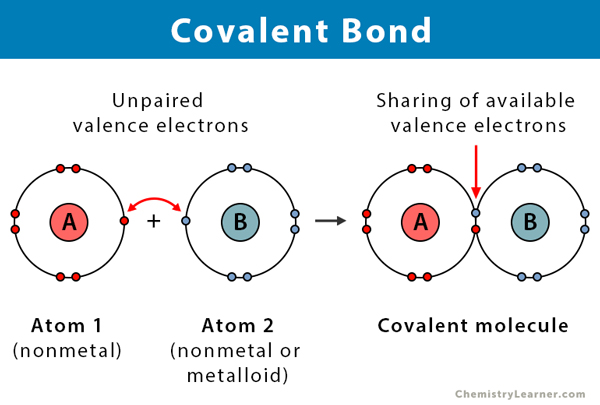
In covalent bonding, how do non-metals complete a full outer shell?
Electrons are shared.
[5.2.1.4 - Covalent Bonding]
How can the sharing of electrons be shown?
The sharing of electrons can be shown through a dot and cross diagram or a displayed formula in 2D.
Or as a 3D model which shows the atoms are arranged in real life.

[5.2.1.4 - Covalent Bonding]
What are the types of substances covalent bonding can create?
Simple Molecular Substances
small molecules with atoms joined by strong covalent bonds. Between the individual molecules, their are weak intermolecular forces.
e.g. Water (H2O) and Methane (CH4)
Giant Covalent Structures
Covalent structures containing many atoms arranged in a regular lattice.
e.g. Silicon Dioxide, Diamond, Graphite
Polymers (later topic)
Long chains made up of repeating units.
Intermolecular forces are…
[5.2.2.4 - Properties of small molecules]
What are the properties of simple molecular structures / small molecules?
Usually gases or liquids with low melting and boiling points.
Weak intermolecular forces, these forces are overcome when melting or boiling (not the covalent bonding).
The intermolecular forces increase with the size of the molecule, larger molecules have higher melting and boiling ponts.
Simple molecular structures do not conduct electricity.
![<p><em>[</em><strong><em>5.2.2.5 </em></strong><em>- Polymers]</em></p><p>What are polymers made up of?</p>](https://assets.knowt.com/user-attachments/2c8124fc-489e-4477-b345-816a118dfcef.webp)
[5.2.2.5 - Polymers]
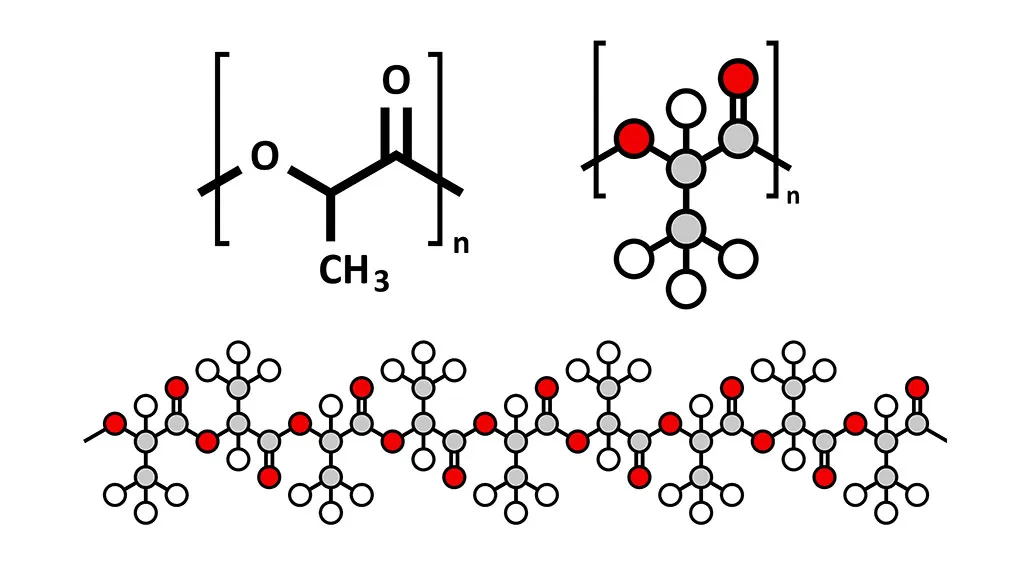
What are polymers made up of?
Polymers are made up of repeating units called monomers. Often, it is asked to identify the repeating monomer.

[5.2.2.5 - Polymers]
The melting and boiling points of polymers are…
This is because polymers are incredibly long with a lot of intermolecular forces so a high amount of energy is needed to break them all.
[5.2.2.5 - Polymers]
Why are polymers solids at room temperature?
Polymers are solid at room temperature due to the strong intermolecular forces between molecules.
[5.2.2.6 - Giant Covalent Structures]
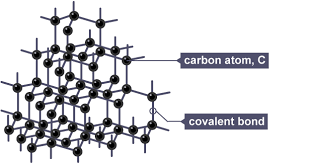
How are Giant Covalent Structures defined?
Giant covalent structures are numerous non-metal atoms bonded together with covalent bonds and arranged in regular repeating lattices.
[5.2.2.6 - Giant Covalent Structures]
What are properties of Giant Covalent Structures?
High melting and boiling points (the strong covalent bonds have to be broken)
Can’t conduct electricity (exception of Graphite)
Very Strong
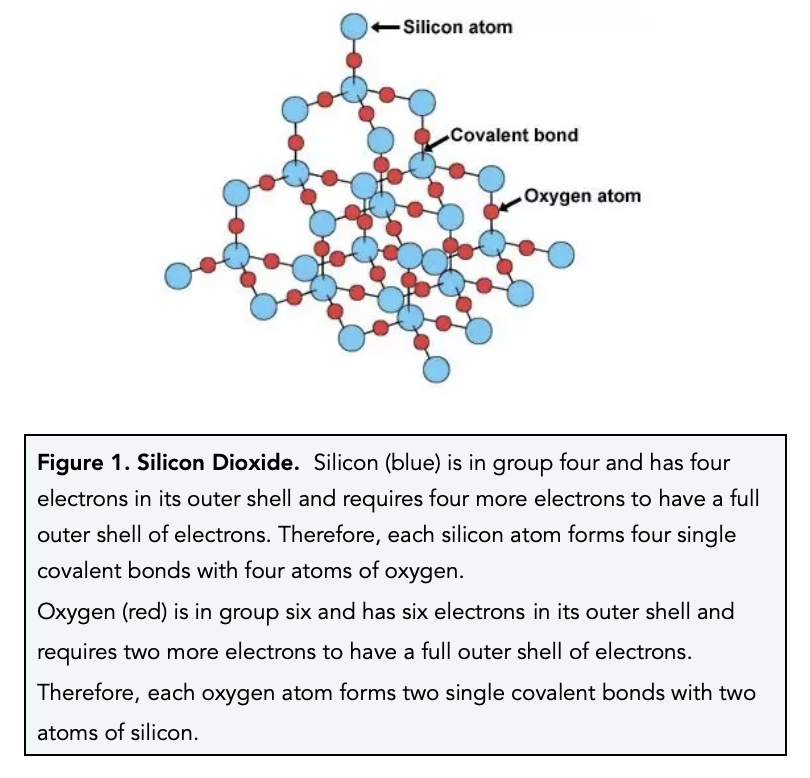
![<p><em>[</em><strong><em>5.2.2.6 </em></strong><em>- Giant Covalent Structures]</em></p><p>What is silicon dioxide made up of and what is it often called?</p>](https://assets.knowt.com/user-attachments/3f08404f-c6a1-469c-b584-ca8c06240403.jpg)
[5.2.2.6 - Giant Covalent Structures]
What is silicon dioxide made up of and what is it often called?
Silicon Dioxide is made up of silicon and oxygen atoms in a ratio of 1:2 and it often referred to as ‘Silica’.
[5.2.1.5 - Metallic Bonding]
True or False?
Metals consist of a giant structure of molecules arranged in a regular pattern.
False.
Metals consist of a giant structure of atoms arranged in a regular pattern.
[5.2.2.7 - Properties of Metals and Alloys]
What are properties of metals?
High melting and boiling points (due to their strong metallic bonding)
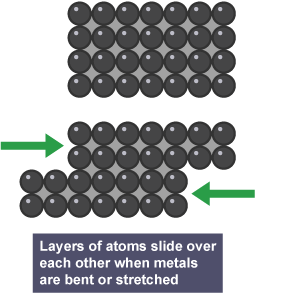
Pure Metals are soft and easily malleable (due to their atoms being arranged in layers which can slide over each other)
Good conductors of electricity and heat (due to their delocalised electrons which can easily carry electrical charge and transfer energy (thermal energy))
[5.2.2.7 - Properties of Metals and Alloys]
What are alloys made up of?
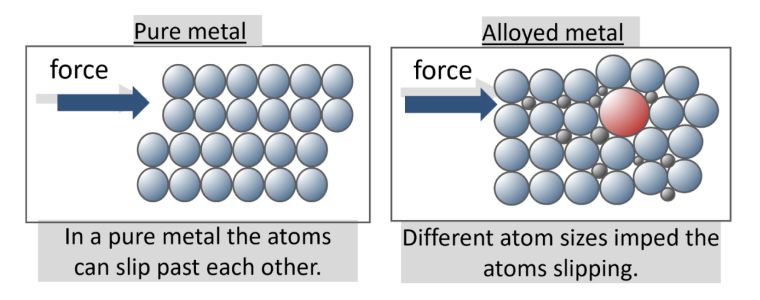
Alloys are made up of either 2 different metals or a metal and a non-metal.
Generally, elements with different sized atoms are chosen for alloys.

![<p><em>[</em><strong><em>5.2.2.7</em></strong><em> - Properties of Metals and Alloys]</em></p><p>What are the properties of alloys?</p>](https://assets.knowt.com/user-attachments/5aeb6982-a3d2-445f-bb04-14ee0a862b34.webp)
[5.2.2.7 - Properties of Metals and Alloys]
What are the properties of alloys?
Normal metallic properties +
Alloys are much harder than pure metals because the mixture of elements distorts their regular structure and stops the layers from sliding over each other.
[5.2.3 - Structure and bonding of Carbon]
What is an allotrope?
An allotrope is a different structural form of the same element in the same physical state.
[5.2.3.1 - Diamond]
In diamond, how is carbon bonded?
In diamond, each carbon atom is covalently bonded to 4 other carbon atoms (the maximum amount) so diamond is very strong with a high melting and boiling point.
[5.2.3.2 - Graphite]
In graphite, how is carbon bonded?
Each carbon is bonded to three other carbon atoms and arranged in hexagons which form large flat sheets. These sheets are then placed on top of each other and held together weakly.
Because each carbon is bonded to only three atoms, one spare electron is left on each carbon which becomes delocalised and can conduct electricity.
[5.2.3.3 - Graphene and fullerenes]
What is graphene?
Graphene is one singular layer of graphite. It exists in a hexagonal shape and can conduct electricity.
[5.2.3.3 - Graphene and fullerenes]
What are fullerenes?
Fullerenes are allotropes of carbon with hollow shapes (e.g. spheres or tubes).
[5.2.3.3 - Graphene and fullerenes]
What was the first fullerene to be discovered?
The first fullerene to be discovered was buckminsterfullerene, a hollow sphere made of 60 carbon atoms.
[5.2.3.3 - Graphene and fullerenes]
What are fullerenes used for?
Fullerenes are used for:
Nanotechnology
Medicine
Batteries
Fashon