(CHAPTER 4) ATTENTION AND CONSCIOUSNESS
 Call Kai
 Learn
Learn Practice Test
 Spaced Repetition
 Match
Match Flashcards
 Knowt Play
1/108

Earn XP
Description and Tags
Cognitive Psychology
Name | Mastery | Learn | Test | Matching | Spaced | Call with Kai | Chat |
|---|
No analytics yet
Send a link to your students to track their progress
109 Terms
Consciousness
(Attention) needs taking possession of the mind, in clear and vivid form, of one out of what seem several simultaneously possible objects or train of thoughts.
-William James
Attention
Process of selecting and processing (SP) a limited amount of information that is:
- stored memories
- sensory information
- other cognitive processes
Consciousness attention
Unconscious attention
Attention involves both what?
Conscious Attention
refers when you are aware of what you’re focusing on
Unconscious Information
information process without your awareness
Consciousness
The feeling of awareness and the content of what you are aware of
Monitor the environment
Connect Past and Present
Control and plan future actions
(MCC)
What are the 3 purpose of awareness? (MCC)
Signal Detection Theory (SDT)
This theory explains how we detect Important stimuli (signals) among irrelevant or distracting stimuli.
HIT
FALSE ALARM
MISS
CORRECT REJECTION
What are the examples of Signal Detection Theory (SDT) ?
HIT
We correctly detect the signal (Present and Detected)
FALSE ALARM
Detects that signal that is not there (Absent but detected)
MISS
Fails to detect a signal that is present
Correct Rejection
Correctly identified that no signal is present (Absent and Not detected)
Hit
Present and detected (There is a smoke and alarm activated)
False Alarm
Absent and detected (No smoke and alarm activated)
Miss
Present and Not detected (There is a Smoke and No alarm)
Correct Rejection
Absent and Not Detected (No Smoke and No Alarm)
Attention
Perception
Memory
Signal Detection Theory can be discussed in terms of?
Vigilance: Waiting to Detect Signal (WDS)
The ability to Maintain attention for a prolonged period of time while waiting to detect a specific target stimulus that may appear at an unknown time.
Requires Immediate Attention
(Ex. you watch a volleyball game and you used this signal cause you will believed that ball will caught you)
Expected Location
In the Vigilance WDS is that when we are in this location our attention is faster and way more accurate
Unexpected Location
In the Vigilance WDS is that when we are in this location our attention is slower and less accurate detection
Amygdala
Part of the Vigilance: Waiting to Detect a Signal → part of the brain that is important for recognizing and detecting stimuli
Thalamus
This part of the brain involved primarily in Vigilance
Distracters
Non target stimuli that divert attention away from the target and make search more difficult.
(make search more difficult)
Feature Search
Looking for one distinctive feature (eg., color, shape, or size)
faster and easier
number of distracters has a little effect
Conjunction Search
Looking for a target based on a combination of two or more features
More difficult and time consuming
More distracters → greater difficulty
Feature Integration Theory (FIT)
This theory explains why feature search is much easier than conjunction search
Stage 1: Feature Search → no conscious attention
Stage 2: Conjunction Search → requires conscious attention
What is the two stages of Object Perception (FIT)
Feature Search
Perceives individual features such as color, size, and shape.
Automatic and requires little/no conscious attention.
Mental Glue
Conjunction Search Combines two or more features using a ___ ____.
Similarity Theory
The more similar the target and the distracter is, the harder it is to find the target.
Similarity Theory
Ex. Lower text is easier to read than uppercase letters have more distinguishing features and are less similar to each other
Selective Attention
Is the process of tracking one stream of information while filtering out competing, simultaneous input — like following one conversation.
Cocktail Party Problem
One of the examples of Selective Attention that when there is party full of people — it is where you tracks one conversation in the face of distraction of other conversations.
Shadowing
it is a term where you repeat the sentence statement in your left ear out loud and the right ear there is a sentence statement also, but what you are reading, repeating, and saying out loud is what you focused and you ignored the one on your left ear.
Left ear → statement out loud
Right ear statement → ignored
Dichotic Presentation
Headset put in your two ears and play a different message in each ear at once. Participants now used their own shadowing — repeat back — only one message, as soon as they hear it. (They only focused on one message).
Pitch
Intensity (loudness)
Location of the sound (is it near the ear?)
What are the factors of selectively attend to only one message of the target speaker? (3)
Filter
Bottleneck
(Filet & Bottleneck Model)
What are the two explanations of selective attention? (FB)
Filter
blocks some of the information going through and thereby selects only a part of the total of information to pass through to the next stage.
Bottle neck
slow downs information passing through
Broadbent’s Model (BBM)
According to one of the earliest theories of attention, we filter information right after we notice it at the sensory level. Multiple channels of sensory input reach an attentional filter. Those channels can be distinguished by their characteristics like loudness, pitch, or accent.
Approach of selective attention
Selective Filter Model-Moray (SFMM)
Found that even when participants ignore most other high level aspects of an unattended message, they frequently still recognize their names in an unattended ear.
Ignore right ear unattended → when they hear they name they still recognized it.
Attenuation Model (Anne Treisman)
Instead of blocking the unattended stimuli outright, the filter merely attenuates (weakens them).
Unattended input is still analyzed at a low level for target properties like loudness and pitch — and even for meaning, if it’s important enough to reach consciousness.
Anna Treisman
Who is the proponent for Attenuation Model?
Preattentive Processes
Attentive Controlled Processes (ACP)
Ulric Neisser proposed that there are processing governing attention. (PA)
Pre-attentive Processes
According to Ulric Neisser (Attention) → These automatic processes are rapid and occur in parallel. They can be used to notice only physical sensory
characteristics of the unattended message. But they do not discern meaning or relationships.
They know that it is a male and female voice (physical sensory characteristics) → but does not know the meaning what they say.
Attentive Controlled Processes (ACP)
According to Ulric Neisser
These processes occur later.
They are executed serially and consume time and attentional resources, such as working memory.
They can also used to observe relationships among features.
They serve to synthesize fragments into a mental representations of an object.
Event Related Potential
reveal how the brain processes attention.
Negative 1 Wave (90 ms)
the ERP's first negative wave was larger when the target occurred in the attended ear
A negative wave
Earlier Positive Wave (20 - 50 ms)
found an even earlier auditory-cortex response. The wave originates in the Heschl’s gyri, which are located in the auditory cortex preceding the N1 effect.
A positive Wave
Visual P1 Wave
A positive wave over occipital cortex is larger when a target appears in an attended region of the visual field — enlarged further, with faster reaction time, when a cue closely precedes the target.
Positive Wave → Visual Field
Negative Wave 1 or N1 → 90 ms
Earlier Positive Wave → 20 - 50 ms
Visual P1 Wave
Negative Wave ear
Positive Wave ear
Positive wave eye
Divided Attention
This occurs when you engage in two or more tasks at once
PRP EFFECT / ATTENTIONAL BLINK
When a second speeded task follows the first too quickly, its response is delayed — cognitive operations like decision-making and memory retrieval mist be handles one at a time.
It basically says that we process information ONE AT A TIME cause when it happened too fast it can cause DELAYED
Psychological refractory effect
PRP effect meaning (the PRP means)
Single Resource Model (SRM)
One shared pool of mental resources is divided freely among whatever tasks are underway.
Writing → single resource for that
Reading → single resource for that
and it is divided freely
Multiple Resource Model (MRM)
Separate resource pools exist for different modalities (e.g. verbal vs. visual) — that's why writing while listening to music is easier than writing while listening to talk radio.
Attention resource theory (ART)
The human brain has a limited pool of mental energy or capacity used to process tasks and focus attention.
We have limited resources to process tasks
a theory
Anxiety
Arousal
Task Difficulty
Skills
What are the 4 factors that influence our ability to pay attention? (AATS)
Alerting
defined as being prepared to attend to some incoming event, and maintaining this attention.
also includes the process of getting to this state of preparedness.
Orientation
is defined as the selection of stimuli to attend to.
This kind of attention is needed when we perform a visual
search.
Executive Attention
Attention includes processes for monitoring and resolving conflicts that arise among internal processes.
These processes include thoughts, feelings, and responses.
Attention Resource Theory (ART)
What theory explains when our attention is limited resource?
Planning, Attention, and Simultaneous–Successive Process Model of Human Cognition (PASS)-
there are three distinct processing units and each is associated with specific areas of the brain: arousal and attention, simultaneous and successive processing, and planning.
Inspection Time
Reaction Time
Choice Reaction Time
Three types of PASS
Inspection time
is the amount of time it takes you to inspect items
and make a decision about them
Reaction Time
the smart person is someone whose neural circuits
conduct information rapidly.
choice reaction time
the time it takes to select one answer from
among several possibilities.
WEEE-WOOO-WEEE-
Posterior Parietal Cortex
Thalamus
Midbrain
Visual Attentional Deficits have been linker to the?
Posterior Parietal Cortex
Part of the brain helps direct attention toward locations in space.
Damage here can acquire difficulty in attention appropriately.
Thalamus
Relay station for vigilance?
Midbrain
Part of the brain that is for (RAS) help to coordinate where the eyes move and where attention is directed.
eye movement
Attention Deficit Hyperactivity Disorder (ADHD)
Change Blindness
Inattentional blindness
What are the 3 examples of Failing Attention?
Change Blindness
Inattentional Blindness
What are the two types of Blindness?
Change Blindness
is when a person fails to notice a change in something they are looking at, even though the change is clearly there.
Inattentional Blindness
You don't notice something because your attention is somewhere else.
Spatial Neglect or Hemi Neglect
It is an attentional dysfunction in which participants ignore the half of their visual field that is contralateral to the hemisphere of the brain that has a lesion.
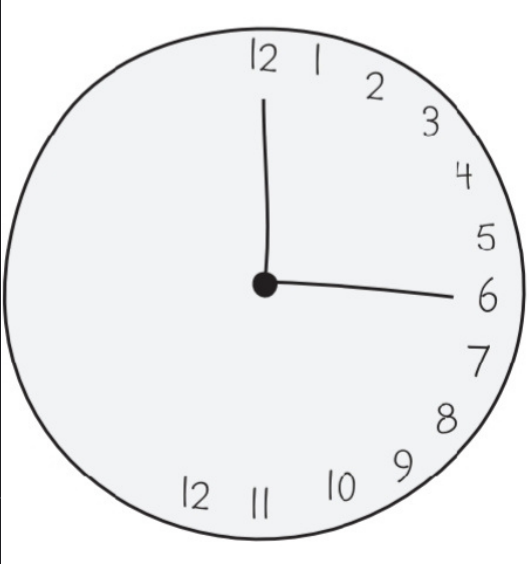
Right Hemisphere
What hemisphere of the brain that involves attention?
Habituation
is becoming accustomed to a stimulus so that we gradually pay less attention to it.
happens without conscious effort
familiarity of the stimuli
Dishabituation
a change in a familiar stimulus prompts us to start noticing the stimulus again.
Familiar sounds becomes unfamiliar and enters awareness
(ain’t in LA by adela)
Sensory Adaptation
a lessening of attention to a stimulus that is not subject to conscious control.
It occurs directly in the sense organ, not in the brain.
We can exert some conscious control over whether we notice something to which we have become habituated, but we have no conscious control over sensory adaptation.
Accesible to conscious control
Not tied to stimulus intensity
Tied to prior exposure
Habituation are?
Not accessible to conscious control
Tied to simulus intensity
Not tied to prior exposure
Sensory Adaptation are?
Arousal
EEG
is a degree of physiological excitation, responsivity, and readiness for action, relative to a baseline.
it is measure in terms of what machine?
Automatic Processes
Fast, effortless thinking that
happens without conscious
trying.
Controlled Processes
Slow, conscious thinking that
requires full concentration and
effort.
Automatization (Proceduralization)
The cognitive process by which a deliberate, attention-demanding activity transitions into an automatic skill through continuous practice and repetition.
ex. riding a bike needs attention demanding activity --> but now it is just an automatic process.
Stroop Effect → John Ridley Stroop
difficulty naming the ink color when the word itself names a different color.
Named after ?
The Classic View
At first, each step takes work.
With practice, individual steps group together into bigger parts.
Eventually, the entire process becomes one single, smooth operation.
It frees up attention and mental effort for other things.
Start → slow & effortful → practice → group steps → eventually automatic & easy → attention is FREED UP! ✅
Instance Theory
Automatization happens because we collect specific memories of reacting to specific situations.
Instead of working through a problem step-by-step, you instantly pull the answer from memory.
You can still go back to doing it step-by-step if you encounter something new.
Stored in memory → pulling than → react to situation.
Mindlessness
Automatization can cause ____ as we already follow our routines without noticing important changes and thoughts that we had planned ahead.
Studying cause exam tomorrow → but your body routine says sleep time and no worry.
Mistakes
Wrong goal or plan
Intentional and controlled processes
You do not have knowledge about it that is why you made a mistake.
ex. You intentionally give it to your dog to relieved your dogs pain, but your dog got worse, because you do not have knowledge about what is that medicine all about.
Slips
Correct goal, but wrong execution
Often occur during automatic process
ex. You type “Teh” instead of the
ex. You give medicine to your dog even that medicine is for human because of how scared you are what will happened to your dog.
Capture
Omission
Preservation
Description
Data-driven
Associative activation
Loss of activation
What are the types of slips? (COP D DAL) 7
Capture (routine automatization)
Routine takes over
ex. Going to bed when you intended to go out
Omission (skip)
Skip a step
ex. forgetting to wear your underwear, do toothbrush, wear ID
Preservation (repeat will not work)
Repeat the step
ex. turning the ignition again
Repeating the actions NONSTOP even though it still won’t work even we do it again and again.
you preserve that idea in your brain, doing it again and again; but it will not work.
Description (right action wrong object)
Right action wrong object
ex. Charger as a key