Arthropod Diseases (12)
 Call Kai
 Learn
Learn Practice Test
 Spaced Repetition
 Match
Match Flashcards
 Knowt Play
1/43

There's no tags or description
Looks like no tags are added yet.
Name | Mastery | Learn | Test | Matching | Spaced | Call with Kai | Chat |
|---|
No analytics yet
Send a link to your students to track their progress
44 Terms
arthropods
(vector transmission)
Kingdom Animalia
Phylum Arthropoda
class insecta: lice, fleas, mosquito
class arachnida: spiders, mites, ticks
arthropod disease interaction
host/reservoir (human/animal)
pathogen/parasite
vector (arthropod)
animal reservoir (w/ a pathogen) → vector (arthropod) → host (human)
ex. infected rat → infected rat flea → infects human (ex. plague)
arthropod vector adaptation (overview)
goal: enhanced survival of arthropod vector
multiple developmental stages/complex life-cycle
diverse habitats (ex. water & land)
several types of vertebrate hosts (rodent, humans)
3 types of arthropod vector adaptation
physiological adaptations:
kissing bug detects host’s chemicals (CO2 → bites around mouth)
mosquito bites the host/release certain chemical before/after a blood meal (numb area → dissolve clot → form clot)
behavioral adaptations:
mosquito bites host at appropriate times (@ night)
structural adaptations
wings: locate nutrient source/escape from predators
compound eyes: multiple lenses → see 360 → escape predators
needles: take a blood meal/deliver pathogens to host
sensory bristles: detect vibrations (nutrients/predators/mates)
bacterial arthropodborne diseases
plague
lyme disease
epidemic typhus
rocky mountain spotted fever (RMSF)
parasitic arthropodborne diseases
malaria (kingdom protista)
arboviral arthropodborne diseases (7)
west nile encephalitis
st. louis encephalitis
eastern equine encephalitis
zika virus disease
yellow fever
dengue
ebola virus disease (viral disease but NOT transmitted by arthropods)
plague (black death)
cause: Yersinia pestis, gram — bacillus
reservoir: 1 rats, wild rodents; 2 human
arthropod vector: rat flea
MOT: pathogen in rat → infected rat flea → bite human
types:
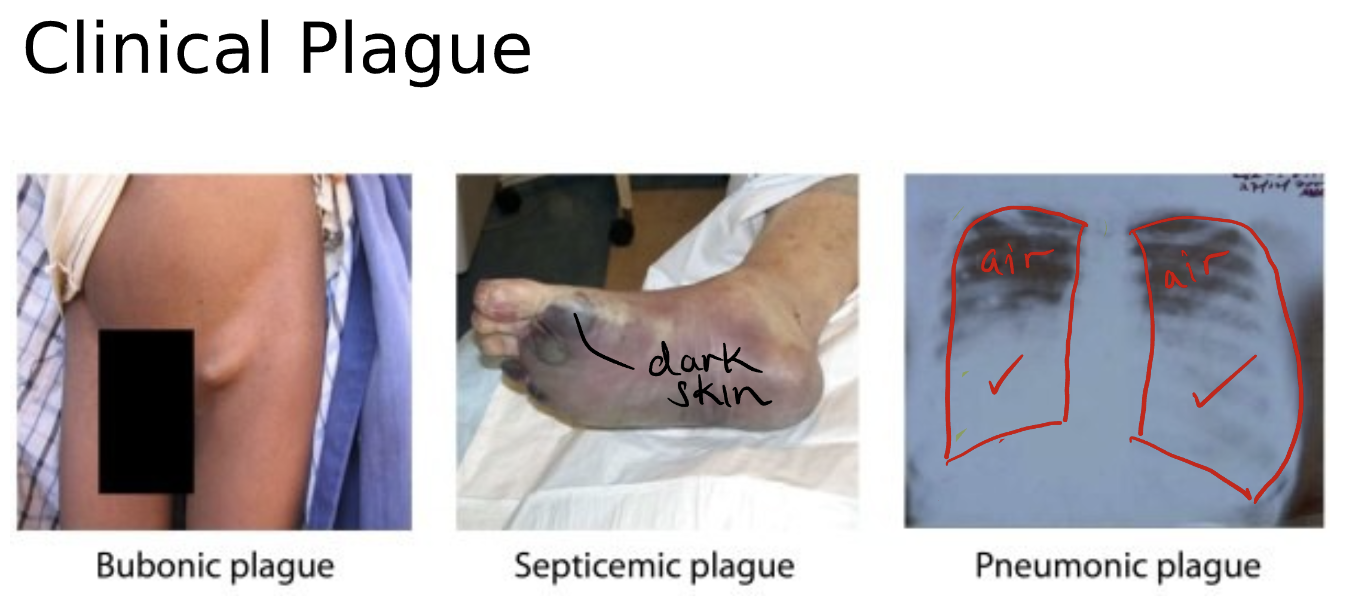
bubonic plague: bact. growth in phagocytes → bacteremia → lymph nodes
s/s: painful/swollen lymph nodes in axilla & groin (buboes), fever, chills, body aches, bleeding into skin (skin turns black), most common, 50-75% mortality
septicemic plague: septic shock d/t bacteremia
pneumonic plague: airborne/droplet transmission (human → human), bact. → lungs, ~100% mortality w/n 3 days if untreated
dx: serology, sputum sample, fluid from buboes
predisposing factor: poor sanitation (rats)
prevention: eliminate reservoir (rats), plague vaccine for ↑ risk people (only effective for bubonic plague)
tx: high dose abx
misc: endemic to parts of U.S.
lyme disease
cause: Borrelia burgdorferi, spiral bact. (spirochete), motile
reservoir: 1 field/deer mice, 2 deer
arthropod vector: tick
MOT: mouse/deer → tick → human
s/s:
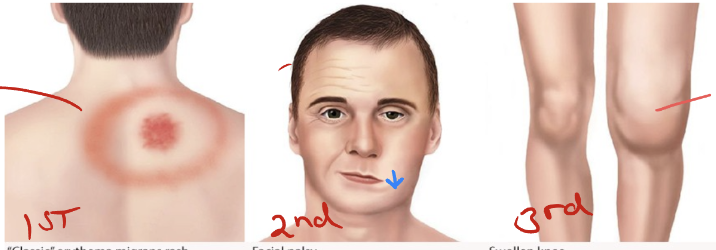
1st phase: bull’s-eye rash
2nd phase: flu-like sxs, irregular heartbeat, encephalitis, facial paralysis
3rd phase: arthritis
dx: clinical sxs, geographic location, serology
prevention: protective clothing, tick repellent, avoid rodents/deer
tx: abx (1st phase), harder to tx in later stages
misc: known since 1975, most common tick-borne dz in US, northeast US, summer months
4 developmental stages (forms) for tick
year 1
egg (U)
larvae (U/I)
year 2
nymph (I) → human/host gets lyme dz
adult (I)
how many blood meals? (ticks)
larvae (U) → infected field mouse
nymph (I) → uninfected pet/human host
adult (I) → uninfected deer
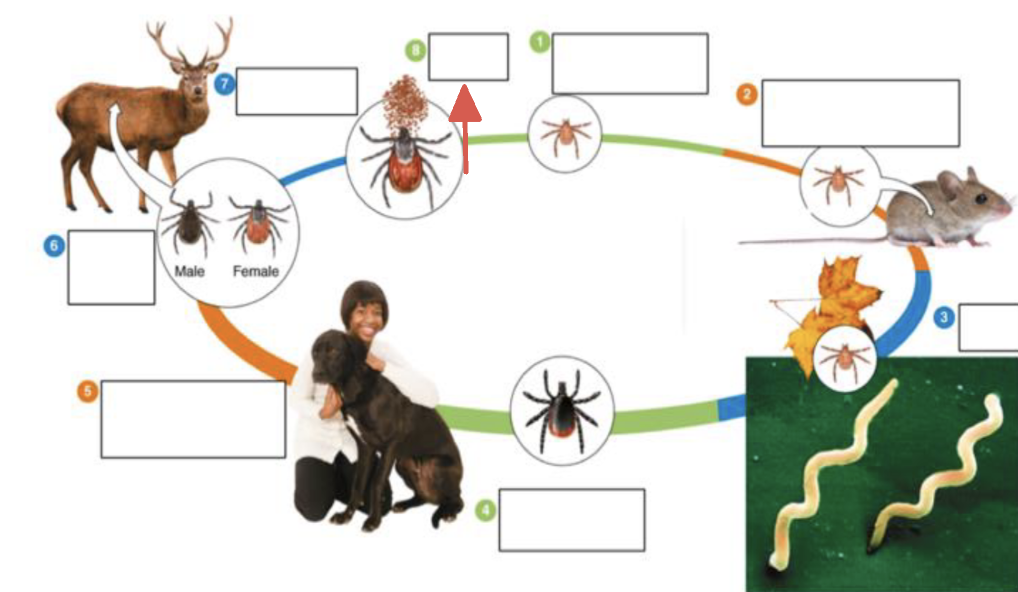
tick vector stage?
(stage 8)
infected adult female tick lays uninfected eggs in the ground during spring year 1
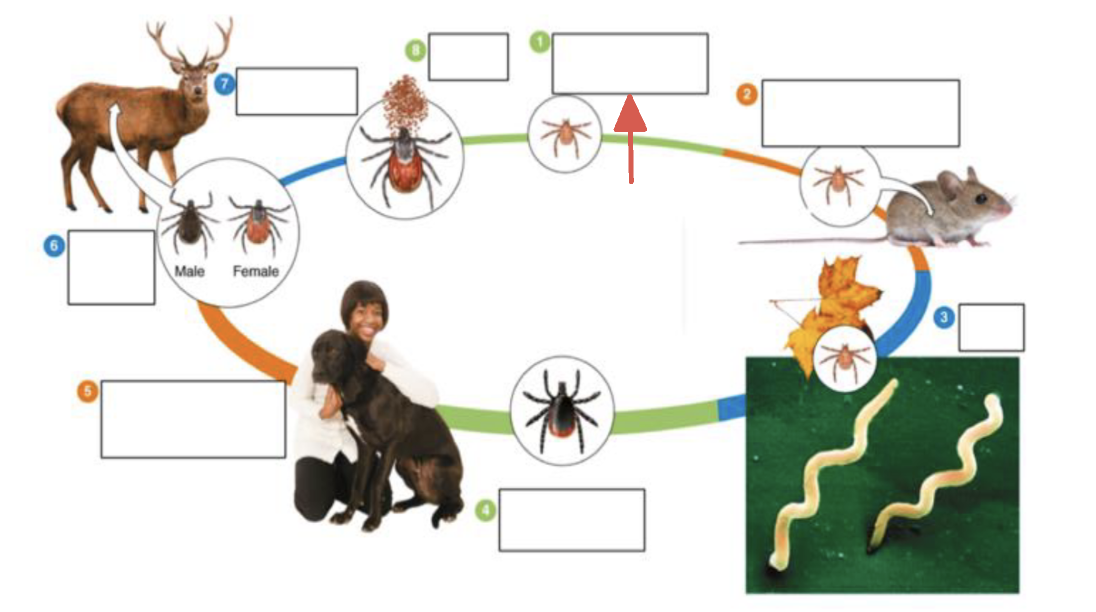
tick vector stage?
(stage 1)
uninfected egg hatches & develops into uninfected larvae in spring year 1
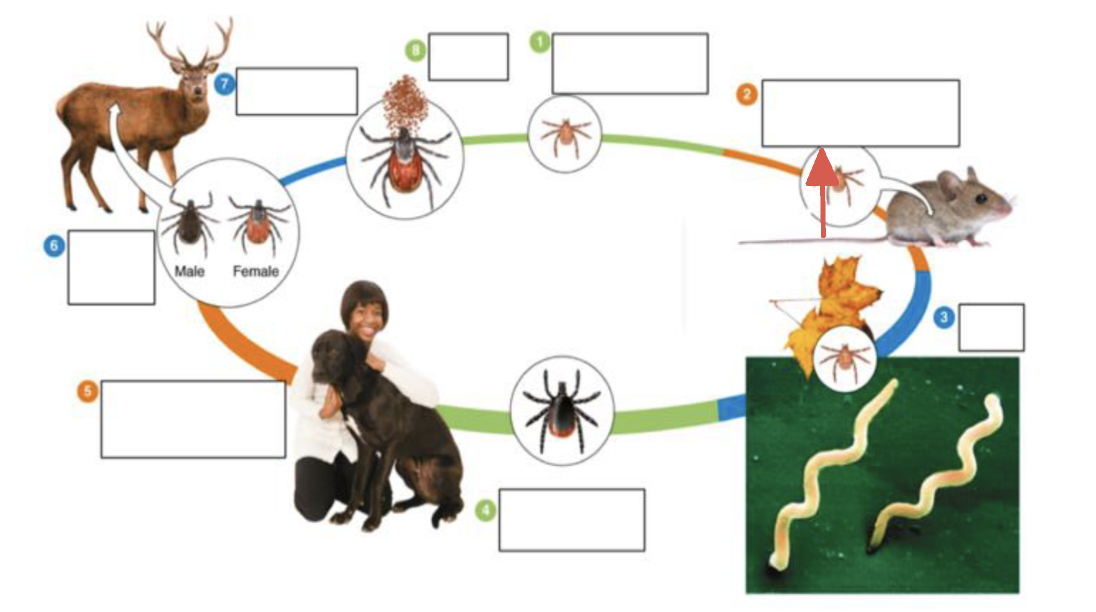
tick vector stage?
(stage 2)
uninfected larvae take 1st blood meal on infected wildlife host, such as field mice (natural reservoirs) who are infected with Borrelia burgdorferi in summer year 1 (uninfected larvae → infected larvae)
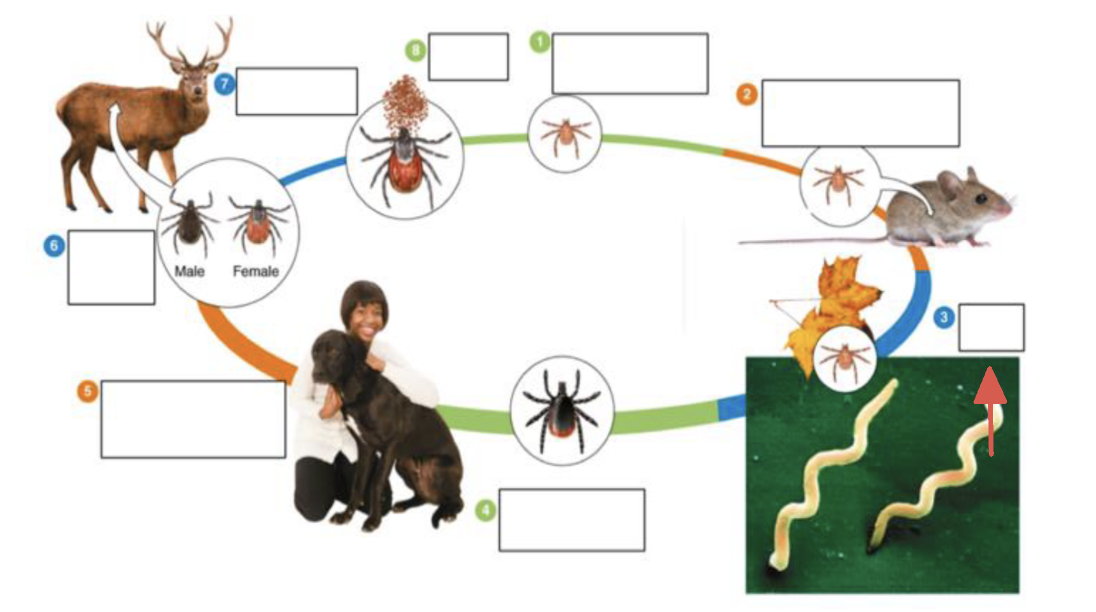
tick vector stage?
(stage 3)
after 1st blood meal, infected larvae w/ B. burgforferi detaches from wildlife host (field mice) & drops to ground & remains dormant during fall/winter year 1 (d/t colder weather & field mice not being available)
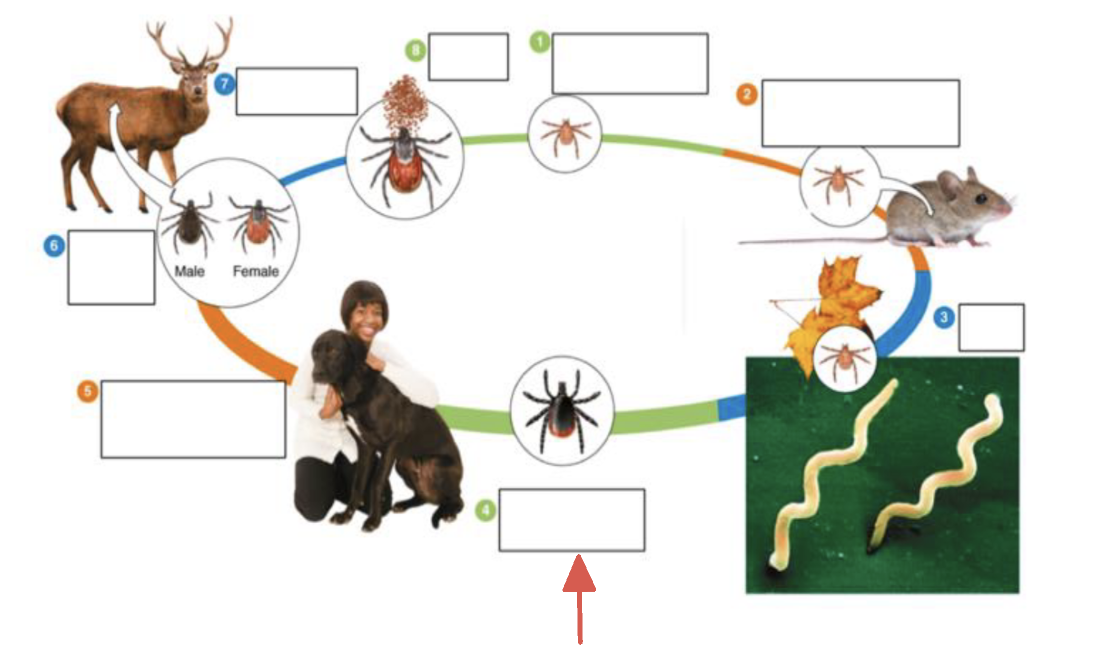
tick vector stage?
(stage 4)
the infected larvae come out of dormant stage & develop into an infected nymph during spring year 2
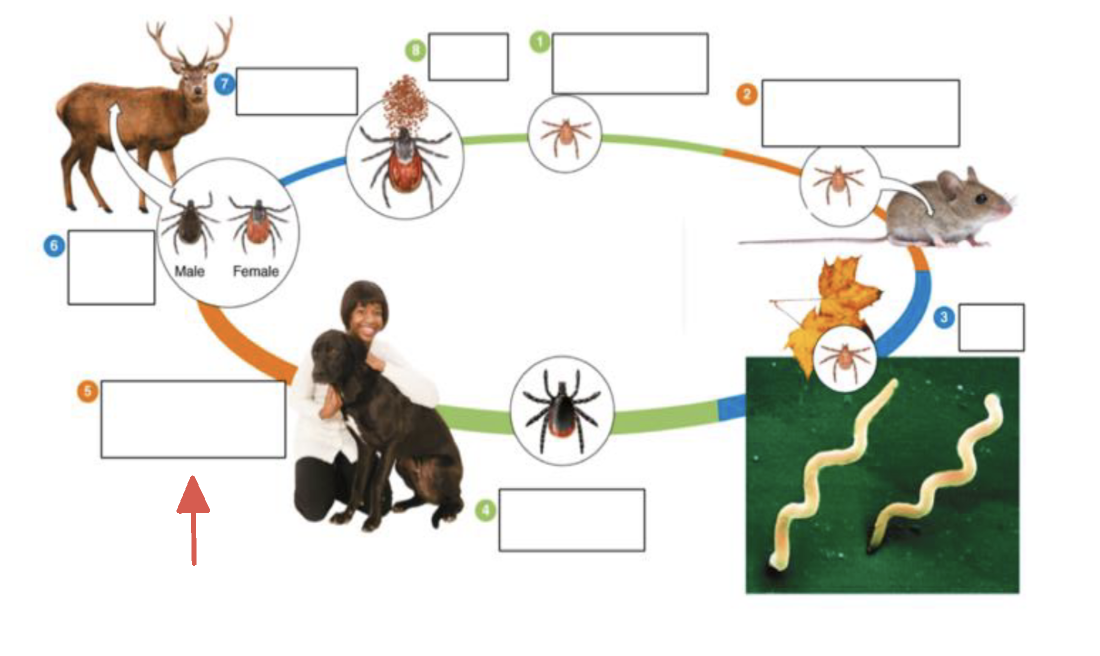
tick vector stage?
(stage 5)
the infected nymph takes its 2nd blood meal on uninfected human/pets who are usually outdoors during summer year 2, infecting human/pet w/ B. burgdorferi
human now develop Lyme Disease
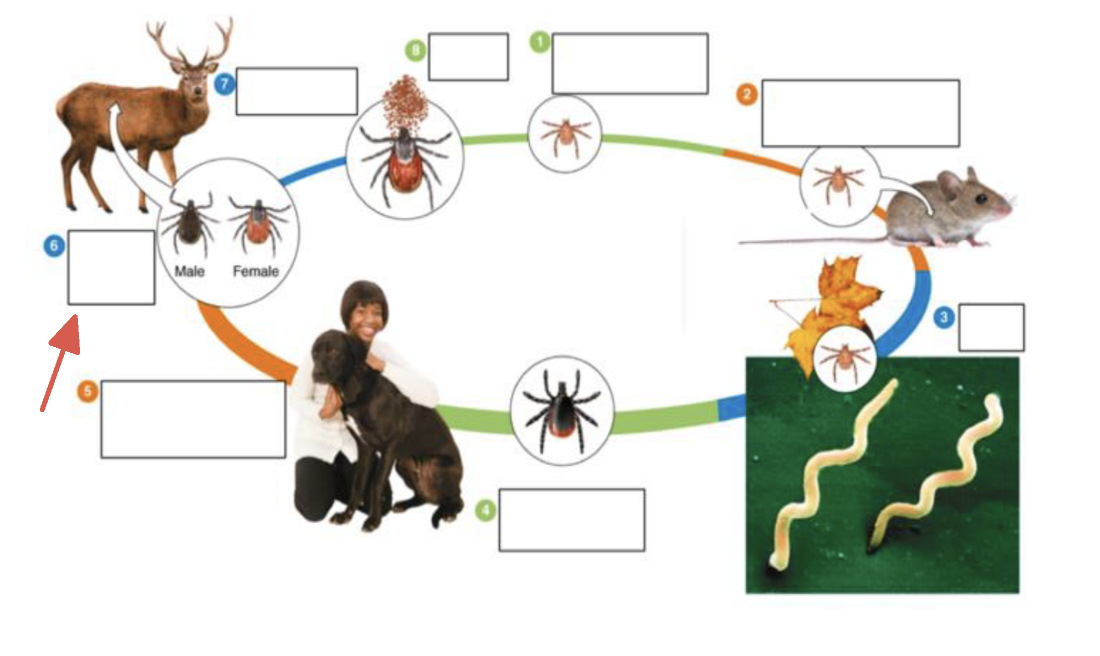
tick vector stage?
(stage 6)
the infected nymph detaches from human/pets after blood meal & develops into infected adult tick in fall year 2
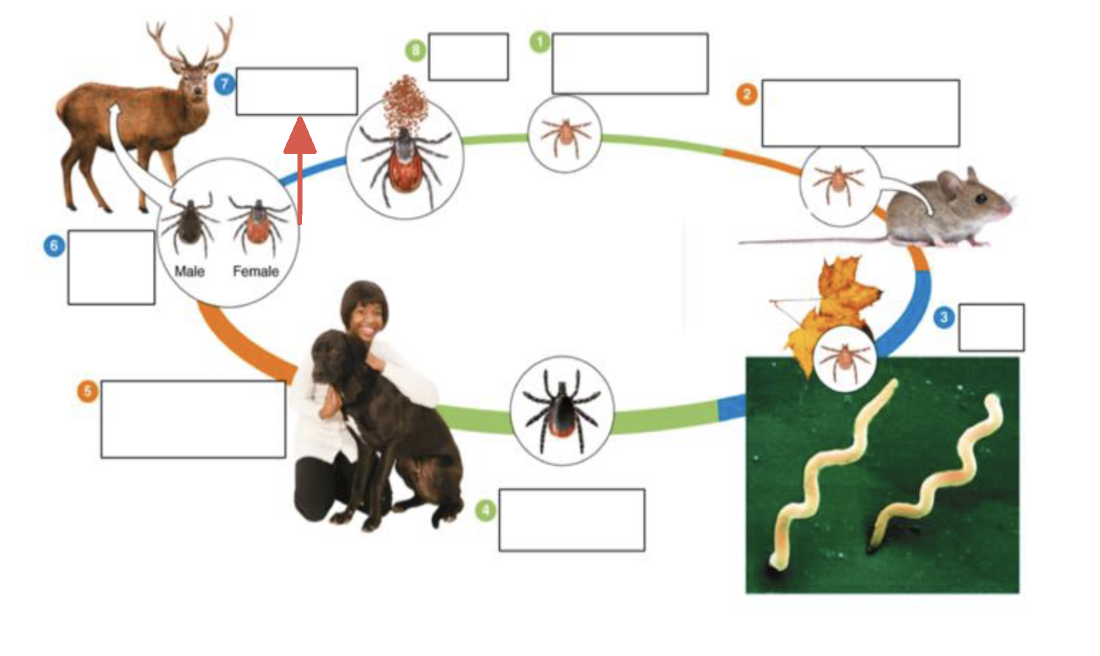
tick vector stage?
(stage 7)
the infected adult tick has its 3rd blood meal on wild animal (deer) in fall year 2, infecting the deer w/ B. burgdorferi. the adult ticks mate.
rickettsial diseases: Epidemic Typhus & Rocky Mountain Spotted Fever
Genus Rickettsia (bacterium)
causative agent of “Typhus Fever” group & “Spotted Fever” group of dz (diff. clinical sxs)
gram — bacillus or coccobacillus
obligate intracellular parasite (replicate in human cells only)
spotted flat rash on body
reservoir = arthropod vector
epidemic typhus (typhus fever)
cause: Rickettsia prowazekii, gram — bacillus/coccobacillus, obligate intracellular parasite
reservoir/vector: human body louse
MOT: louse feces rubbed into bite wound
s/s: prolonged HIGH fever, spotted red rash (chest/trunk → extremities)
dx: rash type/location, serology
predisposing factors: wars, homelessness, crowded jails, concentration camps (unsanitary conditions)
prevention: good personal hygiene
tx: abx
misc: ↑ mortality if untreated
rocky mountain spotted fever (RMSF)
cause: Rickettsia rickettsii, gram — bacillus/coccobacillus, obligate intracellular parasite
reservoir/vector: tick
MOT: (nymph) tick → human
transovarian passage: infected female tick lays infected eggs → larvae hatch already infected
s/s: fever, spotted red rash (palms & soles → chest/trunk)
dx: rash type/location, serology
predisposing factors: outdoor activities (hiking)
prevention: protective clothing, tick repellent
tx: abx
misc: common in southeast US, appalachian mountains
lyme disease vs. rocky mountain spotted fever
lyme disease (Borrelia): infected adult female tick → UNINFECTED eggs → uninfected larvae (only infected after 1st blood meal → field mouse)
RMSF (Rickettsia): infected adult female tick (transovarian passage) → INFECTED eggs → infected larvae
malaria
cause: Genus Plasmodium, kingdom protista, subkindom protozoa, protozoan parasites (found in RBC’s/liver cells)
Plasmodium vivax → mildest & most common
Plasmodium ovale → endemic
Plasmodium malariae → endemic
Plasmodium falciparum → most deadly, severe anemia/encephalitis (cerebral malaria)
VF: complex lifecycle of Plasmodium pathogen w/ 2 hosts
long/slow blood cycle
frequent gene mutations → ↑ drug resistance
reservoir: human (intermediate host / asexual reproduction)
arthropod vector: mosquito (definitive host / sexual reproduction)
MOT: plasmodium (pathogen) in human → mosquito → different human dz
sxs (paroxysyms): intermittent fever (spike every 48 or 72 hours), chills, sweating, fatigue, weakness, anemia (d/t plasmodium infect/destroy RBC → rupture → release merozoites)
dx: RBCs w/ ring form of Plasmodium (merozoites)
predisposing factors: tropical climates, stagnant water
prevention: vector control, mosquito repellant, mosquito nets, clearing stagnant water (no vaccine in US atm)
tx: antiparasitic/antimalarial durgs
chloroquine: limit d/t ↑ drug resistance
artemisinin derivatives: chinese herb
misc: 300 mil worldwide, 500,000 deaths annually, top 3 deadliest infectious dz worldwide
life cycle of the plasmodium pathogen (summary)
4 developmental stages (forms) - for Plasmodium
Sporozoite
Merozoite
Male & Female Gametocytes
Zygote
human: all except zygote
mosquito: all except merozoite
both hosts: sporozoite & gametocyte
schizogony: asexual reproduction in human liver; 1 sporozoite divides into 8 merozoites
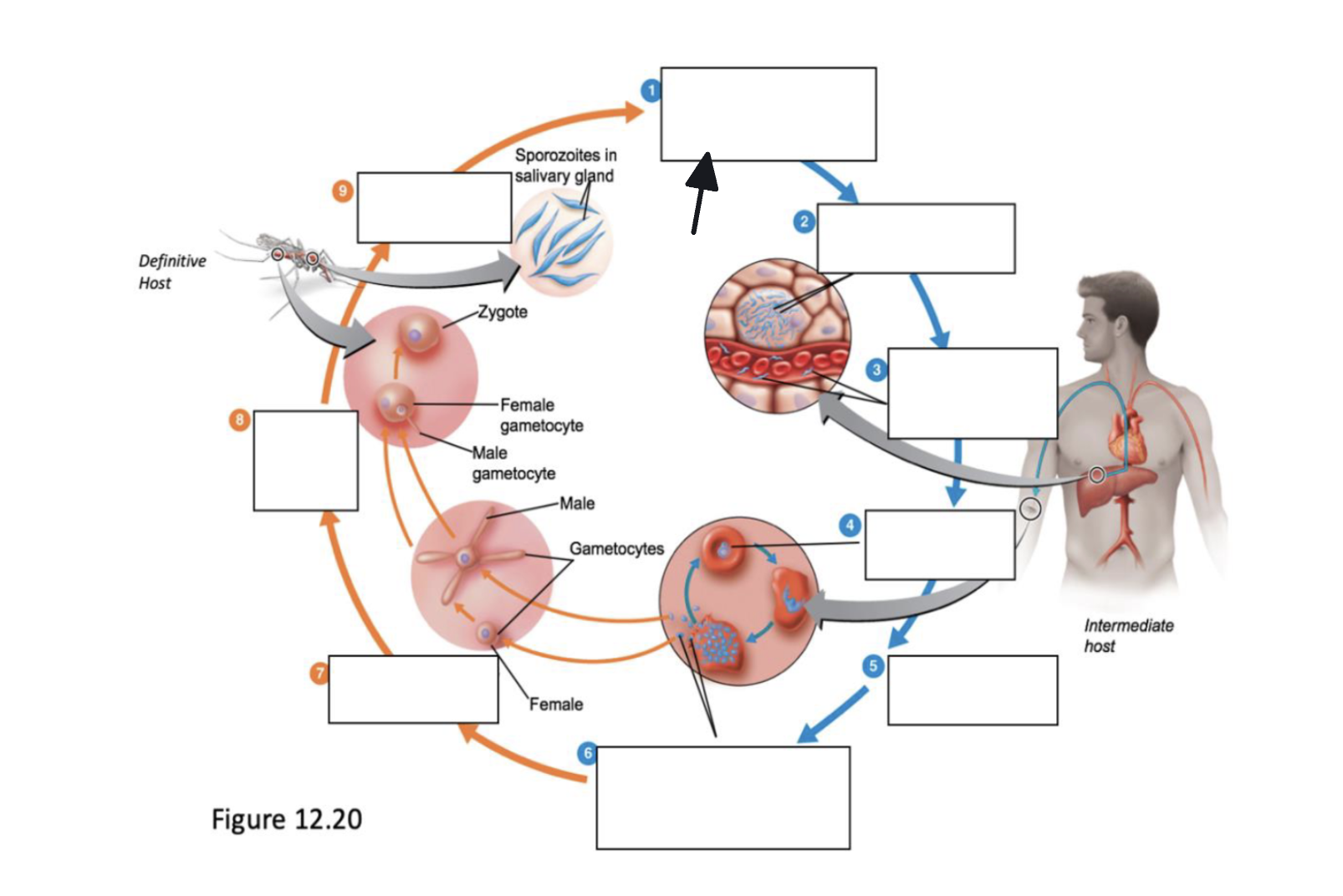
(stage 1)
infected female mosquito has sporozoites of Plasmodium parasite in her salivary glands
infected female mosquito bites/has blood meal on uninfected human
sporozoites from mosquito’s salivary gland enter human bloodstream, then reach human liver
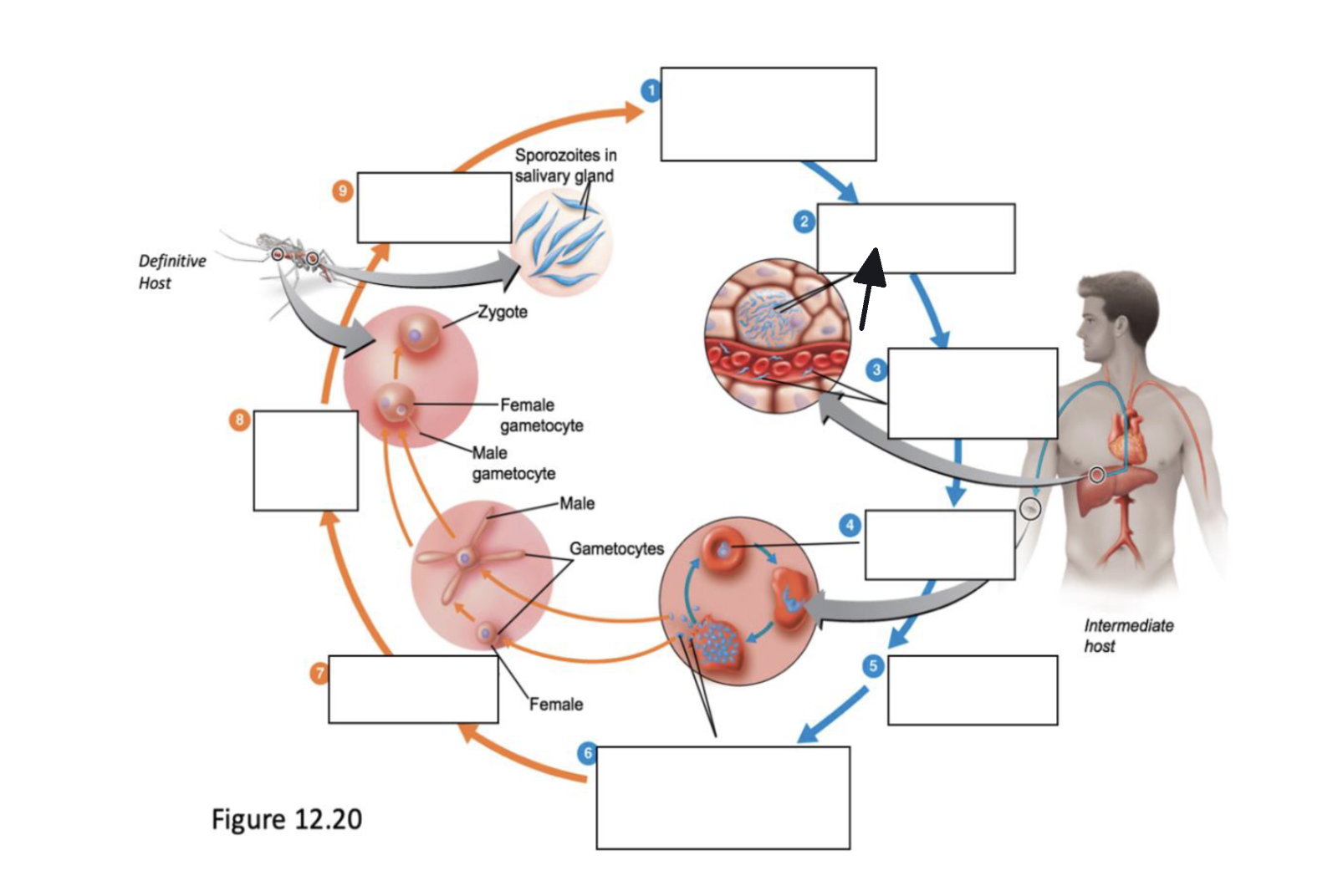
(stage 2)
occurs in intermediate (human) host as part of asexual reproduction
sporozoites undergo “Schizogony” ( division of 1 sporozoites into 8 merozoites) in human liver cells
merozoites are produced in the liver
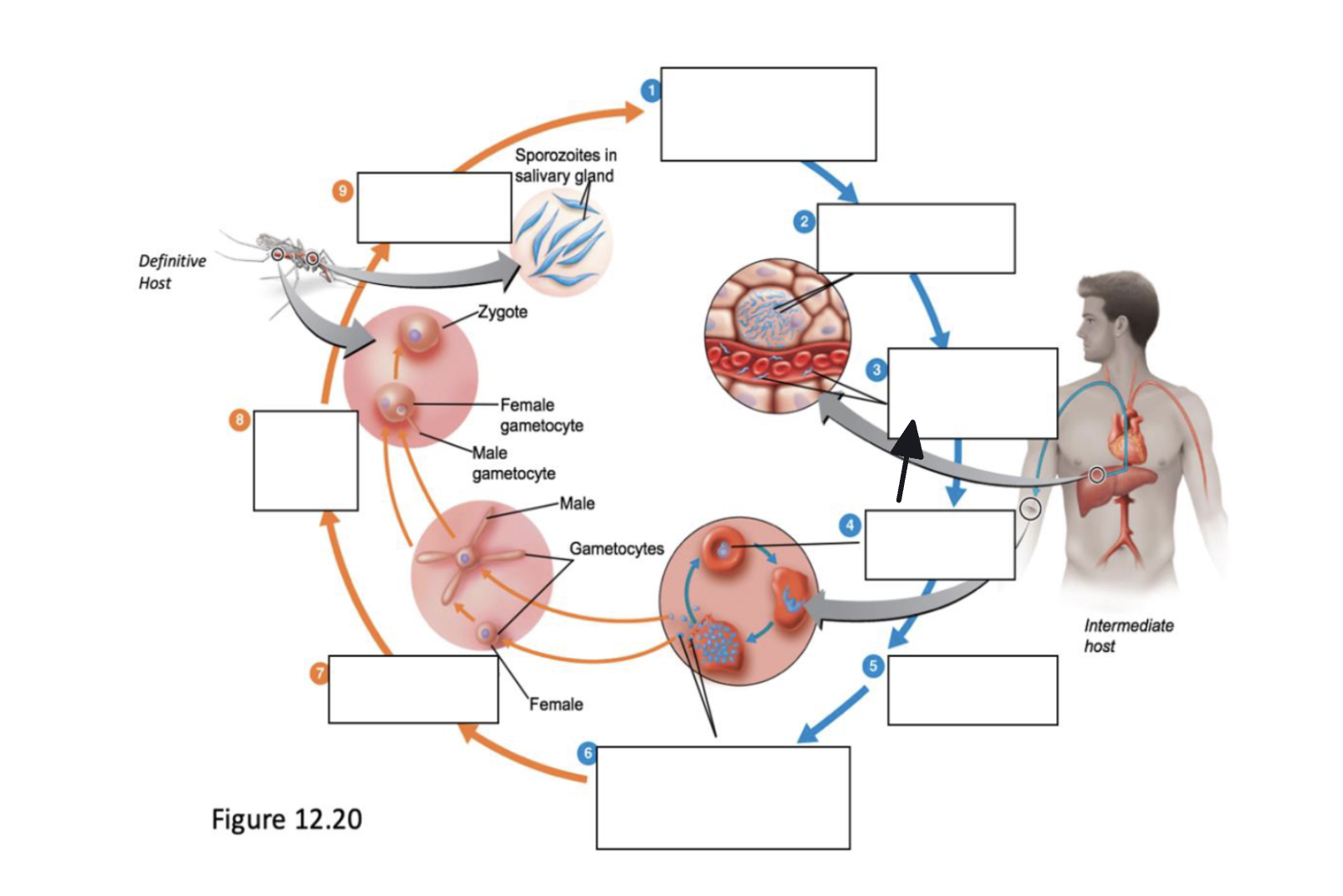
(stage 3)
merozoites are released from the liver into bloodstream & can infect new RBCs
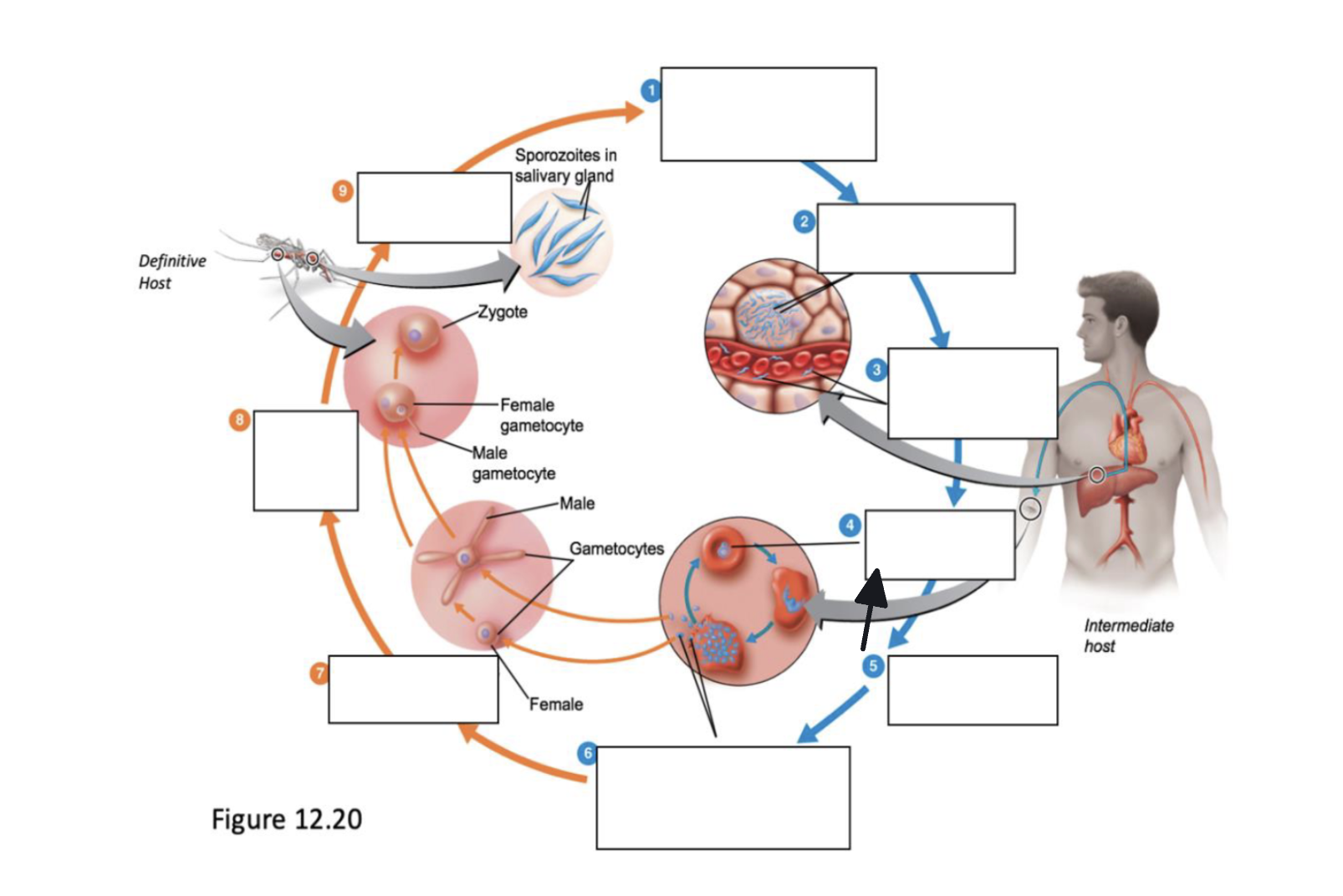
(stage 4)
merozoites develop into the “Ring Stage” inside RBCs
observing RBCs w/ “ring-formed” merozoites in blood smear is most common diagnostic method for malaria
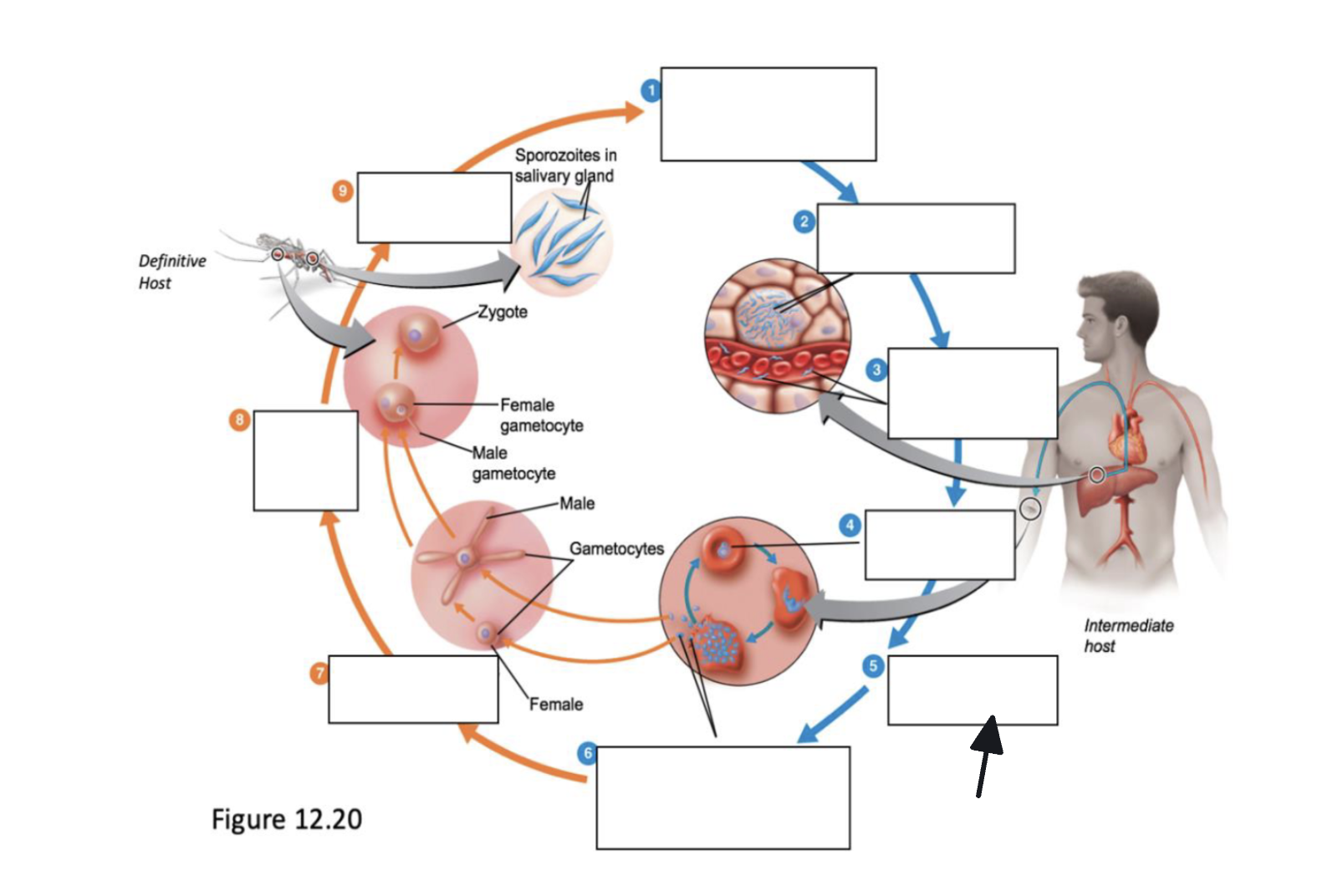
(stage 5)
“ring-stage” of Plasmodium (merozoites) grow and divides, producing more merozoites
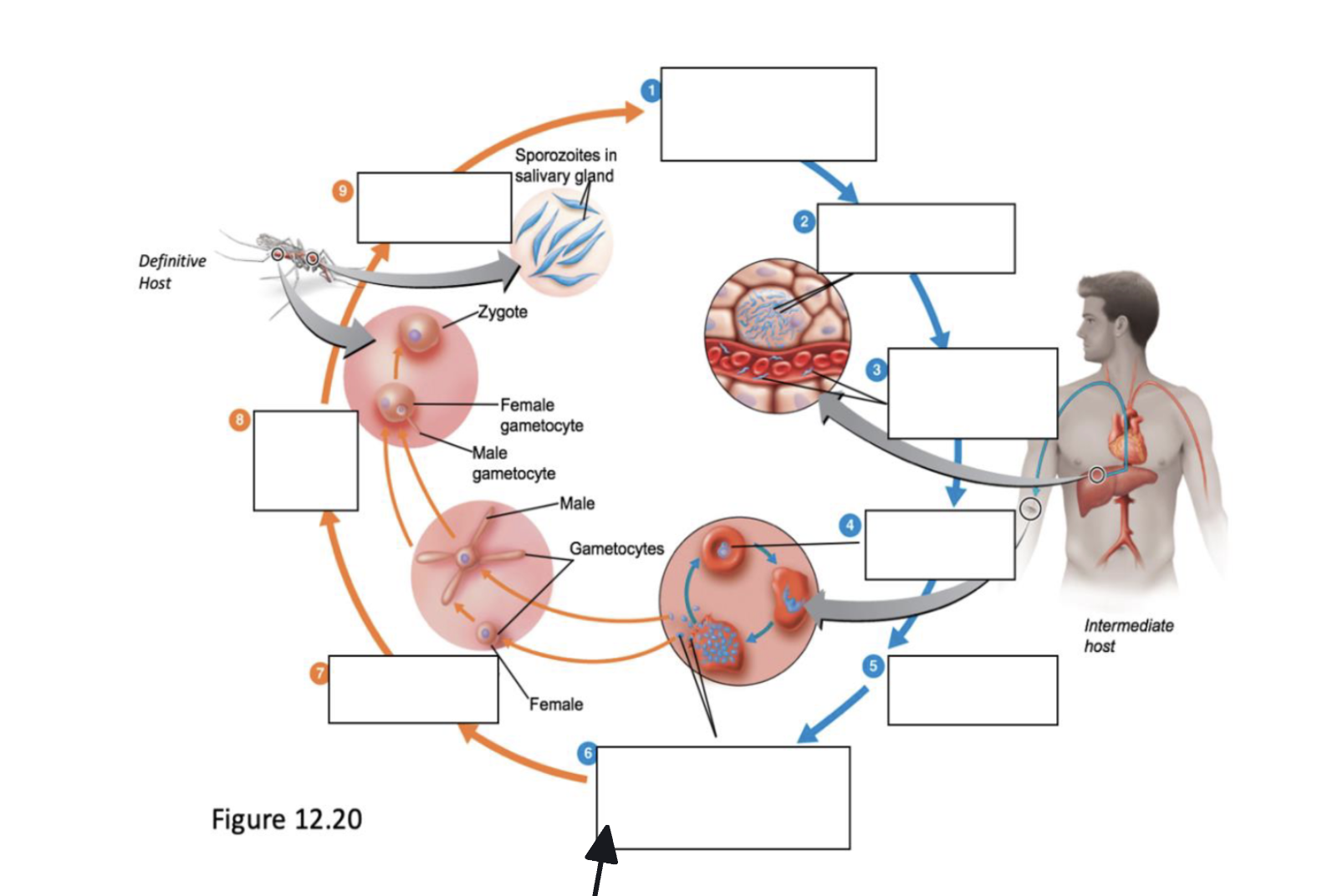
(stage 6)
d/t rapid divison of Plasmodium (merozoites) in RBCs → RBCs rupture and release the merozoites
leads to Paroxysms (intermittent fever & chills in humans)
some merozoites infect new RBCs in bloodstream
some merozoites develop into male & female gametocytes (sex cells to carry out sexual reproduction in definitive (mosquito) host)
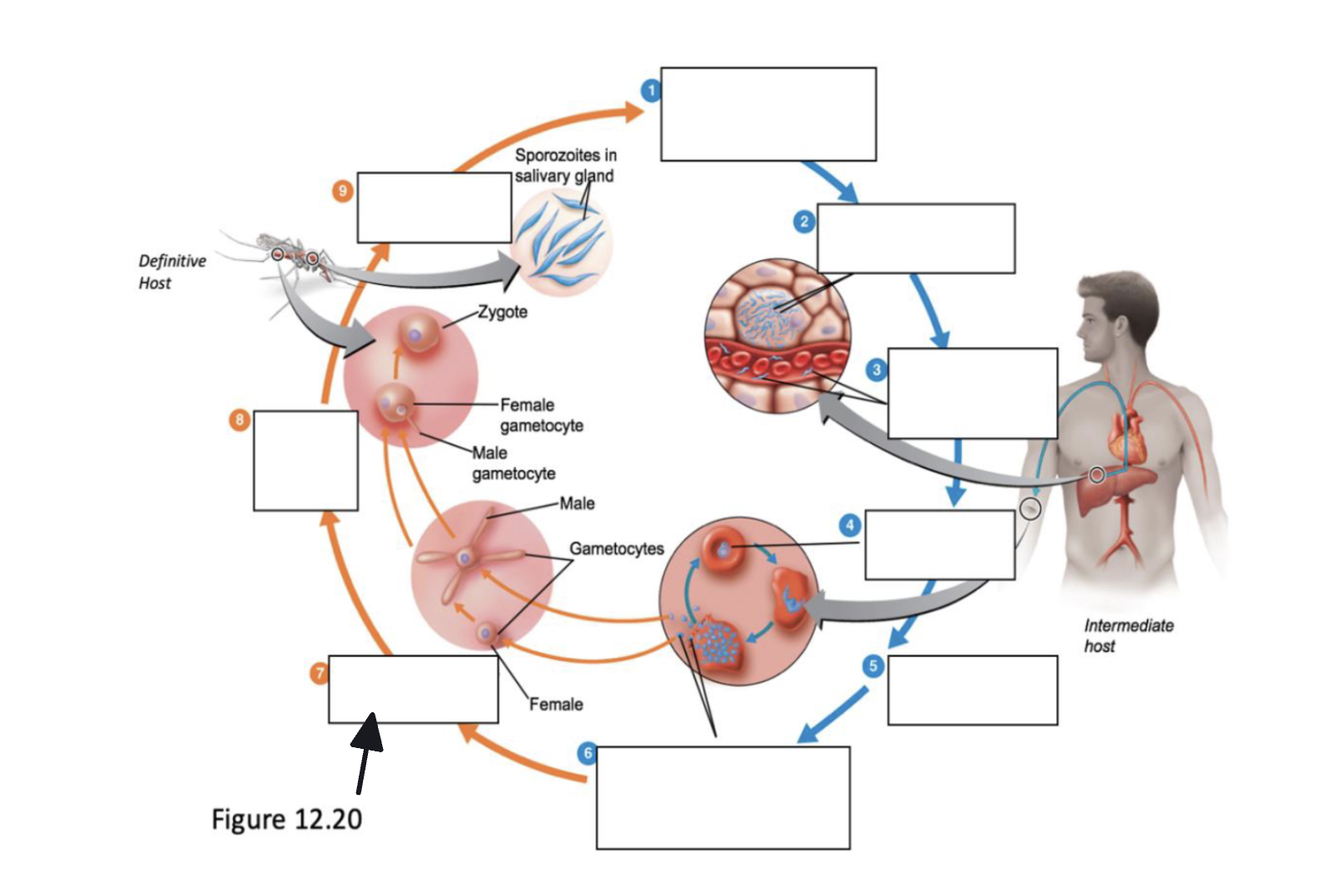
(stage 7)
an uninfected (different) mosquito take blood meal from infected human carrying Plasmodium (gametocytes)
mosquito becomes infected by ingesting gametocytes that travel & found in mosquito’s GI tract
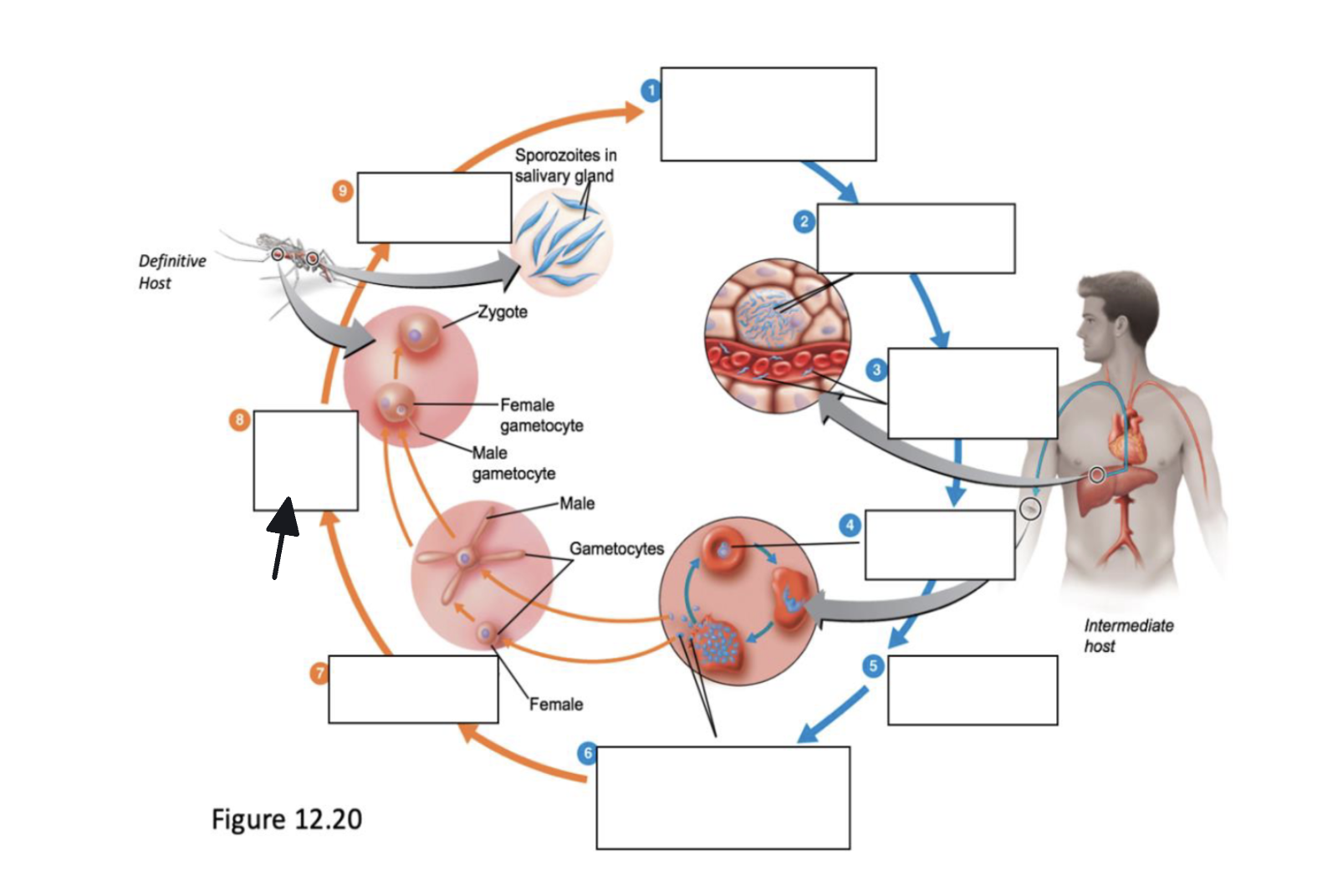
(stage 8)
in infected mosquito’s GI tract, the gametocytes (male & female) unite to form a zygote
sexual reproduction occurs in definitive (mosquito) host
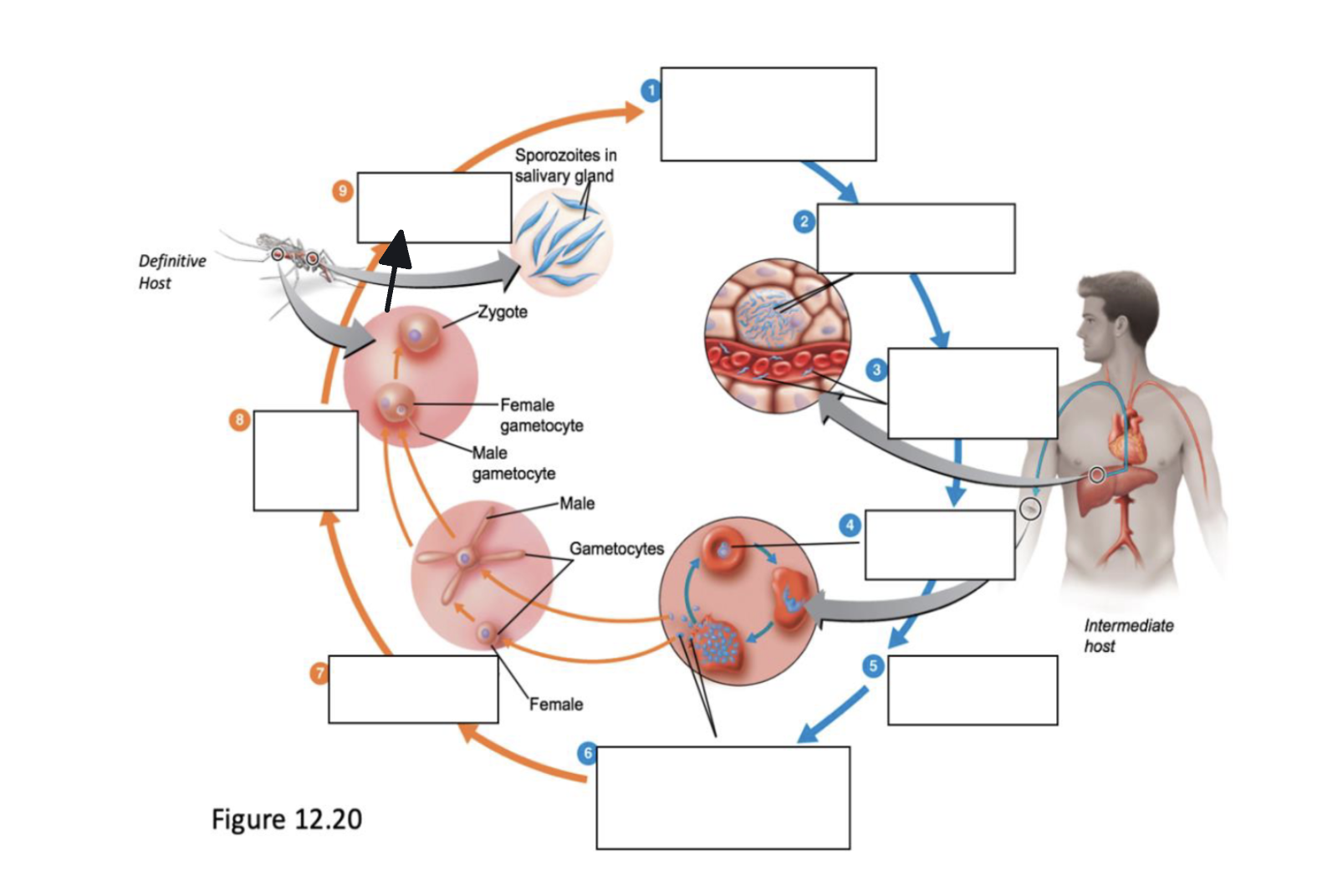
(stage 9)
zygotes develop into sporozoites that migrate to salivary glands of mosquito
adaptive for Plasmodium parasite to be delivered into next host when mosquito takes another blood meal
Plasmodium parasite that remains in mosquito GI tract not helpful b/c cannot pass along parasite
arboviral diseases
arbovirus: arthropodborne virus (belong to several viral families)
arthropod vector: usually mosquitos (mosquito-borne viruses)
some considered EIDs (ebola, zika)
sxs subclinical to severe:
neurological → encephalitis
vascular damage → hemorrhagic fevers
arboviral encephalitis
west nile encephalitis
st. louis encephalitis
eastern equine encephalitis
zika virus dz: more neurological sxs than hemorrhagic fever sxs
arboviral hemorrhagic fevers
yellow fever
dengue
ebola virus dz: hemorrhagic fever sxs, no arthropod transmission!
west nile encephalitis
cause: west nile encephalitis virus
sxs: (most asxs) fever, HA, neurological sxs (brain inflammation), polio-like paralysis (sometimes)
reservoir: birds (crows), rodents
MOT: mosquito bite
prevention: vector control, no vaccine
misc: portal of entry = skin, all over US
st. louis encephalitis
cause: st. louis encephalitis virus
sxs: fever, HA, neurological sxs (brain inflammation)
reservoir: birds
MOT: mosquito bite
prevention: vector control, no vaccine
misc: portal of entry = skin, usually adults over 40 yo, central us
eastern equine encephalitis
cause: eastern equine encephalitis virus
sxs: fever, HA, neurological sxs (brain inflammation)
reservoir: horses & birds
MOT: mosquito bite
prevention: vector control, no vaccine
misc: portal of entry = skin, over 30% mortality in humans, southeast US
yellow fever (jungle fever)
cause: yellow fever virus
sxs: fever, muscle pain, rash, jaundice, blood vessel damage, hemorrhage (severe cases)
reservoir: wild monkeys
MOT: mosquito bite
prevention: vector control, vaccine
misc: portal entry = skin
dengue
cause: dengue virus
sxs: fever, muscle pain, rash, blood vessel damage, hemorrhage (severe cases)
reservoir: humans
MOT: mosquito bite
prevention: vector control, no vaccine
misc: portal entry = skin
ebola virus disease
cause: ebola virus
sxs: fever, muscle pain, rash, blood vessel damage, PROFUSE hemorrhage (severe cases)
reservoir: cave-dwelling fruit bats
MOT: spread by contact w/ animal blood & waste products
spread by infected human body fluids
NO arthropod transmission
prevention: vaccine
misc: portal entry = skin, mortality rate 90%, originated from ebola river region in Africa
zika virus disease
(similar to viruses that cause viral hemorrhagic fevers)
cause: zika virus
sxs: (mild) fever, muscle pain, rash, pink eye (conjuctivitis), mostly neurological sxs, some blood vessel damage
reservoir: wild monkeys
MOT: mosquito bite
sexual, mother to fetus, blood transfusions
prevention: vector control, no vaccine
misc: portal entry = skin, infection during pregnancy → microcephaly (small brain in infants), originated from zika forrest region in Africa, 2015 outbreak in Brazil