infectiology
 Call Kai
 Learn
Learn Practice Test
 Spaced Repetition
 Match
Match Flashcards
 Knowt Play
1/597

There's no tags or description
Looks like no tags are added yet.
Name | Mastery | Learn | Test | Matching | Spaced | Call with Kai | Chat |
|---|
No analytics yet
Send a link to your students to track their progress
598 Terms
Parasite
Living organism dependen of another organism named host
Dependence can be transitory or definitive during the parasite life
Anthroponosis
Parasites only infect humans
Zoonosis
When animal parasites infect humans
Parasitism
Nutrient spoliation of the host towards the parasite
Unilateral physiological dependence
Parasite only gets the profit
Symbiosis
Mutual benefits
Parasite positions
Taxonomic positions: belong to eukaryotes
Anatomic location (ecto or endo parasites)
Protists
Unicellular eukaryotic cells
Helminths
Pluricellular eukaryotes → worms
Eumycytes
Fungi → eukaryotes uni or pluricellular
Ectoparasites
On the host surface → provokes inconvenience (itching): lices
Dwell in teguments → diseases: sarcoptic mange
Endoparasites
Different locations within the host:
Cavities: intestine (taenia)
Blood vessels (schistosomes)
Muscular tissue (trichinella)
Specific cells: erythrocyte (plasmodium), macrophage (leishmania)
Accidental parisitism
Fly larva within a wound
Optional parasitism
Normally saprophytes in the natural under certain conditions → parasites (fungi)
Obligatory parasistism
Temporary: part of its life as a parasite and part as free-living organism (fasciola → liver fluke, strongyloides → anguillulosis)
Permanent: parasite life in one or several hosts (filaria, plasmodium)
Erratic parasitism
Parasite in an unusual host (canin ascaris getting lost in human → larva migrans syndrome)
Parasite specificity
Degree of fidelity between parasite an hosts (stenoxenic or euryxenic)
Stenoxenic parasites
High fidelity degree to a host, only infects species hosts of taxonomically close to each other (plasmodium, anopheles sp.)
Euryxenic
Low fidelity degree to a host (trypanosoma brucei rhodesiense → in human and mammals)
Host
Living organism which harbours a pathogenic agent (parasite)
Final host
Host harbouring the sexual or adult form of the parasite
Intermediate host (IH)
Harbouring the asexual or larval form of the parasite
The parasite should stay within the host
Necessary to get transformations into the inefective form exhibiting contamination habilities
Passive intermediate host
When it harbours the ineffective form without performing any movement to get it or transmit it (molluscus for schistosomes)
Active intermediate host
Vector → when it carries and inoculates the inefective form of the parasite (anopheles sp. for plasmodium, sandflies for leishmania sp.)
Obligate host
When the parasite transforms/matures within a host
Facultative host
Optional host when there is no parasite transformation → paratenic host
Vector
Host for a pathogen and able to transmit it actively to another organism
Hematophagous insect (arthropod) collecting the parasite in infected patients/animals, keeping it, carrying it, and inoculate it in naive patients/animals
Biological vectors
Ensure the parasite maturation or multiplication, essential to the parasite life cycle as an intermediate host (anopheles mosquito → malaria vector). Parasite transformation
Mechanical vectors
Only a role of parasite transport, no necessary to the life cycle (housefly carrying amoebal cysts). No transformation
Parasite reservoir
Animal, plant, or external environment ensuring the parasite's survival, making it available for the different hosts of the life cycle (sheep → parasite reservoir of the liver fluke)
Human parasite reservoir
When infection is strictly human, humans are reservoir (anthroponosis)
Accidental host
Some pathogens carried by animals can be transferred accidentally to humans, minor epidemiologic role (human trichinellosis and hydatidosis) → parasitic dead ends
Animal parasite reservoir
Infection is common to humans and animals
Animals are reservoir promoting transmission to humans, good tolerance and low clinical manifestations
Land based parasite rervoir
Soil, release through feces → intestinal parasite (cyst of amoeba/giardia, eggs of helminths, fungi)
Life cycle
Sequence of mandatory transformations occurring in a precise order for a parasite to get the next parasite generation
Monoxenic life cycle
Direct cycle. Parasite evolution takes place within the same host or partially in external environment, only 1 host
Short direct cycle
Eggs or larvae are directly infectious without necessity of passage within the external environment
Long direct cycle
Eggs or larvae should follow a development in external environment under specific conditions to become infectious
Heteroxenous life cycle
Indirect cycle. Parasite transformation take place in several successive hosts
Polyembryonny
Two or more embryos developing from a single fertilized egg (trematodes)
Forms of resistance
Eggs (worms)
Encysted larvae (nematodes, trematodes)
Cysts (protists)
Types of worms
Nematodes: round
Cestodes: flat, segmented
Trematodes: flat, unsegmented
Quiescent eggs
Require maturation in the environment, not directly infectious (ascaris lumbricoides)
Embryonated eggs
Infectious as soon as eliminated in the stools (enterobius vermicularis)
Encysted larvae
Resealed, larvae mobile encyst and attach, infectious when ingested (metacercarie of liver fluke)
Cysts
Cysts of resistance (entamoeba histolytica)
Vegetative or division cysts: involved in the parasite's life cycle and reproduction
Plasmodium sp.: gametocyte, which undergoes gametogenesis and fertilization.
Toxoplasma:
Forms oocysts that are released into the environment, acting like an "encapsulated egg." Oocysts contain two smaller sacs called sporocysts, and each sporocyst contains four infective sporozoites.
Can also form tissue cysts in the brain that contain slow-growing forms called bradyzoites
Spores (microsporidiae)
Modes of transmission
oral route
muco-cutaneous route
respiratory route
vectorial origin
sexual route
congenital route
transfusion route
transplantation
Oral transmission
By external environment through contaminated water and food
Oral transmission of monoxenous protists via contaminated food and water
Entamoeba hystolytica (amoebosis)
Giardia intestinalis (giardiasis)
Cryptosporidium parvum (cryptosporidiosis)
Enterocytozoon bieneusi (microsporidiosis)
Cyclospora cayetanensis (cyclosporosis)
Isospora belli (isosporose)
Giardiasis
Giardia intestinalis, lamblia or duodenalis
Ingestion of mature cysts in water and food
Diarrhea
Oral transmission
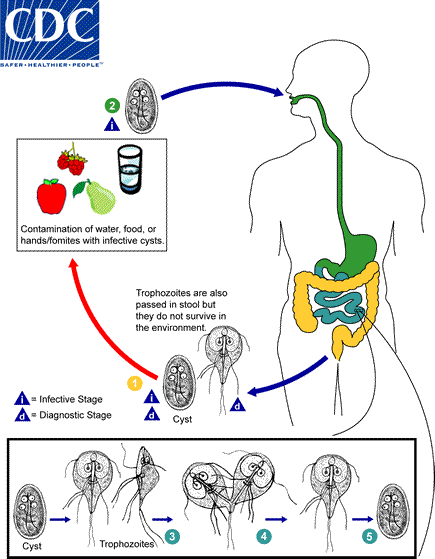
Oral transmission of monoxenous helminths via contaminated food and water
Ascaris lumbricoides (ascaridiosis)
Enterobius vermicularis (oxyurosis)
Toxocara canis (toxocariasis) → human paratenic host
Trichuris trichiura (trichocephalosis)
Oral transmission of heteroxenous helminths via contaminated food and water
Hymenolepis nana (hymenolepiasis)
Echinococcus granulosus (hydatidosis) → human dead-end host
Oral transmission of heteroxenous helminths via contact with animals or plant supports
Toxoplasma gondii (toxoplasmosis)
Angiostrongylus cantonensis (angiostrongylosis) → human accidental host
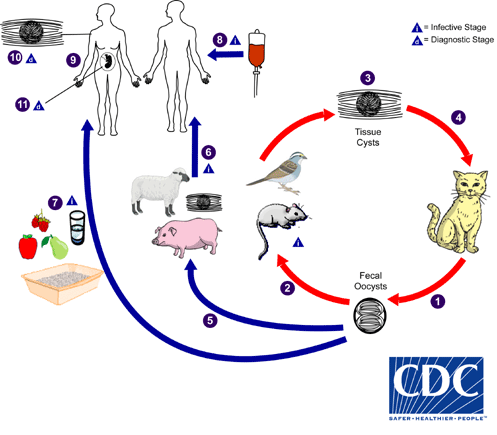
Toxoplasmosis
Toxoplasma gondii
Heteroxenous life cycle
Human contamination:
Eating uncooked meat
Blood transfusion and organ transplant
Congenital (mother-child)
Able to penetrate nervous and muscular tissues
The cat is the definitive host
Zoonotic disease
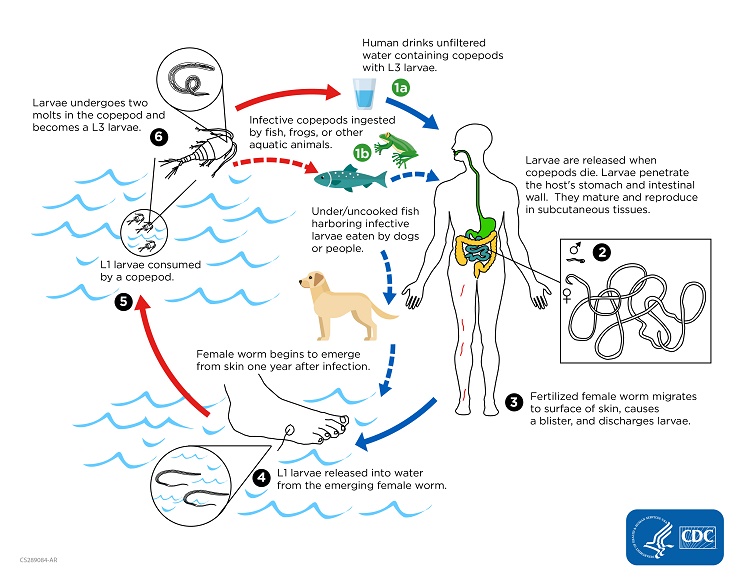
Oral transmission through cyclops
Dracunculus medinensis (dracunculosis)
Passive aquatic intermediate host
Worm lysis can cause alergia if not extracted completely
Muco-cutaneous transmission through water and moist soil
Strongyloides stercoralis (strongyloidiasis)
Intestinal hookworm (ancylostomiasis)
Schistosoma spp. (schistomiasis)
Larva migrans → human dead end host
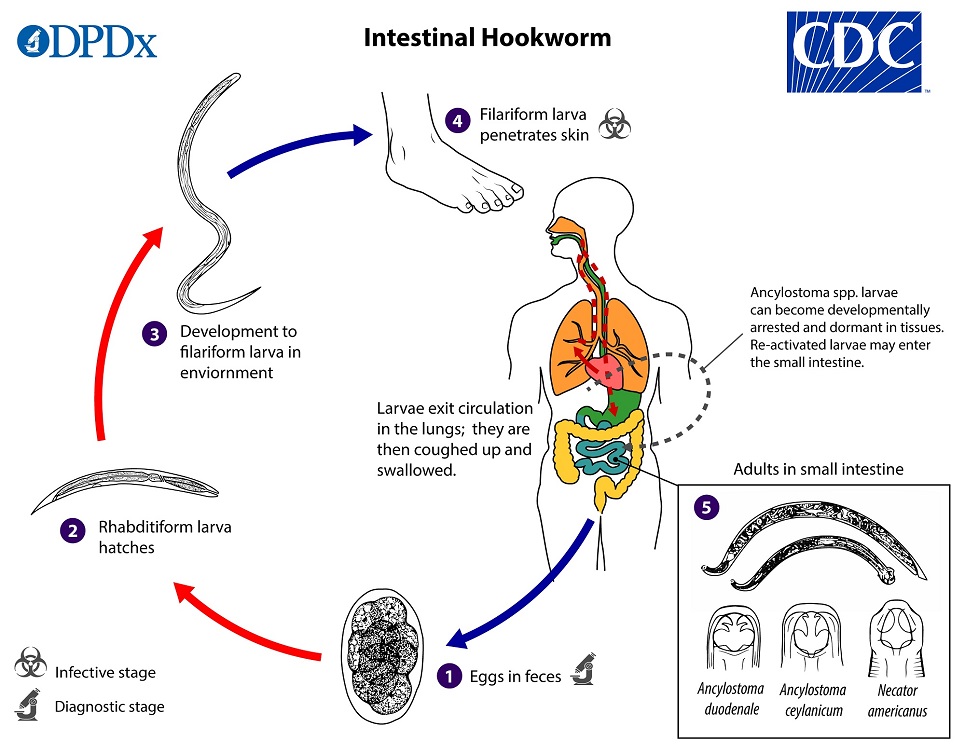
Intestinal hookworm
Ancylostoma duodenale
Humans are the principal host
Muco-cutaneous transmission through dry environment
Dermatobia hominis (myiases)
Tunga penetrans (tungiasis)
Muco-cutaneous transmission through human contact
Saecoptes scabiei (scabies)
Contagious dermatitis
Sexually transmitted
Sick person or asymptomatic carrier
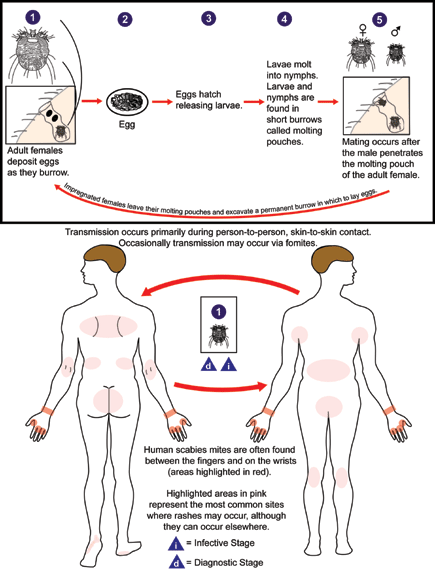
Vector-borne transmission by flying evening and night insect vectors
Malaria (anopheles)
Leishmaniases (sandflies)
Lymphatic filariases (culex, anopheles, aedes, mansonia)
Vector-borne transmission by flying diurnal insect vectors
Trypanosomiases (Tse-tse fly)
Loasis (Chrysops)
Onchocercosis (Blackflies)
Mansonellosis (Culicoides)
Vector-borne transmission by terrestial insect vectors
Chagas disease (bug)
Babesiosis (tick)
Malaria
Plasmodium vivax
Heteroxenous life cycle
Cyclic fever, anemia
Provoked by protists
Congenital transmission, blood transfusion
Humans are the intermediate host
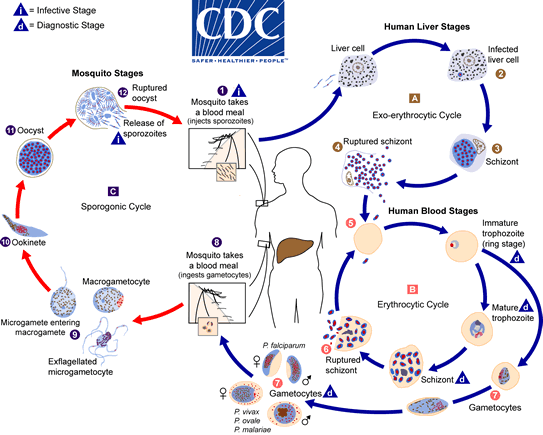
Airborne transmission
Pneumocystis jirovecii (fungi)
Sexual transmission
Uro-genital trichomoniasis
Human final host
Taenia saginata (taeniasis)
Human secondary host
Dipylidium caninum
Fungi
Uni or multicellular eukaryotes
Heterotroph (no photosynthesis)
Sexual and asexual reproduction (spores)
Thallophyte (constituted of filaments)
Cell wall made up of chitin
Classification by modes of nutrition
Symbionts
Saprobes (yeast, mold)
Parasites (dermatophytes)
Classification by pathologies
Cutaneous (candida albicans)
Sub-cutaneus (madurella)
Invasive (coccidioides)
Diverse clinical forms (fusarium)
Phylogenic classification
Chytridiomycota
Sygomycota
Glomeromycota
Ascomycota
Basidiomycota
Classification as a function of cellular organization
Moulds: filamentous multicellular fungus
Aseptate hyphae: hyphae divided by cross walls
Zygomycetes
Coenocytic hyphae: hyphae lacking cross walls
Dematiaceous moulds: mold with pigmented hyphae
Hyaline moulds: lack of hyphae pigmentation
Hyaline septate moulds
Dermatophytes
Dimorphic moulds
Yeasts: unicellular fungus →
Yeast identification method
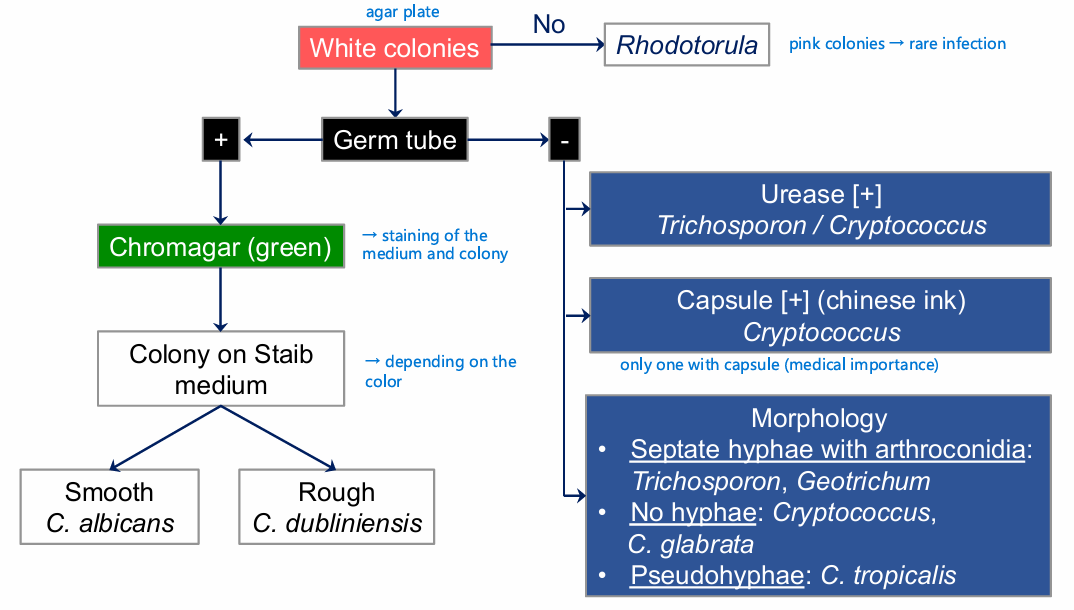
Candida species
Yeast
Ascomycota (septate hyphae, unflagellated spores)
Saprobe in the digestive, respiratory or vaginal mucosa
Can cause candidiasis when it multiplies uncontrollably
Ovoid cells → blastoconidia with multipolar budding
Pseudohyphae
Chromogenic color change on chromagar
Germ tube for C. albicans
Cryptococcus neoformans
Yeast
Basidiomycota
Ubiquitous, saprophyte in the environment
Ovoid cells → blastoconidia with unipolar budding
Presence of a capsule
No pheusohyphae, no germ tube
Production of melanin
Contamination by inhalation of spores
Cause cryptococcosis
+ Urease, 37ºC
Cryptococcosis
Is a potentially fatal fungal infection of mainly the lungs, presenting as a pneumonia, and in the brain, where it appears as a meningitis. Mostly in immunocompromised patients
Aseptate molds
Entomophtorales:
Insect pathogenic fungi
Production of a single conidium forcibly ejected upon maturation
Waxy, folded, and compact mycelium
Mucorales:
Numerous spores in a sporangium
Flucose aerial mycelium
Rhizopus sp.
Zygomycete
R. oryzae
Ubiquitous saprobes in soils, decaying foo
Spherical sporangium; columella +; apophysis-; rhizoid +; unbranched sporangiophores
Transmission via the respiratory, percutaneous, or oral routes
Risk factors: diabetes, immunosuppression
Can cause: rhino cerebral, pulmonary and cutaneous infections, gastric ulcers and peritonitis
Alternaria sp.
Dematiaceous molds
Large dark septate muriform (bricks) conidia in chains
Cause allergic reactions, cutaneous/sub-cutaneous mycosis
Risk factors: immunosuppression
Ubiquitous saprobes in soil or decaying vegetation
Transmission: breakdown of the skin or mucous membrane (ex: nasal, ocular) or inhalation
A. alternata
Phaeohyphomycosis
General term designating infections caused by dematiaceous fungi other than chromoblastomycosis or eumycetoma
Penicillium sp.
Hyaline septate molds
very large and ubiquitous genus
Production of chains of conidia, in basipetal succession (basocatenate: youngest conidia at the basal end of the chain), on flask-shaped phialides via metulae and branches giving a brush-like appearance (penicillus)
Production of different forms of unicellular conidia
Associated with allergic reactions: allergic rhinitis, asthma,
Many species are potential mycotoxin producers
P. citrinum
Histoplasma sp.
Dimorphic fungi
H. capsulatum var. capsulatum and H. capsulatum var. duboisi
Histoplasmosis: acute pulmonary infection to chronic pulmonary or fatal disseminated disease
Grow as molds in the natural environment at 25-30°C and as yeasts at 37°C
Microsporum sp.
Dermatophytes: skin disease
Thick-walled macronidia with a terminal knob
Causing frequently ringworm in
humans (tinea corporis, tinea capitis) and rarely onychomycosis.
Family of antifungals drugs
Polyenes
Azoles
Echinocandins
Pyrimidine
Allylamines
Polyenes
Amphiphilic molecules combining with ergosterol to produce holes in fungal plasma membrane, hydrophilic and hydrophobic
Polyenes mechanism of action
Pore formation in the fungal plasma membrane
Increase of permeability → uncontrolled exchange of electrolytes
Lead to cell death
Amphotericin B (AmB)
Polyenic antifungal
Large spectra: yeast (Candida spp, crypt. neoformans), filamentous (alternaria spp, aspergillus, hyalohyphomycetes), dimorphic (histoplasma, blastomyces)
Lack of activity in dermatophytes, C. lusitanie, trichosporon sp.
Activity on cholesterol of human cells → toxicity
Formulation: Fungizone (old, highly toxic), AmBisome
Nystatin
Polyene for local administration
Cutaneous and mucosal application
Fungal sterilization of the digestive tract (Candida sp.)
Mycostatine
Pymaricin
Polyene
Treatment of keratomycoses
Ophthalmic formulation
Azoles
Inhibition of ergosterol biosynthesis (fungistatic). Di or triazoles
Diazoles
Topical administration
Miconazole, econazole, tioconazole, ketoconazole
Triazoles 1st generation
Fluconazole: IV, good oral biodisponibility, crosses BBB
Itraconazole: larger spectra
Triazoles 2nd generation
Voriconazole
Posaconazole
Ravuconazole
Isavuconazole
Mechanism of action of azoles
14α-demethylase is a cytochrome P450 enzyme that allows the conversion of lanosterol to ergosterol by interacting with oxygen
Azoles inhibit 14α-demethylase by interacting with its active site → block oxygen → prevent conversion of lanosterol to ergosterol → accumulation of toxic methylated sterols → membrane alteration → prevent fungal cells from building new membranes to grow and divide
Azoles toxicity
Lack of specificity. Cross-inhibition of hepatic cytochrome p450 enzymes in sexual hormones, corticoid biosynthesis, and hepatic metabolism
Fluconazole Triflucan
Against C. albicans and C. neoformans
C. krusei resistant
C. glabrata decreased sensitivity
Itraconazole
Godd activity: aspergillus, dimorphic fungi, phaehyphomycetes, dermatophytes, yeast
Lacj of activity: fusarium sp, mucorales
Voriconazole
Candida resistant to fluconazole
Rare infections: fusarium, penicillium marneffei, scedosporium
Low activity in zygomycetes
Posaconazole
Zygamycetes
Dimorphic fungi
Aspergillys fumigatus
Candida sp
Fusarium sp
Scedosporium