AP Calc AB Summer Review
 Call Kai
 Learn
Learn Practice Test
 Spaced Repetition
 Match
Match Flashcards
 Knowt Play
1/29

There's no tags or description
Looks like no tags are added yet.
Name | Mastery | Learn | Test | Matching | Spaced | Call with Kai | Chat |
|---|
No analytics yet
Send a link to your students to track their progress
30 Terms
Linear Function
y = x
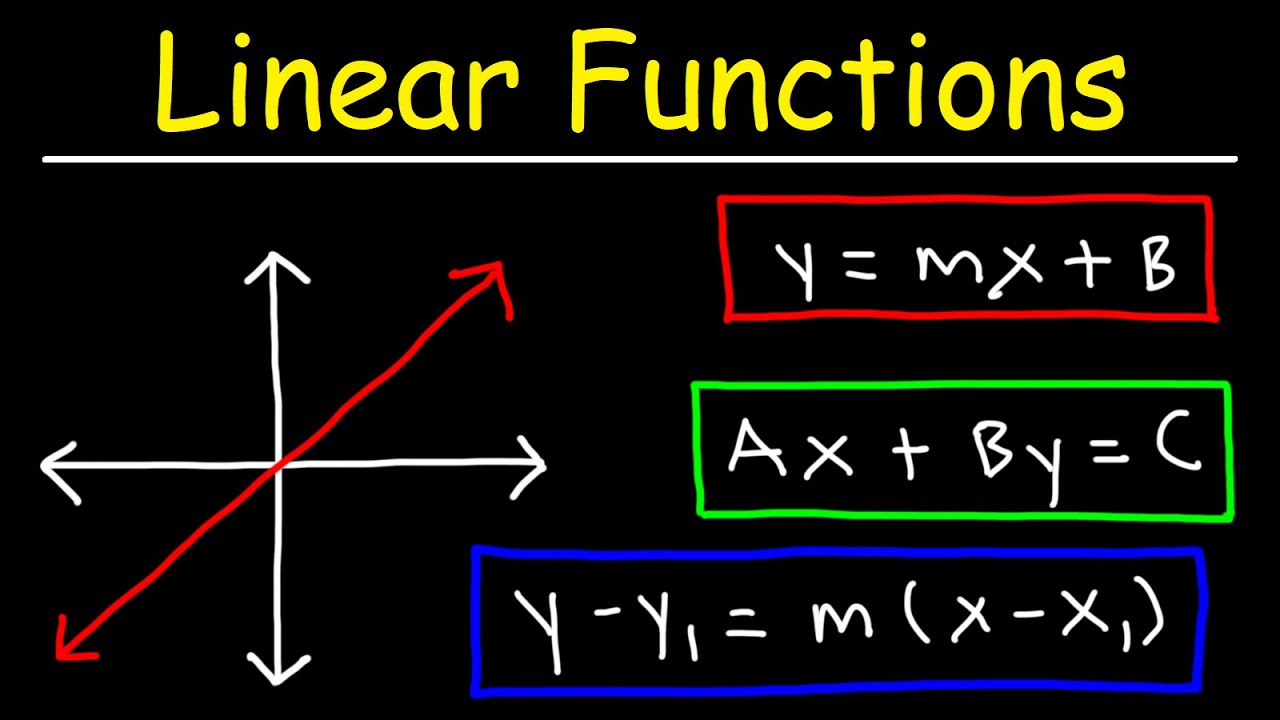
Standard Form of a Linear Function
Ax + By = C
Point-Slope Form of a Linear Function
y - y1 = m(x - x1)
Slope-Intercept Form of a Linear Function
y = mx + b
Slope
m = (y2 - y1) / (x2 - x1)
Slope of Horizontal Line
m = 0
Slope of Vertical Line
m = undefined
Slope of Parallel Lines
m1 = m2
Slope of Perpendicular Lines
m1 = -1/m2
Quadratic Function
y = x2
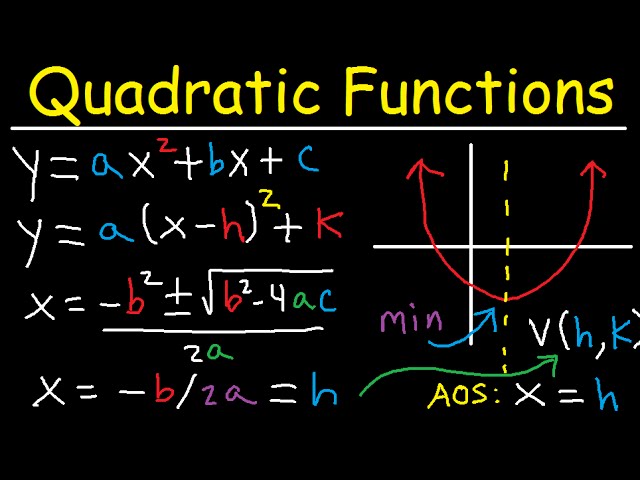
Standard Form of a Quadratic Function
ax2 + bx + c = 0
Vertex Form of a Quadratic Function
y = a(x - h)2 + k
Axis of Symmetry Equation
x = -b/2a
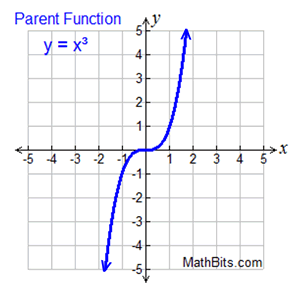
Cubic Function
y = x3
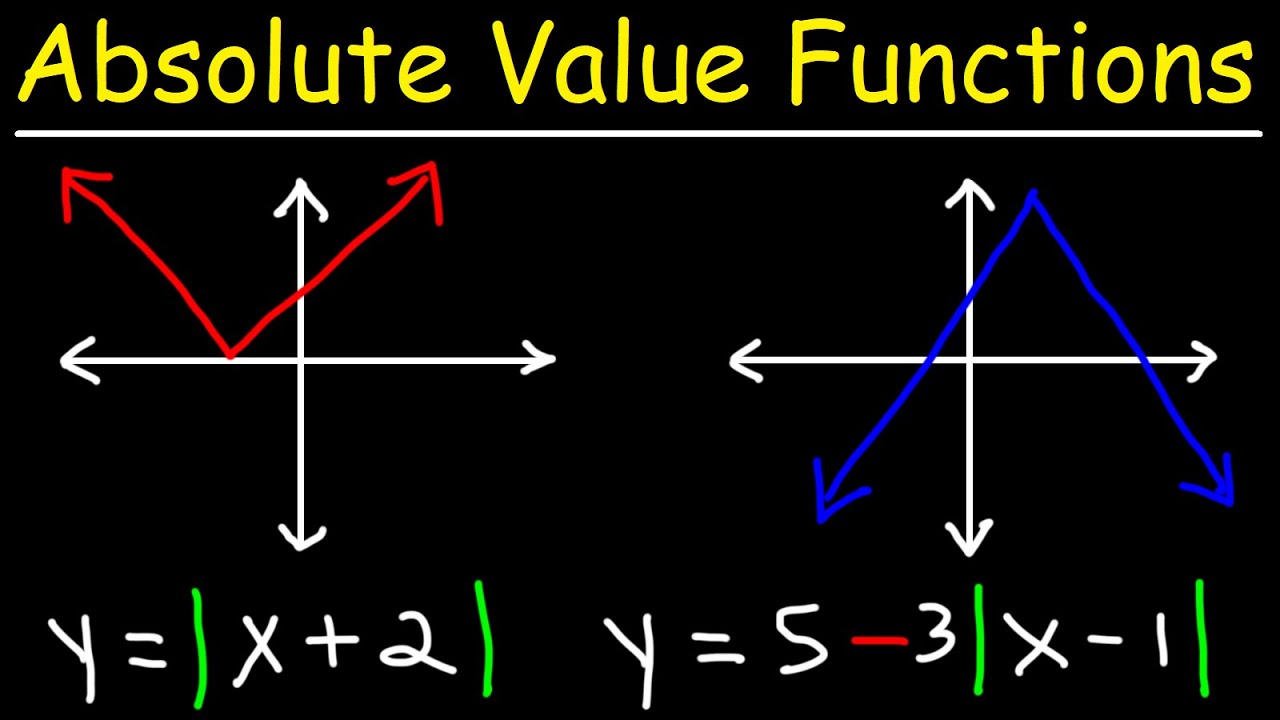
Absolute Value Function
y = |x|
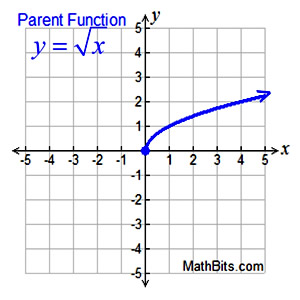
Square Root Function
y = sqrt(x)
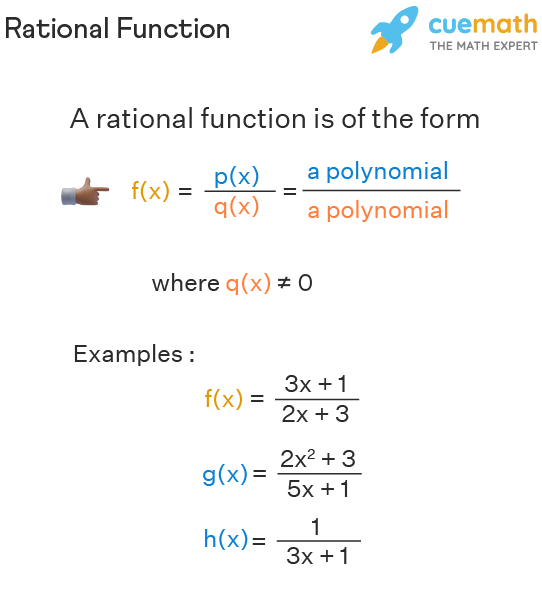
Rational Function
y = p(x) / q(x)
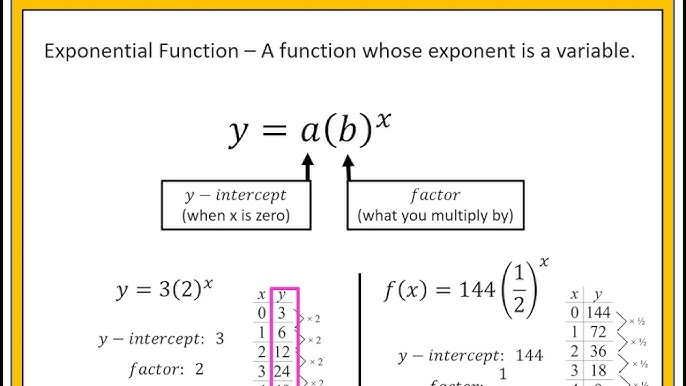
Exponential Function
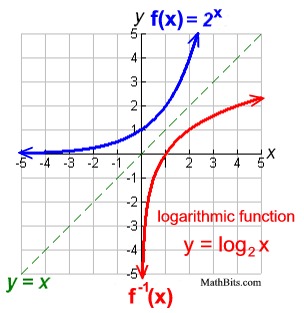
y = abx
Logarithmic Function
y = a log(x)
Symmetric to the y-axis
(x,y) = (-x,y)
Symmetric to the x-axis
(x,y) = (x,-y)
Symmetric to the origin
(x,y) = (-x,-y)
Even Functions
f(x) = f(-x)
Odd Functions
f(-x) = -f(x)
Domain
All possible x values
Range
All possible y values
Vertical Line Test
If you can draw a vertical line that intersects with two points of a graph, then it is not a function.
Leading Coefficient Test
If the leading coefficient of a polynomial is even, then the ends will go in the same direction. If it is odd, then it will go in opposite directions.
If it is positive, then the graph will trend upward. If it is negative, then the graph will trend downward.
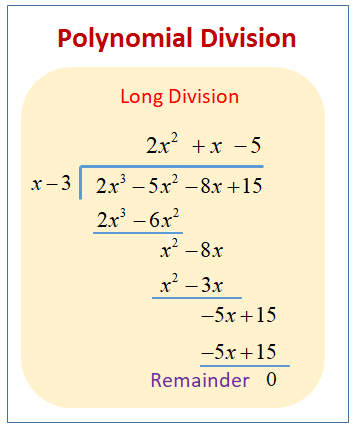
Long Division of Polynomials
Multiply the leading term of the divisor so that the exponent is the same as the dividend’s leading term’s exponent
Subtract from the dividend
Rinse and repeat, numbers that you multiply to the divisor add to make the quotient
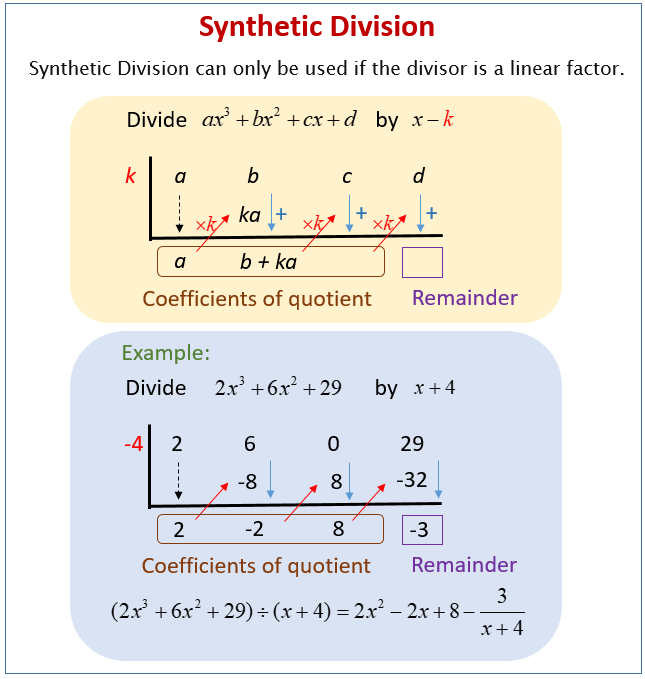
Synthetic Division
Can only be used if the divisor is a linear factor (x - k)
Because it’s (x-k), if -k is being added then k is negative, if -k is positive, then k is negative
Essentially, flip the sign that it seems to be
Write the coefficients of the dividend in the top row
Skip the first add down
Multiply the result by k, put the product to the diagonal slot
Add down
Repeat until there are no more slots
Bottom row is the coefficients of the quotient, last one is the remainder