AQA ALEVEL BIO PAPER 2
 Call Kai
 Learn
Learn Practice Test
 Spaced Repetition
 Match
Match Flashcards
 Knowt Play
1/342

There's no tags or description
Looks like no tags are added yet.
Name | Mastery | Learn | Test | Matching | Spaced | Call with Kai |
|---|
No analytics yet
Send a link to your students to track their progress
343 Terms
What are the stages to the nitrogen cycle?
Nitrogen fixation
Denitrification
Nitrification
Ammonification
What is the role of bacteria in nitrogen fixation?
Lightning can break the triple bond in nitrogen gas which is converted into ammonia which forms ammonium ions in soil by nitrogen-fixing bacteria
What is the role of bacteria in denitrification?
Nitrates in soil converted into nitrogen gas by denitrifying bacterias in anaerobic conditions
What is the role of bacteria in nitrification?
Ammonium ions in the soil is converted into nitrites than nitrates via a 2 step oxidation reaction for uptake by root hair cells by nitrifying bacteria in aerobic conditions
What is the role of bacteria in ammonification?
Nitrogen containing compounds are broken down and converted into ammonia
Ammonium ions in soil are formed by saprobionts which secrete enzymes for extracellular digestion
What is assimilation?
Plants will absorb ions in the soil and convert them to amino acids and nucleic acids
What is a sabprobiant?
Microorganisms that obtain nutrients by breaking down dead or waste organic matter (decomposers) and secrete ammonia
How are saprobionts used to recycle chemical elements?
Decompose organic compounds in dead matter
By secreting enzymes for extracellular digestion
Absorb soluble needed nutrients
Release minerals
What is mycorrhizae?
Symbiotic relationships between fungi and the roots of plants
What is the role of mycorrhizae?
Fungi act as an extension of plant roots to increase root surface area
To increase rate of uptake of water and inorganic ions
In return, fungi receive organic compounds
What is the process of the phosphorus cycle?
Phosphate ions in rocks are released by erosion
Phosphate ions are taken up by producers and are incorporated into their biomass
The rate of absorption is increased by mycorrhizae
Phosphate ions are transferred through the food chain
Some phosphate ions are lost from animals during excretion
Saprobionts decompose organic compounds
What are the advantages/disadvantages of using natural fertilisers?
Advantages:
Release nutrients slowly over time, so nutrients are less likely to be washed away into rivers and lakes after rain
Contain organic matter, so can improve soil structure and water retention
Disadvantages:
Less concentrated so large amounts needed
Nutrient content is variable and harder to control
What are the advantages/disadvantages of using artificial fertilisers?
Advantages:
Concentrated and easy to apply
Precise nutrient content allows controlled dosing
Disadvantages:
Highly soluble in water so can be leached out of soil into rivers and lakes when it rains
Do not improve soil structure
What is leeching?
Soluble nutrients are washed out of the soil by rainwater and end up in rivers, lakes, or groundwater
What are the problems associated with leeching?
Nitrate ions in drinking water can be harmful
Loss of nutrients from soil reduces fertility so there is less productive crop growth
Nitrates go into the water sources contributes to eutrophication
What is eutrophication?
Nutrient enrichment in bodies of water causes excessive plant and algal growth
What is the process of eutrophication?
Mineral ions enter water bodies, causing rapid growth of algae at the surface
Algae block sunlight, which prevents aquatic plants below the surface from photosynthesising
These plants, and eventually the algae, begin to die
Dead organic matter accumulates
Bacteria decompose the dead matter, respiring aerobically and using up the oxygen dissolved in the water
Oxygen levels fall and aquatic animals such as fish and insects can no longer survive
How can dry mass be measured?
Dry organisms in an oven at around 80°C until they reach a constant mass
How can chemical energy store in dry biomass be measured?
Calorimetry
What is Gross Primary Production (GPP)?
The total chemical energy store in plant biomass in a given area/volume in a given time
What is Net Primary Production (NPP)?
The chemical energy store in plant biomass after respiratory losses to the environment have been taken into account
What is Net Primary Production used for?
Growth
Reproduction
Consumers and decomposers
What is the formula for Net Primary Production (NPP)?
NPP = GPP- R(respiratory losses)
What is the formula for the net production of consumers?
I (chemical energy in ingested food)- (F(energy lost to faces and urine)+ R(respiratory lossess)
What is Primary Productivity and what is its unit?
The rate of primary production (kJ ha–1 year–1)
What is Secondary Productivity and what is its unit?
The rate of seccondary production (kJ ha–1 year–1)
Why is less energy available at each trophic level?
Parts of the organism are not consumed
Parts of the organism cannot be digested
Energy is lost in secretions such as urine
Heat energy is transferred during respiration and is lost to the environment
Why is such a small proportion (between 1-3%) of light energy captured by photosynthesising organisms?
Reflection by clouds
Absorption by atmosphere
Not all wavelengths of light can be absorbed
Light may not fall on the chlorophyll molecule
Limiting factors (co2 concentration, temperature, light intensity, type/number of chlorophyll)
How can livestock farming practices increase the efficiency of energy transfer?
Restricting movement, less muscle contraction so rate of respiration will be lowerso less energy can be used for biomass
Regulating temperature to control the rate of respiration, homeostasis
Treat livestock with antibiotics/vaccines- prevents loss of energy due to pathogens (leads to antibiotic resistance)
Selective breeding to produce breeds with a higher growth rate
How can crop farming practices increase the efficiency of energy transfer?
Simplifying food webs to reduce energy to non-human food chains
Using herbicides to cell weeds so less competition
Pesticides to reduce loss of biomass from crops
Fungicides to reduce fungal infections
Fertilisers to prevent stunted growth due to lack of nutrients
Why is respiration important?
ATP is produced
For processes that require energy (e.g, protein synthesis ext)
What are the stages in aerobic respiration and where do they take place?
Glycolysis: cytoplasm
Link reaction: matrix
Krebs cycle: matrix
Oxidative phosphorylation: inner mitochondrial membrane
What are the stages in anaerobic respiration?
Glycolysis: cytoplasm
NAD regeneration: cytoplasm
What is the process of glycolysis?
Glucose is phosphorylated to glucose phosphate
Using inorganic phosphates from 2 ATP molecules
Hydrolysed to produce 2 triose phosphates
Oxidised to produce 2 pyruvate, 2 reduced NAD and 4 ATP (net gain of 2)
What happens if glycolysis is anaerobic?
Pyruvate produced in glycolysis is converted to lactate (animals) or ethanol (plants and yeast)
Reduced NAD is oxidized to regenerate NAD
Allows glycolysis to continue
Why does anaerobic respiration produce less ATP per molecule of glucose than aerobic respiration?
Glycolysis is the only process involved in anaerobic respiration
SO there is no oxidative phosphorylation which forms the majority of ATP
What is the process of the link reaction?
Pyruvate is oxidized to acetate
CO2 and reduced NAD is produced
Acetate combines with coenzyme A, forming Acetyl Coenzyme A
2 of each product is produced per glucose molecule
What is the process of the Krebs Cycle?
Acetyl coenzyme A (2C) reacts with an oxaloacetate (4C) molecule
Coenzyme A and a 6C molecule is produced
6C molecule enters the krebs cycle
A series of oxidation-reduction reactions, the 4C molecule is regenerated
2x CO2 lost
Coenzymes NAD and FAD reduced
Substrate level phosphorylation produces ATP
What is the importance of the Krebs Cycle?
Oxaloacetate (4C) is regenerated allowing Krebs to continue
Produces reduced NAD for oxidative phosphorylation
What is the process of oxidative phosphorylation?
Reduced NAD and FAD are oxidised to release H+ ions and electrons
Electrons are transferred down the electron transfer chain by a series of redox reactions
Free energy released by electrons is used by carriers to actively pump protons from the matrix to intermembrane space
Proton electrochemical gradient is established
Oxygen is the final electron acceptor
A conformational change in the ATP synthase provides the required energy to recombine
So protons, electrons and oxygen combine to form water
What is chemiosmosis?
The movement of protons across a membrane via facilitated diffusion, providing a chemiosmotic potential gradient
How is a lipid used as a respiratory substrate?
Lipids are hydrolysed into glycerol and fatty acids
Glycerol is converted into triose phosphate which enters glycolysis
Fatty acids are broken down into 2C compounds and convert into acetyl coenzyme A which enters the krebs cycle
How are proteins used as respiratory substrates?
Proteins are hydrolysed into amino acids
Amine group is removed from the amino acids
3C compounds are converted into pyruvate (and enters links)
4/5C compounds directly input themselves into different stages of the krebs cycle
What is the method for an investigation into a named variable into the rate of a named variable on respiration?
Set up a water bath at 35°C
Add 5cm3 of the yeast and glucose solution to three test tubes
Place test tubes in the water bath and leave them, for the solution to equilibrate for 10 minutes
Add 2cm3 of methylene blue to the test tubes and start the timer
Shake for 10 seconds and place test tube back in water bath
Record how long it takes for the methylene blue to turn colourless for each test tube
Repeat the experiment using temperatures of 40°C, 50°C, 60°C and 70°C
Find the mean of the results for each temperature and use to calculate the average rate of respiration.
Rate of respiration = 1/mean time
What are the stages of photosynthesis and where do they take place?
Light dependent reaction: thylakoid membrane
Light independent reaction: stroma
What is the process of the light dependent reaction?
Water splits to produce electrons, oxygen and protons (photolysis)
Electrons replace those lost from chlorophyll
Light strikes photosystem 2 and is absorbed
Pigments in PS2 transfer the light energy until it reaches the primary pigment reaction centre
Electrons get excited by light energy, able to escape Mg
The electrons replace the electrons that were excited when the light energy hit the chlorophyll
Electrons enter the electron transport chain, series of redox reactions cause free energy to be released
Hydrogen ions from the stroma enters into Thylakoid Space
Light hits PS1, light energy is funneled into primary pigment reaction centre, electrons become excited
Ferredoxin accepts electrons, takes them to the stroma
NADP and H+ ions combine to make reduced NADP
Hydrogen ions move down proton gradient through ATP synthase
ATP produced as ATP synthase undergoes a conformational change
What is the process of photolysis?
Water splits to produce protons, electrons and oxygen
Electrons replace those lost from chlorophyll
What is the process of photoionisation?
Chlorophyll absorbs light energy which excites its electrons (higher energy level)
9So electrons are released from chlorophyll
Chlorophyll becomes positively charged
What are the products of the light dependent reaction?
18 ATP
12 Reduced NAD
6 O2
(per glucose molecule)
What is the process of the light independent reaction?
Carbon dioxide combines with RuBP
Produces two GP catalysed by enzyme RuBisCo
GP reduced to triose phosphate
Using reduced NADP and energy from ATP
Some triose phosphate converted to RuBP
Some TP converted into glucose
How does temperature affect the rate of photosynthesis?
As temperature increases, rate increases
Enzymes (RuBisCo) gain kinetic energy
So more enzyme-substrate complexes form
Above an optimum temperature, rate decreases
Enzymes denature as Hydrogen bonds in tertiary structure break
So fewer enzyme-substrate complexes form
How does light intensity affect the rate of photosynthesis?
As light intensity increases, rate increases
Light-dependent reaction increases (more photoionisation of chlorophyll)
More ATP and reduced NADP produced
So light-independent reaction increases as more GP reduced to TP and more TP regenerates RuBP
Above a certain light intensity, rate stops increasing as another factor is limiting
How does CO2 concentration affect the rate of photosynthesis?
As CO2 concentration increases, rate increases
Light-independent reaction increases
As more CO2 combines with RuBP to form GP
So more GP reduced to TP
So more TP converted to organic substances and more RuBP regenerated
Above a certain CO2 concentration, rate stops increasing as another factor is limiting
What is the method of chromatography to investigate the pigments isolated in the leaves of different plants from shade-tolerant and shade-intolerant plants or leaves of different colours?
Draw a straight line in pencil approximately 1 cm above the bottom of the filter paper being used
Make sure not to use a pen as the ink will blur the line and obscure the results
Cut a section of leaf and place it in a mortar
Add 20 drops of acetone and use the pestle to grind up the leaf sample and release the pigments
Use a capillary tube to extract some of the pigment and blot it onto the centre of the pencil line you have drawn
Suspend the paper in the solvent so that the level of the liquid does not lie above the pencil line and leave the paper until the solvent has run up the paper to near the top.
Remove the paper from the solvent and draw a pencil line marking where the solvent moved up to
Calculate the Rf value for each spot (distance travelled by solute/distance travelled by solvent)
What is the method for an Investigation into the effect of a named factor onto the rate of dehydrogenase activity in extracts of chloroplasts?
Remove stalks from leaf samples. Grind sample using a pestle and mortar and place into a chilled isolation solution.
Use a muslin cloth and funnel to filter the sample into a beaker. Suspend the beaker in an ice water bath to keep the sample chilled
Transfer to centrifuge tubes and centrifuge at high speed for 10 minutes. This will separate chloroplasts into the pellet.
Remove supernatant and add pellet to the fresh isolation medium. Store isolation solution on ice.
Set the colorimeter to the red filter. Zero using a cuvette containing chloroplast extract and distilled water.
Place the test tube in the rack 30cm from the light source and add DCPIP. Immediately take a sample and add to the cuvette. Measure the absorbance of the sample using the colorimeter.
Take a sample and measure its absorbance every 2 minutes for 10 minutes.
Repeat for different distances from the lamp up to 100 cm. This will vary the light intensity.
What is osmoregulation?
The regulation of the water content of the blood
What ie excretion?
The removal of metabolic waste and excess substances from the blood
What is the role of the hypothalamus in osmoregulation?
Contains osmoreceptors which can detect an increase or decrease in blood glucose concentration
Produces more ADH when water potential is low, or less ADH when water potential is high
What is the role of the posterior pituitary gland in osmoregulation?
Secretes more/less ADH due to signals from the hypothalamus
What is the role of ADH in osmoregulation?
ADH attaches to receptors on the collecting duct and distal convoluted tubule
This stimulates the addition of aquaporins into the cell-surface membranes
So cell membrane permeability to water of the collecting duct and distal convoluted tubule is increased
So water reabsorption from the collecting duct and distal convoluted tubule back into the blood via osmosis is increased
So urine volume is decreased, and urine concentration is increased
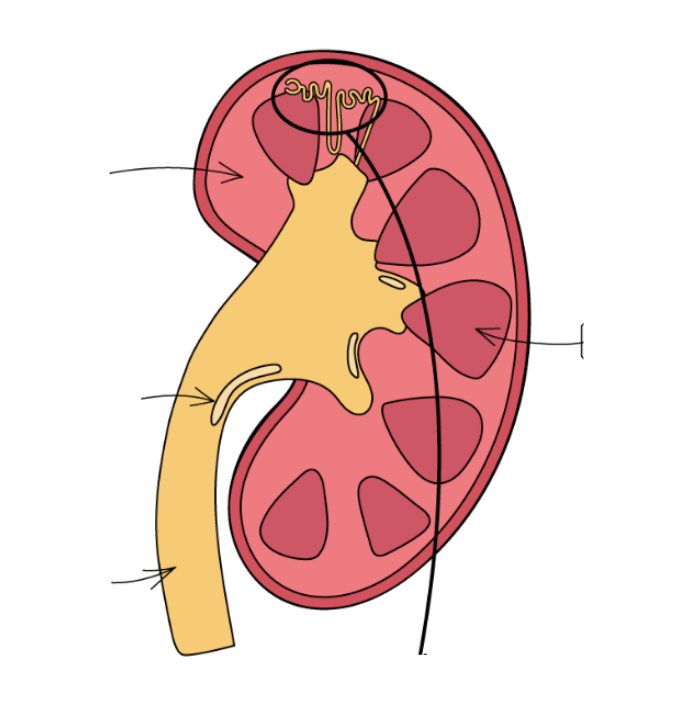
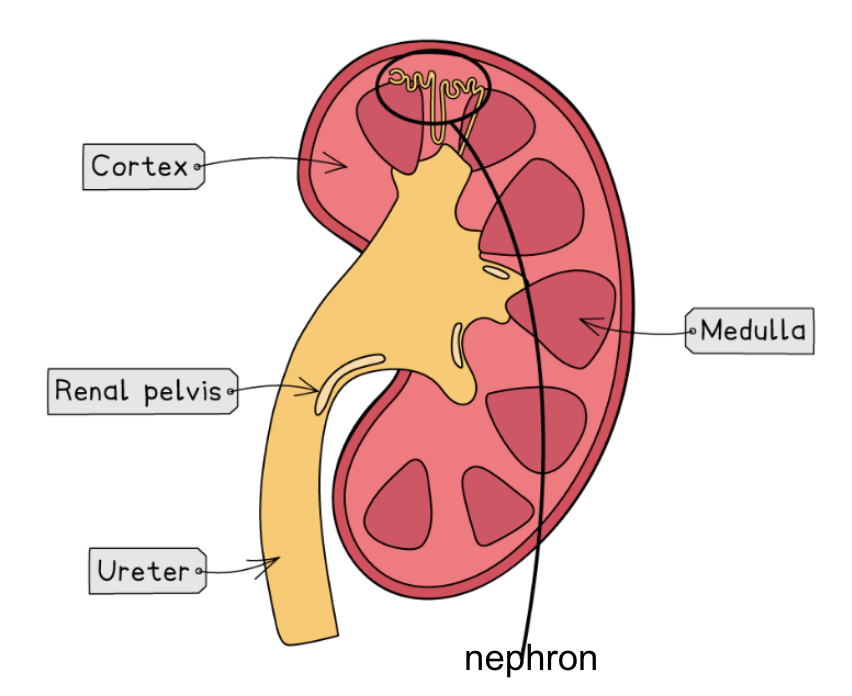
Label the structure of the kidney
Cortex
Renal pelvis
Ureter
Nephron
Medulla
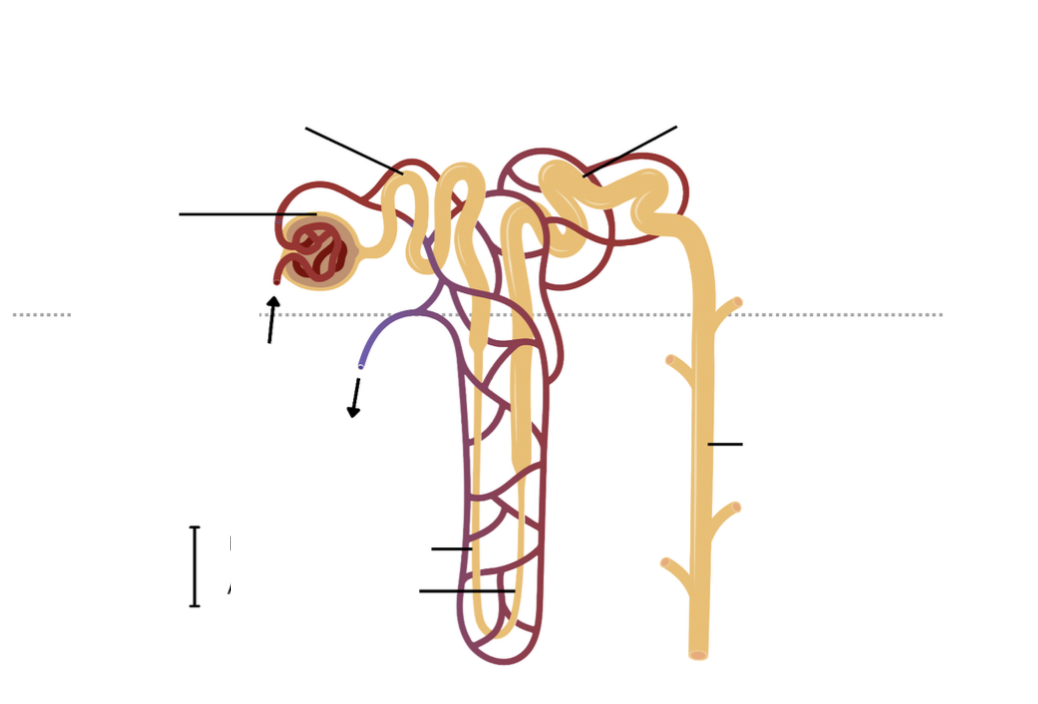
Label the structure of the nephron
Proximal convoluted tubule
Renal (Bowman’s) capsule
Glomerulus
From renal artery
To renal vein
Loop of henle: descending limb, ascending limb
Collecting duct
Medulla
Cortex
Distal convoluted tubule
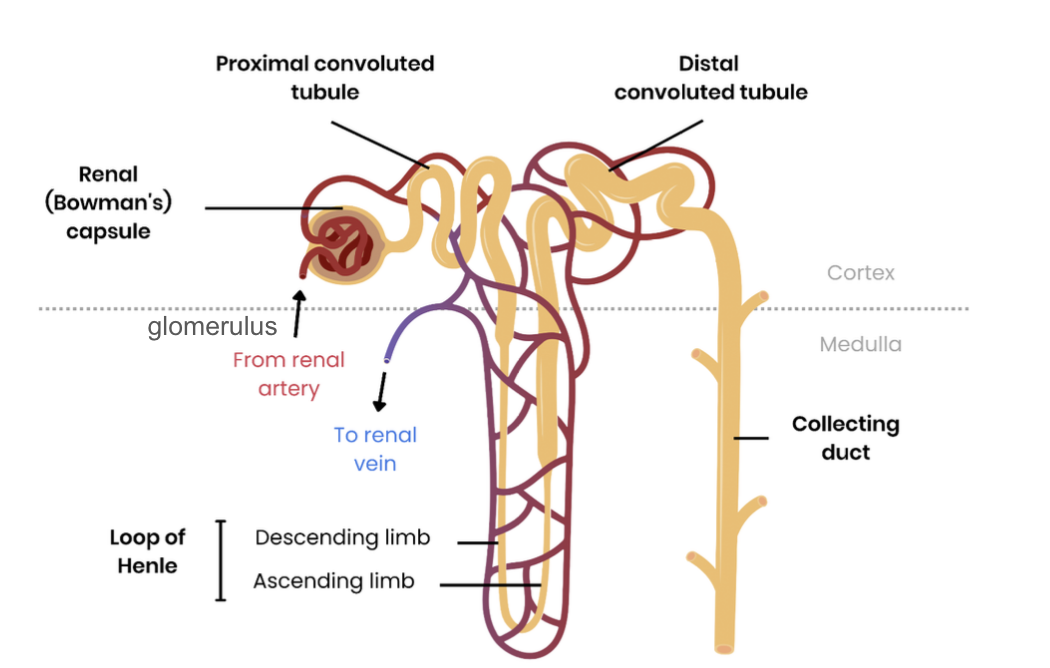
What are the functions of the different parts of the nephron (Bowman’s capsule, proximal convoluted tubule, loop of henle, distal convoluted tubule, collecting duct)?
Bowman’s capsule: formation of glomerular filtrate
Proximal convoluted tubule: reabsorption of water and glucose
Loop of henle: maintenance of a gradient of sodium ions in the medulla
Distal convoluted tubule/collecting duct: reabsorption of water
What is the process of the nephron producing urine?
Ultrafiltration: small molecules are filtered out the blood and into the Bowman’s capsule of the nephron, forming glomerular filtrate
Selective reabsorption: useful molecules are taken back from the filtrate and returned to the blood, the remaining filtrate forms urine
Urine then flows out the kidneys along the ureters and into the bladder where it is temporarily stored
How is glomerular filtrate formed?
High hydrostatic pressure at the diameter of the afferent arteriole (that carries blood into the glomerulus) is wider than the efferent arteriole (that carries blood out of the glomerulus)
Small substances such as water, glucose and urea are forced into glomerular filtrate
This is filtered by pores between capillary endothelial cells, the capillary basement membrane and podocytes
Large proteins and blood cells remain in the blood
How is water reabsorbed by the proximal convoluted tubule?
Active transport of Na+ from proximal convoluted tubule into capillary lowers the blood water potential of the capillaries
So water can move by osmosis from a high water potential in the proximal convoluted tubule to a lower water potential in the capillary down a water potential gradient
How is glucose reabsorbed by the proximal convoluted tubule?
Na+ is actively transported out of the epithelial cells to the capillary
Na+ moves by facilitated diffusion (from lumen) into the epithelial cells down a concentration gradient, bringing glucose against its concentration gradient via co-transport
Glucose moves into the capillary by facilitated diffusion down its concentration gradient
How is the proximal convoluted tubule adapted for the rapid reabsorption of glucose into blood?
Microvilli: large surface area
Many channel/carrier proteins: facilitated diffusion/co-transport
Many carrier proteins: active transport
Many mitochondria: produces ATP for active transport
Many ribosomes: produces carrier/channel proteins
Why is glucose found in the urine of an untreated diabetic person?
Blood glucose concentration is too high so not all glucose is reabsorbed by the proximal convoluted tubule
As glucose carrier/cotransporter proteins are fully saturated
What is the role of the loop of Henle in maintaining a gradient of sodium ions in the medulla?
In the ascending limb
Na+ is actively transported out
Causing concentration of filtrate to decrease
This increases concentration of Na+ in the medulla, lowering water potential
In the descending limb
Water moves out by osmosis and is then absorbed by capillaries
Causing filtrate concentration to increase
Na+ is recycled so it diffuses back into the ascending limb
Why do animals that need to conserve water have long loops of Henle?
More Na+ moves out, so Na+ gradient is maintained for longer in the medulla
So water potential gradient is maintained for longer
So more water can be reabsorbed from collecting ducts by osmosis
How is water reabsorbed by the distal convoluted tubule and collecting ducts?
Water moves out the distal convoluted tubule and collecting duct by osmosis down a water potential gradient
This is controlled by ADH which increases their permeability
What is a stimulus?
A change in an organism’s internal or external environment
Why is it important that organisms respond to stimuli?
Increases chances of survival
Increases chance of reproduction and passing on beneficial alleles to the next generation
Increases allele frequency that give the organism a competitive advantage
What is a taxis?
A directional response that involves movement in a specific direction towards or away from a directional stimulus
Positive taxis= towards a stimulus
Negative taxis= away from a stimulus
What is kinesis?
A non-directional response where the speed of movement or rate of direction change changes in response to a non-directional stimulus, dependent on the intensity of the stimulus
What is a tropism?
The growth of a plant in response to a directional stimulus
Positive tropism= towards a stimulus
What are the types of growth responses in plants and what to the stimuli respond to?
Phototropism: light
Gravitropism: gravity
Hydrotropism: water
What is the effect of IAA in shoots/roots?
In shoots, high concentrations of IAA stimulates cell elongation
In roots, high concentrations of IAA inhibits cell elongation
Explain gravitropism in flowering plants
Cells in the tip of the shoot/root produce IAA
IAA diffuses down the shoot/root
IAA moves to the lower side of the shoot/root
So IAA conc increases
In shoots this stimulates cell elongation
In roots this inhibits cell elongation
So shoots bend away from gravity
So roots bend towards gravity
Explain phototropism in flowering plants
Cells in the tip of the shoot/root produce IAA
IAA diffuses down the shoot/root
IAA moves to the shaded side of shoot/root
So IAA conc increases
In shoots this stimulates cell elongation
In roots this inhibits cell elongation
So shoots bend towards light
So roots bend away from light
What is the role of plant hormones in flowering plants?
Specific growth factors move via the phloem or diffusion from growing regions to other tissues where they regulate growth in response to directional stimuli.
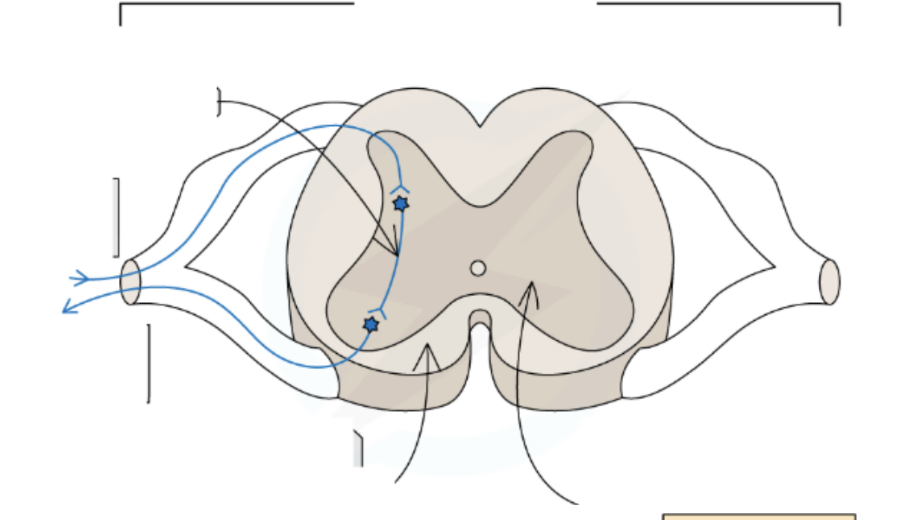
What is the structure of a reflex arc? (label the diagram)
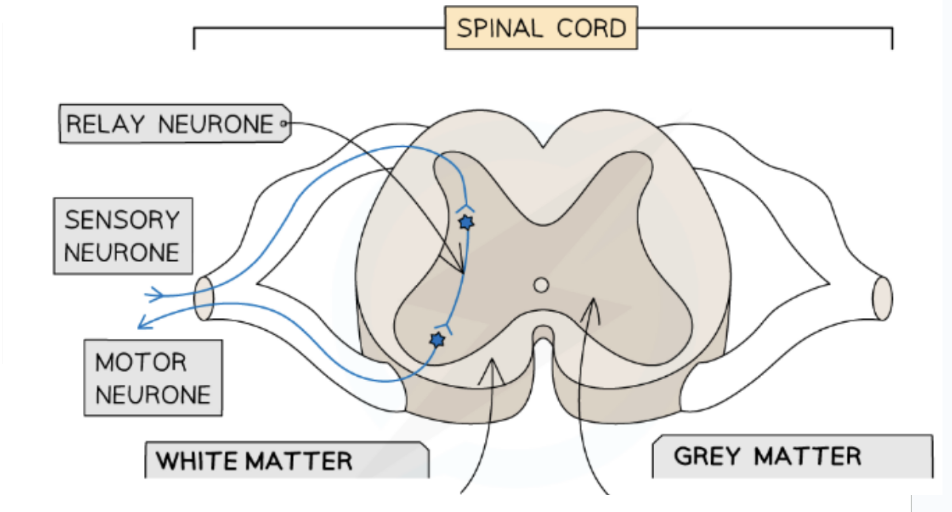
Why are reflexes faster than voluntary synapses?
Bypass the brain so there is no decision to be made
The nerve pathway is shorter so there are fewer synapses
What is the productive effect of a simple reflex?
Rapid as only a few neurones and synapses are used so synaptic transmission is low
Automatic so it does not have to be learnt
Protects from harmful stimuli so prevents damage to body tissues
What factors affect blood glucose concentration?
Consumption of carbohydrates as more glucose is absorbed into the blood
Exercise that increases the rate of respiration of glucose
Secretion of hormones
What is glycogenesis, when does it take place and what is it stimulated by?
Conversion of glucose to glycogen
Takes place when blood sugars are high
Stimulated by insulin
What is glycogenolysis, when does it take place and what is it stimulated by?
Conversion of glycogen to glucose
Takes place when blood sugars are low
Stimulated by glucagon
What is gluconeogenesis, when does it take place and what is it stimulated by?
Converts glycerol and amino acids to glucose
Takes place when blood sugars are low
Stimulated by glucagon
Describe the action of insulin
Beta cells in the Islets of Langerhans in the pancreas detect that the blood glucose concentration is too high
Insulin is secreted and binds to specific receptors on the cell membranes of target cells (liver and muscles)
More glucose channel proteins join the cell membrane, increasing their permeability to glucose
Glucose moves into target cells by facilitated diffusion
Enzymes that convert glucose to glycogen in glycogenesis are activated
Glucose concentration in blood is decreased
Concentration gradient is established, so more glucose enters by facilitated diffusion
Describe the action of glucagon in blood glucose concentration
Alpha cells in the Islets of Langerhans in the pancreas detect that the blood glucose concentration is too low
Glucagon is secreted and binds to specific receptors on cell membranes of target cells (liver)
The enzyme that hydrolyses glycogen to glucose by glycogenolysis is activated
The enzyme that converts glycerol/amino acids to glucose by gluconeogenesis is activated
This establishes a concentration gradient, so glucose enters the blood by facilitated diffusion
Describe the role of adrenaline in blood glucose concentration
Fear/stress/exercise causes the adrenal glands to secrete adrenaline
Adrenaline is secreted and binds to specific receptors on the cell membranes of target cells (liver)
The enzyme that hydrolyses glycogen to glucose by glycogenolysis is activated
This establishes a concentration gradient, so glucose enters the blood by facilitated diffusion
Describe the second messenger model of adrenaline/glucagon action
Adrenaline/glucagon attaches to specific receptors on the cell membrane of target cells
This activates a G protein, which activates the enzyme adenylate cyclase
Adenylate cyclase converts many ATP to cAMP
cAMP acts as the second messenger as it activates protein kinase A
Protein kinase activates enzymes enzymes involved in glycogenolysis
Glycogen is broken down into glucose
Blood glucose concentration increases
Compare types I and II diabetes
Both have higher and uncontrolled blood glucose concentrations with higher peaks after meals
Type I is caused by beta cells in Islets of Langerhans in the pancreas producing insufficient insulin, whereas Type II is caused by receptors losing sensitivity to insulin, but insulin is still produced
Type II causes there to be fewer glucose transport proteins, so less uptake of glucose, so less glycogenesis
Type I usually develops in childhood due to an autoimmune disease destroying beta cells in islets of langerhans, whereas type II is caused by obesity often later in life
How can type I diabetes be controlled?
Insulin injections
Monitoring of blood glucose concentration using biosensors
Eating regularly and controlling carbohydrate intake
Why can insulin not be taken as a tablet by mouth?
Insulin is a protein so it would be hydrolysed by endopeptidases and exopeptidases
How can type II diabetes be cured?
Not treated with insulin injections
Drugs which target insulin receptors to increase their sensitivity- increase glucose uptake by cells
Reduction of sugar intake- less glucose absorbed
Reduction of fat intake- less glycerol converted to glucose
More exercise- glucose used up from increased respiration
Losing weight- increased sensitivity of receptors to insulin
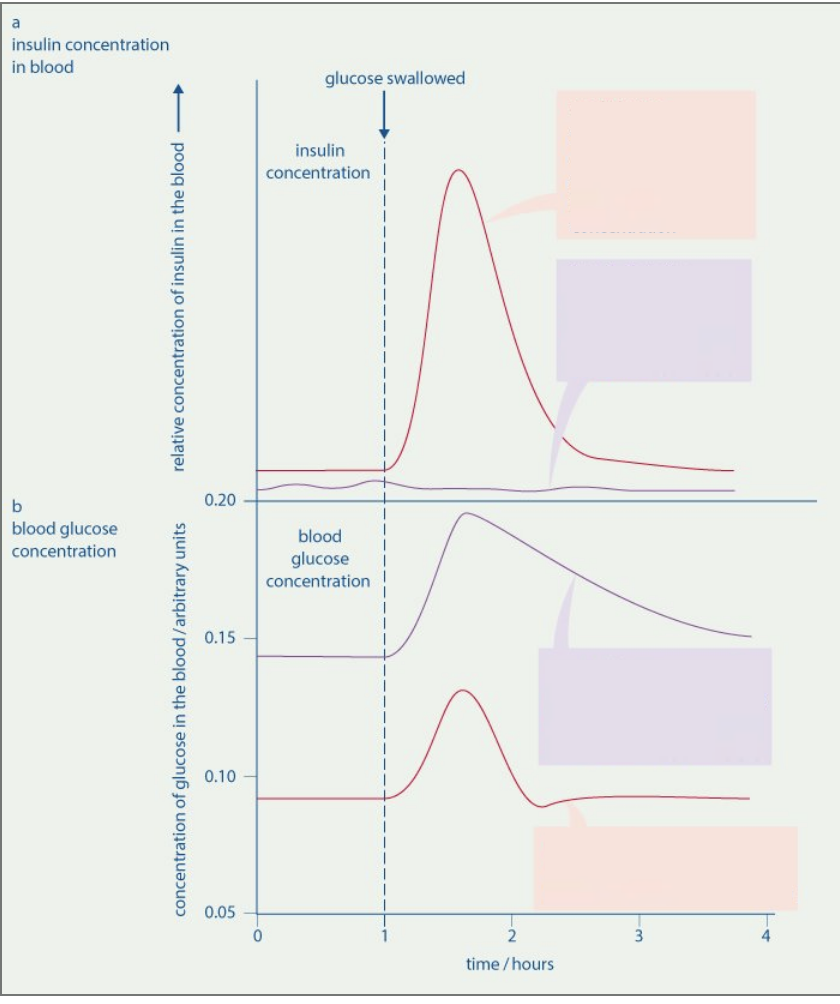
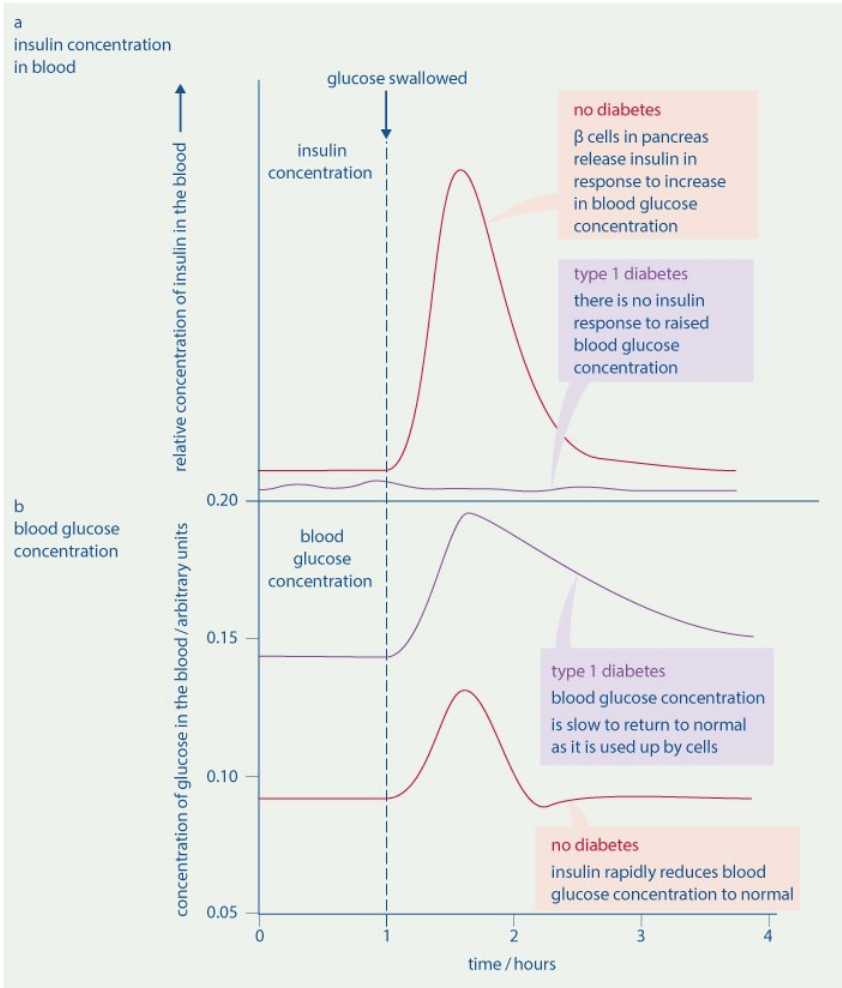
Explain the graph of comparison of blood glucose and insulin concentrations for a person with and without type I diabetes
Insulin concentration in blood
No diabetes: Beta cells in pancreas release insulin in response to increase in blood glucose concentration
Type 1 diabetes: No insulin response to raised blood glucose concentration
Blood glucose concentration
Type 1 diabetes: blood glucose concentration is slow to return to normal as it is used up by cells
No diabetes: Insulin rapidly reduced blood glucose concentration to normal
How can the positions of health advisers and food industry in relation to increased incidence of type II diabetes be evaluated?
Health advisors want to reduce the risk of type II diabetes due to health problems caused, so need to reduce obesity rates
The food industry wants to maximise profit
What is homeostasis?
Maintaining a stable internal environment within restricted limits by physiological control systems, most often a negative feedback system

