General Parturition, Obstetrics, and Fetotomy
 Call Kai
 Learn
Learn Practice Test
 Spaced Repetition
 Match
Match Flashcards
 Knowt Play
1/50

Earn XP
Description and Tags
Lectures 2 and 3
Name | Mastery | Learn | Test | Matching | Spaced | Call with Kai | Chat |
|---|
No analytics yet
Send a link to your students to track their progress
51 Terms
In domestic species, the ____ initiates parturition.
fetus
What hormone must decrease for parturition to occur?
progesterone
In domestic species, what are the 3 stages of parturition (in order of occurrence)?
initiation of myometrial contractions (removal of “progesterone" block”)
expulsion of the fetus
expulsion of the fetal membranes (placenta)
Describe the mechanism of parturition.
maturation of the fetal hypothalamic hypophyseal adrenal axis
increased sensitivity of the fetal adrenal glands to ACTH
increased fetal corticoids from the adrenal cortex
activation/conversion of placental enzyme systems (decreasing progestagens, increasing estrogen)
relaxin —> relaxation of pelvic ligaments
prolactin —> part of the initiation of lactation
uterine activity —> up regulation of oxytocin receptors in endometrium and release of prostaglandin F2 alpha
Which stage of parturition is described:
duration varies by species
myometrial contractions
restlessness, anorexia, abdominal discomfort, increased pulse and respiration, nesting and/or isolation from others, shifting weight, arched back, elevated tail, colic like signs can be present
in mare, ewe, and cow the fetus rotates itself in preparation for exit —> initiates Ferguson’s reflex
dilation of cervix
Stage 1 - initiation of myometrial contractions (removal of the progesterone block)
What is the positive feedback neuroendocrine reflex comprising the self-sustaining cycle of uterine contractions initiated by pressure on the cervix or vaginal walls which stimulates the release of oxytocin, which stimulates the uterine contractions, which pushes the fetus into the cervix/cervical canal causing more pressure thus more oxytocin release, and so on?
Ferguson’s reflex
Which stage of parturition is described:
fetus enters cervical canal
rupture of chorionic membranes (chorioallantois)
active controlled abdominal pressing
delivery of the fetus
Stage 2 - expulsion of the fetus
Which stage of parturition is described:
time to expulsion varies by species
expulsion of fetal membranes
Stage 3 - expulsion of fetal membranes
What is defined as the relationship of the spinal axis of the fetus to that of the dam and the portion of the fetus that is entering the birth canal?
presentation
What is defined as the anatomic relationship of the dorsum of the fetus relative to the maternal pelvis?
position
What is defined as the anatomic relationship of the fetal extremities to its own body?
posture
What is PPP?
presentation
position
posture
Describe presentation, position, and posture for normal delivery (parturition) in bovine and equine.
cranio-longitudinal (presentation)
dorso-sacral (position)
head and forelimbs extended (posture)
Describe presentation, position, and posture for normal delivery (parturition) in canine.
cranio or caudo-longitudinal (presentation)
dorso-sacral (position)
head and limbs extended (posture)
What is defined as difficulty giving birth?
dystocia
Is dystocia more common among primapara (first baby dam) or multipara (dam that has already had one or more babies)?
primapara
Which domestic species poses the highest incidence of dystocia?
cattle
Which domestic species poses the lowest incidence of dystocia?
cats
What is the “theriogenologists mantra”?
be clean
be gentle
use lots of lube
What lubricant is fatal if introduced into the abdomen, therefore you need to think before using it in case a dystocia turns into a C section?
J-Lube (Polyethylene polymer)
What is the most common lubricant used that is available in powder or liquid form?
Methylcellulose lubricant
True or False: Removal of hair is not indicated for arthrocentesis with sharp injection needles, but is recommended when using spinal needles with stylets.
True
Should you ship a horse that is still numb from an epidural?
NO, they will fall in the trailer
Wait until it wears off
What is defined as the process by which the fetus is restored to a deliverable fashion?
mutation
What is defined as pushing the fetus out of the maternal pelvis into the uterine cavity (maternal abdomen) to enable correction of the abnormality and allow more space to mutate?
repulsion
What is defined as turning the fetus on its longitudinal axis?
rotation
What is defined as turning the fetus on its transverse axis into a cranial or caudal presentation?
version
List methods of correction and delivery.
assisted vaginal delivery (AVD)
controlled vaginal delivery (CVD)
fetotomy
cesarean section

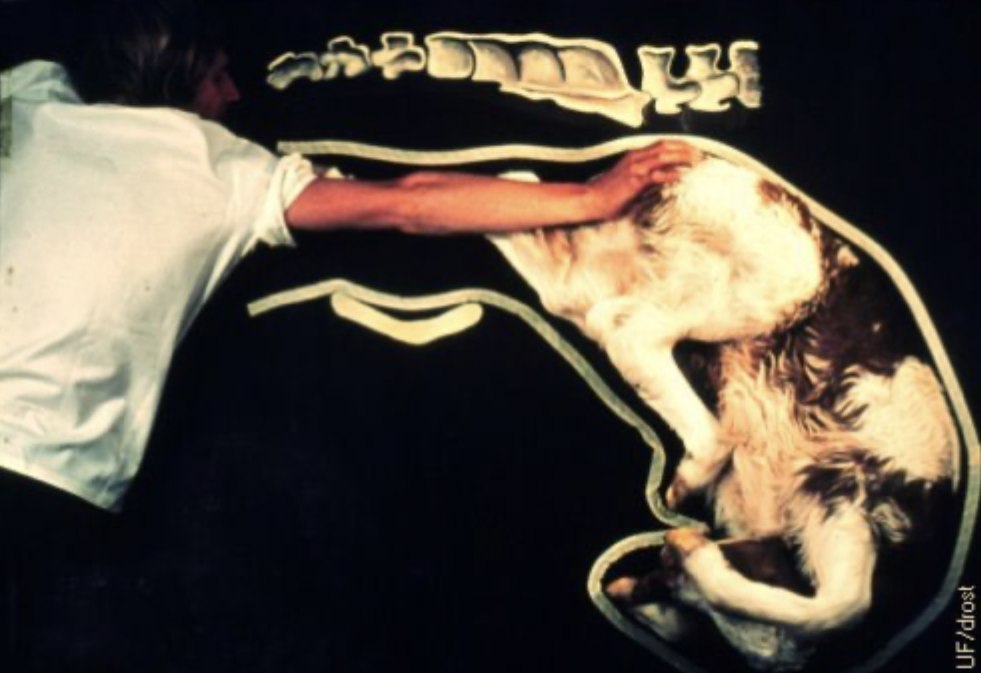
Describe the abnormality in this image.
cranoi-longitudal
dorso-sacral
right forelimb flexed at the carpus
known as leg retained
Describe how to mutate a fetus with “leg retained” into a deliverable position.
bring limb up the midline by looping rope at fetlock and pushing carpus back while pulling the fetlock forward to get the hoof into the vaginal canal with the other limb
can also pull limb forward by hand
ensure protection of uterus
Describe the abnormality in this image.
caudo-longitudinal
dorso-sacral
right hindlimb flexed at tarsus, hock, and stifle
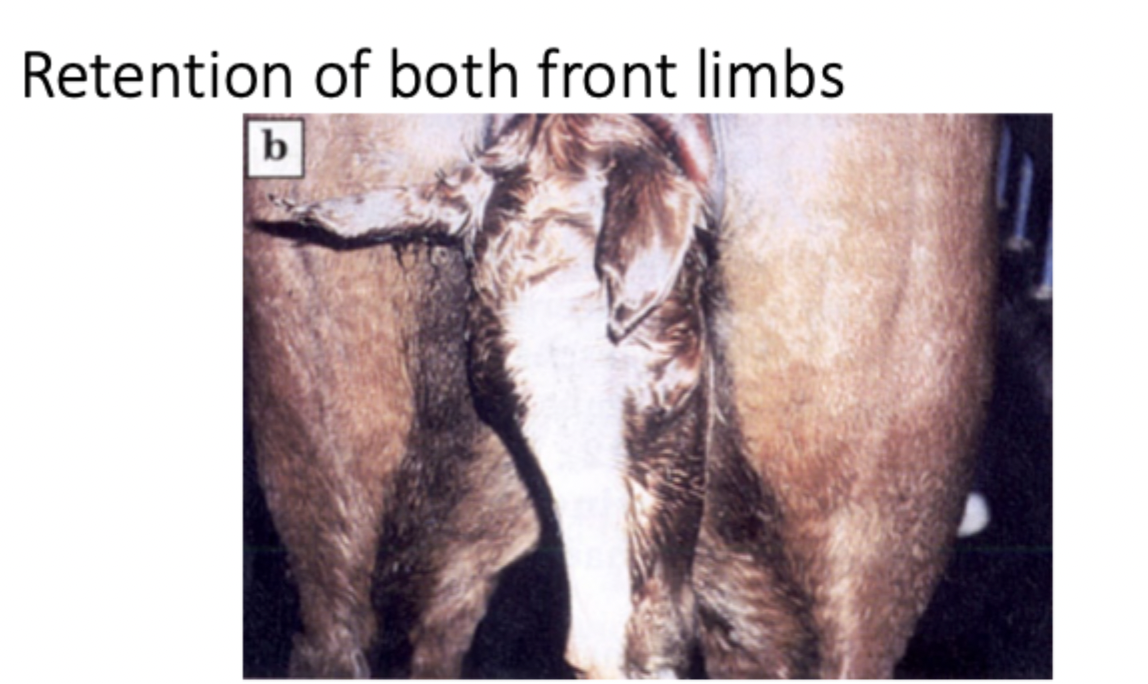
Describe the abnormality in this image.
cranio-longitudinal
dorso-sacral
head extended
both forelimbs flexed at the shoulder
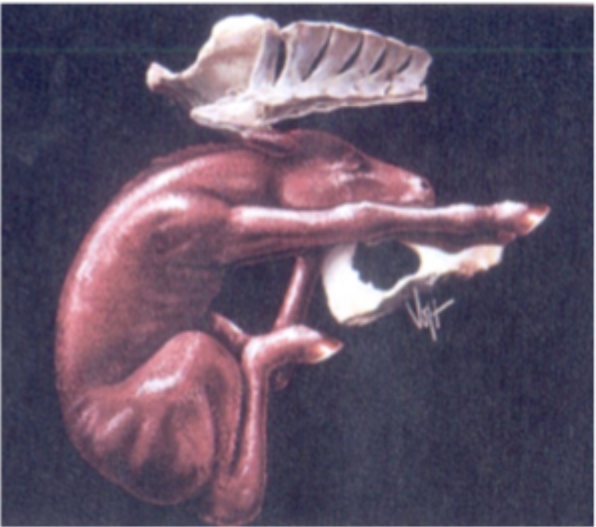
Describe the abnormality in this image.
cranio-longitudinal
dorso-sacral
head and forelimbs extended
hindlimb flexed at the hip
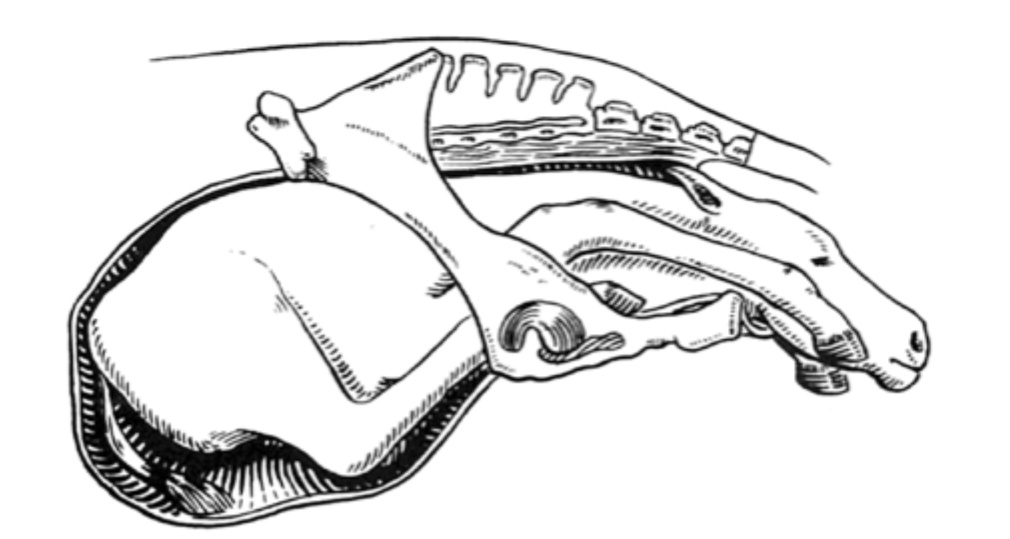
Describe the abnormality in this image.
cranio-longitudinal
dorso-sacral
head and forelimbs extended
hindlimbs flexed at the hips
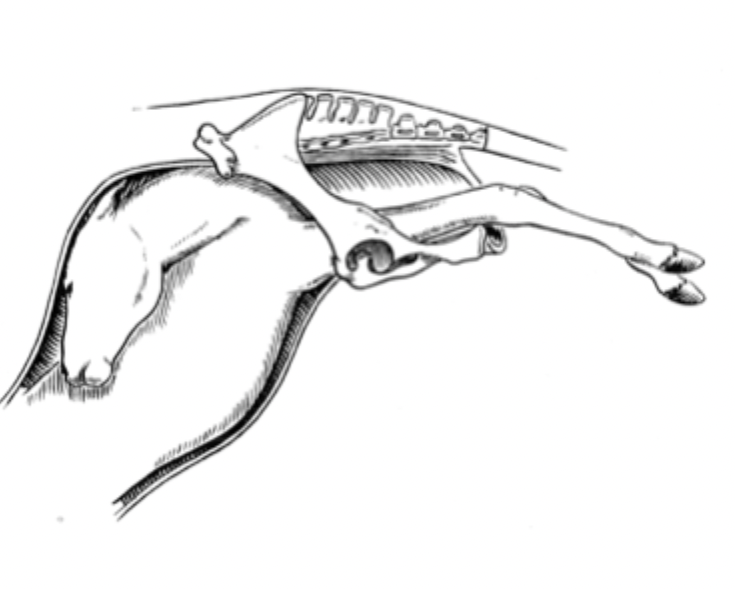
Describe the abnormality in this image.
cranio-longitudinal
dorso-sacral
head flexed to right of fetus both forelimbs extended
List methods to hold onto the head of the fetus.
nose hold
fingers in mouth (intermandibular space)
eye socket hold (blunt eye hooks)
noose around lower jaw
noose around head that passes through opening of mouth
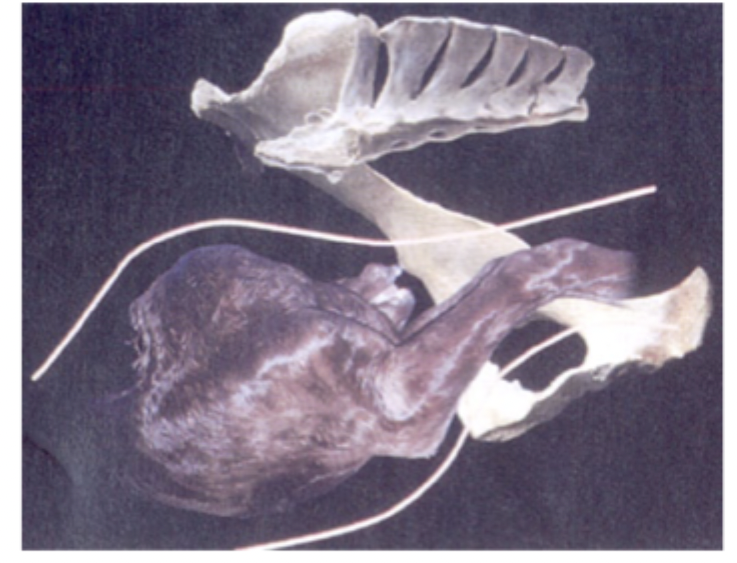
What abnormality (shown in the image) is the same as flexed neck, but impossible to correct since the spine is fixed in this position, meaning it is not agreeable with life and may require fetotomy or C-section?
wry neck

Describe the abnormality in the image.
caudo-longitudinal
dorso-sacral
hind limbs flexed at the hip
known as breech

Describe the abnormality in this image.
caudo-longitudinal
dorso-sacral
hind limbs flexed at the hock and stifle
known as hock presentation
Why is it important to pay attention to which way the feet are pointing on presentation?
normal presentation is front feet will be pointing down and fetus is dorso-sacral
if fetus backward and upside down —> feet will still be down even if it is hindlimbs first
owner’s cannot tell front limb from rear limb!

Describe the abnormality in this image.
caudo-longitudinal
dorso-pubic
hind limbs extended

When results from ventral displacement of the uterus and folding of the uterus/cervix as shown in the image?
ventro-transverse presentation
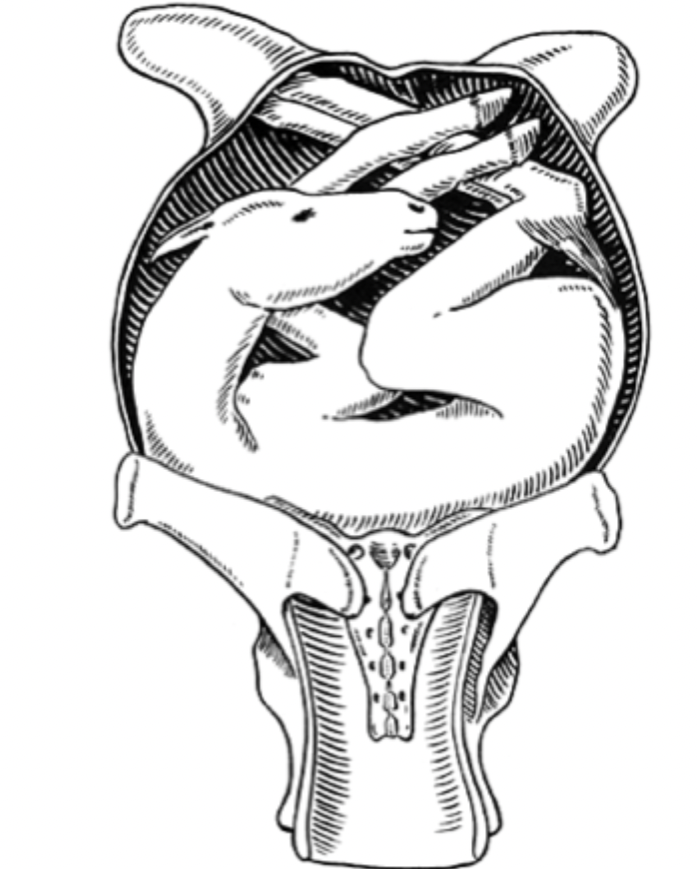
What abnormal presentation is shown in the image?
dorso-transverse
Traction on both forelimbs simultaneously when pulling a calf or foal often results in what?
shoulder lock
What should you do to avoid causing shoulder lock when pulling a calf or foal?
traction on one forelimb and then the opposite forelimb should be applied in a seesaw motion
What should be done during fetal extraction to prevent hiplock in cattle?
rotate calf as fetal head emerges from vulva
What is the most common fetotomy performed?
partial fetotomy
What are the two different types of fetotomy?
partial fetotomy
full fetotomy
A full fetotomy is how many cuts total?
5-6
List the cuts for a full fetotomy.
decapitation or cervical (verterbral amputation) (1 cut)
amputation of forelimbs (2 cuts) —> subcutaneous or percutaneous
detruncation (may be done in 1 or 2 cuts) —> transection, evisceration, destruction of teh rib cage, lumbar transection
division of the pelvis (1 cut) —> divide diagonally
What is the difference between a partial fetotomy and full fetotomy?
partial fetotomy can be as little as one cut, it is anything not considered a full fetotomy
a full fetotomy is 5-6 specific cuts