Antifungal Drugs
 Call Kai
 Learn
Learn Practice Test
 Spaced Repetition
 Match
Match Flashcards
 Knowt Play
1/16

There's no tags or description
Looks like no tags are added yet.
Name | Mastery | Learn | Test | Matching | Spaced | Call with Kai | Chat |
|---|
No analytics yet
Send a link to your students to track their progress
17 Terms
[REVIEW] Fungal Structure

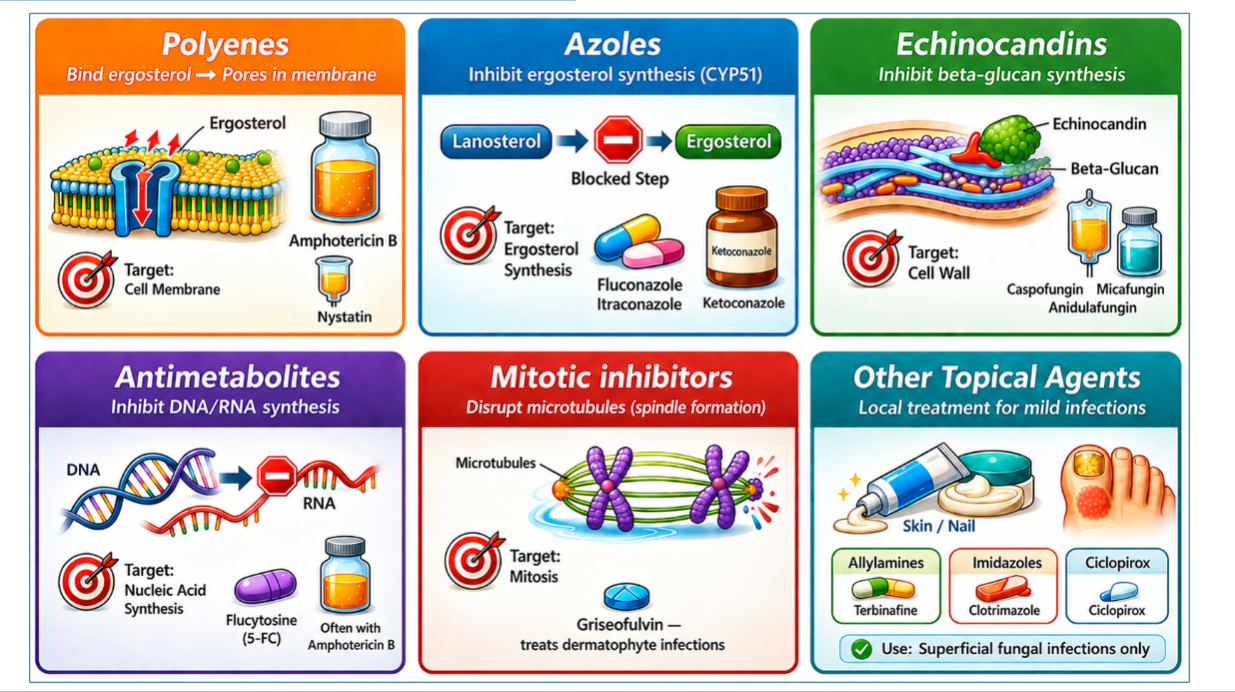
List the drug targets antifungals target
DRUG TARGETS
bind ergosterol
block ergosterol synthesis
inhibit β-glucan cell wall Synthesis
Echinocandins
interferes with DNA/RNA synthesis.
Flucytosine
disrupts microtubules/ Mitotic spindle
Griseofulvin

Describe POLYENES
Types
MOA
POLYENES
Types:
Ampho-tericin B (systemic)
Ny-statin (topical)
MOA:
bind ergosterol -> pores -> leakage
fungicidal
Describe AMPHOTERICIN B
Clinical Usage
Adverse Effects?
AMPHOTERICIN B
Clinical Usage:
severe systemic fungal infections
Classic induction therapy
cryptococcal meningitis
invasive aspergillosis and mucormycosis
serious endemic mycoses
ADVERSE EFFECTS
Infusion toxicity
w/ fever and Chills
Renal Toxicity:
Electrolyte loss
Renal injury -> hypokalemia/hypomagnesemia
Hematologic effect:
Reduced erythropoietin -> Anemia
Describe AZOLES
MOA
Subgroups
Adverse Effects
AZOLES
MOA:
inhibit fungal 14-alpha-demethylase -> blocks ergosterol synthesis
NOTE: most imp. Antifungals in practice
SUBGROUPS
Imid-azoles:
Often topical antifungals
Skin and mucosal infections
Tri-azoles:
Common systemic azoles
Deeper or invasive mycoses
Adverse Effects
hepatotoxicity
CYP inhibition
QT effects
GI: Nausea and intolerance
List the drug names in the drug classes: IMIDAZOLES vs. TRIAZOLES

Describe These Azoles:
FLUCONAZOLE
Targets
Pros
ITRACONAZOLE
Targets
Adverse Effects
VORICONAZOLE
Targets
Adverse Effects
BROAD-SPECTRUM TRIAZOLES
Types
Usages
FLUCONAZOLE
Targets:
Candida species + Cryptococcus
Common use in mucosal candidiasis
Pros:
Good oral bioavailability
CSF penetration
ITRACONAZOLE
Targets:
Dimorphic fungi
Onychomycosis
Adverse effect:
Negative inotrope
Avoid in heart Failure
VORICONAZOLE
Targets:
invasive aspergillosis
Broad activity against molds
Adverse effects
Visual disturbances
Hepatotoxicity
BROAD-SPECTRUM TRIAZOLES
Types:
Posaconazole
Isavuco azole
Unique QT pearl
Usage:
serious invasive fungal disease
Important in mold coverage
Describe ENCHINOCANDINS
Types
MOA
Clinical Uses
Strength/Limitations
ENCHINOCANDINS
Types:
Caspo-fungin,
Mica-fungin,
Anidula-fungin
MOA:
Targets Fungal cell wall
CLINICAL USES
Invasive candidiasis
Candidemia
Aspergillus salvage/adjunct role
Often used in hospitalized patients
STRENGTH & LIMITATION
Strengths:
well tolerated
Good for Candida
Limitations
Not useful for Cryptococcus
Poor CNS penetration
Poor ocular penetration
NOTE: NOTE: Major IV antifungal group
Describe FLUCYTOSINE
MOA
Targets
Combo
Adverse Effects
FLUCYTOSINE
MOA:
Converts to 5-FU in fungi -> blocks DNA/RNA synthesis
Targets:
Cryptococcal meningitis
Combo:
Paired w/ amphotericin B
ADVERSE EFFECTS
Bone marrow suppression
Hepatotoxicity
Resistance (if by itself)
Describe GRISEOFULVIN
MOA
Targets
Distribution
Adverse effects
GRISEOFULVIN
MOA:
Disrupts microtubules and mitosis
Targets:
Dermatophyte infections
Hair, skin, and nails
Distribution:
Deposits in keratin precursors
ADVERSE EFFECTS
Hepatotoxicity
Teratogenic
CYP interactive
Prolong therapy course
weeks-months
Describe TERBINAFINE
MOA
Targets
Adverse Effects
TERBINAFINE
MOA:
Inhibits squalene epoxidase -> blocks ergosterol synthesis
Targets:
Dermatophytes
Onychomycosis
ADVERSE EFFECTS
Hepatotoxicity
GI: Upset
Taste Disturbance
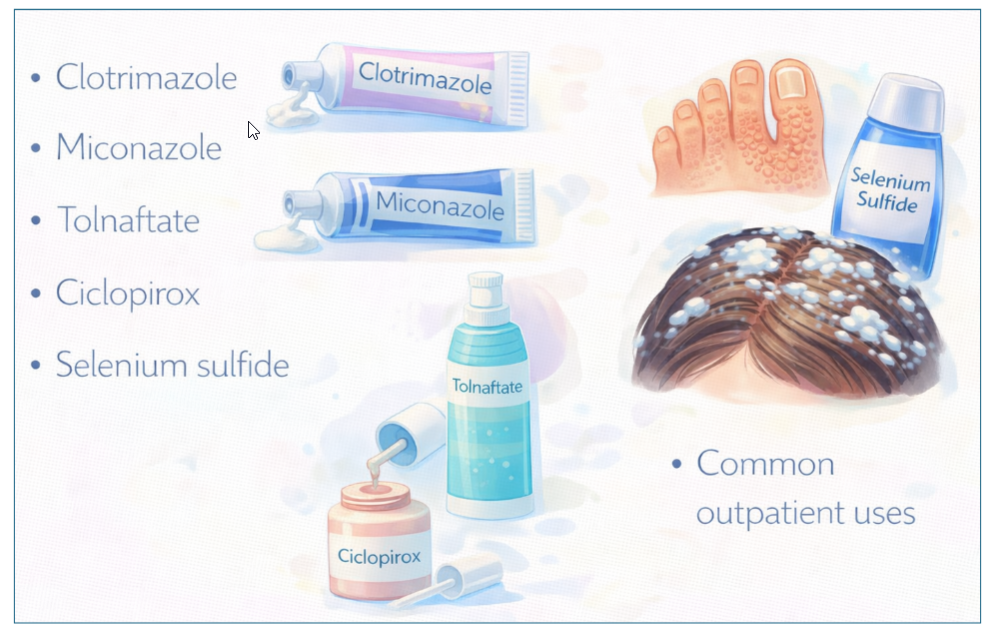
List the TOPICAL ANTIFUNGAL AGENTS



How do fungi develop resistance
Resistance
Altered Ergosterol Pathway
Decrease drug uptake
Active drug export
Altered cell wall composition