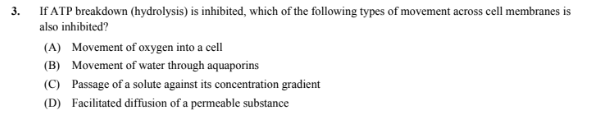
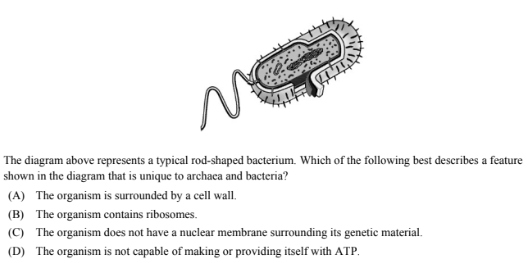
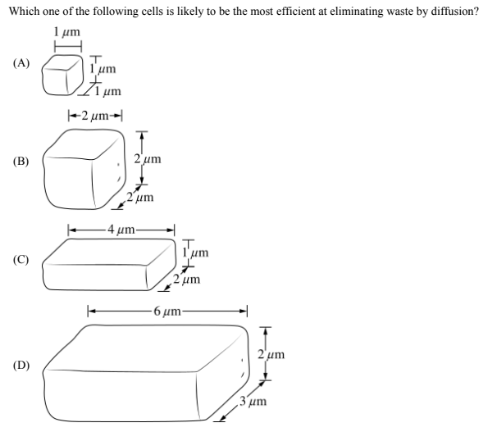
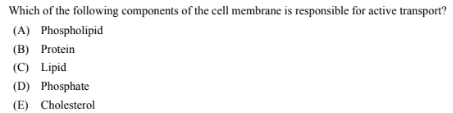
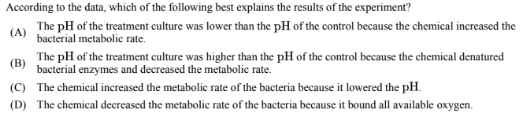
AP Biology Semester 1 MCQ (unfinished)

5.0(2)
Studied by 5 people
call kaiCall Kai
learnLearn
examPractice Test
spaced repetitionSpaced Repetition
heart puzzleMatch
flashcardsFlashcards
GameKnowt Play
Card Sorting

1/115

encourage image

There's no tags or description

Looks like no tags are added yet.

Last updated 7:02 PM on 1/10/25
Name
Mastery
Learn
Test
Matching
Spaced
Call with Kai

No analytics yet

Send a link to your students to track their progress

116 Terms
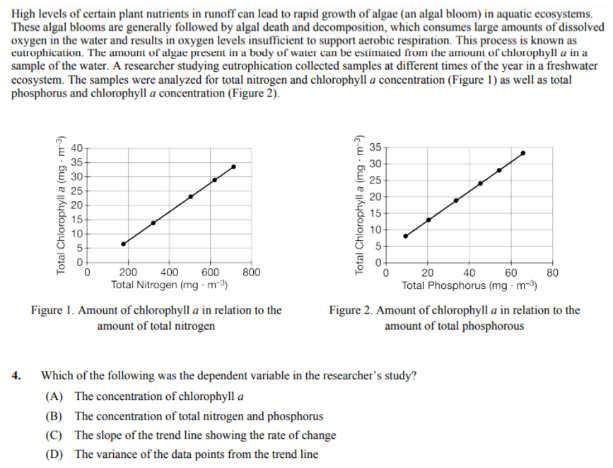
1
New cards
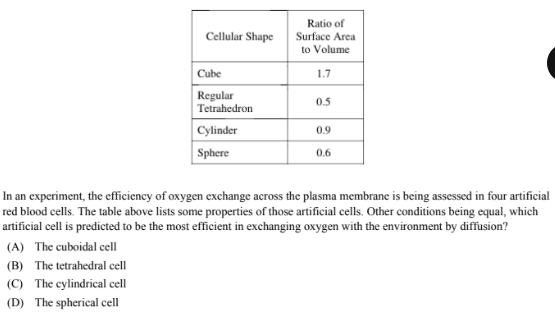
term image

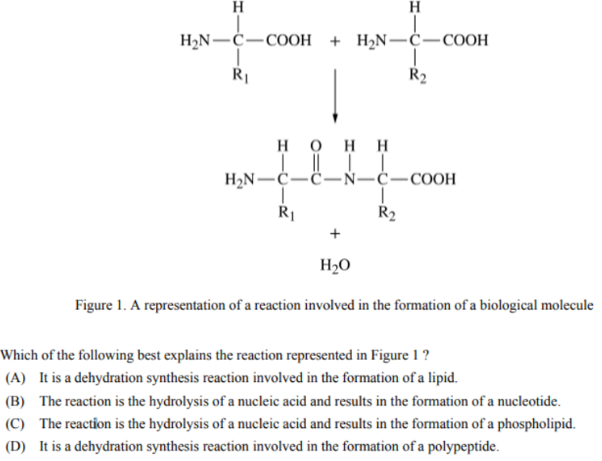
a

2
New cards
term image

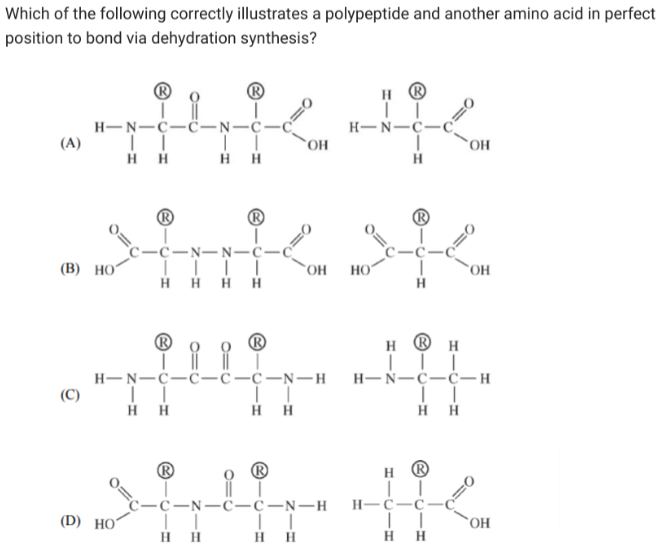
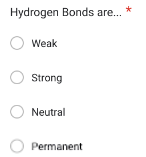
d

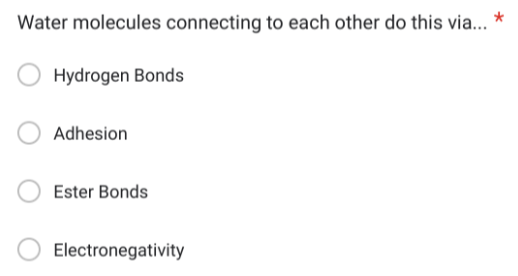
3
New cards
term image

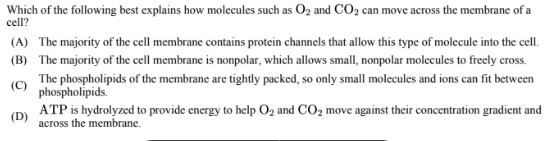
c

proteins have nitrogen which cancels out d. There will be extra oxygen if a and b did dehydration synthesis. The two hydrogen from c connect via dehydration synthesis cause oxygen is just added in.
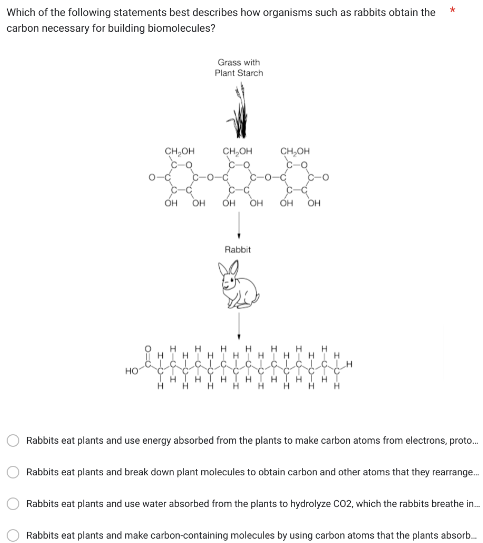
4
New cards
term image

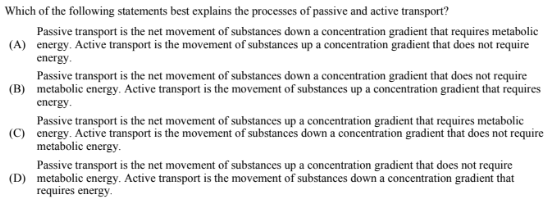
b

full answer: Rabbits eat plants and break down plant molecules to obtain carbon and other atoms that they rearrange into new carbon-containing molecules
5
New cards
<p></p>

Negative

6
New cards
term image

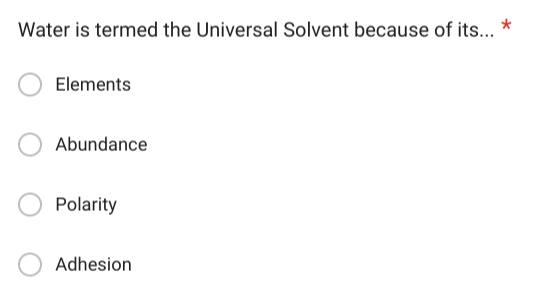
Polarity

7
New cards
term image

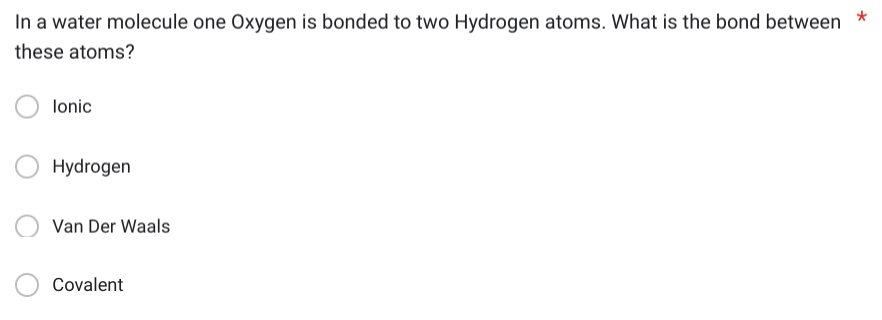
Covalent

8
New cards
term image

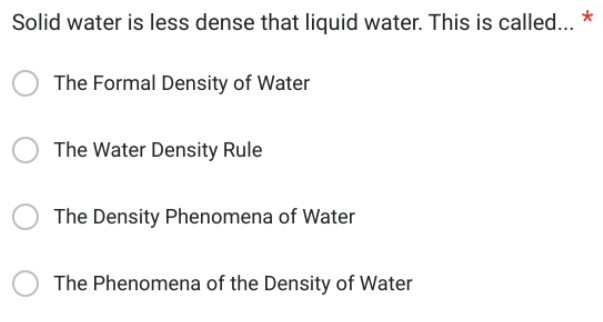
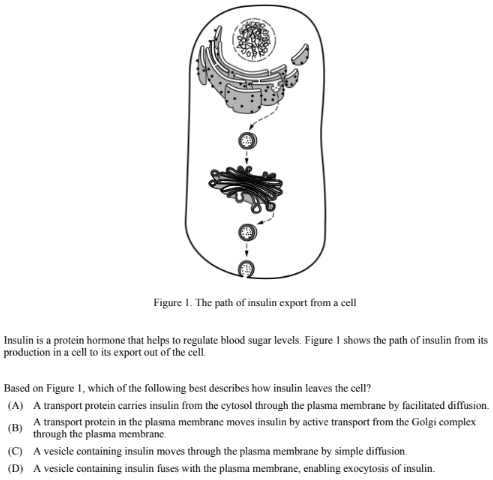
The density phenomena of water

9
New cards
term image

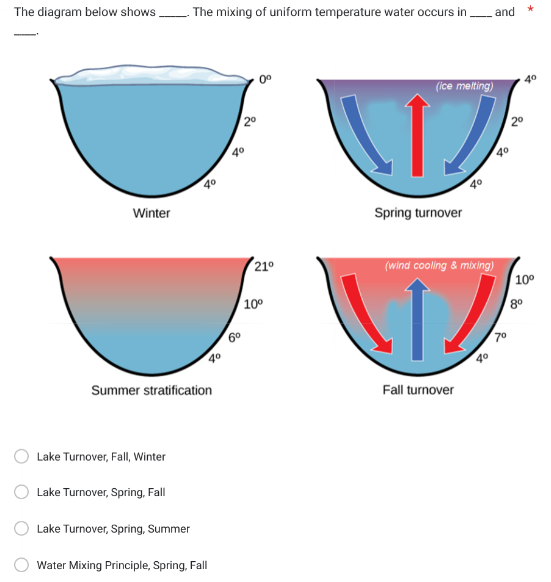
Lake Turnover, Spring, Fall

10
New cards
term image

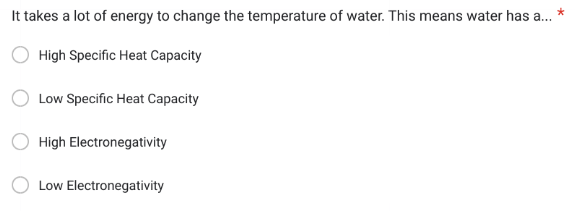
High Specific Heat Capacity

11
New cards
term image

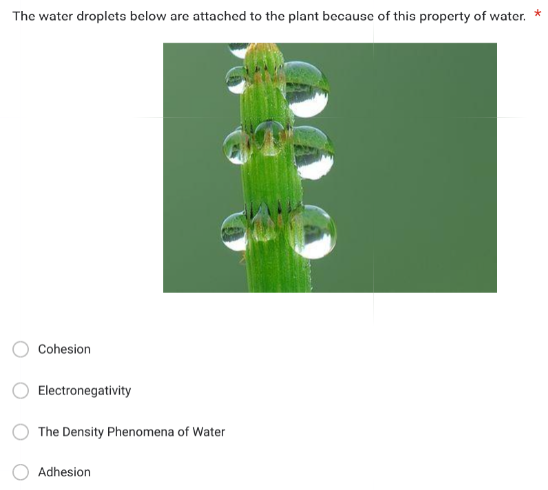
adhesion

12
New cards
term image

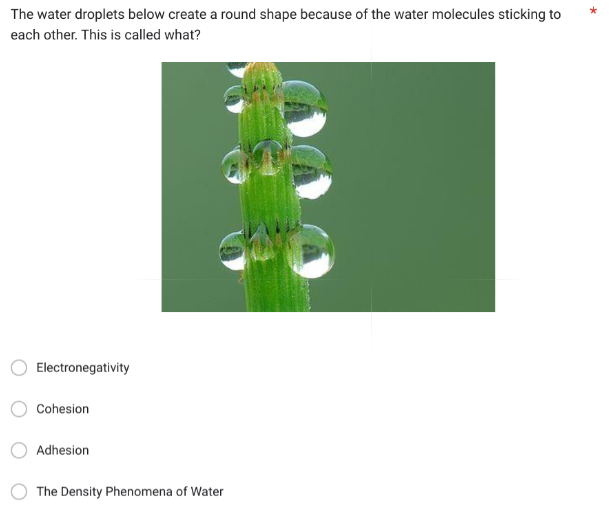
cohesion

13
New cards
term image

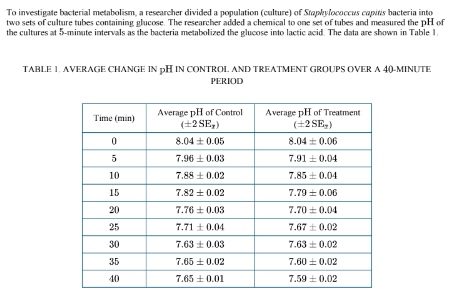
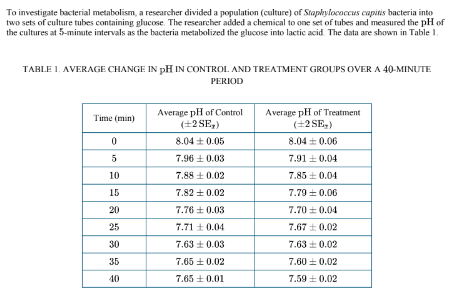
hydrophobic

14
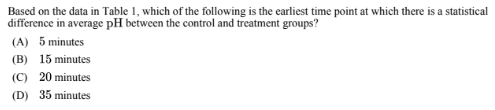
New cards
term image

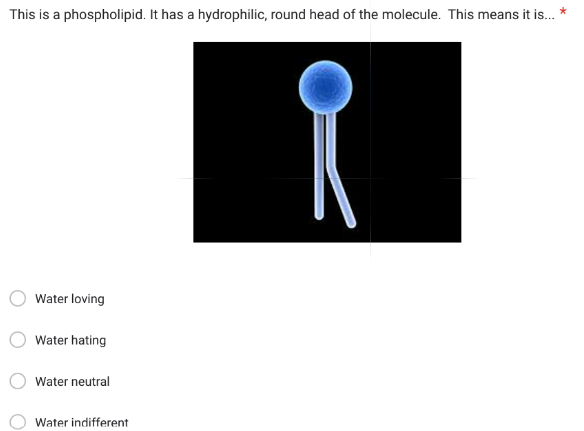
Water loving

15
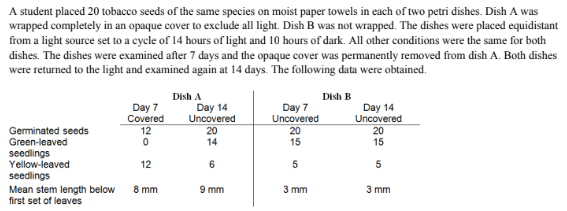
New cards
term image

Oxygen

16
New cards
term image

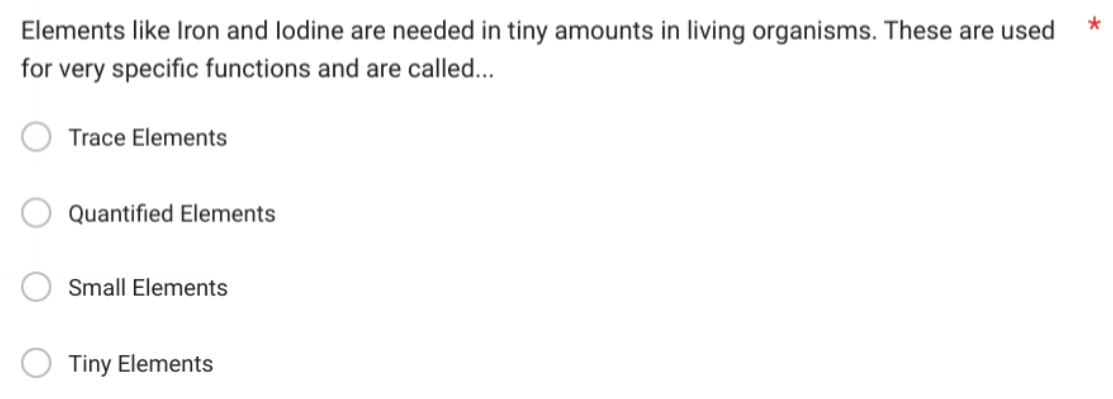
Trace Elements

17
New cards
term image

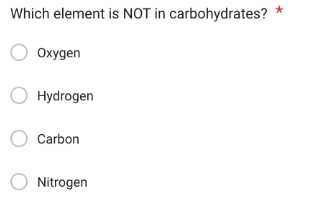
Nitrogen

18
New cards
term image

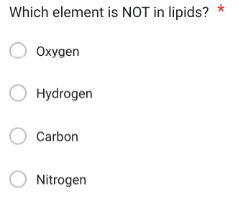
Nitrogen

19
New cards
term image

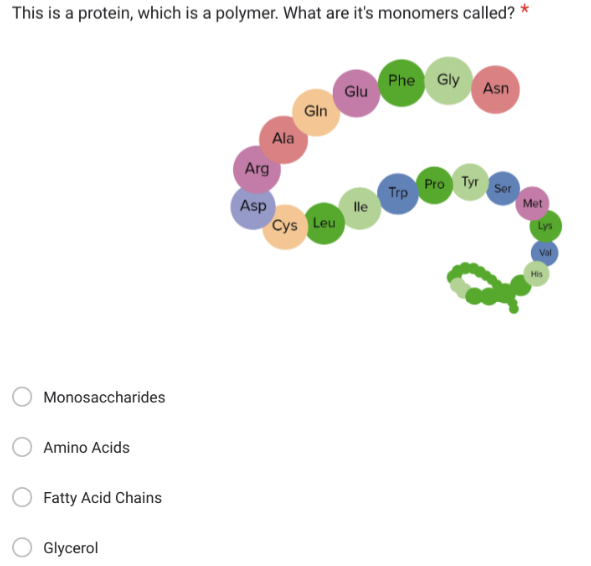
Amino acid

20
New cards
term image

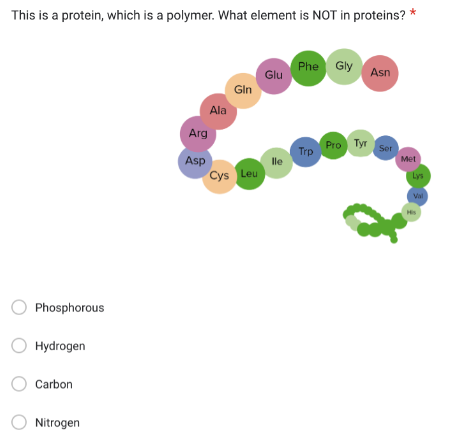
Phosphorous

21
New cards
term image

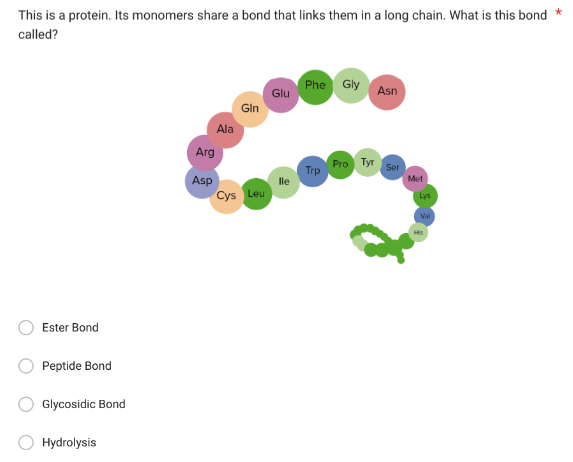
Peptide Bond

22
New cards
term image

Polysaccharide

23
New cards
term image

Ester bond

24
New cards
term image

Ester bond

25
New cards
term image

Dehydration synthesis

26
New cards
term image

Hydrolysis

27
New cards
term image

b

28
New cards
term image

c

29
New cards
term image

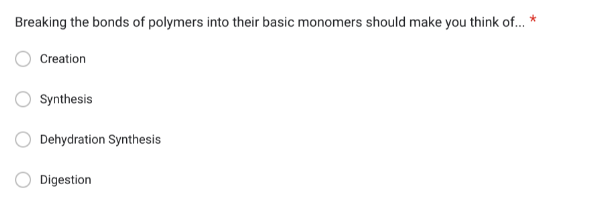
Digestion

30
New cards
term image

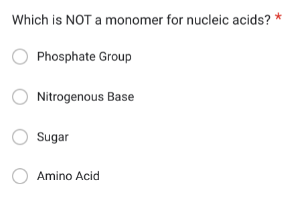
Amino Acid

31
New cards
term image

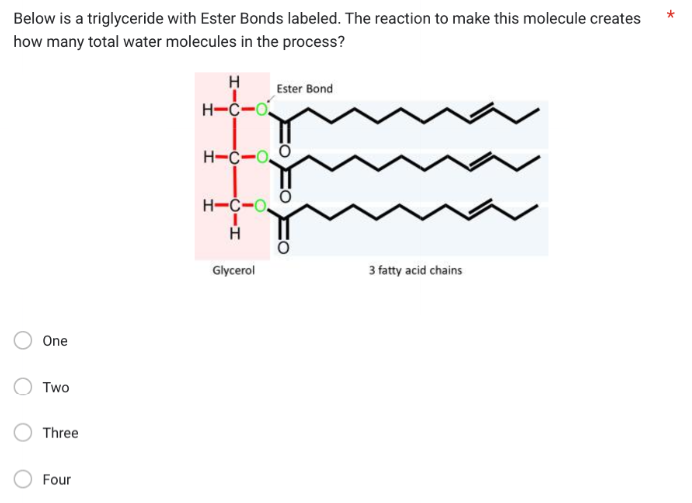
Three

32
New cards
term image

Glycosidic bonds

33
New cards
term image

Strong

34
New cards
term image

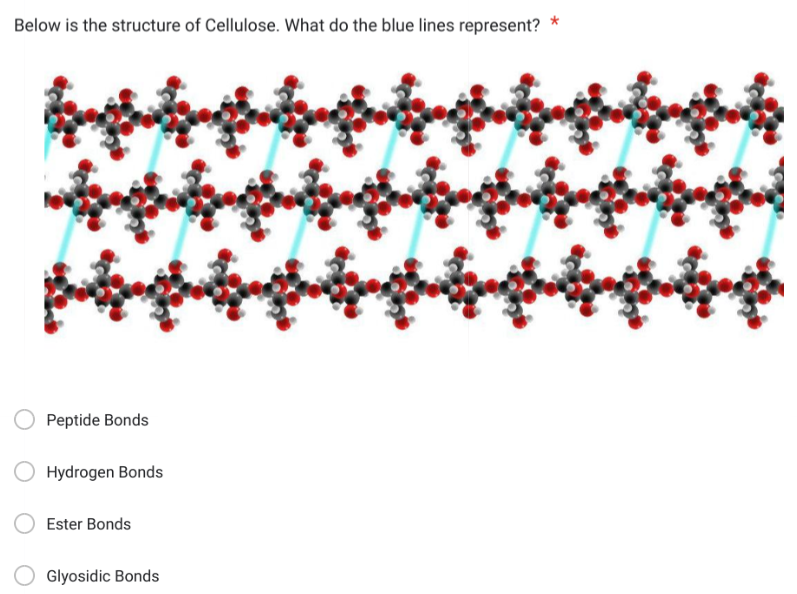
Hydrogen bonds

35
New cards
term image

a

36
New cards
term image

a

37
New cards
term image

c

38
New cards
term image

c

39
New cards
term image

A

40
New cards
term image

B

more right/ less specific

41
New cards
term image

A

42
New cards
term image

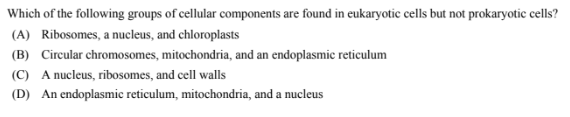
c

43
New cards
term image

d

44
New cards
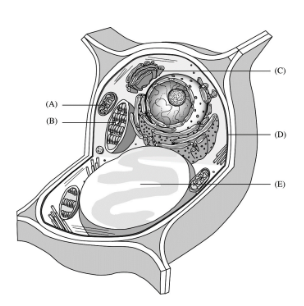
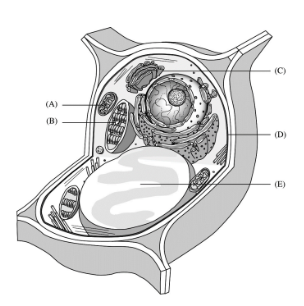
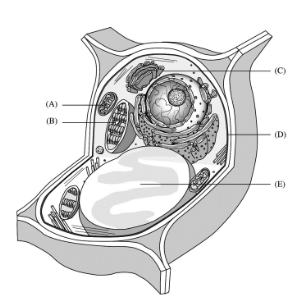
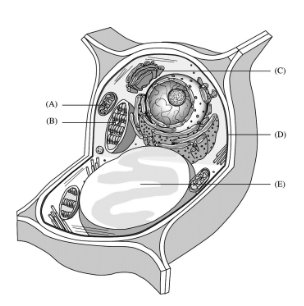
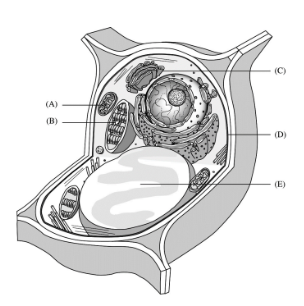
<p>Site of glucose synthesis</p>

Site of glucose synthesis

b (chloroplast)
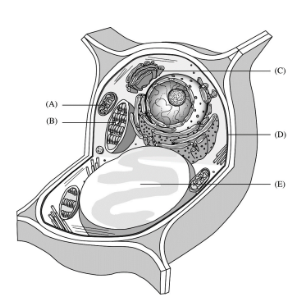
<p>b (chloroplast)</p>
45
New cards
<p>Site of conversion of chemical energy of glucose to ATP</p>

Site of conversion of chemical energy of glucose to ATP

a (mitochondria)
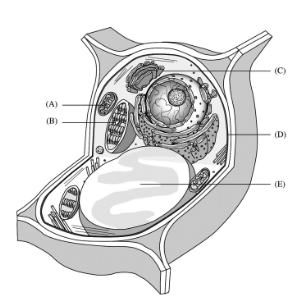
<p>a (mitochondria)</p>
46
New cards
<p>Site of modification and packaging of proteins and lipids prior to export from the cell</p>

Site of modification and packaging of proteins and lipids prior to export from the cell

c (golgi apparatus)
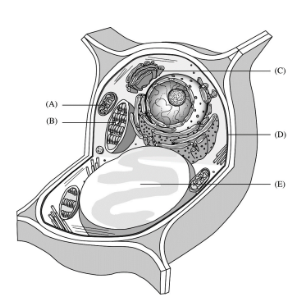
<p>c (golgi apparatus)</p>
47
New cards
<p>Site of transport of materials into and out of the cell</p>

Site of transport of materials into and out of the cell

d (cell membrane)
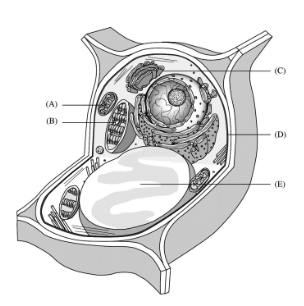
<p>d (cell membrane)</p>
48
New cards
<p>Evolved from a photoautotrophic prokaryote</p>

Evolved from a photoautotrophic prokaryote

B (chloroplast)

photoautotrophic = light energy
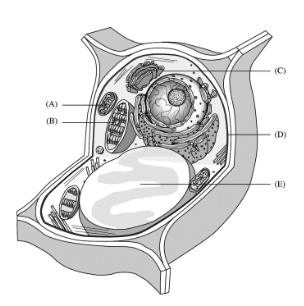
<p>B (chloroplast)</p><p></p><p>photoautotrophic = light energy</p>
49
New cards
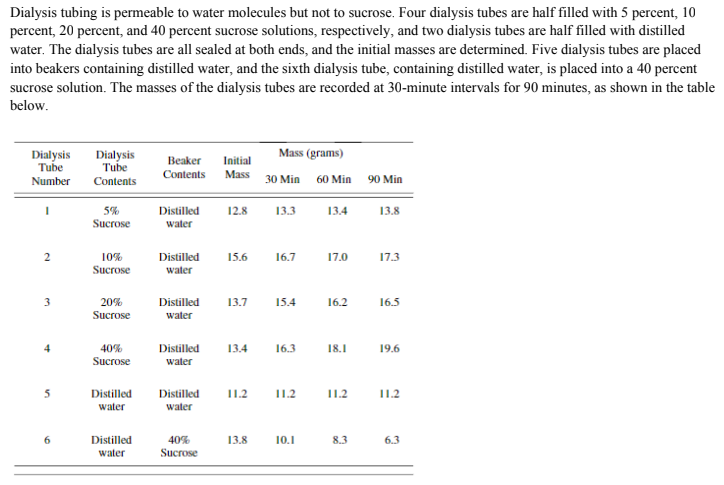
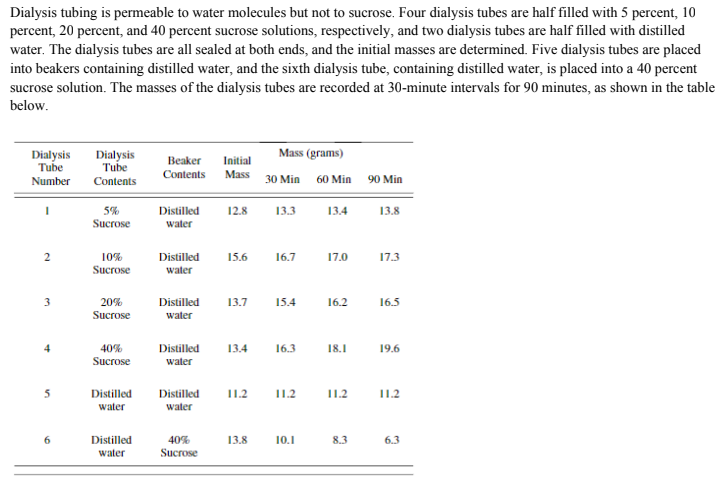
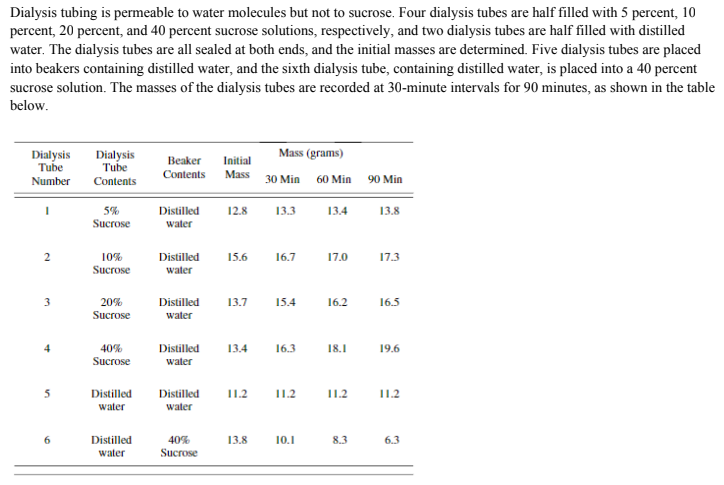
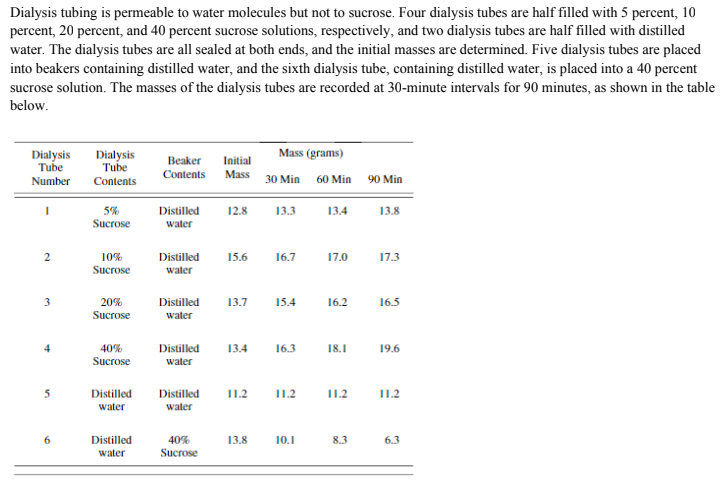
<p>The contents of which dialysis tube are initially isotonic to distilled water in the beaker?</p>

The contents of which dialysis tube are initially isotonic to distilled water in the beaker?

e
<p>e</p>
50
New cards
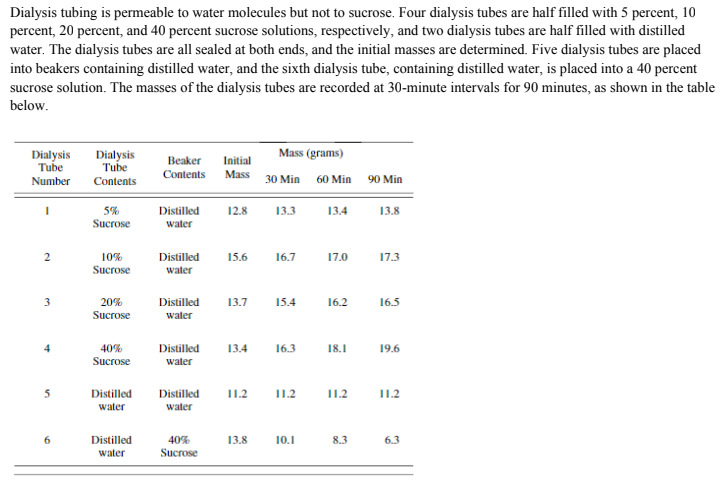
<p>A net movement of water into the beaker occurs in which of the following dialysis tubes?</p>

A net movement of water into the beaker occurs in which of the following dialysis tubes?

e

total water, only one with significant decrease in mass
<p>e</p><p></p><p>total water, only one with significant decrease in mass</p>
51
New cards
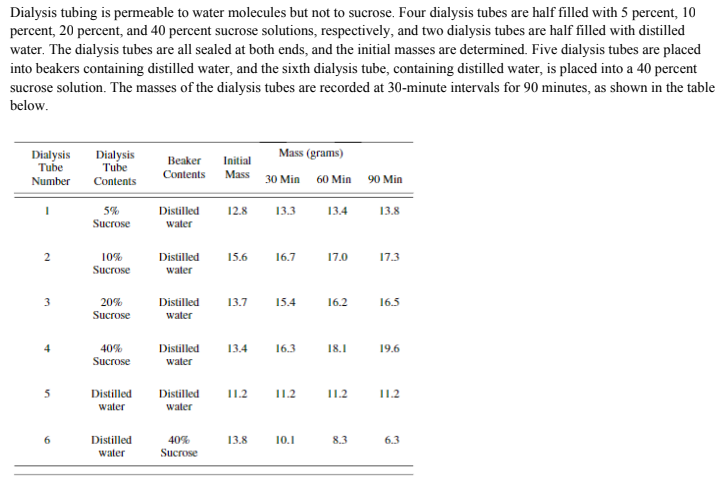
<p>To model a plant cell, a permeable, nonflexible case is placed around each piece of dialysis tubing. The greatest pressure potential will develop within dialysis tube number</p>

To model a plant cell, a permeable, nonflexible case is placed around each piece of dialysis tubing. The greatest pressure potential will develop within dialysis tube number

c (lots of water rushing in)
<p>c (lots of water rushing in)</p>
52
New cards
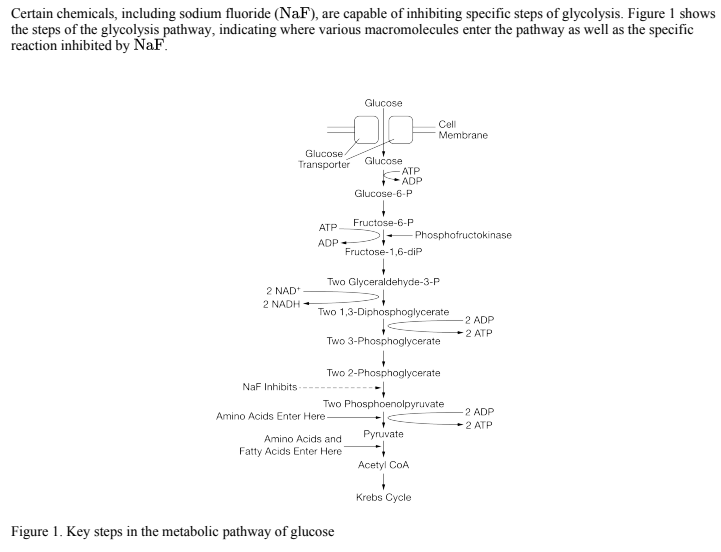
<p>Which of the following describes why a glucose transporter is needed to move glucose into the cell?</p><p>(A) Glucose is nonpolar and requires to move across the membrane.</p><p>(B) Glucose molecules are polar and need to move from low concentration to high concentration.</p><p>(C) Glucose molecules are charged, and charged molecules are only ever actively transported.</p><p>(D) Glucose is large and polar and cannot pass through the phospholipid bilayer.</p>

Which of the following describes why a glucose transporter is needed to move glucose into the cell?

(A) Glucose is nonpolar and requires to move across the membrane.

(B) Glucose molecules are polar and need to move from low concentration to high concentration.

(C) Glucose molecules are charged, and charged molecules are only ever actively transported.

(D) Glucose is large and polar and cannot pass through the phospholipid bilayer.

d
<p>d</p>
53
New cards
term image

b

54
New cards
term image

d

55
New cards
term image

d

56
New cards

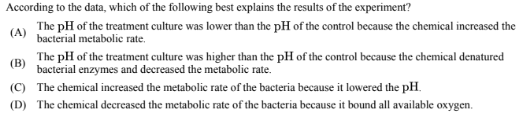
Intravenous (IV) solutions administered to patients are normally isotonic. Which of the following is most likely if an IV of distilled water is administered to a patient?

(A) The cells that are exposed to hypotonic solutions will shrink as a result of salt moving into the blood.

(B) The liver will secrete additional bile salts into the blood to raise the tonicity of the administered fluid.

(C) The cells that are exposed to hypotonic solutions will expand as water moves osmotically into the cells from

the blood.

(D) The patient’s respiration rate will slow to compensate for the higher levels of circulating blood.

c
57
New cards
term image

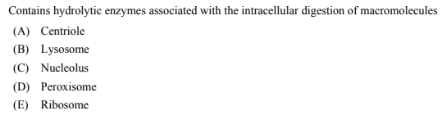
b

58
New cards
term image

e

59
New cards
term image

b

60
New cards
term image

b

61
New cards
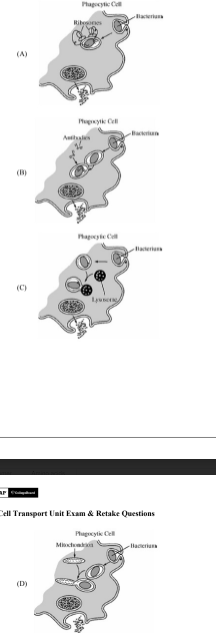
<p>A pathogenic bacterium has been engulfed by a phagocytic cell as part of the nonspecific (innate) immune response. Which of the following illustrations best represents the response?</p>

A pathogenic bacterium has been engulfed by a phagocytic cell as part of the nonspecific (innate) immune response. Which of the following illustrations best represents the response?

c
62
New cards
term image

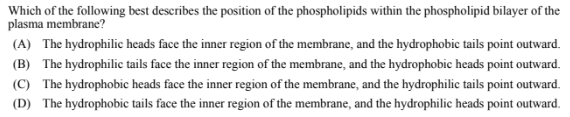
d

63
New cards
term image

d

64
New cards
term image

d

65
New cards
term image
66
New cards
term image

d

67
New cards
term image

c

68
New cards
term image

d

69
New cards

Liver cells manufacture glycoproteins, while adipose cells store fat. Which of the following subcellular structures is

(A) Nucleus

(B) Golgi apparatus

(C) Cytoskeleton

(D) Plasma membranelikely to be more prominent in liver cells than in adipose cells?

b
70
New cards
term image

a

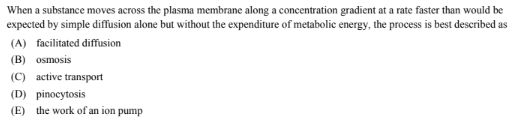
71
New cards
term image

a

72
New cards
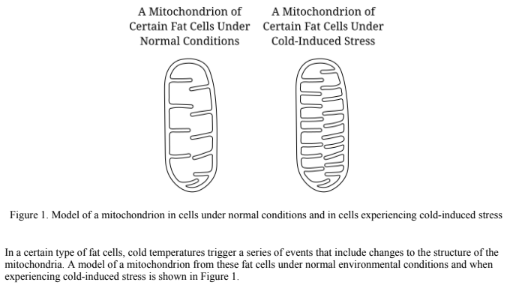
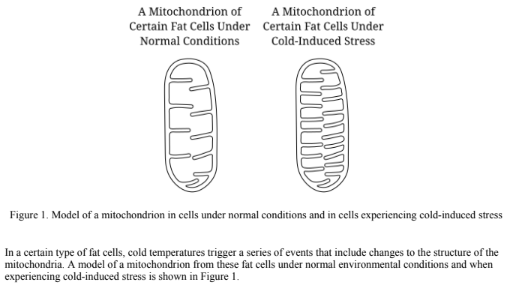
<p>Which of the following best explains how the changes in mitochondrial structure observed when the cell experiences cold-induced stress affect cellular respiration?</p><p>(A) The volume of the mitochondrial intermembrane space decreases, preventing the reactions of the Krebs cycle from occurring.</p><p>(B) The surface area of the inner membrane decreases, preventing the transport of oxygen molecules into the</p><p>mitochondria.</p><p>(C) The volume within the mitochondria increases, providing more space for the reactions of glycolysis to take place.</p><p>(D) The surface area of the inner membrane increases, providing more space for the components of the electron transport chain.</p>

Which of the following best explains how the changes in mitochondrial structure observed when the cell experiences cold-induced stress affect cellular respiration?

(A) The volume of the mitochondrial intermembrane space decreases, preventing the reactions of the Krebs cycle from occurring.

(B) The surface area of the inner membrane decreases, preventing the transport of oxygen molecules into the

mitochondria.

(C) The volume within the mitochondria increases, providing more space for the reactions of glycolysis to take place.

(D) The surface area of the inner membrane increases, providing more space for the components of the electron transport chain.
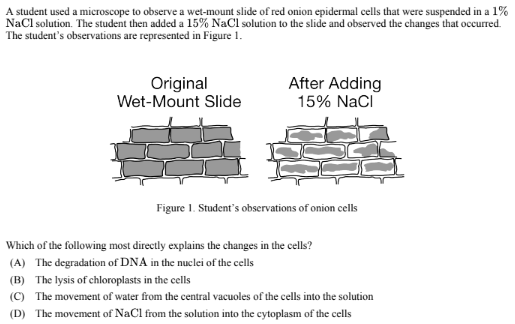
knowt flashcard image
73
New cards
term image
74
New cards
term image
75
New cards
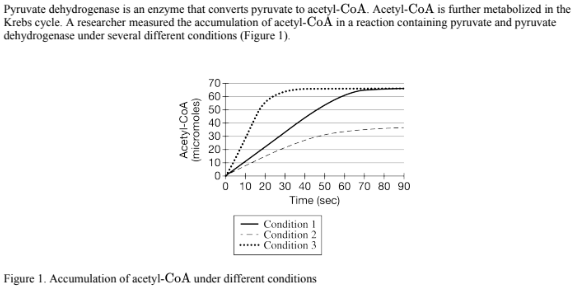
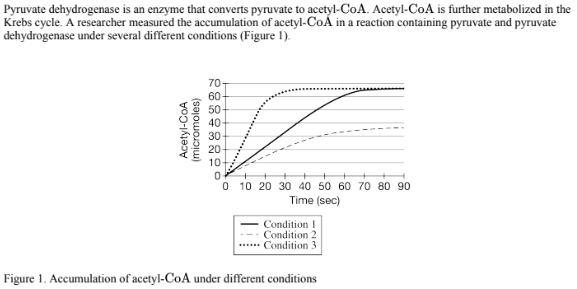
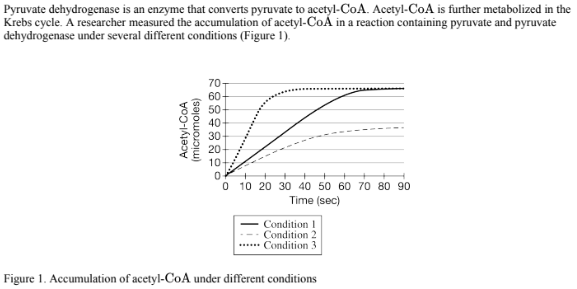
<p>Which of the following best describes the cellular location where pyruvate dehydrogenase is most likely active?</p><p>(A) The cytosol</p><p>(B) The lysosomes</p><p>(C) The nucleus</p><p>(D) The mitochondrial matrix</p>

Which of the following best describes the cellular location where pyruvate dehydrogenase is most likely active?

(A) The cytosol

(B) The lysosomes

(C) The nucleus

(D) The mitochondrial matrix
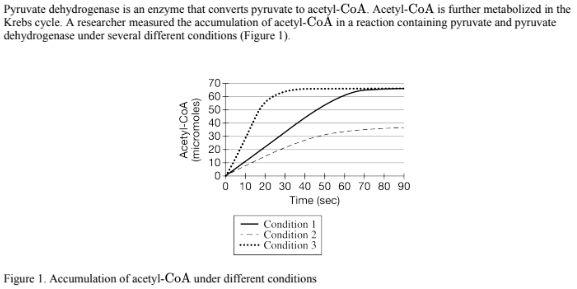
knowt flashcard image
76
New cards
<p>The maximum production rate of acetyl-CoA under condition is closest to which of the following?</p><p>(A) 1 micromole / sec</p><p>(B) 24 micromole / sec</p><p>(C) 35 micromoles / sec</p><p>(D) 65 micromoles / sec</p>

The maximum production rate of acetyl-CoA under condition is closest to which of the following?

(A) 1 micromole / sec

(B) 24 micromole / sec

(C) 35 micromoles / sec

(D) 65 micromoles / sec

a
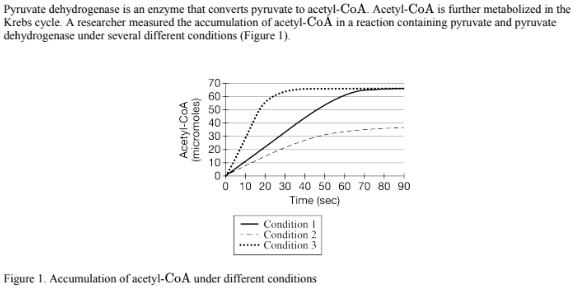
<p>a</p>
77
New cards
<p>Which of the following observations provides the best evidence that acetyl- negatively regulates pyruvate <span style="font-size: 1.6rem">dehydrogenase activity?</span></p><p>(A) The rate of the pyruvate dehydrogenase–catalyzed reaction is slower in the presence of a higher concentration of acetyl-CoA.</p><p>(B) The gene that encodes pyruvate dehydrogenase is transcribed when excess acetyl-CoA is detected.</p><p>(C) The accumulation of acetyl-CoA stops after seconds, regardless of the reaction mixture.</p><p>(D) Acetyl-CoA is continuously broken down in the Krebs cycle.</p>

Which of the following observations provides the best evidence that acetyl- negatively regulates pyruvate dehydrogenase activity?

(A) The rate of the pyruvate dehydrogenase–catalyzed reaction is slower in the presence of a higher concentration of acetyl-CoA.

(B) The gene that encodes pyruvate dehydrogenase is transcribed when excess acetyl-CoA is detected.

(C) The accumulation of acetyl-CoA stops after seconds, regardless of the reaction mixture.

(D) Acetyl-CoA is continuously broken down in the Krebs cycle.
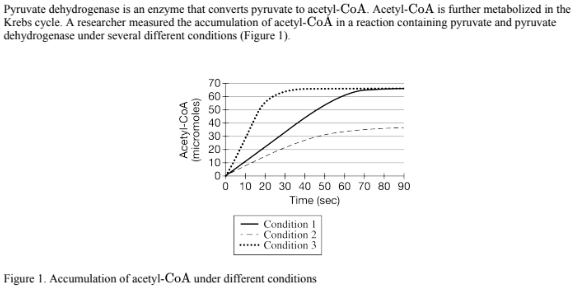
knowt flashcard image
78
New cards
term image

d

79
New cards
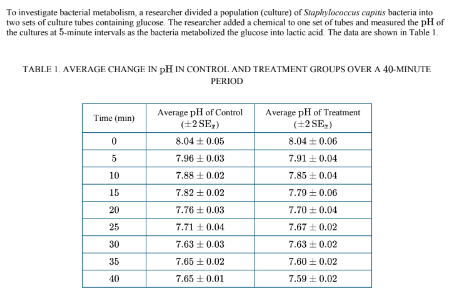
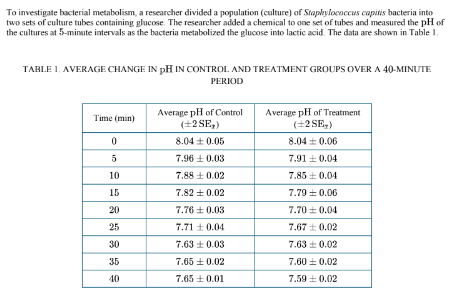
<p>Which of the following best describes the process by which the bacteria are breaking down the glucose to produce lactic acid?</p><p>(A) The bacteria are breaking down sugars in the absence of oxygen.</p><p>(B) The bacteria are creating a gradient to synthesize more .</p><p>(C) The bacteria are using their mitochondria to break down glucose in the presence of oxygen.</p><p>(D) The bacteria are producing in the Krebs cycle that is then converted into lactic acid.</p>

Which of the following best describes the process by which the bacteria are breaking down the glucose to produce lactic acid?

(A) The bacteria are breaking down sugars in the absence of oxygen.

(B) The bacteria are creating a gradient to synthesize more .

(C) The bacteria are using their mitochondria to break down glucose in the presence of oxygen.

(D) The bacteria are producing in the Krebs cycle that is then converted into lactic acid.

a
<p>a</p>
80
New cards
<p>Which of the following was the dependent variable in the researcher’s experiment?</p><p>(A) Time</p><p>(B) pH</p><p>(C) Glucose concentration</p><p>(D) Lactic acid concentration</p>

Which of the following was the dependent variable in the researcher’s experiment?

(A) Time

(B) pH

(C) Glucose concentration

(D) Lactic acid concentration

b
<p>b</p>
81
New cards
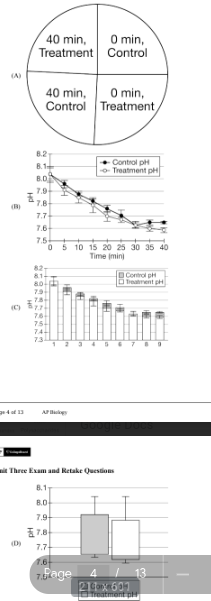
<p>Which of the following graphs best represents the data in Table 1 ?</p>

Which of the following graphs best represents the data in Table 1 ?

b
82
New cards
term image

d

83
New cards
term image

a

84
New cards
term image

a

85
New cards
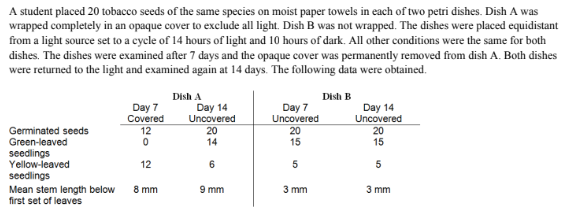
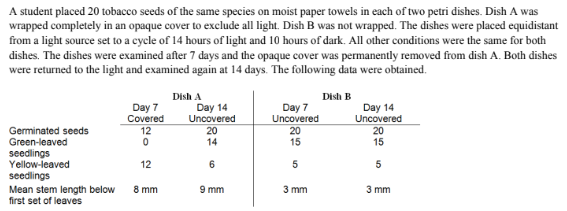
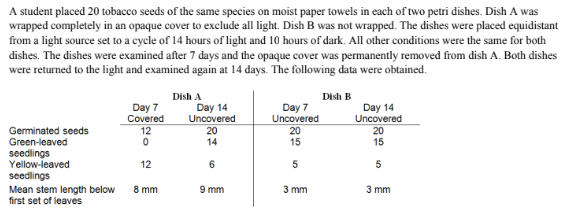
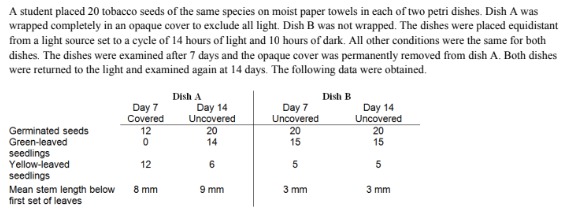
<p>According to the results of this experiment, germination of tobacco seeds during the first week is</p><p>(A) increased by exposure to light</p><p>(B) unaffected by light intensity</p><p>(C) prevented by paper towels</p><p>(D) accelerated in green-leaved seedlings</p>

According to the results of this experiment, germination of tobacco seeds during the first week is

(A) increased by exposure to light

(B) unaffected by light intensity

(C) prevented by paper towels

(D) accelerated in green-leaved seedlings

a
<p>a</p>
86
New cards
<p>The most probable cause for the difference in mean stem length between plants in dish A and plants in dish B is which of the following?</p><p>(A) Shortening of cells in the stem in response to the lack of light</p><p>(B) Elongation of seedlings in response to the lack of light</p><p>(C) Enhancement of stem elongation by light</p><p>(D) Genetic differences between the seeds</p>

The most probable cause for the difference in mean stem length between plants in dish A and plants in dish B is which of the following?

(A) Shortening of cells in the stem in response to the lack of light

(B) Elongation of seedlings in response to the lack of light

(C) Enhancement of stem elongation by light

(D) Genetic differences between the seeds

b
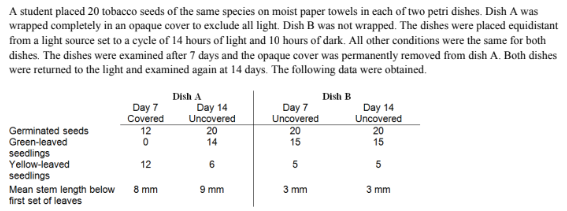
<p>b</p>
87
New cards
<p>Which of the following best supports the hypothesis that the difference in leaf color is genetically controlled?</p><p>(A) The number of yellow-leaved seedlings in dish A on day 7</p><p>(B) The number of germinated seeds in dish A on days 7 and 14</p><p>(C) The death of all the yellow-leaved seedlings</p><p>(D) The existence of yellow-leaved seedlings as well as green-leaved ones on day 14 in dish B</p>

Which of the following best supports the hypothesis that the difference in leaf color is genetically controlled?

(A) The number of yellow-leaved seedlings in dish A on day 7

(B) The number of germinated seeds in dish A on days 7 and 14

(C) The death of all the yellow-leaved seedlings

(D) The existence of yellow-leaved seedlings as well as green-leaved ones on day 14 in dish B

d
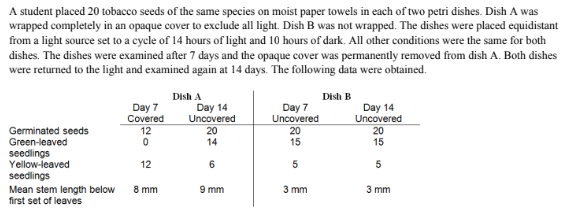
<p>d</p>
88
New cards
<p>Additional observations were made on day 21, and no yellow-leaved seedlings were found alive in either dish. This is most likely because</p><p>(A) yellow-leaved seedlings were unable to absorb water from the paper towels</p><p>(B) taller green-leaved seedlings blocked the light and prevented photosynthesis</p><p>(C) yellow-leaved seedlings were unable to convert light energy to chemical energy</p><p>(D) a higher rate of respiration in yellow-leaved seedlings depleted their stored nutrients</p>

Additional observations were made on day 21, and no yellow-leaved seedlings were found alive in either dish. This is most likely because

(A) yellow-leaved seedlings were unable to absorb water from the paper towels

(B) taller green-leaved seedlings blocked the light and prevented photosynthesis

(C) yellow-leaved seedlings were unable to convert light energy to chemical energy

(D) a higher rate of respiration in yellow-leaved seedlings depleted their stored nutrients

c
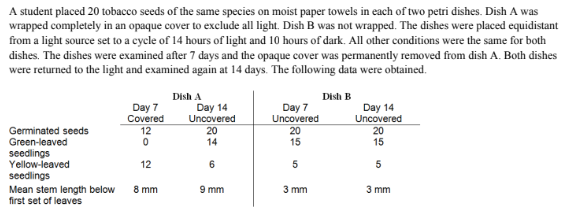
<p>c</p>
89
New cards
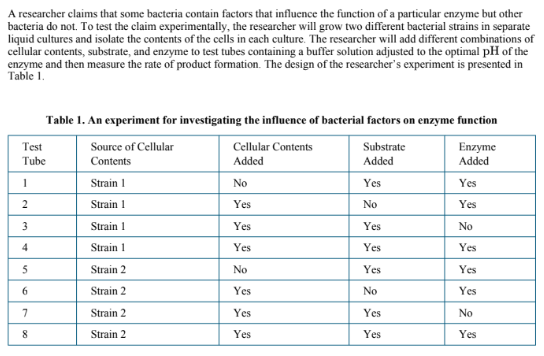
<p>Which of the following statements best justifies the inclusion of test tubes 3 and 7 in the experiment?</p><p>(A) They will show whether the isolated cellular contents have enzymatic activity.</p><p>(B) They will show whether environmental affects the function of the enzyme.</p><p>(C) They will show the rate of product formation in the absence of bacterial factors.</p><p>(D) They will show the rate of product formation in the absence of the substrate.</p>

Which of the following statements best justifies the inclusion of test tubes 3 and 7 in the experiment?

(A) They will show whether the isolated cellular contents have enzymatic activity.

(B) They will show whether environmental affects the function of the enzyme.

(C) They will show the rate of product formation in the absence of bacterial factors.

(D) They will show the rate of product formation in the absence of the substrate.

a
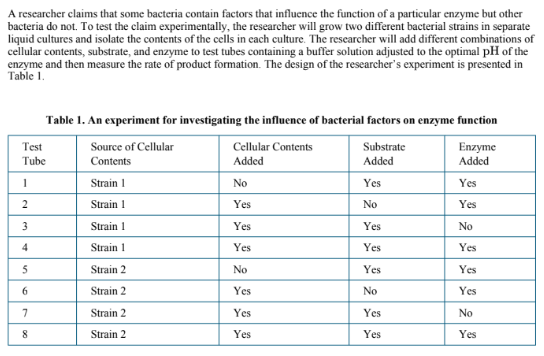
<p>a</p>
90
New cards
term image

b

91
New cards
<p></p>

c

92
New cards

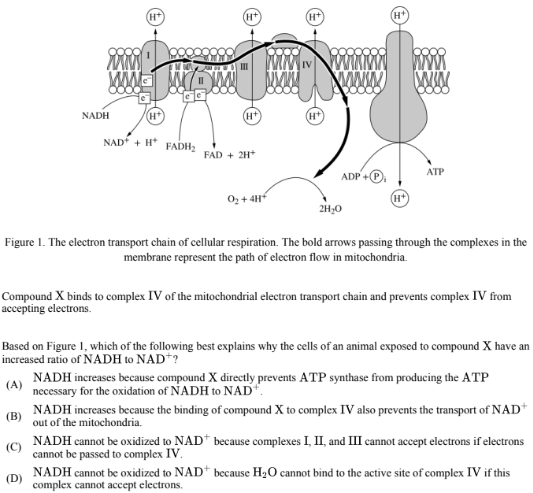
Which of the following best describes the function of the coenzymes NAD+ and FAD in eukaryotic cellular respiration?

(A) They participate in hydrolysis reactions by accepting protons from water molecules.

(B) They participate directly in the phosphorylation of ADP to ATP.

(C) They serve as final electron acceptors in the electron transport chain.

(D) They aid vitamins such as niacin in the breakdown of glucose.

(E) They accept electrons during oxidation-reduction reactions.

e
93
New cards
term image

c

94
New cards
term image

b

95
New cards
term image

c

96
New cards
term image
97
New cards
term image
98
New cards

Which metabolic process is common to both aerobic cellular respiration and alcoholic fermentation?

(A) Krebs cycle

(B) Glycolysis

(C) Electron transport chain

(D) Conversion of pyruvic acid to acetyl CoA

(E) Production of a proton gradient
99
New cards
term image
100
New cards
term image