T4 Sillero- Mammalian structure and function: endothermy + feeding
 Call Kai
 Learn
Learn Practice Test
 Spaced Repetition
 Match
Match Flashcards
 Knowt Play
1/5

There's no tags or description
Looks like no tags are added yet.
Name | Mastery | Learn | Test | Matching | Spaced | Call with Kai | Chat |
|---|
No analytics yet
Send a link to your students to track their progress
6 Terms
how can mammals be adapted to cold environments?
mainly due to endothermy + high basal metabolic rate
large body size to minimise s.a:vol ratio and reduce heat loss
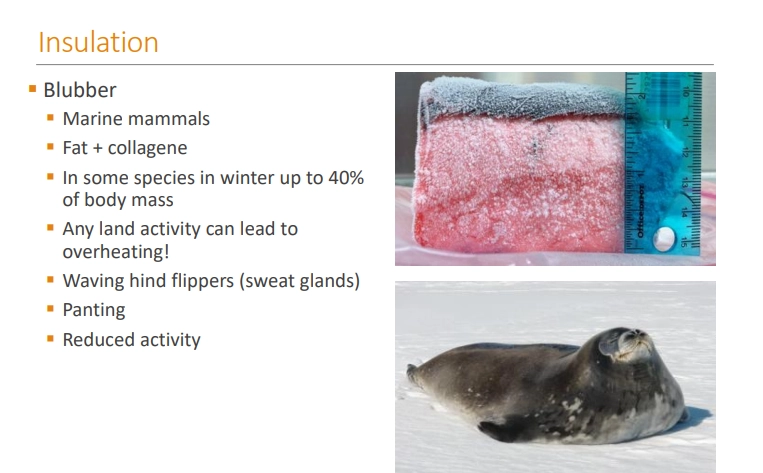
insulation- long fur + blubber made of fat + collagen in marine mammals
appendages- shorter + thicker limbs with countercurrent heat exchange between veins + arteries
colouration- light pigmentation of fur/clear hairs so light penetrates to the dark skin (+ camouflaging)
migration to warmer climates
microclimate modification- communal nesting + elaborate nests
food hoarding
reduction in activity/body mass, dormancy, torpor + hibernation- reduced metabolic rate, heart rate + body temperature
how can mammals be adapted to hot environments?
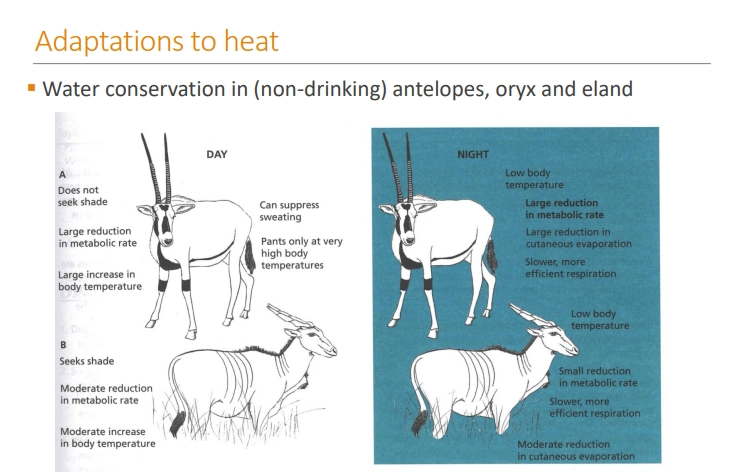
nocturnal activity to avoid exposure to high temperatures
relying on burrows + shade
anatomic arrangement to promote cooling of the brain
longer, thinner appendages + large ears for heat loss
small body size to maximise s.a:vol ratio and increase heat loss
concentrated urine (long loops of Henle) + dehydrated faeces for water conservation
what is the tooth structure and positioning in mammals?
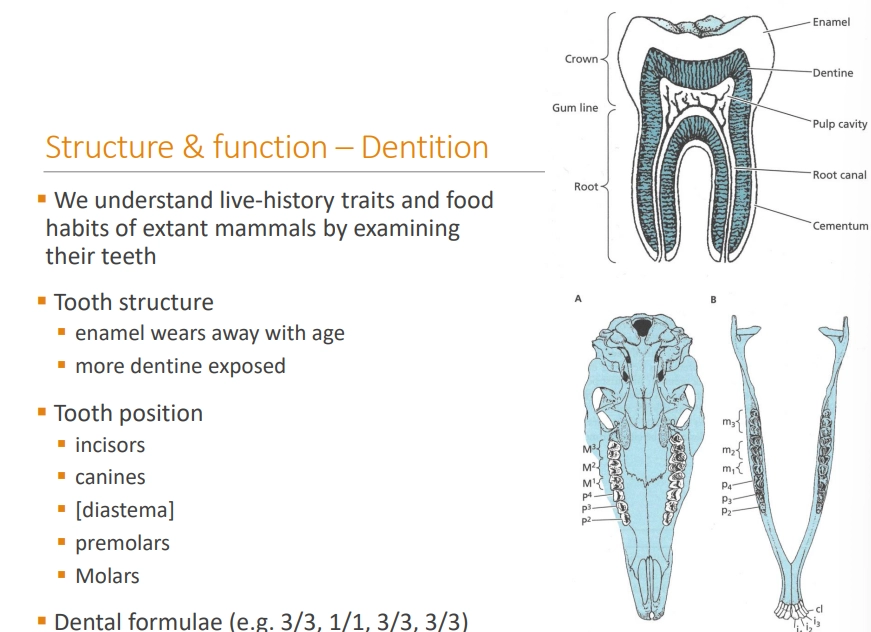
carnivores and herbivores have different tooth layouts/structures as well as jaw movements
these all evolved from a small, insectivorous mammalian ancestor
carnivore jaw muscles favour vertical movement- shearing
herbivore jaw muscles favour horizontal movement- grinding
omnivore jaw movement facilitates both- crushing
how have mammals adapted to insectivory?
insectivory is the basal, ancestral condition of placental mammals
teeth tend to be smaller and similar in structure
in many cases a sticky protruding tongue is relied on to catch insects
short intestines, no cecum
longer, extended skulls evolved multiple times
how have mammals adapted to carnivory?
short intestine + colon, small cecum
terrestrial carnivores often use large canines to catch and hold prey
specialisations of aerial (eg. vampire bats) and aquatic (eg. baleen whales- baleen filters + no teeth to feed on zooplankton) carnivores
how have mammals adapted to herbivory?
forgeut fermentation- chambered ruminant stomachs for fermentation of cellulose (digastric)
hindgut fermentation (monogastric)
specialisations for granivory, folivory (leaves), frugivory (fruit), nectarivory (long tongue), gummivory, mycophagy
gnawing mammals have teeth that grow for life
some evolved coprophagy- feeding on faeces for dual digestion