2: Biochemical Testing of Metabolic Decompensation
 Call Kai
 Learn
Learn Practice Test
 Spaced Repetition
 Match
Match Flashcards
 Knowt Play
1/31

There's no tags or description
Looks like no tags are added yet.
Name | Mastery | Learn | Test | Matching | Spaced | Call with Kai | Chat |
|---|
No analytics yet
Send a link to your students to track their progress
32 Terms
what is metabolic decompensation?
what factors lead to it?
breakdown of prev functional metabolic pathways
fatigue, stress, sickness, old age
note: a compensated syst can still function despite stressors/defects
what serious hyperglycymeic emergencies can people w diabetes get?
diabetic ketoacidosis (DKA), hyperglycemic hyperosmolar state (HSS)
decompensated diabetes =
presence of DKA and/or HHS
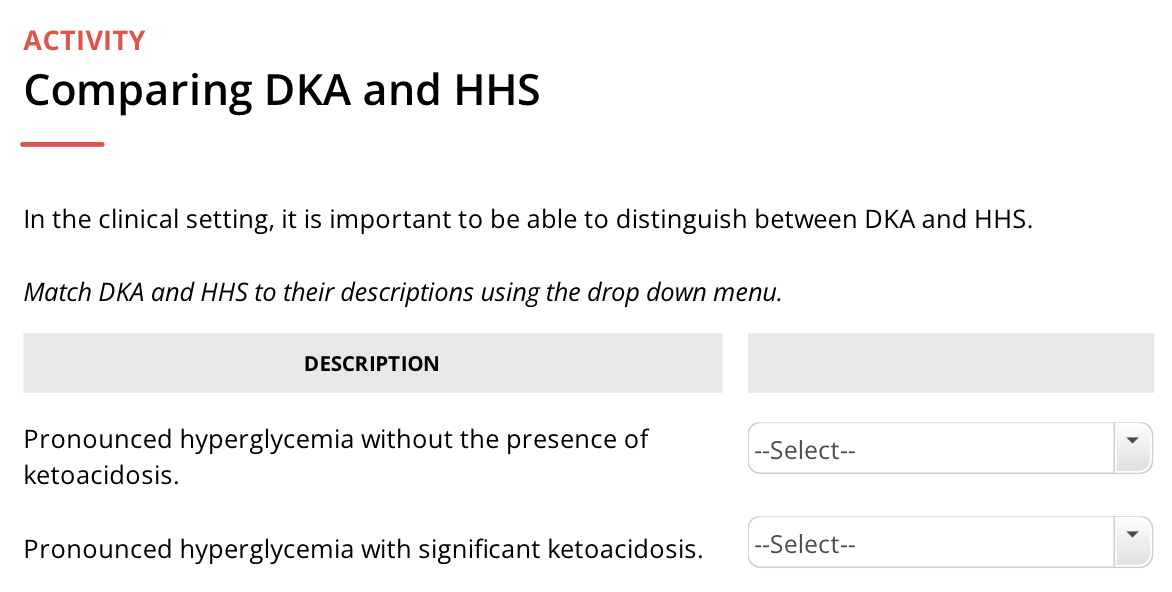
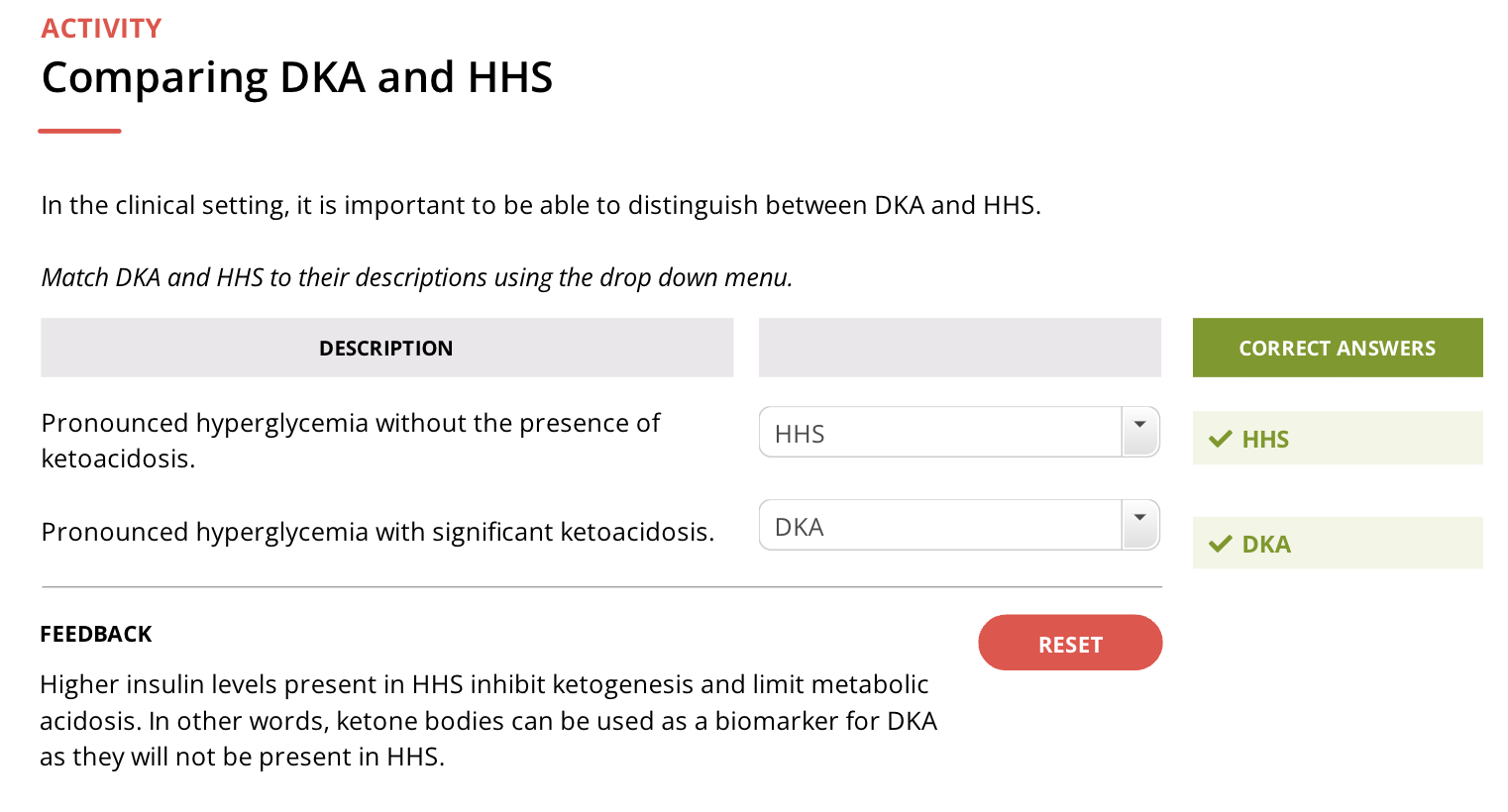
compare DKA and HHS
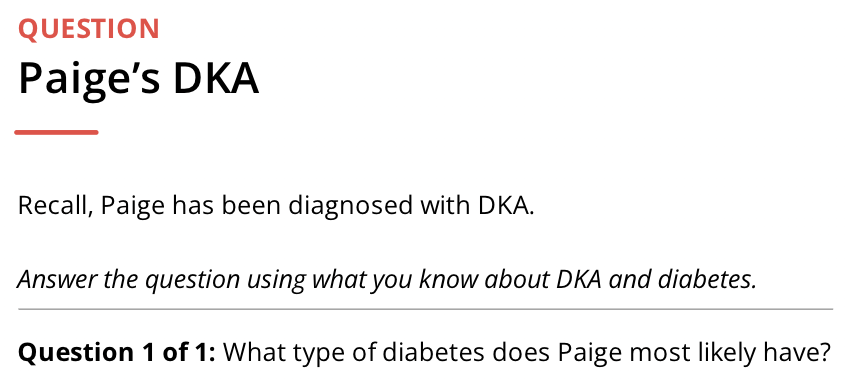
body cant make enough insulin to break down glucose into E → ketogenesis → acid (ketone body) buildup in blood → DKA
more common in young people
symptoms: fast/deep breathing, fruity breath, tired, nausea, vomit
prolonged hyperglycemia → severe dehydration → confusion → HHS
insulin cant control blood glucose → excrete gluc into urine → inc urination → dehydration
more freq in adults, elderly
symptoms: confusion, drowsy, extreme thirst, freq urine, fever, blurred vision
both DKA and HHS are characterized by?
hyperglycemia
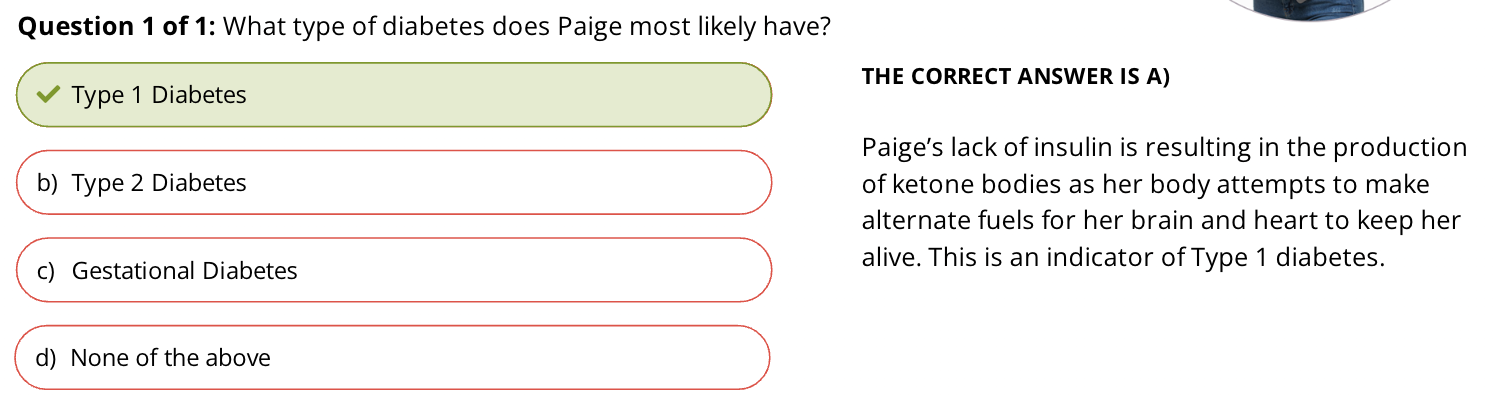
absolute (T1D) or relative (T2D) insulinpenia = [low insulin in bloodstream]
DKA and HHS differ by?
severity of dehydration, ketosis, metab acidosis
ketosis =
metab state that indicates elevated levels of ketone bodies in blood/urine
most common facotrs in DKA/HHS development
inadequate insulin therapy (omitted or insufficient regimen)
infection
Inadequate insulin therapy can result in?
absolute (as in T1D patients) or relative insulin deficiency (as in T2D patients undergoing stress or illness)
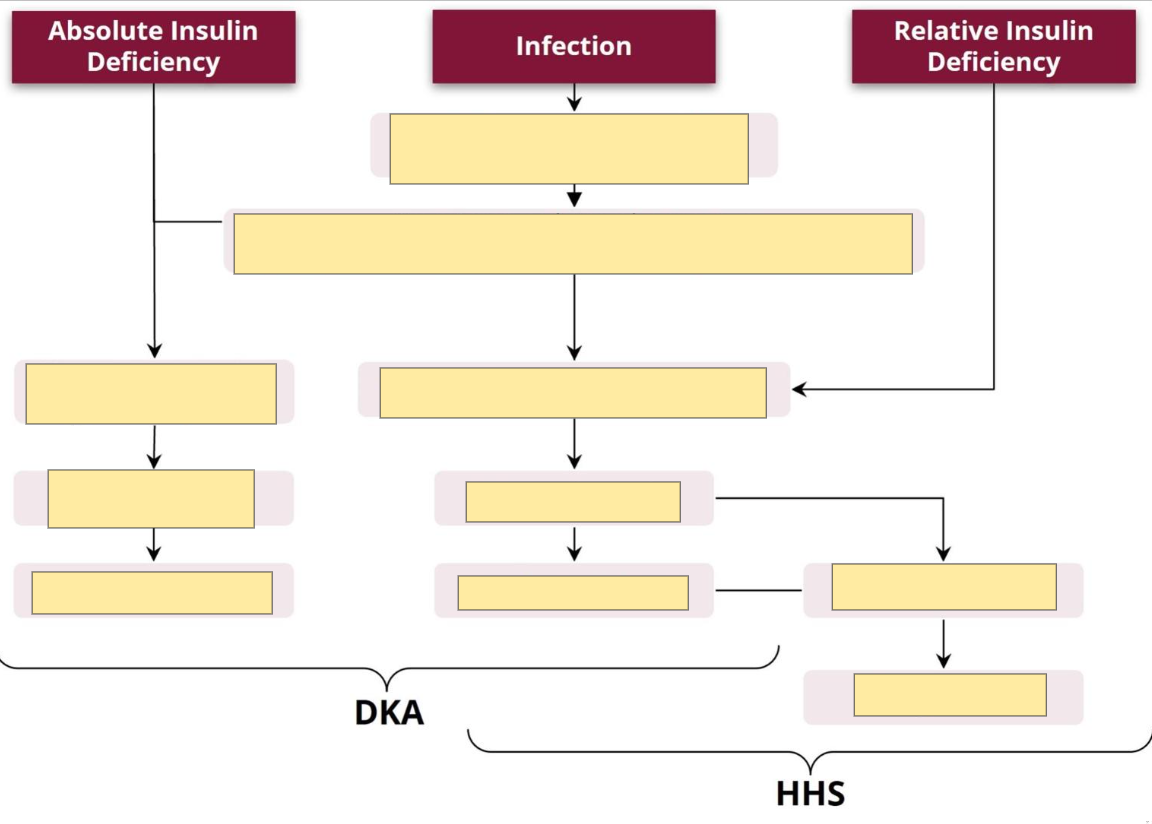
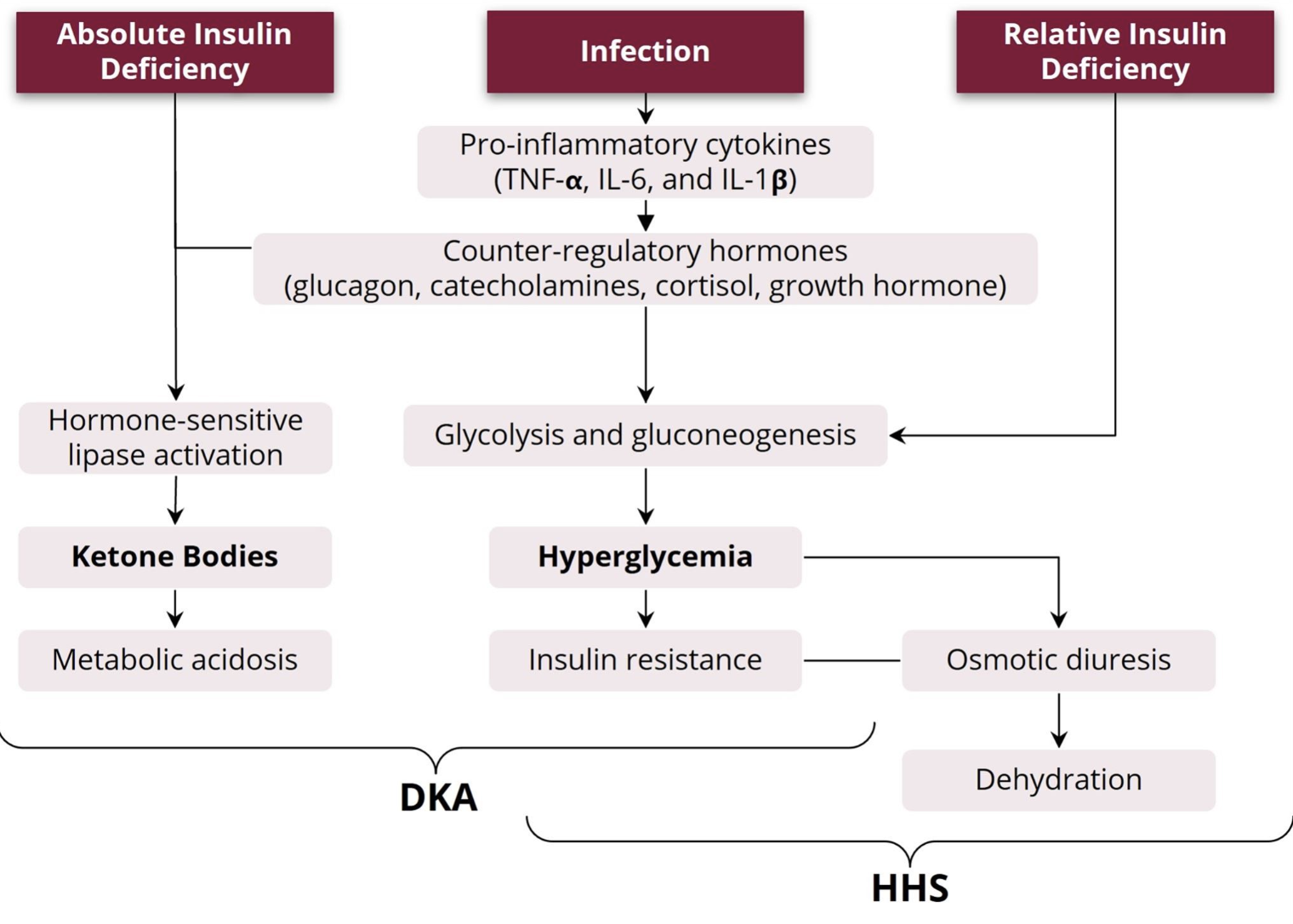
pathogenesis of DKA and HHS
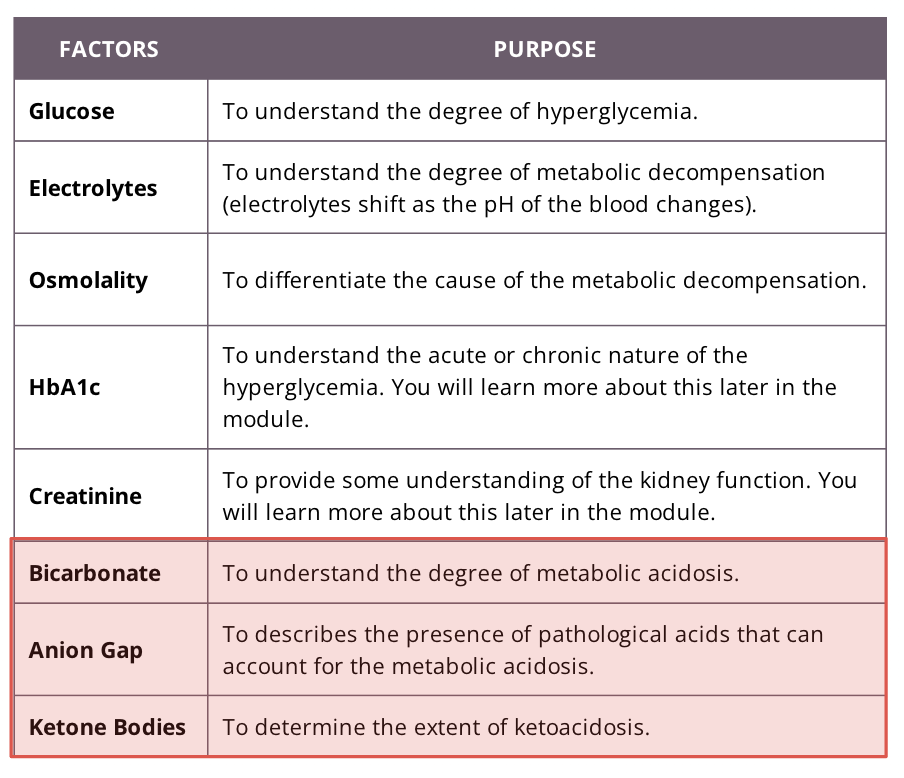
The initial laboratory evaluation of patients with suspected DKA or HHS may involve?
blood gas determination
urine testing for ketones (associated with
ketoacidosis)
plasma testing for
a variety of factors
patients exhibiting DKA will present with …, while those exhibiting HHS …; the differentiating factor is the …
the first clue to metabolic acidosis is a ...
explain
metabolic acidosis, will not, presence of ketone bodies in DKA
decreased serum bicarbonate concentration ([HCO3-])
serum [HCO3-] < reference interval (22-30 mmol/L) → metabolic acidosis
cause can be differentiated by serum electrolytes and arterial blood gases → define if acidemia (low blood pH) + anion gap is present
how to measure serum [HCO3-]
note: even though carbonic anhydrases are present in blood, assay uses PURIFIED ENZYMES added as reagents in assay
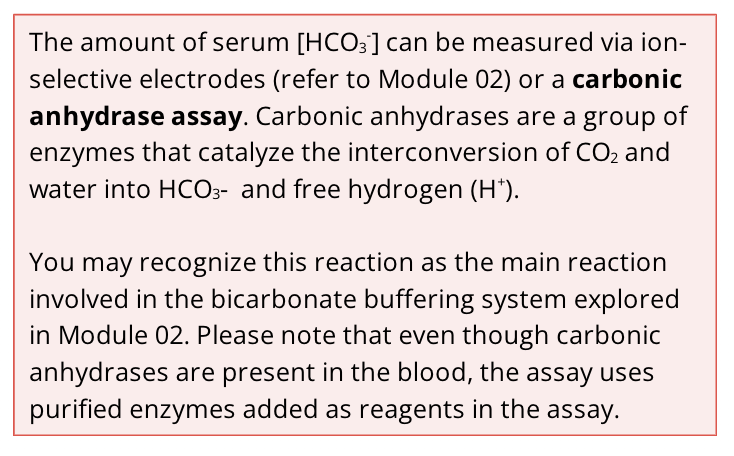
The amount of HCO3- present in a plasma or serum sample is typically determined by ...
The test is often referred to as … because the first step in the testing method is to …
and then, the amount of HCO3- is measured how?
the measurement of total CO2
"total CO2"; alkalinize a sample to convert all forms of CO2 to HCO3-
indirectly by enzymatic methods → conversion of oxaloacetate to malate and NADH to NAD+ → use spectrometry to detect NADH consumption → use absorbance values to estimate sample [HCO3-]
![<ul><li><p>the measurement of total CO2</p></li><li><p>"total CO2"; alkalinize a sample to convert all forms of CO2 to HCO3-</p></li><li><p>indirectly by enzymatic methods → conversion of oxaloacetate to malate and NADH to NAD+ → use spectrometry to detect NADH consumption → use absorbance values to estimate sample [HCO3-]</p></li></ul>](https://knowt-user-attachments.s3.amazonaws.com/d42d2ca6-8e71-4e6c-b705-61eea6371767.jpeg)
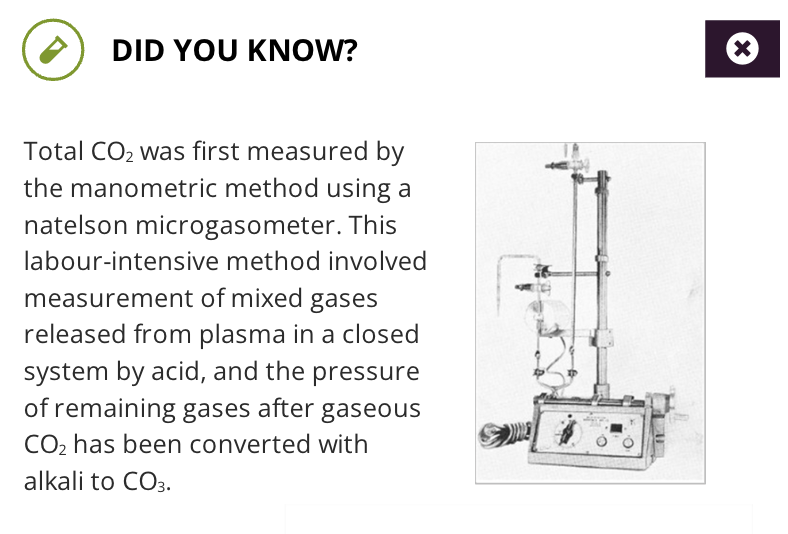
how CO2 was measured historically
manometric method using a natelson microgasometer; labour-intensive; measure mixed gases from plasma in closed acid system; pressure of leftover gases after gas co2 is converted w alkali to co3
the anion gap (AG) is a useful parameter to decipher ...
The principle of … orders that anions must …
Most frequently requested biochemical profile, urea, and electrolytes?
Other cations and anions present? But need to make sure that?
metabolic acidosis
plasma neutrality; balance cations to maintain a neutral charge
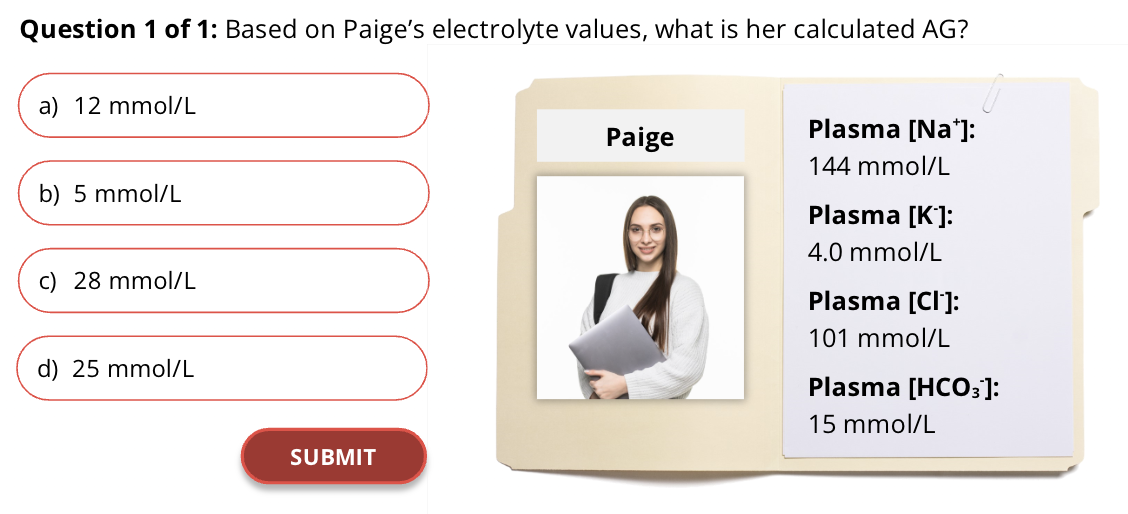
cation: Na+; anions: Cl-, HCO3-
K+ and albumin; if i want to use them for anion gap calc, i need to measure them in patient AND be mindful of a different reference interval when these additional charged species in the blood are taken into account
anion gap calculation
when does AG occur?
what if the anion gap is too large or small?
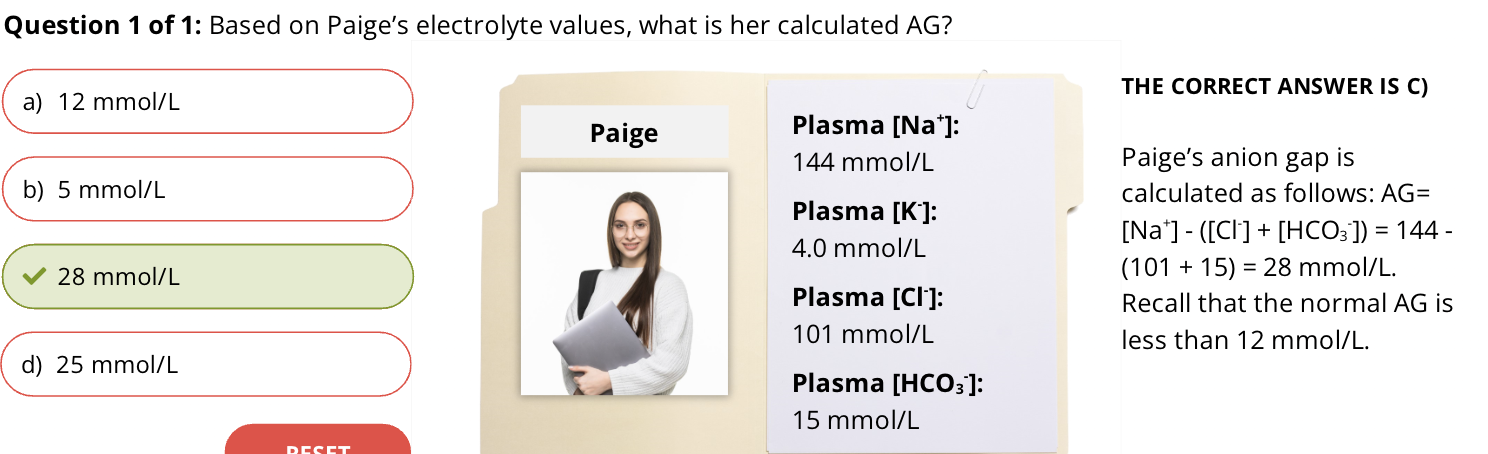
AG = [Na+] - ([CI-] + [HCO3-])
[Na+] (e.g., 142 mmol/L) > combined [Cl-] and [HCO3-] (e.g., 130 mmol/L) by 12 mmol/L or greater
→ could be a sign of disorder in the lungs, kidneys, or other organ systems
![<p><mark data-color="purple">AG = [Na+] - ([CI-] + [HCO3-])</mark></p><p>[Na+] (e.g., 142 mmol/L) > combined [Cl-] and [HCO3-] (e.g., 130 mmol/L) <strong>by 12 mmol/L or greater</strong></p><p>→ could be a sign of disorder in the lungs, kidneys, or other organ systems</p>](https://knowt-user-attachments.s3.amazonaws.com/8bff0717-b25c-48a3-b625-9b14be405dc2.jpeg)
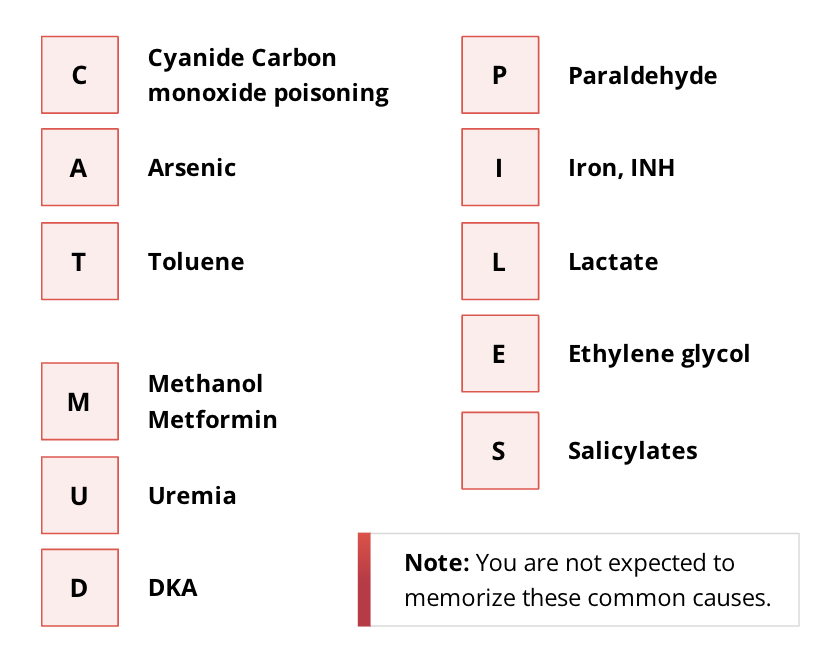
causes of AG metabolic acidosis
it is ferq a result of?
CAT MUD PILES
anaerobic metabolism + lactic acid accumulation
what is a hallmark of absolute insulin deficiency
DKA
effects of absolute insulin deficiency (DKA) on:
glucose
fatty acids
ketone bodies
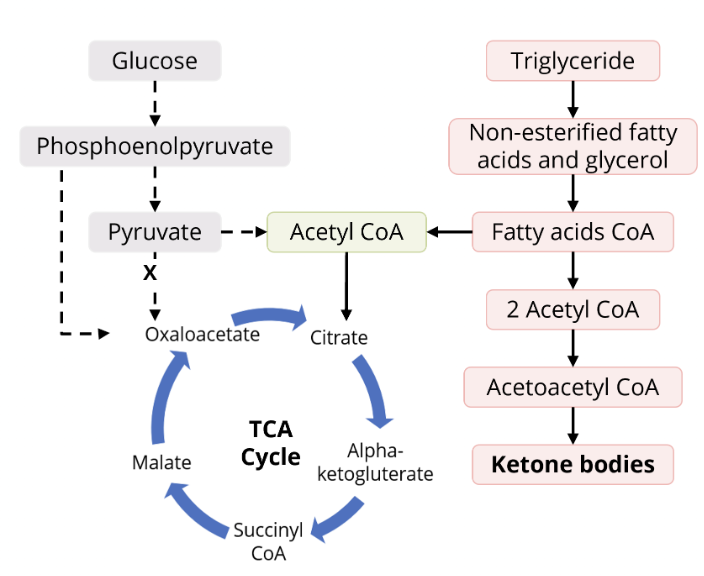
absolute insulin deficiency → glucose not properly released + metabolized thru TCA/Krebs/Citric Acid cycle → can’t gen E for body to use
triggers FFA gen from triglycerides in adipocytes → beta oxidize FA → form acetyl CoA → enter TCA → gen E w/out glucose
absolute insulin deficiency and fatty acid breakdown → so much acetyl CoA being prod + trying to enter TCA cycle → enzyme systems become overwhelmed → excess acetyl CoA converted to ketone bodies in liver
how to determine amount of ketoacidosis occuring
measure levels of ketone bodies in circulation
another tool to understand cause of AG metabolic acidosis → …; this assists in the … and …
measurement of plasma ketone bodies, diagnosis of ketoacidosis, differentiating DKA from HHS
The principal ketone bodies are … and ...
… can be metabolized to either …, through a … reaction, or …, through a … reaction.
In DKA, an … results from …
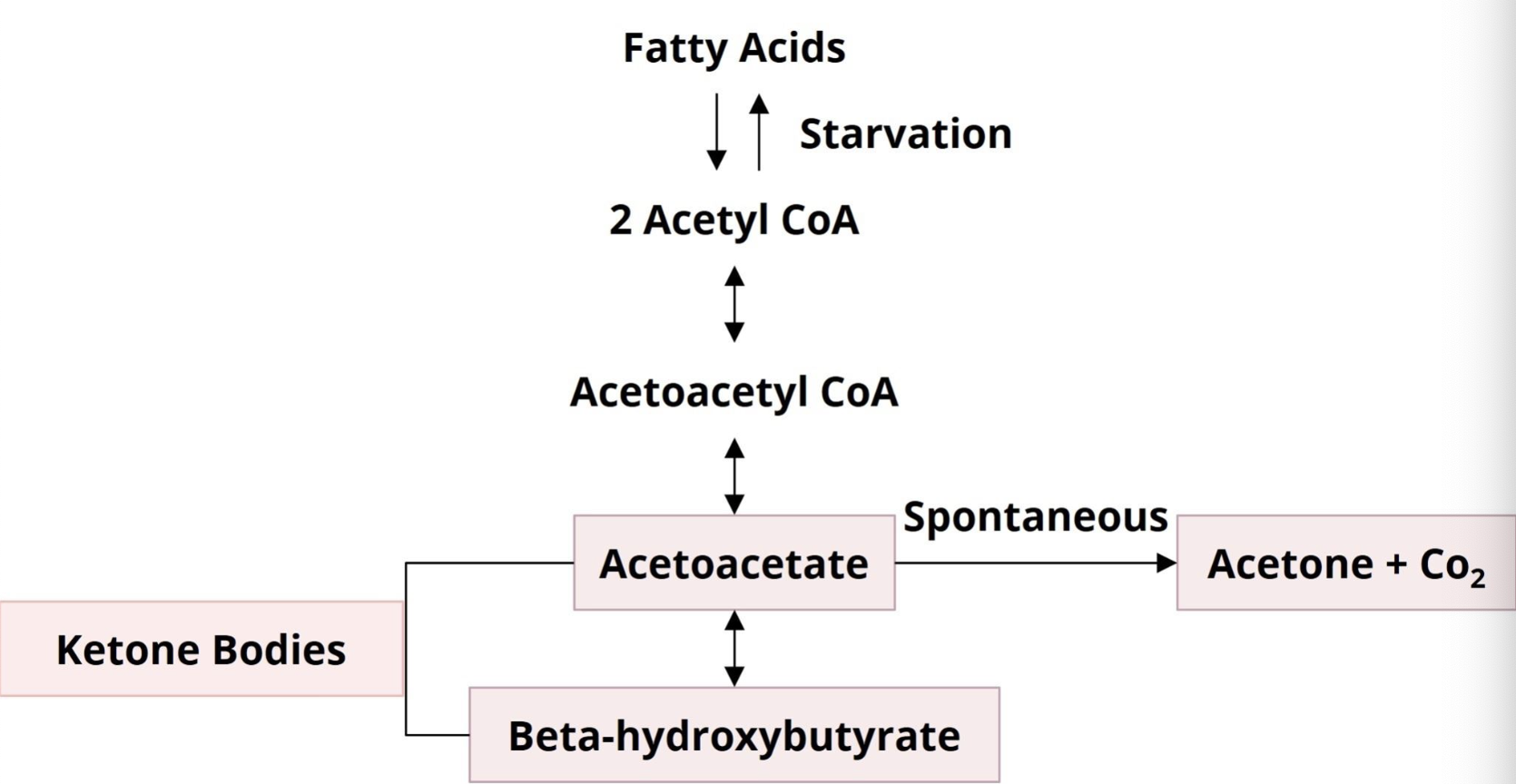
beta-hydroxybutyrate
(BHB); acetoacetate (AcAc)
AcAc, acetone, non-reversible, BHB, reversible
increased BHB: AcAc ratio, enhanced fatty
acid beta oxidation
first test available to test ketone body presence
availability? convenience?
what exactly do they measure? BUT?
limitations?
nitroprusside test tablets (Acetest)
broadly, convenient → easy to perform, long shelf life
blood and/or urine acetone + acetoacetic acid levels; DO NOT MEASURE BHB LEVELS
Nitroprusside test tablets react mainly with AcAc in samples, with limited reaction with acetone → prod colour change
DKA primarily produces BHB → underestimate keotsis severity when BHB:AcAc ratio is high (as in DKA) → so AcAc value may yield false negatives in DKA patient
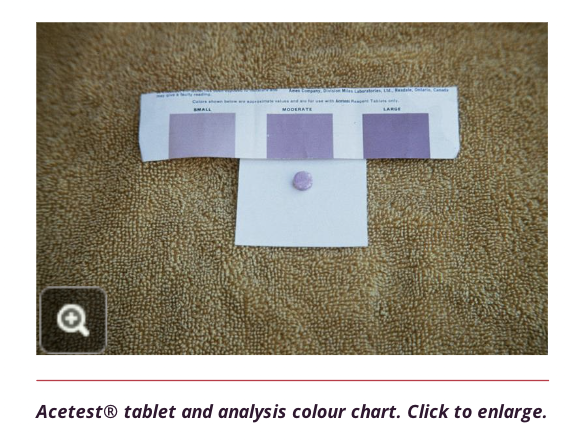
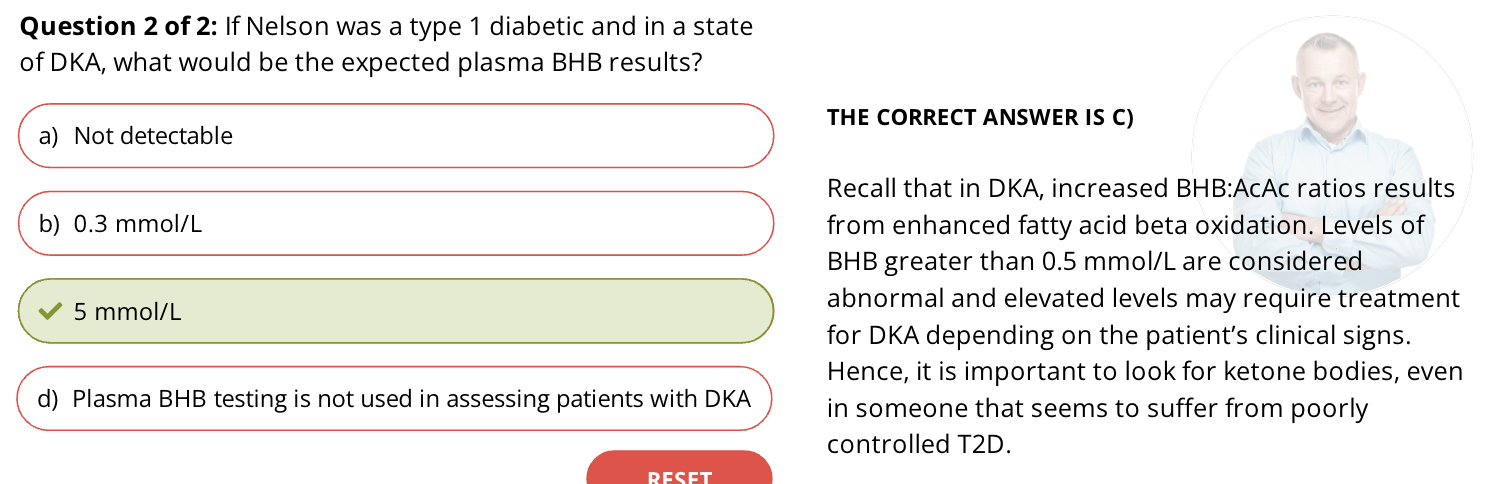
BHB test is used to measure … to eval potential …
abnormal BHB levels =
elevated levels may require?
2 diff methods to admin BHB test:
whole blood, serum, or plasma, presence of DKA
GREAT THAN 0.5 mmol/L
DKA treatment depending on patient clinical signs
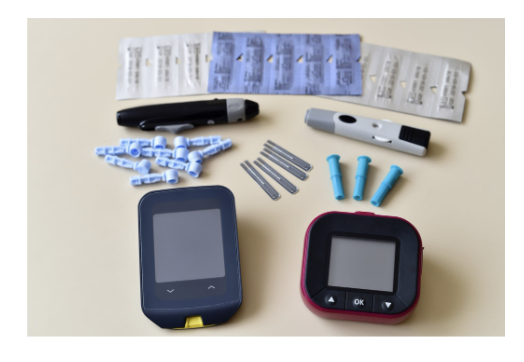
bedside ketone meters
used to initially diagnose DKA
ex. of POCT
ketone meters measure serum BHB levels by using a reagent strip
lab testing
serum/capillary BHB testing → follow treatment response in DKA patients or used in suspected DKA or alcoholic ketoacidosis (AKA) cases

metformin
first-line medication for T2D treatment
Urine test (urinalysis) for ketone bodies detects only acetoacetate
Relative amounts of acetoacetate to beta hydroxybutyrate can vary based on redox state of fluid
In diabetic ketoacidosis, beta-hydroxybutyrate predominates
Only trace amounts of acetoacetate may be present in urine
Urinalysis may be negative for ketone bodies in diabetic ketoacidosis → patient has DKA w large amount of ketone bodies in form of BHB
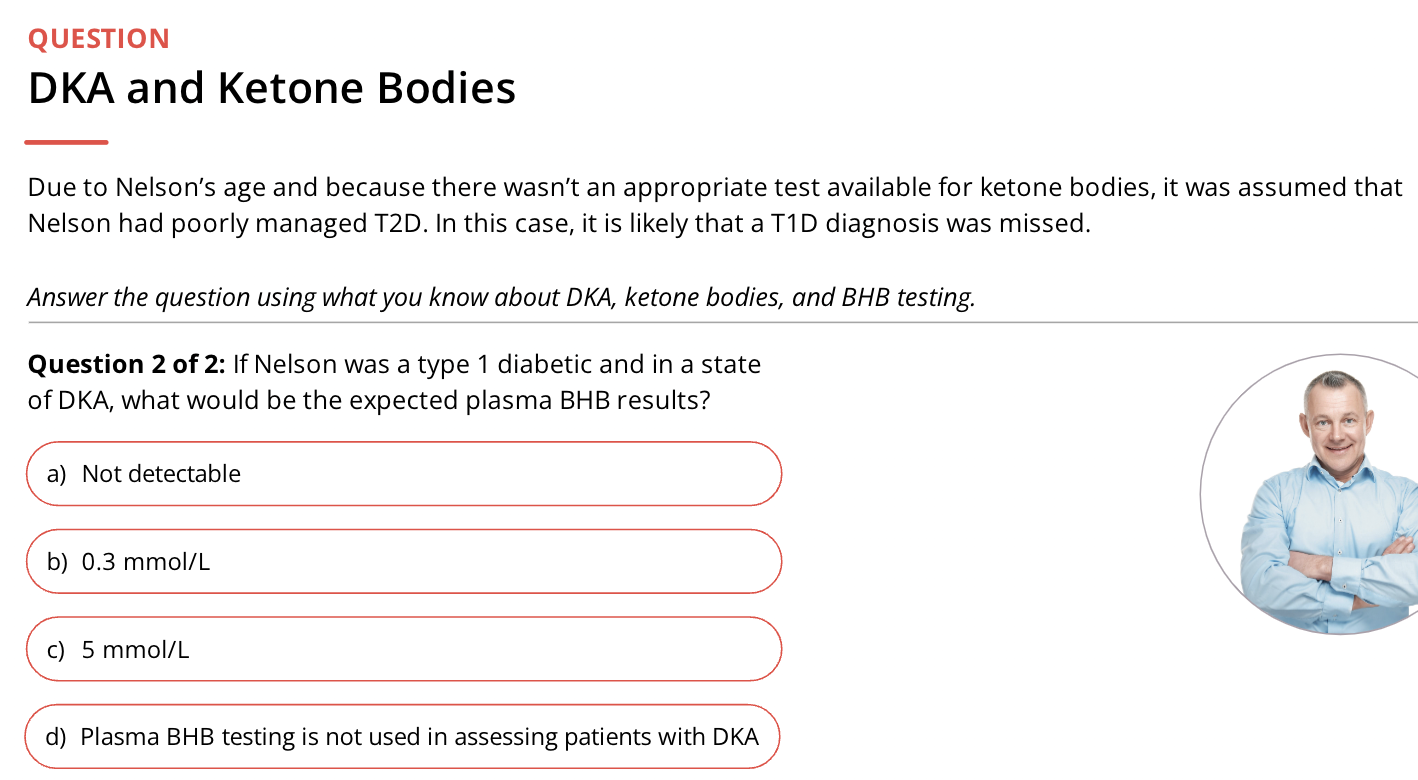
BHB levels > 0.5 mmol/L are abnormal
Elevated BHB may require DKA treatment
Increased BHB:AcAc ratios in DKA due to enhanced FA beta oxidation
Important to monitor ketone bodies, even if someone seems to suffer from pooly managed T2D