unit 1 vocab and roots (ap bio)
 Call Kai
 Learn
Learn Practice Test
 Spaced Repetition
 Match
Match Flashcards
 Knowt Play
1/57

There's no tags or description
Looks like no tags are added yet.
Name | Mastery | Learn | Test | Matching | Spaced | Call with Kai | Chat |
|---|
No analytics yet
Send a link to your students to track their progress
58 Terms
Molecules
Groups of two or more atoms held together by chemical bonds
Carbohydrates
Broken down to glucose to provide energy, made of monosaccharides

Nucleic Acids
large biomolecules that play essential roles in all cells and viruses, made of nucleotides
properties of water
cohesive- creates surface tension; allows travel through tight knit spaces without energy
adhesive- allows it to stick to other molecules
Has high specific heat and high heat of vaporization
The universal solvent
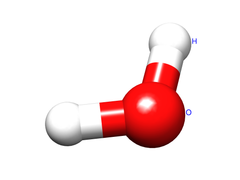
water
Polar molecule (- charged oxygen end; + charged hydrogen end)
Cellulose
A substance (made of sugars/carbs) that is common in the cell walls of many organismst is a polysaccharide consisting of chains of glucose monomers.
Tertiary structure
The third level of protein structure; three-dimensional shape of a polypeptide due to interactions of the R groups of the amino acids making up the chain.

Hydrophobic
Having an aversion to water; forms droplets in water, does NOT mix, NONPOLAR
Nonpolar
a molecule in which all atoms have the same electronegativity and the electron distribution is equal

Carboxyl end
the end of a polypeptide chain that has a free carboxyl group ( oxygen double bonded to a carbon with a oxygen to hydrogen bonded)

Phosphate group
A functional group consisting of a phosphorus atom covalently bonded to four oxygen atoms with one double bond
Functional groups
specific groupings of atoms within molecules that have their own characteristic properties, regardless of the other atoms present in a molecule
Cofactor
A nonprotein molecule or ion that is required for the proper functioning of an enzyme.

Atoms
Building blocks of matter

Proteins
a macromolecule the body uses to build and maintain its cells and tissues (amino acids)

Nitrogen
used to build proteins and nucleic acids
Polarity
A lack of electrical symmetry in a molecule. Charge differences on opposite ends of a structure.

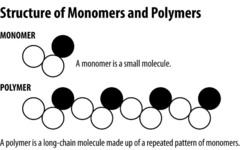
Polymer
A long molecule consisting of many similar or identical monomers linked together.

Primary structure
The first level of protein structure; the specific sequence of amino acids making up a polypeptide chain.

Quaternary structure
The fourth level of protein structure; the shape resulting from the association of two or more polypeptide subunits.

Hydrophilic
Having an affinity for water. POLAR
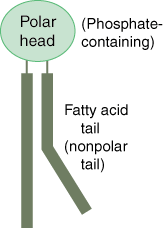
Phospholipids
a lipid consisting of a glycerol bound (hydrophilic) to two fatty acids (hydrophobic) and a phosphate group (hydrophilic)
Amino end
The end of a polypeptide chain that has a free amino group.

Fatty Acids
chains of carbon atoms bonded to hydrogen atoms, makes up lipids

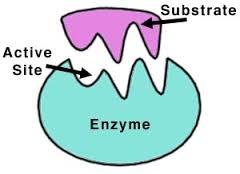
Enzyme
A type of protein that speeds up a chemical reaction in a living thing

Substrate
A specific reactant acted upon by an enzyme

Carbon
used to build all 4 macros
Lipids
Energy-rich organic compounds, such as fats, oils, and waxes, that are made of carbon, hydrogen, and oxygen.

Phosphorus
necessary to make lipids and nucleic acids
Hydrogen bonding
Bonds between partial positive hydrogen atom and partial negative oxygen atom of another water molecule (dipole-dipole)
Monomer
A simple compound whose molecules can join together to form polymers
Secondary structure
The second level of protein structure; the regular local patterns of coils or folds of a polypeptide chain DUE TO HYDROGEN BONDS

R group
the atoms attached to the central carbon (depends on which is included for characteristics)

Ionic
Formed when one or more electrons are transferred from one atom to another, opposite charges

Dehydration synthesis
A chemical reaction in which two monomers covalently bond to each other with the removal of a water molecule.

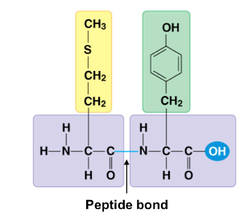
Peptide bond
The chemical bond that forms between the carboxyl group of one amino acid and the amino group of another amino acid
Cholesterol
A lipid that forms an essential component of animal cell membranes, a steroid, four ring structure and hydrophobic(nonpolar)

Coenzyme
an organic cofactor

Active Site
a region on an enzyme that binds to a protein or other substance during a reaction.
Activation Energy
the minimum amount of energy required to start a chemical reaction
bio-
life, living

-ell
pertaining or adhering to
eu-
normal
pro-
before, forward
karyo-
the nucleus of a cell

an-
not, without, lacking, deficient
co-
with, together

electro-
electric or electricity

iso-
equal, same
neutr-
neutral
kilo-
one thousand
hydro-
water
phil-
affinity; preference; loving
phob-
fearing
enanti-
opposite (enantiomer: molecules that are mirror images of each other)
carb-
Carbon
sulf-
Sulfur
thio-
an oxygen atom in the compound has been replaced by a sulfur atom