AP PSYCHOLOGY || Unit 1 (Fall 2026)
 Call Kai
 Learn
Learn Practice Test
 Spaced Repetition
 Match
Match Flashcards
 Knowt Play
1/60

Earn XP
Description and Tags
....
Name | Mastery | Learn | Test | Matching | Spaced | Call with Kai | Chat |
|---|
No analytics yet
Send a link to your students to track their progress
61 Terms
Gestalt Psychology
"the whole is different from the sum of its parts"
Structuralism (goal)
The first formal school of thought in psychology, aimed at analyzing the basic elements, or structure, of conscious mental experience.
Wilhelm Wundt
"the father of psychology"
Introspection
examining of one's own thoughts and feelings; Thinking about the way you think
Psychology
the scientific study of behavior and mental processes
Functionalism
focuses on the PURPOSE or FUNCTION of our behavior rather than the individual structures
Psychodynamic Perspective (goal)
focuses on the subconscious's effect on our behavior
Subconscious
The part of the mind that we are not consciously aware of
Psychoanalysis
A category of therapies designed at analyzing the subconscious (like ink blots or free association)
Behavioral Perspective
Focuses on how conditioning, or learning associations, affects our behavior
Conditioning
learning associations between our behavior and consequences (rewards and punishments) or between two stimuli (thunder and lightning)
Humanistic Perspective
focuses on positive aspects of psychology like reaching our full potential and becoming our best version of ourselves
Cognitive Perspective
focuses on mental process and how they affect behavior such as problem solving, critical thinking, intelligence, memory, etc... (it's a lot of stuff)
Biological Perspective
focuses on how our behavior is affected by our physical brains and body chemistry (hormones, neurons, neurotransmitters, etc...)
Sociocultural Perspective
focuses on how the norms and expectations of our culture can impact our behavior and mind
Positive Psychology
the scientific study of human functioning, with the goals of discovering and promoting strengths and virtues that help individuals and communities to thrive
Biopsychosocial Perspective
focuses on a combination of physical elements, cognitive elements, and social elements and how they affect our behavior
Applied Research
Studies done for a specific purpose or for solving a problem
Basic Research
Studies conducted for knowledge's sake, without a specific purpose or problem to solve
Case Study
A detailed study of a single person or event (like Phineas Gage)
Case Study (advantages)
Lots of detail and they're good for unique situations
Case Study (disadvantages)
The results can't be applied to everyone, they often rely on eyewitness testimonies or memories of people (which are often incorrect), and they can't be replicated or reproduced
Correlations
Shows relationships between two different variables
Positive Correlation
as one variable increases, so does the other (like studying and grades)
Negative Correlation
as one variable increases, the other decreases (like absences and grades)
Zero Correlation
no relationship between variables (like shoe size and grades)
Correlation Scatterplots
Shots relationships between variables on a graph
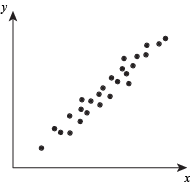
Positive Correlation (Scatterplot)
The variables increase together or decrease together
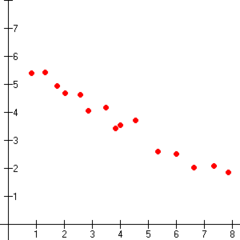
Negative Correlation (Scatterplot)
as one variable increases, the other decreases
Correlation Coefficient (r)
A numerical range showing the strength of the relationship between two variables (+1.00 to -1.00)
Illusory Correlation
thinking there is a relationship between two variables when there isn't one ('this always happens to me' when it likely doesn't).
Correlations (disadvantages)
Does NOT show causation
Surveys
Questionnaires and interviews that ask people directly about their experiences, attitudes, or opinions.
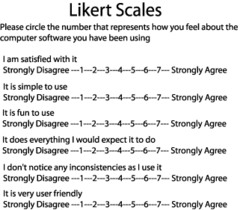
Likert Scale
A way to answer a survey that offers choices like 'strongly agree', 'agree', 'strongly disagree', etc... in response to statements
Representative Sample
a sample that accurately reflects the characteristics of the population as a whole
Sampling Bias
A problem that occurs when a sample is not representative of the population from which it is drawn.
Random Sampling
Choosing participants randomly from the population to take part in a survey or experiment
Random Selection
Choosing members of a sample to be in the experimental or control group of an experiment
Survey (advantages)
Easy to get lots of info
Survey (disadvantages)
People lie, it's difficult to get a representative sample, surveyors have agendas and have biased questions, people read into the questions too much
Social Desirability Bias
the tendency for people to say what they believe is appropriate or acceptable, rather than what may actually be true
Self-Report Bias
When people don't accurately report their own behaviors or traits
Naturalistic Observation
observing and recording behavior in naturally occurring situations without trying to manipulate and control the situation
Laboratory Observation
watching animals or humans behave in a laboratory setting
Observations (advantages)
We see actual behavior instead of relying on memories and perceptions of individuals
Observations (disadvantages)
observers can have biases or get tired and miss things; participants act differently when being observed
Hawthorne Effect
A change in a subject's behavior caused simply by the awareness of being studied
Observer Bias
tendency of observers to see what they expect to see
Experiment
Research method aimed at determining cause and effect relationships
Independent Variable
variable that is manipulated; difference between the control and experimental group
Dependent variable
the variable that is being measured in an experiment
extraneous variables
any variables other than the independent variable that seem likely to influence the dependent variable in a specific study
Experimental Group
The group that receives the Independent Variable
Sampling
The process of choosing who is in an experiment
Control Group
The group that does not receive the experimental method
Random Assignment
randomly choosing who is in the experimental group and who is in the control group within an experiment
Quasi-Experiment
An experiment in which random selection may not be practical, because people are already in groups (like women and men)
Placebo
a fake treatment given to control groups to mimic the experimental group's variable or to provide for a single-blind study
Single-Blind Study
study in which the subjects do not know if they are in the experimental or the control group
Double-Blind Study
An experiment in which neither the participant nor the researcher knows whether the participant has received the treatment or the placebo
Peer Review
When a colleague professionally reviews the work of another and critiques it