CT DMV Permit Test 2025
 Call Kai
 Learn
Learn Practice Test
 Spaced Repetition
 Match
Match Flashcards
 Knowt Play
1/121

There's no tags or description
Looks like no tags are added yet.
Name | Mastery | Learn | Test | Matching | Spaced | Call with Kai | Chat |
|---|
No analytics yet
Send a link to your students to track their progress
122 Terms
Learns permit holders and 16-17 year old licensed drivers may NOT:
- Transport more passengers than the number of seatbelts in the vehicle
- Operate any vehicle that requires a public passenger transportation permit or a vanpool vehicle
- Use a cell phone (even if it is hands-free) or mobile electronic devices while driving
- Transport any passengers on a motorcycle for six months after the issuance of a motorcycle endorsement
What is the fine for is the driver or passenger fails to wear a seatbelt AKA a seal belt violation?
$75
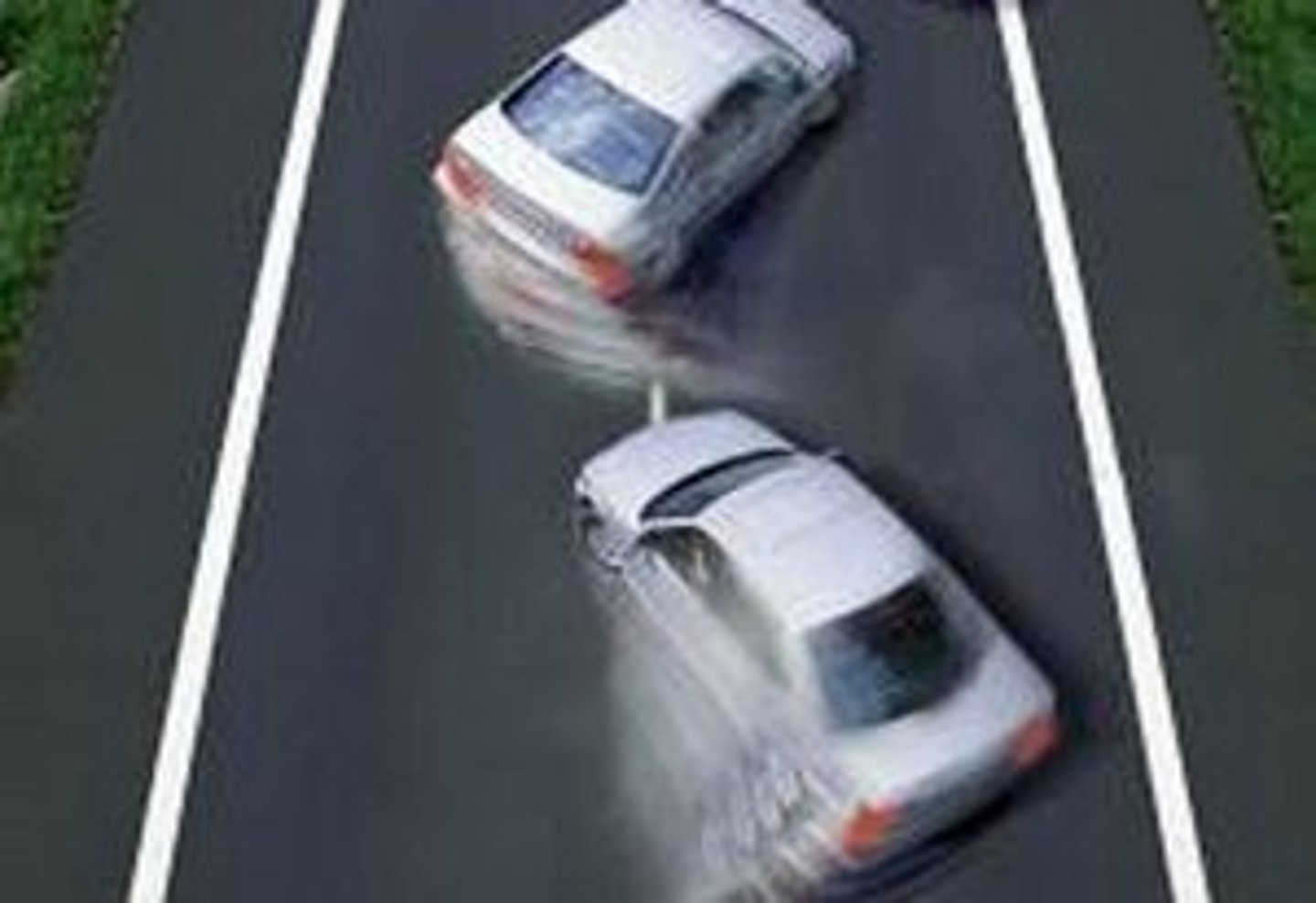
Worn tires increase the affect of ______________?
hydroplaning
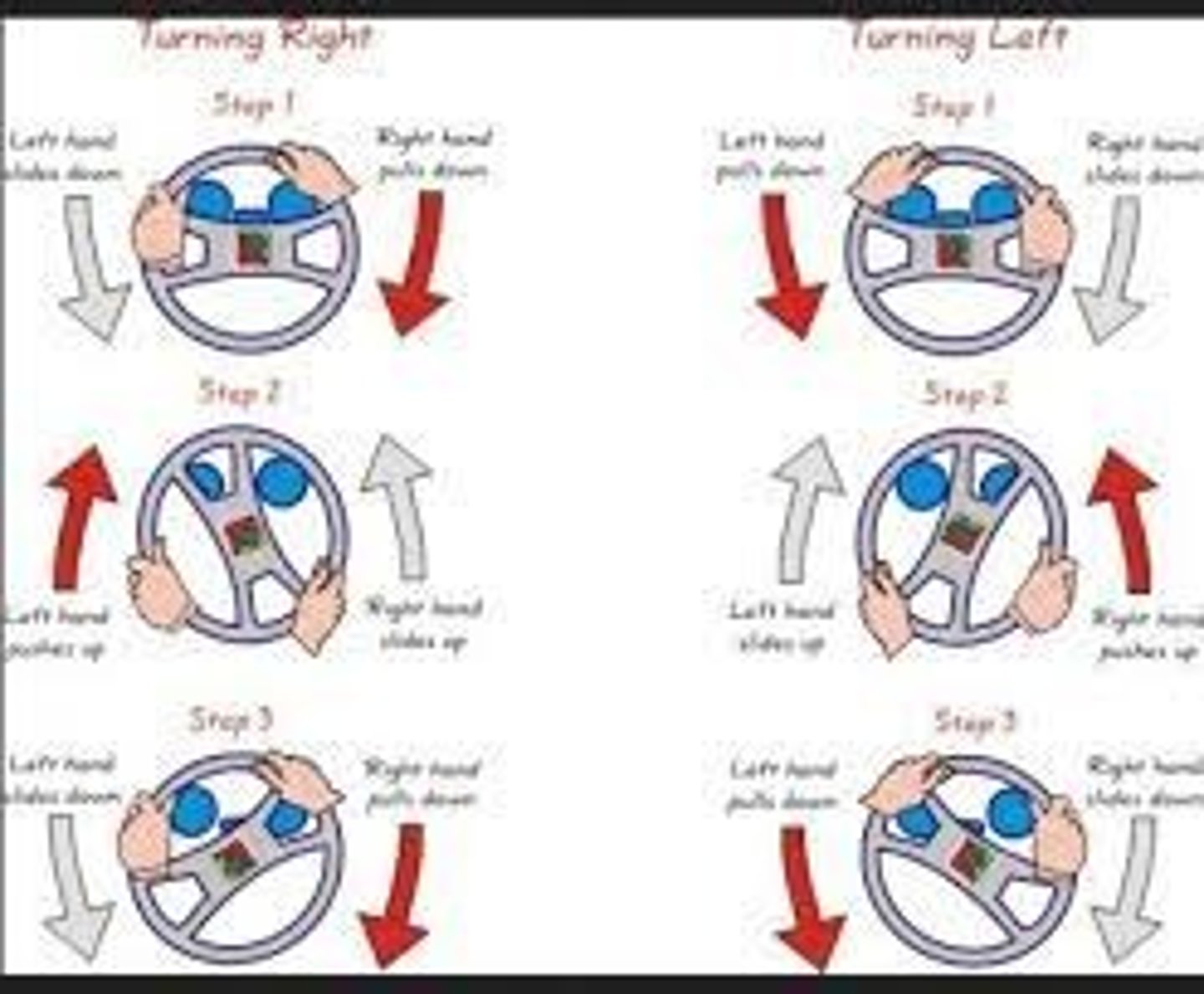
When do you use the hand-over-hand steering technique?
When turning sharp corners
(T/F) After turning your wheel, straighten out the steering wheel by letting it slip through your fingers.
False; straighten out the steering wheel by hand. Letting it slip through your fingers could be dangerous
What is the push/pull steering method?
It helps turning the wheel without crossing arms and keeping one hand on the wheel
How many seconds ahead do safer drivers trend to look ahead of their vehicle?
About 12 seconds
In the city, 12 seconds is about one block
On the highway, 12 seconds is about a quarter of a mile
When turning left across traffic, do you have the right-of-way?
NO you do not
Oncoming traffic, including bicycles, always has the right-of-way
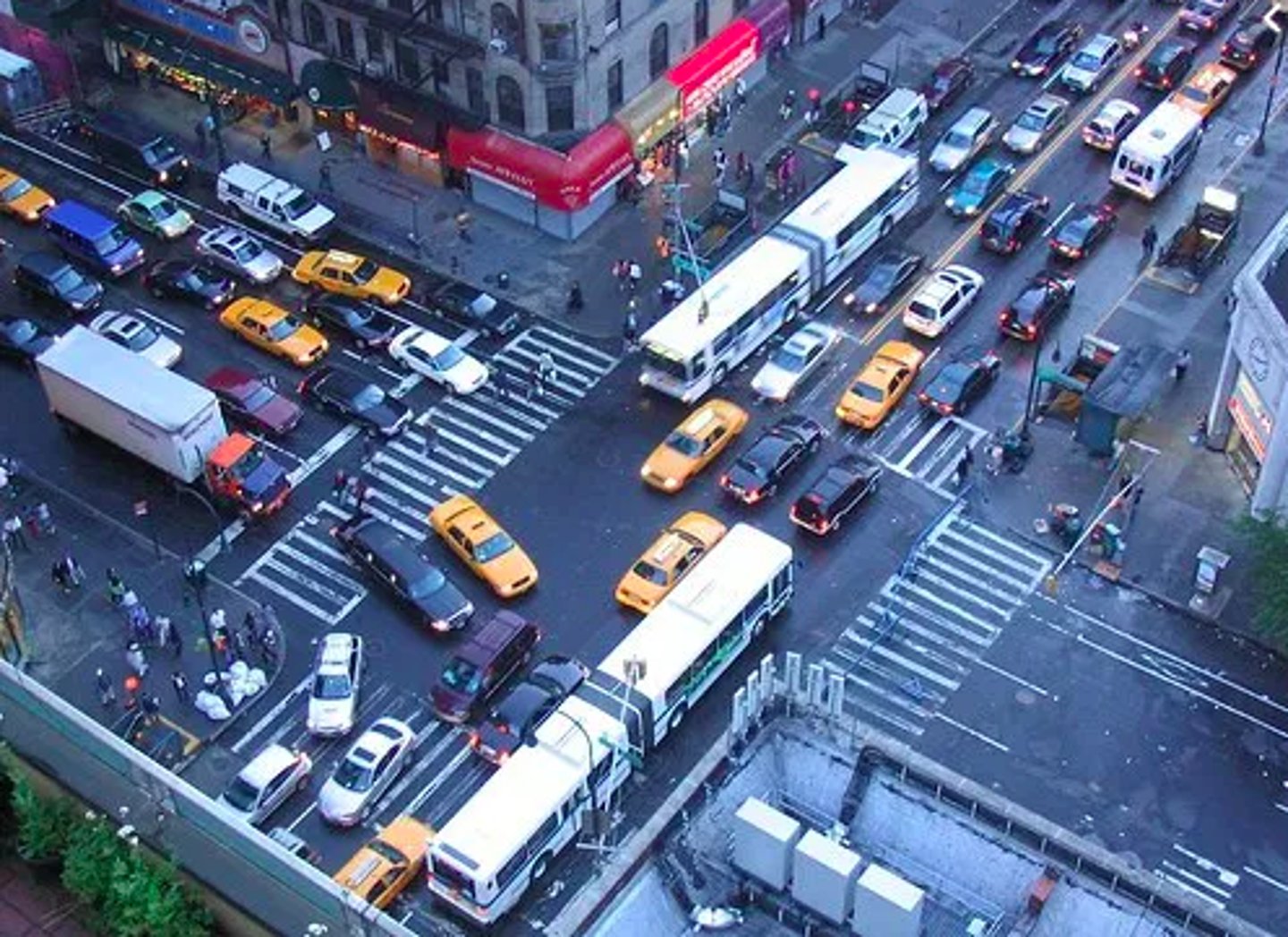
What is "blocking the box" or causing "gridlock"?
When drivers are prohibited from entering any intersection during heavy traffic unless there is enough room for their vehicle to fit without blocking the passage of other vehicles or pedestrians
Why do you have to wait until a passing train is well down the track before starting to cross at multi-track crossings?
The train that just passed may hide another one that is approaching
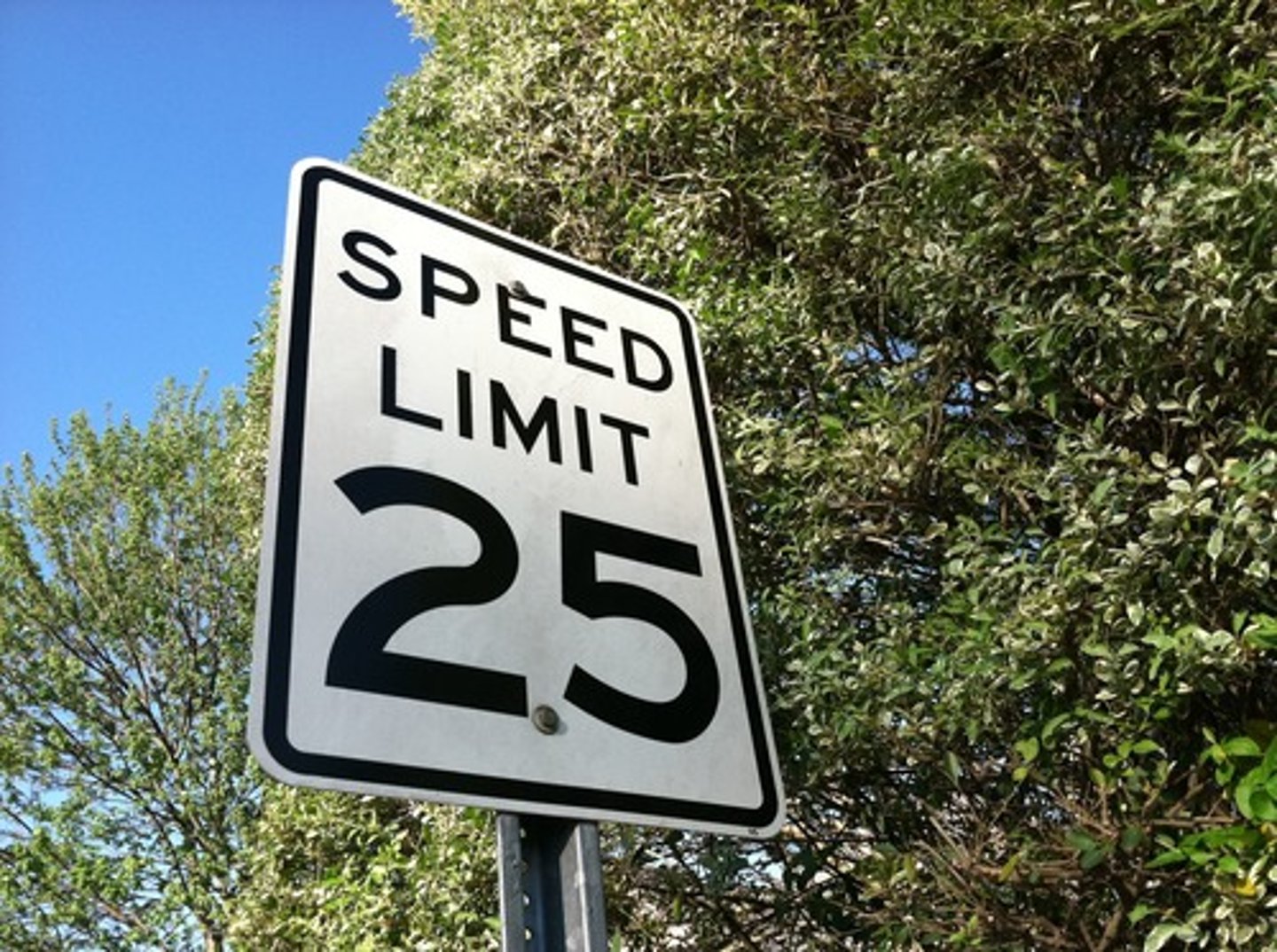
What should you do if there is no reduced speed limit signs near a work zone?
Obey the normal posted speed limit
What is the fine and punishments for anyone convicted of speeding, disobeying traffic control devices, using an improper lane, or endangering a highway worker within a work zone?
- Up to $1,000
- Can be assessed points against their driver's license
- May be required to complete the driver retraining program
What is the distracted driving fine for anyone convicted of illegally using a hand-held cellphone or mobile electronic device while driving in a work zone?
The fines are doubled from general work zone driving errors
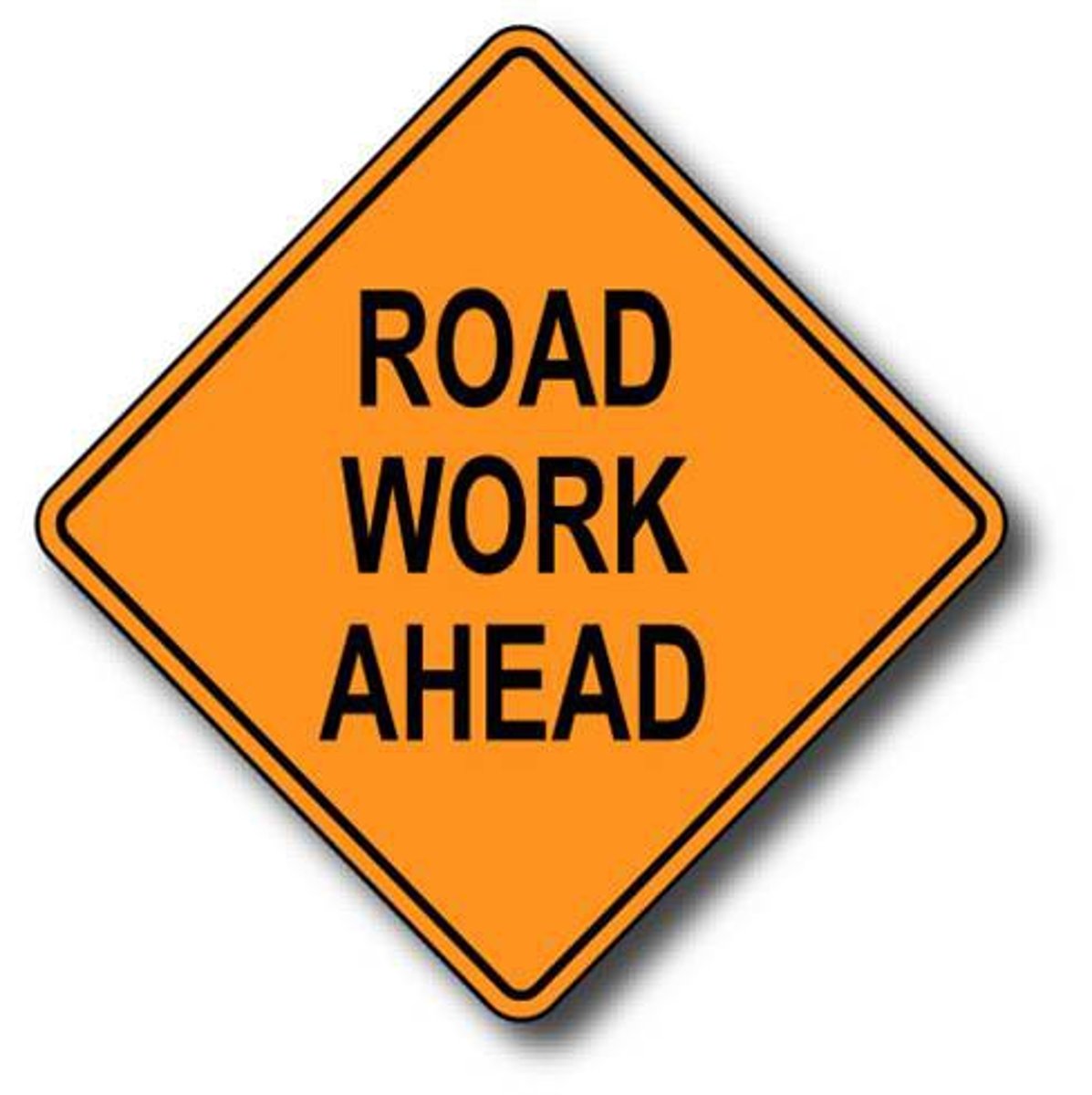
What are the safety tips for driving in work zones?
- Slow down, obey posted speed limits and be alert to conditions around you. Workers could be present.
- Follow instructions on the work zone warning signs and those given by flaggers.
- Do not become oblivious to work zone signs when the work is long term or widespread
- Be aware that traffic patterns in work zones can change daily including lane shifts or alternating lane closures
- Use extreme caution when driving through a work zone at night whether workers are present or not
- Watch the traffic around you; be prepared to react to what traffic is doing. Check for tail and brake lights of vehicles ahead of you for indications of what is happening on the road ahead. Be ready to respond quickly.
- Merge as soon as possible. Motorists can help maintain traffic flow and posted speeds by moving to the appropriate lane at first notice of an approaching work zone.
- Adjust your lane position away from the side where workers and equipment are located when possible
- Keep a safe distance between your vehicle and traffic barriers, trucks, construction equipment, and workers. Increase your following distance. Do not tailgate.
- Some work zones, such as line eating, road patching, and mowing are mobile. Just because you do not see the workers immediately after you see the warning sign does not mean they are not out there. Observe the posted signs until you see the one that says "End Road Work"
- Concentrate when driving through work zones. Pay attention to your surroundings and do not become distracted from cellphones, changing the radio station or applying makeup
- When you can, avoid work zones altogether by using alternate routes
- Expect delays, plan for them and leave early to reach your destination on time
- Calm down. Work zones are not there to inconvenience you. They are there to improve the roads for everyone.
What is the Vulnerable User's Law?
Higher penalties for drivers who fail to exercise reasonable care and cause the serious injury or death of a vulnerable user
What is considered a "Vulnerable User"
- Pedestrians
- Bicyclists
- Wheelchair users
- A person riding or driving an animal
- Highway workers
- Garbage truckers
- Tank vehicles
- Vehicles authorized by U.S. gov't to carry mail
- Express delivery carriers
How much feet must drivers allow of distance when passing a vulnerable user?
3 feet
What vehicles must you yield the right-of-way to?
Police vehicles, fire engines, ambulances, or other emergency vehicles using sirens, air horns, or red/blue flashing lights
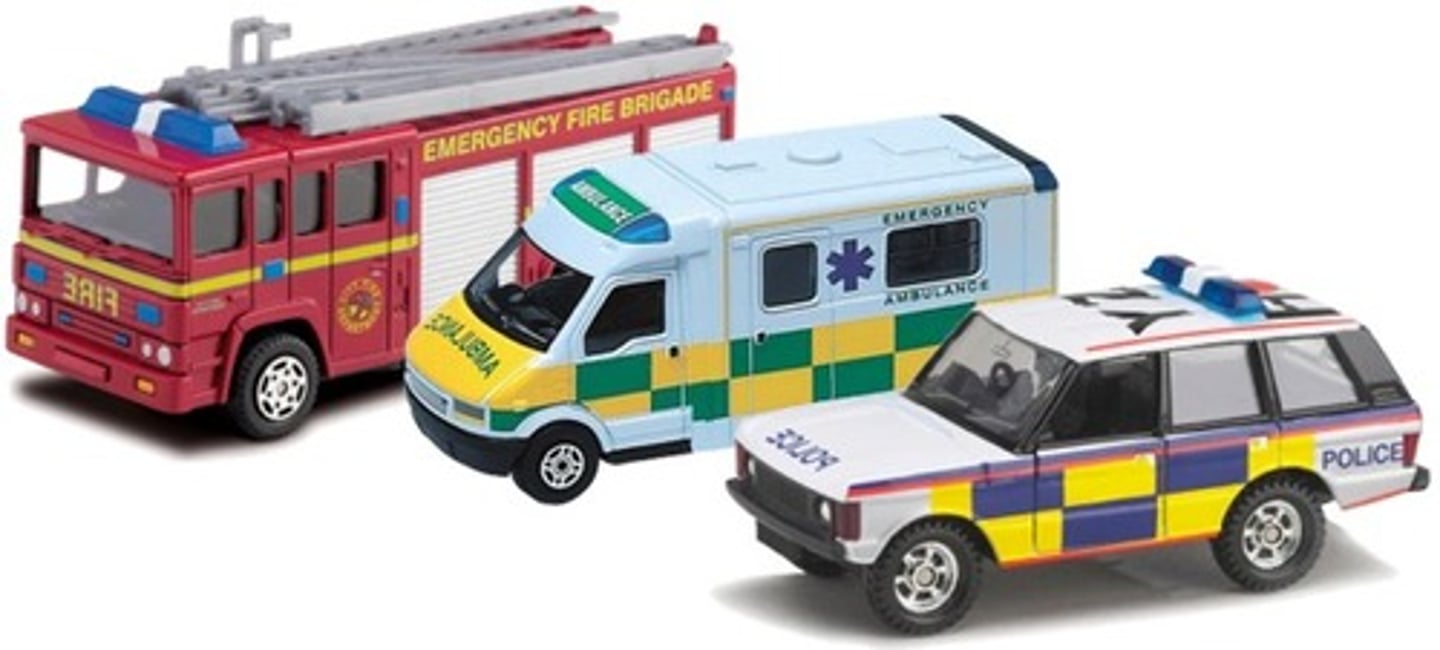
What must you do when you hear an emergency vehicle?
Pull over to the right edge of the road and stop your vehicle. Remain stopped until the emergency vehicle has passed unless otherwise directed by a state or local police officer or firefighter
What is the "Move Over Law"?
When any vehicle is pulled over on any part of a highway or road, drivers must:
- SLOW DOWN (below the posted speed limit)
- Move their vehicle over one lane whenever it is safe to do so
Bicycles are considered __________ when used on roadways and are expected to follow the same rules of the road as motorized vehicles.
vehicles
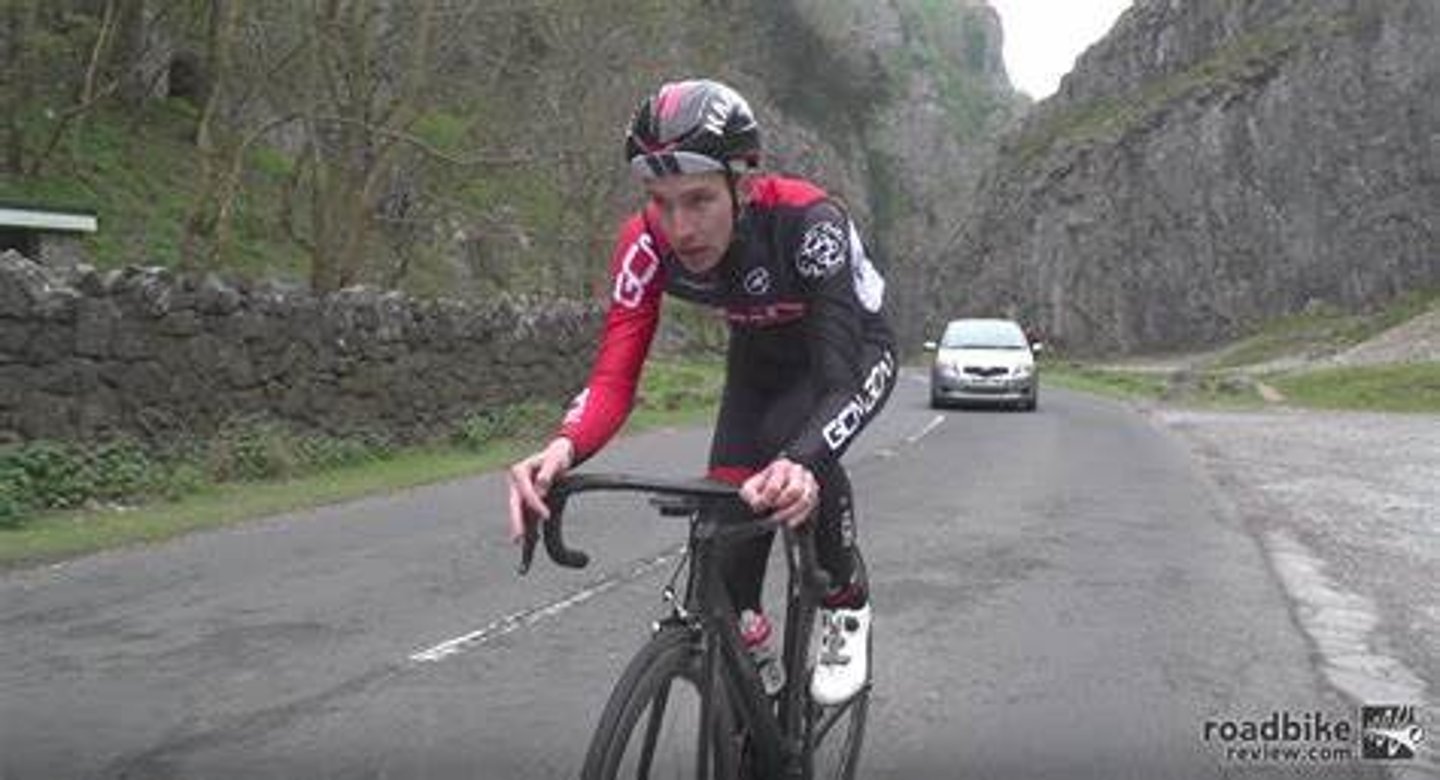
What is the "travel lane"?
When a lane is too narrow for cars and bikes to drive side-by-side, the bicyclist may "take the travel lane" which means driving in or near the center of the lane
Are bicyclists required to yield to pedestrians?
Yes
Do bicyclists need to use hand signals to let others know what they plan to do?
Yes
Do drivers need to yield the right-of-way to a bicyclist when a bike path/lane intersects a road?
Yes
(T/F) Fines are doubled for drivers who fail to yield right-of-way to a bicyclist
True
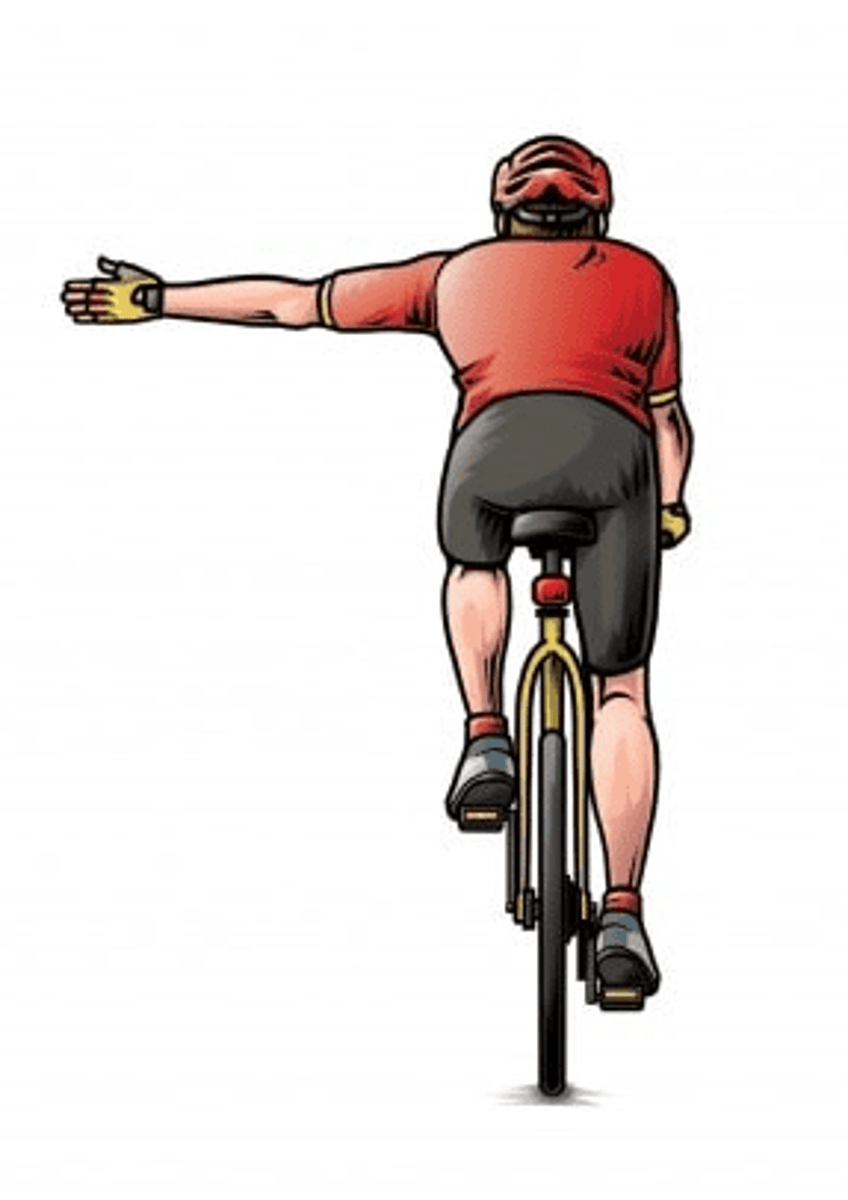
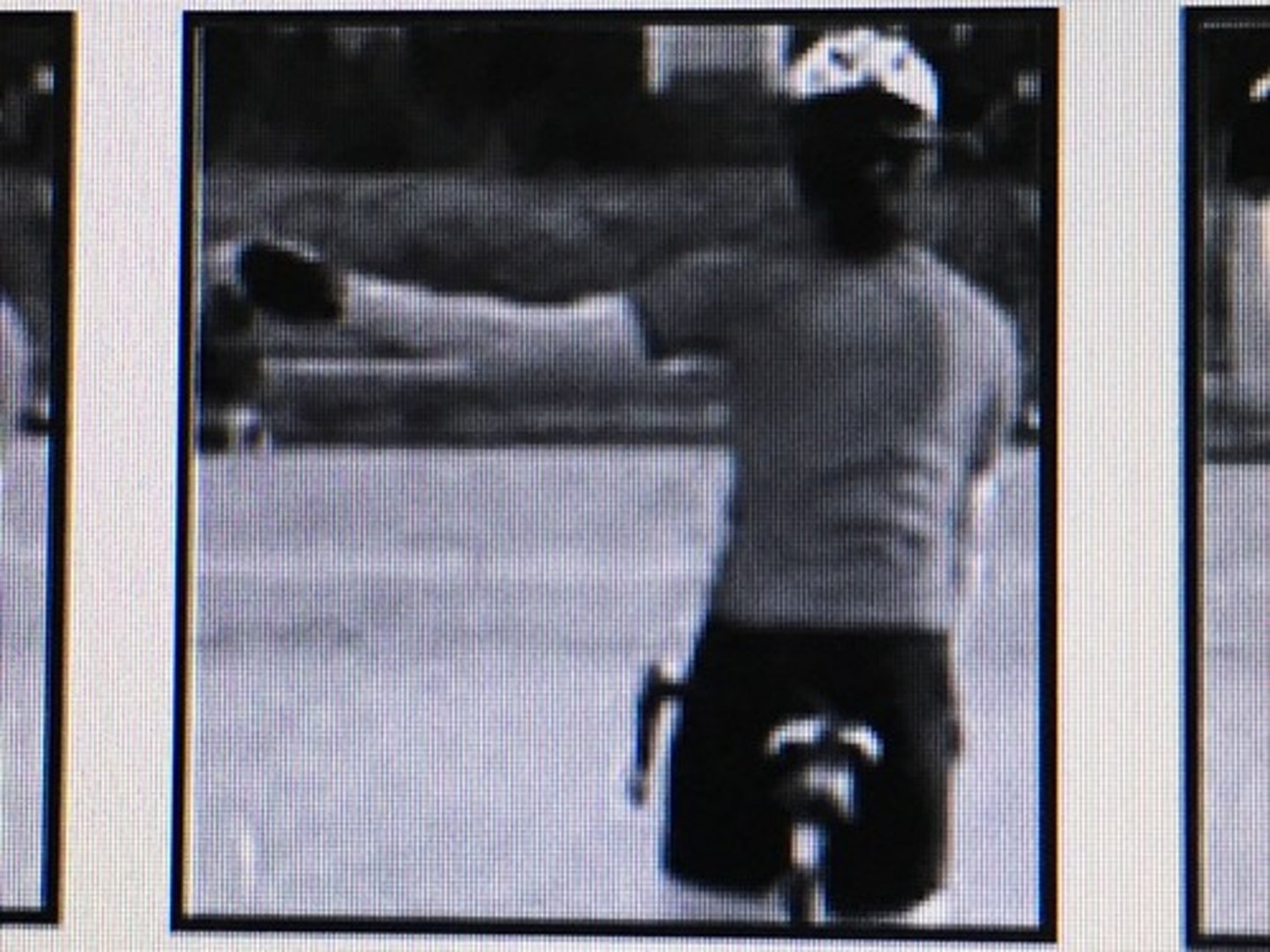
What is the bicyclist signal for STOP?
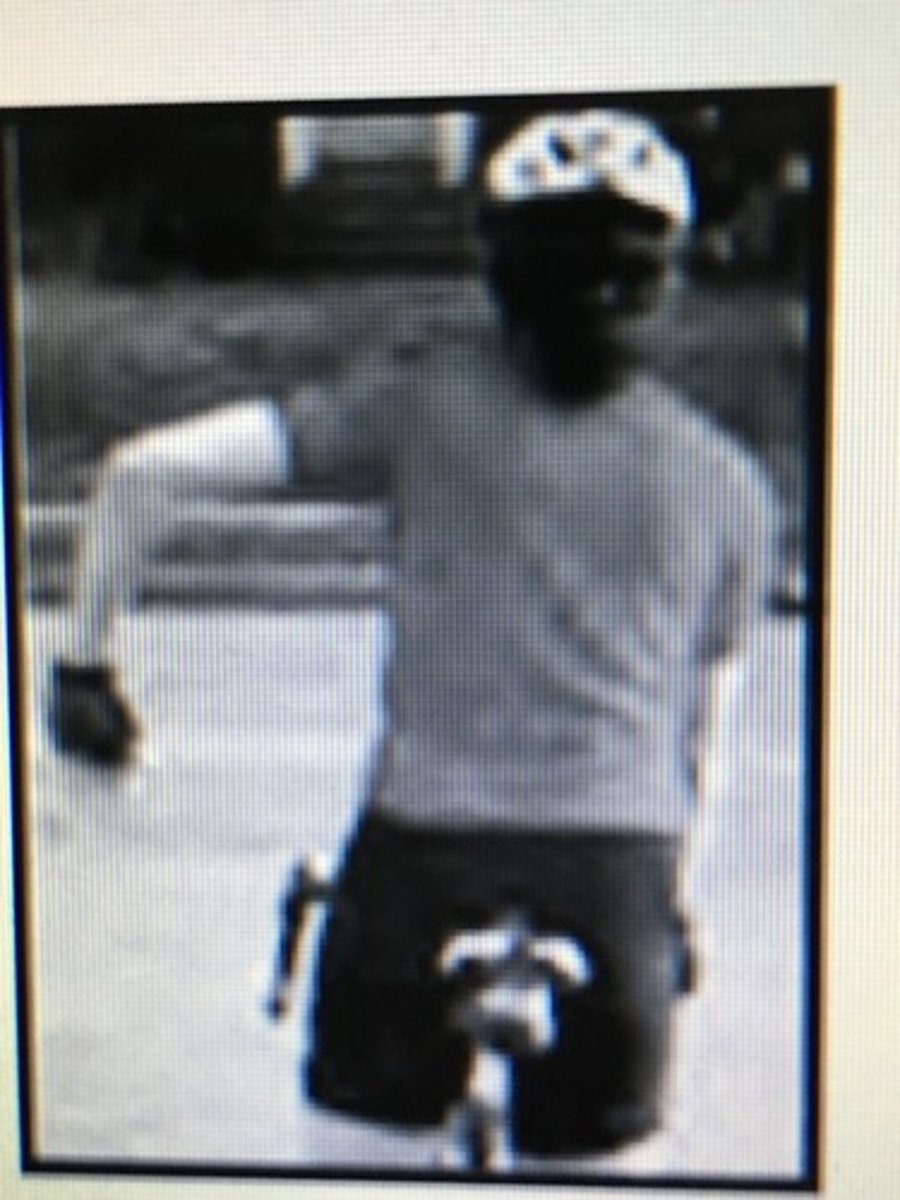
What is the bicyclist signal for RIGHT TURN?
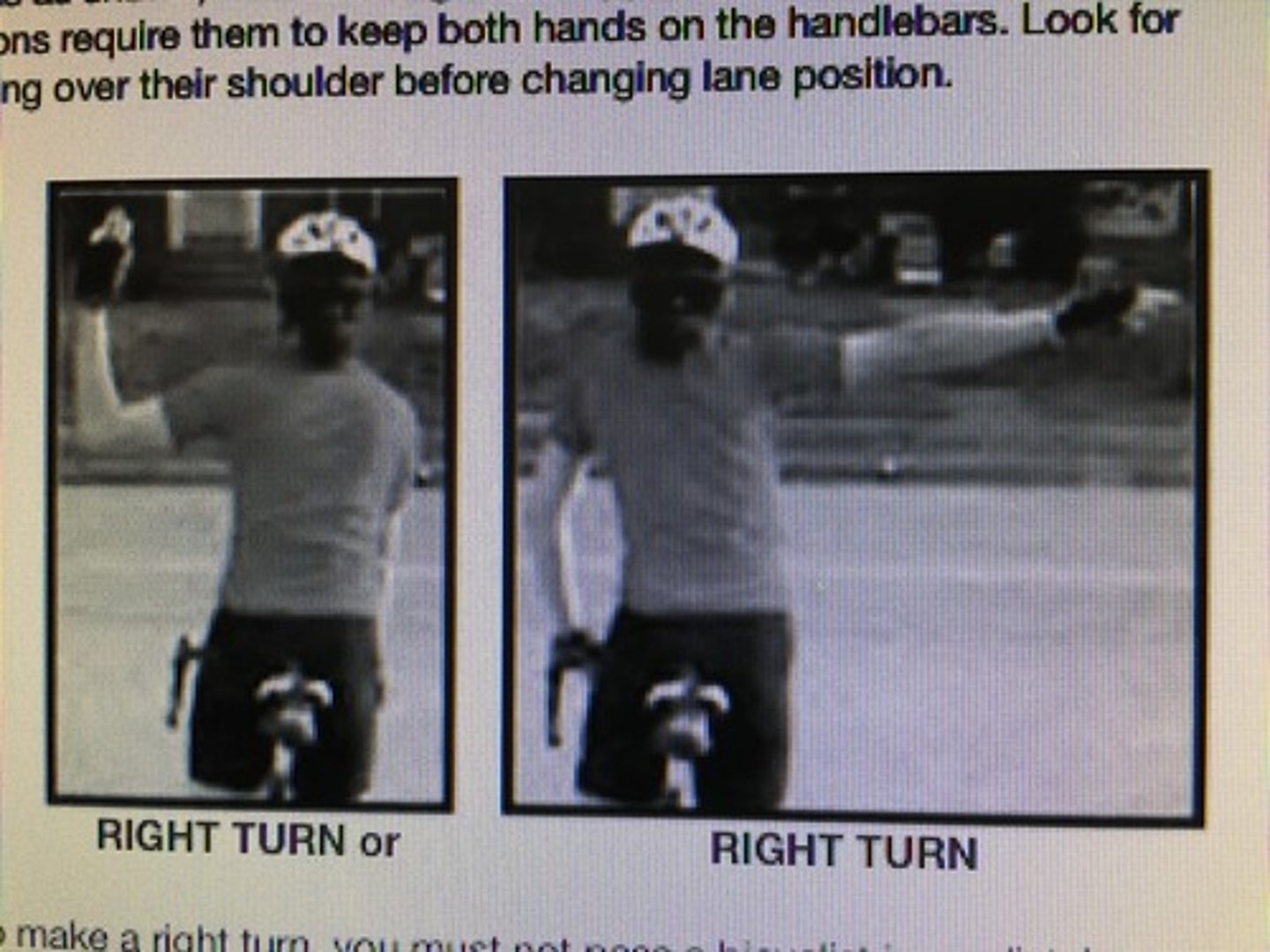
What is the bicyclist signal for LEFT TURN?
Motorcycle operators (DO/DO NOT) have the right to use a complete traffic lane
DO
When following a motorcyclist, allow for a ________ second following distance or more in wet conditions
3-4
What should you change in your headlights brightness when approaching a motorcycle?
Dim your headlights to prevent the blinding effect of your high beams
Vehicles such as farm tractors and roadway maintenance vehicles usually go 25mph or less. What decal do they often have on the back of the vehicle to indicate this?
A slow-moving decal (an orange triangle) on the back
According to state law, can you pass slow moving traffic in no passing zones?
Yes, you may cross over a double yellow line in these instances
What do you need to check before passing over a double yellow line?
Make sure you can see far enough ahead to enable you to safely pass before attempting
What does the state law require drivers to do when approaching an ice cream truck displaying a stop signal arm?
Stop at least 10 feet from the front or back of the truck
After stopping, you may proceed past the truck at a reasonable speed, up to 5mph, and must yield the right-of-way to any pedestrian crossing the road to/from the truck
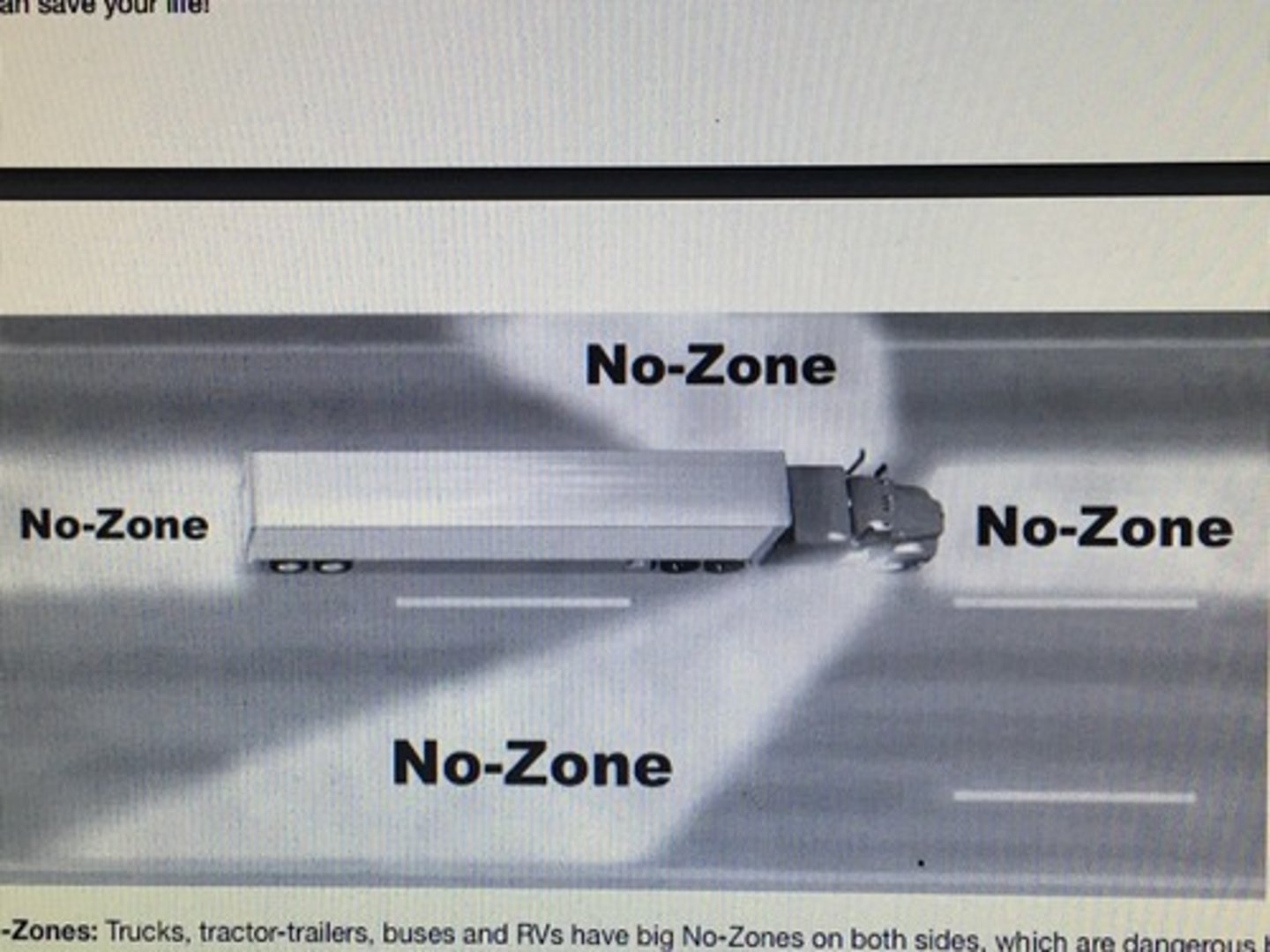
What are "No-Zones"?
Areas of limited visibility around large trucks
Any time you want to merge with other traffic, you need an opening of how many seconds?
About four seconds
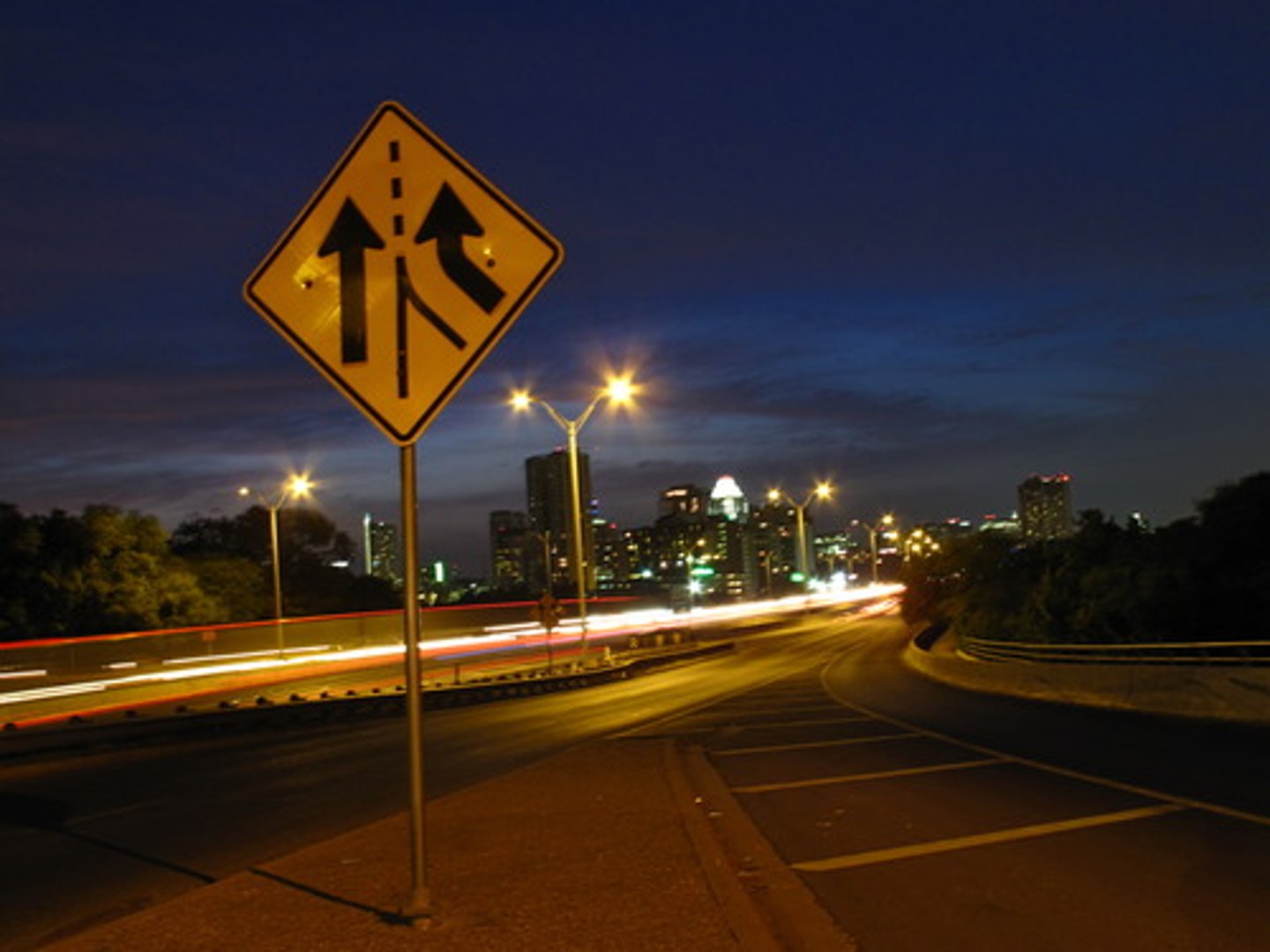
You need a ________ second opening whenever you change lanes or enter a roadway and when your lane merges with another travel lane
four
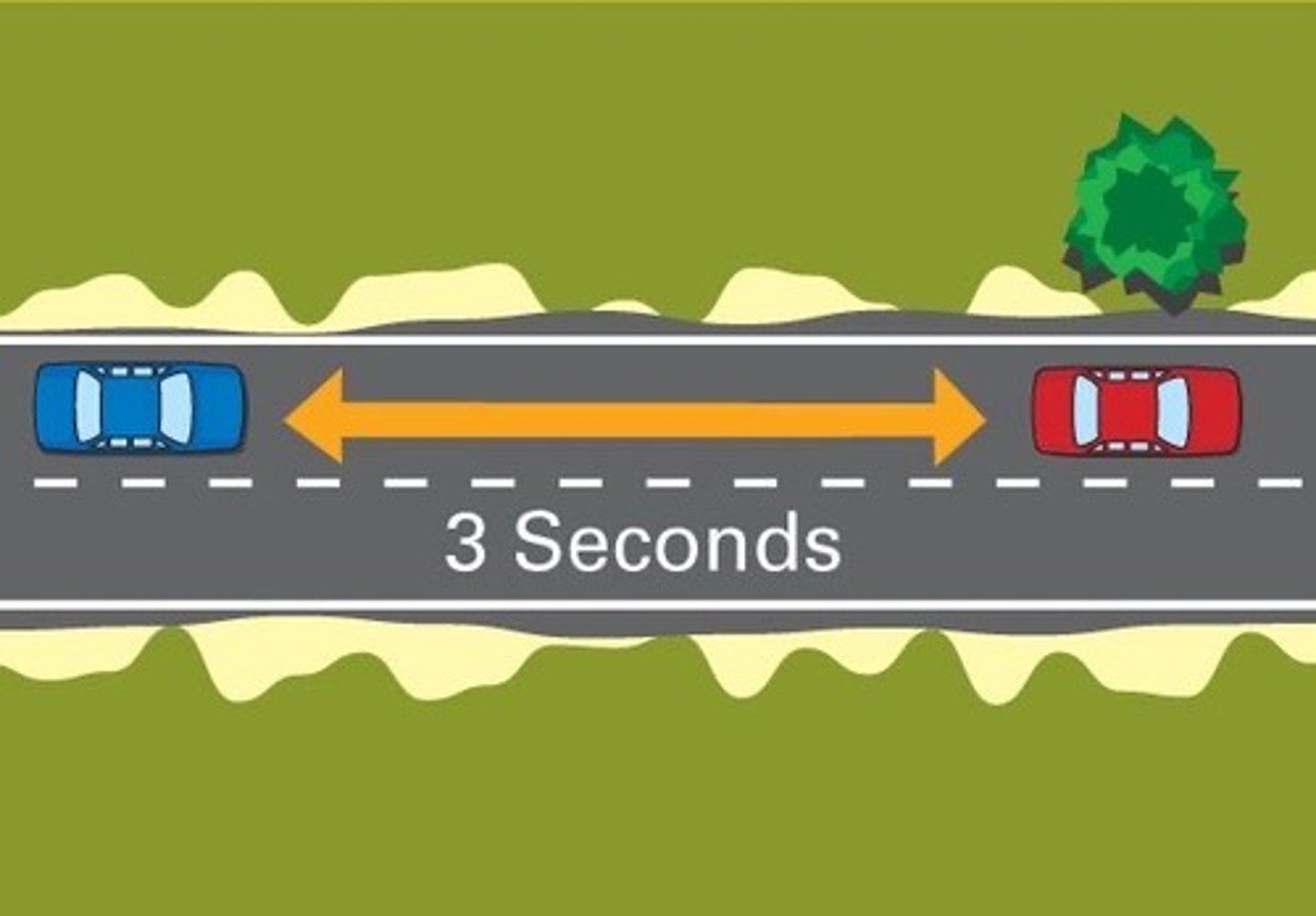
What is the "three-second" rule used for?
Easy way to tell if you are following too closely
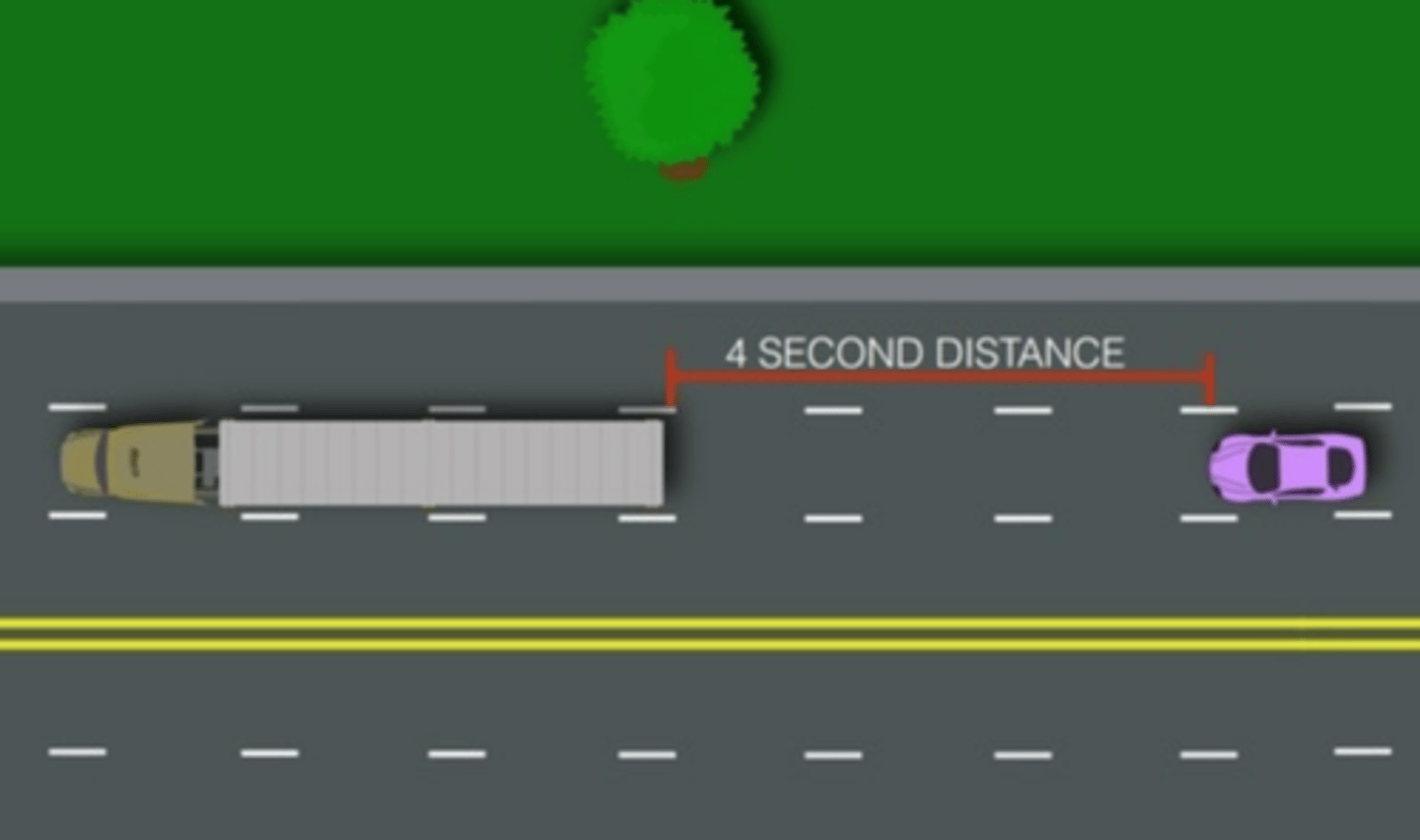
What is the "four-second" rule and when is it used?
There are situations you need more space in front of your vehicle, which is where the 4-second rule comes into play
Use this rule on slippery roads, if the driver behind you wants to pass, following drivers who cannot see you, following motorcyclists, you are being followed closely, pulling a trailer, low visibility, following emergency vehicles, railroad crossings, or when stopped on a hill or incline
At a speed of 55mph, how many seconds does a vehicle need to pass?
About 10 seconds
How do you know if it is safe to return to the original lane after passing?
When you can see both headlights of the vehicle you passed in your rear-view mirror
(T/F) You can pass on the shoulder if needed
False
For a child under age 2 or weighing less than 30 pounds, what restraint is required?
Rear-facing-only car seat or rear facing convertible seat with a 5-point harness
For a child ages 2-5 or weighing less than 40 pounds, what restraint is required?
Rear- or forward-forward facing child restraint with a 5-point harness
For a child ages 5-8 or weighing between 40-60 pounds, what restraint is required?
5 point-harness or booster seat
For a child age 8 and older or weighing 60 pounds or more, what restraint is required?
Booster seat or seat belt
On a wet road, you should reduce your speed by ____ mph
10
On packed snow, you should cut your speed in _________
half
Tires have good traction up to _____ mph when it is raining or the road is wet
35
What is the curfew for Connecticut driving teenagers?
11pm to 5am
EXCEPT for school, a job, a medical or religious reason, or a Safe Rides program
What is the first thing alcohol affects?
Judgement
If you fail the BAC test then your license will be suspended for a minimum of how many days?
45
What is the "Zero Tolerance" policy?
A policy that enforces strict consequences for underage drinking. If you have 0.02 BAC your license can be suspended for at least 45 days
Graduated Driver’s License violations (passenger restrictions; driving curfew; operating public service vehicle or vanpool; more passengers than seat belts; carrying passengers on a motorcycle less than six months after obtaining a motorcycle) First Offense punishment
- 30-Day suspension
- $175 license restoration fee; court fines
Graduated Driver’s License violations (passenger restrictions; driving curfew; operating public service vehicle or vanpool; more passengers than seat belts; carrying passengers on a motorcycle less than six months after obtaining a motorcycle) Second Offense punishment
- 6-month suspension or until age 18 (whichever is longer)
- $175 license restoration free; court fines
Use of Cell Phone/Text Messaging First Offense punishment
- 30-Day suspension
- $175 license restoration fee; court fines
Use of Cell Phone/Text Messaging Second Offense punishment
- 90-Day suspension
- $175 license restoration fee; court fines
Use of Cell Phone/Text Messaging Third Offense punishment
- 6-Month suspension
- $175 license restoration fee; court fines
Speeding (over 20mph) First Offense punishment
- 60-Day suspension
- $175 license restoration fee; court fines
Speeding (over 20mph) Second Offense punishment
- 90-Day suspension
- $175 license restoration fee; court fines
Speeding (over 20mph) Third Offense punishment
- 6-Month suspension
- $175 license restoration fee; court fines
Reckless Driving First Offense punishment
- 6-Month suspension
- $175 license restoration fee; court fines or imprisonment of no more than 30 days or BOTH
Reckless Driving Second Offense punishment
- 1-Year suspension
- $175 license restoration fee; court fines or imprisonment of no more than 1 year or BOTH
Reckless Driving Third Offense punishment
- 1-Year suspension
- $175 license restoration fee; court fines or imprisonment of no more than 1 year or BOTH
Street Racing First Offense punishment
- 6-Month suspension
- $175 license restoration fee; court fines or imprisonment of no more than 1 year or BOTH
Street Racing Second Offense punishment
- 1-Year suspension
- $175 license restoration fee; court fines or imprisonment of no more than 1 year or BOTH
Street Racing Third Offense punishment
- 1-Year suspension
- $175 license restoration fee; court fines or imprisonment of no more than 1 year or BOTH
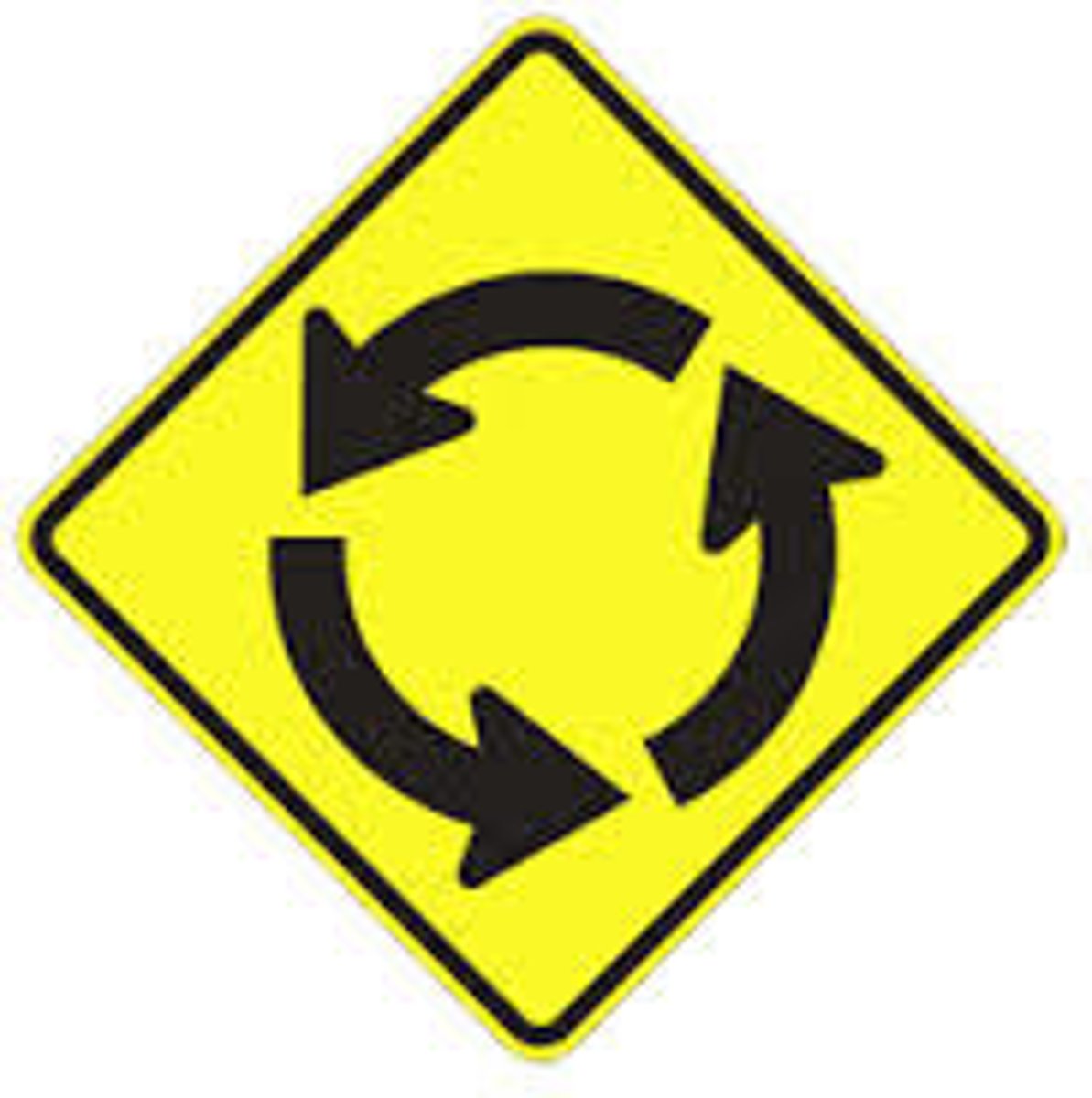
What is the sign for an approaching roundabout?
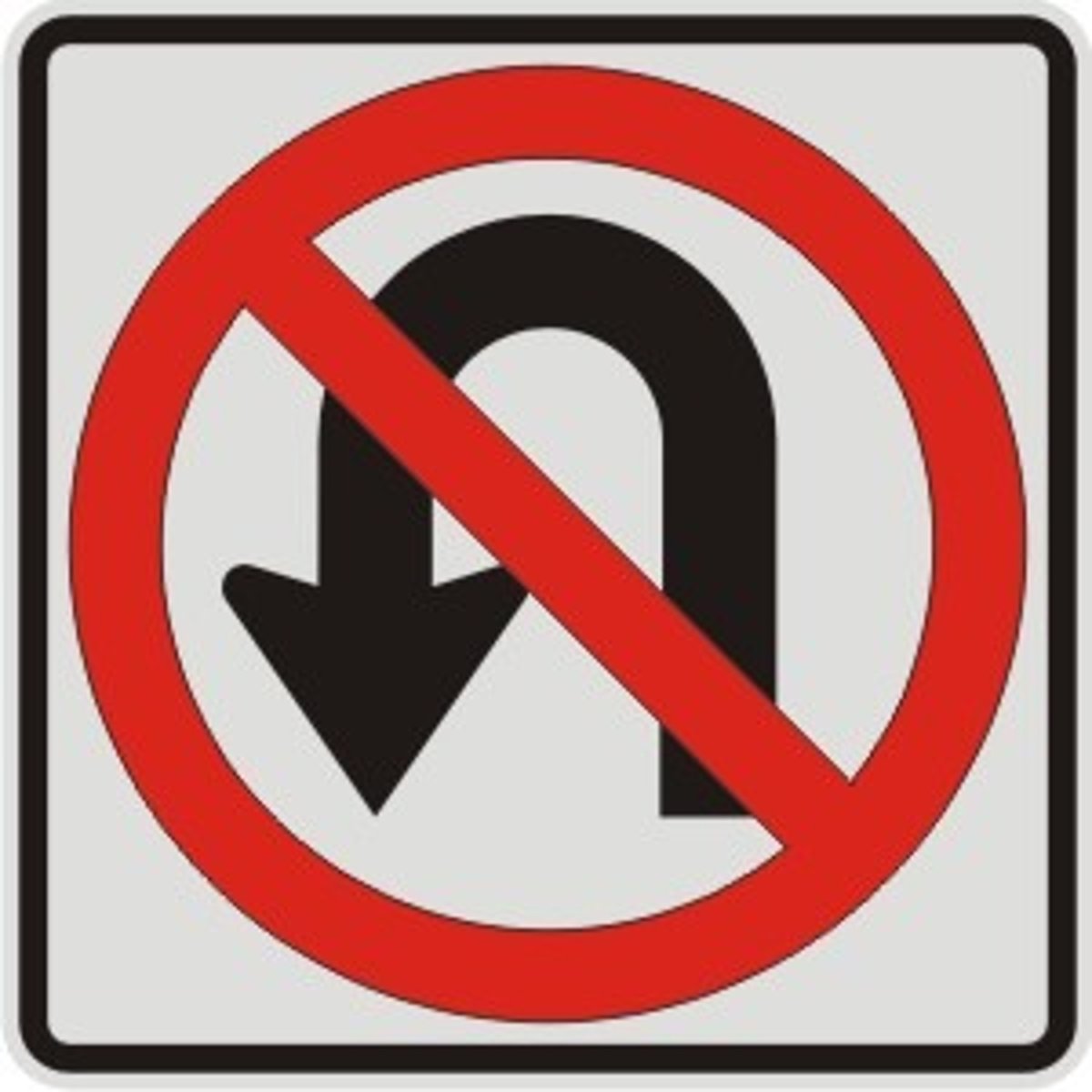
What is the sign for no legal U-turns?
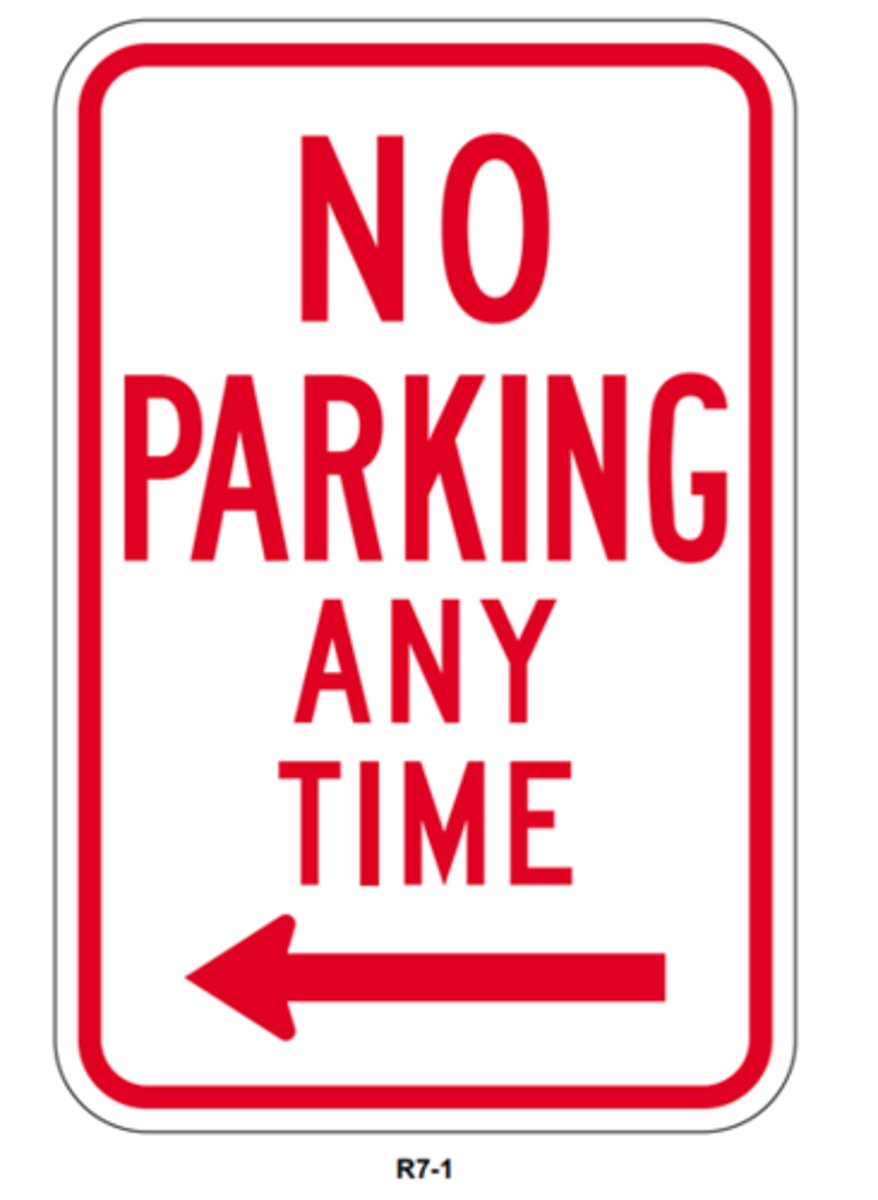
What is the sign for no-parking zones?
What are two ways to notify other drivers of your existence when dark or foggy out?
- Turn on your headlights
- If necessary, flash your high-beams
What is the driver hand signal for left turn?
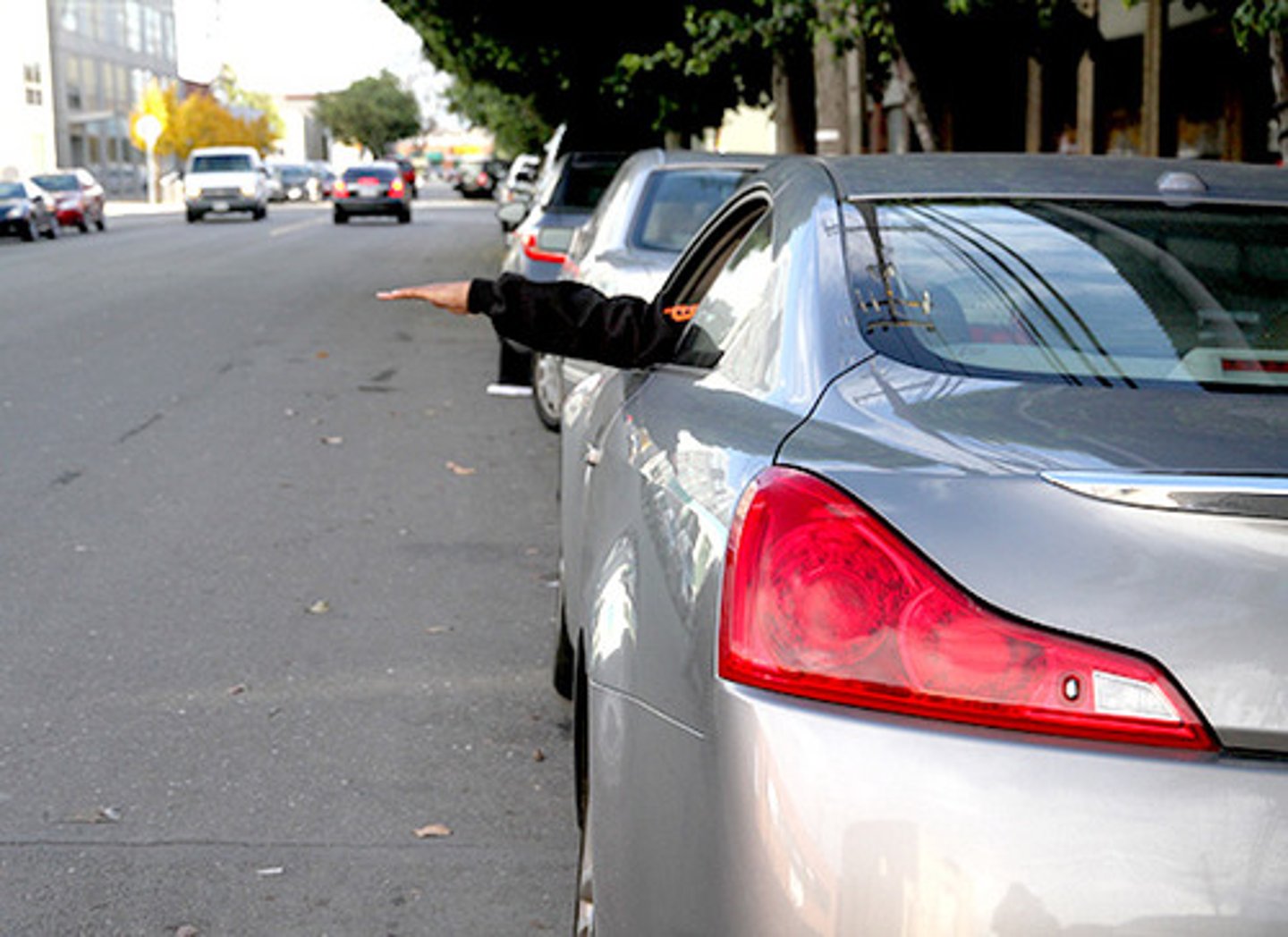
What is the driver hand signal for right turn?
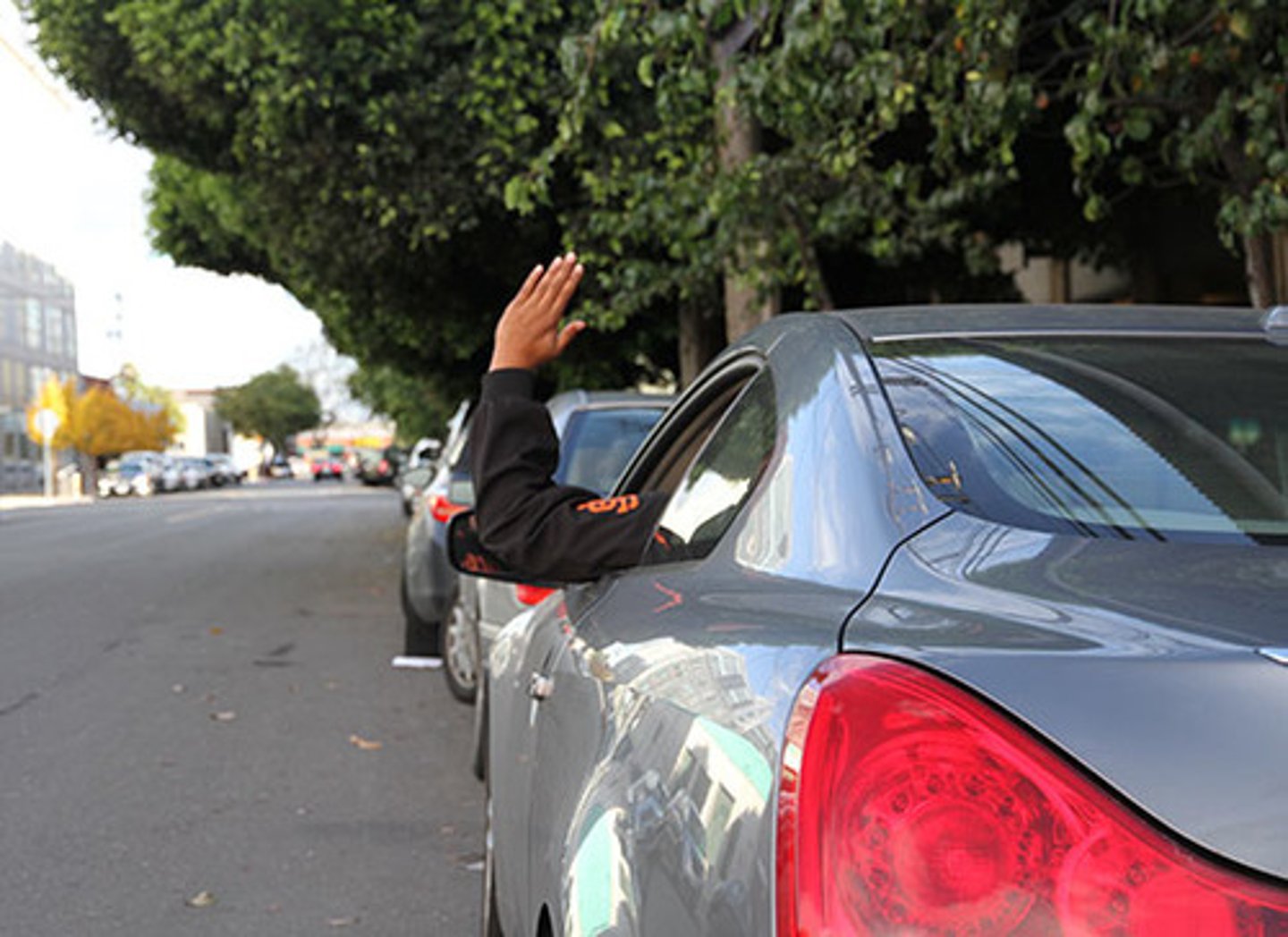
What is the driver hand signal for slow/stop?
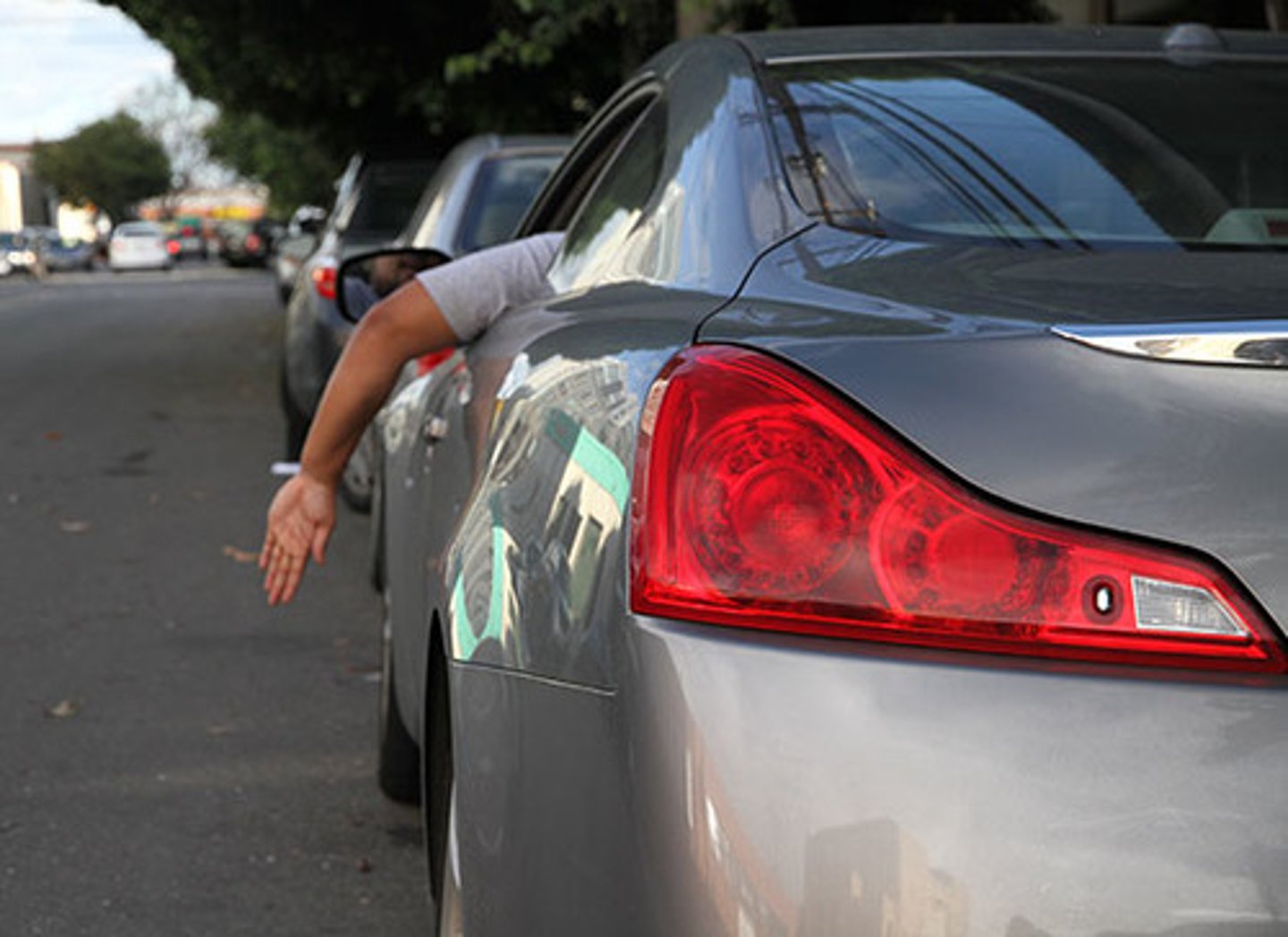
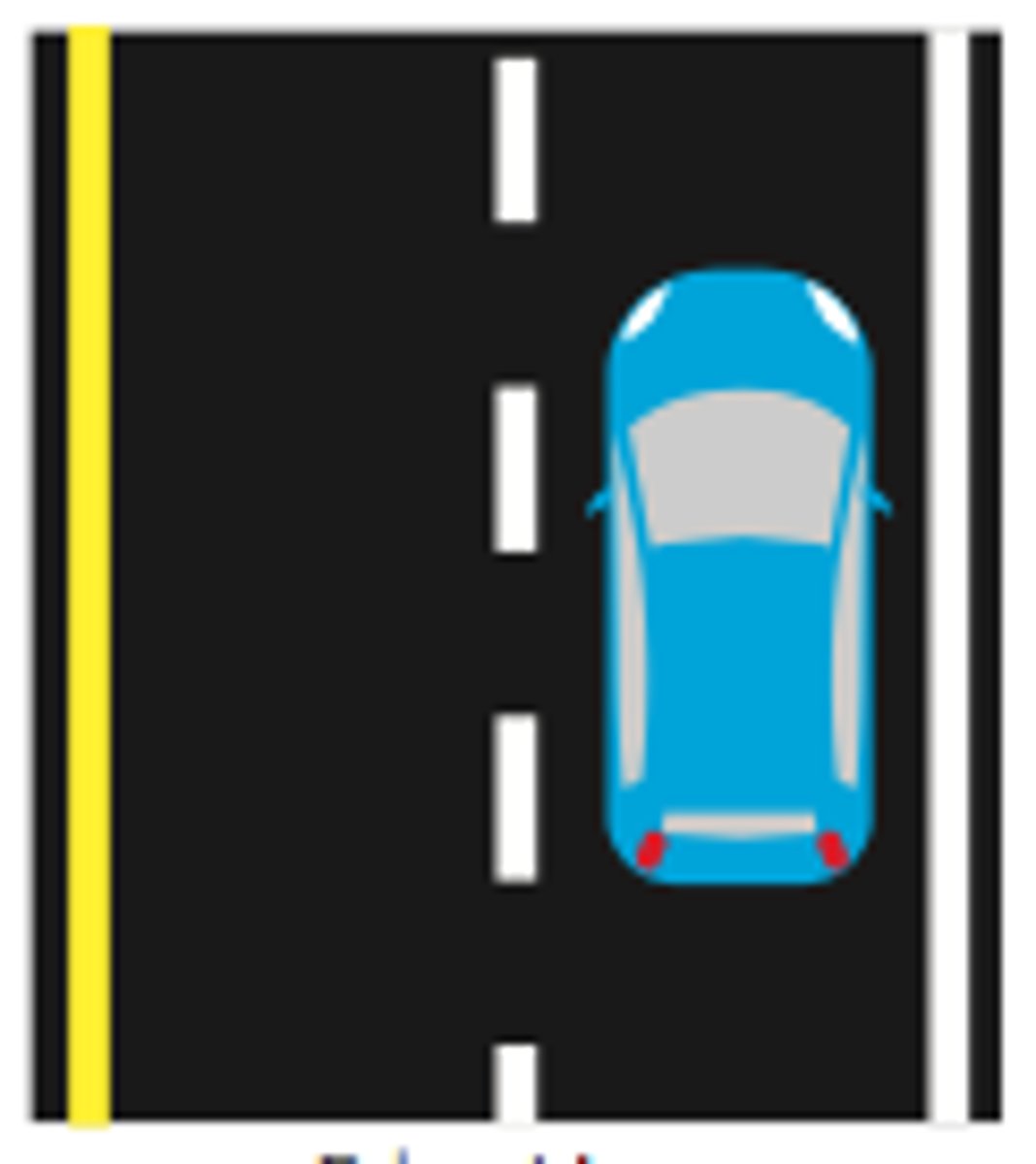
What are solid white edge lines used for?
On the right of the roadway edge
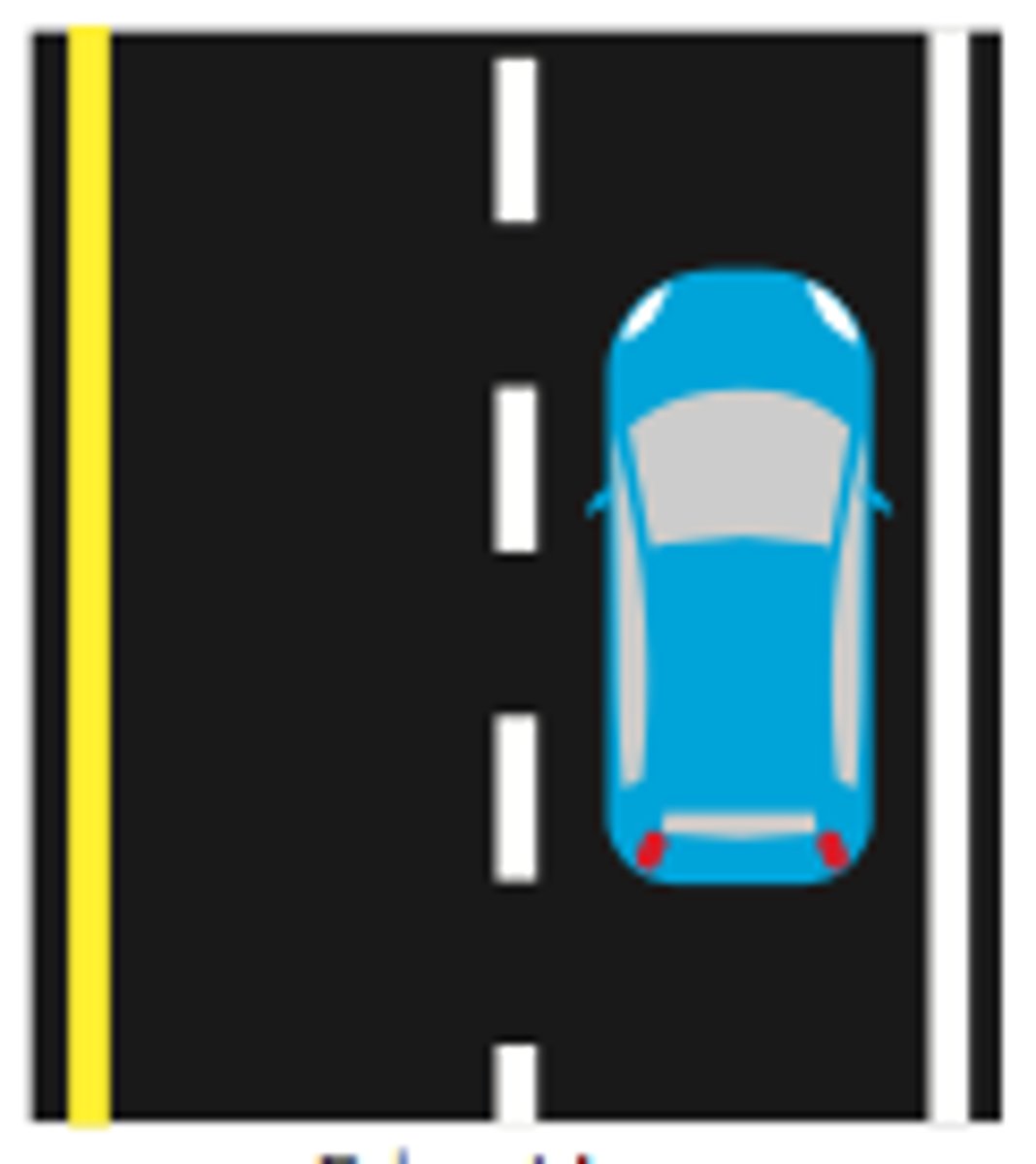
What are solid yellow edge lines used for?
On the left of the roadway edge of divided streets or roadways
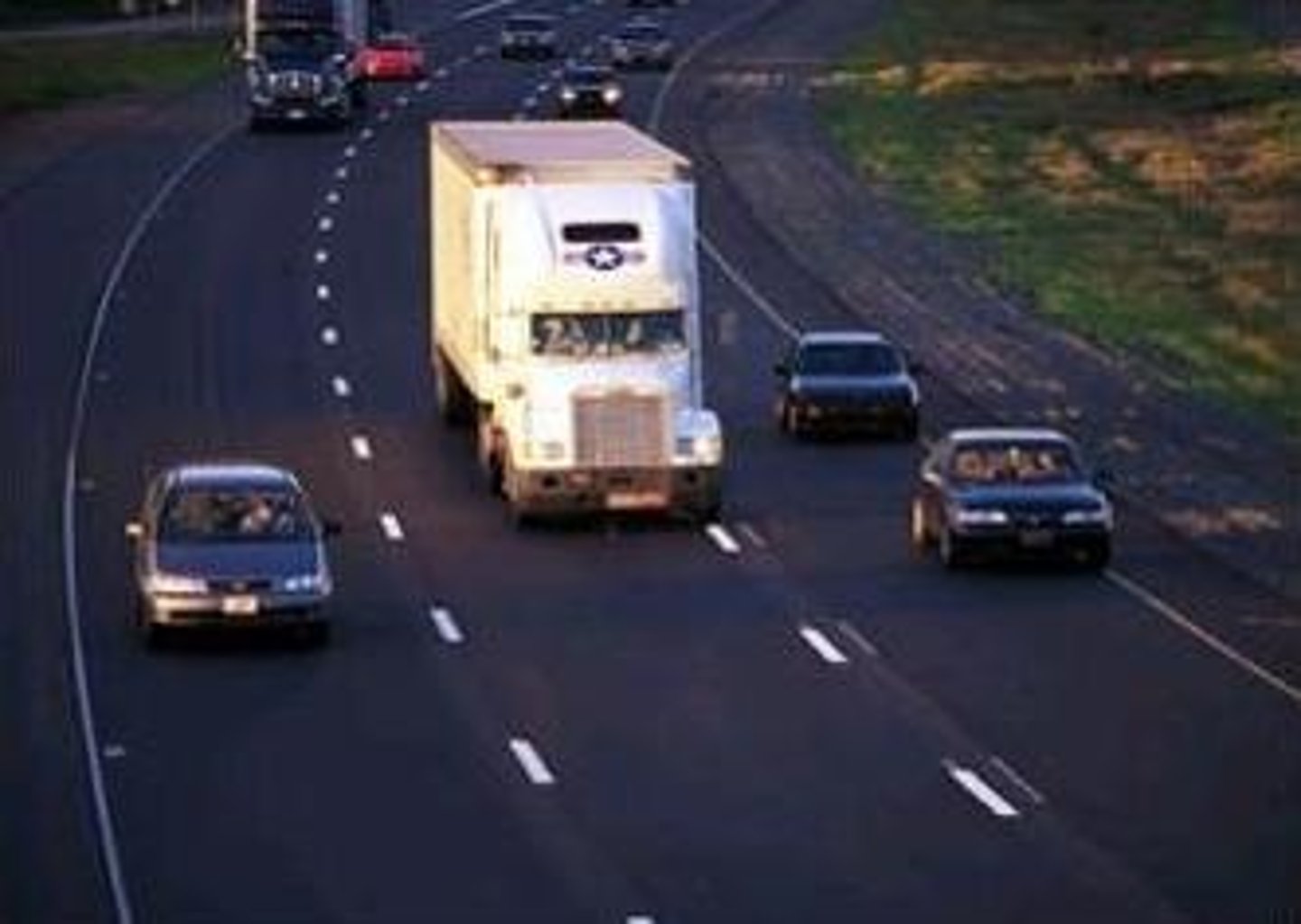
What are dashed white lane lines used for?
Between lanes of moving traffic in the same direction that indicate you may cross to change lanes if it is safe to do so
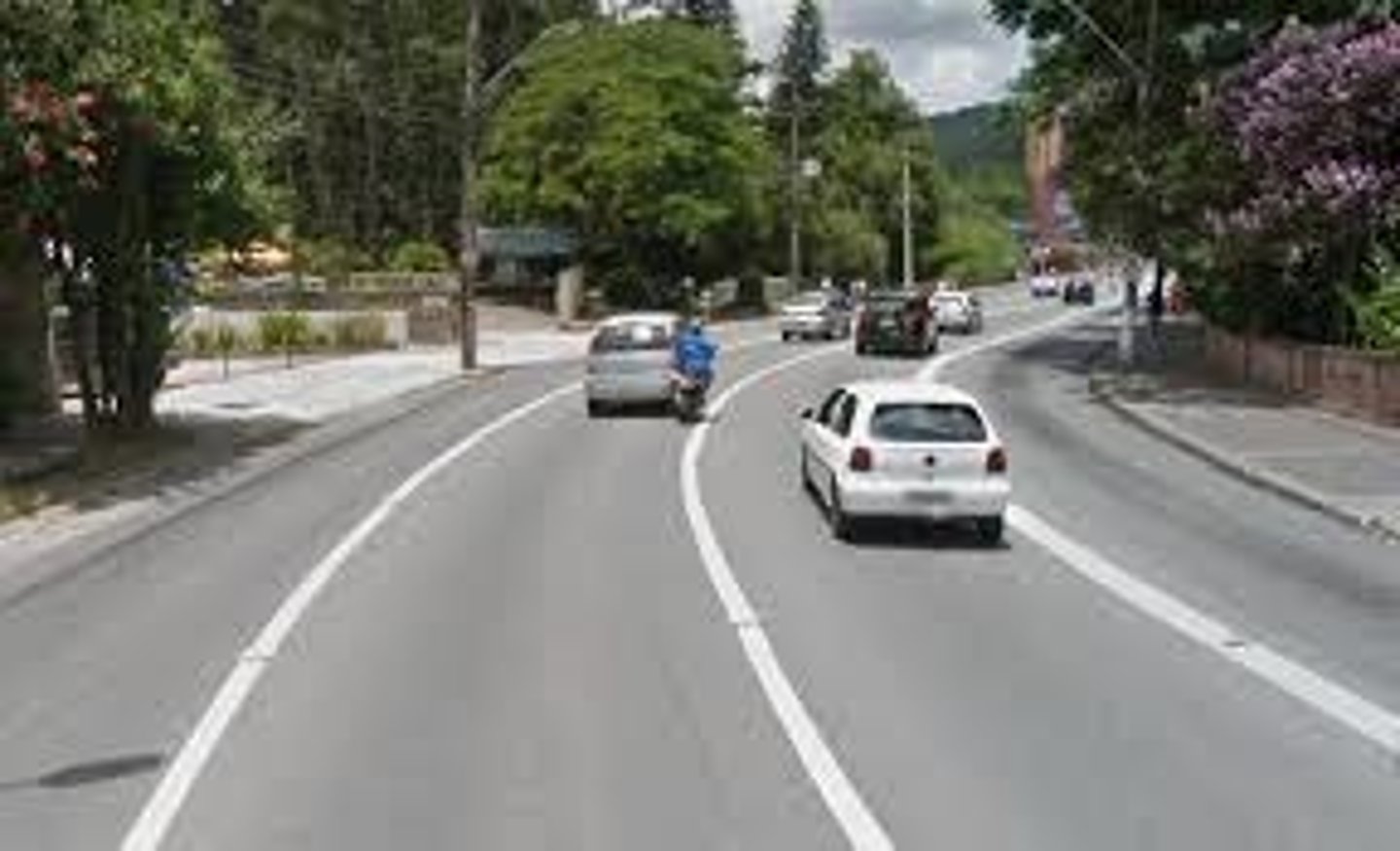
What are solid white lane lines used for?
Between lanes of traffic that indicate you should stay in your lane unless a special situation requires you to change lanes
What are dashed yellow center lines used for?
Separate single lanes of traffic moving in opposite directions. Passing is allowed
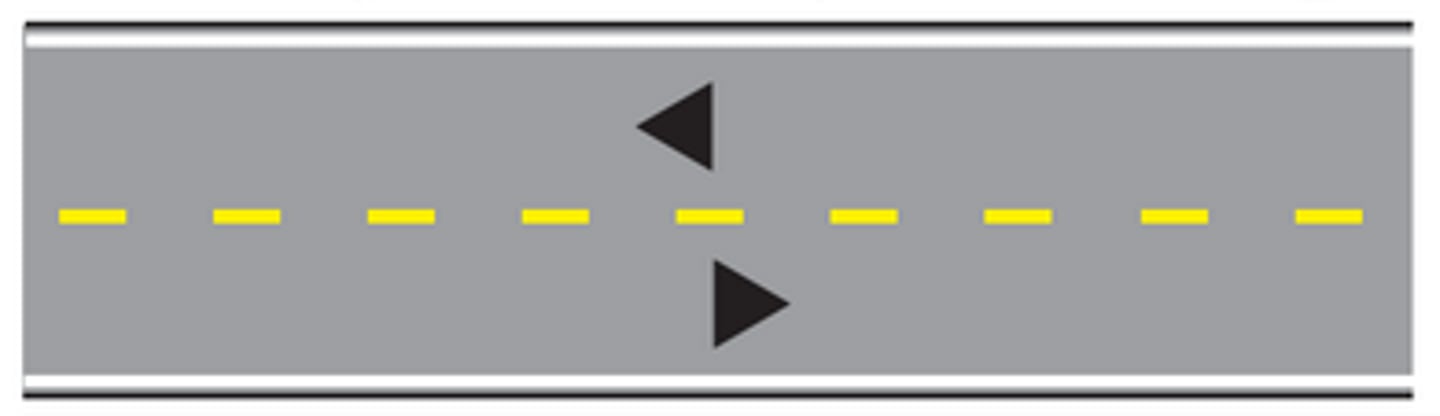
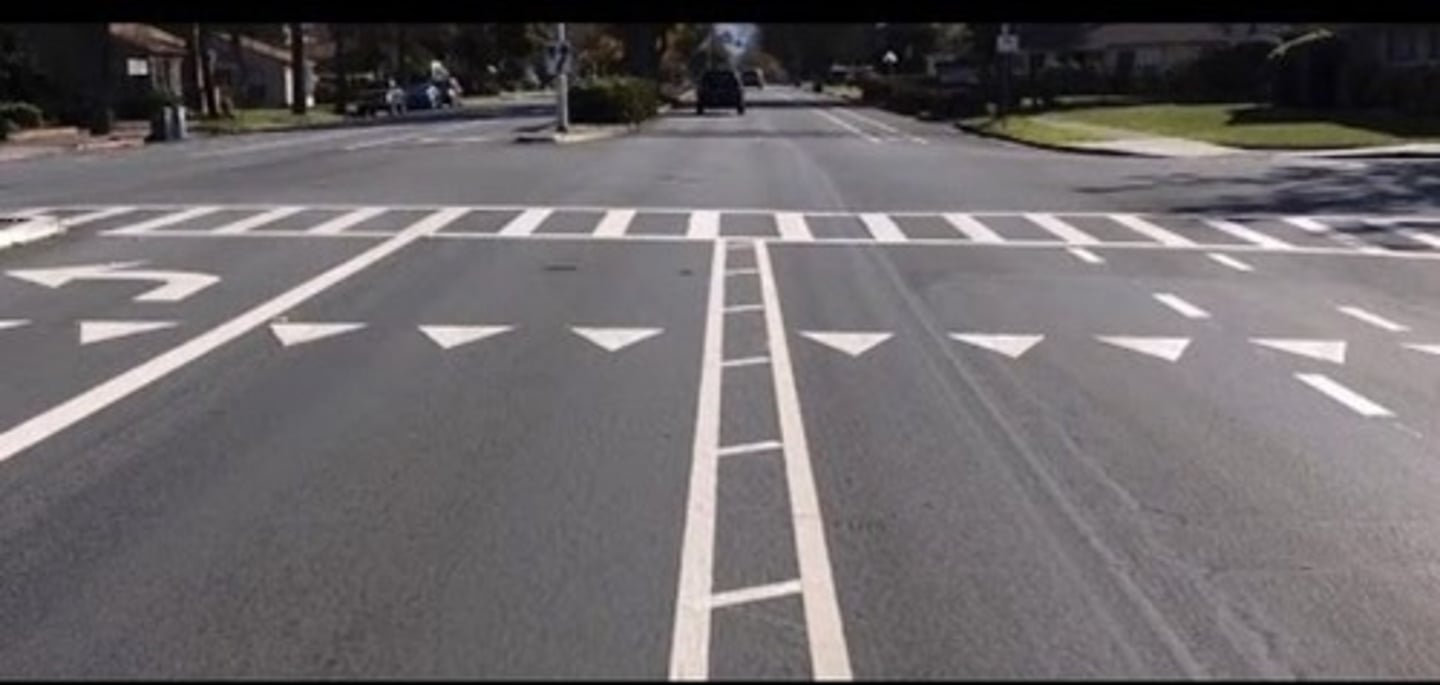
What are yield center lines used for?
Used at locations where drivers are required to yield, such as a mid-block crosswalk
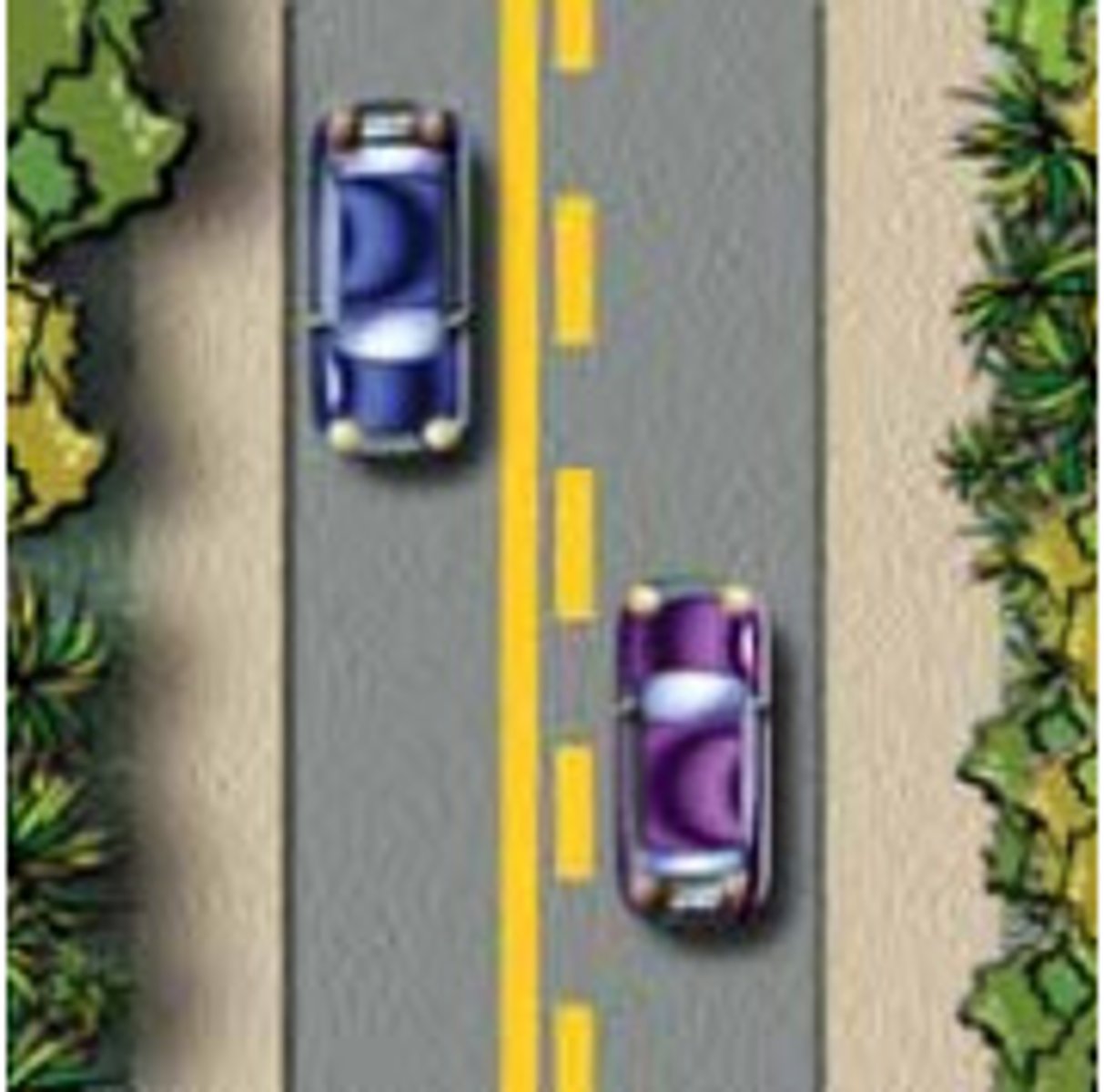
What are dashed yellow center lines alongside a solid yellow center line used for?
Indicates that passing is permitted on the side of the broken line, but not on the side of the solid line
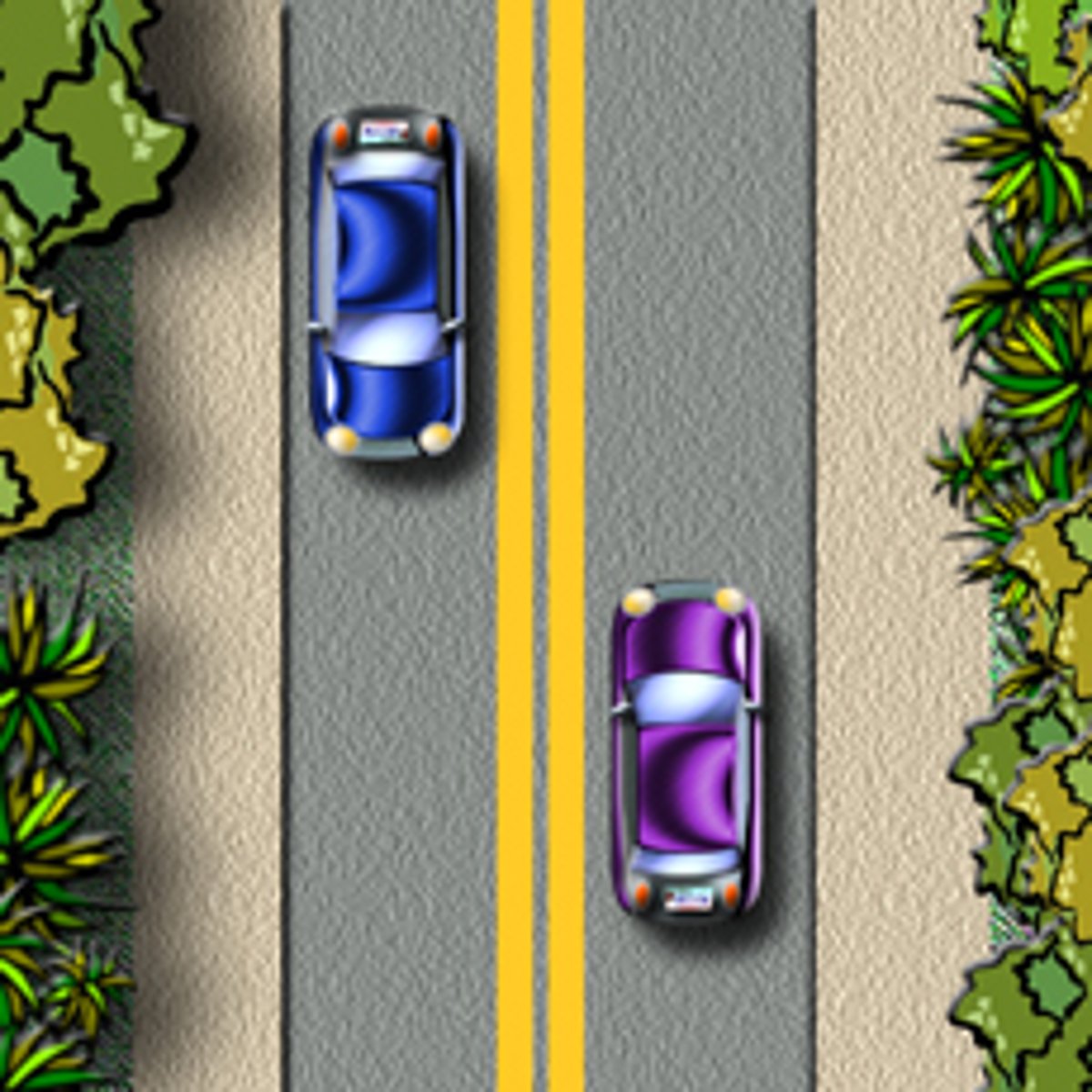
What are solid double yellow center lines used for?
Used where there are lanes with traffic moving in opposite directions. Two solid lines mark the center of the roadway. Solid yellow lines may be crossed to make a left turn to or from an alley, private road, driveway, or street
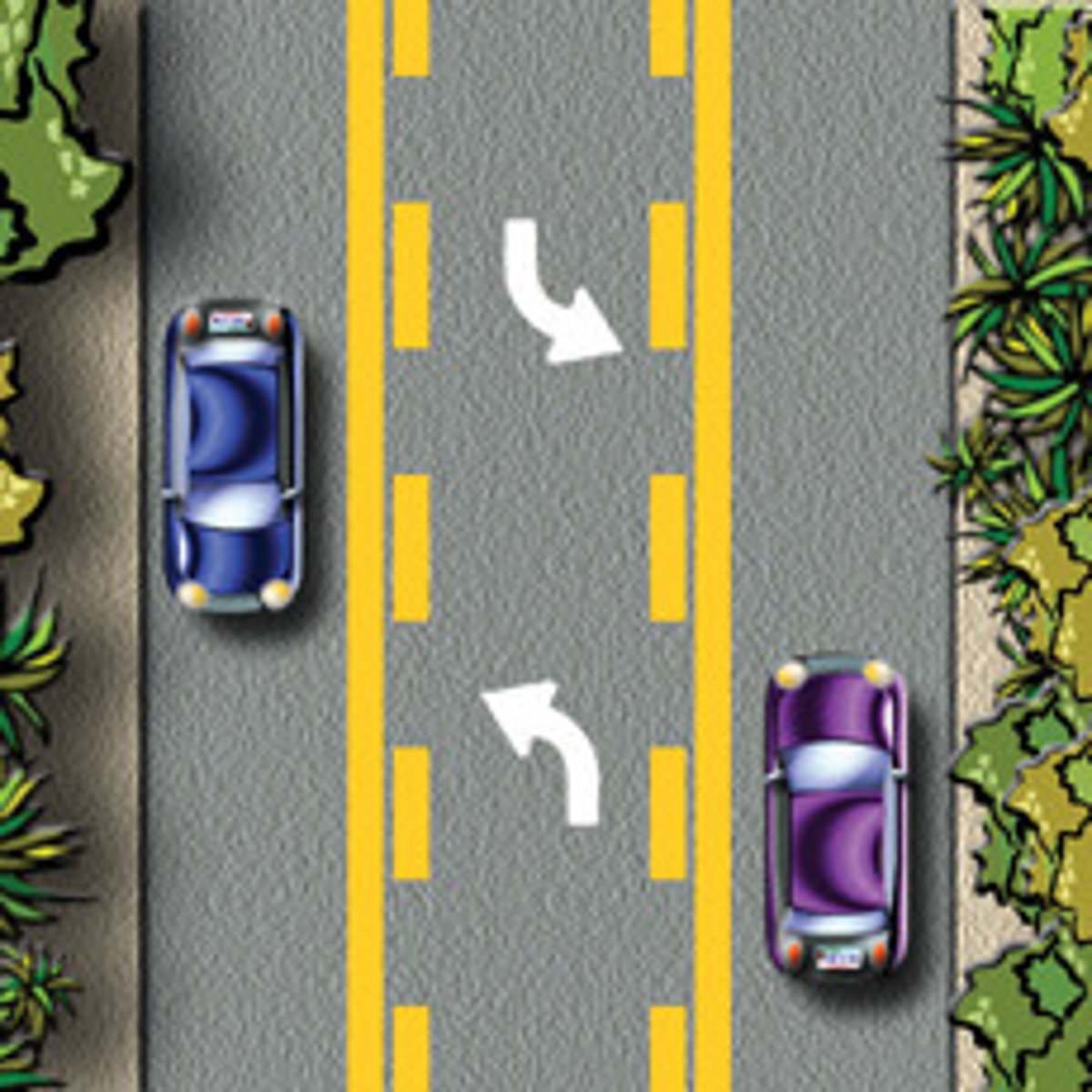
What are shared center lanes used for?
Reserved for making left turns
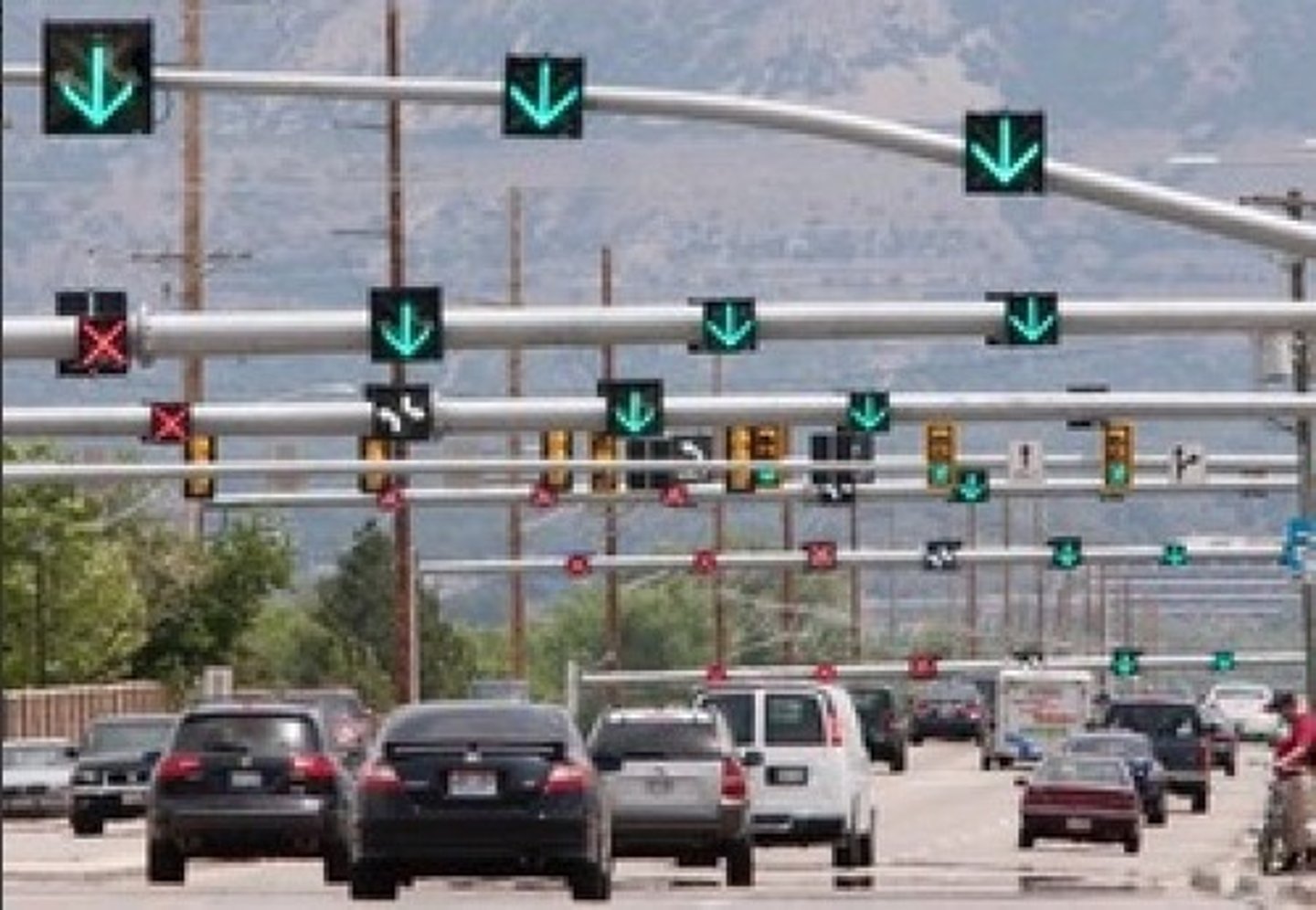
What are reversible lanes used for?
To help handle traffic. Marked by double-dashed yellow lines.
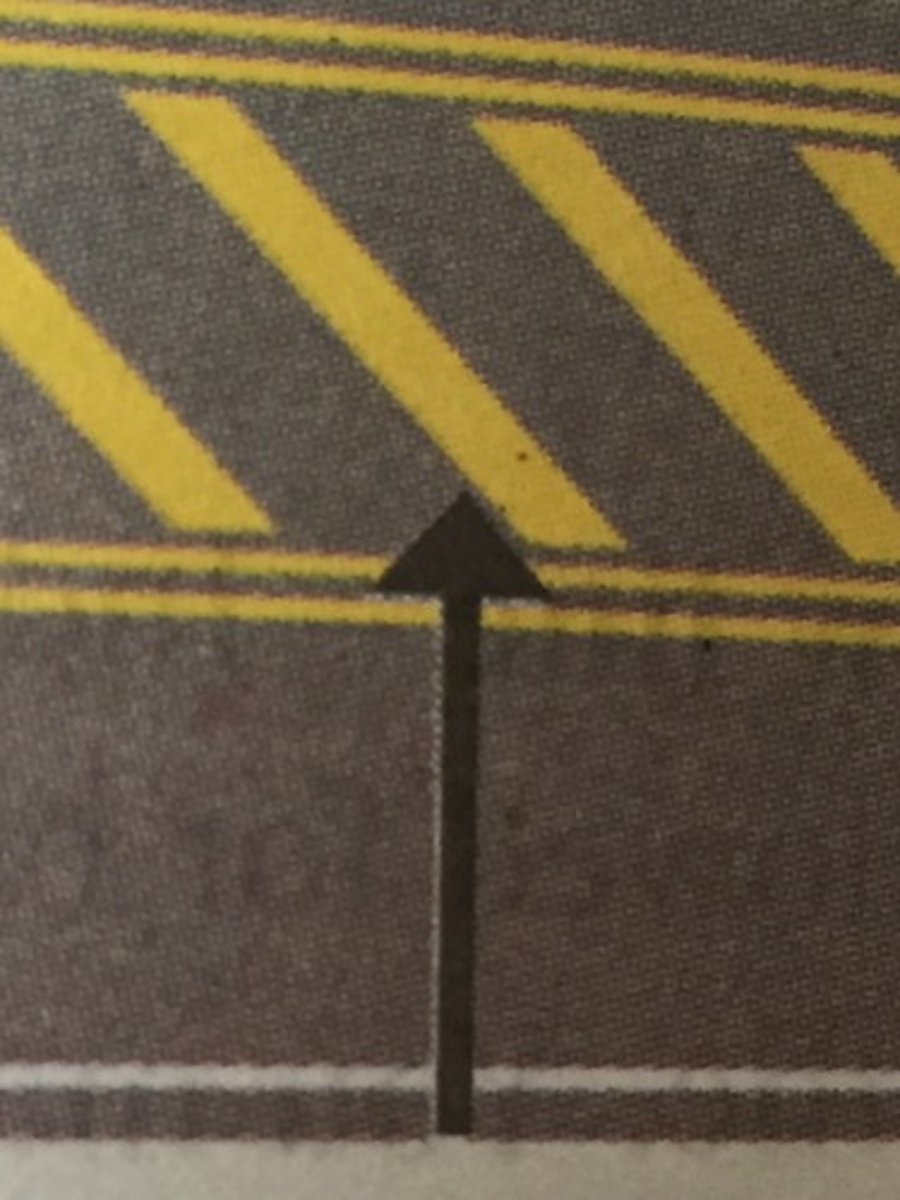
What are yellow or white diagonal stripes used for?
Used to mark fixed obstructions
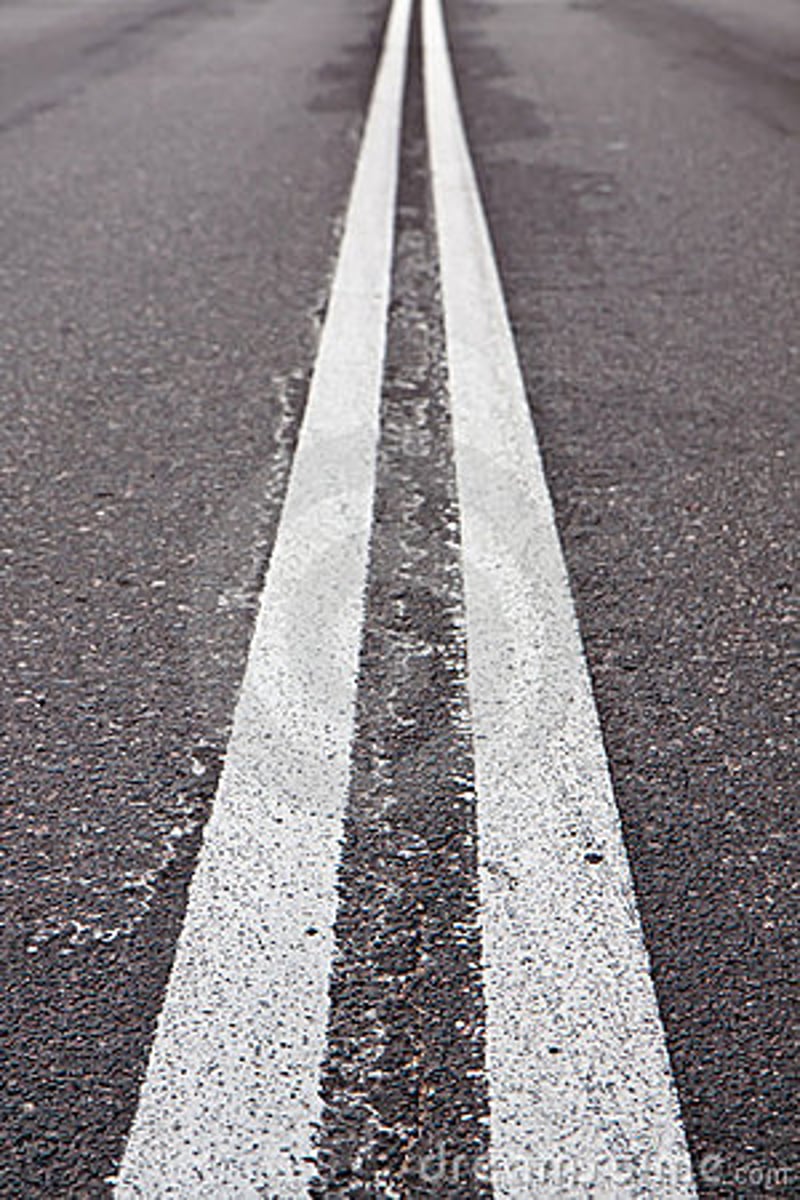
What are solid white or yellow lines used for?
Sometimes used to channel traffic around a hazard
What are a double solid white line used for?
Prohibits lane changing
What does a flashing red light mean?
Means the same as a stop sign. You must come to a full stop and proceed when it is safe to do so
What does a flashing yellow traffic light mean?
Means slow down and proceed with caution
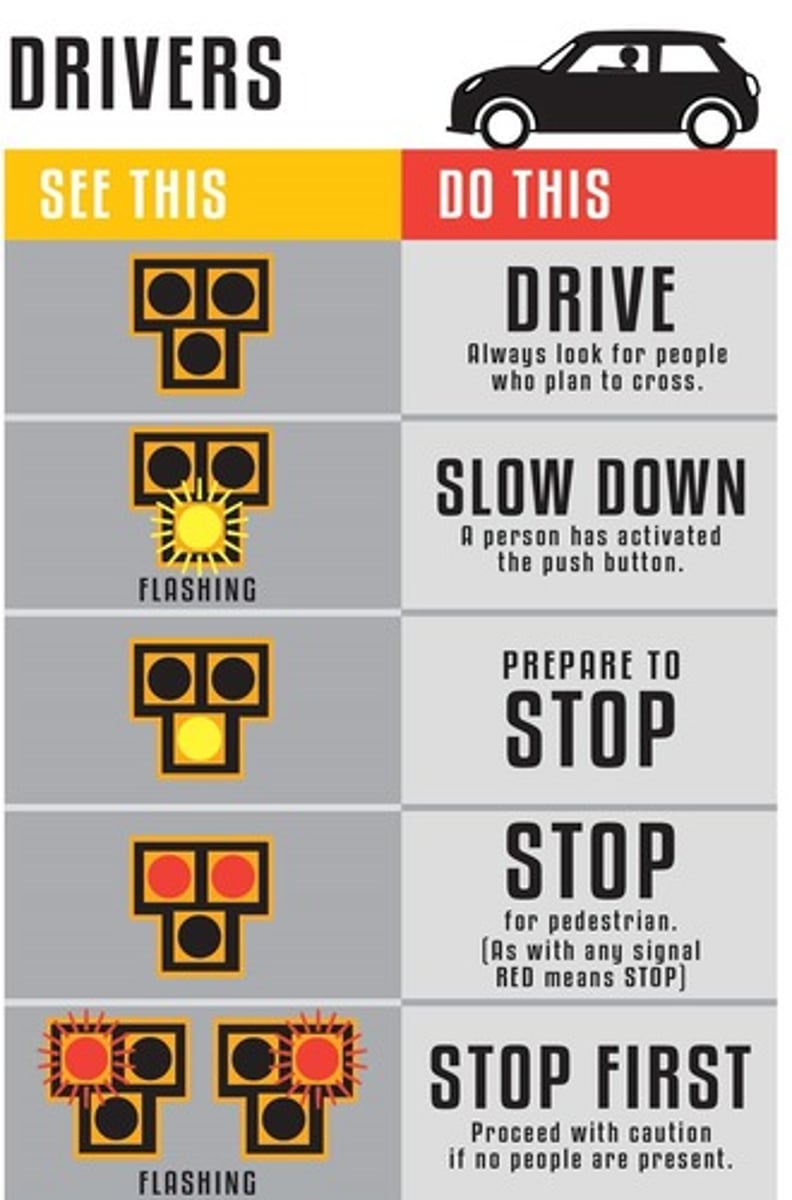
What does a High-Intensity Activated CrossWalk (HAWK) mean?
Composed of a circular yellow signal centered under two horizontally-aligned circular red signals. When activated, vehicles must come to a complete stop as the pedestrian crosses. Then vehicles may move once the pedestrians have finished crossing.
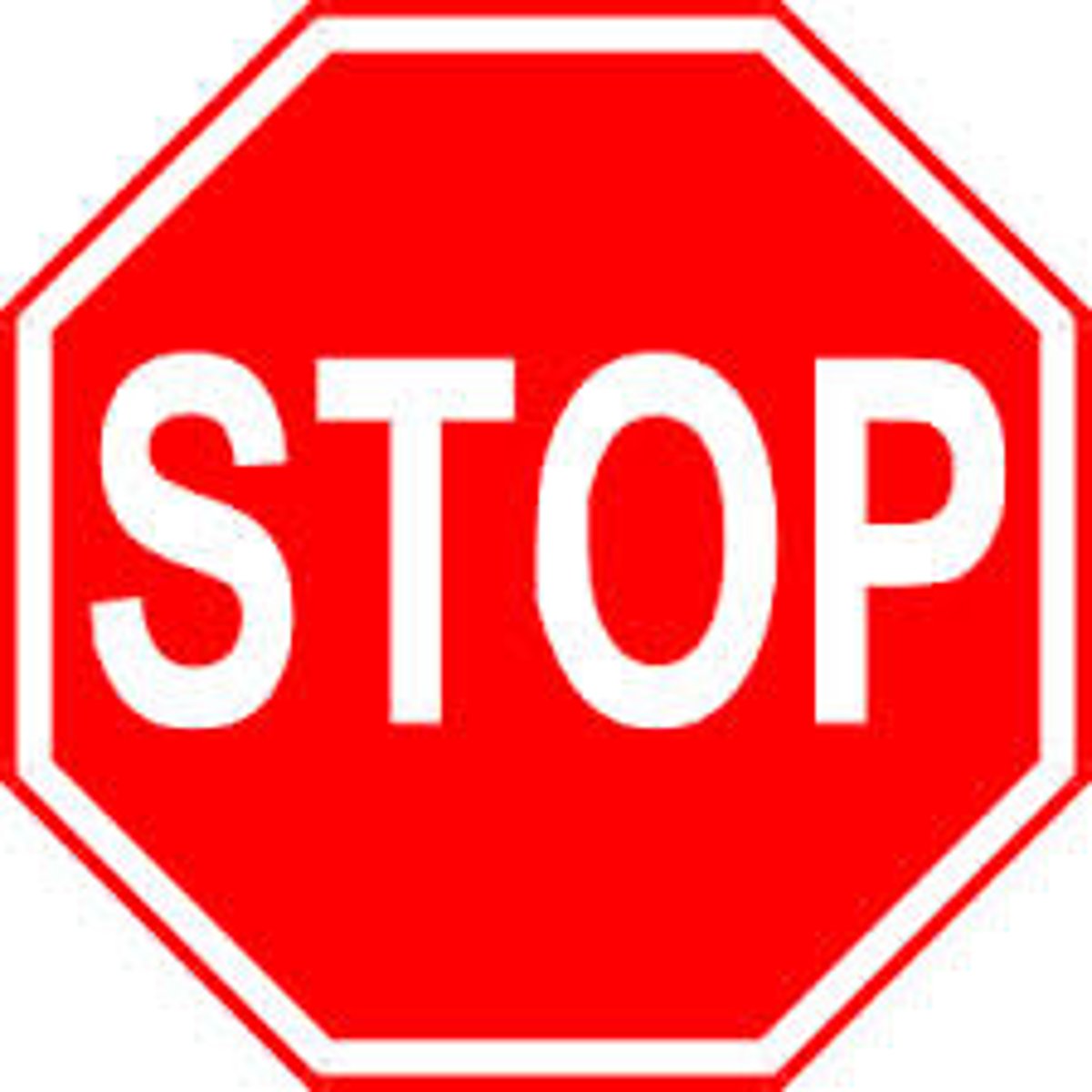
What does an octagon traffic sign mean?
Stop
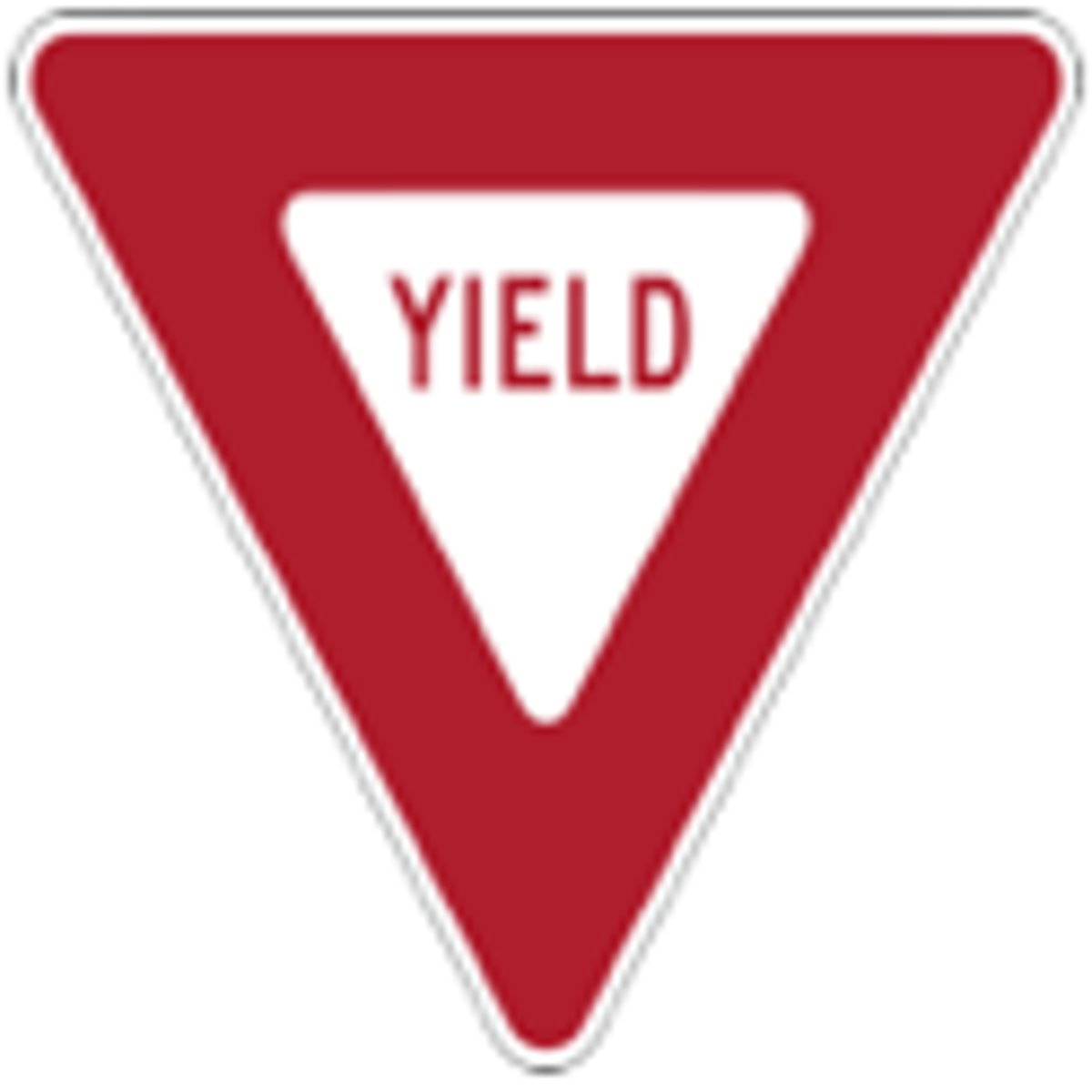
What does a triangle traffic sign mean?
Yield
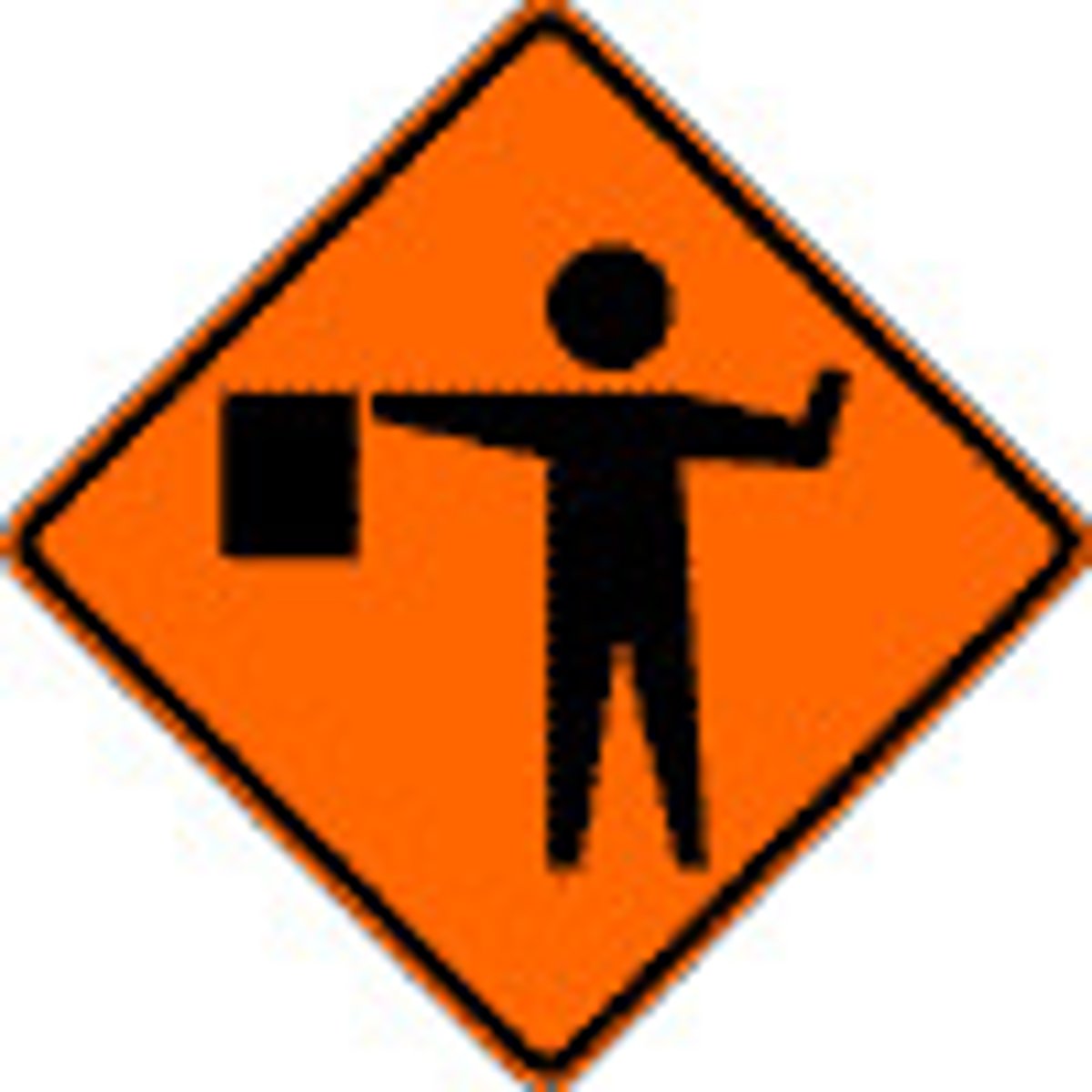
What does a diamond traffic sign mean?
Warning
What does a rectangle/square traffic sign mean?
Regulatory, warning, guide
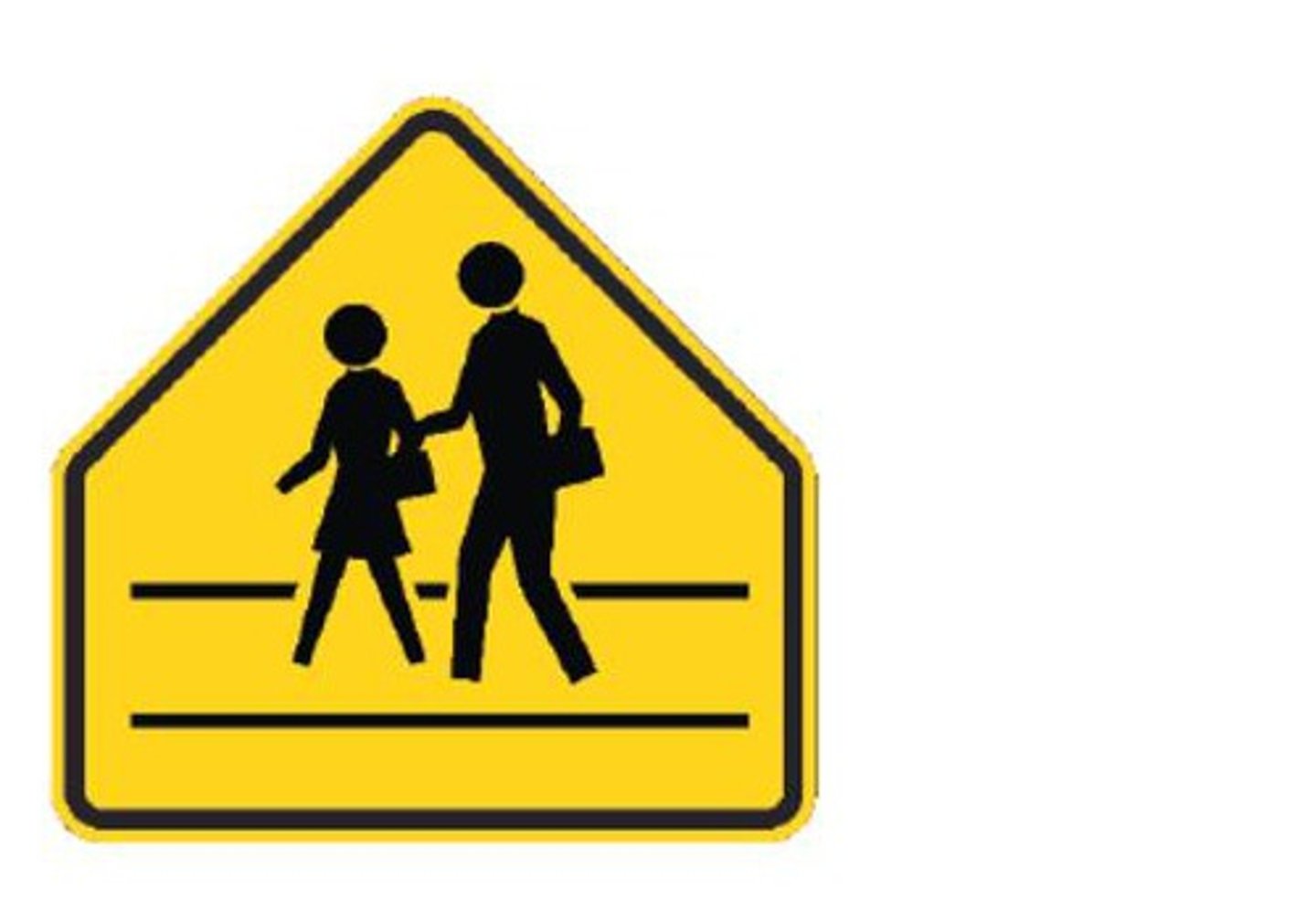
What does a pentagon traffic sign mean?
School zone & school crossing
What does a circle traffic sign mean?
Railroad crossing
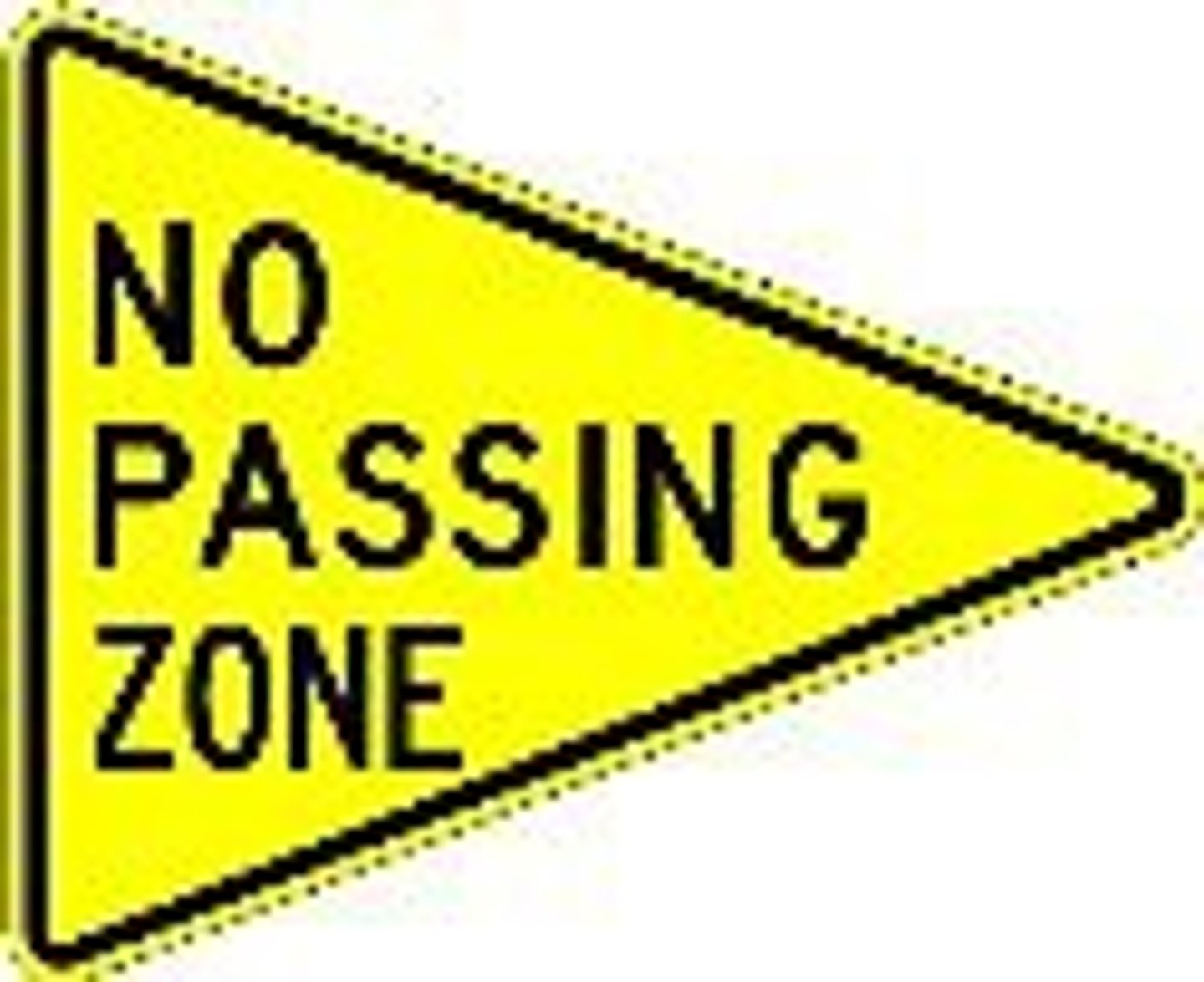
What does a pennant traffic sign mean?
No passing zone
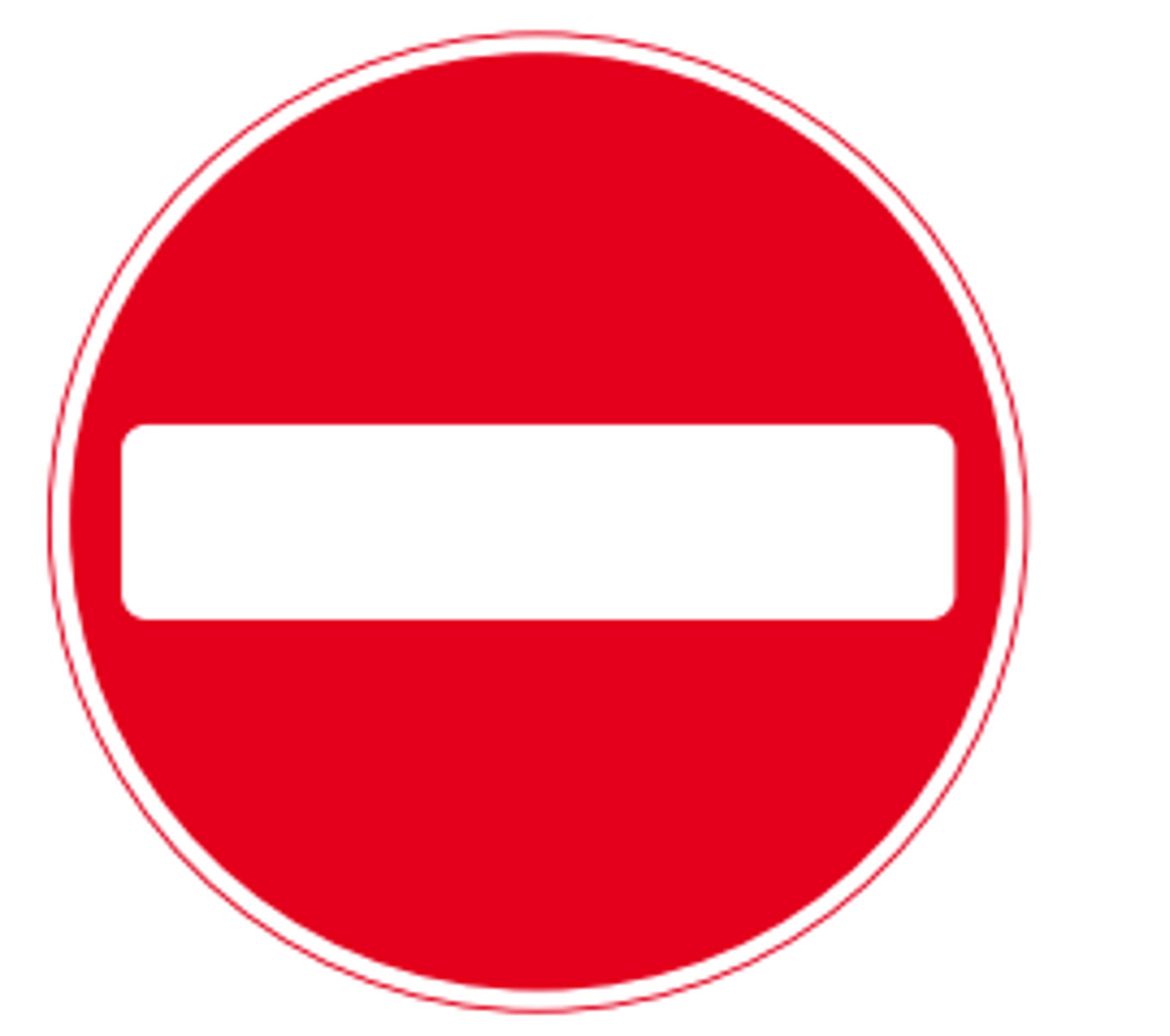
What do red signs mean?
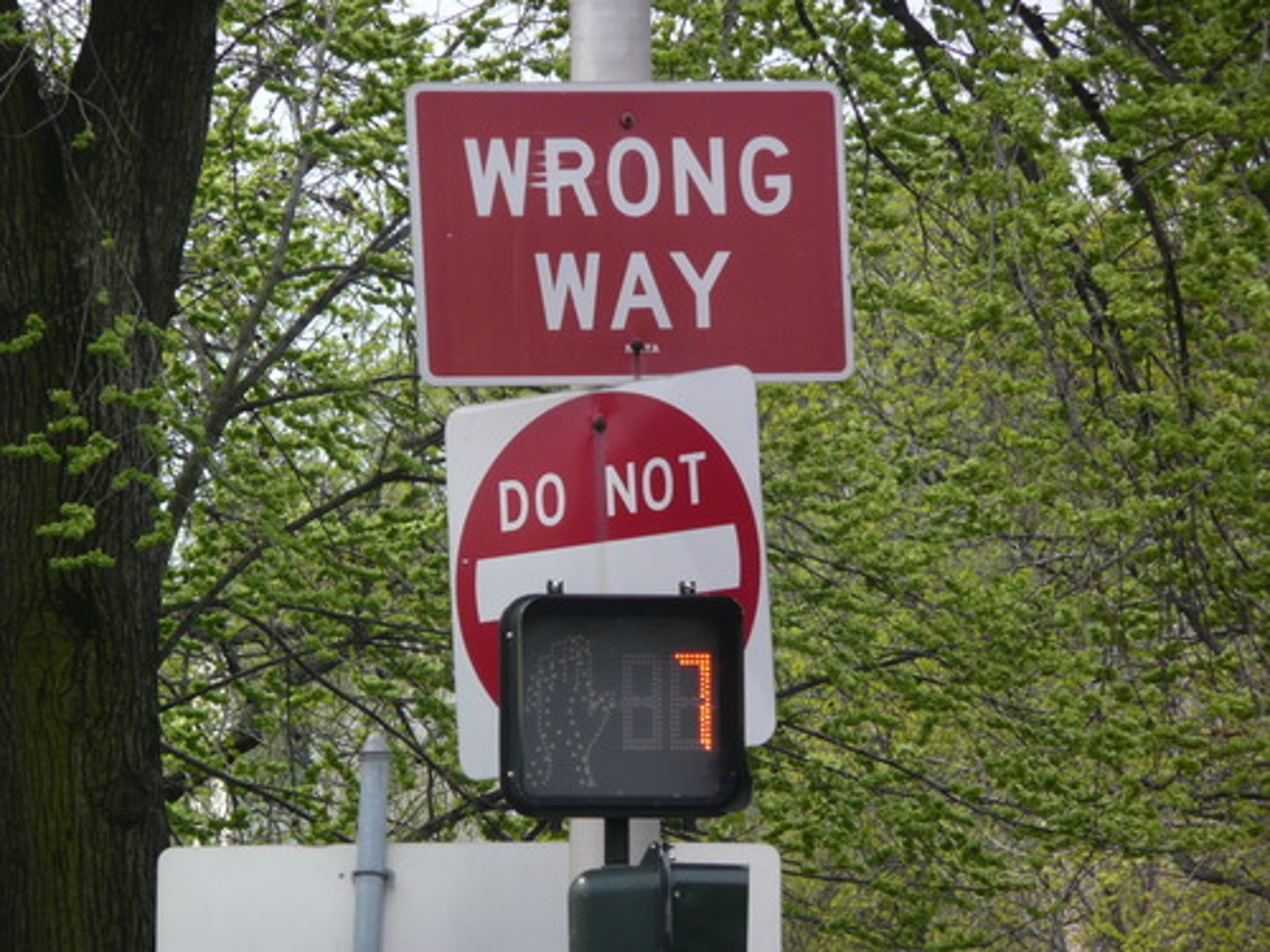
Regulatory and must be obeyed. Include STOP, YIELD, DO NOT ENTER, or WRONG WAY