Biochem Chapters 1 and 2
 Call Kai
 Learn
Learn Practice Test
 Spaced Repetition
 Match
Match Flashcards
 Knowt Play
1/56

There's no tags or description
Looks like no tags are added yet.
Name | Mastery | Learn | Test | Matching | Spaced | Call with Kai | Chat |
|---|
No analytics yet
Send a link to your students to track their progress
57 Terms

Name this functional group
Methyl

Name this functional group
Ethyl
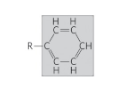
Name this functional group
Phenyl

Name this functional group
Aldehyde

Name this functional group
Ketone

Name this functional group
Carboxyl

Name this functional group
Alcohol (hydroxyl)

Name this functional group
Enol

Name this functional group
Ether

Name this functional group
Ester
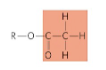
name this functional group
Acetyl
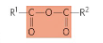
Name this functional group
anhydride (two carboxylic acids)

Name this functional group
Protonated Amino

Name this functional group
Amido

Name this functional group
imine

Name this functional group
substituted imine

name this functional group
guanidinium
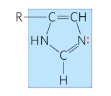
name this functional group
imidazole

name this functional group
sulfhydryl
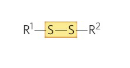
Name this functional group
disulfide
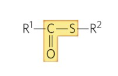
Name this functional group
thioester
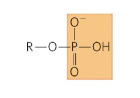
Name this functional group
Phosphoryl
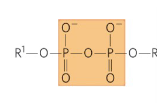
Name this functional group
Phosphoandydride
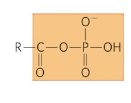
Name this functional group
Mixed anhydride
Select the functional group from below that is stabilized
by resonance in its ionized form.
A. Amine
B. Ester
C. Alcohol
D. Carboxylic acid
E. sulfhydryl
D. Carboxylic Acid
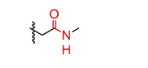
Which two functional groups present in all amino acids
react to form the linkage shown here?
A. Alcohol
B. Amide
C. Amine
D. Carboxylic acid
Amine and Carboxylic acid (forms an amide)
What is accepted as “physiological pH?
A. pH 7.4
B. pH 6.5
C. pH 8.1
D. pH 7.2
E. None of these is correct
A. 7.4
Define Homolytic Cleavage
Both of the resulting atoms in the cleavage will carry only one electron from the original PAIR that formed the bond. Each atom leaves the bond as a RADICAL
Define Hetrolytic Cleavage
One atom retains BOTH electrons from the broken bond, often forming carbocations, hyride ions, and carboanions
What is a nucleophile
Functional groups that are rich in and capable of donating electrons
What is an electrophile
Election defficient functional groups that seek electrons
What are the primary six elements that make up life on a molecular basis
Carbon
Nitrogen
Hydrogen
Oxygen
Phosphates
Sulfur
What is the equation to find detlaG
DeltaG = DeltaH - T x DeltaS
What does it mean if DeltaG is negative
the forward reaction (to make products) procedes spontaneously
what does it mean if deltaG is positive
the reverse raction (to make the reactants) proceeds spontaneously
What does it mean if DeltaG equals zero
the reaction is at equilibrium
What does it mean if DeltaH is negative and DeltaS is positive
The reaction is both enthalpically favored and entropically favored. It is SPONTANEOUS at all temps
What does it mean if DeltaH is negative and DeltaS is negative
Ther action is enthalpically favored but entropically opposed. It is spontaneous at temperatures below T
What does it mean if DeltaH is positive and DeltaS is positive
The reaction is enthalpically opposed but etroplically favored. It is spontaneous only at temps above T
What does it mean if DeltaH is postive and DeltaS is negative
The reaction is both enthalpically and entropically opposed. It is nonspontaneous at all temps
What is the equation to find DeltaG’
DeltaG’ = -RT x In Keq
What is the DeltaG’ biochemical standard state
pH=7
55.5 M H2O
1 mM magnesium
Water (blank) around nonpolar solutes to maximize (blank) bonding with other water molecules, causing a decrease in randomness
Water ORGANIZES around nonpolar solutes to maximize MAXIMIZE bonding with other water molecules, causing a decrease in randomness
Describe the Hydrophobic Effect
The natural tendency of nonpolar substances (such as oil or fats) to clump together in an aqueous solution and push out water molecules. As a result, polar water moecules form a “cage like” structure around the nonpolar substances
This the most importatn stabilizing force for biomolecule structures
What type of molecules spontaneosuly organize in water without energy input being needed
Amphiphilic molecules
soap forms a micelle around dirt or grease, making it water soluble. What directs micelle formation in this case
soap directs micelle formation
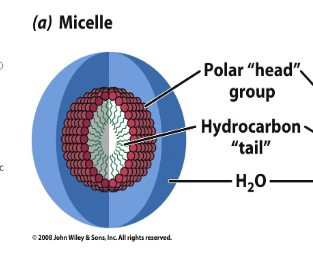
What is a Micelle
An amphiphilic molecule with a polar head group and hydrocarbon tail being surrounded (caged) by water molecules, making the compound water soluble.
What is osmotic pressure
the force required to oppose the flow of water.
What would happen to animal cells in a hypotonic solution
they would rupture due to an influx of water inside of the cell
what would animal cells do in a hyperronic solution
water would leave the cells to equalize the concentration of solutes, causing the cells to shrivel up and die
what would happen to animal cells in an isotonic solution
there would be equal solute concentarion in and out of the cell
Strong acids and bases completely (blank) in water
Strong acids and bases completely DISSOCIATE in water
What does the midpoint represent on a titration curve
the midpoint is when there are equal amounts of H3O and H+ in a solution. If a base is continuously added, the pH shoots up as the acid is completly disolved
Whate is the buffering range of a titration curve
the area where the pka is ± 1 pH
HA + A always equals what
HA + A always equals 1
Where does the phosphate butter system act
the phosphate buffer system acts in the cytoplasm of cells, keeping the pH between a range of 5.9 to 7.9
Where does the bicarbonate buffer system act
the bicarbonate buffer system acts in the blood plasma keeping the pH around 7.4