APES Unit 1 Test Biomes
 Call Kai
 Learn
Learn Practice Test
 Spaced Repetition
 Match
Match Flashcards
 Knowt Play
1/13

There's no tags or description
Looks like no tags are added yet.
Name | Mastery | Learn | Test | Matching | Spaced | Call with Kai | Chat |
|---|
No analytics yet
Send a link to your students to track their progress
14 Terms
Tropical Rainforest
A biome found in the tropics that is the most productive because of its consistently high annual temperatures and precipitation. It is home to lush and extremely biodiverse vegetation.

Lakes and Ponds
Slow moving and confined bodies of fresh water that allow complex ecosystems to develop depending on their depth, which determines the temperature and amount of sunlight they receive.
Tropical Grasslands (Savannas)
This biome tends to experience warm temperatures for most if not all of the year, but goes through very distinct wet and dry seasons that act as a limiting factor for its plants and animals. There are trees but they tend to be woody and small, and the landscape tends to be fairly open.

Subtropical Deserts
Biome that experiences extremely hot temperatures and little to no precipitation year round, which leads to sparse vegetation and very specially adapted plant and animal species.

Rivers and Streams
Aquatic biome characterized by constantly flowing fresh water, the flow of which may change over time and impact the surrounding environment.
Temperate Grasslands/Cold Desert
This biome has the lowest average annual precipitation of any temperate biome. It experiences cold, harsh winters and hot and dry summers, making it susceptible to wildfires like the chaparral. Some parts of this biome have higher annual precipitation and are able to support a variety of grasses, which leads to a very rich and nutrient-dense layer of topsoil.
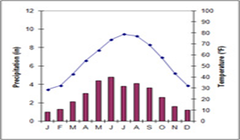
Temperate Desert
Biome with greater temperature variation than biomes at tropical latitudes, but still experiences very little precipitation.
Temperate Shrubland and Woodland (Chaparral)
A biome characterized by hot, dry summers and mild but rainy winters. The dryness and heat of the summers limits plant growth, and also makes the biome prone to wildfires.
Temperate Seasonal (deciduous) Forest
Biome that experiences warm summers and cold winters, the latter of which is a limiting factor for productivity. They are found at similar latitudes to the temperate rainforests, but are farther inland and more abundant. A defining feature is the prevalence of large trees that lose their leaves in the fall as a way of dealing with the cold winters.

Temperate Coniferous Forest/Temperate Rainforest
A coastal biome where large bodies of water provide a moderating factor to temperatures. Temperatures therefore tend to be mild compared to other biomes at similar latitudes, precipitation is high, and very large trees like redwoods are prevalent.

Boreal Forest/Taiga
Biome found in the northern latitudes of the world just beneath the tundra. It is characterized by a cold climate (though not quite as cold as the tundra), the prevalence of evergreen coniferous trees, and a short growing season.

Tundra
Biome found in the northernmost and southernmost latitudes of the world, characterized by very cold temperatures, a sparce and low-lying vegetation, and the existence of permafrost.

Estuaries/Saltmarshes
Salinity level varies depending on elevation, which determines the plant and animal species that can tolerate living there. This biome typically acts as a filtration system for the water, drawing in toxins and blocking debris before it moves further inland or out to the open ocean.
Coral Reefs
The most biodiverse aquatic biome.