PBSI 336 EXAM 1
 Call Kai
 Learn
Learn Practice Test
 Spaced Repetition
 Match
Match Flashcards
 Knowt Play
1/83

There's no tags or description
Looks like no tags are added yet.
Name | Mastery | Learn | Test | Matching | Spaced | Call with Kai | Chat |
|---|
No analytics yet
Send a link to your students to track their progress
84 Terms
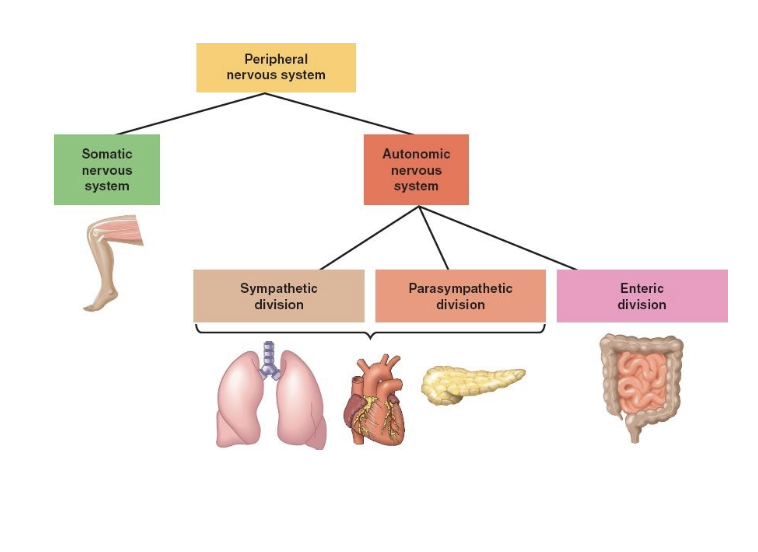
somatic nervous system
-part of PNS, voluntary movement and conscious sensory experience
-delivering voluntary motor signals from CNS to muscles
-conveying sensory info from body to CNS, enter dorsal root (the "back" side entry point into the spinal cord, carrying sensory (afferent) info) of spinal cord
-dorsal root ganglia (a specific ganglion sitting just outside the spinal cord on the dorsal (sensory) side, containing the cell bodies of sensory neurons)

-Motor information going to skeletal muscles
exits the ventral side of the spinal cord – the
cell bodies that give rise to these axons are in
the spine (i.e., in the CNS)
-cranial nerves: convey sensory info about vision, taste, smell, hearing, balance to brain, also controls muscles of neck and head
peripheral nervous system (PNS)
-detects environmental info inside and outside body then transmitted to CNS
-forms nerves (bundle of axons) and ganglia (clusters of cell bodies)
2 type of cells in nervous sytem
neurons (nerve cell) + glial cells (supporting cells)
soma
-metabolic center of the brain
-function to participate in expression of genetic info, synthesis of proteins needed for growth and maintenance of cell
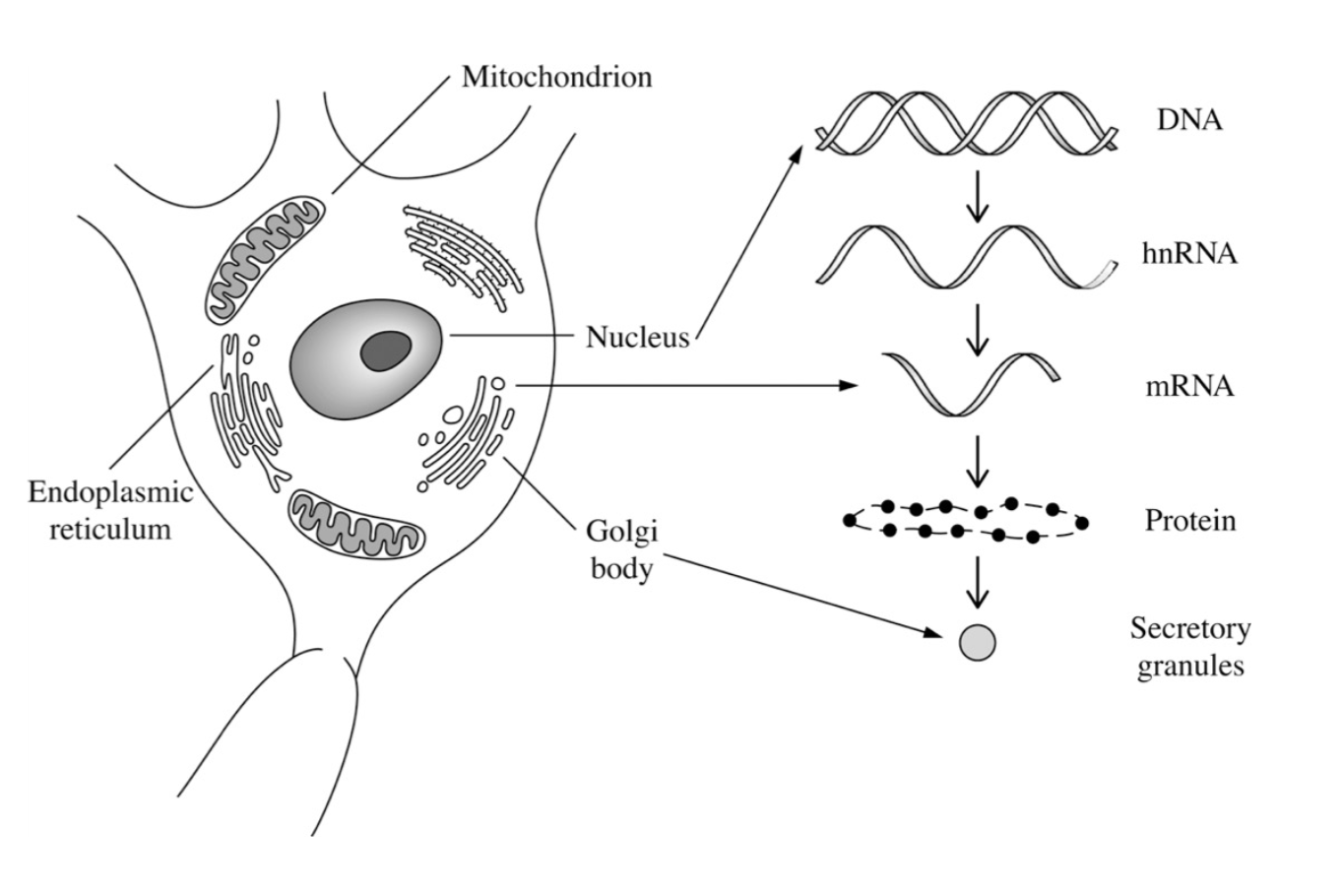
-transcription: DNA to mRNA, in nucleus
-translation: mRNA to proteins, on ribosomes in cytoplasm
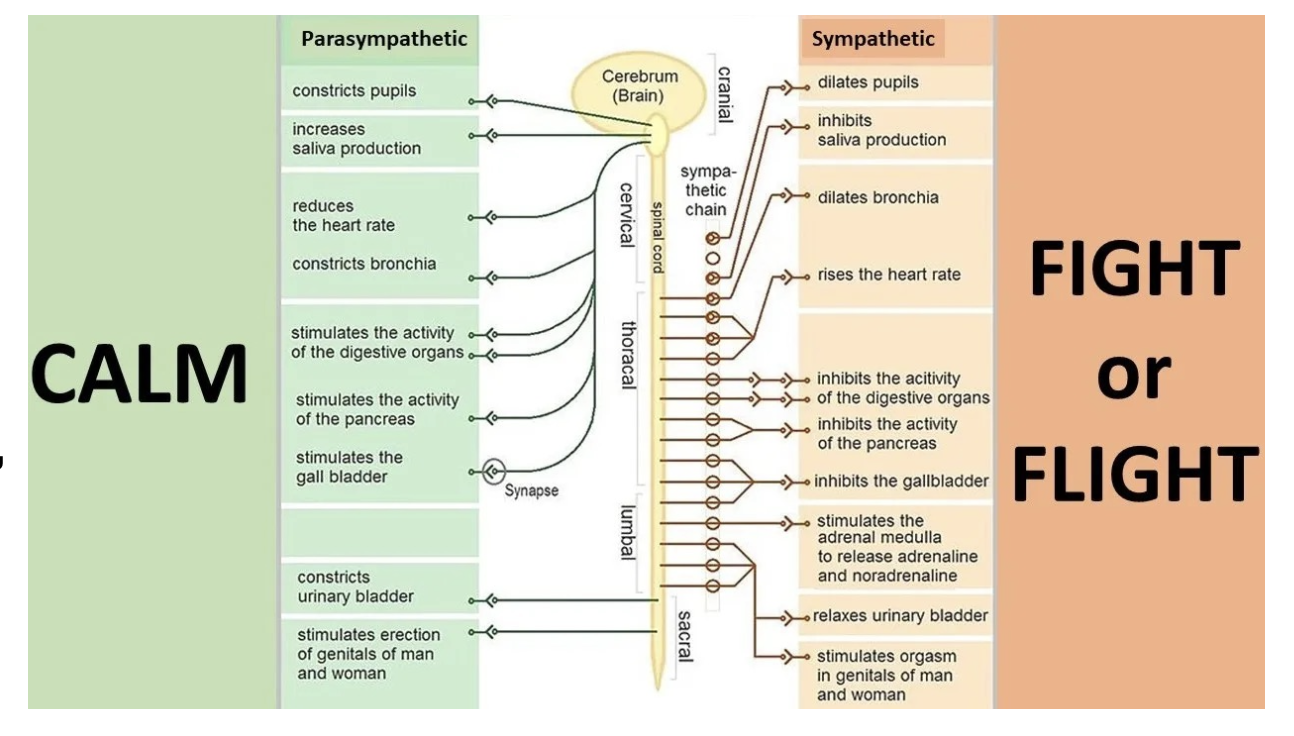
autonomic nervous system
-motor system that innervates smooth muscles, controls digestion, blood pressure, body temperature, and other functions
-breaks into sympathetic and parasympathetic divisions
sympathetic system
-dominates during times of stress, excitment, and exertion
-”fight or flight system”

parasympathetic system
-dominates when energy reserves can be conserved and stored for later use
-”rest and digest system”
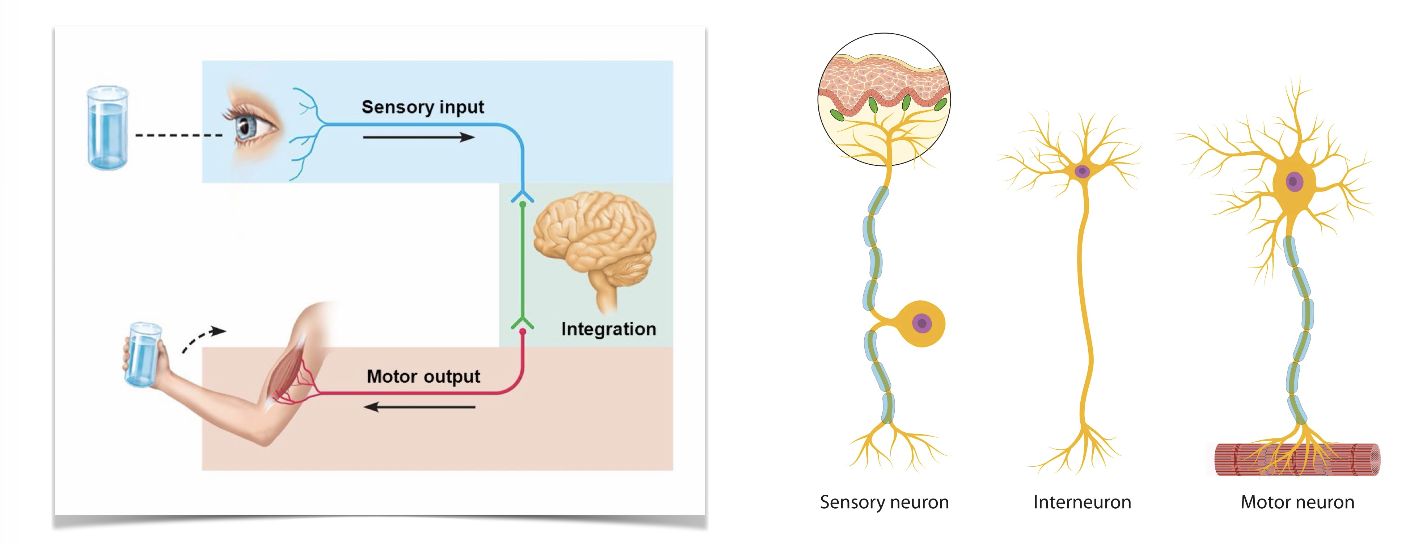
neuron: major features and functions
-main function is to transmit info in the form of electrical signaling over short and long distances in the body (moves in one direction, dendrites to axon terminals)
-electrically and chemically excitable
-typically consists of: dendrites, cell body (soma), axon (includes axon hillock), presynaptic terminal

-soma(cell body): nucleus, mitochondria, ribosomes
-dendrites: transmit info toward cell body
-axon: transmits info away from cell body, micrometer to meter in length, grow out of axon hillock to connect postsynaptic neurons

-types of neurons: sensory neuron (carry sensory impulse from sensory organs to CNS), interneuron (located in brain and spinal cord, soma and axon found within the same structure), motor neuron (carry motor impulses from the CNS to specific effector muscles)

organization of nervous system/ anatomical directions
-close structures are proximal, far are distal
-ipsilateral, same side
-contralateral, opposite side

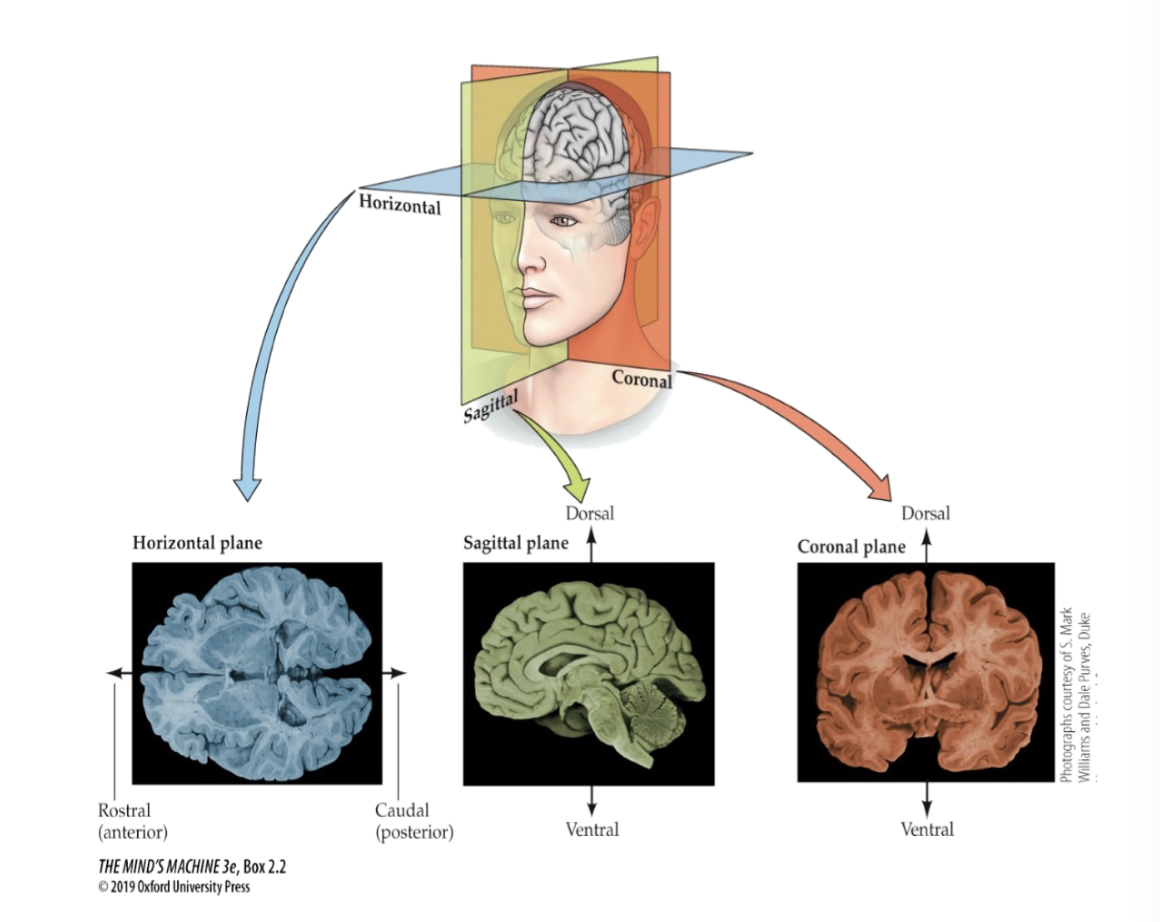
-horizontal section, from aboce
-sagittal section, divides into left and right parts
-coronal section, shows view from front “crown”
brain anatomy/ division of the CNS
efionwe


synaptic vesicles
receptors
-specific binding
-depending on receptor binding the post synaptic neuron will fire or not fire
-after receptor binding, neurotransmitter can be taken back to presynaptic neuron to be used again (reuptake) or enzyme can diactivate neurotransmitter
synaptic cleft
space between neurons, neurons communicating through chemicals (neurotransmitters)
dendritic spines

terminal button
nodes of ranvier
-allow for exchange of ions between axon and the extracellular space
-bare axon with no insulation, densely packed with ion channels which help generate the action potential
-saltatory (jumping) conduction
myelin sheath
-insulating substance consisting of lipids and proteins formed by Schwann cells in the PNS and oligodendrocytes in the CNS
-role of myelination is to increase resistance of membrane and speed up conductance of neuronal currents, instead of climbing every stair you’re able to skip a couple stairs and not waste any “work” making climbing faster
afferent connection
traveling towards the CNS, carries sensory info
“arriving”
efferent connection
traveling away from CNS, carries motor commands
“exit”
general roles of glial cells
types of synaptic connections
-electrical signal occur within a neuron, distribution of ions inside and outside determines whether cell fires or not
resting and action potential
-chemical signals occur between neurons to allow neurons to communicate with one another
neurotransmitters
oligodendrocytes
-act as myelination in the CNS
-octopus, one cell multiple connections (axons), since theres no many neurons this is more efficient connection

schwan cells
-act as myelination in PNS
-single cell single axon, more spread out and need longer myelin segments
microglia
-mediate immune response in the CNS
-type of glial cell
-ingest bacteria, dead cells, protein plaques through phagocytosis
-activated when large amounts of debris are produced by the brain (alzheimers disease where it disposes of amyloid plaques, overactive and doesn’t calm down causes more damage than it repaired)

astrocytes
-second most common glia
-surround neuron to supply vessels (forming blood brain barrier)
-”astro” star shape helps with structure of brain tissue
-forms glial scar, brain scar when damaged
-regulation of blood supply through release of vasoactive substances
-removal and metabolism of excess neurotransmitter
-supply nutrients to the neuron

CNS
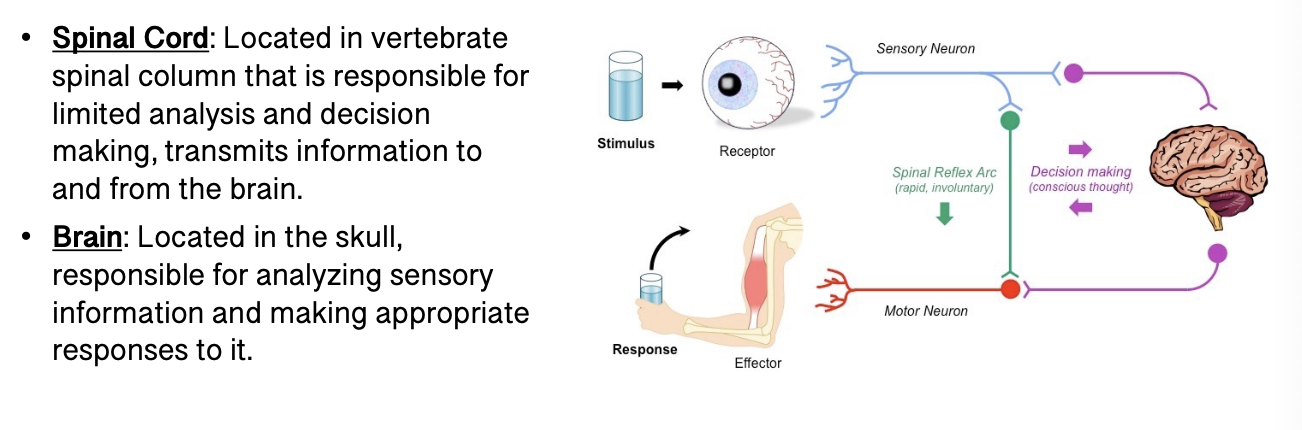
-recognizes and analyzes info from PNS, makes decision, transmits decisions to glands, organs, and muscles for execution
hindbrain
-brainstem that consists of medulla, pons, midbrain
-connects spinal cord to forebrain
-medulla oblongata controls autonomic basic life functions (respiration, heart rate, vomiting, salivation)
-reticular formation (reticular activating system), beings in medulla and extends to other areas of the brain and is involved in arousal (maintains consciousness)
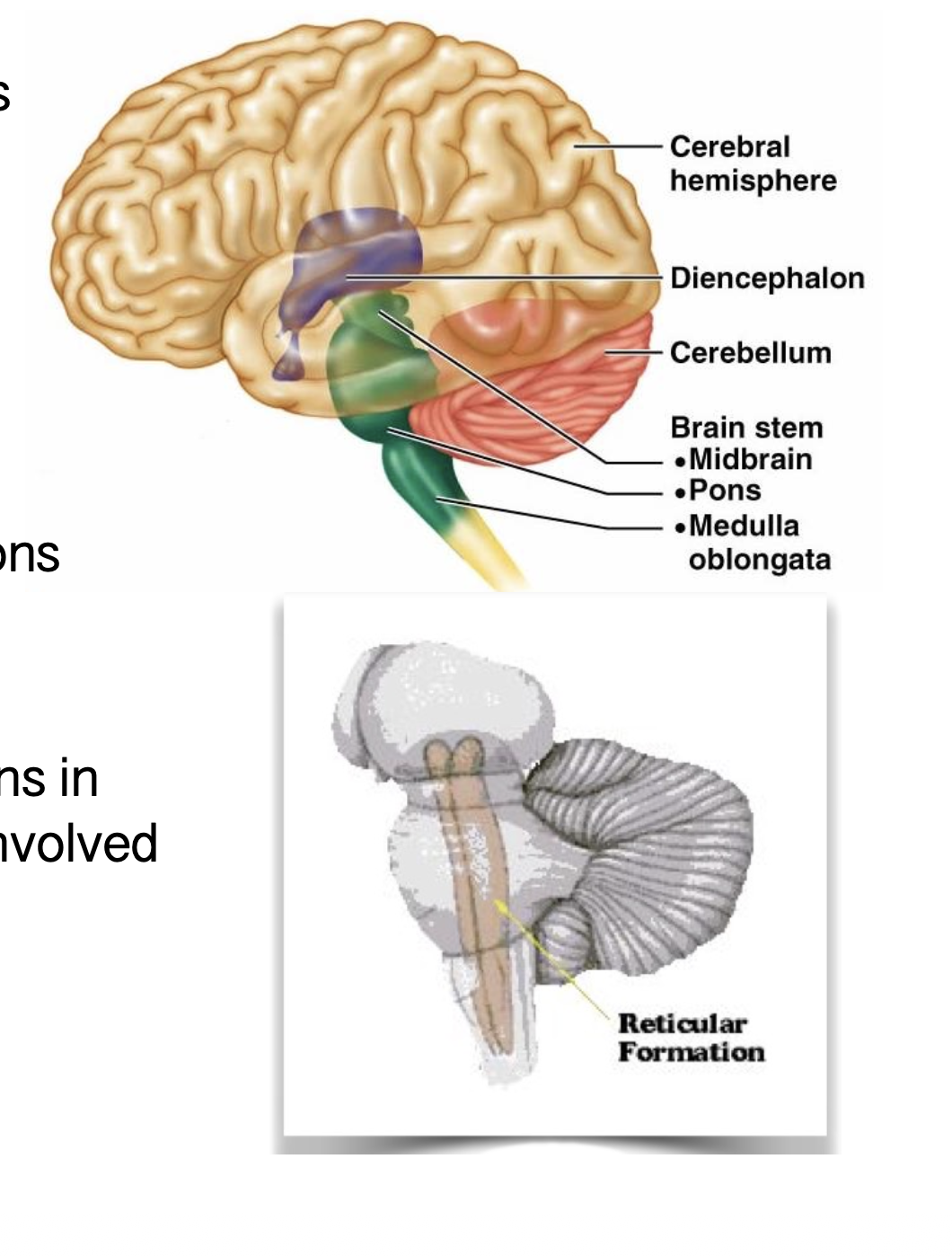
forebrain
-contains the basal ganglia, limbic system, cerebral cortex
-basal ganglia, widespread connections and involved with voluntary movement, maintaining muscle tone, and posture
extrapyramidal motor system, movement pathway outside primary pyramidal tract (direct cortex to CNS, initiates movement directly), fine tunes and regulates movement
caudate nucleus, has “head” and “tail”, curving in c shape
putamen, sits alongside caudate nucleus
globus pallidus
caudate nucleus and putamen are referred to as corpus striatum
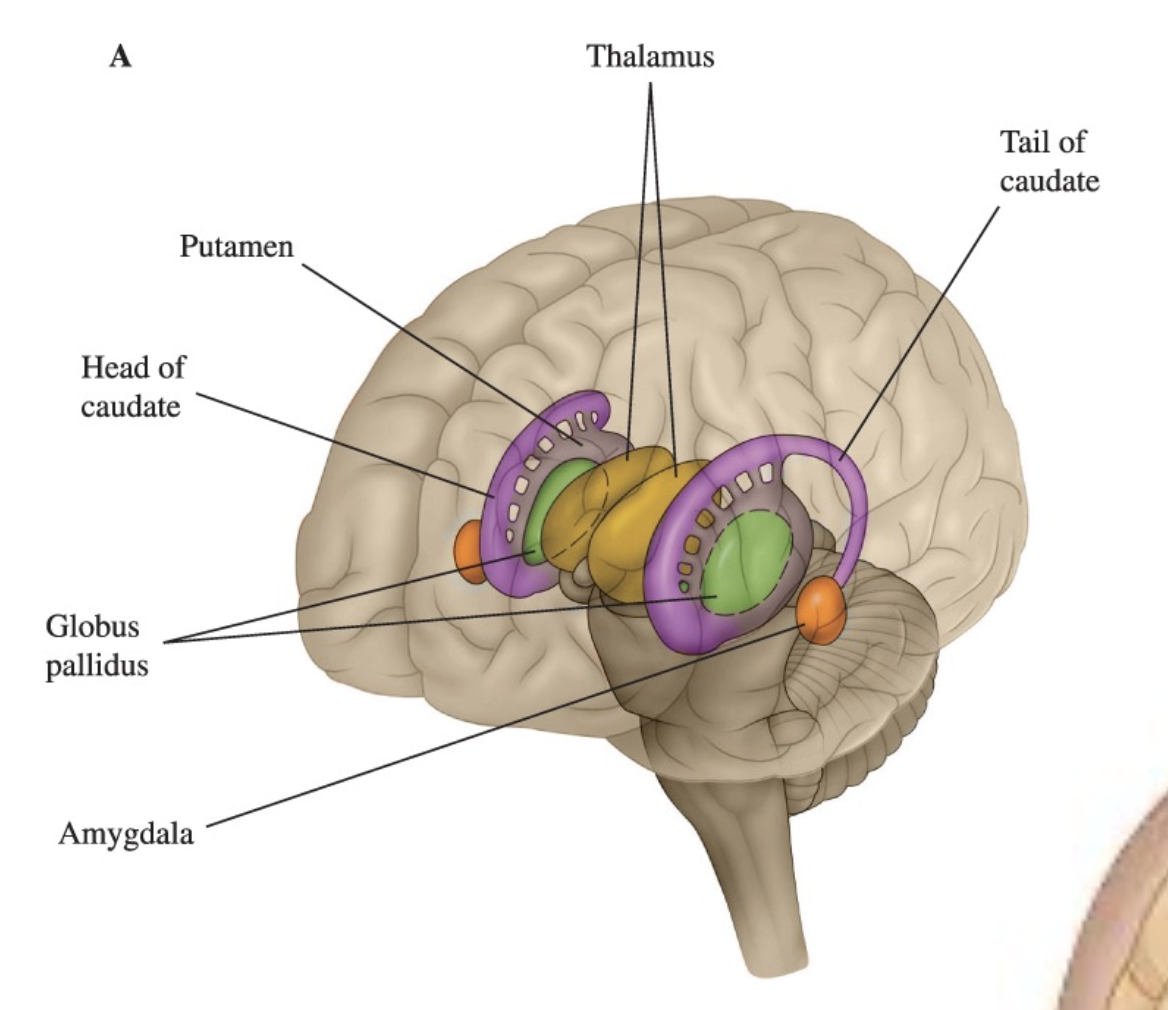

limbic system
-part of forebrain, group of structure surrounding brain stem
-consists of amygdala, cingulate gyrus, hippocampus, olfactory bulb
-governs emotions and is involved in storage and retrieval of memories
-amygdala, facilitates fear and aggression
-hippocampus, memory formation (encoding and consolidation), learning, spatial navigation (mental maps)
-cingulate gyrus, connects sensory input to emotions, emotional responses to pain, maternal bonding, language expression, motivational
anterior cingulate: involved in decisions related to empathy, fairness, social context of behavior
posterior cingulate: required for monitoring performance and keeping motivated during learning, particularly when problems are challenging
-olfactory bulb, odor discrimination, signal enhancement, memory and emotional link
-reward circuit: VTA connects to nucleus accumbens, amygdala, septum, prefrontal cortex via medial forebrain bundle (MFB)


cerebral cortex
-part of forebrain
-outer layer of forebrain that processes sensory info, controls thinking, decision making, stores and retrieves memory, initiates motor response
-divided into 2 hemispheres and connected by corpus callosum, each hemisphere has 4 lobes
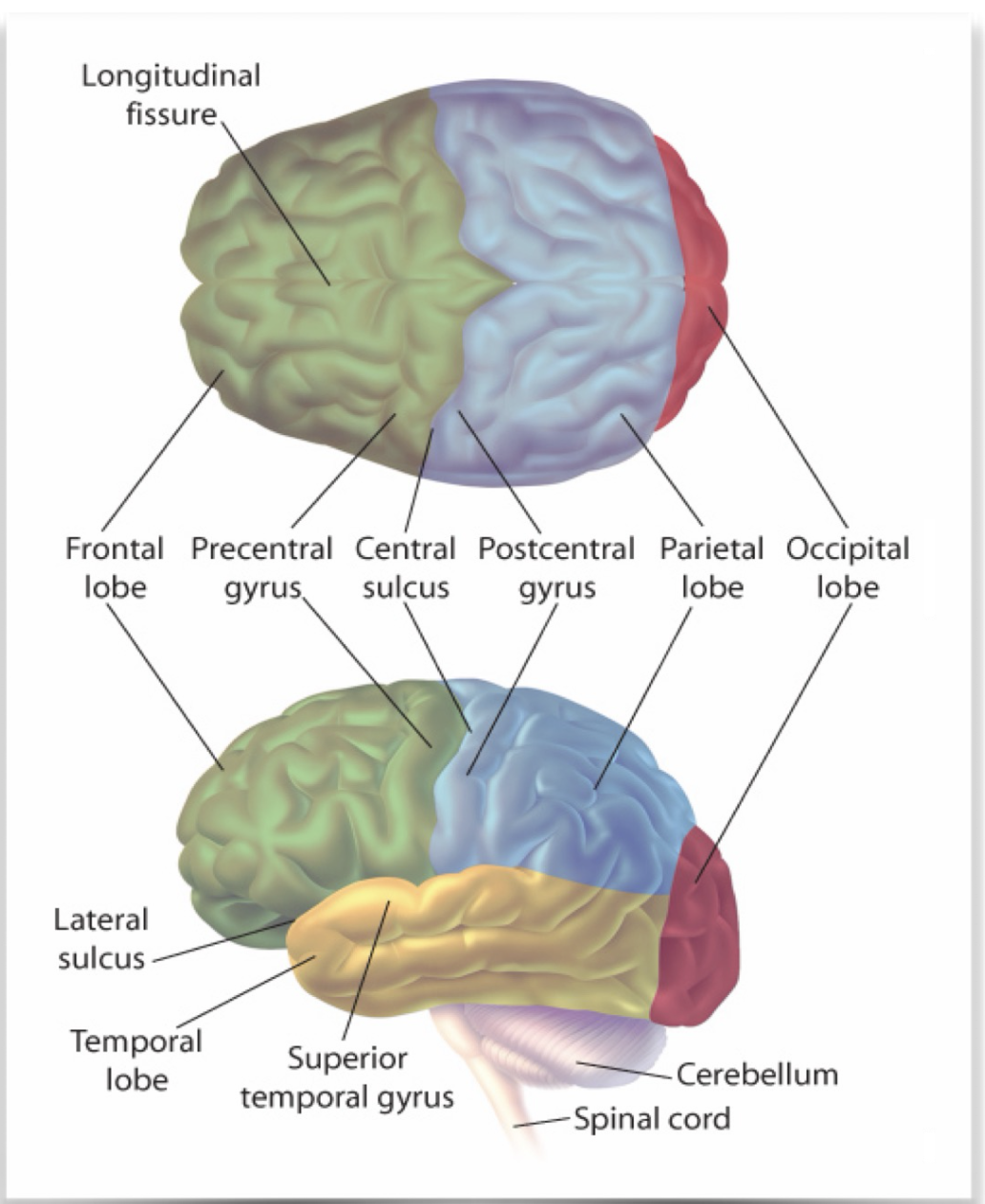
-occipital lobe, analysis of visual info
-parietal lobe, anterior portion (somatosensory cortex) analyses sensory info pain, pressure, body position. posterior portion involved in spatial perception
-temporal lobe, primary auditory cortex (visual area and language centers)
-frontal lobe, motor cortex (muscle movement), area for programming motor movements for speech production is broca’s area
-”prefrontal cortex” controls complex intellectual functioning (planning and sequencing of behavior)

-insular cortex, engaged with interoception sensing one’s own body, interpreting emotional experiences
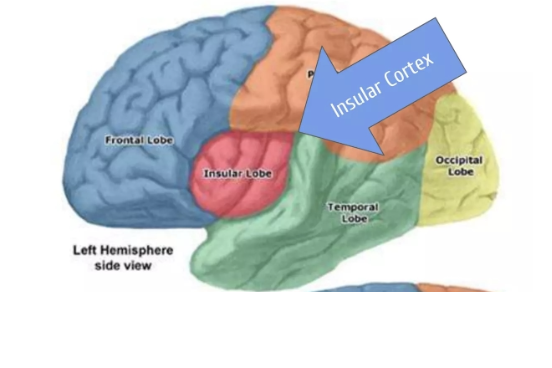

relationship between limbic system and memory center
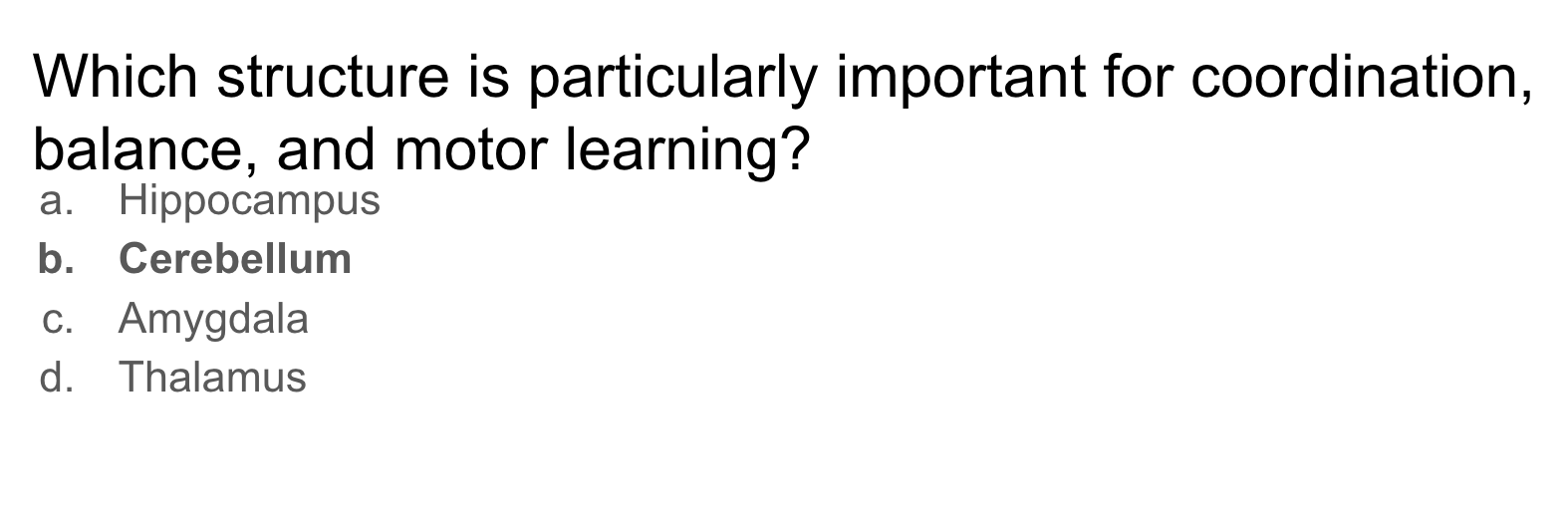
cerebellum
-hindbrain
-contains 80% of brain’s neurons and plays central role in motor control and development and coordinaion of movement and posture
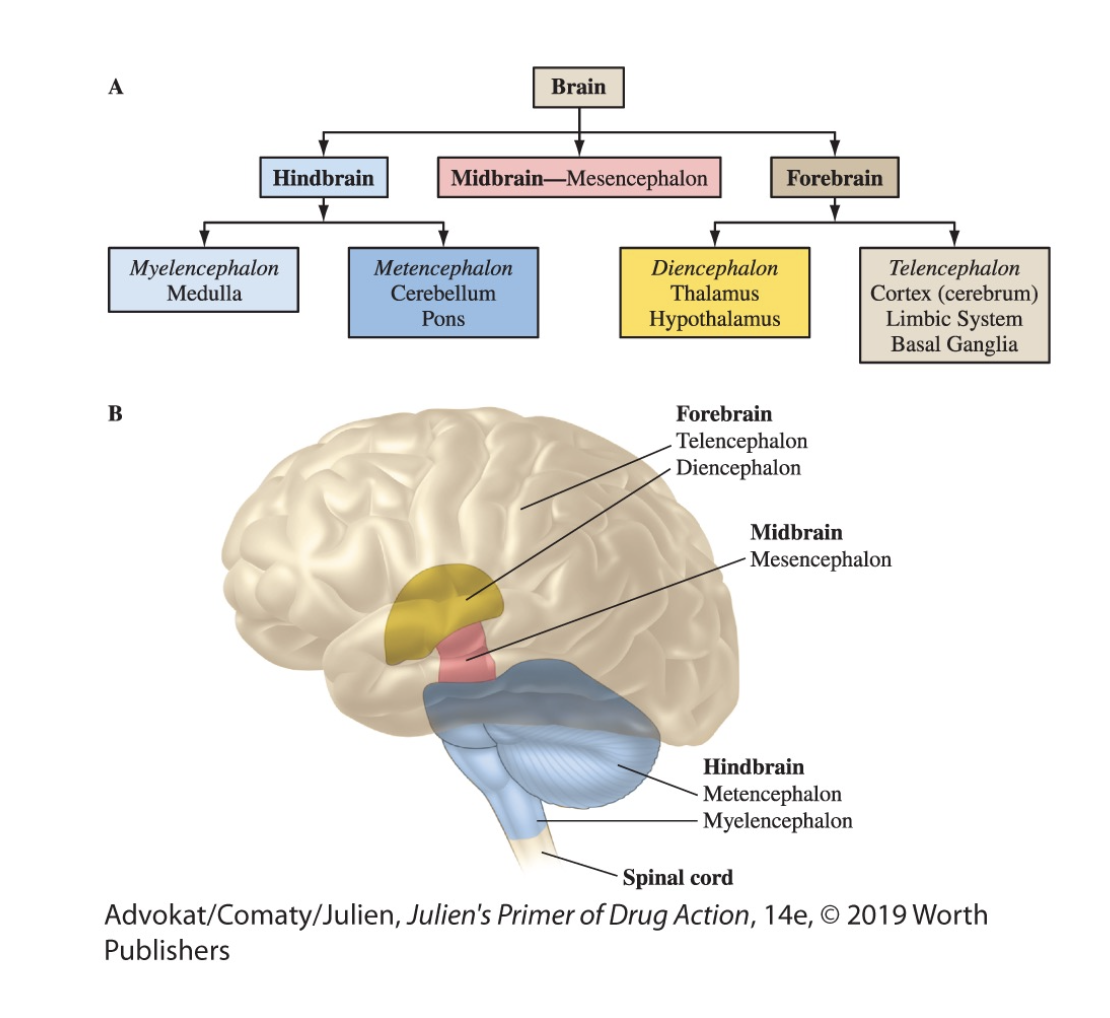
midbrain
-source of dopamine projections and relay station for sensory and motor signals
-tectum “roof” relays visual and auditory info and controls simple reflexes, eye, and ear orientation movements
superior colliculi (lil hills), relays visual info
inferior colliculi, relays auditory info
-tegmentum “floor covering”
substantia nigra: nucleus of dopaminergic neurons projecting to the caudate nucleus and putamen in the basal ganglia, integrate voluntary movements, loss results in parkinsons
ventral tegmental area (VTA), contains dopaminergic neurons projecting to nucleus accumbens (NAc), part of reward circuit, implicated in mental disorders
red nucleus, controls basic body movements, limbs
reticular formation, controls arousal and consciousness
periaqueductal gray (PAG), separates the tegmentum fro the tectum, involved in the perception of pain and secual behavior
forebrain
-largest and most complex, consists of cerebral cortex, basal ganglia, thalamus (inner room), epithalamus (upper room), hypothalamus (lower room)
-epithalamus, habenula (olfactory functions) and pineal gland (produces melatonin)

-thalamus, major relay station for sensory info
medial geniculate nucleus (MGN), relays audtory info
lateral geniculate nucleus (LGN), replays visual info
-hypothalamus, detects need states (hunger and thrist), controls autonomic nervous system and controls pituitary hormone production, pineal gland, motivated behavior (feeding, sec, temperature regulation)
-suprachiasmatic nucleus of hypothalamus is also involved in control of biological rhythms

medulla
function
membrane potential
-inside of neuron is more negative than the outside, -70mV due to selective permeability of cell membrane and uneven distribution of ions in and outside membrane
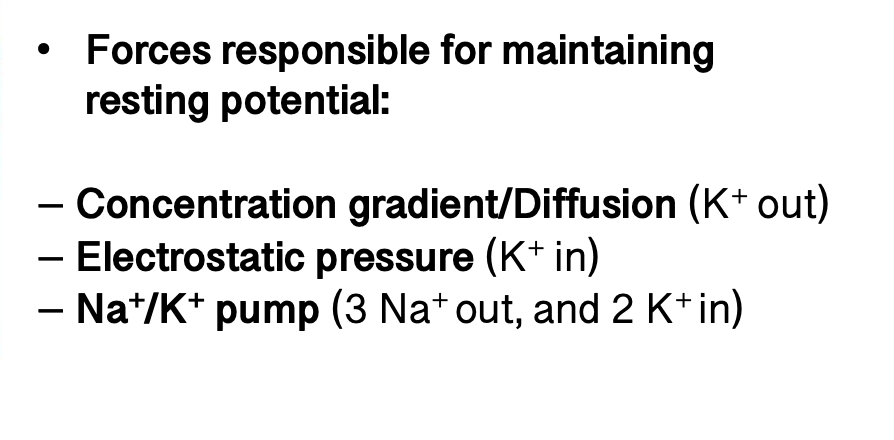

membrane composition, receptors, channels

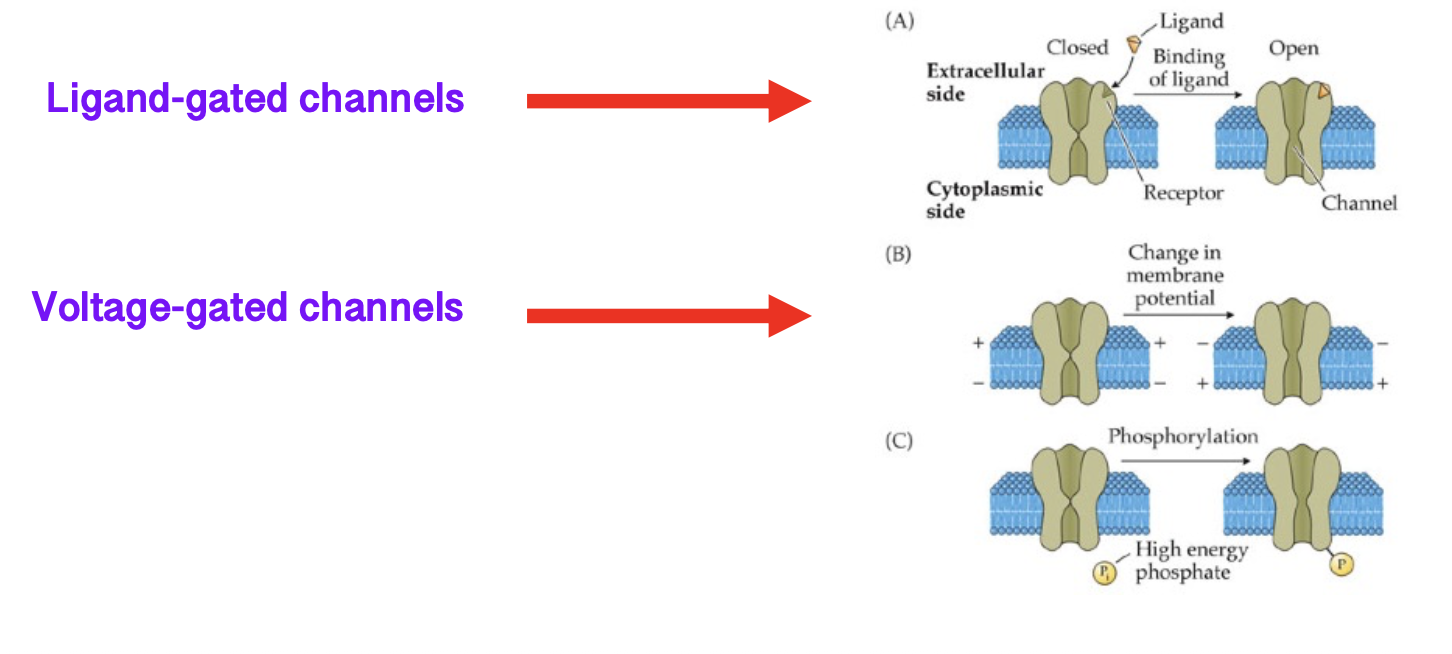
autoreceptor
-receptor on presynaptic neuron that detects its own released neurotransmitter and decreases further release
-self regulating feedback loop
synaptic transmission
transmitter is synthesizes and stored
action potential arrives
depolarization opens voltage gated ca2+ channels
ca2+ enters the cell
ca2+ causes vesicles to fuse with membrane
neurotransmitter released, exocytosis
NT binds to postsynaptic receptos
post synaptic channels open or close
post synaptic current creates EPSP or IPSP, changes excitability
vesicle retrieval, endocytosis, recycling

vesicle cycling and signaling amount
-amount of NT released depends on ca2+ concentration which increases with duration
inonotropic receptors

metabotropic receptors
Na+/K+ pump
sodium, potassium, and chloride ions, function
diffusion vs electrostatic pressure
EPSP
-excitatory postsynaptic potential
-action potential likely to happen
ex: dopamine receptors, serotonin receptors
-small depolarization by excitatory neurotransmitters opening ligand gated na+ channels, which brings neuron closer to threshold

-temporal combination over time
-spatial multiple signals across locations
IPSP
-inhibitory postsynaptic potential
-action potential not likely to happen
ex: GABA receptors, adenosine receptors
-inhibitory neurotransmitters open ligand gated k+ or cl- channels that moves neuron farther from threshold or counteracts excitation

inhibitory amino acids
-gaba and glycine
excitatory amino acid
glutamate
reflexes
action potential
-electrical event that happens when incoming signals exceed certain threshold
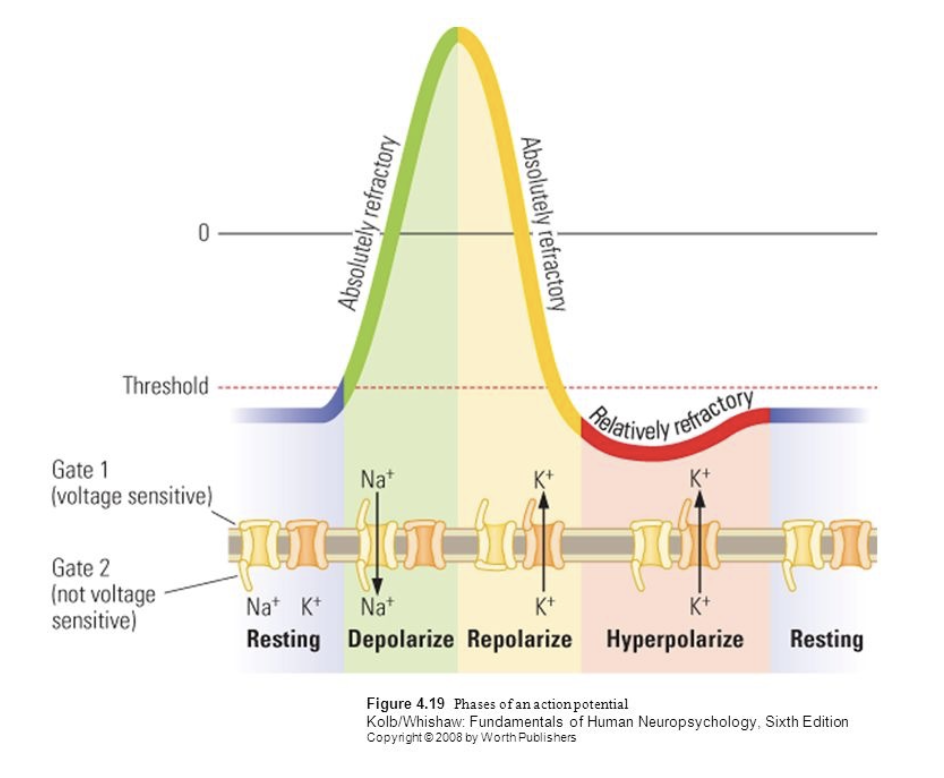
threshold
-70 vs -55mV
hyperpolarization
depolarization
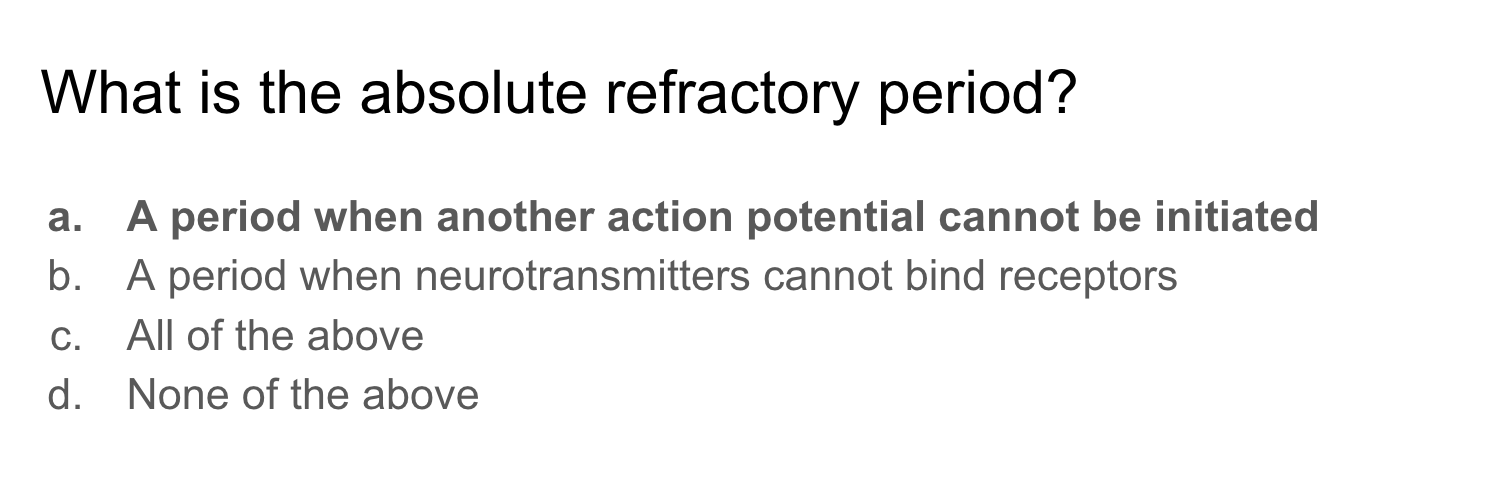
absolute refractory period
relative refractory period
exocytosis
endocytosis
role of Ca2+ in neurotransmitter release
presynaptic facilitation vs presynaptic inhibition
modes of neurotransmitter inactivation (metabolism, transporter, autoreceptor)
synthesis GABA
-glutamate converted to GABA with enzyme glutamic acid decarboxylase
synthesis 5-HT
-serotonin

-tryptophan from diet


classifying a neurotransmitter

synthesis ACh


NE


glutamate

ACh and muscle paralysis
-found in brain and skeletal muscles
-binding of ACh causes muscle contractions in skeletal muscles
-stimulated by nicotine

warfare/beauty
reversible vs irreversible AChE inhibition
Glutamate vs GABA
GABA:
-gamma amino butyric acid
-important inhibitory neurotransmitter
-causes feelings of relaxation and sedation
-anti anxiety drugs
glutamate:
-excitatory neurotransmitter
-important in learning and memory
-NMDA is type of glutamate receptor and important for synpatic plasticity
GABAA receptor and IPSP

benzodiazepines
iuvi

neurotransmitter vs neurohormone
DA in relation to drug abuse, Parkinson’s disease, schizophrenia
dopamine (DA)
-regulation of movement, emotion, cognition, motivation, and feelings of pleasure (brain reward pathway)
-parkinsons is loss of DA neurons

dopamine pathways

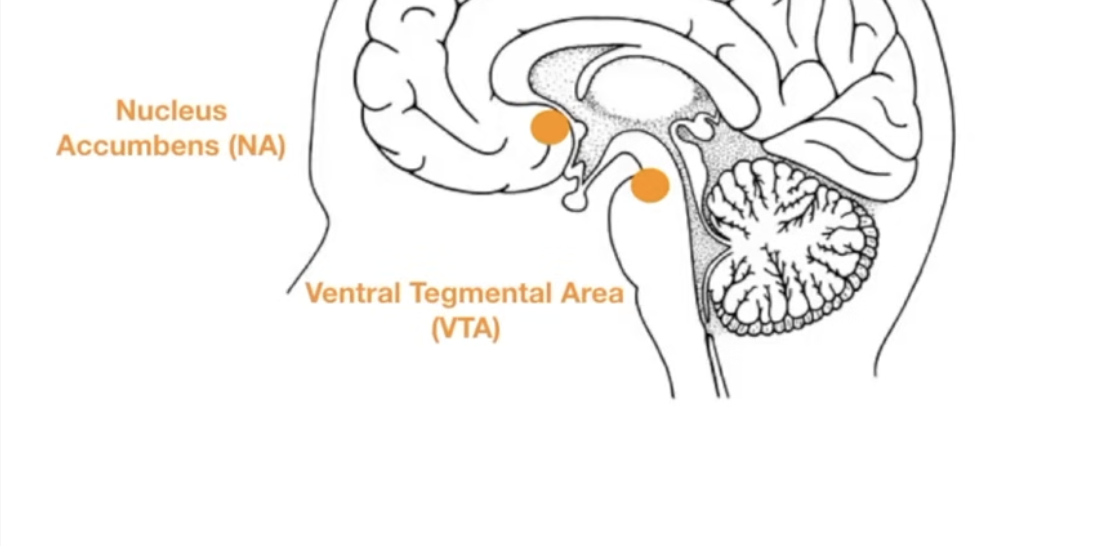
-mesolimbic pathway: DA from VTA to NA
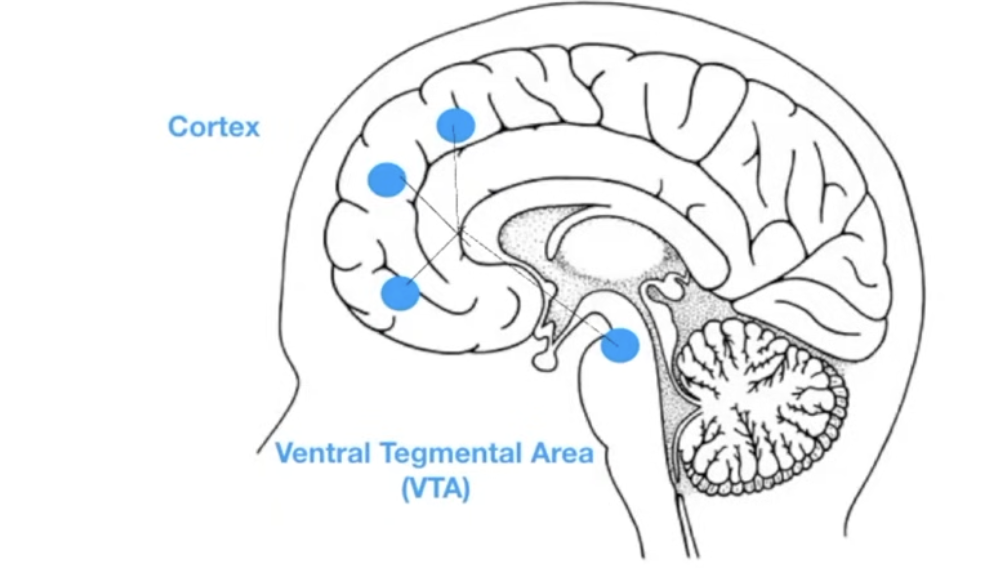
-mesocortical pathway: DA from VTA to cortex, schizophrenia has low DA to cortex which presents negative symptoms
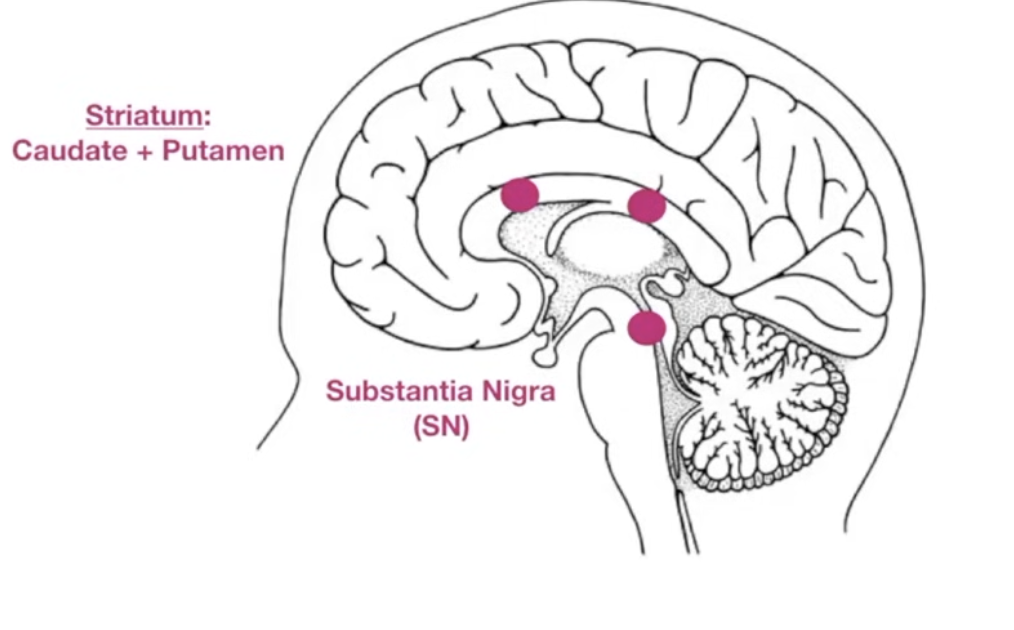
-nigrostratal pathway: DA from SN to striatum, parkinsons decreased DA activity from SN
NE cell body location: arousal/vigilance
-norepinephrine
-emotional arousal and regulation of hunger and alertness
“fight or flight” response
-insufficient levels of norepinephrine will lead to ADHD and major depression
5HT3 receptor

catecholamines, synthesis
-DA, NE, EPI
-location in adrenal medulla and post ganglionic fibers of sympathetic NS


nicotinic vs muscarinic
-nicotinic, ionotropic (fast and direct ion channel), 5 subunits and opens to let na+/ca2+ rush in to cell to depolarize it. “quick fix”
-muscarinic, metabotropic so slow and via 2nd messengers, m1-m5 subtypes found in cortex/hippocamps/thalamus/striatum/basal ganglia
messengers
-1st messenger = extracellular (binds receptor outside), 2nd messenger = intracellular (relays signal inside, e.g., cAMP, G-protein)
na+/k+
-NS spends most energy on this its constantly pumping 3 na+ out and 2k+ in to maintain ion gradient
incoorect mcq