IB Bio Unit 3
 Note
Note Call Kai
 Learn
Learn Practice Test
 Spaced Repetition
 Match
Match Flashcards
 Knowt Play
1/169

There's no tags or description
Looks like no tags are added yet.
Name | Mastery | Learn | Test | Matching | Spaced | Call with Kai | Chat |
|---|
No analytics yet
Send a link to your students to track their progress
170 Terms
Carbon
A chemical element that naturally occurs in all organic compounds and is found in all forms of life.
Organic Chemistry
The study of the structure, properties, composition, reactions, and preparation of carbon-containing compounds.
Covalent bond
A chemical bond that involves the sharing of electrons to form electron pairs between atoms.
Polar covalent bond
A type of chemical bond where a pair of electrons is unequally shared between two atoms. I
Nonpolar covalent bonds
Two atoms of the same element or between different elements that share electrons equally.
Electronegativity
An index of the tendency of an atom to attract electrons. It is proportional to the difference between an atom's ionization potential and its electron affinity.
Hydrogen bond
A common type of chemical bond in organisms. Created between a partially positively charged hydrogen atom attached to a highly electronegative atom and another nearby electronegative atom.
Valence electrons
The electrons located at the outermost shell of an atom.
Valence
A whole number that represents the ability of an atom or a group of atoms to combine with other atoms or groups of atoms.
Tetravalence
An atom having four covalent bonds.
Hydrocarbon
Any of a class of organic chemicals made up of only the elements carbon (C) and hydrogen (H).
Functional Group
A specific group of atoms within a molecule that is responsible for a characteristic of that molecule.
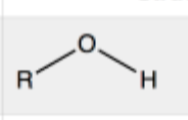
Hydroxyl (OH)
Participate in chemical reactions to link molecules together, forming chains of sugars or fatty acids.
Carboxyl (COOH)
It is polar, weakly acidic, and capable of hydrogen bonding, making it a key component in molecules like fatty acids and amino acids.

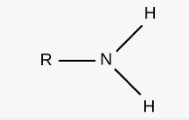
Amino (NH2)
Critical to building all the proteins that makeup life on earth. Peptide bond formation reacts an ____ with a carboxylic acid to form a peptide bond and water.
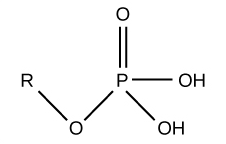
Phosphate (PO4 ³-)
Along with sugars and bases, it makes up nucleic acids, like DNA and RNA. As part of energy carriers, like ATP, it provides energy for moving our muscles.
Macromolecule
A very large molecule important to biological processes, such as a protein or nucleic acid. It is composed of thousands of covalently bonded atoms.
Polypeptide
A continuous, unbranched chain of amino acids joined by peptide bonds. To generate an amide, the peptide bond connects the carboxyl group of one amino acid to the amine group of the next amino acid.
Peptide Bond
A covalent bond that links amino acids together to form a protein.
Carbohydrates
An organic compound such as sugar or starch, and is used to store energy. Like most organic compounds, they are built of small, repeating units that form bonds with each other to make a larger molecule.
CHO (1:2:1 Ratio)
For every carbon there should be 2 hydrogens and 1 oxygen.
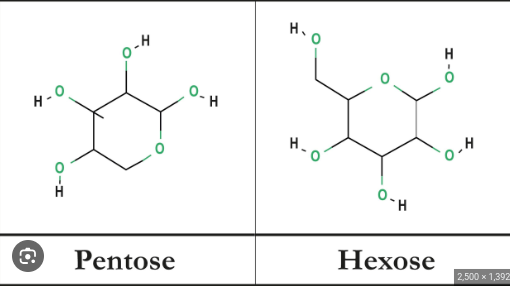
Pentose
Any of various sugars containing five carbon atoms in a molecule.
Ribose
An organic compound classified as a monosaccharide, or simple sugar. Composed of five carbon atoms, ten hydrogen atoms, and five oxygen atoms that have been bonded together.
Hexose
A monosaccharide containing six carbon atoms in a molecule.
Glucose
The main type of sugar in the blood and is the major source of energy for the body's cells. Has the molecular formula C6H12O6.
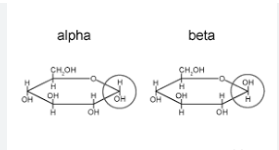
Alpha Glucose
A cyclic hemiacetal form of glucose where at anomeric carbon, the position of hydroxyl group is in downward direction.
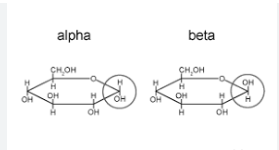
Beta Glucose
A cyclic hemiacetal form of glucose where at anomeric carbon the position of hydroxyl group is in upward direction.
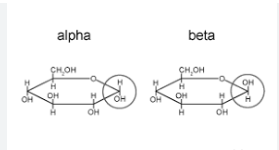
Galactose
An essential carbohydrate for cellular metabolism, as it contributes to energy production and storage in several human tissues while also being a precursor for glycosylation.
Fructose
Used as an energy fuel and for the synthesis of glycoproteins and glycolipids.
Pentose v Heoxse Structure
Alpha V Beta Glucose
Disacchirde
The sugar formed when two monosaccharides are joined by glycosidic linkage.
Sucrose (Glucose + Fructose)
A disaccharide sugar made of Glucose + Fructose
Lactose
A disaccharide sugar made of Glucose and Galactose
Maltose
A disaccharide sugar made of Glucose and Glucose
Molecular structure of a disaccharide
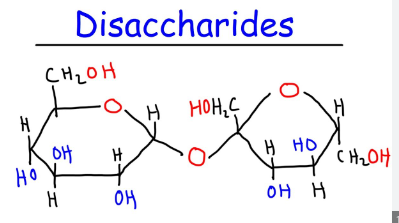
Glycosidic Linkage
A type of ether bond that joins a carbohydrate (sugar) molecule to another group, which may or may not be another carbohydrate.
Polyssaccharide
A long-chain carbohydrate made up of smaller carbohydrates called monosaccharides that's typically used by our bodies for energy or to help with cellular structure.
Starch (Function, Organism, Monomer Name, Descriptors)
Help plants store energy
Glucose
A polysaccharide made up of 1.4 a-glucose linkages between glucose monomers. The chemical formula of the molecule is (C6H10O5). Is made up of long chains of sugar molecules that are connected together.
Amylose
A straight chain of glucose molecules that is used as an energy storage method for plants. It is made up of alpha-D-glucose molecules bound with covalent bonds using an alpha (1,4) glycosidic bond.
1-4 ⍺-glycosidic linkages
Formed by covalent bonding between the oxygen of the C1 (Carbon number 1) of one glucose ring and the C4 (carbon number 4) of the other connecting ring.
Amylopectin
A polysaccharide made up of many units of glucose to store energy in plants and make up the structure of the plant starch granule as a storage unit.
1-6 ⍺-glycosidic linkages
Linkages in which carbon atoms 1 and 6 of the two monomers form a glycosidic bond.
Glycogen (Function, Organism, Monomer Name, Descriptors)
1.A main source of energy
2.Extensively branched glucose polymer that animals use
3. Alpha D glucose
4. A multibranched polysaccharide of glucose, a core protein of glycogenin is surrounded by branches of glucose units.
Cellulose (Function, Organism, Monomer Name, Descriptors)
Helping plants to remain stiff and upright. (Structural)
Present in the cell wall of a plant cell.
Beta glucose
A water insoluble polysaccharide made up of thousands of glucose molecules and has a great tensile strength.
1-4 β-glycosidic linkages
Linkages in which carbon atoms 1 and 4 of two glucose monomers in their β form connect through a glycosidic bond.
Steroid (Function, Organism, Monomer Name, Descriptors)
Important components of cell membranes that alter membrane fluidity; and as signaling molecules.
Plants, animals, and fungi - Any of a group of lipids (fats) that have a certain chemical structure.
17 carbon polycyclic skeleton, based on the cholesterol molecule, which is classed as a lipid.
A fused ring structure. Although they do not resemble the other lipids, they are grouped with them because they are also hydrophobic and insoluble in water. They have four linked carbon rings, and many of them, like cholesterol, have a short tail.
Cholesterol
A waxy, fat-like substance that's found in all the cells in your body.
Steroid hormones
Cyclical chemical compounds made up of rings of carbon atoms that play an essential role in a wide range of physiological functions, including growth, development, energy metabolism, homeostasis and reproduction.
Testosterone
A hormone made mainly in the testes (part of the male reproductive system). It is needed to develop and maintain male sex characteristics, such as facial hair, deep voice, and muscle growth.
Oestrogen (estrogen)
A type of hormone made by the body that helps develop and maintain female sex characteristics and the growth of long bones.
Molecular structure of steroids
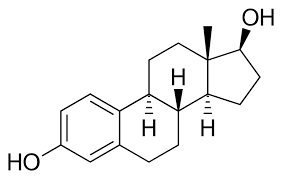
Waxes
A type of long chain nonpolar lipid. Natural ____ are typically esters of fatty acids and long chain alcohols. Synthesized by many animals and plants.
Waterproofing waxes
Because of their hydrophobic nature, _____ prevent water from sticking on plants and animals.
Metabolism
The whole sum of reactions that occur throughout the body within each cell and that provide the body with energy.
Anabolic
A biochemical process in metabolism where the simple molecules combine to generate complex molecules
Catabolic
Marked by or promoting metabolic activity concerned with the breakdown of complex molecules (such as proteins or lipids) and the release of energy within the organism
Condensation
A chemical reaction during which monomers (small molecules) join to form polymers (large molecules or macromolecules). Water is released or lost.
Hydrolysis
A common form of a chemical reaction where water is mostly used to break down the chemical bonds that exists between a particular substance
Monomer
A molecule that may react chemically to another molecule of the same type to form a larger molecule
Polymer
Any of a class of natural or synthetic substances composed of very large molecules, called macromolecules, which are multiples of simpler chemical units called monomers
Endergonic
Absorbing energy in the form of work.
Exergonic
A reaction that releases free energy in the process of the reaction
Nucleic Acids
Large biomolecules that play essential roles in all cells and viruses
Elements: CHONP
Carbon, Hydrogen, Nitrogen, Oxygen, Phosphorus, and Sulfur
Polynucleotide
A combination of nucleotide monomers which are connected to each other through covalent bonds
Phosphodiester bond
Ester bonds that form between sugar and phosphate to form the backbone of nucleic acids.
Proteins
A molecule made up of amino acid
Elements: CHON (sometimes S)
An mnemonic acronym for the four most common elements in living organisms: carbon, hydrogen, oxygen, and nitrogen.
Amino acids
Molecules that combine to form proteins. They are the building blocks of life. When proteins are digested or broken down, ______ are the result.
Essential amino acids
Including histidine, isoleucine, leucine, lysine, methionine, phenylalanine, threonine, tryptophan, and valine, are classified as _______ because they cannot be synthesized by human or other mammalian cells.
Non - Essential amino acids
Our bodies can produce the amino acid, even if we do not get it from the food we eat. Include: alanine, arginine, asparagine, aspartic acid, cysteine, glutamic acid, glutamine, glycine, proline, serine, and tyrosine.
Dipeptide
A molecule that consists of two amino acids joined together by a peptide bond.
Polypeptide
A continuous, unbranched chain of amino acids joined by peptide bonds. To generate an amide, the peptide bond connects the carboxyl group of one amino acid to the amine group of the next amino acid.
Enzymes (& Function)
A biological catalyst and is almost always a protein. It speeds up the rate of a specific chemical reaction in the cell. The enzyme is not destroyed during the reaction and is used over and over.
Transport (& Function)
The act or the means by which molecules, ions, or substrates are moved across a biological membrane, such as the plasma membrane. It may also pertain to electrons being transported along the electron transport chain.
Structure (& Function)
Any physical component in a living organism whose shape helps support, sustain, or perform myriad vital functions in our bodies. STRUCTURE CHANGES FUNCTION
Defense (& Function)
A form of adaptation that promotes the survivability of an organism by protecting it from its natural enemies, such as predators (Anti-predator adaptation) or pathogens (Immune system)
Receptors (& Function)
A molecule inside or on the surface of a cell that binds to a specific substance and causes a specific effect in the cell.They detect a change in the environment (stimulus) and stimulate electrical impulses in response.
Storage (& Function)
The capture of energy produced at one time for use at a later time.
Hormones (& Function)
Chemical substances that act like messenger molecules in the body. After being made in one part of the body, they travel to other parts of the body where they help control how cells and organs do their work.
Side chain/R group
That is also attached to the α carbon. Have a variety of shapes, sizes, charges, and reactivities. This allows amino acids to be grouped according to the chemical properties
Amino group (NH2
Consists of one nitrogen atom and two hydrogen atoms bonded through covalent bonds. Main function in the amino acid.
Carboxyl group (COOH)
A functional group consisting of a combination of hydroxyl (OH) and carbonyl (O) groups attached to a single carbon atom. It is polar, weakly acidic, and capable of hydrogen bonding,
Alpha carbon (∝)
Serves as the point of attachment for the sidechains of 19 out of 20 amino acids used in protein building.
Where a peptide bond is found in a dipeptide/polypeptide diagram?
Between the carboxyl group of amino acid 1, and the amino group of amino acid 2
Chitin
A fibrous substance consisting of polysaccharides and forming the major constituent in the exoskeleton of arthropods and the cell walls of fungi
Glycoprotein (& Functions)
Any of a class of proteins that have carbohydrate groups attached to the polypeptide chain.
Secreted ______ can act as signaling molecules and membrane-bound
ABO blood groups
A system used to group human blood into different types, based on the presence or absence of certain markers on the surface of red blood cells.
Lipids
A broad group of organic compounds which include fats, waxes, sterols, fat-soluble vitamins, monoglycerides, diglycerides, phospholipids, and others. The functions include storing energy, signaling, and acting as structural components of cell membranes.
Elements: CHO
(VERY little O compared to C and H) - Carbon, Hydrogen, Oxygen)
Hydrophobic
Tending to repel or fail to mix with water
Nonpolar
Molecules that do not have any electrical charges or partial charges
Fats/Oils
Those that stay solid at room temperatures are called ____ while those that stay liquid at room temperatures are called ____
Triglycerides
Consists of a glycerol backbone esterified with three fatty acids
Ester linkages
The carbon atom is double-bonded to one oxygen atom and single-bonded to another oxygen atom, which is in turn bonded to another carbon atom
Glycerol
A nontoxic, sweet tasting, and viscous fluid that has the chemical formula C3H8O3. It is a polyol, a compound that is made up of more than one hydroxyl group. Its chemical structure consists of three hydroxyl groups, which are -OH groups attached to the carbon atoms
Fatty Acids
Hydrocarbon chains of differing lengths with various degrees of saturation that end with carboxylic acid groups
Saturated fatty acid
Fats that have single bonds along their fatty acid chains
Unsaturated fatty acid
Have one or more double bonds between carbon atoms