Introduction to Comparative Politics: Key Concepts, Theories, and Methods
 Call Kai
 Learn
Learn Practice Test
 Spaced Repetition
 Match
Match Flashcards
 Knowt Play
1/63

There's no tags or description
Looks like no tags are added yet.
Name | Mastery | Learn | Test | Matching | Spaced | Call with Kai | Chat |
|---|
No analytics yet
Send a link to your students to track their progress
64 Terms
What is the primary focus of the course GOVT 203?
To explore comparative politics, including statehood, democracy, economic development, and political institutions.
What are some key questions addressed in the course?
1. Why do some countries develop strong senses of statehood and nationhood while others do not? 2. Why do some countries remain authoritarian while others transition into democracies? 3. How are wealth, inequality, and political power interconnected?
What is one reason some countries achieve economic development while others remain impoverished?
Differences in institutions and forms of government can influence economic development outcomes.
What is a significant question regarding social revolutions in the course?
Why do some social revolutions succeed and endure while others fail?
What contemporary challenges are discussed in the course?
The course addresses various contemporary challenges facing political systems today.
What is the educational background of the course instructor, Yonca Özdemir?
BSc in Management from Middle East Technical University, MA in International Relations from University of Delaware, and PhD in Public and International Affairs from the University of Pittsburgh.
What positions has Yonca Özdemir held in academia?
Visiting Faculty & Director of Advising in IR at William & Mary, Visiting Associate Professor at Haverford College, Associate Professor at World Peace University, Assistant Professor at METU, and Teaching Fellow at the University of Pittsburgh.
What is the office location and hours for the course instructor?
Office: Chancellors 416; Office hours: Monday & Wednesday, 5:00-7:00 pm, or by appointment.
What is the significance of understanding the relationship between wealth, inequality, and political power?
It helps to analyze how economic disparities can affect governance and social stability.
What is a potential outcome of studying different forms of government?
Understanding why countries have different institutions and how these affect political and economic outcomes.
What is the role of social revolutions in political change?
Social revolutions can lead to significant shifts in power and governance, impacting statehood and democracy.
What is the importance of statehood and nationhood in comparative politics?
They are foundational concepts that influence a country's political identity and stability.
What is the connection between authoritarianism and democracy in the course context?
The course examines why some countries remain authoritarian while others transition to democratic governance.
How does the course approach the study of economic development?
By analyzing the factors that contribute to economic success or failure in different countries.
What is the significance of the course's focus on contemporary political challenges?
It prepares students to understand and engage with current global political dynamics.
What is Comparative Politics?
A subfield of Political Science that studies political systems, institutions, and behaviors within countries.
How does Comparative Politics differ from International Relations?
Comparative Politics focuses on domestic politics within countries, while International Relations examines relationships between states.
What are some central questions in Comparative Politics?
Questions include why some states fail while others succeed, the reasons for different forms of government, and the evolution of political systems.
What is state/nation-building in Comparative Politics?
The process of state formation and establishing sovereignty.
What are the different regime types studied in Comparative Politics?
Democracies, autocracies, and hybrid regimes.
What does the political economy focus on in Comparative Politics?
Economic growth, class structures, industrialization, and inequality.
What is the importance of Comparative Politics?
It enhances understanding of how histories, institutions, and cultures influence politics and informs political decisions.
What is the Comparative Method?
A systematic approach to studying and comparing political systems to identify similarities and differences.
What are the two key approaches in the Comparative Method?
Inductive reasoning (building theories from specific observations) and deductive reasoning (testing hypotheses with specific cases).
What are the levels of analysis in Comparative Politics?
Micro-Level (individual/group behavior), Meso-Level (institutions/organizations), Macro-Level (systemic factors).
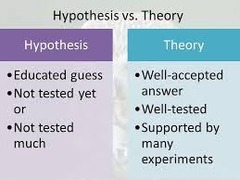
What is a theory in Comparative Politics?
A systematic explanation that helps scholars understand political realities and predict outcomes.
What are the types of theories in Comparative Politics?
Normative (values and beliefs) and Empirical (observations and facts).
What is Rational Choice Theory?
A theory that assumes individuals act based on self-interest, weighing costs and benefits.
What does Cultural Theory emphasize?
The role of cultural norms, values, and identities in shaping political behavior.
What is Institutional Theory?
A theory focusing on how formal and informal institutions shape political behavior and outcomes.
What is Structuralism in Comparative Politics?
A perspective that highlights the role of overarching structures (economic, social, historical) in shaping political systems.
What is a hypothesis in Comparative Politics?
A statement predicting the relationship between variables, derived from a theoretical framework.
What are the components of a good hypothesis?
Explicit predictions, testability, falsifiability, and clear operational definitions of variables.
What is empirical evidence?
A set of facts or observations used to support a proposition or hypothesis.
What are the two types of empirical evidence?
Quantitative (statistical data) and Qualitative (case studies, interviews).
What is a case study in Comparative Politics?
An in-depth analysis of a single country or political entity to provide detailed insights.
What are comparative case studies?
Studies that identify patterns through similarities and differences across two or more cases.
What are Big N studies?
Studies that identify patterns through similarities and differences across a large number of cases.
What is the Most-Similar-Systems Design (MSSD)?
A research approach that compares similar countries differing in key aspects to identify factors responsible for divergent outcomes.
What is the Most-Different-Systems Design (MDSD)?
A research approach that compares countries with significant differences to find common factors leading to similar outcomes.
What are the two main types of methods used in political analysis?
Quantitative Analysis and Qualitative Methods.
What does Quantitative Analysis involve?
Utilizing statistical techniques on large datasets to find patterns.
What are Qualitative Methods?
Methods such as interviews, historical analysis, archival research, and fieldwork to understand context and detail.
What is Mixed Methods?
An approach that combines qualitative and quantitative tools for a holistic understanding.
What is the role of theories in comparative politics?
Theories provide frameworks for understanding political phenomena and help build hypotheses and identify variables.
What is conceptualization in political studies?
The process of creating and defining concepts.
What is operationalization?
The process of making a concept workable, mainly by making it measurable.
What are variables in a study?
Properties or characteristics of a concept, such as performance at school.
What is the difference between independent and dependent variables?
The independent variable (X) is the cause, while the dependent variable (Y) is the effect that depends on changes in the independent variable.
What is a challenge in non-experimental research?
Researchers often cannot directly manipulate the independent variable, making it difficult to establish cause-and-effect relationships.
What is selection bias?
Choosing cases that confirm the hypothesis while ignoring contradictory evidence.
What does endogeneity refer to?
The situation where variables influence each other reciprocally.
What are some complexities of variables in political systems?
Political systems are influenced by numerous interrelated factors, making it difficult to isolate specific causes.
How do contextual differences affect political studies?
Cultural, historical, and social contexts can affect the applicability of theories across different settings.
What is the contribution of comparative politics?
It refines basic ideas, categorizes cases, provides theoretical critiques, and addresses global issues like democratization and inequality.
What is the importance of the comparative method in political analysis?
It systematically examines domestic political systems to uncover patterns, test theories, and understand variations.
What is the significance of big-N studies?
They enable hypothesis testing through analysis of large datasets.
What is the purpose of case studies in comparative politics?
They offer detail, empirical validation, and theory refinement.
What is a hypothesis in the context of political research?
A proposed explanation for a phenomenon that can be tested through research.

What is the role of indicators in research?
Indicators are ways of measuring or quantifying variables.
What is a research design?
A plan that outlines how to conduct a study, including the selection of cases and methodology.
What are some methods of data collection in qualitative research?
Interviews, historical analysis, and fieldwork.
What is the relationship between theory and practice in comparative politics?
Theories help explain political phenomena and inform practical governance and policy-making.
What are the key factors that shape political systems?
Institutions, power, culture, and various other factors.