Unit 3: AP World History Test
 Studied by 3 people
 Call Kai
 Learn
Learn Practice Test
 Spaced Repetition
 Match
Match Flashcards
 Knowt Play
1/29

There's no tags or description
Looks like no tags are added yet.
Name | Mastery | Learn | Test | Matching | Spaced | Call with Kai |
|---|
No study sessions yet.
30 Terms
Which of the following accurately describes a significant difference between the Ottoman and Mughal Empires in the early seventeenth century?
The Ottomans ruled over people who were predominately Muslim, while the Mughals did not.
Which of the following describes a major cause of the expansion of the Ottoman Empire in the fifteenth and sixteenth centuries?
Exploitation of artillery and small arms gave the Ottomans advantages over many of their political rivals.
Which of the following contributed the most to the Ottoman Empire's successful expansion in Europe and the Middle East in the period from 1450 to 1600 ?
The Ottomans' adoption of the latest gunpowder and artillery technology
Which of the following factors contributed most to Manchu expansion in Asia during the seventeenth and eighteenth centuries?
D
The use of cannons and gunpowder
Which of the following about Afro-Eurasian trade is supported by the map above?
The Ottoman Empire was located at the intersections of major trading routes.
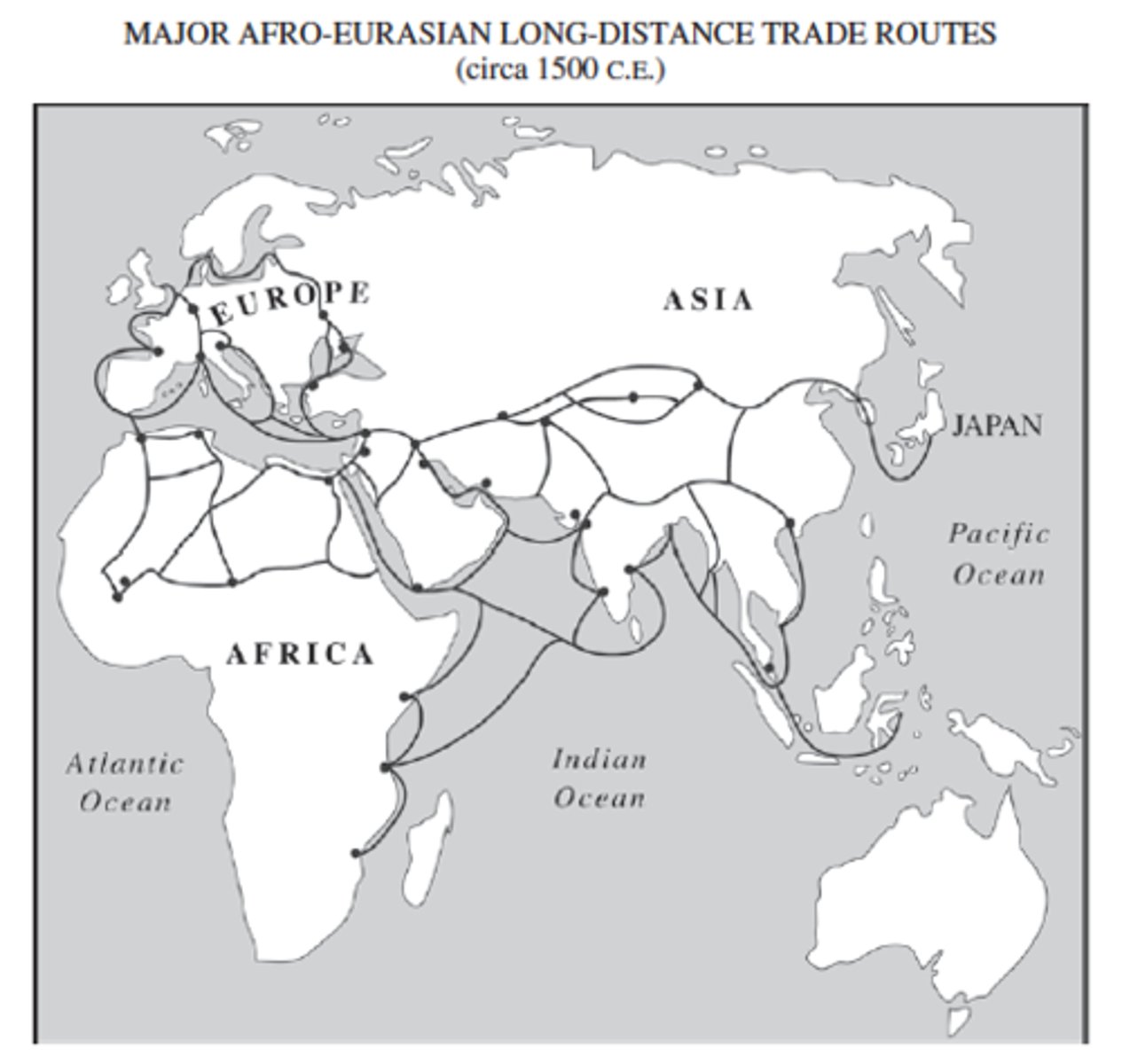
Based on your knowledge of world history, which of the following factors contributed most directly to the Mughal Empire's territorial expansion in South Asia?
A
The Mughals’ adoption and effective use of gunpowder weapons
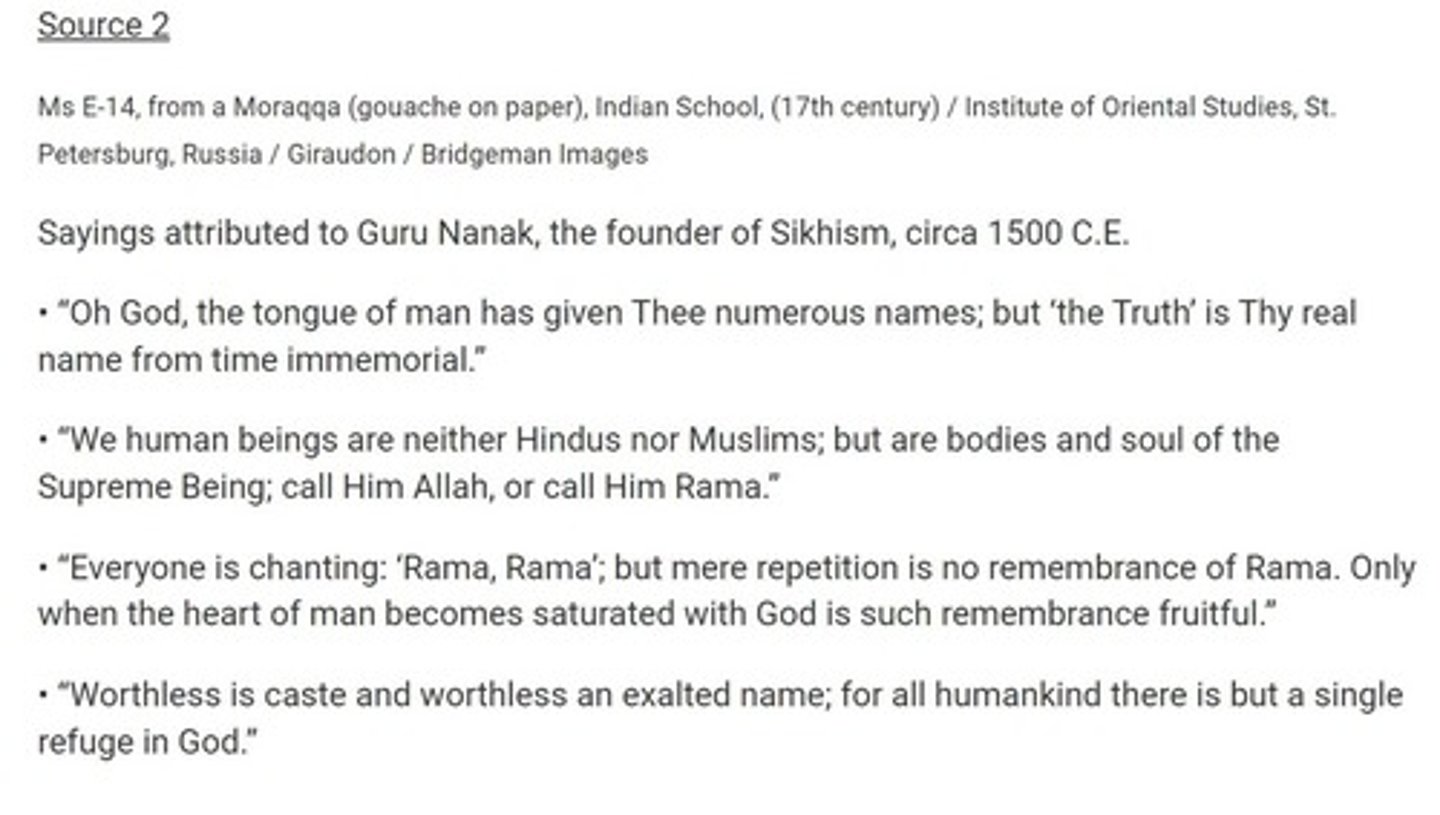
Source 2 indicates that all of the following were likely factors contributing to Sikhism’s popularity in India EXCEPT:
It offered a set of principles around which all Indians could rally in resisting British imperial encroachment
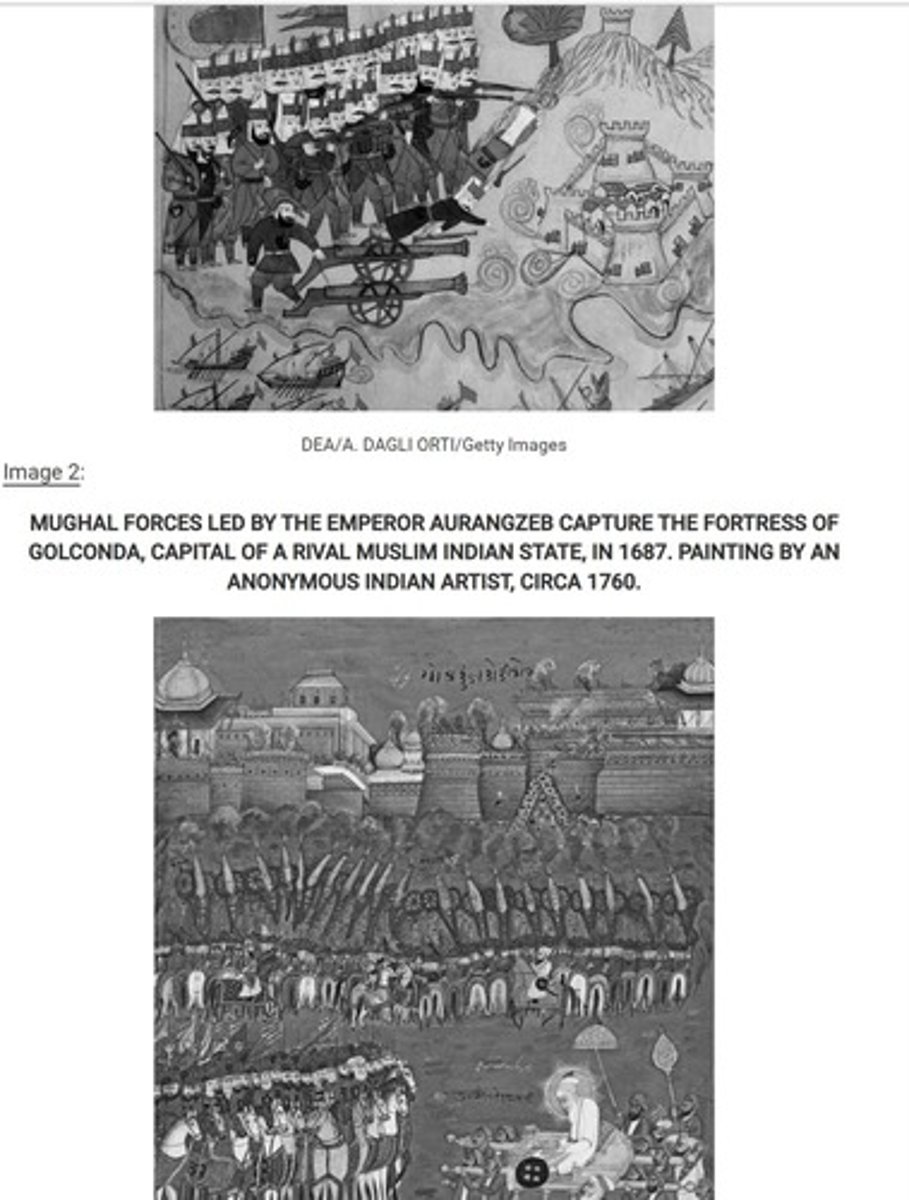
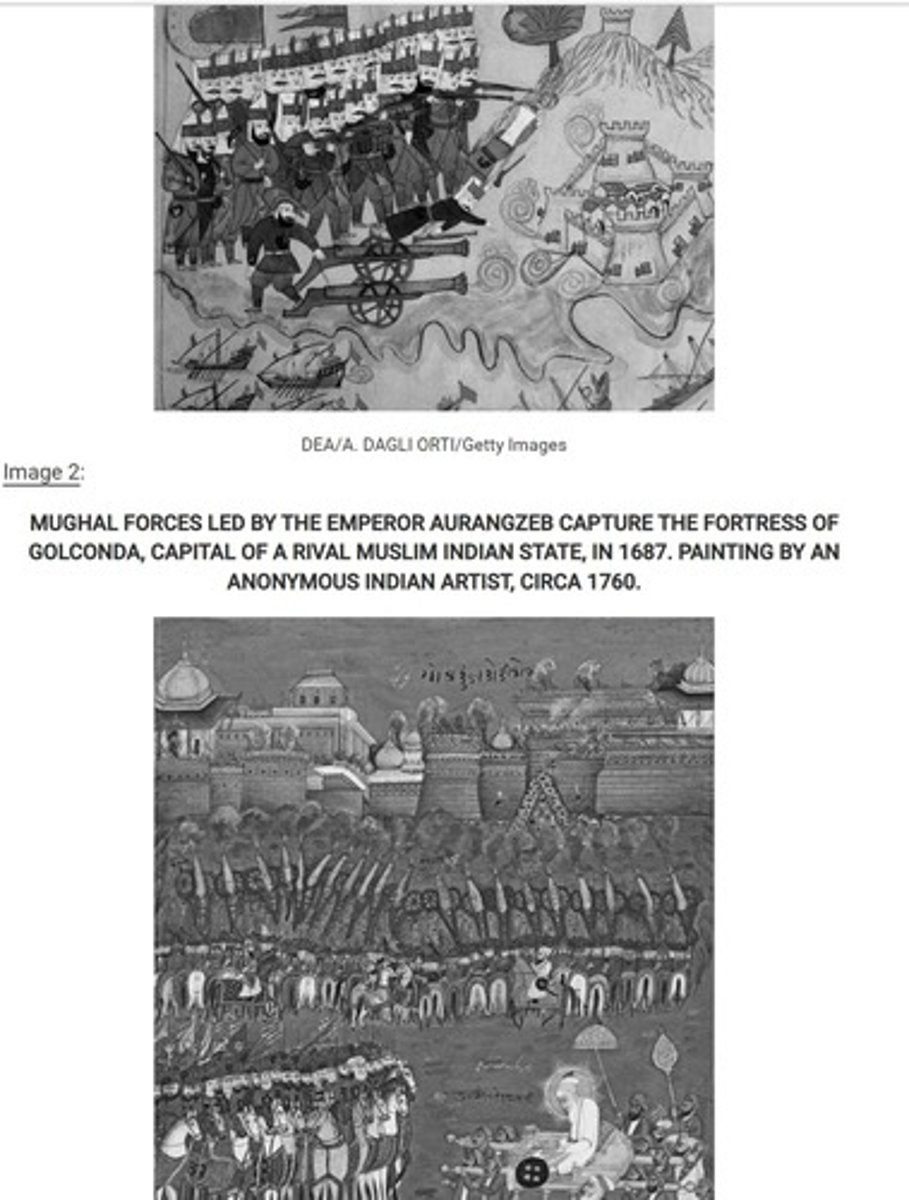
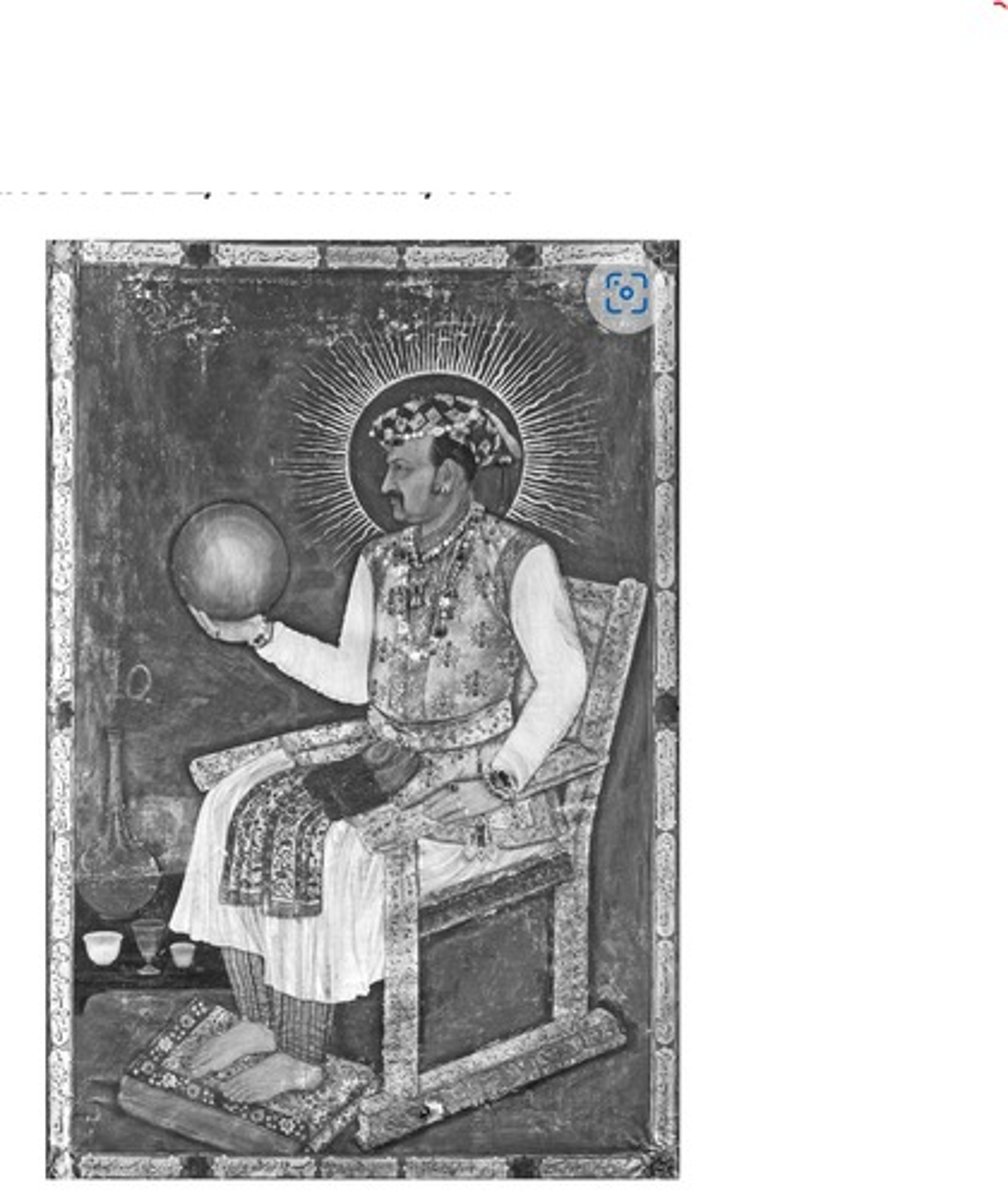
Taken together, the two images best support which of the following claims regarding developments in the period from 1450 to 1750 ?
Gunpowder technology facilitated the expansion of land-based empires.
Which of the following imperial expansions was most similar to those of the Ottoman and Mughal Empires?
The Manchu Empire in East Asia
All of the following pieces of additional information regarding the events portrayed in Image 2 are factually accurate. Which would be most useful in evaluating the message that the image was intended to convey?
Emperor Aurangzeb was a strong proponent of Sunni Islam, while the rulers of Golconda were supporters of Shiism.
Which of the following statements is true about both the Mughal and Ottoman empires in the sixteenth century?
Both empires expanded through the use of gunpowder weapons and extensive bureaucracies.
Which of the following best describes the relationship that the Chinese and Aztec empires had with their respective peripheral states during the fifteenth century C.E.?
Both empires established tributary relationships with their peripheral states.
The spread of new cultural ideas, such as those illustrated by the religious beliefs of Xu Guangxi and Candida Xu, most strongly encouraged some Asian governments in Eurasia in the period 1450-1750 to
B
limit trade and other contacts with foreigners
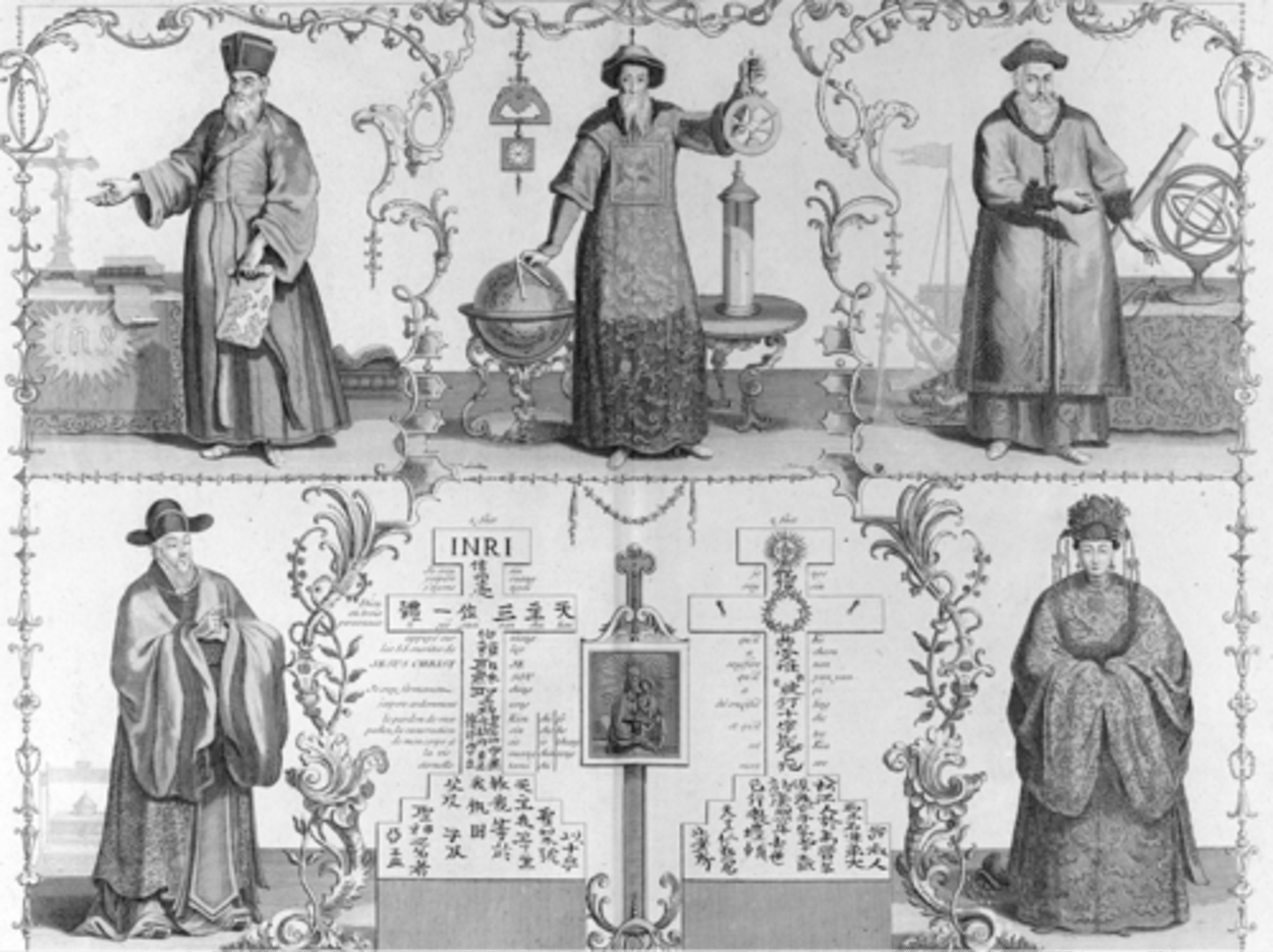
Which of the following developments in Europe in the sixteenth and seventeenth centuries most directly helps to explain the presence of the scholars shown in the image of China?
The Protestant Reformation led the Catholic Church to seek new converts outside of Europe.
All of the following statements about Du Halde are factually accurate. Which would most likely lead historians to question the objectivity of his portrayal of the scholars shown in the image?
He was a Jesuit and based his book on Jesuit missionary reports.
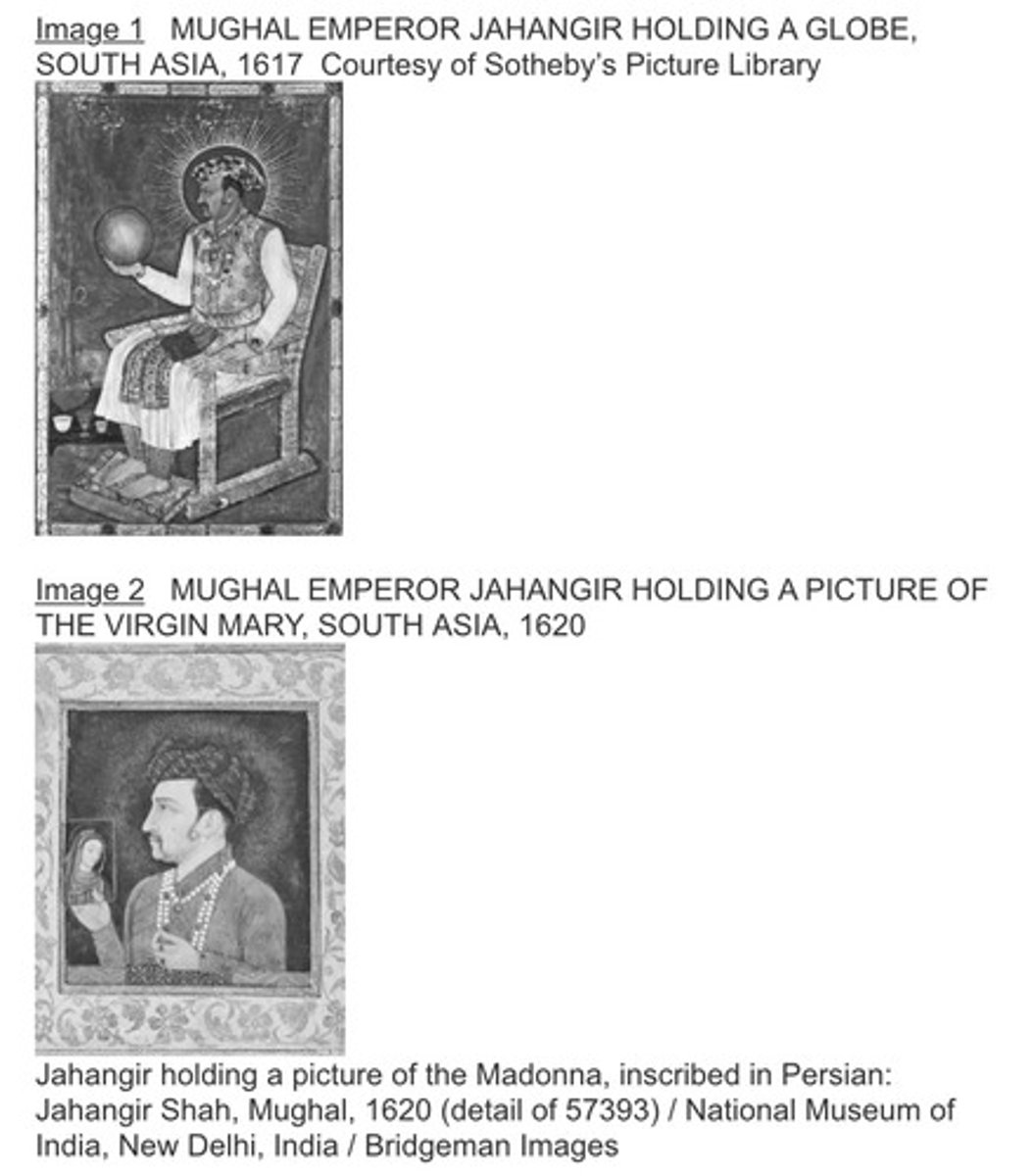
The portrait of Emperor Jahangir in Image 1 was most likely a symbolic representation of which of the following?
The expanding power of the Mughal Empire
Which of the following was the most likely purpose of the portraits of the emperor?
To glorify his rule through the sponsorship of artworks
(Mughal rulers often sponsored works of art and architecture to illustrate their power and glorify their rule.)
The particular event depicted in the painting was likely important to Golkonda rulers mostly because it
could be used as a symbol of the union between the state's ruling class and the majority of its population
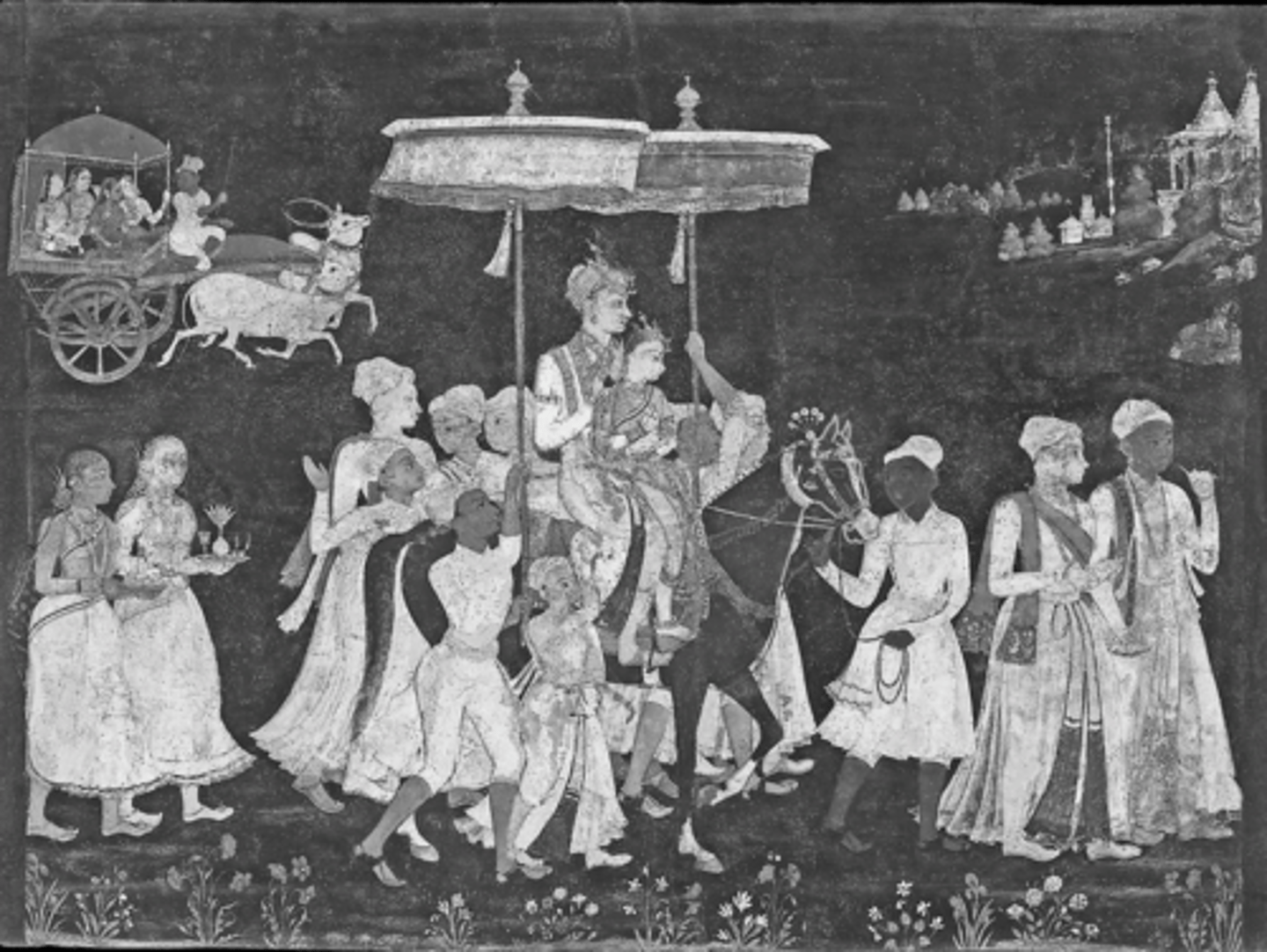
Which of the following most likely describes the fate of the Golkonda state after 1650 ?
It was conquered by the Mughal Empire.

The two passages best illustrate which of the following continuities in world history?
While some states were willing to tolerate diversity within their territories, others suppressed diversity.
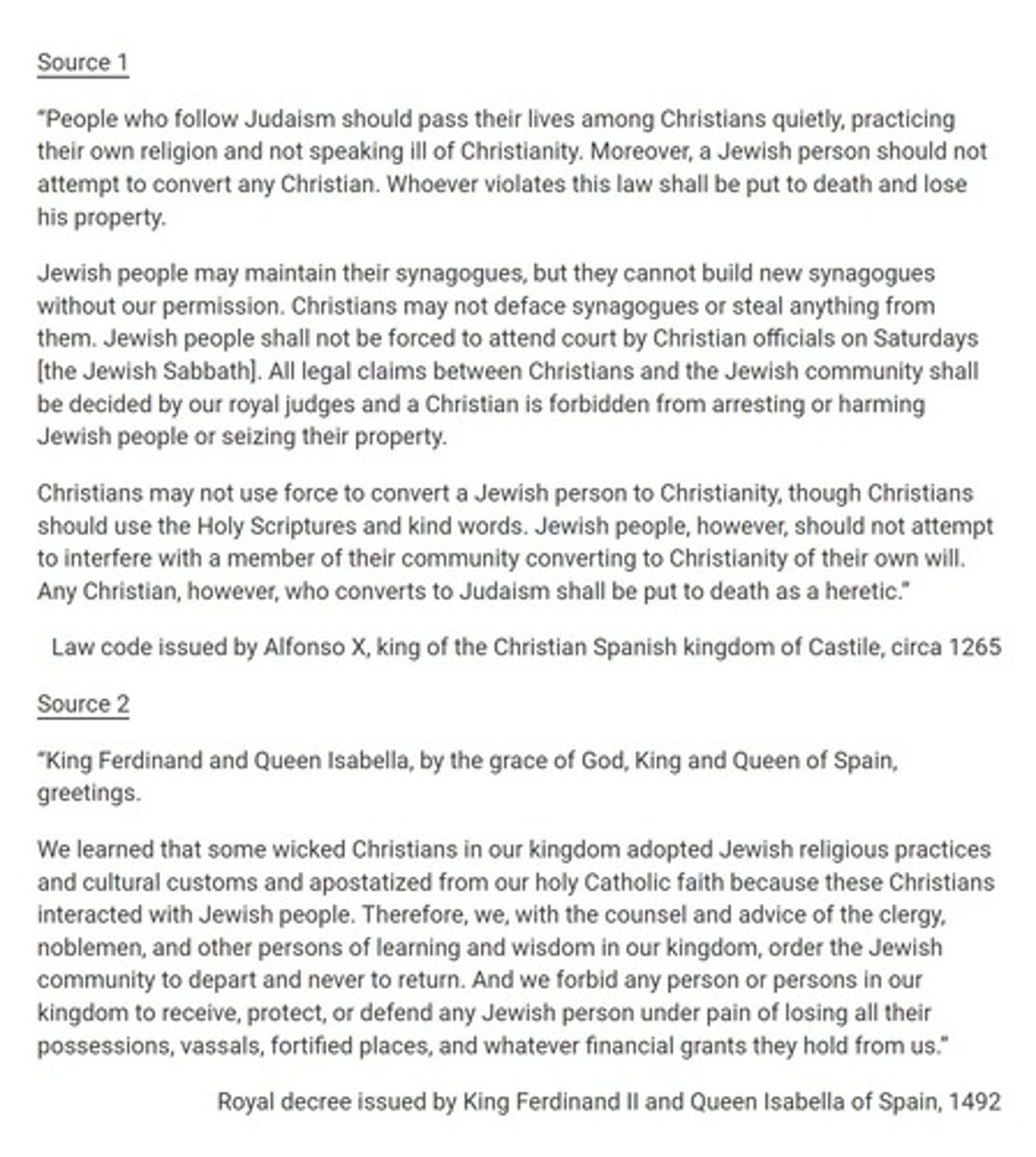
Which of the following states in the period 1450-1750 adopted a religious policy that was most different from the religious policy expressed in Source 2 ?
The Mughal Empire under Akbar
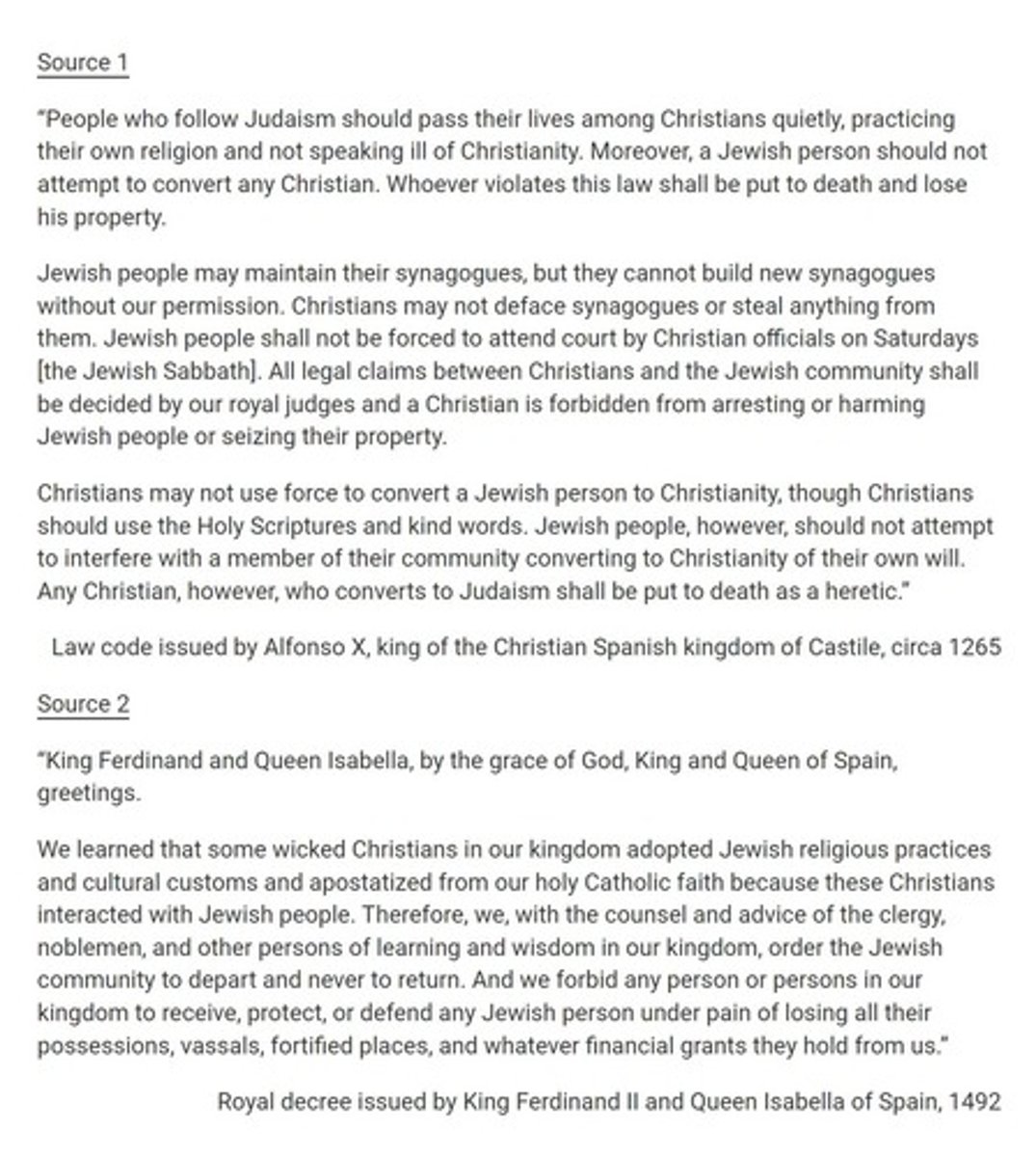
The attitude toward religious practice expressed in Source 2 was most directly apparent in which of the following Spanish policies in the Americas in the period circa 1500-1750 ?
The state sponsorship of Jesuit missions to native populations (The Spanish state's sponsorship of Jesuit missions to convert native populations to Christianity directly derives from the state's intolerance of religious diversity, which is apparent in Source 2.)

Between 1450 and 1750, empires such as the Ottoman and Chinese shared which of the following?
The use of a large bureaucracy to support the government
Which of the following was a method rulers in Eurasia used to legitimize and consolidate their power during the period 1450 C.E. to 1750 C.E.?
Developing professional militaries
Which of the following is a similarity between the Ottoman and Chinese governments during the period 1450—1750 ?
An extensive governmental bureaucracy
Which is the most likely reason that rulers during the seventeenth century built elaborate palaces such as the one at Versailles, France, shown above?
To demonstrate their wealth and power
The photograph above of a sixteenth-century Mughal mosque in India built by Akbar is an example of which of the following?
Cultural syncretism
Which of the following most directly caused a disruption in the land-based trade of the Safavid empire during the period circa 1500-1750 ?
Conflicts between the Shi'a Safavids and neighboring Sunni empires
Which of the following most directly strengthened Sunni religious scholars' role as official interpreters of Islamic doctrine within the Ottoman Empire, as suggested by the passage?
The Ottoman Empire's rivalry with the Safavid Empire
Outside of the Ottoman Empire, Sufis contributed most directly to which of the following during the period before 1750?
The spread of Islam to new locations on the margins of the Muslim world, such as southeast Asia