Bio 180 - Integumentary System - Moraine Valley
 Call Kai
 Learn
Learn Practice Test
 Spaced Repetition
 Match
Match Flashcards
 Knowt Play
1/83

There's no tags or description
Looks like no tags are added yet.
Name | Mastery | Learn | Test | Matching | Spaced | Call with Kai | Chat |
|---|
No analytics yet
Send a link to your students to track their progress
84 Terms
Integument
The skin (cutaneous membrane) and accessory structures; the body's first line of defense.
What is the cutaneous membrane made up of?
Dermis
Epidermis

Epidermis
Superficial epithelium

Dermis
underlying connective tissue that contains as extensive blood supply, along with sensory receptors that monitor touch, pressure, temperature, and pain

Where are the accessory structures of the cutaneous membrane located?
The Dermis; then projected into the epidermis
What are some accessory structures of the cutaneous membrane?
Hair
Nails
Exocrine Glands
What separates the integument from the deep fascia around other organs, muscles, and bones?
Hypodermis (superficial fascia)

True or False: Hypodermis is a part of the Integument.
False
Functions of the Skin and the Hypodermis
Protection (Acts as a barrier)
Excretion (Salts, water, and wastes)
Insulation and Evaporation for Maintenance of body temp
Production of melanin and protection from UV rays
Production of keratin*
Acts as water repellent
Synthesis of Vitamin D3
Storage of lipids (in form of adipocytes)
Detection of external stimuli
What are the types of skin
Thick Skin and Thin Skin

Thick Skin Location
Palms of hands and Soles of feet

How many layers of epdermis make up thick skin?
five

Thin Skin Location
All areas that do not contain thick skin

How many layers of epidermis make up thin skin
Four

What differentiates think skin from thick skin
How many layers of dead skin cells are present
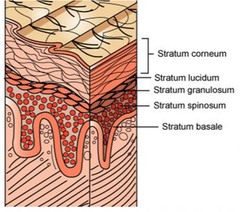
Name the five epidermal layers
Stratum Basale
Stratum Spinosum
Stratum Granulosum
Stratum Lucidum
Stratum Corneum

Stratum basale
The innermost epidermal layer; Basale cells and melanin.

Stratum Spinosum
layer immediately superficial to the stratum basale; composed of 8 to 10 layers of keratinocytes bound by desmosomes. Contains dendritic cells.

Which epidermal layer contains dendritic cells?
Stratum Spinosum
What do dendritic cells defend against?
Superficial skin cancers
Microorganisms that penetrate the most superficial layer of the epidermis.
Stratum Granulosum
consists of three to five keratinized layers derived from the stratum spinosum. "Granular" or "grainy".

Define Keratin
tough, fibrous protein that is a main structural component in hair and nails

What is Keratohyaline?
The protein that promotes dehydration of a cell, along with the aggregation of cross-linked fibrin.

Stratum Lucidum
The glassy layer that covers the stratum granulosum in thick skin; devoid of organelles and contains large amounts of densely packed keratin. "lucid"
Which epidermal layer, or strata, is unique to thick skin?
Stratum Lucidum
Stratum Corneum
The outermost layer in both thin and thick skin types. Think "Corns are superficial on skin - top layer".

How many layers of keratinized cells are in the Stratum Corneum
15-30
How often in the stratum corneum shed and replaced?
10-14 days
Keratinization
The formation of a protective, superficial layer comprised of cells filled with keratin
Which pigments are present in the epidermis?
Carotene
Melanin
Carotene
The orange-yellow pigment that normally accumulates in epidermal cells; can be converted to Vitamin A. "Carrot".
Melanin
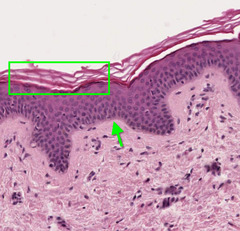
The brown, yellow-brown, or black pigment produced by melanocytes in the stratum basale; protects the epidermis and dermis from excess ultraviolet radiation.
Jaundice
The yellowing of the skin, eyes, and mucous membranes due to liver pathology; too much bilirubin in the system.

What is responsible for the darkening of the skin?
Pituitary Tumors

What does the Pituitary tumor secrete?
melanocyte-stimulating hormone (MSH)

What does Addison's Disease do to the body?
Addison's Disease causes the pituitary gland to release large amounts of adrenocorticotropic hormone (ACTH), causing more darkening of the skin.

What happens when one has Vitiligo?
Skin color becomes palers due to the immune system attacking melanocytes.

What type of disease is Vitiligo?
Autoimmune
What vitamin is produced with the help of the skin?
Vitamin D3
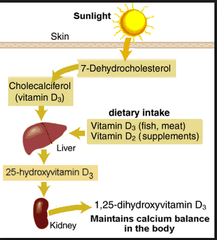
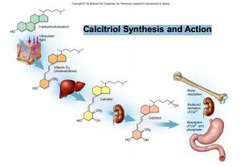
Calcitriol
essential for normal absorption of calcium and phosphorus in the small intestine
Epidermal Growth Factor
Stimulates cells to reproduce and heal. Mitogenic (mitosis).
Role of Epidermal Growth Factor
Promotes the division of Basale Cells*
Accelerates the production of keratin*
Stimulates epidermal repair and development after injury
•Stimulates synthetic activity and secretion by epithelial cells
Dermis
The layer of tissue between the epidermis and hypodermis.

Two layers of the Dermis*
Papillary Layer
Reticular Layer
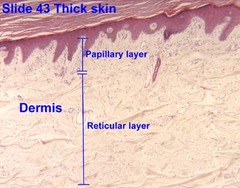
How many layers make up the Dermis
Two

What is the papillary layer made up of
Areolar tissue and contains capillaries, lymphatics, and *sensory neurons*
Reticular Layer
deep to the papillary layer; dense irregular connective tissue

IS the reticular layer of the dermis made up of reticular tissue?
NO
Dermatitis*
The inflammation of the dermis, primarily affecting the papillary layer; potentially very painful.

Is pain felt at the papillary level?
No, but signals for pain originate there
What gives the dermis a characteristic strength and elasticity?
The presence of collagen and elastic fibers
Define Skin Turgor*
properties relating to the flexibility and resilience of skin due to water content (gives the dermis resiliency)

Define Cleavage Lines
collagen and elastic fibers in a particular area of the dermis established in parallel bundles

Define Plexus
network of vessels or nerves
Cutaneous Plexus
arteries supplying the area of the hypodermis along its border with the reticular layer

Papillary Plexus
branching network of arteries located inside of the papillary layer

What layer below the dermis has a high venous circulation?*
Hypodermis
Hair
The projections above the surface of the skin found in most external places

Are hair living or dead structures?
Hair is non-living; it was never alive, so it cannot be dead
Root hair plexus
sensory nerves that surround the base of hair follicles
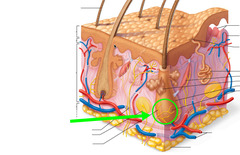
What is the exposed part of the hair (the part we visibly see) called?
Hair shaft
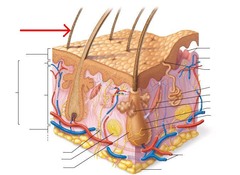
Arrector Pili Muscle
smooth muscle band that extends from the dermis and attaches to a connective sheath of the hair follicle; able to force the hair to stand erect

Hair root
portion of the hair that anchors to the skin at the base of the hair bulb; surrounds the hair shaft

What is the hair shaft made up of?
Keratin
Club hair*
hair at the end of a growth cycle; only at certain parts of our bodies (ie. Pubic or axillary hair)

Lanugo
fine and unpigmented hair associated with embryological development
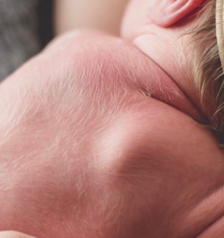
Vellus hair
fine "peach fuzz" hairs

What kind of hair covers majority of our bodies?
Vellus hair

Terminal (androgenic) hair
heavy, deeply pigmented, and sometimes curly
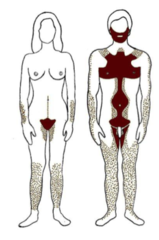
What type of hair gives off odors?
Androgenic
What produces hair color?
Melanocytes
Holocrine glands*
Accumulate their "products" within them until they rupture; "holo" = Whole, all

Sebacous glands
holocrine glands that discharge an oily lipid secretion into hair follicles

Sebum
mixture of triglycerides, cholesterol, proteins, and electrolytes that deposit on the skin

Apocrine sweat gland
secretes product onto hair follicles; apocrine sweat has a distinct odor

Do apocrine sweat glands work through apocrine secretion?
NO
Through what method do all sweat glands work through?
MEROCRINE SCERETION

Functions of sweat from merocrine sweat glands*
*Cooling the surface of the skin to reduce body temperature*
Excreting water and electrolytes
Providing protection from environmental hazards
Mammary glands
anatomically related to the apocrine sweat glands; produce milk in the female breasts

Ceruminous glands
modified sweat glands in the passageway of the external ear; secretion combines with secretions of sebaceous glands forming cerumen (earwax)

Nails
protect the exposed dorsal surface of the tips of the fingers and toes; help limit distortion of the digits when they are subjected to mechanical stress

Eponychium (cuticle)
area of the epidermis that extends over the exposed nail - where you start producing the nail

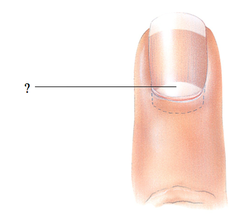
Lunula
area below the nail body where blood vessels are obscured - Luna: Looks like half-moon
Keloid
raised scar tissue covered with a shiny, smooth, epidermal surface
