Equipment Considerations for Clients with Neurologic Conditions
 Call Kai
 Learn
Learn Practice Test
 Spaced Repetition
 Match
Match Flashcards
 Knowt Play
1/83

There's no tags or description
Looks like no tags are added yet.
Name | Mastery | Learn | Test | Matching | Spaced | Call with Kai | Chat |
|---|
No analytics yet
Send a link to your students to track their progress
84 Terms
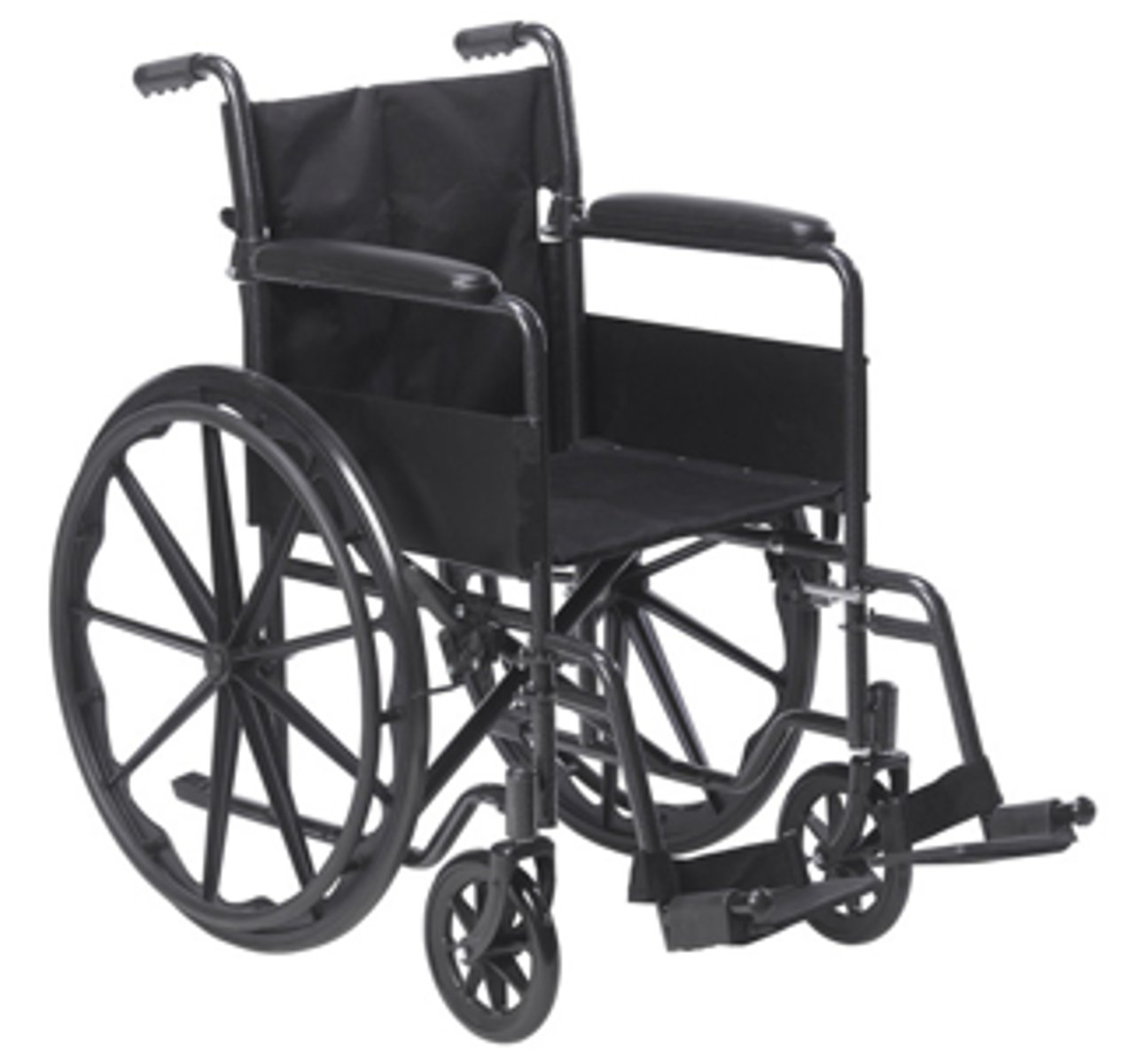
Standard (K0001)/ Standard Hemi (K0002) Wheelchair
- Weighs >36 lbs.
- Little no adjustability
- Intended for short-term use or transport
- Hemi=lower floor-to-seat height for foot propellers
Lightweight (K0003) Folding Frame Wheelchair
- Weighs 34-36 lbs.
- Slightly more adjustable than K0001/K0002
- Intended for short-term use or transport
Lightweight (K0003) Wheelchair
- Weighs <34 lbs.
- More options for seat size and increased adjustability over K0001-K0003
- Intended for long-term use, but there is a better option...
lighter and less basic
As K number increases the chair gets ……
Ultra Lightweight (K0005) Wheelchair
- Weighs <30 lbs.
- Lightest option available
- Hallmark is adjustable rear axle position
- Many frames are custom-built and have endless adjustability
- Rigid frame vs. folding frame
Ultra Lightweight (K0005)
What type of wheelchair is the most commonly used for general use
- Cross brace under the chair
- Allows it to fold
- Adds weight
- Fully adjustable rear axel (Up/down and forward/backward)
How does the Folding Frame K0005 Design differ from the rigid frame design
- Lighter option
- Footrests swing out of the way
- Footrests can be removed to allow for foot propulsion or hemi body propulsion (one arm and one leg)
What are the Pros of Folding Frames
- Heavier than the rigid frame due to increased mass from the cross brace
- Less efficient than the rigid frame due to increased weight and increased play in the frame
- Difficult for someone to independently manage in and out of a vehicle if they're transferring to the front seat
What are the Cons of Folding Frames
- Rigid design eliminates need for bracing under the seat
- Fully adjustable rear axle (Up/down and forward/backward)
What are the key points about the Rigid Frame K0005 Design
- Lightest frame option available
- Most efficient due to minimal moving parts and pieces
- User's energy is converted into forward motion
- Frame design allows a user to independently transfer to a car and break down the chair from the driver's seat
What are the Pros of Rigid Frames
Tilt-in-Space Manual Wheelchair
- User is dependent for propulsion
- User is unable to independently relieve pressure
- Typically, cognitive impairment precludes the use of a power wheelchair
Tilt-in-Space Manual Wheelchair
This wheelchair type is seen frequently in cerebral palsy, brain injury, intellectual disability
- Can't reach wheels making it difficult to push
- too much space leading to poor posture
- skin integrity
What are the Implications of Incorrect Seat Width: Too Wide
- Skin integrity from rubbing against tire
- makes it hard to scoot forward
What are the Implications of Incorrect Seat Width: Too Narrow
- Slide forward into Sacral sitting increasing risk for ulcers
- poor posture
- cuts into back of knees resulting in skin breakdown and decreased circulation
What are the Implications of Incorrect Seat Depth: Too Long
- skin integrity on thighs or IT breakdown
- poor LE support resulting in ER position
What are the Implications of Incorrect Seat Depth: Too Short
seat dump
- Difference between the front and rear seat heights
- Expressed in inches
- Tradeoff between stability, mobility, and pressure distribution
- hip flexor contractures
- increased pressure on butt/ITs
- difficult to slide forward for transfers
- poor posture in relation to wheels
What are the Implications of Incorrect Dump: Too Much
- Increased tendency to slide out of the chair
- decreased stability and trunk control
- sitting high on the wheels making it difficult to reach wheels for propulsion
What are the Implications of Incorrect Dump: Not Enough
Camber
Angle between the wheels and the ground
0-5
15
agile turning; UE
Key points about Camber
- Everyday chairs typically ___-___ degrees
- Sport chairs can be __ degrees or greater
- Increased camber will result in more ______ and decreased ____ strain
- Not enough = Harder to turn and decreased lateral stability
- too much = difficult to maneuver through tight spaces
What are the implications of Incorrect Camber
middle finger
Rear Axle Position
- Critical for correct propulsion biomechanics
- Can be adjusted up/down and forward/backward
- Good estimate = tip of _______ reaches center of axle with arms relaxed at the sides
- Increased instability/tippyness
- increased risk of flipping over backwards
- more difficult to propel up hill
Implications of Incorrect Rear Axel Position: Too Forward
- Push rim access poor
- increased risk of UE injury
- increased weight on front casters
Implications of Incorrect Rear Axel Position: Too Rearward
aluminum frames
- Most common material at present due to its good strength/weight to cost ratio
- Inferior shock absorption and durability
- Can fatigue over time
titanium frames
- Excellent shock absorption and vibration dampening
- Excellent durability
- Expensive
carbon fiber frames
- Lightest/strongest
- Excellent shock absorption
- Can crack/fracture with high forces
- Most Expensive
- Very difficult to get funded through traditional insurance
Basic upholstery backrests
Backrest Type
- Minimal postural support
- Lightweight
Tension adjustable backrests
Backrest Type
- Lighter than a solid backrest
- Some postural support with adjustable straps, but they are prone to loosening
solid backrests
Backrest Type
- Best postural support
- Heaviest option
- Usually worth the trade off for positioning benefits
Most energy efficient
Push Handles
- Integrated, bolt-on, flip-down, etc.
- Used to assist the user with propulsion or up/down obstacles
- Some user's "hook" onto them for increased trunk stability while completing tasks such as reaching
T arms
what type of armrests are a heavier component but can withstand increased pressure
L arms
what type of armrests have a sleeker aesthetic and are lighter weight
mag wheels
Wheel types
- Durable but increased weight and decreased shock absorption
- Most common in institutional settings
spoked wheels
Wheel types
- Lighter weight and better shock absorption
- Preferred option for full-time users
pneumatic rear tires
Tire Types
- Least rolling resistance and best shock absorption
- Require regular maintenance
airless insert rear tires
Tire Types
- Flat-free design with no maintenance
- Some shock absorption
- Significantly higher rolling resistance than pneumatic
solid rear tires
Tire Types
- No maintenance
- Higher rolling resistance than pneumatic but better than airless inserts
- Heavy
- Poor shock absorption and outdoor performance
Ergonomic (oval-shaped, larger diameter)
push rim type
best for active users to prevent elbow and wrist pathology
plastic-coated
push rim type
improves grip for individuals with limited hand function
Standard aluminum
Push rim type
can work for less active users, not very ergonomic
large diameter
front casters diameter type
easier to propel over thresholds, cracks, bumps, etc.
smaller diameter
front casters diameter type
more responsive
narrower
front casters width
decreased rolling resistance
wider
front casters width
easier to propel over obstacles
Power Assist
- Device or accessory added onto a manual wheelchair that provides powered propulsion in some way
- Can be for indoor or outdoor use
- Can increase independence for certain users
- Assist with every push stroke
- Easier to transport than a power wheelchair
- Can be programmed to provide asymmetrical assistance
- Can provide braking assistance
What are the Pros of Push rim Activated Power Assist Wheels
- Add significant weight
- Difficult for the user to breakdown
- Adds width to the chair
What are the Cons of Push rim Activated Power Assist Wheels
- Small and compact
- Promotes independent parts management
- Eliminates the need to propel for long distances, uphill, etc.
What are the Pros of Power Assist Rear Add-On
- Does not provide braking assistance
- Not conducive for use indoors or in small spaces
- Safety considerations with reaction time and stopping the device
What are the Cons of Power Assist Rear Add-On
- Easier to transport than a power wheelchair
- Provides single limb control
- Requires no propulsion
What are the Pros of Power Assist Joystick Add-On
- Requires caregiver assistance for breakdown
- Less capable/durable than a power wheelchair
What are the Cons of Power Assist Joystick Add-On
- Increases ability to climb steeper hills and roll over obstacles
- Increased speed and battery range
What are the Pros of Power Assist Add-On: Scooter Attachment
K0005
Which classifications of manual wheelchair is the most ideal for a full-time, active user?
Rear axle position
Which wheelchair configuration component has the greatest impact on independence with wheelchair skills?
Wider, larger diameter casters
When configuring an ultra-lightweight manual wheelchair, all of the following help contribute to a more efficient system except:
- Lateral instability
- Disassembly can be cumbersome
- Difficult to maneuver in small spaces
- Limitations in seating system
What are the Cons of Power Operated Vehicle (POV)
- Breaks down for transport
- Compact
- Maneuverable
- More stable than scooter
What are the Pros of Group 1 Power Wheelchair
- Breaks down and more prone to repairs
- Very limited seating options
- Limited terrain
What are the Cons of Group 1 Power Wheelchair
- Easy to transfer in/out of device
- Very maneuverable
- Able to traverse a variety of surfaces safely-suspension
What are the Pros of Group 2 Power Wheelchair
- Much heavier than scooter
- Less transportable in a vehicle
- May be more difficult to learn
- Minimal seating options
What are the Cons of Group 2 Power Wheelchair
- Neurologic conditions
- Congenital conditions
- Progressive conditions
What is needed to qualify for a Group 3 Power Wheelchairs (3 conditions)
- Tilt
- Recline
- Elevating leg rests
- Seat elevator
- Power standing
What are the seat functions of a Group 3 Power Wheelchairs
1. pressure relief
2. postural support
3. Maneuver inclines
4. Gravity assisted repositioning
What are the primary functions of Power Tilt
power recline
- Increases back angle
- Problematic when used in isolation
- Increased shear forces leading to skin breakdown
1. weight shifting
2. spasticity management
3. catheterization
4. dressing tasks
5. hygiene
what are the primary functions of power recline
Power Elevating Leg rests
- Extension/flexion at knee joint to elevate lower extremities
- Used in combination with Tilt and Recline
1. edema management
2. spasticity management
3. accommodation for contractures
what are the primary functions of Power Elevating Leg rests
Power Seat Elevator
1. ADLs/UE reach
2. assists with safe transfers
3. level height with others for psychosocial reasons
- Spasticity management
- GI motility
- Pressure relief
- Bone density
- Joint ROM-passive
- Circulation
what are the health benefits of Power Standing chairs
- Client requires assistance for transfers
- Client has a neurologic, progressive, congenital condition
- Client is unable to weight shift or reposition themselves independently
- Weakness in upper extremities
- Client has a history of pressure related skin breakdown or current skin breakdown or impaired sensation which could lead to skin breakdown
Considerations for Selecting Group 3 Power wheelchairs
- Allows for user to remain independent in their mobility AND health needs (repositioning/weight shifting); or reduce caregiver dependence
- Provide independent mobility for progressive conditions (e.g. ALS, MD, MS, etc...)
- Allow for increased time in device due to seat functions allowing for change in position
- More seating options including custom molded seating
what are the pros of power wheelchairs
- Weight = 400+lbs
- Limited transportation
- Much more complex to learn and operate
- More controls to learn
- Seating functions could interfere with maneuverability
what are the cons of group 3 power wheelchairs
outdoor use power wheelchair
what are Group 4 Power Wheelchair classified as
- Allows for power standing feature
- Heavy duty motors, batteries, and suspension
- All seating functions are compatible
What are the Pros of Group 4 Power Wheelchair
- Heavy
- Wider than group 2 and 3 power wheelchairs
- Funding is difficult
What are the Cons of Group 4 Power Wheelchair
- Pediatrics
- Short stature
- <125lbs
what is the target population for Group 5 Power Wheelchair
Seat to floor chair feature
what is a unique feature of Group 5 Power Wheelchair
foam seat cushions
Seat cushion types
- Least pressure relieving
- Inexpensive
- Deteriorate over time
gel seat cushions
Seat cushion types
- Cooling properties
- Stable base
- Can become displaced
air seat cushions
Seat cushion types
- Generally, the most pressure relieving (ROHO)
- High maintenance + user error
- Unstable
- Spasticity management
- Maintain muscle mass
- Increase blood circulation
- Maintain ROM
What are the benefits of FES bikes