Lecture 15: Gait/Locomotion
 Studied by 0 people
 Call Kai
 Learn
Learn Practice Test
 Spaced Repetition
 Match
Match Flashcards
 Knowt Play
1/24

There's no tags or description
Looks like no tags are added yet.
Name | Mastery | Learn | Test | Matching | Spaced |
|---|
No study sessions yet.
25 Terms
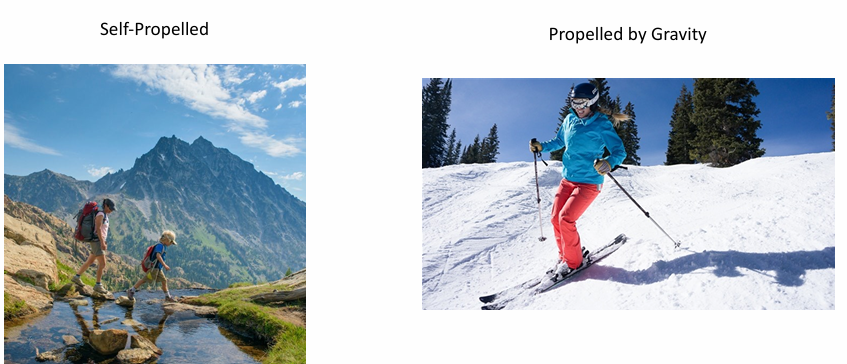
What is locomotion? Provide distinction between self and gravity propelled locomotion.
Locomotion: The act of moving the body from one place to another. It must be self-propelled.
-Self propelled: Walking across river.
-Gravity propelled: Skiing
What are the three components of locomotion?
Arm and leg movements generate propulsive forces
Control of speed, direction, and route
Control of posture and orientation
Explain the role of arm and leg movements in locomotion. How does arm swing affect energy efficiency and motor control, and what implications does this have for individuals with Parkinson’s disease? Include examples of technological interventions used to improve arm swing.
Role of Arm and Leg Movements in Locomotion:
Leg movements generate the primary propulsive forces that move the body forward.
Arm movements also contribute to propulsion and play a key role in maintaining balance and coordinating gait. Swinging the arms while walking reduces energy expenditure.
Motor Control Implications:
People with PD have Reduced or asymmetric arm swing. This can affect balance and gait stability.
Technological Interventions:
Wearable devices using Inertial Measurement Units (IMUs) can detect arm orientation.
Vibratory feedback can be applied to the arm to encourage natural arm swing, improving gait and postural control.
Example: A watch or wearable device vibrates to cue the user to swing their arm, helping restore more balanced and efficient walking patterns.
What are the key components of locomotor control, and how do they contribute to navigating the environment? Explain the independent control of speed, direction, and route.
Locomotor control involves the ability to move through the environment in a purposeful, coordinated, and adaptable way. The key components include:
Control of Speed:
The ability to increase or decrease walking or running pace as needed.
Essential for safely navigating obstacles, interacting with other people, or responding to environmental changes.
Control of Direction:
The ability to change the heading of movement independently of speed.
Allows adjustments to avoid obstacles or follow a desired path.
Control of Route:
The ability to choose and maintain a path from a starting point to a goal.
Involves planning and executing movement around barriers and through complex environments.
Explain the importance of posture and orientation control during locomotion. Discuss how impairments (e.g., in individuals with Cerebral Palsy or older adults) affect walking and describe interventions that can improve postural control and reduce fall risk.
Control of Posture and Orientation is essential during locomotion to maintain balance, stability, and proper alignment of the body. Without effective postural control, the risk of falling increases.
Impairments in Postural Control: Children with CP often struggle to support and maintain posture during walking due to impaired motor control. This can limit walking speed, endurance, and overall mobility.
Developmental Stage:
In young children, incomplete myelination and immature motor control make postural regulation less efficient, increasing fall risk.
Older Adults:
Age-related vision impairments, sensory deficits, and chronic health conditions contribute to reduced postural control and higher fall risk.
Interventions to Improve Postural Control:
Treadmill or robotic training:
Six weeks of training with robotic assistance applied to the pelvis and legs can improve walking speed, endurance, and postural stability in children with CP.
Fall prevention strategies:
Ensuring safe environments, using assistive devices, and training to enhance balance and posture are critical across the lifespan.
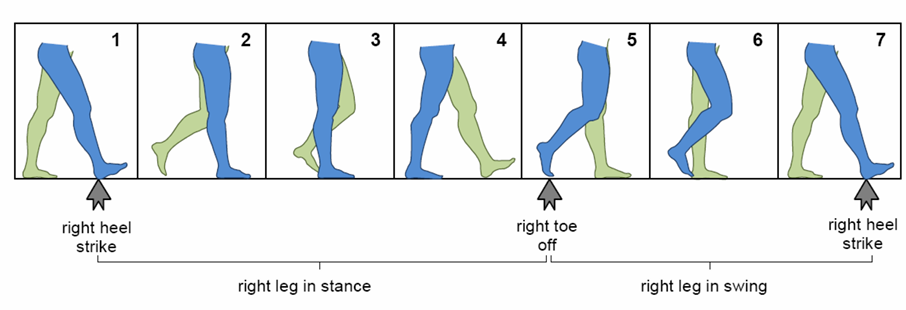
Describe the cyclical nature of locomotion. Define the stance phase, swing phase, and stride in a single leg’s movement cycle.
Stance Phase: foot is in contact with the ground
Swing Phase: foot is not contact with the ground
Stride: movement cycle of a single leg (stance + swing phase)
Explain what is meant by symmetrical locomotion. What can asymmetrical walking patterns indicate about an individual’s health?
Symmetrical locomotion refers to the typical pattern of walking in which the movement cycles of the two legs are almost identical in timing, amplitude, and coordination. Each leg alternates between stance and swing phases in a consistent, mirrored manner.
Asymmetrical walking patterns occur when the movement cycles of the two legs are not equal or coordinated. This can indicate:
Bodily injury: such as muscle, joint, or bone damage affecting one leg.
Neurological problems: such as stroke, Parkinson’s disease, or other conditions affecting motor control.
How can asymmetrical gait be used to study motor learning and rehabilitation in stroke survivors? Explain the role of split-belt treadmills and the cerebellum in adapting stride length.
Asymmetrical gait can be used to study motor learning and provide rehabilitation in individuals with neurological impairments, such as stroke survivors.
Key Points:
Stride Mismatch in Stroke Survivors:
Stroke survivors often exhibit unequal stride lengths between the affected and unaffected legs.
Split-Belt Treadmill Intervention:
A split-belt treadmill has independently moving belts for each leg, allowing different speeds.
The treadmill is adjusted so that the leg with the shorter stride moves slower.
This causes the individual to overcompensate, taking longer steps with the affected leg.
Over repeated practice, this helps normalize step length and improves gait symmetry.
Role of the Cerebellum:
The cerebellum is critical for adapting to new locomotor conditions and updating motor commands based on sensory feedback.
It helps the brain learn the adjusted gait pattern and maintain improvements even after leaving the treadmill.
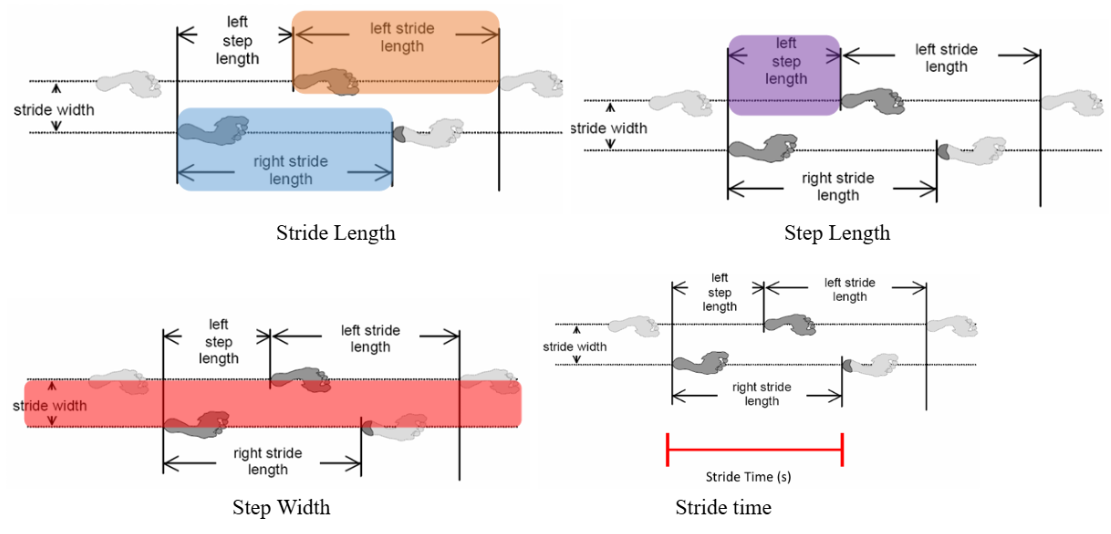
What are the measurements for gait?
Stride Length: The distance from when the foot contacts the ground to the next ground contact of the same foot. Measured from heel of first ground contact to heel of next ground contact
Step Length: The distance from the step of one foot to the step of the next foot. Measured from heel of ground contact of right foot to heel of ground contact of left foot
Stride Width: The lateral distance between the left and right foot falls
Stride Time: The time it takes for one stride – time between one heel strike and the next of the same foot
Stride Rate: Number of strides per unit time (stride/sec = Hz)
What exactly do the muscles do during gait?
Locomotion is a cyclical activity
Provide force for forward progression of gait
Moving the leg ahead during the swing phase
Keep the foot clear of the ground during swing phase 4) Maintaining upright posture throughout the gait cycle
Is the brain needed for locomotion? Use the example of a chicken being able to walk without its head.
The brain is teachnically not needed for locomotion. Locomotive circuits are not located in the brain, but rather the spinal cord. So therefore even without a head, the body is able to move through locomotive patterns.
What generates Rhythmic locomotor patterns? Explain what a Central Pattern Generator (CPG) is and its role in locomotion.
Rhythmic locomotor patterns (i.e., walking) are generated by spinal circuits. These rhythmic patterns are thought to be produced by Central Pattern Generators
Central Pattern Generator: A network of neurons that can produce rhythmic/cyclic locomotor behavior without afferent feedback
Located in the spinal cord
Creates reciprocal flexion and extension movements (e.g., legs during walking)
Require no sensory feedback
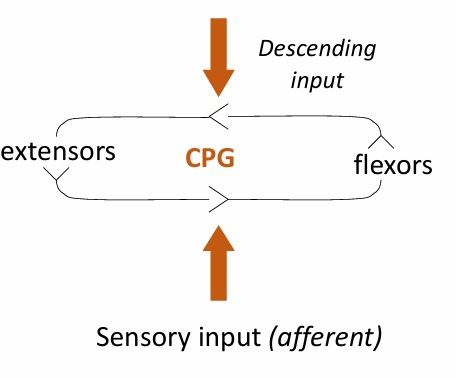
Describe how a spinal Central Pattern Generator (CPG) produces rhythmic locomotor activity, and explain the role of inhibitory interneurons and sensory/descending inputs in this process. Also, name two other behaviors (besides walking) that are generated by rhythmic pattern generators.
CPGs generate alternating patterns of muscle activation by rhythmically exciting flexor muscles while inhibiting extensor muscles. This occurs through inhibitory interneurons, which activate the flexors and simultaneously inhibit the extensors, creating the alternating flexion–extension cycle needed for stepping.
Although a CPG can produce rhythmic movement without sensory input, descending input from the brain and ascending sensory feedback can modify and fine-tune the pattern, making locomotion adaptable to real-world environments.
Other behaviors generated by rhythmic pattern generators include respiration, chewing, swimming, sleep rhythms, and (in some animals) flying.
What evidence supports the existence of Central Pattern Generators (CPGs) in humans and animals? Describe how spinalized cat experiments and the infant stepping reflex demonstrate that rhythmic locomotor patterns can be generated without cortical control or sensory feedback.
Evidence for Central Pattern Generators comes from both animal and human studies.
1. Spinalized Cat Experiments
Researchers studied cats with a complete spinal cord injury, meaning they had no communication with the brain and no sensory feedback reaching the brain. Despite this:
When placed on a moving treadmill, the cats recovered rhythmic stepping patterns in their hindlimbs.
The cats could adapt their stepping to the treadmill speed:
Faster walking when the treadmill moved faster
Slower walking when the treadmill slowed down
This demonstrates that the spinal cord itself contains CPGs.
2. Evidence From Human Infants: The Stepping Reflex
Newborn babies display the stepping reflex, where they take “steps” when held upright with their feet touching a surface. Importantly:
Corticospinal tracts are immature in newborns—they are not myelinated enough for voluntary control.
Full myelination of the corticospinal tract does not occur until about age 2, so cortical control of locomotion is limited in infants.
Even children born without a cerebral cortex still show the stepping reflex.
This shows that the rhythmic stepping pattern does not require cortical (brain) control, meaning the rhythm must be generated by lower neural structures (CPG).
What is the role if vision in locomotion?
Detection: Hazards, dangers, obstacles: such as holes in the ground and slippery roads etc.)
Decision Making: Decisions related to action of route navigation
Preparation: Navigation of different conditions
Initiation: Proper timing of locomotor maneuvers
Adjustment: Error correction to improve outcome
Explain how vision contributes to hazard detection during locomotion, and describe how eye-tracking methodology is used to study where people look while walking. Include examples of how fixations are used, what the “Golden Triangle” refers to, and how people visually respond to obstacles of different sizes.
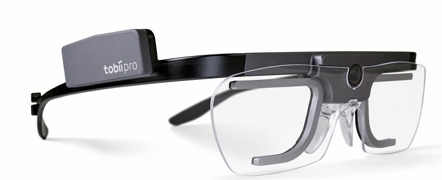
Vision plays a major role in locomotion by enabling the detection of hazards, dangers, and obstacles in the environment. Researchers often study this using mobile eye-tracking headsets, which record eye movements while people walk. These devices show that individuals typically look in the direction they are walking, scanning ahead to gather information.
A fixation occurs when the eyes stop scanning and rest briefly on a specific point. Fixations indicate that a person has selected something important, such as an obstacle, to guide upcoming movement.
Eye-tracking is also widely used in web design and marketing. For example, people naturally look at the eyes and mouth when viewing a face, and website users tend to fixate within a “Golden Triangle” pattern on a screen, which companies like Google and Facebook use to optimize layout.
Research on obstacle avoidance shows that people briefly fixate hazards as they approach but do not look at the obstacle while stepping over it. In studies with obstacles 1 cm, 15 cm, and 30 cm tall, participants looked at the obstacle one or two steps in advance, then looked ahead while stepping over it. This indicates that early visual detection is sufficient for successful locomotion.
What decisions is vision used for when walking?
Direction of route (left, right, straight?)
Speed of route (fast, slow?)
Trajectory of route (where do I want to go?)
Explain how vision is used to prepare for navigating different environmental conditions during locomotion. In your answer, describe the concept of affordance perception and summarize the stair-stepping and gap-passing experiments, including how people judge whether an action is possible.
Affordance: The action possibilities offered by objects and surfaces in the environment. This includes evaluating whether stairs are climbable, shoes are stable, or a narrow space is passable.
Affordance Perception: Stairs
Participants viewed photos of stairs with riser heights of 20, 25, 30, 35, and 40 In and asked whether they could step up each stair. Shorter (5’3”) and taller (6’ 2”) participants perceived critical riser height equal to ~0.88 of their leg length.
This demonstrates that individuals can accurately judge whether a stair is too high using vision alone, matching their body dimensions to the environment.
Experiment 1: examined whether people could visually judge if they could pass through a narrow gap without turning their torso.
Participants physically walked through gaps (shoulder width = 40cm). Participants rotated shoulder when the gap was less than 60cm. Critical gap = 1.3 x shoulder width.
This suggests people use body-scaled information, not absolute width, to guide actions.
Experiment 2: Stairs steepness
Participants stood 5 meters from a gap and decided whether they could pass through. Larger shoulders had a larger perceived passable gap (55.5) than smaller shoulders (45.5cm). The Critical value was 1.16 × shoulder width (a more conservative estimate).
These findings show that people can visually match their body dimensions to environmental constraints, though they tend to be more conservative when judging from a distance.
Explain how vision assists movement initiation during locomotion, particularly in individuals with Parkinson’s disease (PD). Describe why visual cues are effective, and summarize the findings of the Azulay et al. (1999) study comparing normal lighting and strobe lighting during walking.
Initiation: Proper timing of locomotor maneuvers
People with PD struggle with initiation. Movement initiation in PD can be improved with visual cueing: such as stripes/ lines on the floor. Visual cues provide an external reference that supports the timing and initiation of locomotor movements.
Lighting: Does the type of visual cue affects gait improvement in Parkinson’s disease.
Participants with PD walked under two lighting conditions: Normal lighting and Strobe lighting. Each condition was tested with and without floor stripes.
Normal lighting with the presence of stripes significantly improved gait speed in PD patients.
Strobe lighting with the stripes provided no benefit. Gait speed was the same with or without them.
The strobe lighting disrupted the visual flow and made the visual cues ineffective.
How does error correction contribute to locomotor adjustment, and what did Brady et al. (2012) demonstrate regarding sensory perturbation training in walking?
Error correction: During locomotion allows the NS to compare the actual outcome of a movement with the desired outcome. If there is a mismatch (trip or lose balance) then body uses real time corrections to improve outcome. Our body is able to avoid hazards this way and keep stability.
Sensory perturbation
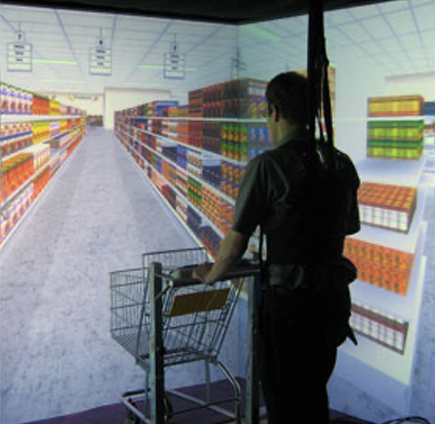
Used a (VR) display combined with an oscillating treadmill to examine how humans respond to sensory perturbations while walking.
Participants experienced three conditions:
No disturbance – normal treadmill and visual scene
Treadmill platform motion – mediolateral disturbance
Visual scene motion – visual perturbation only
Findings:
Training with visual motion only improved participants’ performance in a transfer test when the treadmill platform moved.
This demonstrates that error correction and adaptation in one sensory modality (vision) can generalize to other perturbations, showing the nervous system’s flexibility in adjusting locomotor patterns.
How can vision be combined with gait training in neurorehabilitation, and what is an example of a task designed for this purpose?
Vision can be integrated into gait training to improve balance and locomotor control by providing sensory cues that guide movement, aid in error correction, and enhance postural adjustments. Using visual information during walking helps individuals anticipate hazards, navigate complex environments, and practice safe locomotion.
An example of this approach is the “Shop ‘til you drop” rehabilitation task/game. This task is designed to assist individuals with balance difficulties during gait by combining visual challenges with walking tasks, thereby improving postural control, sensory integration, and locomotor adaptability in a safe, controlled setting.
What does time to contact vision play an important role in?
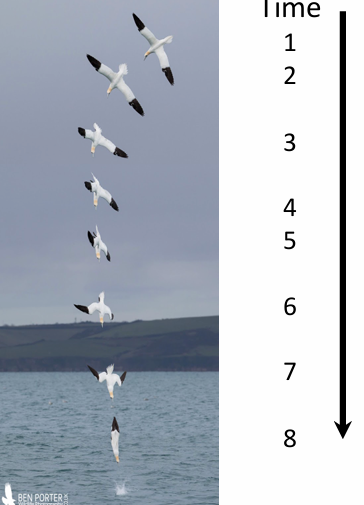
Time-to-Contact Vision plays an important role in specifying WHEN to initiate an action and make contact with the object
What role does Vision play when trying to avoid contact with an object?
Specifying when to initiate an action to avoid contact with the object (time of avoidance). EX: Ducking a snowball.
What can TTC/TTA be used to do when preparing to avoid a moving object?
Initiate gait
Intercept a moving object during gait
Avoid a moving object
Ex: Stealing a base or catching a fly ball.

How does the visual system help determine when and how to turn the shoulders when walking through a narrow gap?
When walking through a narrow gap, the visual system is critical for estimating the time to contact with the object or obstacle. This estimation allows a person to:
Determine whether a shoulder turn is necessary to pass safely.
Determine the magnitude of the shoulder turn based on the width of the gap.
Determine when to initiate the shoulder turn, ensuring proper timing.
Timing is essential because turning too early can lead to awkward walking patterns, while turning too late can result in collisions or bodily injury. As the object or gap approaches, the image on the retina enlarges, providing visual information that triggers the initiation of the movement at the correct moment.