6.5 The Depiction of Heroes & Kings in the 11th & 12th Centuries
 Call Kai
 Learn
Learn Practice Test
 Spaced Repetition
 Match
Match Flashcards
 Knowt Play
1/3

Earn XP
Description and Tags
Illuminated Manuscript Art Continues and the Stitched Record of a Very Famous Battle
Name | Mastery | Learn | Test | Matching | Spaced | Call with Kai | Chat |
|---|
No analytics yet
Send a link to your students to track their progress
4 Terms
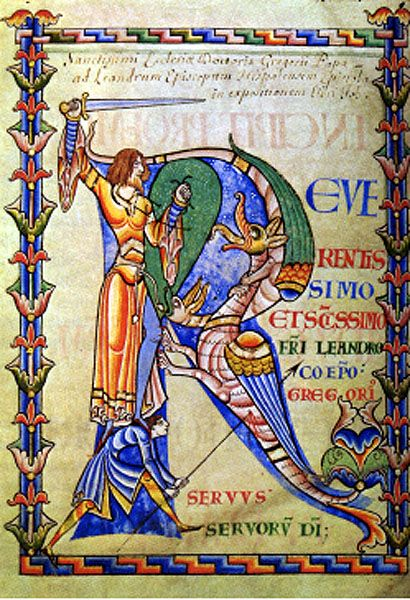
Initial R with knight fighting dragons, Moralia in Job, Citeaux, France, ca. 1115-1125. Ink and tempera on vellum; approx. 1' x 9".
Frontispiece "R", from Moralia in Job
-Reverentissimo = "The Most Revered" (Medieval salutation)
The main characters making up the colorful shape of this lively letter "R," referring to a salutation, are a sword-wielding knight, his squire ready with a lance, and two dragons. Knights vs. dragons would've been understood as methaphors for good vs. evil, or monks struggling against the Devil to save souls.
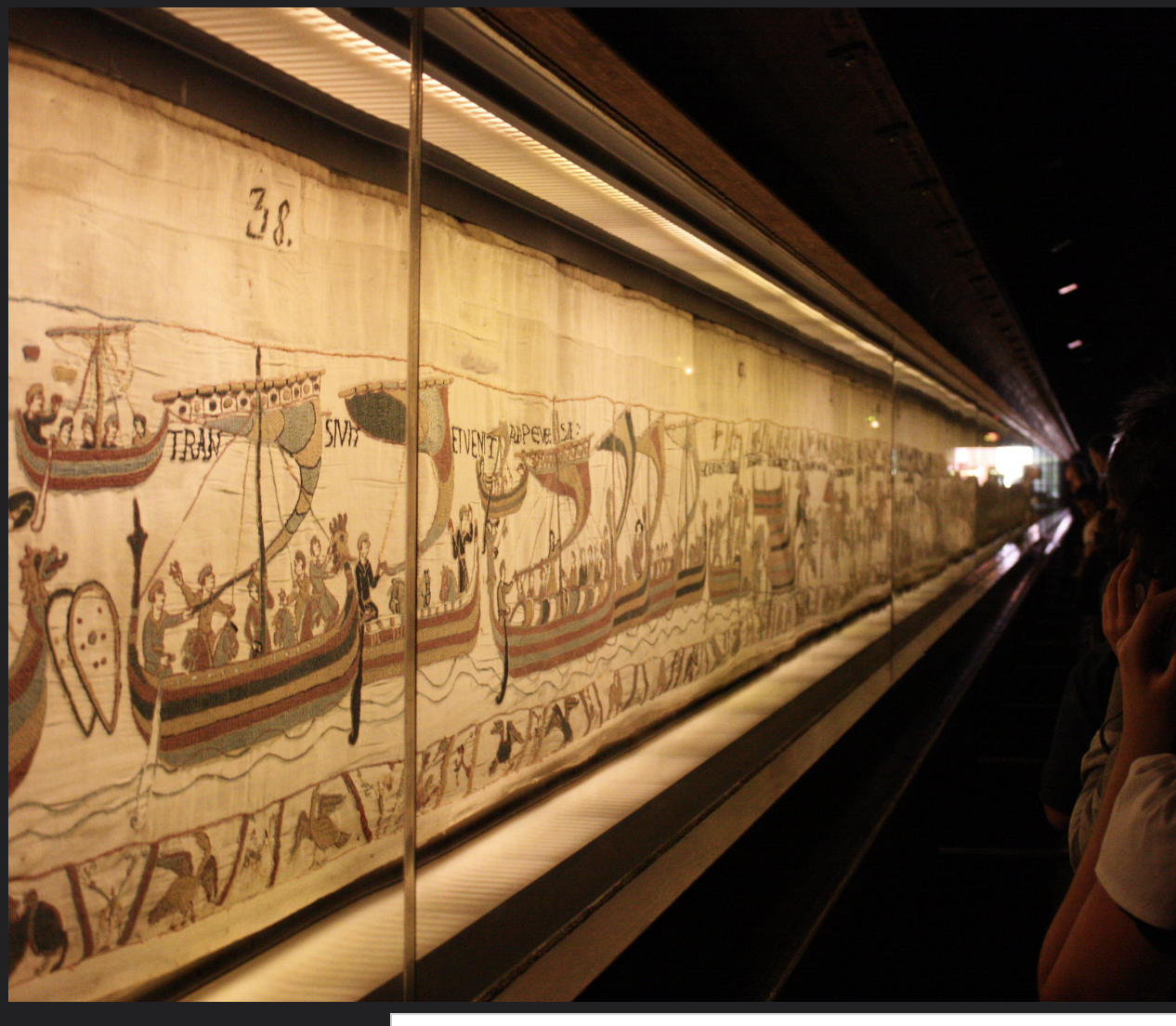
Bayeux Tapestry on display--Normans sailing across the English Channel
-Using cloth, needle, and thread,
-an enormous continuous, scroll-like expanse of embroidery (cuộn giấy)
many scenes that fundamentally transpired after a dispute over the rightful heir to the English throne.
When England-based Anglo-Saxon king, Edward the Confessor died, the Normans in northern France thought William of Normady would be the next-in-line to the throne heir. Instead, it went to the Earl of Wessex, the king's brother-in-law.
Well, the moral of the story is don't mess with the descendants of Vikings. The Normans sailed to England and won control of all of England, uniting it with much of France for a brief era of cross-channel kingdom.
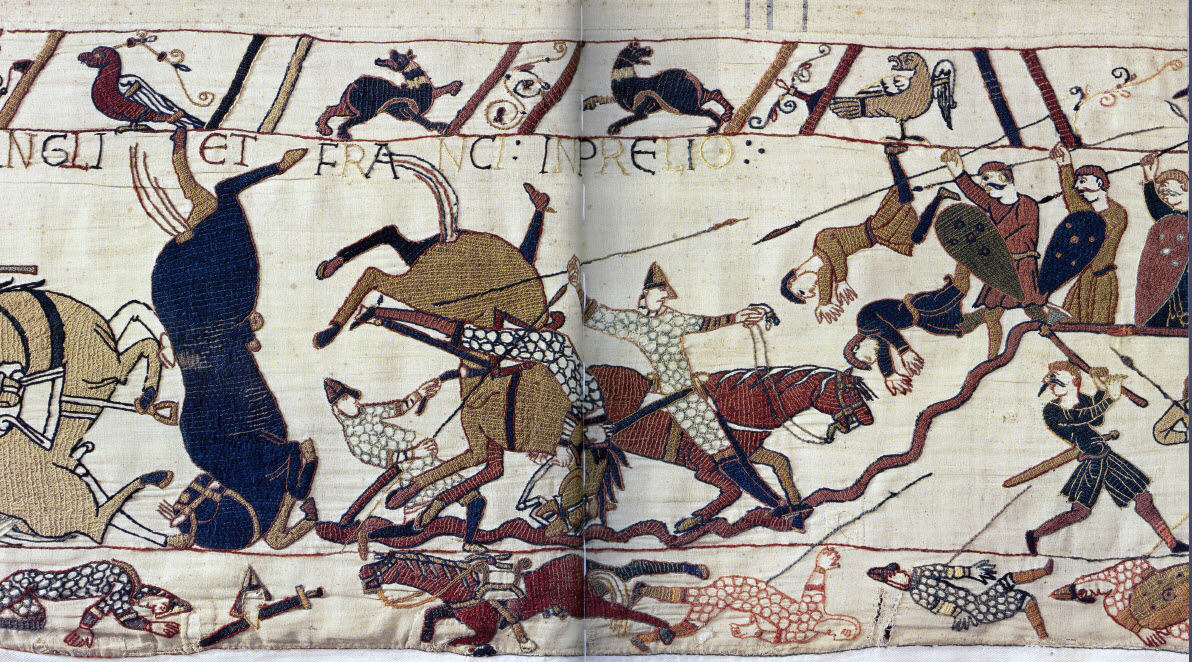
Battle of Hastings, detail from Bayeux Tapestry, ca. 1070-1080. Embroidered wool on linen.
one of the many scenes that can be found on the tapestry from the funeral of Edward the Confessor at Westminster Abbey to the Norman preparations for war, and ultimately to the more action-packed battlefield scene on land and by horse as the Normans mow down their enemy (image above).
So Why Is It Very Romanesque? What's Classical World About It?
The continuous scene is reminiscent of the Ionic frieze at the Parthenon, but its battle scene is very Roman indeed! All in all, this Romanesque era isn't just reviving Roman sculpture and stonework, but its militaristic themes as well.