WBC 5: Chronic Lymphoproliferative/Lymphoma; Multiple Myeloma/Plasma Cell Disorders
 Call Kai
 Learn
Learn Practice Test
 Spaced Repetition
 Match
Match Flashcards
 Knowt Play
1/80

There's no tags or description
Looks like no tags are added yet.
Name | Mastery | Learn | Test | Matching | Spaced | Call with Kai | Chat |
|---|
No analytics yet
Send a link to your students to track their progress
81 Terms
LDH and b2-MG are indicators of ____.
tumor load
what is the gold standard for lymphoma diagnosis?
biopsy
which mature lymphoid neoplasm is associated with 13q14 del?
CLL
which mature lymphoid neoplasm is associated with t(8;14), MYC?
PLL
which mature lymphoid neoplasm is associated with BRAF V(600)E?
HCL
what is the most common leukemia in adults?
CLL
what kind of cell disorder is CLL?
B cell
the median age of CLL is ____.
72
the following characteristics are associated with ____:
>85% of lymphocytes appear as small and mature with scant cytoplasm and a dense nucleus with a condensed chromatin pattern without a defined nucleolus (“cobblestone” or “soccer ball” appearance)
smudge cells (very important cells, must be counted as lymphocytes)
CLL
the following immunophenotyping markers are associated with ____:
CD19
CD20
CD23
T cell markers CD5 (aberrant)
CLL
the following expresses 1 point when scoring for ____ diagnosis (catovsky-matutes scoring)
weak expression of surface immunoglobulin
expression of CD5
expression of CD23
no expression of FMC7
absent or weak expression of CD79b or CD22
CLL
a total catovsky-matutes score greater than or equal to 4 is consistent with ____.
CLL
a total catovsky-matutes score 1 or 2 (low scores) are consistent with ____.
non-hodgkin lymphoma
an intermediate catovsky-matutes score of ____ remains problematic and these cases may require biopsy of a node or molecular data to establish the diagnosis.
3
list the 2 worst prognostic indicators of CLL.
del(17p); TP53
what is the rai classification for CLL based on the following characteristics:
lymphocytosis >5 × 10⁹/L
low risk
what is the rai classification for CLL based on the following characteristics:
lymphocytosis >5 × 10⁹/L
lymphadenopathy
splenomegaly or hepatomegaly or both
intermediate risk
what is the rai classification for CLL based on the following characteristics:
lymphocytosis >5 × 10⁹/L
hemoglobin <11 g/dL
high risk
what is the binet classification for CLL based on the following characteristics:
hemoglobin >10 g/dL
PLTs >100 × 109/L
<3 enlarged nodal areas
stage A
what is the binet classification for CLL based on the following characteristics:
hemoglobin >10 g/dL
PLTs >100 × 109/L
>3 enlarged nodal areas
stage B
what is the binet classification for CLL based on the following characteristics:
hemoglobin >10 g/dL
PLTs <100 × 109/L
any number of enlarged nodal areas
stage C
which gene mutation status is an important factor in predicting how CLL will behave/progress/etc.?
IGHV
if there is a mutation OR no mutation? in the IGHV gene, the CLL is associated with the pre-germinal center type of CLL and more aggressive clinical course.
no mutation
if there is a mutation OR no mutation? in the IGHV gene, there is a much better prognosis and better response to drug treatment.
mutation
testing for ____ and ____ are correlated with IGHV mutational status for CLL.
ZAP70; CD38
which mature lymphoid neoplasm is associated with the following characteristics:
rare
median age of 70
>75% cases B cell
very aggressive
PLL
which mature lymphoid neoplasm is associated with the following characteristics:
massive splenomegaly
marked absolute lymphocytosis (>100 × 109/L)
PLL
a rapid rising WBC count may be a clue that the diagnosis is not CLL and that it is most likely ____.
PLL
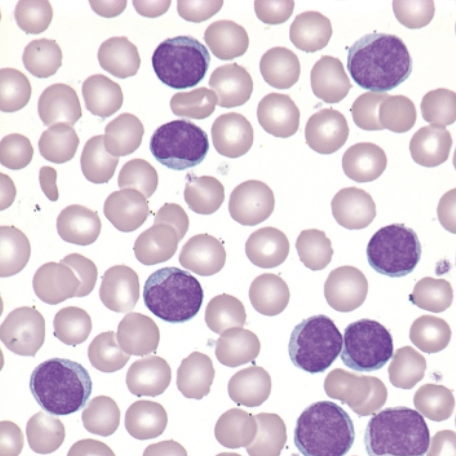
which mature lymphoid neoplasm is associated with the following characteristics:
medium to large lymphs with ample cytoplasm
more open chromatin
prominent nucleolus
PLL
which mature lymphoid neoplasm is associated with the following characteristics:
CD7 +
inv(14) in approximately 70% of patients (using FISH)
hematology analyzer
increased WBC
increased lymph
blast of atypical or variant lymph flag must be followed with a PBS
PLL
indolent disease of B cell lineage most commonly found in middle age men (median age, 50); mostly males:
HCL
major focus of ____ is in spleen, blood, and BM splenomegaly and cytopenias (fibrotic BM due to fibrosis).
HCL
which mature lymphoid neoplasm is associated with dry tap due to fibrotic BM (fibrosis) and requires a biopsy?
HCL
monoclonal anti-CD20 an annexin A using immunohistochemistry are diagnostic staining tests for the diagnosis of which mature lymphoid neoplasm?
HCL
which condition is a clonal expansion of cytotoxic T cells expressing:
CD3
CD8
CD57
T cell LGL
_____ is CD3 negative but CD56 positive.
NK cell LGL
associated with retroviral infection by the human T lymphotropic virus type 1 (HTLV-1):
ATLL
what virus is endemic in Japan, Caribbean islands, Africa, South America, the Middle East, and northern Oceania.
HTLV-1
what virus is transmitted via placental circulation, breastfeeding, blood transfusion, or sex?
HTLV-1
the estimated risk of developing ATLL among HTLV-1 carriers is about ____ in women over a latency period of 55 to 70 years.
2.5%
the estimated risk of developing ATLL among HTLV-1 carriers is about ____ in men over a latency period of 55 to 70 years.
5%
there is marked leukocytosis in the ____ phase of ATLL.
leukemic
what cells have the following characteristics:
medium to large in size and have accentuated, convoluted nuclei
coarsely clumped chromatin
deeply basophilic cytoplasm
“flower cell”
ATLL
the ____ immunophenotype is generally consistent with T helper cells (CD3 and CD4 are expressed while CD7 and CD8 are absent).
ATLL
CD25 and CCR4 are highly expressed in which condition?
ATLL
the soluble form of ____ receptors have prognostic significance and can be used as a tumor marker for assessing ATLL status.
IL-2
aggressive cancer of mature B cells associated with a fulminant clinical presentation:
burkitt lymphoma/leukemia
which burkitt lymphoma/leukemia subtype is associated with the following characteristics:
found primarily in childhood in equatorial Africa
extranodal involvement is common with orbits and mandible as typical sites of disease
EBV genome has been present in neoplastic cells
endemic
which burkitt lymphoma/leukemia subtype is associated with the following characteristics:
presents mostly as an abdominal disease
extranodal involvement is not uncommon
sporadic
which burkitt lymphoma/leukemia subtype is associated with the following characteristics:
profound immunosuppression
blood and BM are primary sites of disease
HIV
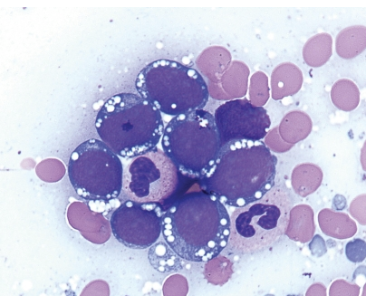
what cells have the following characteristics:
medium to large in size
finely clumped chromatin
deeply basophilic cytoplasm with distinct vacuoles
BM and lymph biopsies
“starry sky” appearance
interspersed tangible body macrophages suspended in a “sea” of malignant cells
burkitt lymphoma/leukemia
what cells have the following characteristics:
sIgG (+)
CD10 (+)
CD34 (-)
Tdt (-)
burkitt lymphoma/leukemia
neoplastic disorder of germinal B cells and account for about 12% of non hodgkin lymphoma cases:
follicular lymphoma
which mature lymphoid neoplasm is associated with the following characteristics:
middle to older age groups
has an indolent course but it is most often incurable with current therapies
most patients are asymptomatic
sometimes painless lymphadenopathy
follicular lymphoma
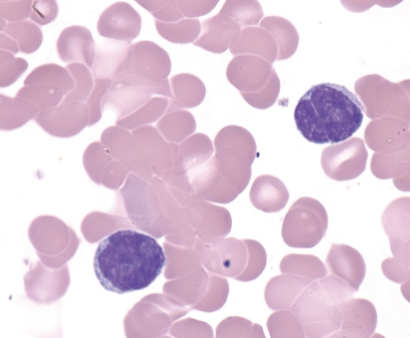
which mature lymphoid neoplasm is associated with the following characteristics:
peripheral blood involvement in 10% cases
circulating cells have a condense chromatin pattern with distinct nuclear clefts
BM may be involved
follicular lymphoma
which mature lymphoid neoplasm is associated with the following characteristics:
about 3-6% of non hodgkin lmyphoma cases
median age 68
male predominance
clinically aggressive
extensive lymphadenopathy
diagnosis based on morphology alone is challenging
mantle cell lymphoma
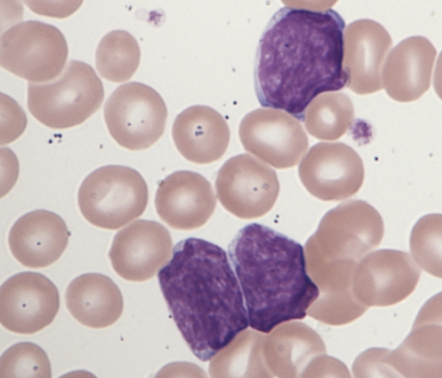
which mature lymphoid neoplasm is associated with the following characteristics:
small cell forms can be mistaken for CLL
blastoid variants can be mistaken for ALL
some morphologic changes can be confused with hairy cells or prolymphocytes
mantle cell lymphoma
an accurate diagnosis of ____ requires demonstration of either t(11;14) via FISH or overexpression of cyclin D1 by immunohistochemistry.
mantle cell lymphoma
most common form of cutaneous T cell lymphoma in elderly, male predominance.
MF/SS
which is more common (70%) and confined to the skin: MF or SS?
MF
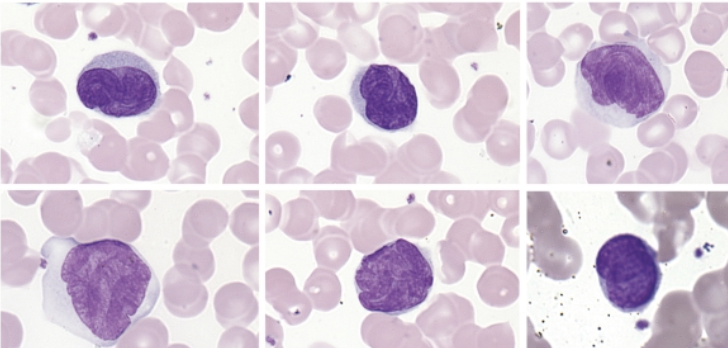
malignant T cells in ____ have the following characteristics:
abnormal appearance with scant cytoplasm and cerebriform
folded nucleus
variably condensed chromatin inconspicuous nucleoli
MF/SS
both MF and SS are CD+ ____ cell disorders.
t helper cell
which cutaneous T cell lymphoma (MF or SS) refers to psoriatic-like skin lesions, skin biopsy needed?
MF
which cutaneous T cell lymphoma (MF or SS) refers to erythroderma, generalized lymphadenopathy, and presence of clonal T cells in skin, lymph nodes, and peripheral blood, and severe pruritus (itching)?
SS
____ refers to neoplasm of terminally differentiated B cells.
plasma cell neoplasms
monoclonal gammopathy of undetermined significance (MGUS) is the precursor state of _____.
multiple myeloma
multiple myeloma is a ____ cell neoplasm with a median age of 69.
plasma
an M spike in SPE helps predicting the risk for ____ transformation from MGUS.
multiple myeloma
multiple myeloma usually stays in the bone marrow. true or false?
true
plasma cell leukemia (PCL) is common and less aggressive form where more than 20% of plasma cells are found in the blood (outside of the BM). true or false?
false
in multiple myeloma, abnormal proteins called ____ in the blood can cause RBCs to stick together, forming stacks called rouleaux.
paraproteins
to tell the difference between multiple myeloma plasma cells from normal/reactive plasma cells are through immunohistochemistry with ____.
CD138; kappa/lambda clonality
what cells strongly express the following:
CD38
CD138
CD56 (aberrant)
multiple myeloma
low grade lymphoplasmacytic lymphoma associated with aberrant secretion of IgM:
WM
high levels of IgM can result in hyper-viscosity syndrome requiring emergent plasmapheresis to alleviate symptoms in what condition?
WM
somatic mutation in what gene is found in over 90% of patients with WM?
MYD88
hodgkin lymphoma is a ____ based lymphoma.
nodal
hodgkin lymphoma (both types) are based on ____.
node biopsy
which hodgkin lymphoma is associated with the following characteristics:
>85% of cases usually in young adults
responds well to chemotherapy
classic
which hodgkin lymphoma is associated with the following characteristics:
RS cells are of B cell origin
do not express most B cell markers
CD30 (+)
CD15 (+)
never seen in peripheral blood
classic
which hodgkin lymphoma is associated with the following characteristics:
no RS cells
malignant cell is a lymphocytic histiocytic (L&H) cell = “popcorn” cell
CD15 (-)
CD30 (-)
lymphocyte-predominant