Plant Path Symptoms!
 Call Kai
 Learn
Learn Practice Test
 Spaced Repetition
 Match
Match Flashcards
 Knowt Play
1/33

There's no tags or description
Looks like no tags are added yet.
Name | Mastery | Learn | Test | Matching | Spaced | Call with Kai | Chat |
|---|
No analytics yet
Send a link to your students to track their progress
34 Terms

Blast
sudden death of flowers (image is wheat blast)
Blight
sudden, severe, and extensive spotting, discoloration, wilting, or destruction of leaves, flowers, stems, or entire plants. Commonly used when leaves dieback but remain attached to the plant, indicating the suddeness of death.
Blotch
necrotic area of tissue irregular in form
Canker
a dry, necrotic, localized lesion on the stem (or trunk) that has clear boundaries (image is nectria canker of apple)

Chlorosis
yellowing; indicating a failure of chlorophyll development, caused by disease or nutritional disturbance. Light green, to yellow, to white.
Damping off
sudden death of a seedling before or shortly after emergence. Due to decompostion of the roots and or lower stem. It is important to distinguish pre/post emergence.

Defoliation
loss of leaves from a plant, whether normal or premature
Dieback
preogressive death of shoots, leaves, or roots, beginning at the tips.

Distortion
malformed plant tissues
Enation
abnormal outgrowth from the surface of a stem or leaf, typically caused by viral infections

Epinasty
abnormal, downward curling of a leaf, leaf part, or stem

Fasciation
malformation in shoots or floral organs manifested as enlargements and flattening as if several parts were fused. Caused by bacterial and viral infections, injury, stress, chemicals, insect feeding, and genetic mutations.

Fleck
a minute spot (pin hole size). (image is tobacco induced by ozone, “weather fleck” or “pollution spots”

Flower break
break or stripe in flower color (image is tulip broken by viruses)

Gall
abnormal swelling or localized outgrowth, often roughly spherical. Formed by insects, bacteria, and viruses. (image is of oak galls, formed when a gall wasp lays her eggs into an oak tree’s leaves or stems. The oak tree is tricked into sending nutrients to the larvae, forming the gall.

Gummosis
pathogenic condition characterized by excessive formation and oozing of sap, resin, and gums; the products of cell degeneration. (image peach tree gummosis)

Leaf spot
a plant disease lesion typically restricted in development in the leaf after reaching characteristic size (septoria leaf spot tomato)

Lesion
a localized area of discolored, diseased tissue
Mosaic
a disease symptom characterized by non-uniform coloration, with intermingled normal, light green and yellowish patches. Usually caused by a virus, often interchanged with the word “mottle”. (image cucumber mosaic virus)

Mottle
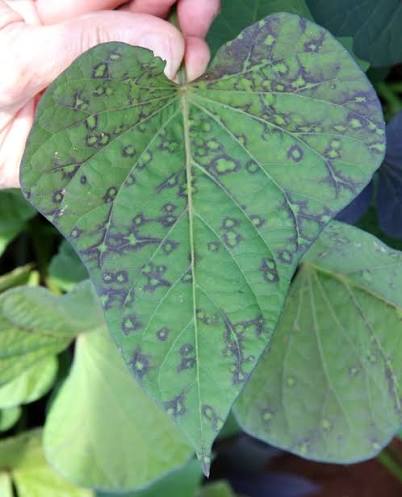
symptom comrising of light and dark areas in an irregular pattern, usually caused by a virus; interchanged with mosaic often. Image sweetpotato feathery mottle.
Mummy
a dried shriveled fruit; plant part or organ partially or completely replaced with fungal structures.

Phyllody
the change of floral organs into leaflike structures.

Reddening
Development of abnormal red color. Image: cotton.

Ringspot
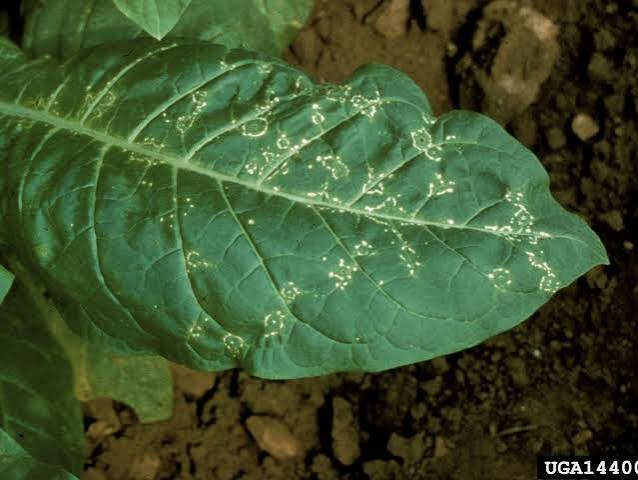
Symptom characterized by yellowish or necrotic rings enclosing green tissue, common in some viruses. Image: tobacco ringspot.
Rosette
characterized by short bunchy growth habit due to shortened internodes and no comparable reduction in leaf size. Image rose rosette disease.

Rugose
ridged or wrinkled. Image: kava associated with aphid feeding.

Russet
brownish, roughened areas resulting from cork formation. Image: apple fruit russeting. Caused by fungi, genetics, and environmental stress: early frosts can damage young fruit.

Scab
roughened, crustlike diseased area on the surface of a plant organ. Image: apple scab.
Scald
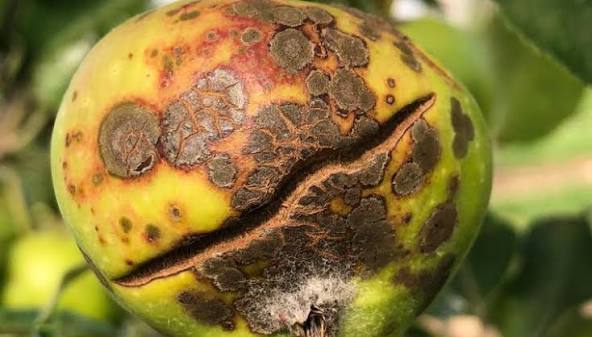
a necrotic condition in which tissue is usually bleached and has the appearance of having been exposed to high temperatures. Image: barley scald.

Scorch
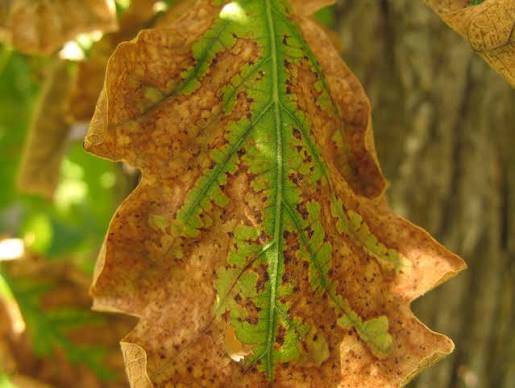
sudden browning and necrosis of large, indefinite areas on a leaf, stem, fruit. Often appears as dead areas along or between veins, and at the margins and tips of leaves. Image: Oak with scorch.
Shot hole
symptom in which small lesions fall out of leaves, giving the appearance of being hit by buckshot. Image: cherry laurel with shot hole disease caused by the fungal pathogen: wilsonomyces carpophilus.

Stippling
Series of small dots or speckles in which chlorophyll is absent. Describes damage done by sap sucking insects or air pollution (ozone). (image caused by spider mite feeding).
