HEAL 1500 session 5-7 (hya made)
 Call Kai
 Learn
Learn Practice Test
 Spaced Repetition
 Match
Match Flashcards
 Knowt Play
1/56

There's no tags or description
Looks like no tags are added yet.
Name | Mastery | Learn | Test | Matching | Spaced | Call with Kai | Chat |
|---|
No analytics yet
Send a link to your students to track their progress
57 Terms
Summarize the cell theory and state its importance to the study of biology
- A cell is the basic unit of life
- All living organisms are made of cells
- New cells come from preexisting cells
This is important in evolutionary history and diversity
Explain how a cell's size relates to its function
small cells have a greater surface-area-to-volume ratio, thus a greater ability to move material into and out of the cell
Compare and contrast the information that may be obtained from a light microscope and an electron microscope
- Light microscopes use light rays to magnify objects + can be used for LIVING specimens
- Electron microscopes use a stream of electrons to magnify objects + have a higher resolving power than light microscopes
Summarize the role of the plasma membrane
The plasma membrane (made of a phospholipid bilayer) forms the outer membrane of the cell & regulates what enters and exists the cell
What is the plasma membrane?
Phospholipid bilayer with proteins that are attached and embedded
- Hydrophilic heads face the cytoplasm and extracellular fluid
- Hydrophobic tails face inward
- Contains cholesterol for support
- Contains glycoproteins and glycolipids: carbohydrate chains attached to proteins and lipid which identify the cell as "self" or "foreign" and act as receptors
What is the fluid mosaic of the plasma membrane
** DYNAMIC, proteins freely move laterally
The fluid mosaic model describes the cell membrane as a flexible, two-dimensional liquid where diverse molecules float and shift past one another
Summarize the role of organelles in a eukaryotic cell
Organelles are compartments within eukaryotic cells where specialized reactions occur
What types of molecules can and cannot pass freely through the membrane and example?
Small, hydrophobic substances pass freely though the phospholipid bilayer
eg) gases like oxygen, carbon dioxide, estradiol
Ions and large molecules need help passing through
eg) water can cross the membrane by passing though channels called aquaporins
What are aquaporins?
Integral membrane proteins channels which facilitate water diffusion through the membrane
Describe the main differences between a eukaryotic and a prokaryotic cell.
Eukaryotic cells have a nucleus and membrane-bound organelles, whereas prokaryotic cells lack these
Describe the possible evolution of the nucleus, mitochondria, and chloroplast
Nucleus: through invagination of the plasma membrane (the process where a surface, cell layer, or membrane folds inward on itself to form a pocket, cavity, pouch, or tube)
Mitochondria & chloroplast: by engulfing prokaryotic cells
Summarize how the fluid-mosaic model describes the structure of the plasma membrane
Describes the plasma membrane as a phospholipid bilayer in which proteins are embedded
The protein can move within the bilayer, creating varied patterns
Compare and contrast diffusion, osmosis, facilitated transport, and active transport
Diffusion: the random movement of particles from an area of HIGH concentration to an area of LOW concentration until they're equally distributed
Osmosis: the net movement of water across aw semipermeable membrane from high --> low conc.
Facilitated transport: requires a protein carrier to help molecules move through a membrane according to their concentration gradient
Active transport: requires a carrier plus energy
What is osmosis and what drives it?
The net movement of WATER across a semipermeable membrane from high --> low conc.
Osmotic pressure drives osmosis
What are isotonic solutions
The same concentration of impermeable solutes, normal body fluids are isotonic to cells
(Intravenous solutions that have an equal salt and particle concentration to human blood)
Cells do not change in size as a result
What are hypotonic solutions
Solutions that have fewer solutes WATER GOES INTO CELLS (which causes water to shift out of the blood vessels and into the cells)
Cells swell and can burst (lysis)
What are hypertonic solutions?
Solutions that have more solutes WATER EXISTS THE CELL (They draw water out of the cells and into the blood vessels)
Cells shrink (crenation)
What is diffusion?
The random movement of particles from an area of HIGH concentration to an area of LOW concentration until they're equally distributed
* Molecules move in both directions, but the NET MOVEMENT is from high to low conc.
At equilibrium. the same number of molecules move in and out of the cell
Is diffusion passive?
Yes, it doesn't require energy
What is facilitated transport?
- The transport of molecules across the plasma membrane from higher conc. to lower conc. VIA A PROTEIN CARRIER
- Protein transporters are very SPECIFIC and only move certain molecules:
- Channels (tunnels, gated or not)
- Uniporter carriers (open on one side, close, then open on other side)
Is facilitated transport active or passive?
Passive, requires no energy
What is active transport?
The movement of molecules from a LOWER TO HIGHER conc. (goes against conc. gradient)
What is the difference between primary active transport and secondary active transport?
Primary active transport: a PUMP always uses ATP, uniport (one molecule) or cotransport (molecules A and B)
Secondary active transport: energy is provided by one if the molecules (A) going according to its gradient:
- Symport: (A and B molecules go in the same direction)
- Antiport: (A and B molecules fo in opposite directions)
Does active transport require energy?
Yes because it goes against the conc. gradient
What is bulk transport used for?
Bulk transport used to move large molecules across the membrane
Discuss the various ways cells can move materials in bulk into and out of the cell
Other than diffusion, osmosis, facilitated transport, and active transport, materials can enter the cells via endocytosis: invagination of the plasma membrane (phagocytosis or pinocytosis) and leave cells via exocytosis
What is exocytosis?
Transports molecules OUTSIDE the cell via the fusion of a vesicle with the plasma membrane
(sort of life reverse endocytosis)
What is endocytosis and describe each type
Transports molecules or cells INTO the cell via invagination (folding into itself) of the plasma membrane to form a vesicle
Phagocytosis: endocytosis of pathogens (eg) bacteria) by white blood cells
Pinocytosis: endocytosis of fluid with small particles
Receptor-mediated endocytosis: particles first bind to receptors in the plasma membrane; this initiates endocytosis
Describe the functions of the following organelles: endoplasmic reticulum (ER), Golgi apparatus, and lysosomes
- Smooth ER synthesizes lipids and rough ER synthesizes protein; both are packaged in vesicles
- Golgi apparatus modifies lipids and proteins from the ER and sorts and packages them in vesicles
- Lysosomes contain digestive enzymes that break down cell parts or substances entering by vesicles
What is the endoplasmic retulum?
What is the golgi apparatus?
Modifies, sorts, and packages proteins and lipids for use inside or outside the cell
What are lysosomes?
a membrane-bound cell organelle that contains digestive enzymes to break down waste, old cell parts, and foreign invaders
Explain how the nucleus, ribosomes, and rough endoplasmic reticulum (ER) contribute to protein synthesis
Nucleus: contains DNA, which directs the synthesis of proteins
Ribosomes: aid the mRNA in the production of proteins
Rough ER: where proteins are synthesized and folded
Describe the organelles of the endomembrane system involved in the export of a protein from the cell
The endomembrane system is composed of:
- Nuclear envelope: has pores through which ribosomal subunits can pass out
- Rough ER: where membrane proteins are made
- Smooth ER: where phospholipids are synthesized
- Golgi apparatus: where proteins and lipids are modified
- Vesicles: which transport their contents to the plasma membrane for export or to lysosomes for digestion
What is the endoplasmic reticulum?
What is the nuclear envolope
a double-membrane barrier that surrounds and protects the nucleus in eukaryotic cells.
What is the vesicles
List the three types of fibers in the cytoskeleton
microtubules, actin filaments, intermediate filaments
Describe the structure of cilia and flagella
Cilia and flagella: both contain an inner core of microtubules within a covering of plasma membrane
Describe the function of cilia and flagella
Cilia: function by moving cells slowly in their environment and by sweeping debris
Flagella: function in moving a cell quickly
List the types of junctions found between animal cells, and state a function for each.
Adhesion junctions: mechanically attach adjacent cells and prevent overstretching
Tight junctions: provide a zipperlike barrier between adjacent cells and do not allow movement of molecules between the two cells
Gap junctions: are channels used for communication between adjacent cells
What are the types of functions found between animal cells?
Adhesion junctions, tight junctions, and gap junctions
What are adhesion junctions?
Adhesion junctions: mechanically attach adjacent cells and prevent overstretching
What are tight junctions?
Tight junctions: provide a zipperlike barrier between adjacent cells and do not allow movement of molecules between the two cells
What are gap junctions?
Gap junctions: are channels used for communication between adjacent cells
Summarize the roles of enzymes in chemical reactions
Enzymes speed up the chemical reactions in biological systems by lowering the activation energy of reactions
Describe the basic steps required to break down glucose by cellular respiration
EDIT LATER:
- Glycolysis begins with glucose and ends with two molecules of pyruvate
- Two molecules of ATP and NADH are produced
- Acetyl CoA enters the citric acid cycle --> continues breakdown of glucose & ends with the production of two molecules of ATP, NADH, and FADH2
- The electron transport chain accepts high-energy electrons, which are passed carrier to carrier along the chain
- The energy is used to produce ATP
- Oxygen is the final electron acceptor and water is produced
Explain why the ATP resembles that of a rechargeable battery
- When ADP binds with phosphate, energy is being stored in the molecule just like a battery
- When ATP is broken down to ADP and phosphate, energy is being released to be used in other reactions
Explain the differences between cellular resperiation and fermentation
- Cellular respiration used oxygen as the final electron acceptor in a reaction at the end of the electron transport chain that produces water
- Fermentation occurs in the absence of oxygen, and the citric acid cyle and electron transport chain do not function
- Instead, pyruvate is converted to lactate in animal cells or to ethanol and CO2 in yeast cells
Light microscopy resolution, pros, and cons
Resolution: ~200 nm
Pros: Simple, widely available, live-cell imaging
Cons: Limited
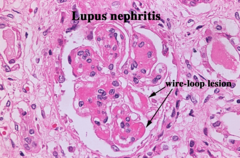
Structured illumination resolution, pros, and cons
Resolution: ~30-50 nm
Pros: Improved resolution, compatible with live cells
Cons: Lower acquisition, limited depth
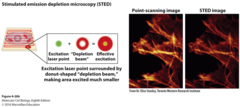
STED Microscopy resolution, pros, and cons
Resolution: ~30-50
Pros: Super-resolution, precise localization
Cons: High phototoxicity, expensive
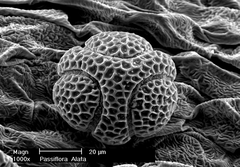
SEM (scanning electron microscopy) resolution, pros, and cons
Resolution: ~1-10 nm
Pros: 3D-like surface imaging
Cons: Sample coating required, only non-living samples
Electron microscopy (TEM)
Resolution: ~0.1-1 nm
Pros: Atomic-scale resolution
Cons: Requires fixed/dead samples
nc-AFM (non-contact AFM)
Resolution: Sub-angstrom (~0.1 nm)
Pros: Can resolve single atoms, non-destructive imaging
Cons: Slow scanning, requires ultra-stable conditions
What are glycoproteins and glycolipids
Ccarbohydrate chains attached to proteins and lipid which identify the cell as "self" or "foreign" and act as receptors
Symport vs antiport
- Symport: (A and B molecules go in the same direction)
- Antiport: (A and B molecules fo in opposite directions)