A&P Chapter 2 Study Guide
 Call Kai
 Learn
Learn Practice Test
 Spaced Repetition
 Match
Match Flashcards
 Knowt Play
1/148

There's no tags or description
Looks like no tags are added yet.
Name | Mastery | Learn | Test | Matching | Spaced | Call with Kai | Chat |
|---|
No analytics yet
Send a link to your students to track their progress
149 Terms
Matter
Anything that has mass and occupies space
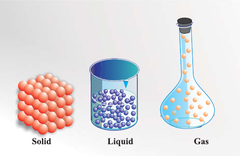
States of Matter
Solid
Liquid
Gas
Energy
Capacity to do work or put matter into motion
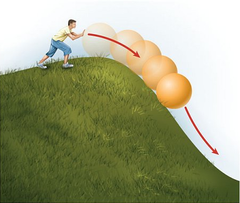
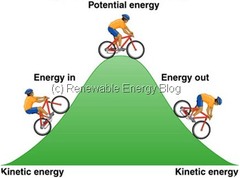
2 forms energy exist in
Kinetic
Potential
Kinetic
Energy in action

Potential
Stored (inactive) energy
Chemical
Electrical
Mechanical
Radiant or electromagnetic
What are the forms of energy
Chemical energy
Stored bonds of chemical substances
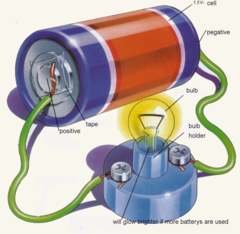
Electrical energy
Results from movement of charged particles
Mechanical energy
Directly involved in moving matter

Radiant or electromagnetic matter
Travels in waves

Carbon (C)
Hydrogen (H)
Oxygen (O)
Nitrogen (N)
What four elements make up 96% of the body
Carbon
C
Oxygen
O
Hydrogen
H
Nitrogen
N
Sodium
Na
Calcium
Ca
Potassium
K
Iodine
I
Phosphorus
P
Iron
Fe
Magnesium
Mg
Protons
Positive charge (inside Nucleus)

Neutrons
No electrical charge (inside nucleus)

Electrons
Negative Charge (outside of nucleus)
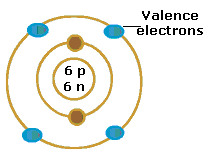
Atomic number
Number of protons in nucleus
Mass number
Total number of protons and neutrons in nucleus
Isotopes
Atomic numbers are same, but mass numbers different
Atomic weight
An average of all isotopes of an element
Radioisotopes
Isotopes that decompose to more stable forms
Molecule
Term for two or more atoms bonded
Compound
Has two or more different kinds of atoms bonded together
- Solutions
- Colloids
- Suspensions
3 mixtures
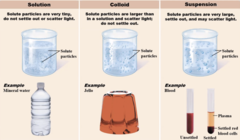
Solutions
Evenly distributed together
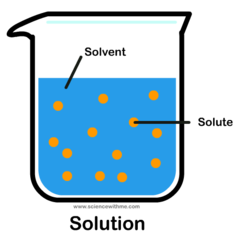
Solvent
Usually liquid, such as water
Solute
Substance dissolved in solvent

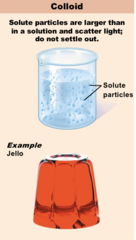
Colloids/Emulsions
Are heterogeneous, not evenly distributed together
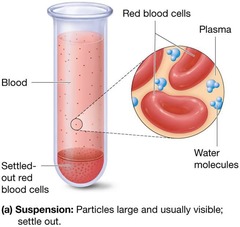
Suspensions
Heterogeneous mixtures that contain large visible solutes that DO settle out
Chemical bonds
Energy relationships between electrons of reacting atoms
Octet rule
8 electrons in their valence shell
Ionic bonds
Covalent bonds
Hydrogen bonds
Major types of chemical bonds
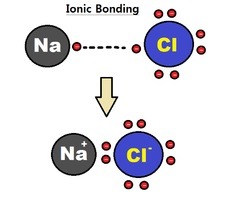
Ionic bonds
Atoms that have gained or lost electrons and become charged
- Attraction
Covalent bonds
Are formed by sharing of two or more valence shell electrons between two atoms

Single Bond
Sharing of 2 electrons results in
Double bond
Sharing of 4 electrons is a
Triple bond
Sharing of 6 electrons is a
Nonpolar covalent bonds
Equal sharing of electrons between atoms
Polar covalent bonds
Unequal sharing of electrons
Yes - nice
Does carbon share electrons
NO - bully
Does oxygen share electrons
Yes - whimp
Does hydrogen share electrons
Hydrogen bonds
Attractive force between electropositive hydrogen of one molecule and an electronegative atom of another molecule

Covalent bonds
Sharing of pairs of electrons. polar or nonpolar

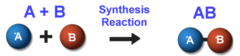
Synthesis
Reactions involve atoms or molecules combining to form larger, more complex molecule
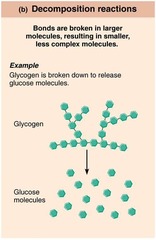
Decomposition
Reactions involve breakdown of a molecule into smaller molecules or its constituent atoms
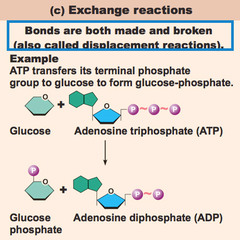
Exchange
Involve both synthesis and decomposition
Exergonic
Gives off energy
Endergonic
Use up energy
Catalysts
substances that speed up chemical reactions without being changed or becoming part of the product
Biochemistry
Study of chemical composition and reactions of living matter
High heat capacity
Absorb and release heat with little temp change
High heat of vaporization
Evaporation requires large amounts of heat
Reactivity
Necessary part of hydrolysis and dehydration synthesis reactions
Cushioning
Protects certain organs from physical trauma
Acidic pH scale
Below 7 - higher concentration of hydrogen ions [H+]
![<p>Below 7 - higher concentration of hydrogen ions [H+]</p>](https://assets.knowt.com/user-attachments/99fb79d3-302e-4969-945c-27791e3439b2.png)
Neutral pH scale
7- Equal concentration of hydrogen ions [H+] and hydroxide ions [OH-]
![<p>7- Equal concentration of hydrogen ions [H+] and hydroxide ions [OH-]</p>](https://assets.knowt.com/user-attachments/fcd0022d-f14c-4782-bb66-e03fed184af0.jpg)
Alkaline pH scale
Above 7 - low hydrogen ions [H+] but high hydroxide ions [OH-]
![<p>Above 7 - low hydrogen ions [H+] but high hydroxide ions [OH-]</p>](https://assets.knowt.com/user-attachments/69c11931-cd11-445e-ad35-4391f994b83e.jpg)
-Carbohydrates
Lipids
Proteins
Nucleic acid
WHat are the major organic compounds
Polymers
Chains of similar units called monomers (building blocks)
Monosaccharides
One single sugar
- 3-7 carbon atoms
Disaccharides
Two sugars
- too large to pass through cell membrane
Polysaccharides
Many sugars
important monosaccharides
Ribose
Deoxyribose
Hexose
important disaccharides
Sucrose
Maltose
Lactose
important polysaccharides
Starch
Glycogen
Triglycerides
called fats and oils when liquid
- Energy storage, Insulation, Protection
Phospholipids
"Head" and "tail" regions have different properties
- Head is polar and hydrophilic
- Tails are nonpolar and hydrophobic
Steroids
Consist of four interlocking ring structures
- Most important steroid is cholesterol
Cholesterol
Most important steroid
Acidic solution
Higher concentration of hydrogen ions (H+)
Neutral solution
Equal concentration of hydrogen ions (H+) and hydroxide ions (OH-)
Alkaline solution
Higher concentration of hydroxide ions (OH-)
Biomolecules
Food is a source of large molecules that are needed for life
Monomer
Building block, that same type of “block” makes up something larger
Carbohydrate
Food source, such as, bread, pasta, fruit, and vegetables tend to be high in carbs
Monosaccharides
The monomer for carbohydrates
Mono
One
Di
Two
Polysaccharides
What does a lot of monosaccharides combine together make?
Maltose
Glucose + Glucose =
Disaccharide
Monosaccharide + Monosaccharide =
Glucose
Used in cellular respiration to make ATP (fast energy source)
Glucose used to make ATP
What makes a fast energy source for cells
Cellulose
Plants
Chitin
Fungi
Lipids
Butter, olive oil. Include fats and oils
Monomers of lipids
Glycerol and fatty acids

Proteins
Food source - beans, meat, nuts, and eggs
Monomer for proteins
Amino acids
