Ch. 11: Outsourcing
 Call Kai
 Learn
Learn Practice Test
 Spaced Repetition
 Match
Match Flashcards
 Knowt Play
1/25

There's no tags or description
Looks like no tags are added yet.
Name | Mastery | Learn | Test | Matching | Spaced | Call with Kai | Chat |
|---|
No analytics yet
Send a link to your students to track their progress
26 Terms
Outsourcing
Contracting out services that need to be unertaken on a regular basis
Complete transfer of a business process to an independant business
: HR, equipment and people
Outsourcing Core Value-Chain Activities
Supply chain: Manufacturing
Downstream activities: Distribution
Outsourcing Support Activities
HRM
R&D
Facilities management
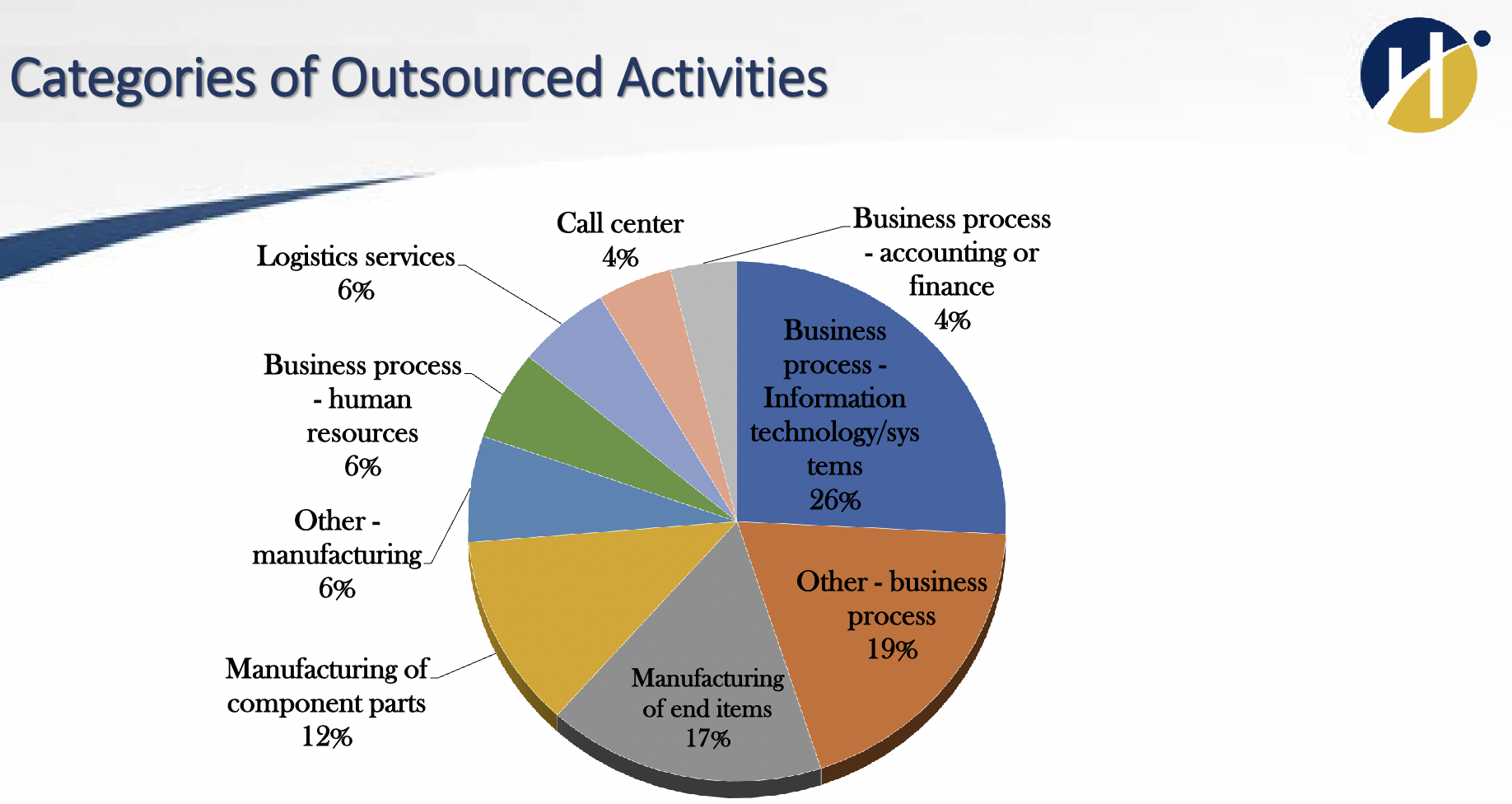
Problems of Outsourcing
20%-25% of relationships fail within first 2 years, 50% in first 5 years
Hidden costs
Loss of key skills/competencies
Unreliability of suppliers
Poor contracts
Employee morale
Dependency
Communication problems
Benefits of Outsourcing
Cost minimization: Fixed costs, inventory, and operational
Refocus on core competencies
Operational performance improvements: Flexibility, quality and reduced cycle time
Increased market share
Conditions Needed for OS
Extensive strategic assessment
True commitment to cooperative relatinship
Training and recruitment within outsourcing orgs focus on relationship building
Hidden Costs of Outsourcing
Quality costs
Supplier-Vendor relationship management
Supply chain risk management
Implementation fo external sourcing model
Govt. and politcal related expenses
Internal coordination
Hidden Costs of Outsourcing: Quality Costs
Preventative costs
Appraisal costs
Interal failure costs
External failure
Hidden Costs of Outsourcing: Supplier-Vendor Relationship Management
Relationship building and coordination
3%-10% of annual contract value
IT structure, development programs, high labour and travel costs
Hidden Costs of Outsourcing: Internal Coordination
OH expenses
Payrollm benefits, utility and IT
Does not mean signifcant reduction of costs
Hidden Costs of Outsourcing: Implementation of External Sourcing Model
Supplier search, evaluation, and contracting costs (~3% of contract value)
Transitions taking over 10 months, including asset transfer and travel
Training new suppliers and additional internal staff support
Lower efficiency at contract start and training relationship managers
Hidden Costs of Outsourcing: Product Service Design and Development
Relationship between product/service architecture and coordination cost
Tightly integrated designs involve tacit knowledge and high knowledge sharing
Higher coordination costs make them less suitable for external sourcing
Hidden Costs of Outsourcing: Government and Politics Related Expenses
Ensuring compliance to laws, regulations and customs
Legal expenses, lobbying efforts and travel
Taxations, tariffs, and quota systems
Local content obligations
Hidden Costs of Outsourcing: Supply Chain Risk Management
Key factor
4 iterative phases of risk management
Risk assessment
Risk mitigation
Risk monitoring
Contingency planning
Hidden Costs of Outsourcing: Miscellaneous Financial Considerations
Learning curve cost reductions from cumulative volume
Suppliers aggregate demand across multiple customers
Outsourcing cost benefits depend on market competition, power balance, and opportunism risk
Process of Outsourcing
Strategic Eval
Financial eval
Vendor search and contracting
Transition to external sourcing model
Activity and relationship management
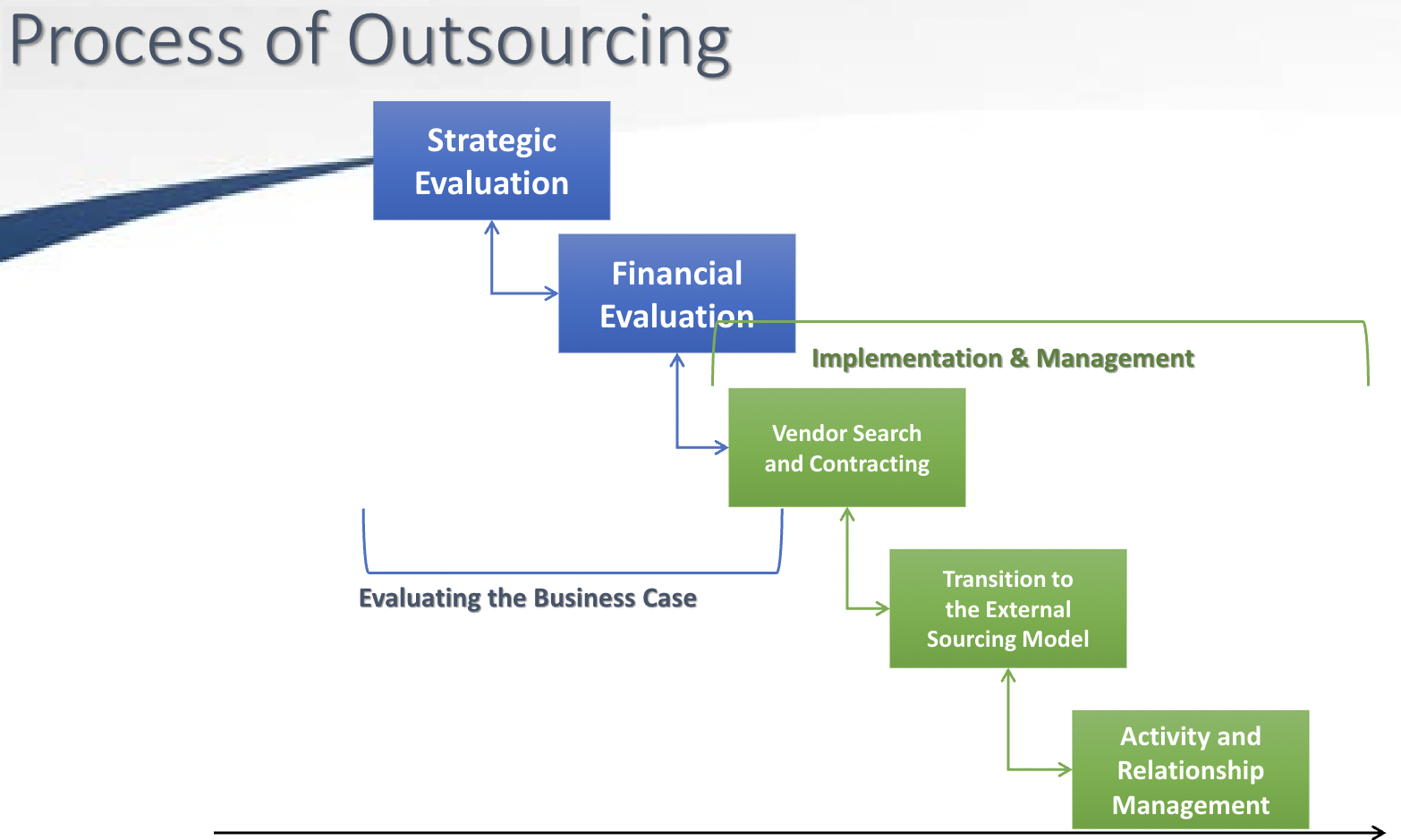
Evaluating the Business Case
Strategic Evaluation: Understand the strategic value of the activity or system
Financial Evaluation: Short- and long-term financial evaluation
• Evaluation of conditional factorsSupplier Selection
• Supplier profiles
• Clearly establish expectationsContract Development
• Key governance tool of the relationship
• Risk of suppliers acting counter to the objectives of the buyer
Buyers’ Outsourcing Risks (BOR)
Potential operational, financial, reputational, and legal dangers a company faces when OS
Risks
Poor quality
Data breaches
Hidden costs
Overdependancy
BOR= PA X NC
PA: The probability that an adverse event will occur
NC: Negative consequences if the adverse event occurs
Consensus Transition Plan
Communication criteria
Personnel criteria
Transition criteria
Cultural Distance
Negative effect on control and coordination
Individualistic cultures usually lead to higher costs
Inter-firm management
Three Criteria for Outsourcing
Strategic: Weigh (1) relative strategic value of process, (2) capability and efficiency of external supply base
Optimal operational arrangements: e.g. how difficult to integrate outsourced operations
Capacity to make the major organizational changes associated with outsourcing
Real-Time Visibility and Monitoring
Asset tracking: Monitor movement of goods, ensuring partners are meeting delivery schedules
GPS, RFID, IoT
Control Towers: Cloud-based SCM platforms to centralize data
SCM and Performance
AI-Powered Performance Analytics: Leverage to benchmark partners
: Supplier performance, quality ratings
Automated Communication: Streamline communication
: Chatbots and AI assistants
Digitalized Contracts: Ensure compliance
Predictive and Advanced Optimization (AO
Demand forecasting
Scenario Planning and “What-if” analysis
Intelligence Routing: Optimize shipping
Process Automation (RPA)
Automated Ordering and Invoicing: Implement Robotic Process Automation (RPA)
Automated Data Entry: Use Intelligent Document Processing (IDP) to extract data
Future Trends
Third party logistics
Cognitive Procurement: AI negotiating with supplier systems directly
Predictive Risk Mitigation: AI spotting emerging geopolitical or weather
risks before they impact operations