(BIOL 329) Prehealth Microbiology Lab Practical
 Call Kai
 Learn
Learn Practice Test
 Spaced Repetition
 Match
Match Flashcards
 Knowt Play
1/101

Earn XP
Description and Tags
Name | Mastery | Learn | Test | Matching | Spaced | Call with Kai | Chat |
|---|
No analytics yet
Send a link to your students to track their progress
102 Terms
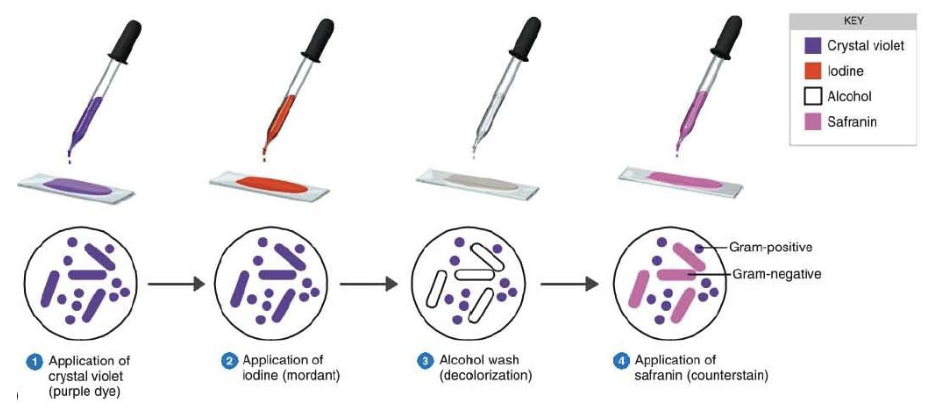
What is the Gram Stain Procedure after Heat Fixation?
Crystal violet (primary stain), 1 min + rinse , Gram Iodine (mordant), 1 minute + rinse, Alcohol (decolorizer), Safranin (counterstain), rinse, blot
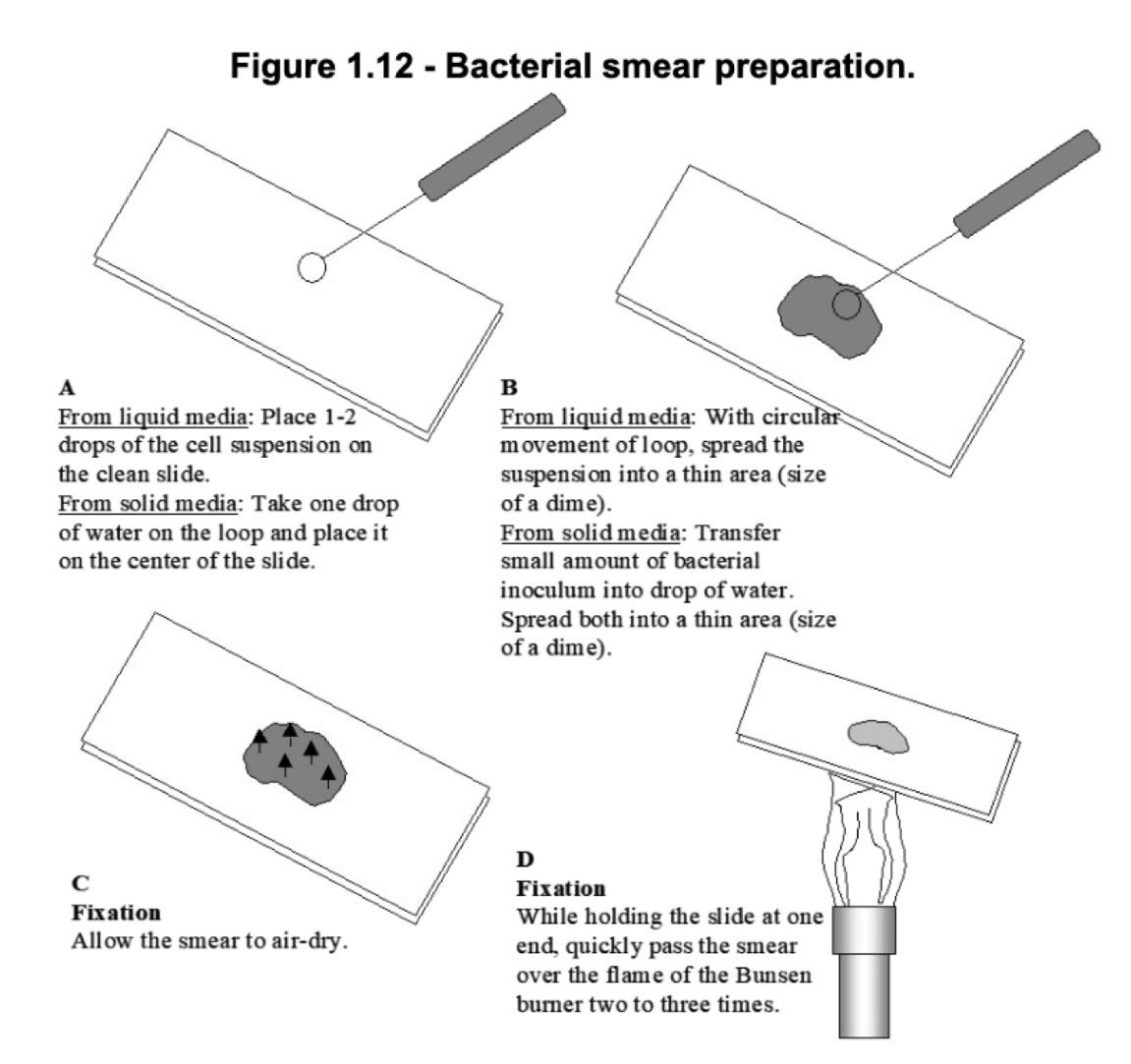
What is the procedure Liquid media Heat Fixation?
place 1-2 drops of cell on clean slide, spread on slide with sterilized loop, air dry, pass through flame 2-3 times.
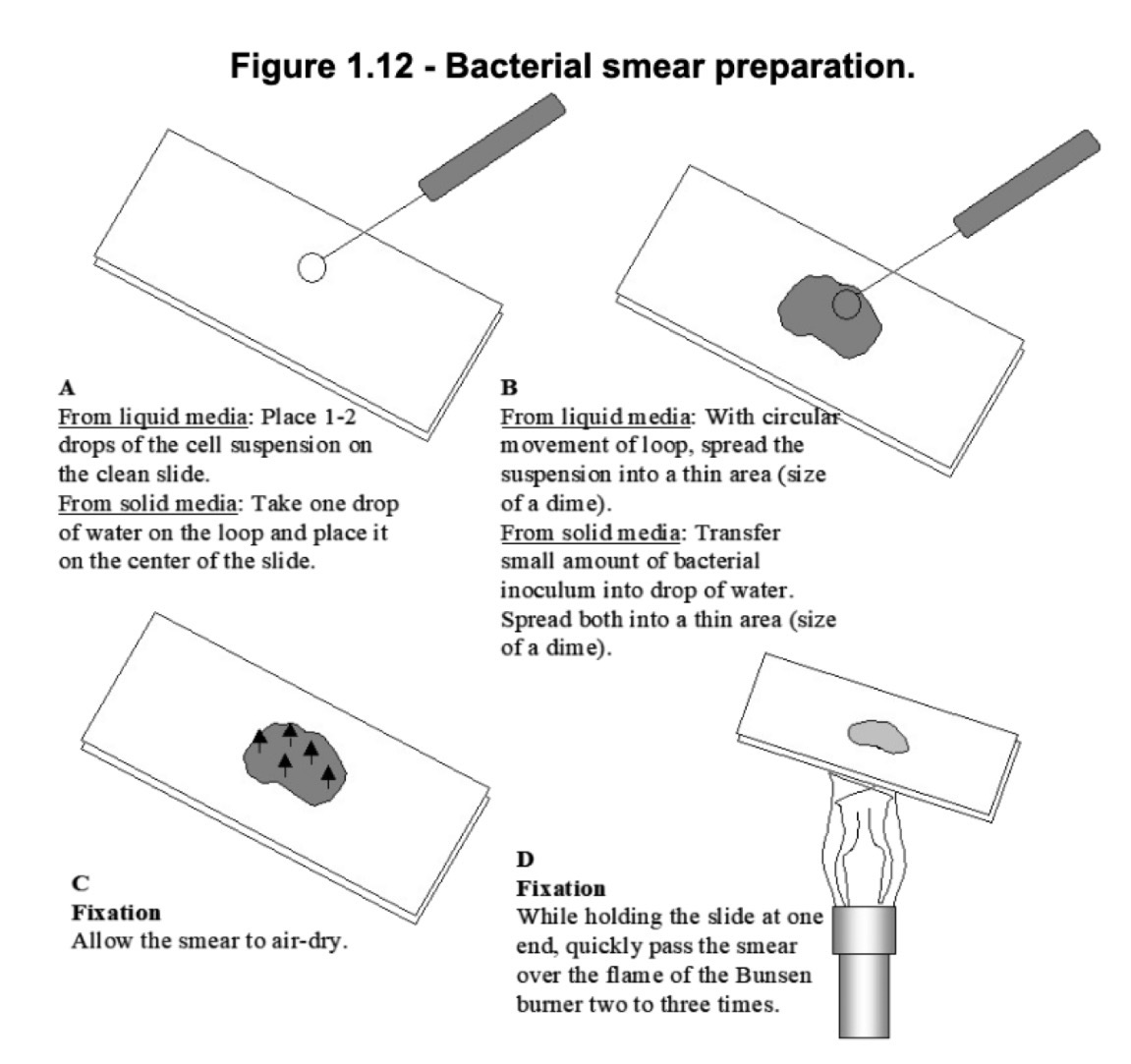
What is the procedure for Solid media Heat Fixation?
place a drop of distilled water and inoculate + mix bacteria into drop of water with sterilized loop, spread, air dry, pass through flame 2-3 times
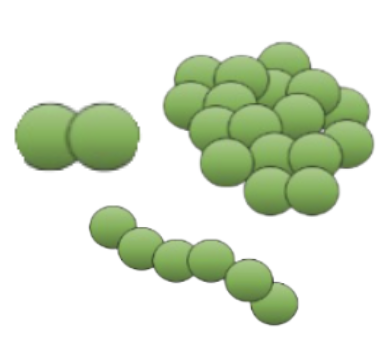
What is the Bacterial Morphology for this image?
cocci, cocci clusters, cocci chains
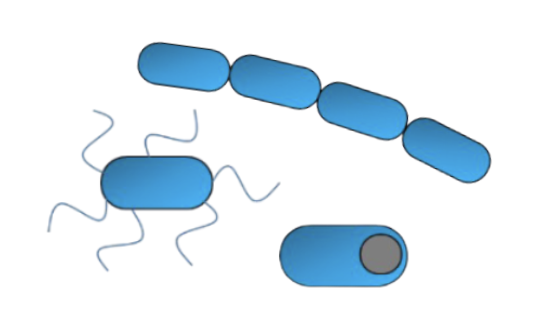
What is the Bacterial Morphology for this image?
flagellate rods, bacilli chains, spore formers
What is the procedure for 4 Quadrant Streak Plate?
Sterilize loop, inoculate bacterial culture, streak heavily in one quadrant, flame loop, cool, drag from previous quadrant and streak your next quadrant for 2, 3, and 4. sterilize.
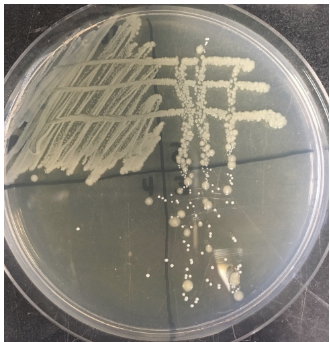
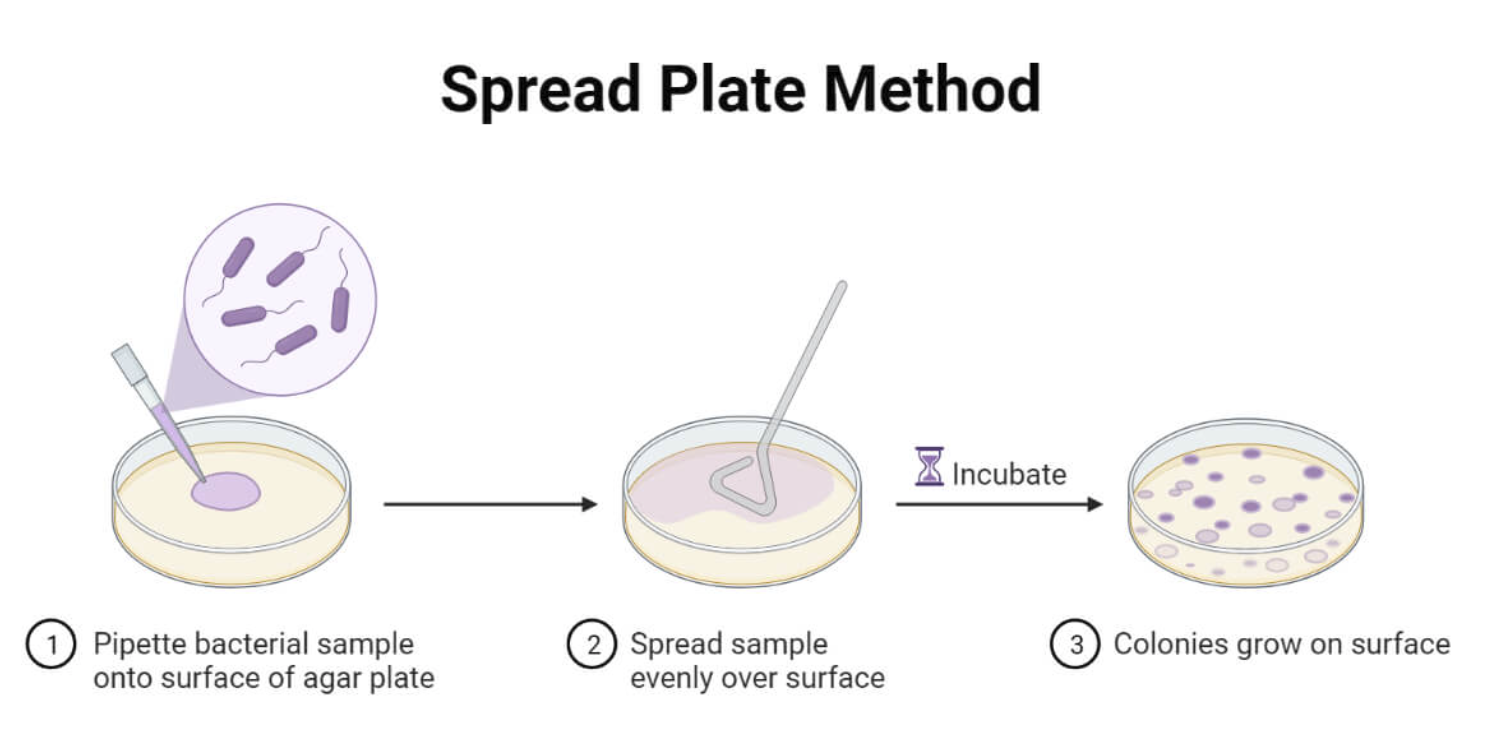
What is the procedure for Spread Plate?
add culture to your plate and place plate onto turntable. sterilize pipette 100 uL in center of plate. sterilize spreader in ethanol then pass through the flame, cool, spread the liquid throughout the plate as you turn. sterilize spreader and put back in ethanol.
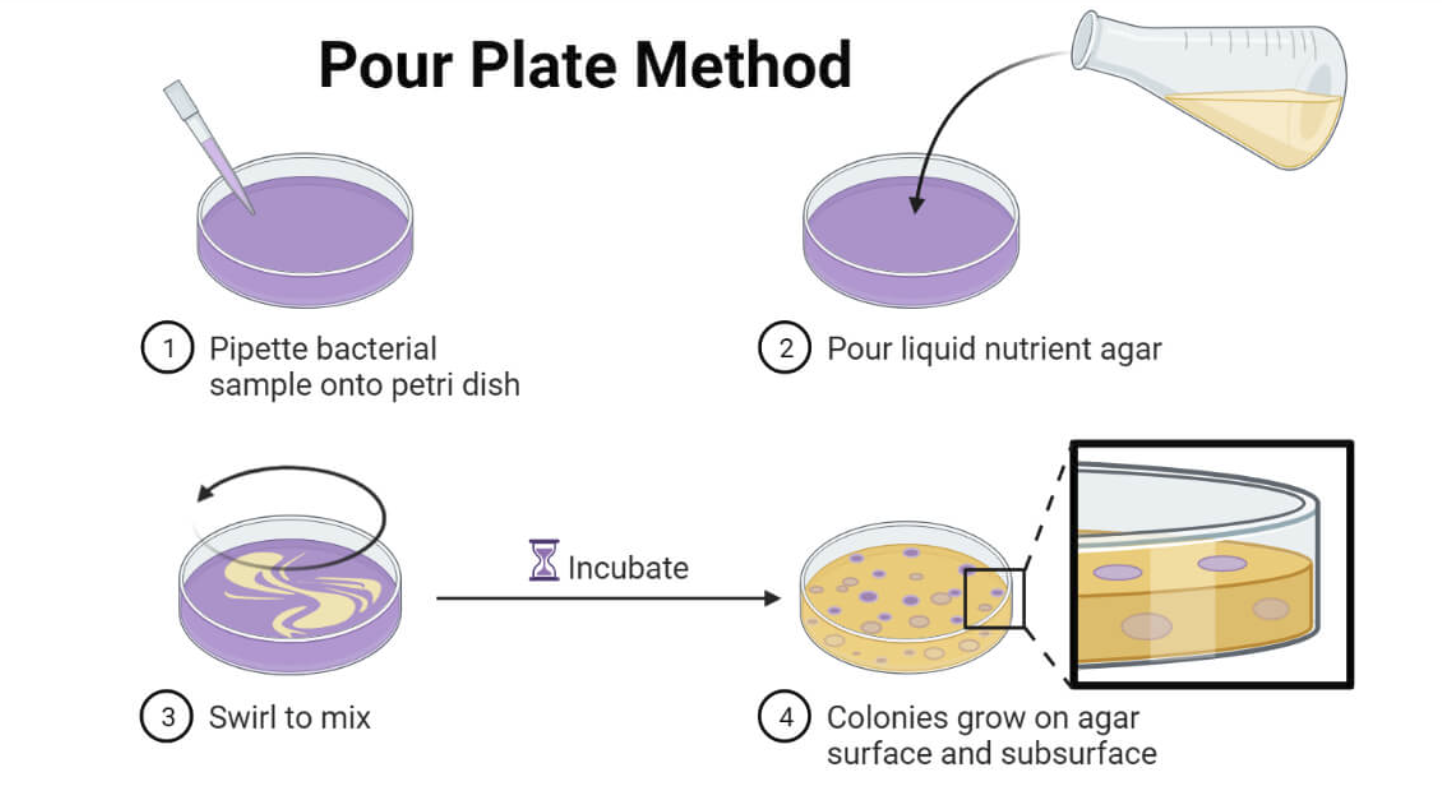
What is the procedure for Pour Plate?
pipette 0.1mL of diluted sample onto an empty sterile plate, add melted nutrient agar, swirl to mix, wait for medium to solidify, then incubate.
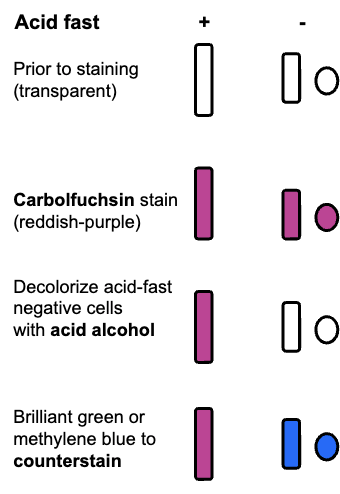
What are the primary stain, decolorizing agent, and counterstain for Acid Fast Stain
Carbolfuchsin (primary stain), Acid-Alcohol (decolorizing agent), Methylene blue (counterstain)
What colors are Acid-fast cells and Non-Acid-fast cells for the Acid-Fast Stain? What does this result interpret?
Acid-fast cells: reddish-purple, presence of waxy-cell wall bacteria, rich in mycolic acid, resistant to dehydration + disinfectants
Non-acid-fast cells: blue, absence of waxy-cell-wall bacteria
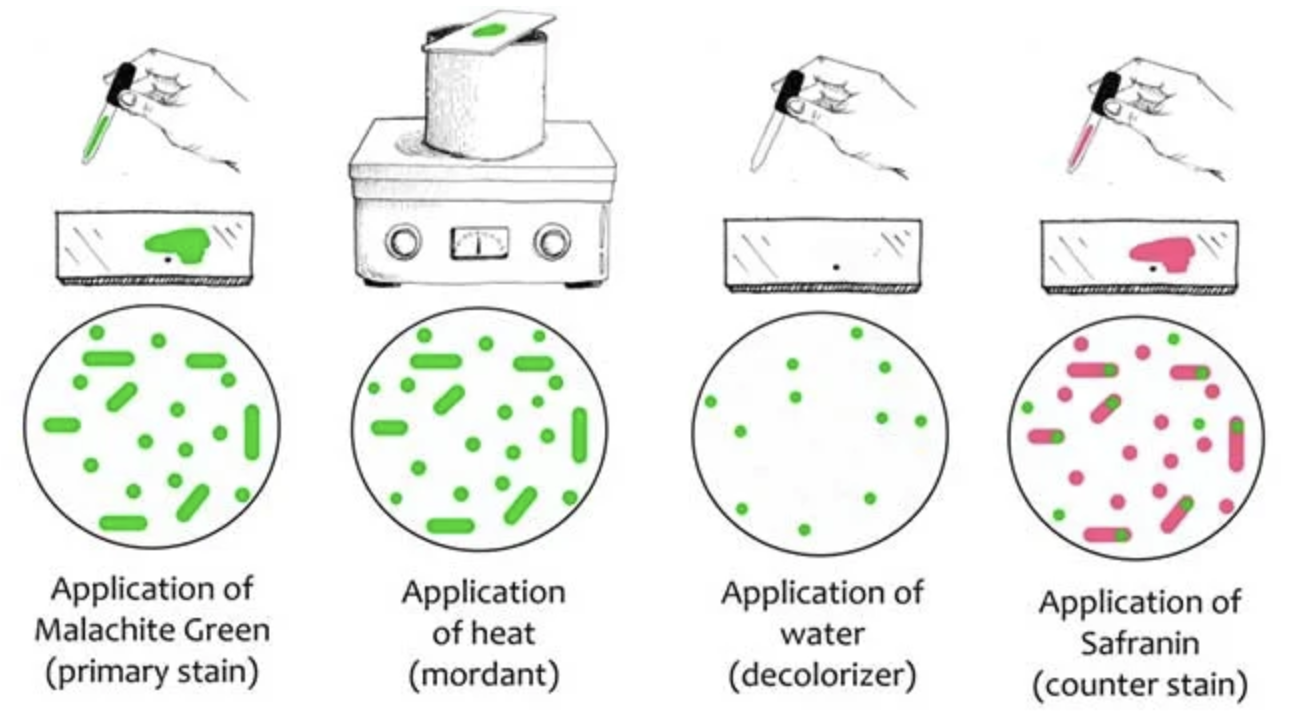
What are the primary stain, mordant, decolorizer, and counterstain for Spore Stain (Schaeffer-Fulton Method)?
primary stain: malachite green
mordant: heat
decolorizer: water
counterstain: safranin
What colors are spore cells and vegetative cells for the Spore Stain (Schaeffer-Fulton Method)? What does this result interpret?
Spore cells: green, presence of dormant, highly resistant, metabolically inactive bacterial endospores because of unfavorable environment
Vegetative cells: red/pink, metabolically active
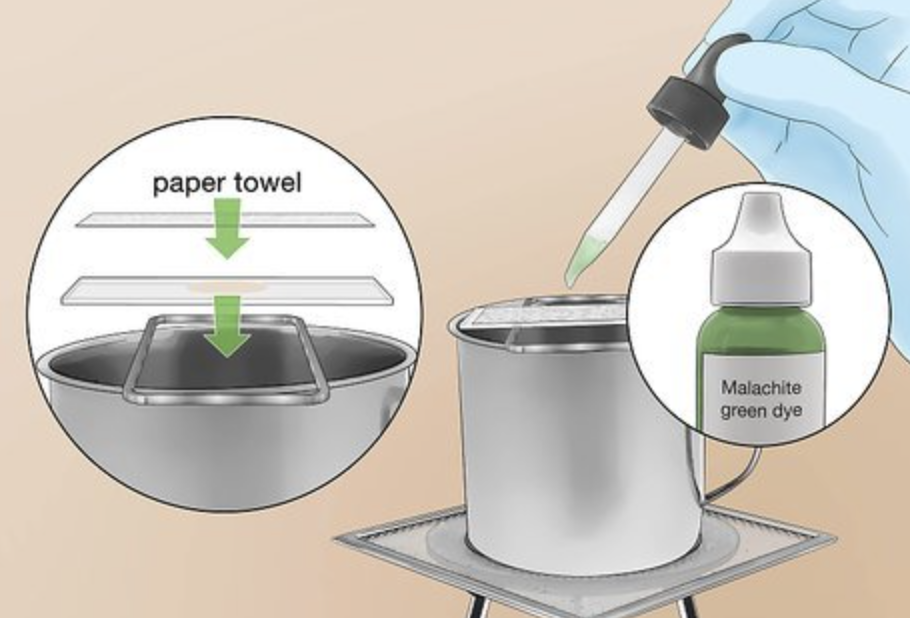
What is the purpose of the mordant in Spore Stain (Schaeffer-Fulton Method)?
softens the tough spore coat so that the primary stain can penetrates and dye the endospores.
What is Blood Agar selective and differential for?
selective: nothing
differential (component as well): red blood cells (hemolysis)
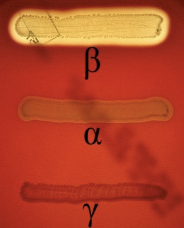
What are the hemolysis patterns of Blood Agar?
Alpha: partial/incomplete hemolysis, green/brown, cloudy halo
Beta: complete hemolysis, clear, transparent zone
Gamma: no hemolysis, no change in media
What is Mannitol Salt Agar selective and differential for?
Selective: Staphylococcus species due to high salt concentration (7.5%)
Differential: Staphylococcus aureus that produces a yellow halo
What is Mannitol Salt Agar selective and differential component?
Selective component: High salt (7.5% NaCl)
Differential component: Mannitol salt, phenol red
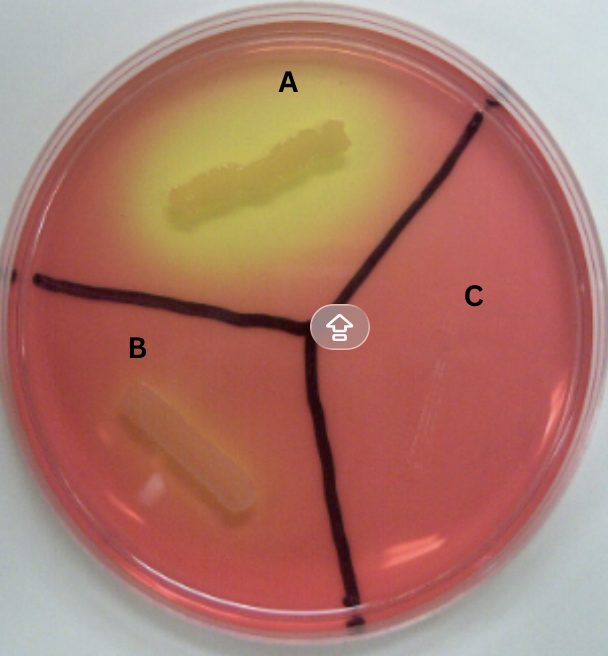
This is a Mannitol Salt Agar, What does A, B, and C interpret?
A) Mannitol fermentation that produces acid (pH <6.8), hence the yellow halo
B) Growth on the agar, but does not ferment mannitol
C) No growth/fermentation
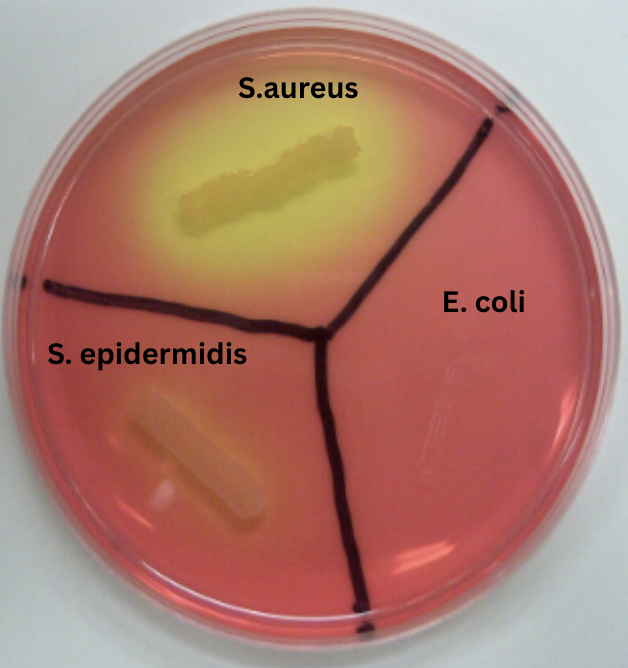
What is the pH indicator for Mannitol Salt Agar?
phenol red, red when pH > 7.4, yellow when pH < 6.8
What is MacConkey Agar selective and differential for?
Selective: gram-negative enteric bacteria
Differential: differentiate coliforms that ferment lactose from non-coliforms that don’t ferment lactose
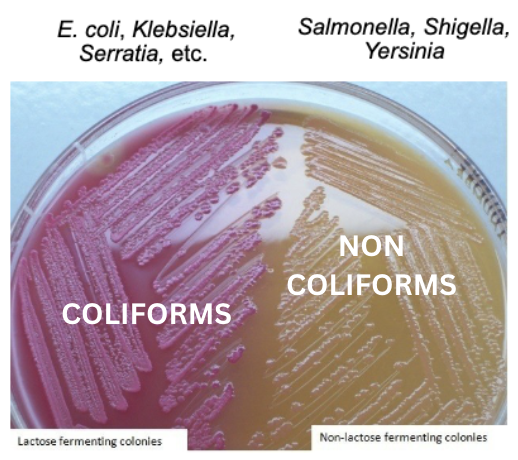
What is MacConkey Agar selective and differential component?
Selective component: Bile salt, crystal violet
Differential component: Neutral red, Lactose
What is the indicator dye for MacConkey Agar?
neutral red,
colorless: pH >/above 6.8
red (because of acid from lactose fermentation): pH </below 6.8
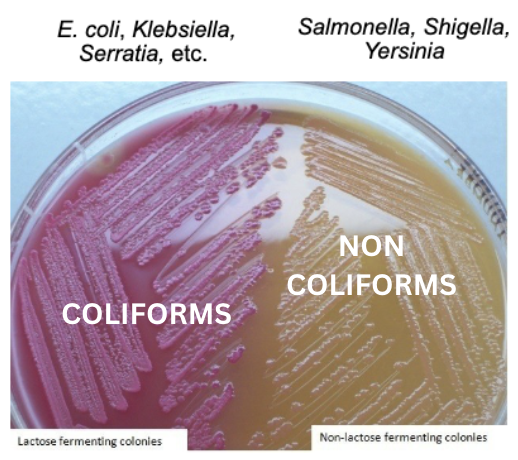
What is Eosin-methylene blue (EMB) Agar selective and differential for?
Selective: gram-negative enterics
Differential: distinguish coliforms (like E. coli, which can produce high acidic conditions via mixed acid fermentation) from non-coliforms
What is Eosin-methylene blue (EMB) Agar selective and differential component?
Selective component: Eosin, Methylene blue
Differential component: Eosin/Methylene blue, Lactose
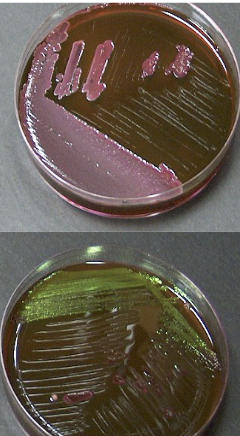
On Eosin-methylene blue (EMB) agar, how do colony colors relate to lactose fermentation strength?
colorless: no lactose fermentation
pink/purple: weak lactose fermentation
dark, metallic green sheen: strong lactose fermentation (high acid production)
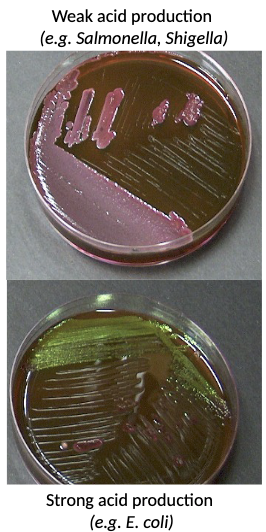
How does Eosin-methylene blue agar select for Gram-negative enteric?
inhibits growth of gram positive organisms via Eosin Y and methylene blue
What is Phenylethyl Alcohol (PEA) Agar selective and differential for?
Selective: gram-positive organisms
differential: nothing
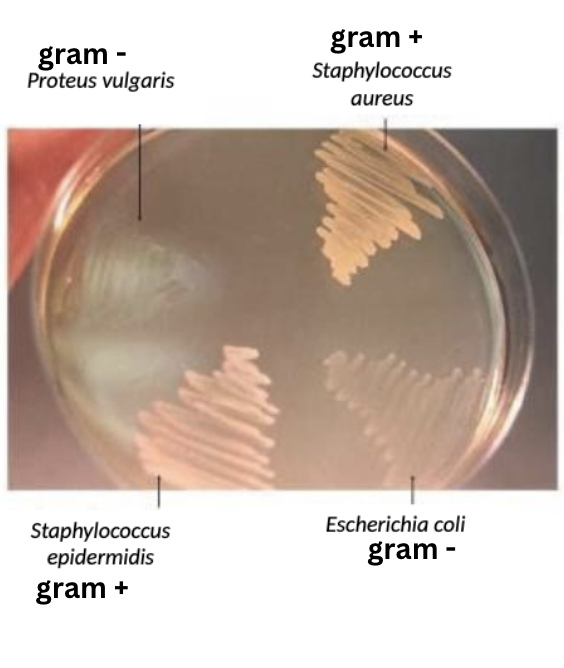
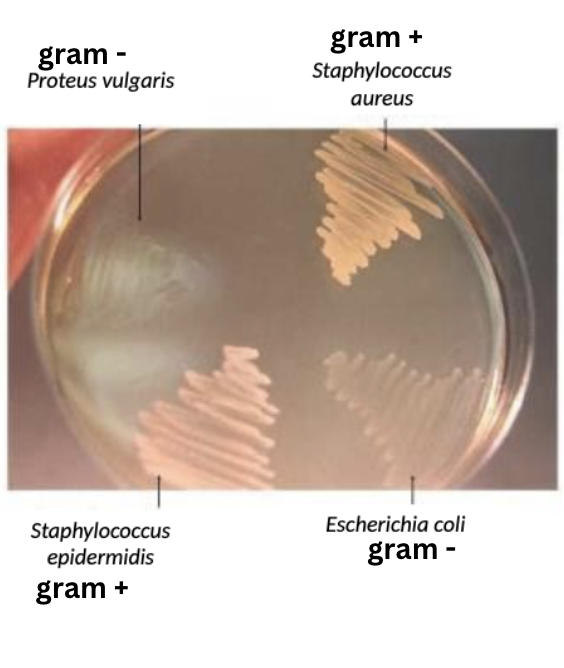
How does Phenylethyl Alcohol (PEA) Agar select for Gram-positive organisms?
Inhibits gram-negative bacteria via phenylethyl alcohol (selective component). BUT, gram-negative colonies may grow, it would just be smaller and less abundant.
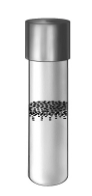
What type of Oxygen growth pattern is this?
Obligated Aerobic
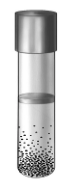
What type of Oxygen growth pattern is this?pe of Oxygen growth pattern is this?
Obligated Anaerobe
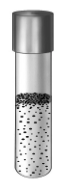
What type of Oxygen growth pattern is this?
Facultative Anaerobe
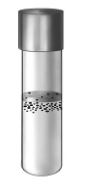
What type of Oxygen growth pattern is this?
Micro-aerophile
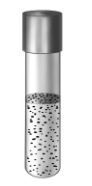
What type of Oxygen growth pattern is this?
Aerotolerant Anaerobe
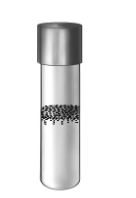
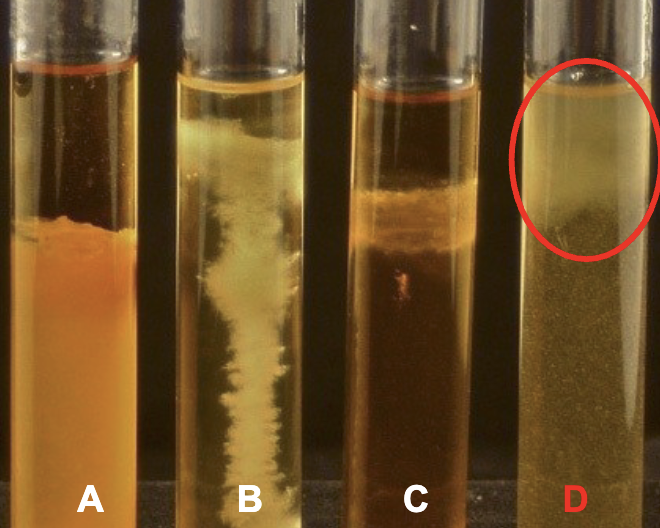
Obligated Aerobic
Requires oxygen for growth
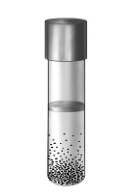
Obligated Anaerobe
Grow without oxygen (oxygen = toxic)
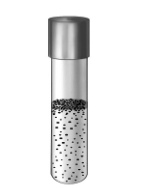
Facultative Anaerobe
greater growth in oxygen but can grow without oxygen
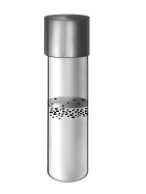
Micro-aerophile
requires oxygen but only at a low concentration or else it blocks the oxidative enzymes
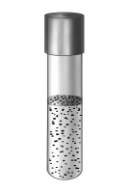
Aerotolerant anaerobe
can growth with oxygen but prefers no oxygen
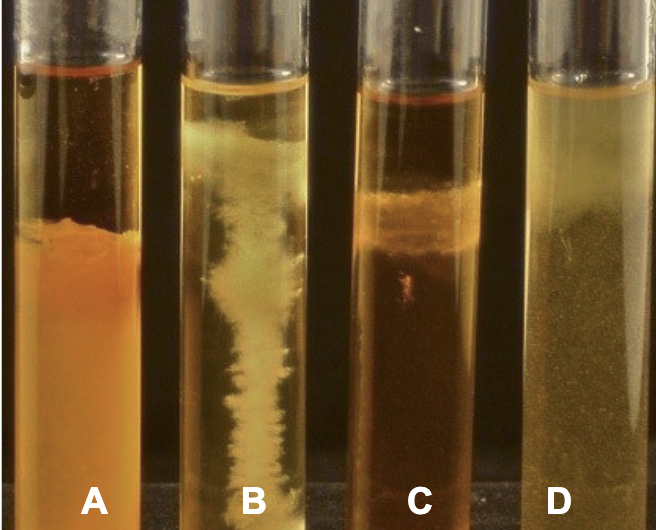
Which tube is Obligate Aerobe?
Tube D
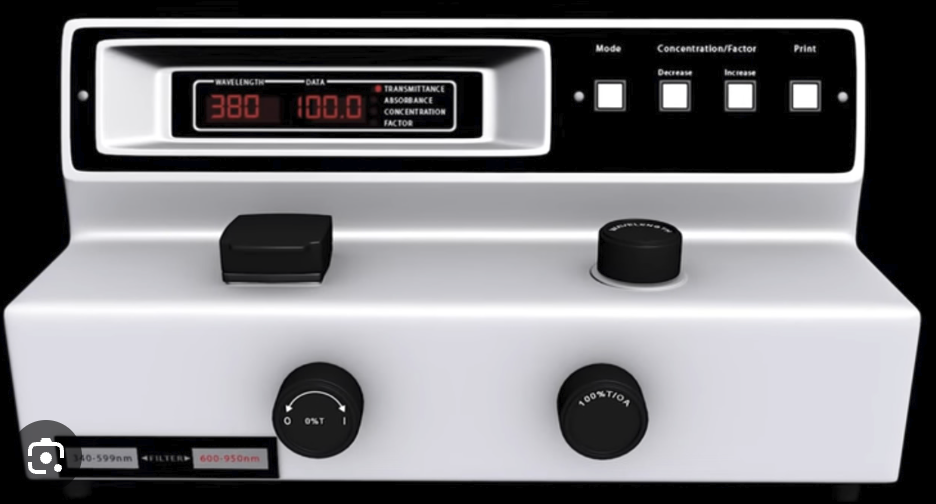
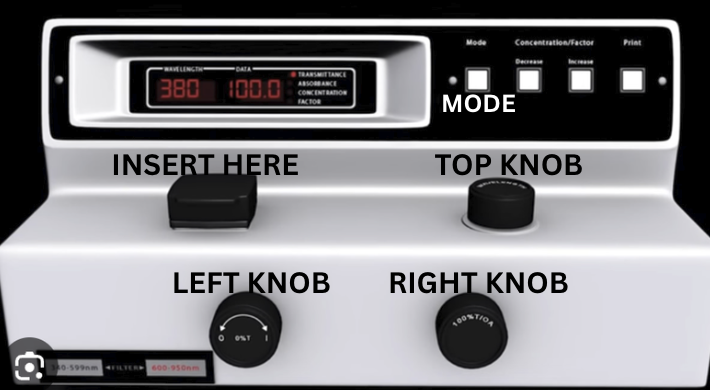
What are the procedure for calibrating the spectrophotometer when measuring Optical Density?
set mode to transmittance
top knob: 600
left knob: 0
insert blank sterile flask tube
right knob: 100
take blank sterile flask tube out
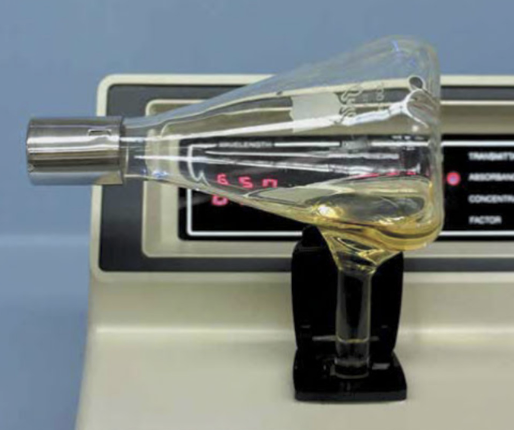
what is the procedure after you are done calibrating the spectrophotometer when measuring Optical Density?
pour E.coli into flask
insert flask
record data every 20 minutes
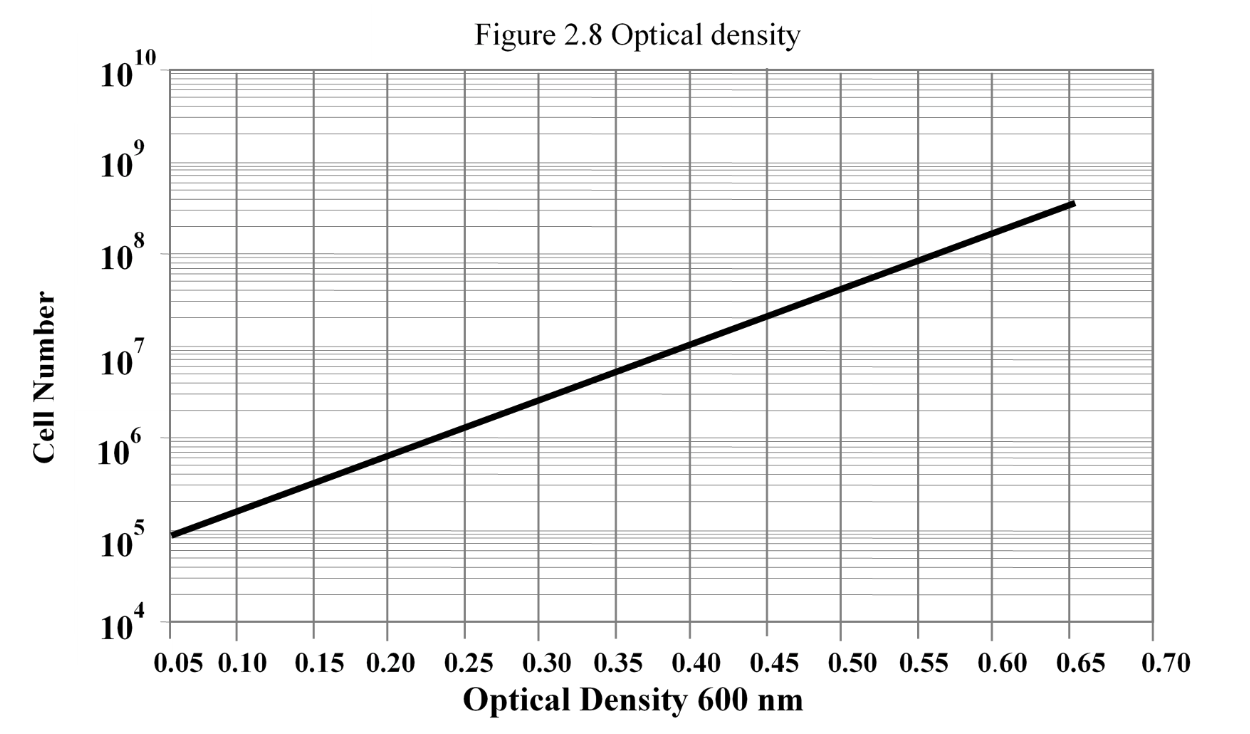
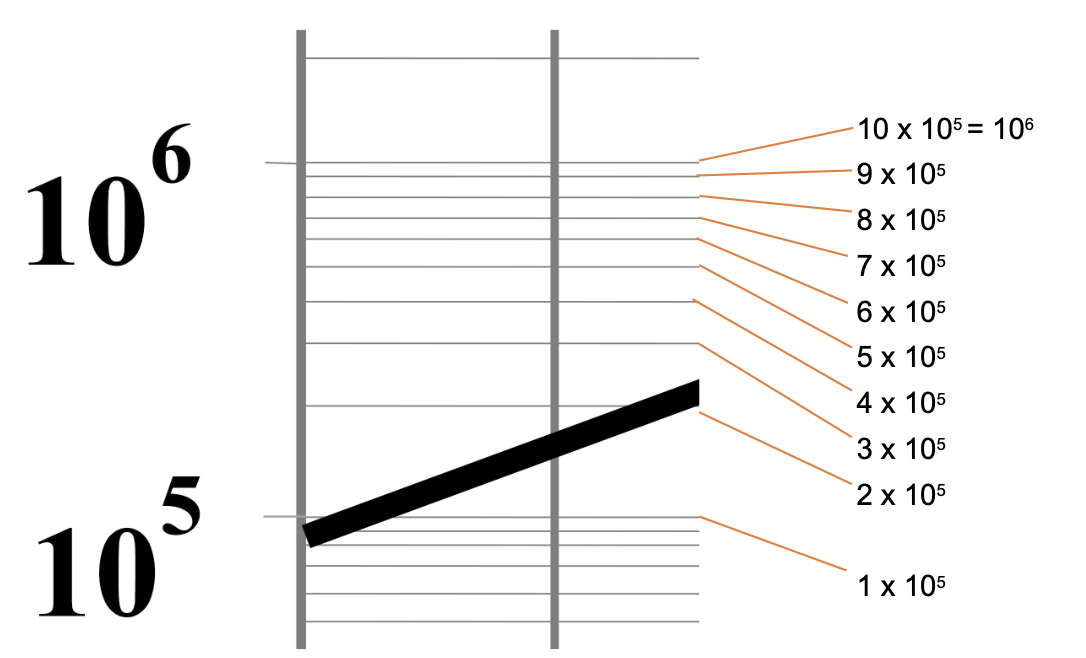
Convert Optical Density 0.20 in correspondingly to the given graph, what’s the value?
7×10^5
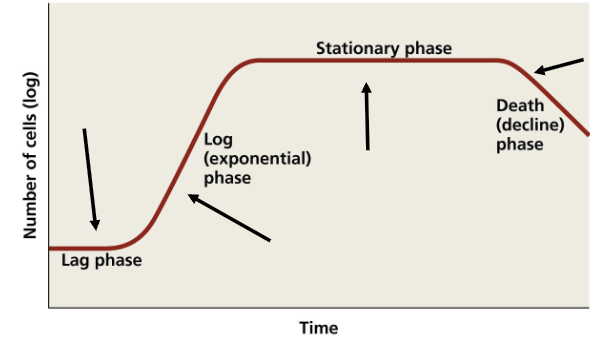
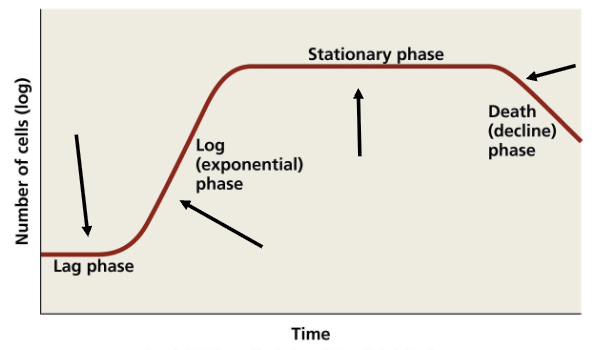
What does the Lag Phase mean for Bacterial Growth?
Bacteria still adapting to new growth conditions
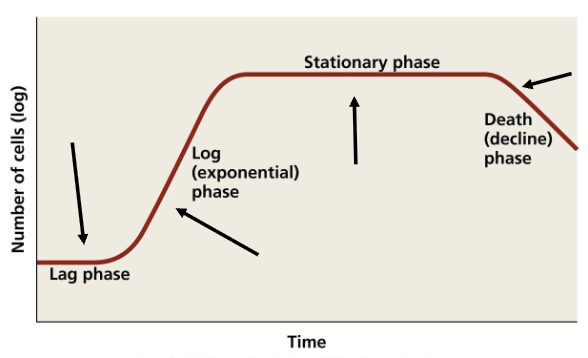
What does the Log Phase mean for Bacterial Growth?
Bacterial cells are doubling at a constant rate
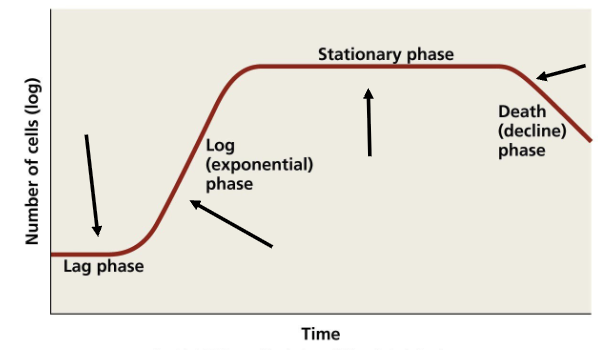
What does the Stationary Phase mean for Bacteria Growth?
Bacteria stop growing due to nutrient limitation, the growth and death rate are roughly equivalent
What does the Death Phase mean for Bacteria Growth?
Bacteria are dying due to adverse conditions
What does the IMViC tests test for?
Indole, Methyl red, Voges Prosakuer, Citrate Utilization
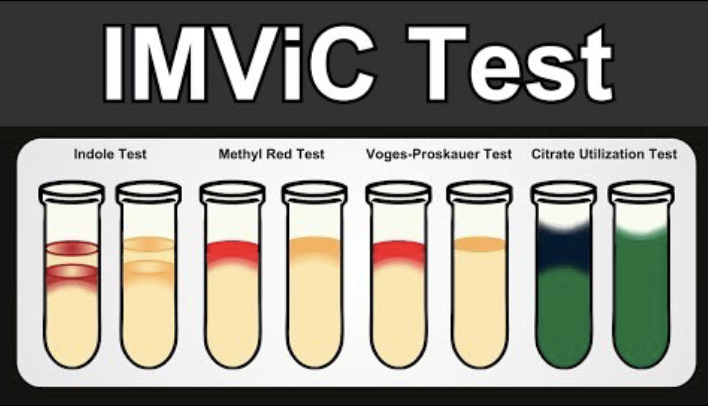
How is Indole production tested?
Via SIM Agar deep tube stab inoculation which measures bacteria ability to break down tryptophan to indole via tryptophanase
After incubating the SIM Agar, what has to be added to extract Indole to see if it’s a positive or negative reaction?
10 drops of Kovac’s Reagent
What is everything that the SIM agar tests for?
S = Sulfide (Hydrogen Sulfide H2S), I = Indole, M = Motility
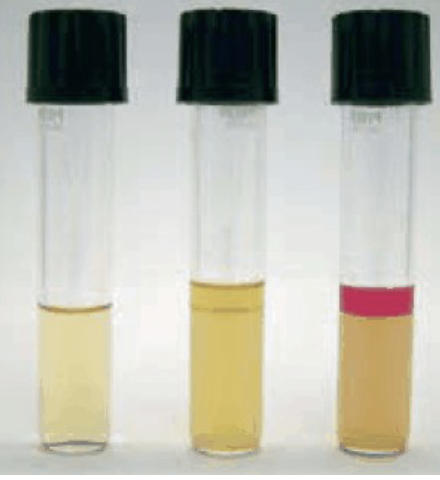
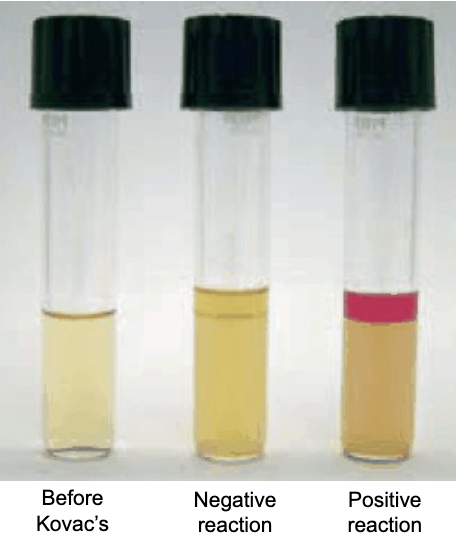
What does this image interpret?
Left: SIM Agar without Kovac’s Reagent
Middle: SIM Agar with Kovac’s Reagent showing a negative reaction, meaning there was no Indole production
Right: SIM Agar with Kovac’s Reagent showing a positive reaction, meaning there was indole production
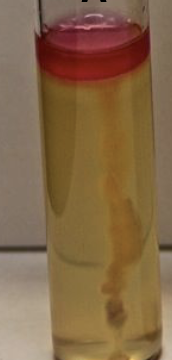
What test is this and Interpret result.
SIM Agar, Negative for Sulfide (H2S), Positive for Indole (Red layer), Positive for Motility (Growth spreading from stab line)
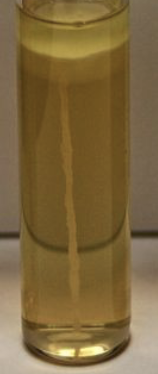
What test is this and interpret the result
SIM Agar, Negative for Hydrogen Sulfide, Negative for Indole production, Negative for Motility
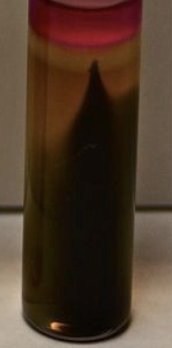
What test is this and Interpret the result.
SIM Agar, Positive for Sulfide (H2S, black medium change), Positive for Indole (red layer), Positive for Motility (growth spreading from stab line).
What does Methyl Red in the IMViC tests test for?
the ability to oxidize glucose into acidic end products through glucose fermentation
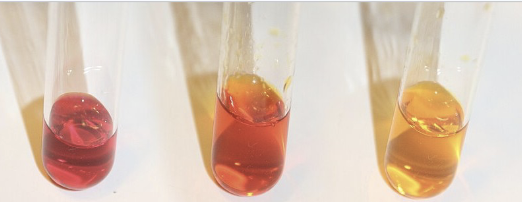
After incubation, what indicator needs to be added to see the result of a Methyl Red IMViC test?
5 drops of Methyl Red indicator
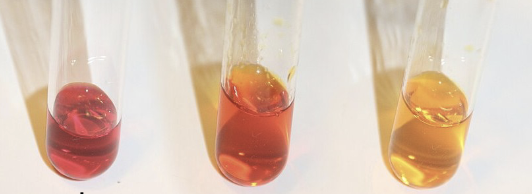
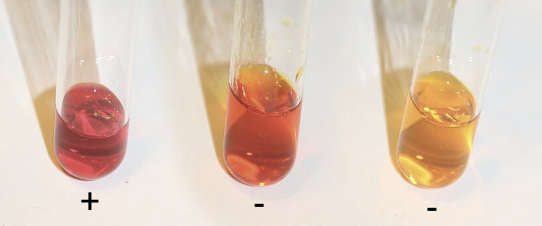
The image shows the result of a Methyl Red IMViC test. Interpret the result.
Left: Positive result, fermented glucose, created a highly acidic end product (pH < 4.4)
Middle: Negative result, fermented glucose, but did not create an end product that was acidic enough to drop the pH
Right: Negative result, fermented glucose, created a neutral end product
What does Voges Proskauer test for in IMViC test?
if microorganism produce acetoin as its end product when fermenting glucose
What are the required steps and reagents needed for the Voges-Proskauer IMViC test after incubation?
10 drops of Barritt’s Reagent A, shake, 15 drops of Barritt’s Reagent B, shake, and reshake the culture every 3 to 4 minutes until coloration is seen after 15-30 minutes.
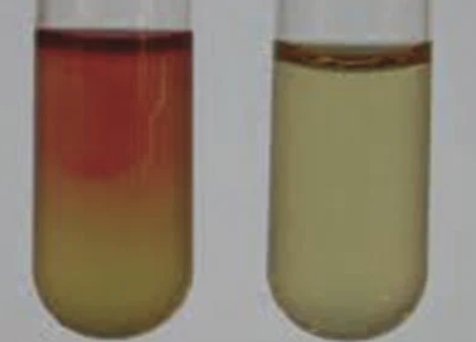
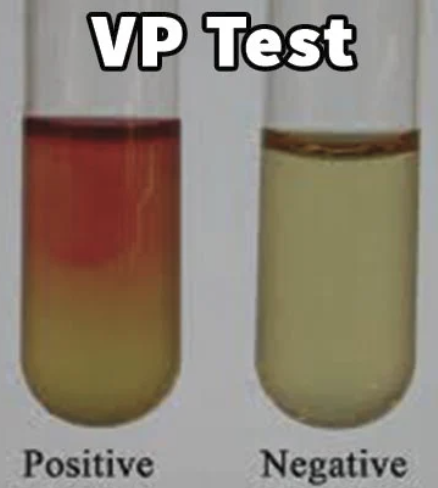
The image shows the results of the Voges-Proskauer IMViC test. Interpret the result.
Left: rose coloration = positive result of glucose fermentation that created the end product of acetoin production
Right: no rose coloration = negative result, no acetoin product = not using neutral fermentation pathway
What does the Citrate Utilization test tests for in IMViC test?
determine whether an organism uses citrate as its sole carbon source through the enzyme citrase.
What is the inoculating procedure for the Citrate Utilization test/Simmon Citrate Agar?
Stab and drag
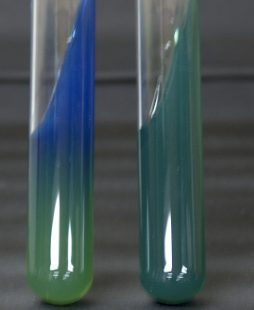
After Incubation, the image shown is the result of the Citrate Utilization test. Interpret the result.
Left: Growth on slant + Blue = positive, citrate was utilized as the sole carbon source, alkaline byproduct = increase in pH
Right: No growth on slant, remained green = negative, citrate was not the sole carbon source, no pH change
What does the Urease Test test for?
if the microorganism produce Urease to break down urea, producing ammonia and carbon dioxide, raising pH levels
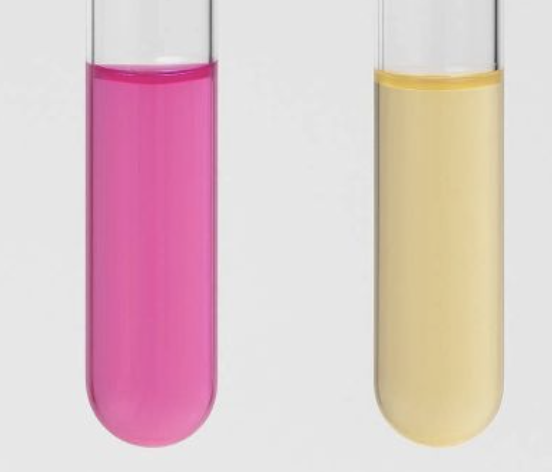
Interpret the result of a Urease test base on the image shown.
Left: Pink/Purple = positive result, urease present and was hydrolyzed, producing ammonia which increases the pH to level of alkalinity.
Right: Yellow/Orange = negative result, did not produce urease, pH remained the same
What does the Litmus Milk Test test for?
lactose fermentation, litmus reduction, protein (casein) digestion, gas production, and curd formation
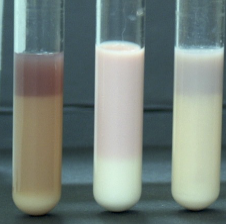
Interpret the results for Litmus Milk Test.
Left: yellow/clear liquid = complete proteolysis, purple band = alkalinity, white = litmus reduction
Middle: pink = acidity, white = litmus reduction
Right: purple = alkaline conditions, yellow = curd formation
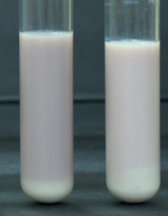
Interpret the results for Litmus Milk Test.
Left: purple = alkaline condition, white = litmus reduction
Right: pink = acid condition, white = litmus reduction
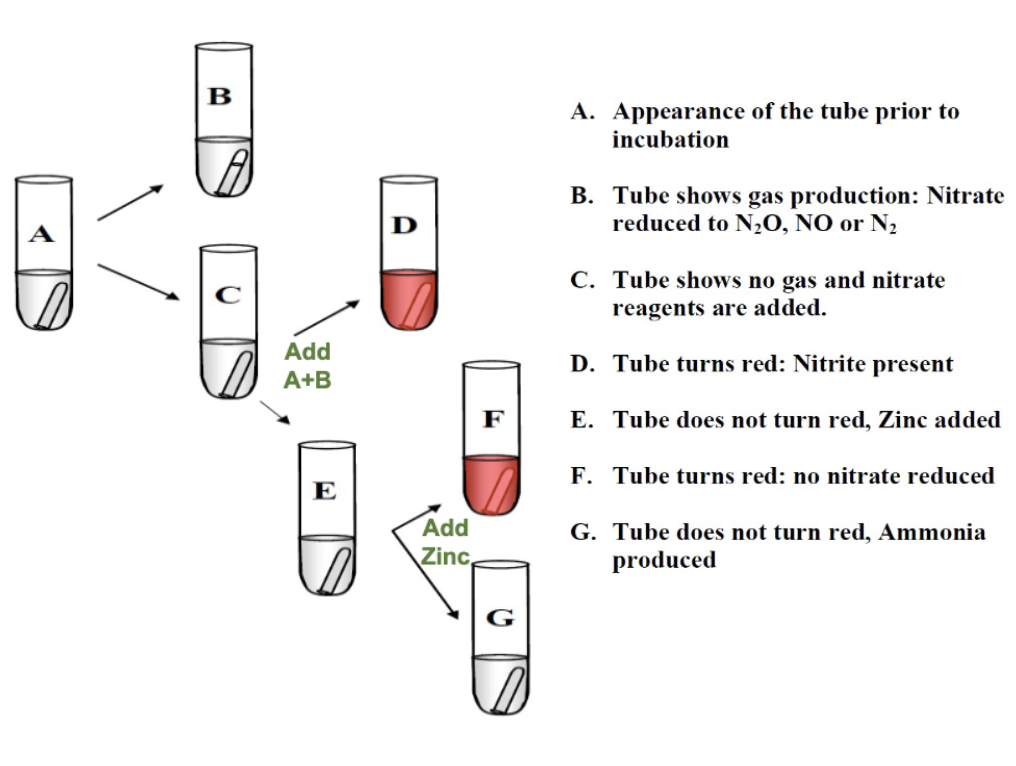
What does Nitrate Reduction Test test for?
if a microorganism can reduce nitrate (NO3-) to nitrite (NO2-) or even nitrogen gas
What are the steps to process the tube for Nitrate Reduction Test evaluation?
Add 5 drops of Solution A (Sulfanilic acid), then 5 drops of Solution B (alpha-napthylamine reagent). If no color change, add a small amount of powdered zinc.
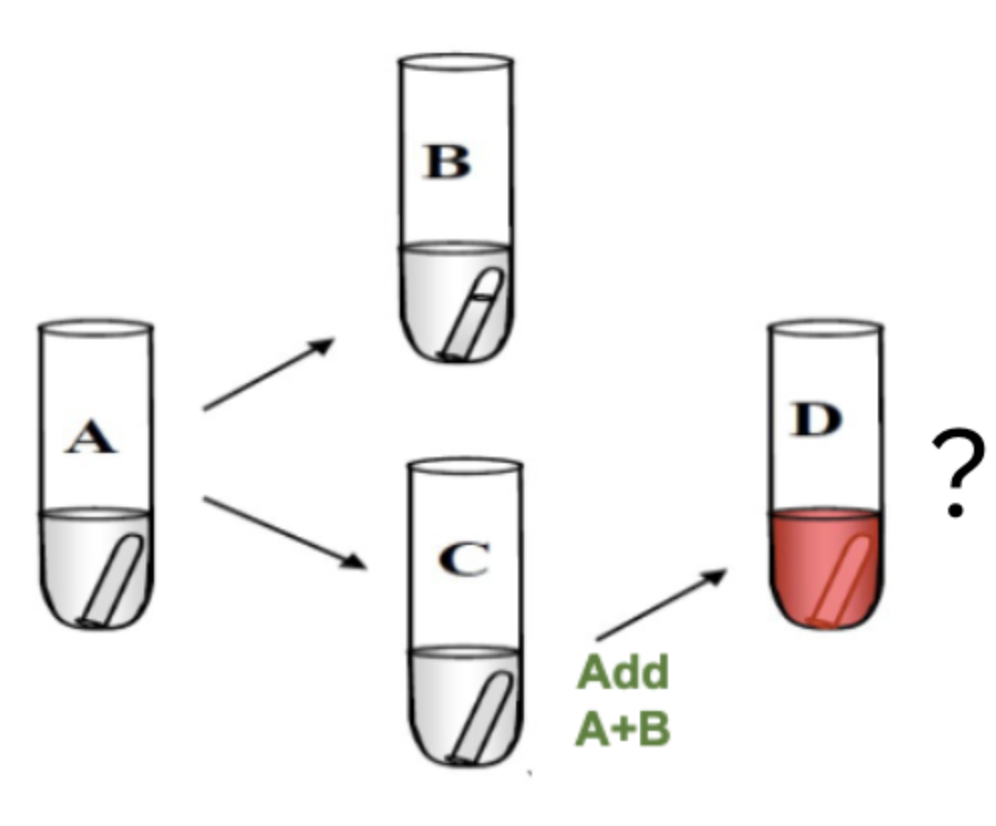
After adding Solution A + B for Nitrate Reduction, you see a color change to red, what does this mean?
positive for nitrate (NO3-) reduction to nitrite (NO2-)
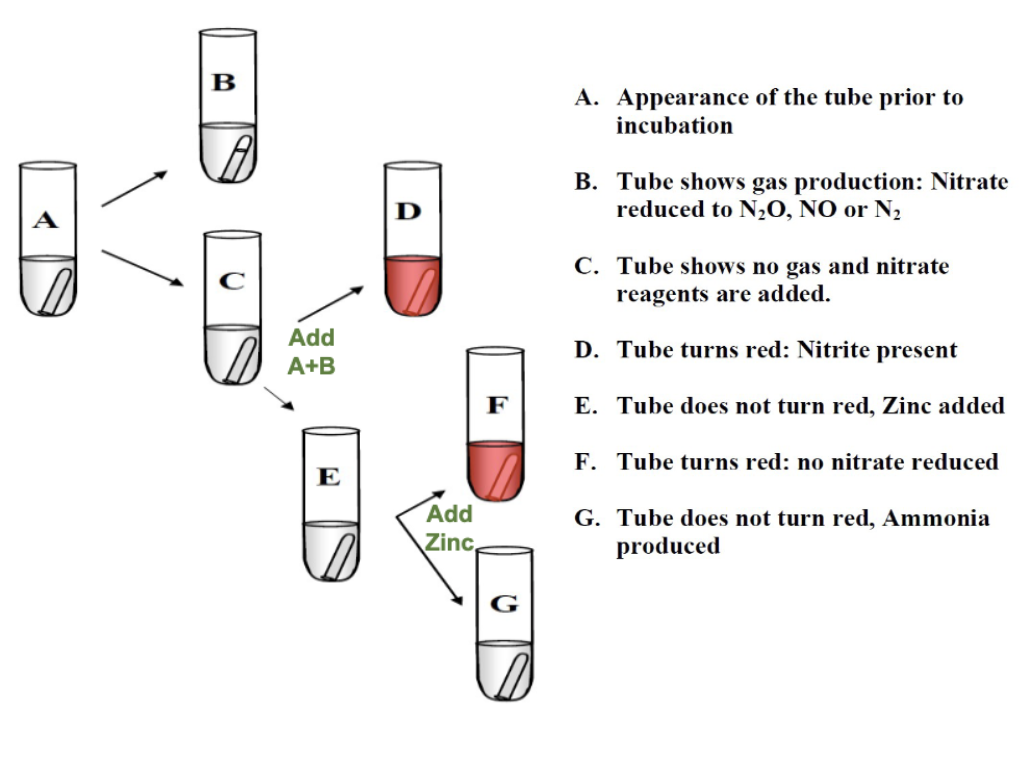
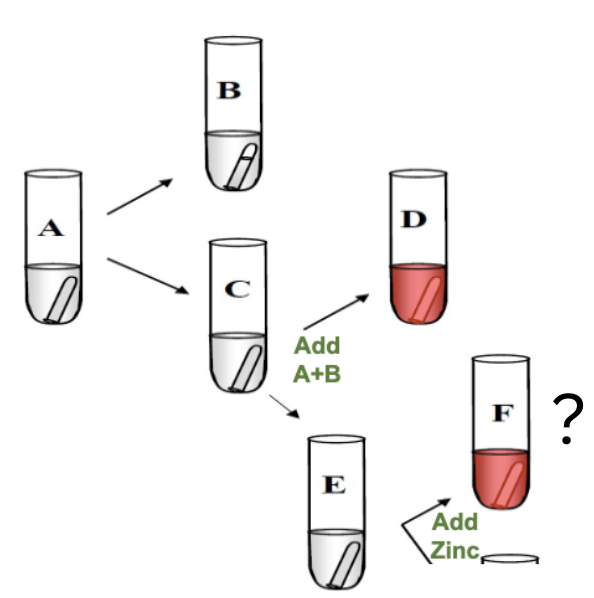
After adding Solution A+B, then Zinc powdered for Nitrate Reduction, you see a color change. What does this mean?
Negative result (red color change) = organism did not reduce nitrate and zinc cause the reaction.
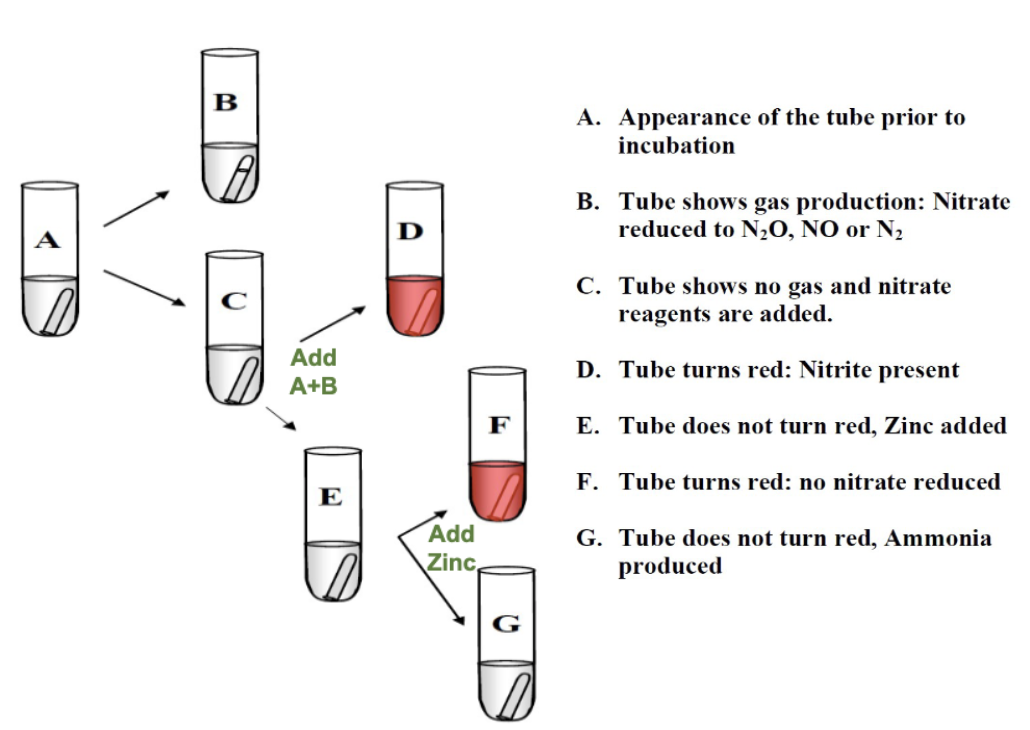
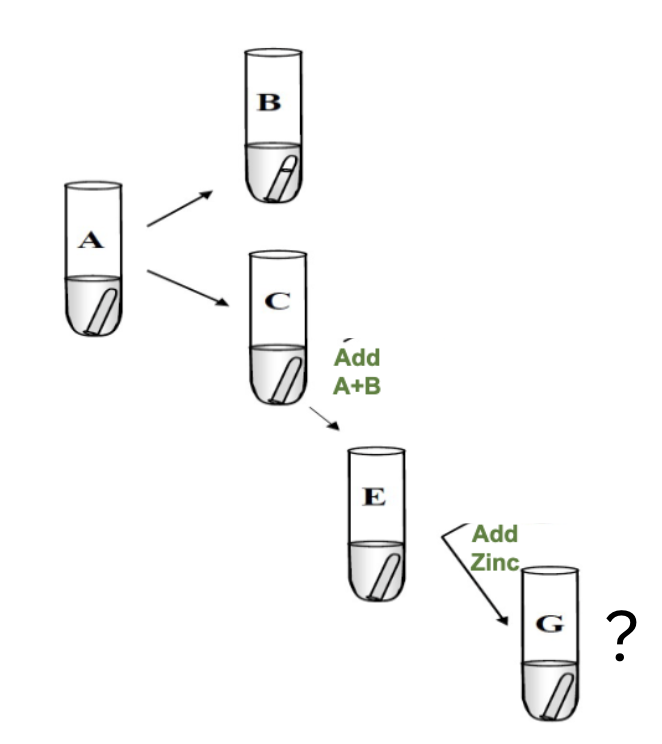
After adding Solution A+B, then Zinc powder for Nitrate Reduction, you don’t see a color change. What does this mean?
Positive result (clear) = organism reduce nitrate but it went beyond Nitrite and produce Ammonia or other nitrogen gas.
What does the Catalase Test evaluate for?
detects the presence of catalase, which breaks down hydrogen peroxide into water and oxygen (bubbles)
What is the procedure for the Catalase Test?
3-4 drops of hydrogen peroxide, loopful of culture, and stir into the hydrogen peroxide.
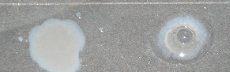
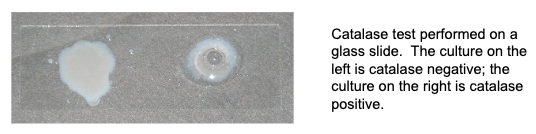
Interpret the results from the Catalase Test.
Left: negative for the presence of catalase
Right: bubbling, positive for presence of catalase
What does the Oxidase Test evaluate?
if microorganism produces the enzyme cytochrome c oxidase
How do you conduct an Oxidase Test?
With a streak plate, add 2-3 drops of p-aminodimethylaniline oxalate (oxidase reagent) onto the plate.
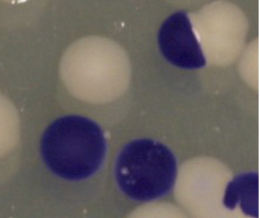
Interpret the result of this Oxidase Test.
Light pink changes to Dark purple = positive, the microorganism does produce cytochrome c oxidase and uses oxygen in the electron transport chain
No color change or light pink = negative
Which biochemical assay will indicate whether a bacterium utilizes mixed acid fermentation?
Methyl Red Test
What does the Starch Hydrolysis Test evaluate?
if an organism can break down starch via amylase
What is the procedure for Starch Hydrolysis?
flood the agar plate with gram iodine for 30 seconds, pour excess off.
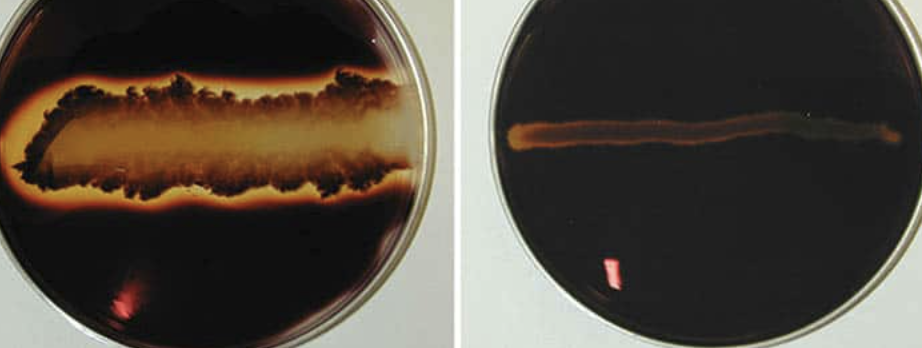
Interpret the result for Starch Hydrolysis
Left: positive, clear/yellow zone around growth, starch was broken down, and amylase production
Right: negative, no clearing
What is the purpose of Lipid Hydrolysis Test?
if microorganism can break down lipids (triglycerides) via lipase
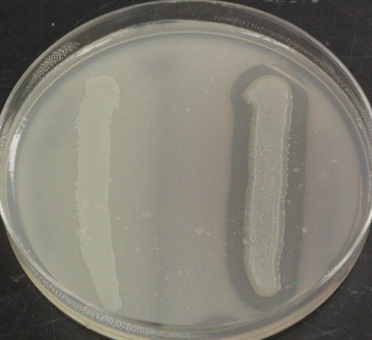
Interpret the result of Lipid Hydrolysis shown in the image.
Left = negative, no clear zone
Right = positive, clear zone around growth , lipid break down
What is the purpose of the Gelatin Hydrolysis Test?
if microorganism can break down gelatin (protein) via gelatinase enzymes/collagenase
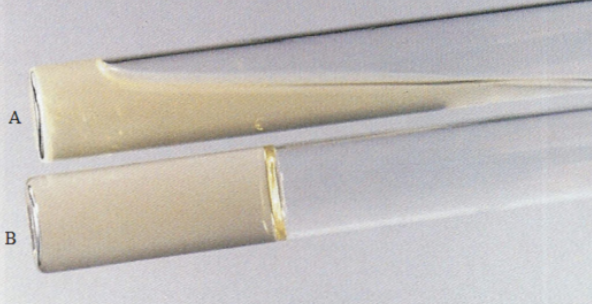
Interpret the result of the Gelatin Hydrolysis Test
A = Positive, medium remain liquid, gelatin was broken down
B = Negative, medium solidified, gelatin still intact
What is the purpose of the Carbohydrate Fermentation test?
if microorganism can ferment a specific carbohydrate (like glucose or lactose) and produce gas
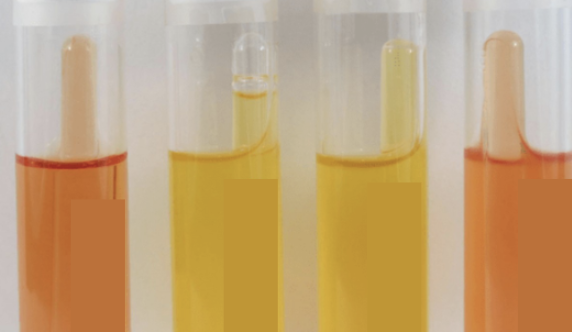
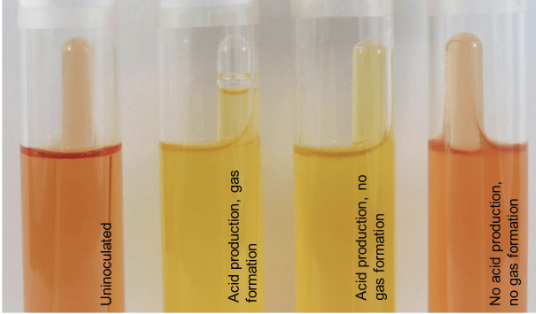
Interpret the result of the Carbohydrate Fermentation test.
Left: Uninoculated
2nd from Left: Acid production (color change to yellow), gas formation (bubble in Durham Tube)
3rd from Left: Acid production, no gas fermentation
Right: No acid production, no gas formation
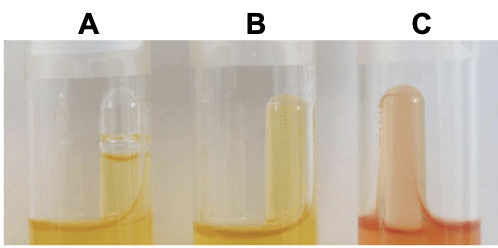
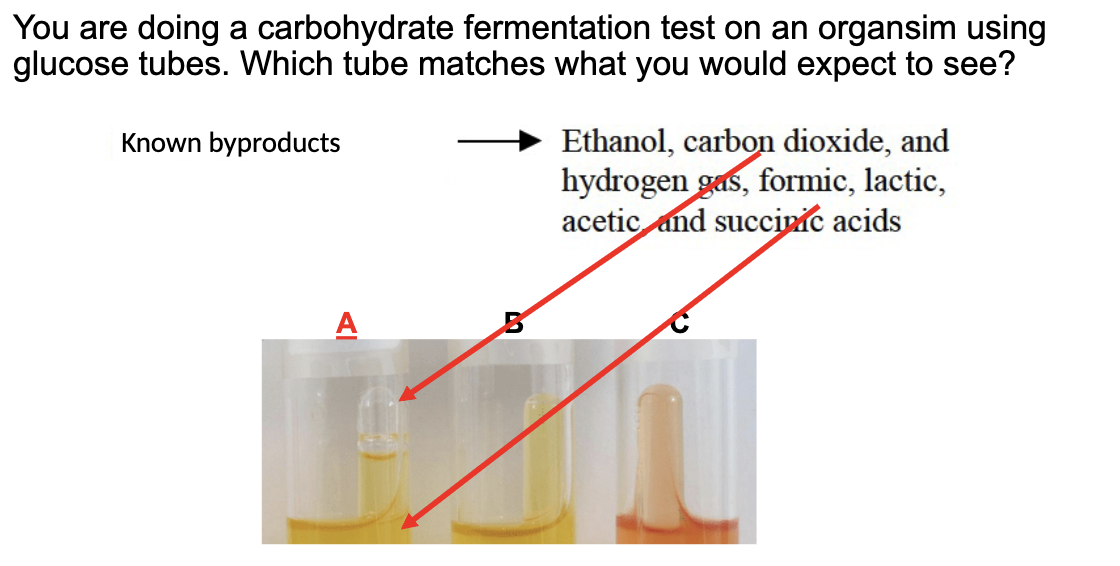
Which tube matches what you would expect to see if the byproduct of the microorganism is ethanol, carbon dioxide, hydrogen gas, formic, lactic, acetic, and succinic acids
A, gas fermentation and acid production
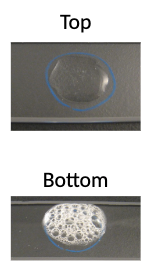
Which is positive, and what does it indicate?
Bottom, Catalase production
What is the purpose of using a Chocolate agar along with a Oxidase test?
to grow fastidious microorganisms (like Neisseria and Haemophilus bacteria) that need extra nutrients (X and V factors) and require a low oxygen and high CO2 environment to grow.
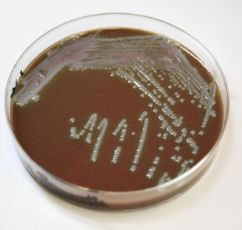
What does a Pink/Purple colony mean on a Chocolate Agar after conducting a Oxidase Test?
Pink/Purple Colony = positive for members of the genera Neisseria and Haemophilus
What is the purpose of Sabouraud agar?
To isolate and grow fungi (like yeast and mold). Growth-wise, Yeast would be elevated, moist, and glistening. Mold would be fuzzy and powdery.
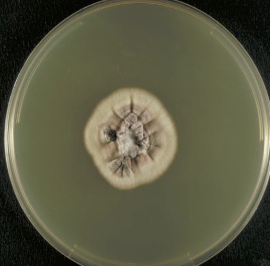
What is the purpose of the Mueller-Hinton tellurite/Tinsdale agar plate?
To detect the presence of diphtheroids, the agar overall identifies bacteria that reduce tellurite, which forms black pinpoint colonies.
What is the purpose of the Chromagar UTI medium?
It differentiates bacteria based on their enzyme activity, which produces distinct colony colors.
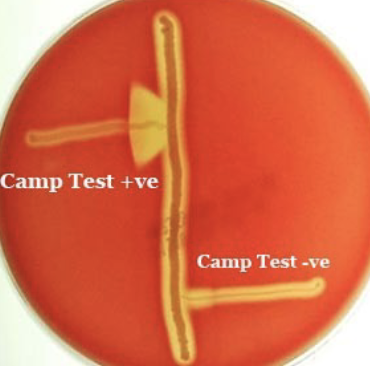
What is the purpose of a cAMP test?
used to identify bacteria with enhanced hemolysis
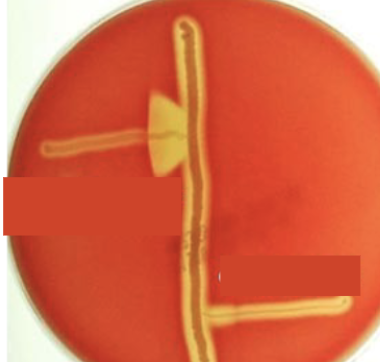
Interpret the result of cAMP test shown in the image.
Arrowhead (Left upper streak): Group B strep (positive), the organism produces CAMP factors, zone of increased hemolysis
Right lower streak: negative, Group A streptococci, no enhanced hemolysis
What is Lauryl trypose broth (LTB) selective and differential for?
Selective: coliform bacteria
Differential: contains lactose to detect fermentation
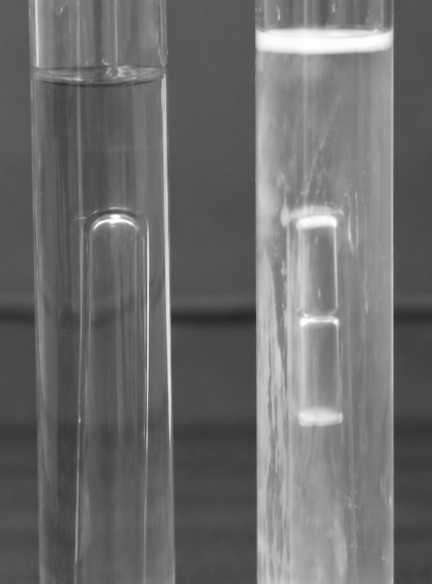
Interpret the result of a Lauryl trypose broth (LTB) shown in the image.
Left: negative, no gas within the Durham tube, no growth (clear)
Right: positive, gas in Durham tube, cloudy = growth present