U10 - Digestive System
 Call Kai
 Learn
Learn Practice Test
 Spaced Repetition
 Match
Match Flashcards
 Knowt Play
1/37

There's no tags or description
Looks like no tags are added yet.
Name | Mastery | Learn | Test | Matching | Spaced | Call with Kai | Chat |
|---|
No analytics yet
Send a link to your students to track their progress
38 Terms
digestive system
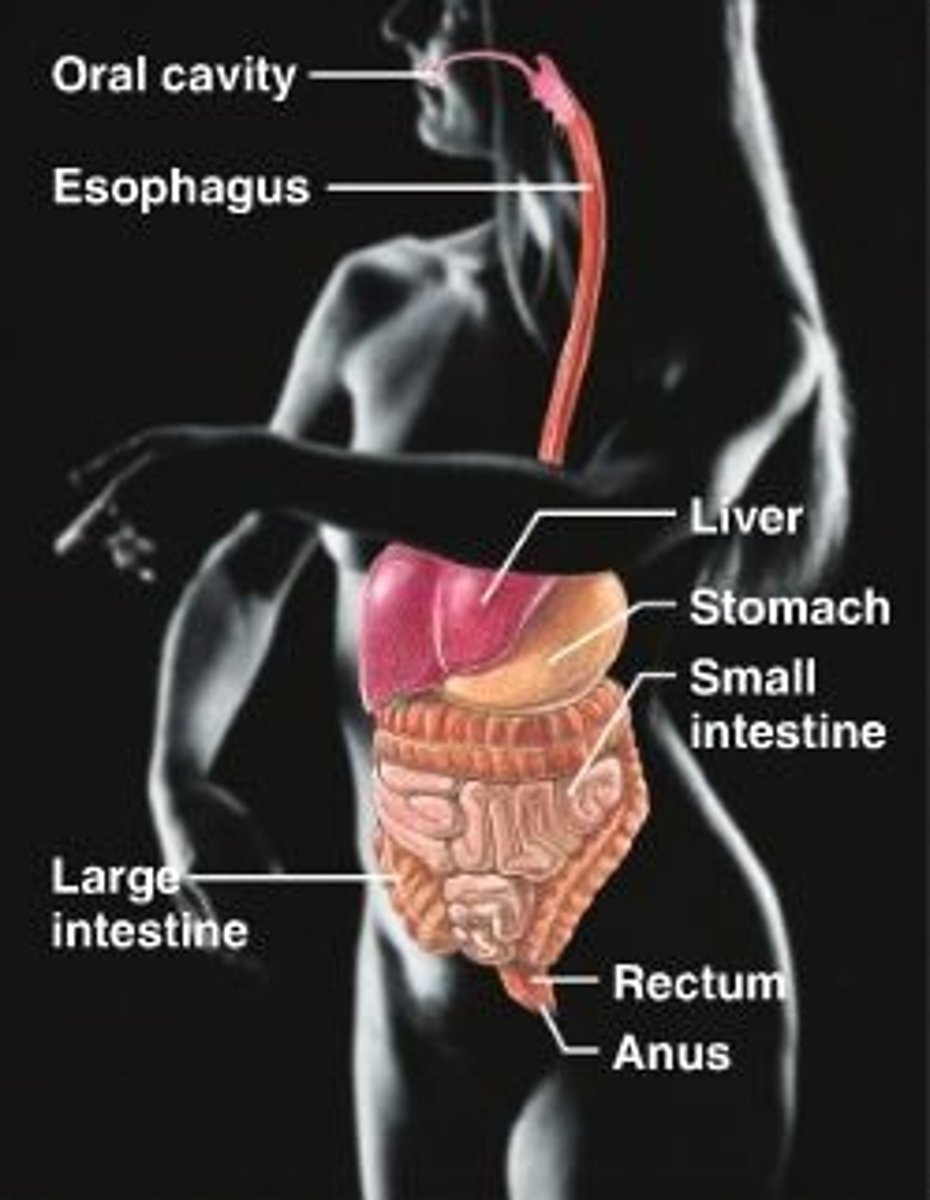
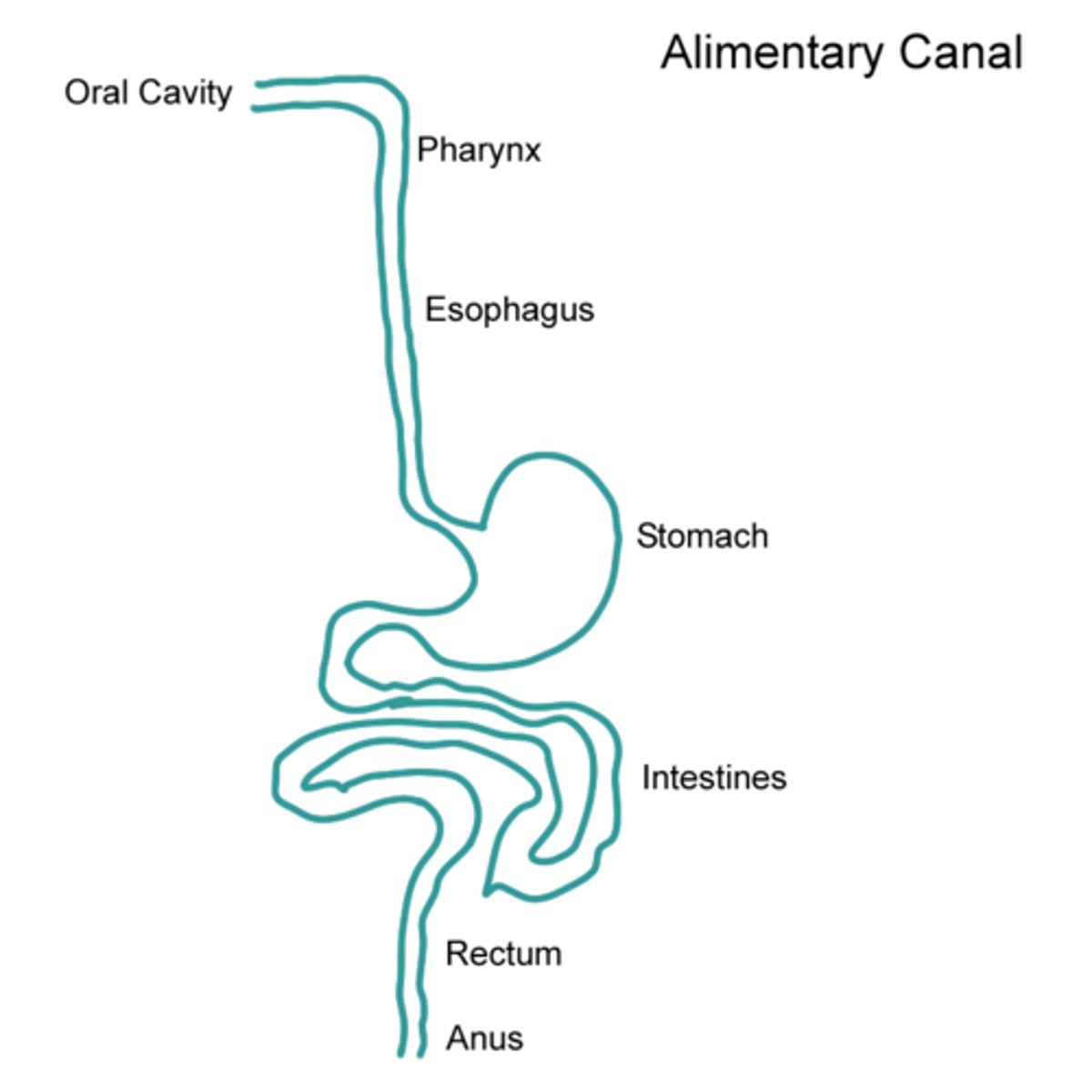
consists of alimentary canal (donut) and accessory organs (liver, pancreas, gallbladder, salivary glands)
Functions: ingestion, digestion, absorption, expulsion
alimentary canal
aka the gastrointestinal (GI) tract
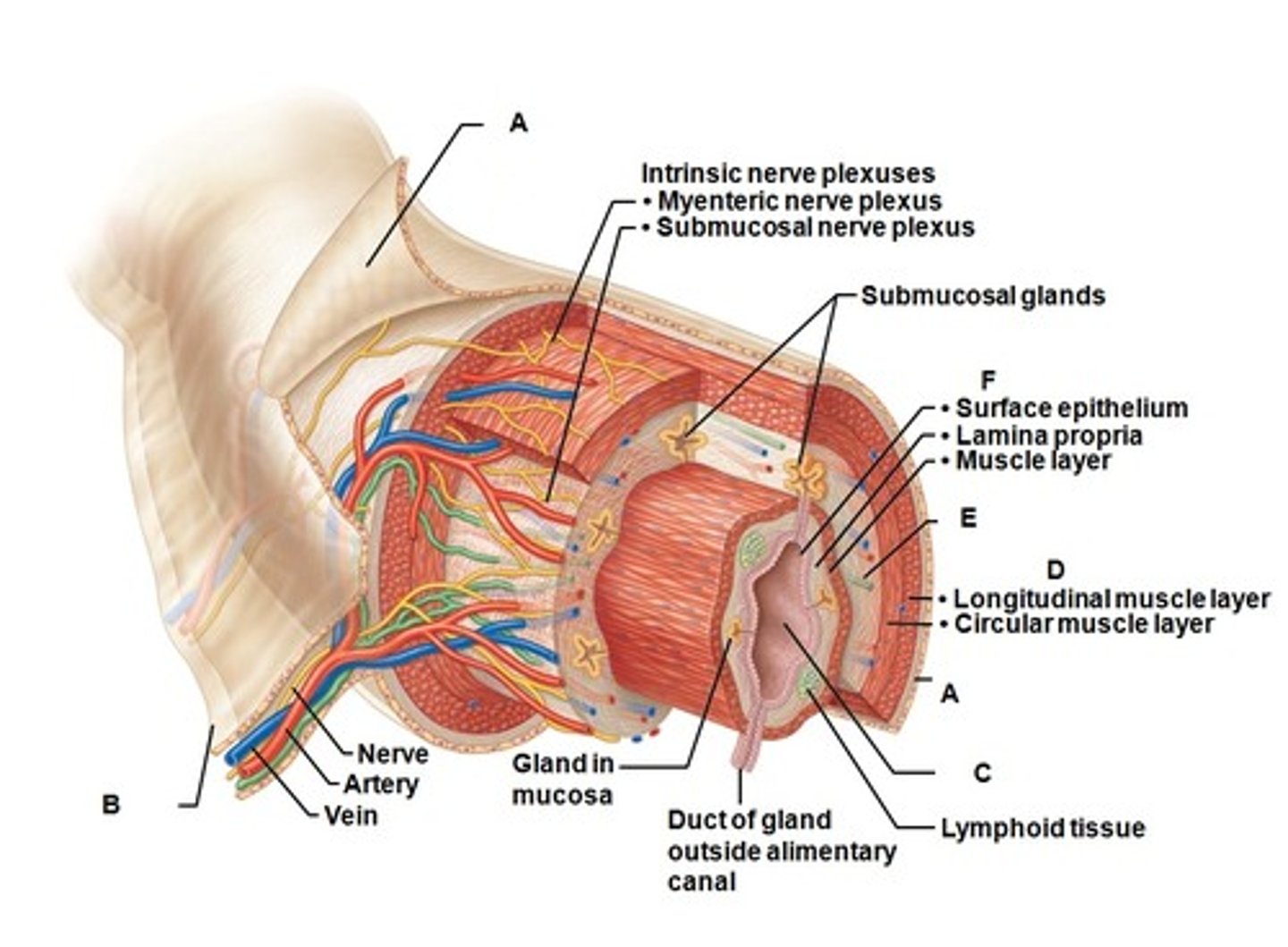
has four layers: serosa, muscle layers, submucosa, mucosa
-> ~7.5-8.5 m long, most is small intestine
mucosa
The innermost layer of the alimentary tract; mainly protects tissue and absorbs
in some parts of the digestive system, it contains mucus-secreting cells and glands that secrete digestive enzymes
submucosa
The second most deep layer of the alimentary tract that contains glands, blood vessels, and nerves
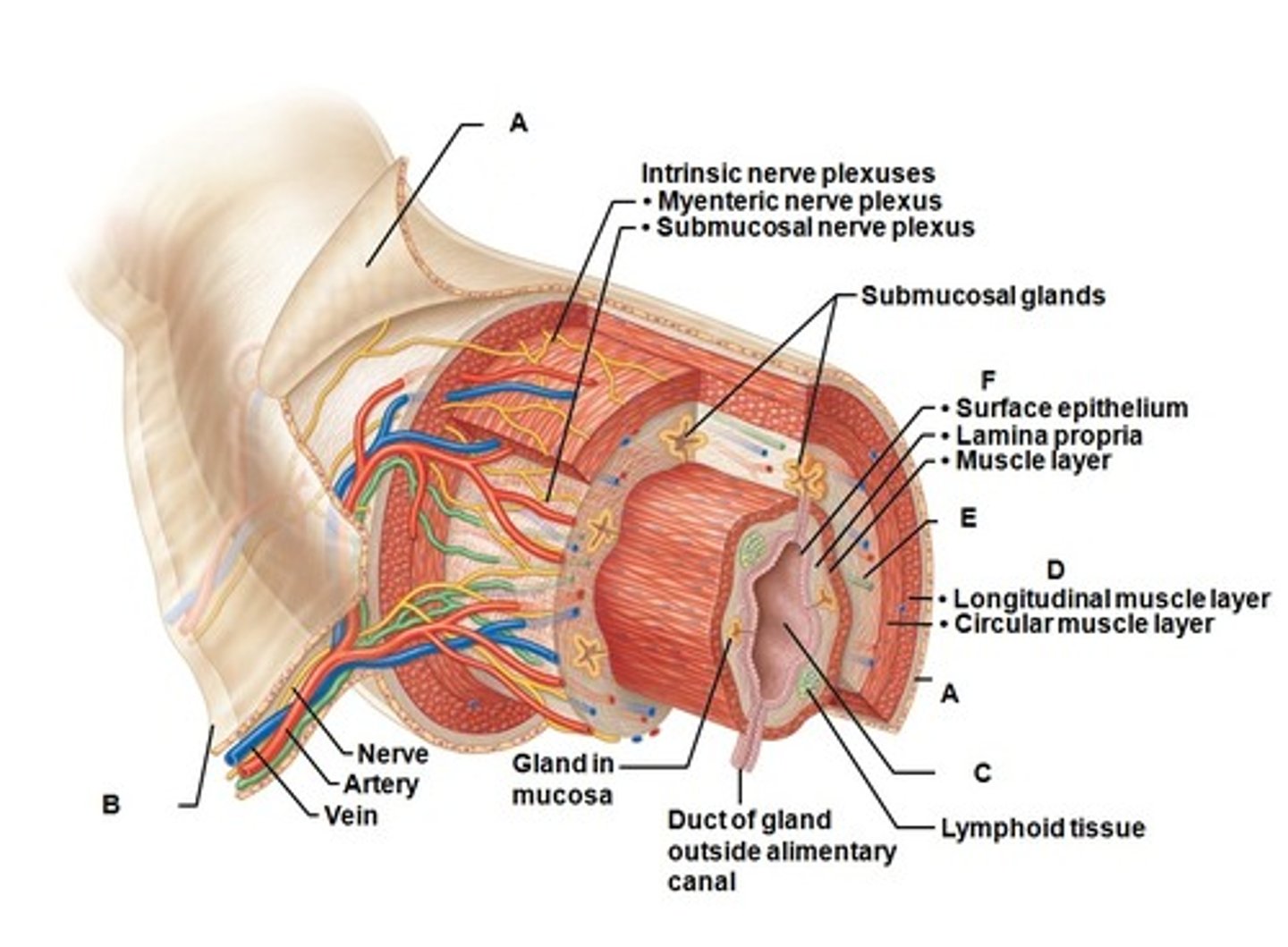
muscular layer
The second most superficial layer of the alimentary canal that consists of inner circular fibers and outer longitudinal fibers that propel food through the canal (e.g. smooth muscle tissue)--peristalsis
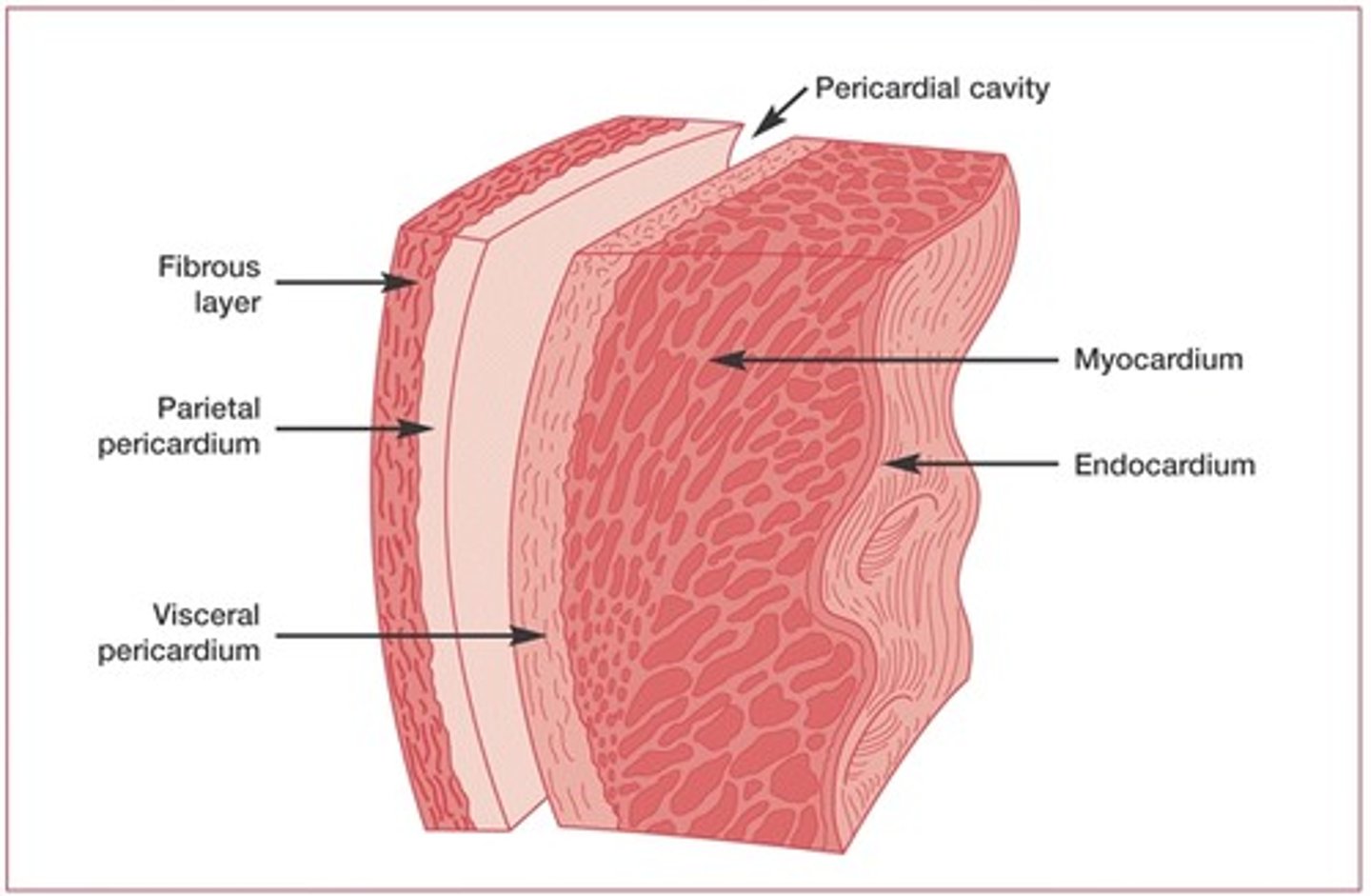
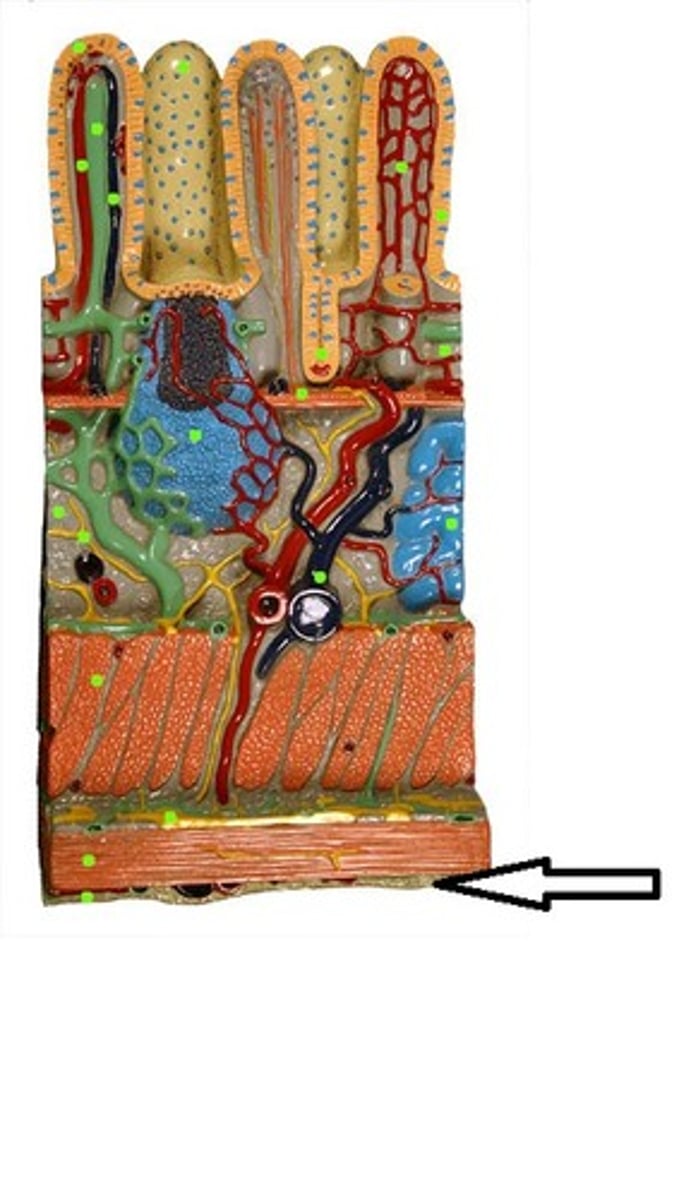
serosa
The outermost/superficial layer of the alimentary canal that consists of the visceral peritoneum and lubricates surfaces with serous fluid
-> there is a parietal peritoneum but far distance
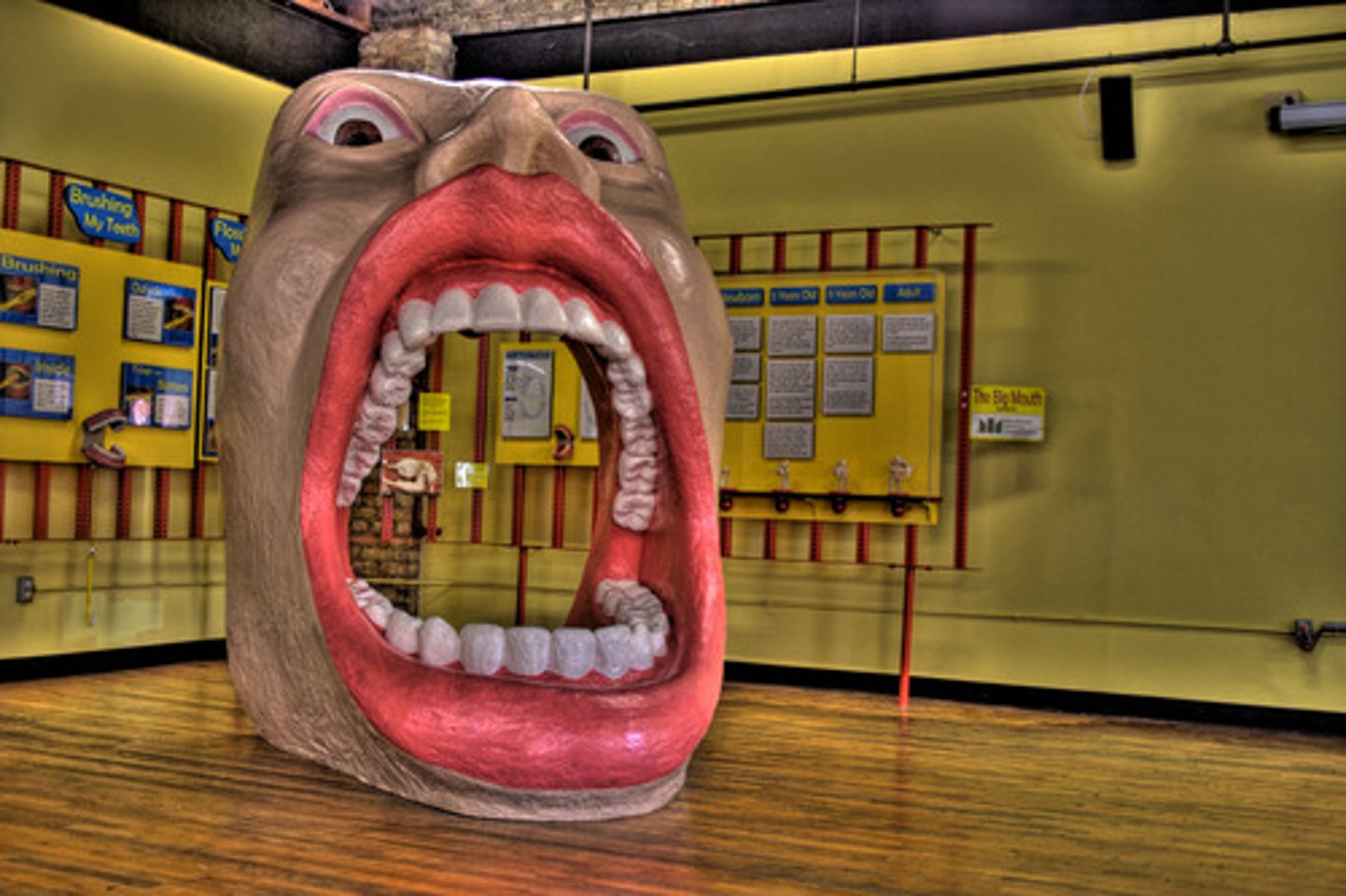
mouth
first part of the alimentary canal that works in ingestion (only part) and digestion (mechanical and chemical)
Mechanical Digestion: teeth (mastication)
Chemical Digestion: saliva (amylase enzyme digests starch)
Other Functions: mucin (slippery protein found in mucus that protects soft lining and lubricates food), buffers (neutralizes acid to prevent tooth decay), anti-bacterial chemicals (kill bacteria that enter with food)
Three Salivary Glands Help: parotid, submandibular, sublingual (all secrete mucus, serous fluid, etc.)
parotid salivary gland
largest salivary gland lies under the skin covering the lateral and posterior surface of the mandible; RICH IN AMYLASE
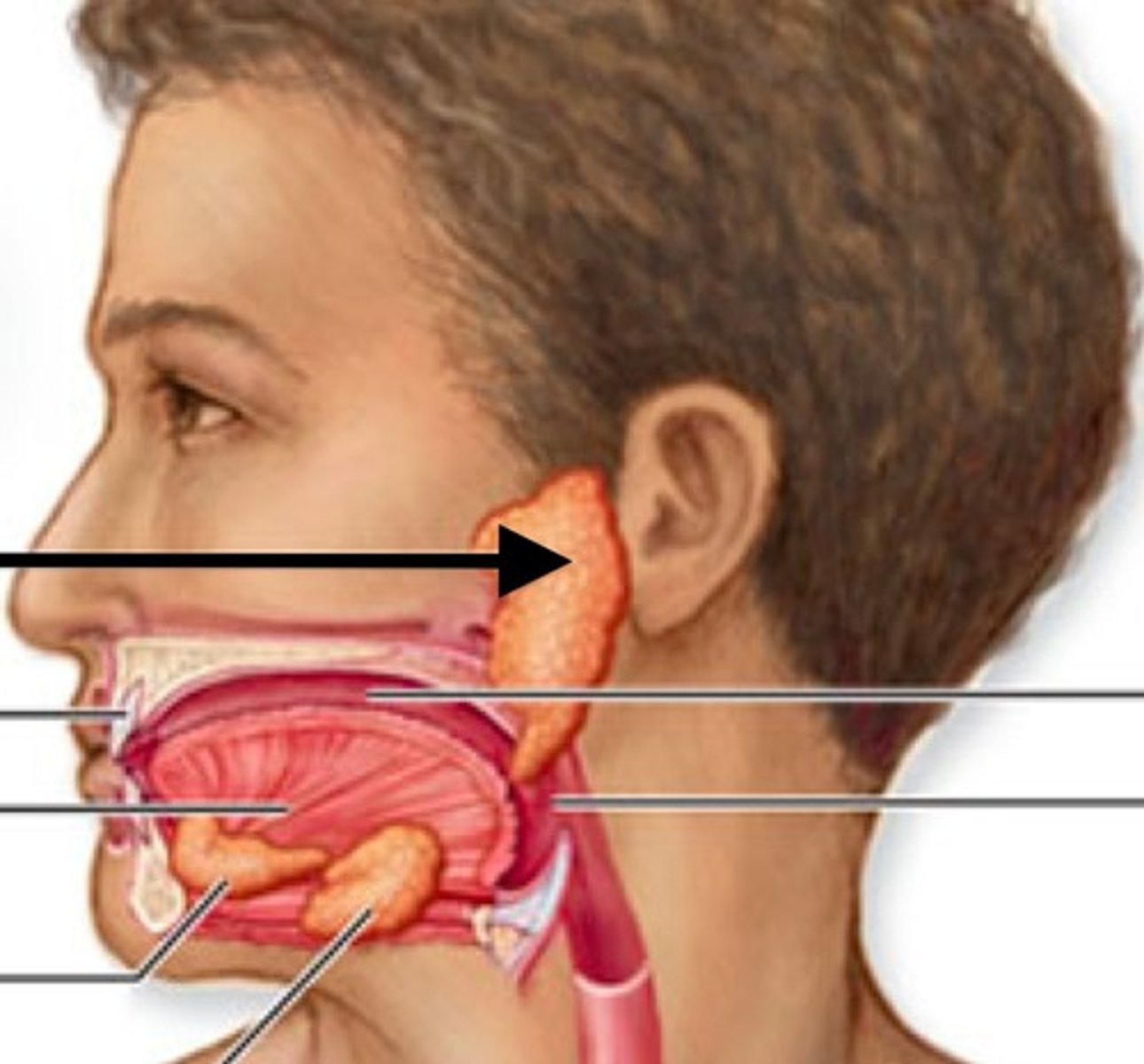
submandibular salivary gland
a salivary gland inside the lower jaw on either side that produces most of the nocturnal saliva
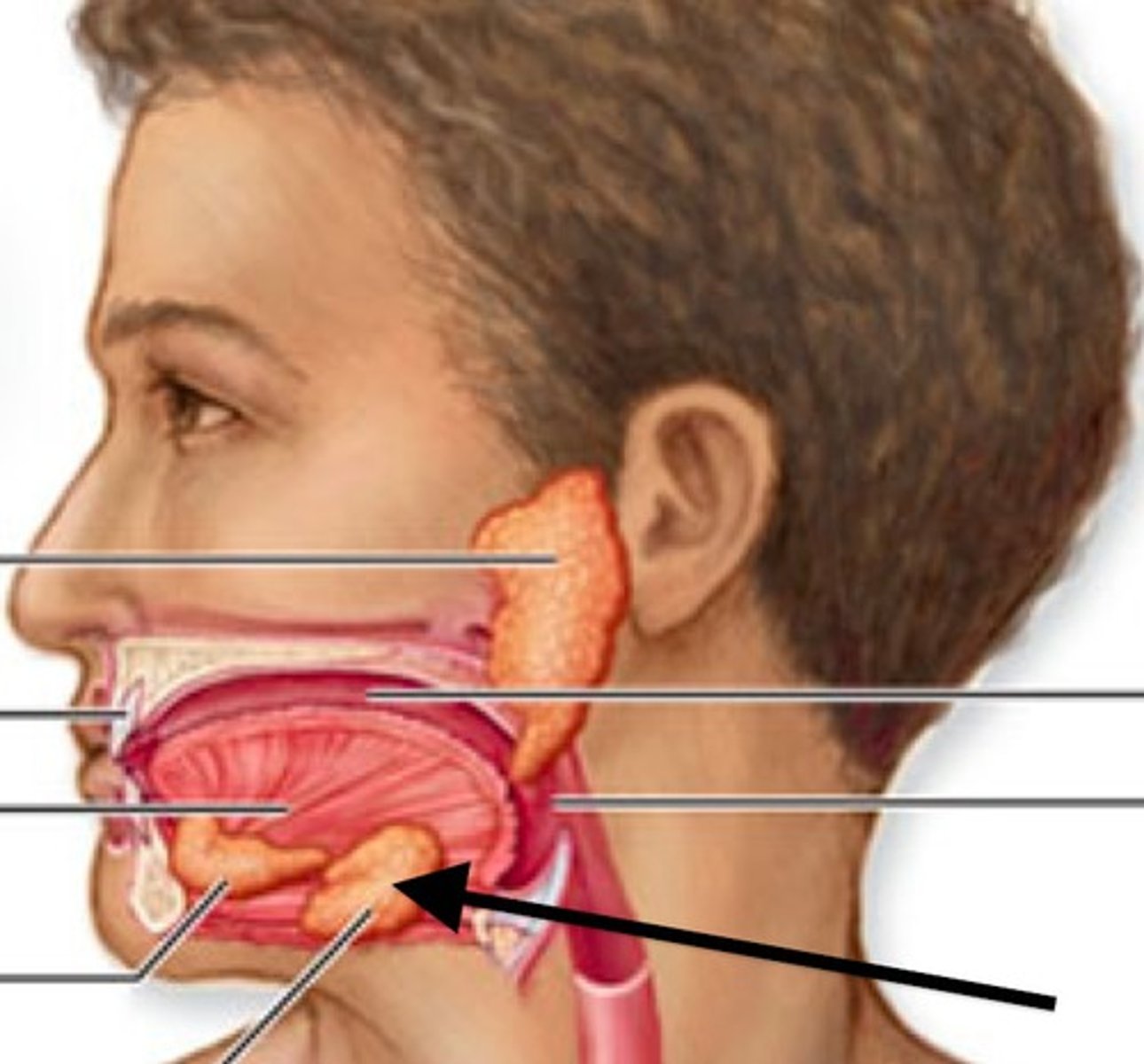
sublingual salivary gland
a salivary gland that lies under the tongue
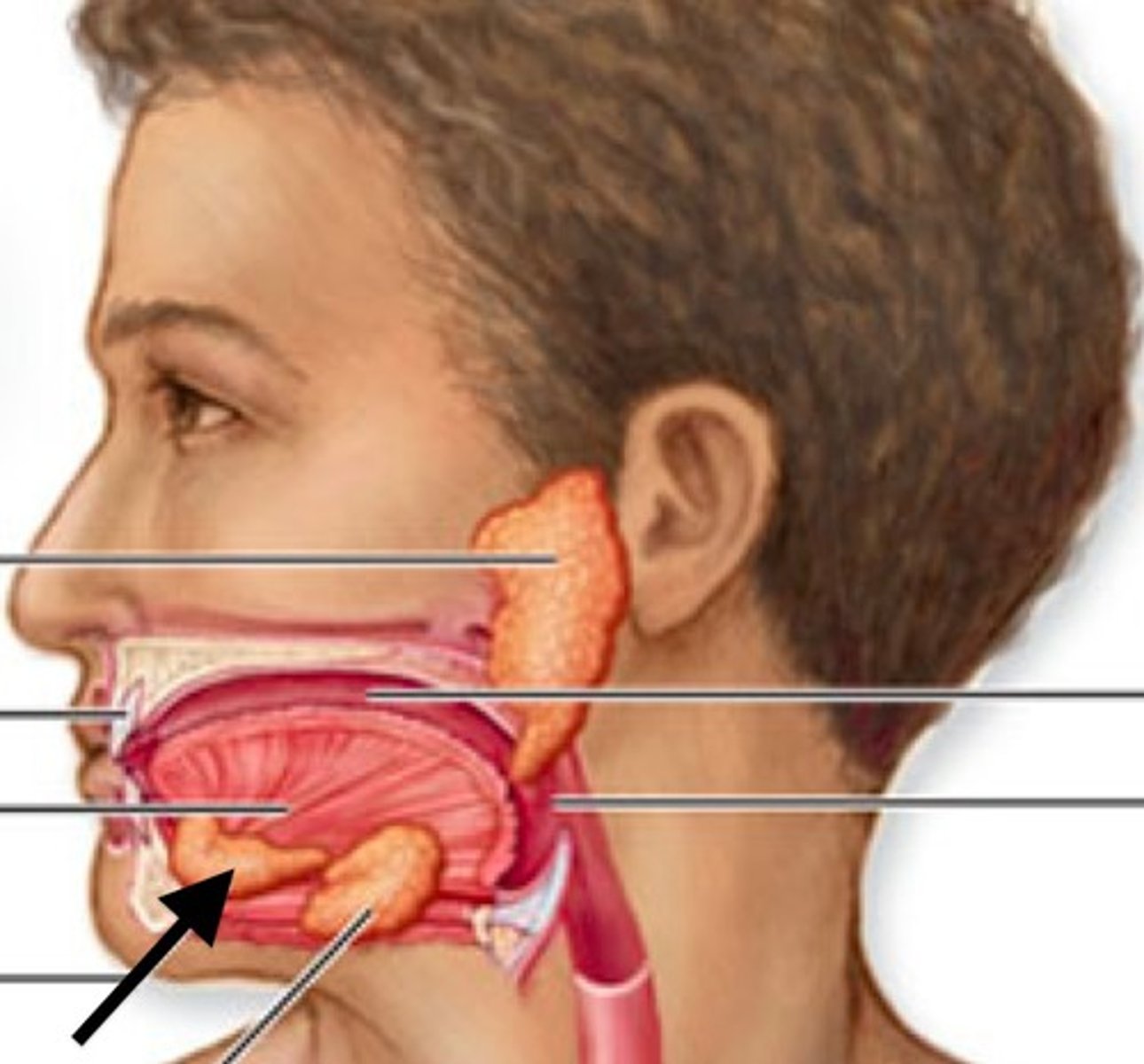
bolus
A term used to describe food after it has been chewed in the mouth and mixed with saliva, formed by the tongue
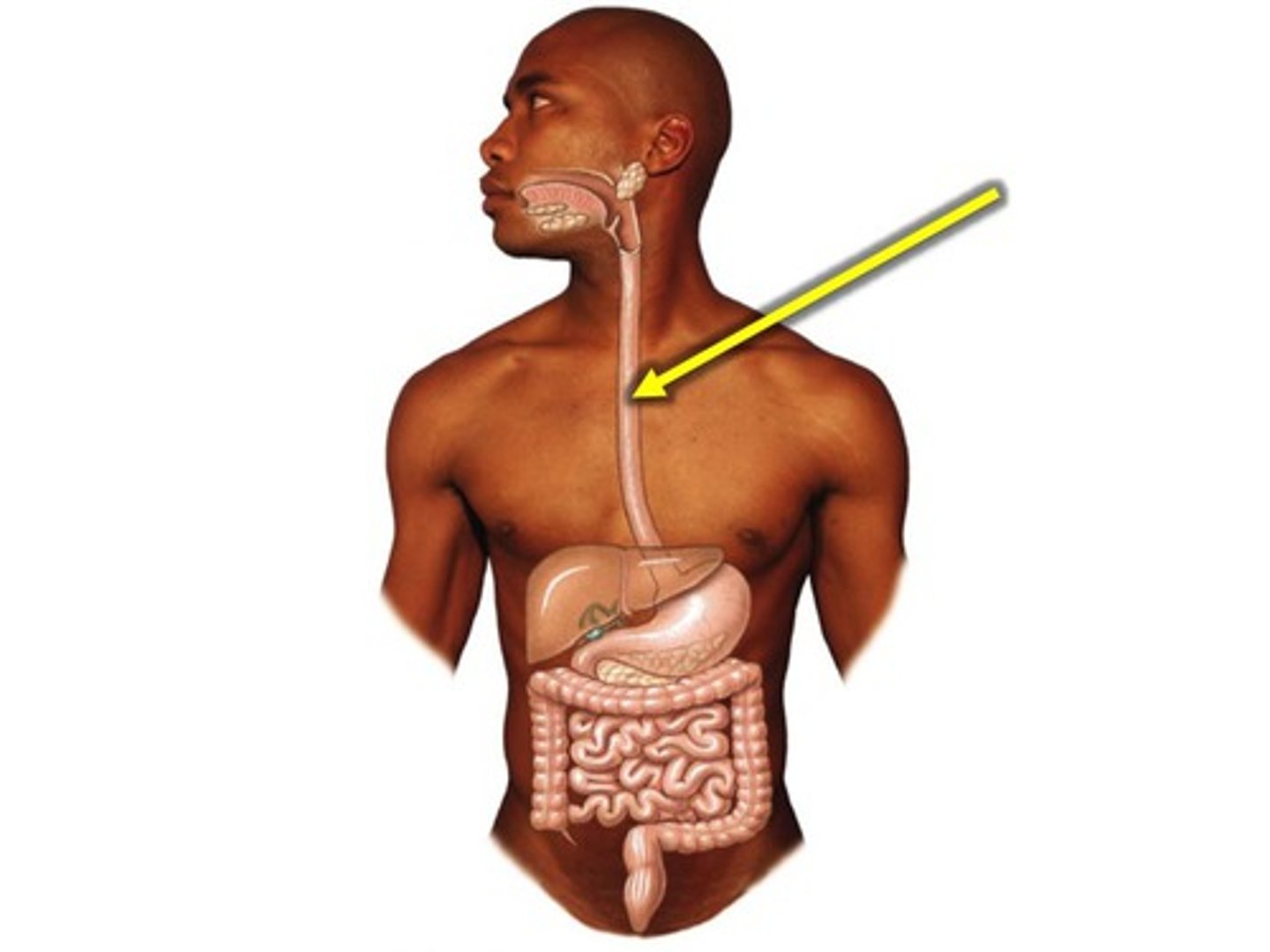
esophagus
second part of the alimentary canal that connects the bolus from the mouth to the stomach; functions in peristalsis (movement)
- esophageal hiatus is where it penetrates the diaphragm
- cardiac sphincter is the entrance to the stomach
pharynx
aka the throat; used for swallowing; passageway for food to the esophagus and air to the larynx
Larynx: passage for air, closes when we swallow
Epiglottis: flap of cartilage that closes trachea (windpipe) when swallowing
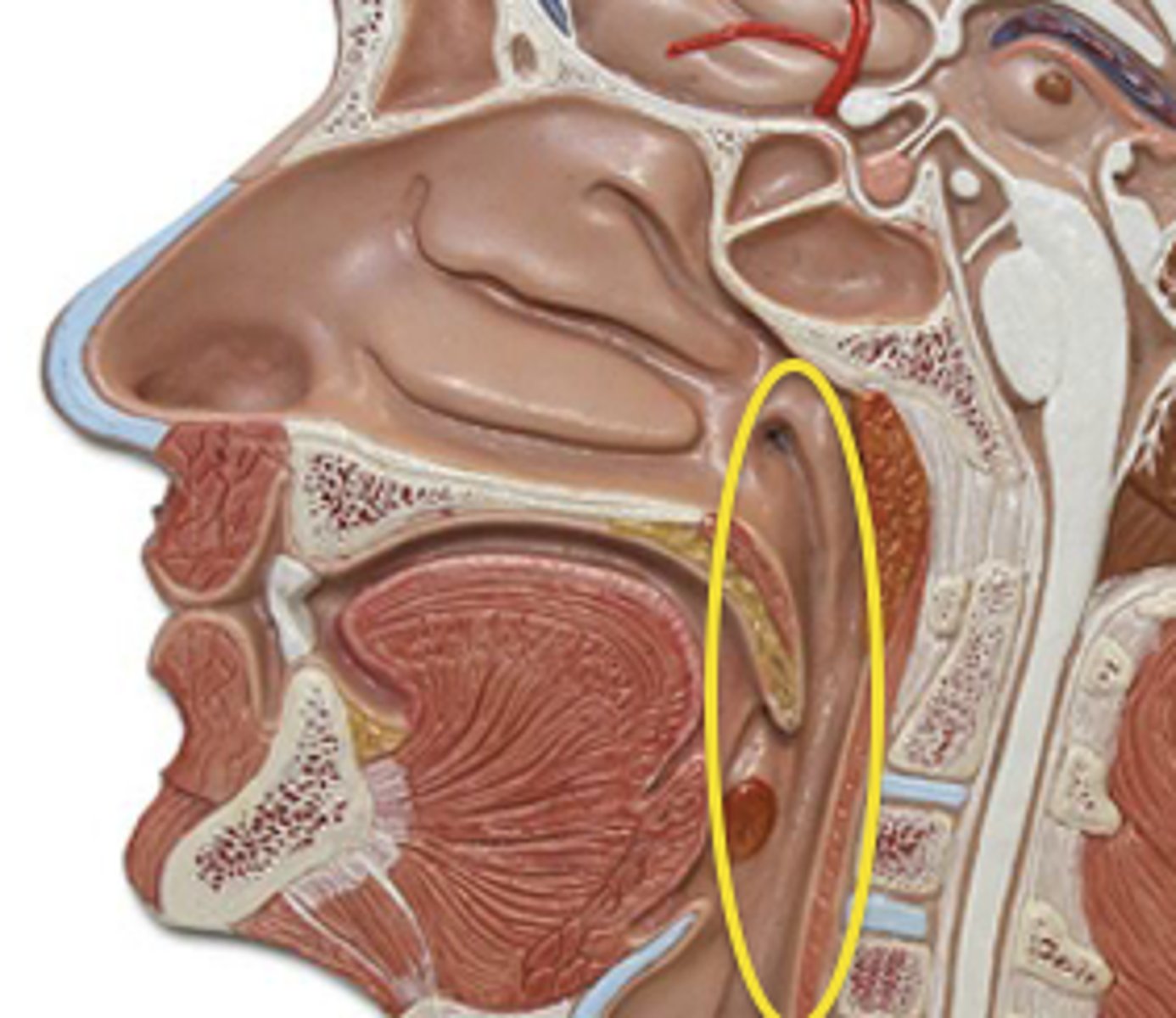
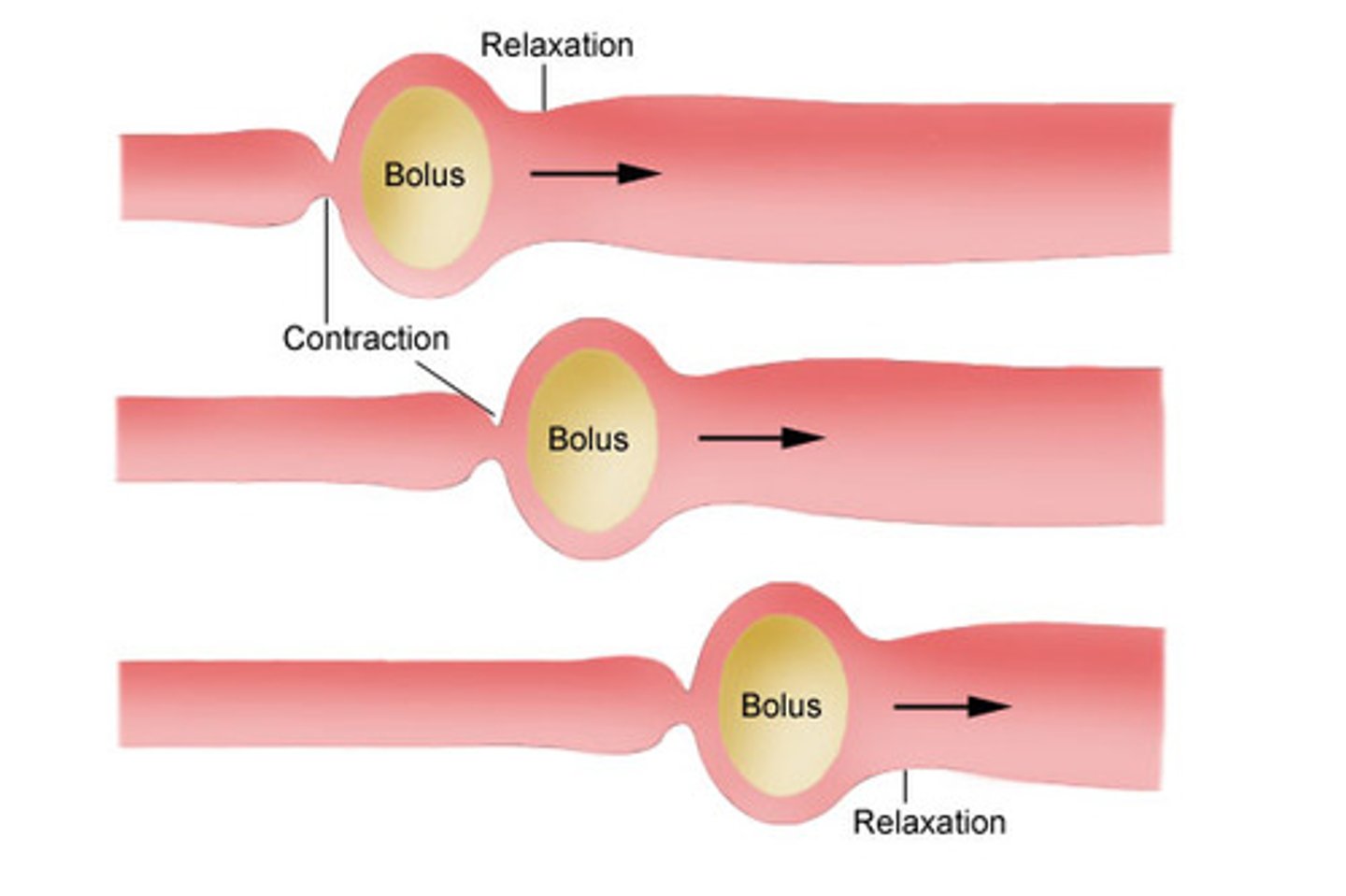
peristalsis
Involuntary waves of smooth muscle contraction that keep food moving along in one direction through the digestive system, such as in the esophagus
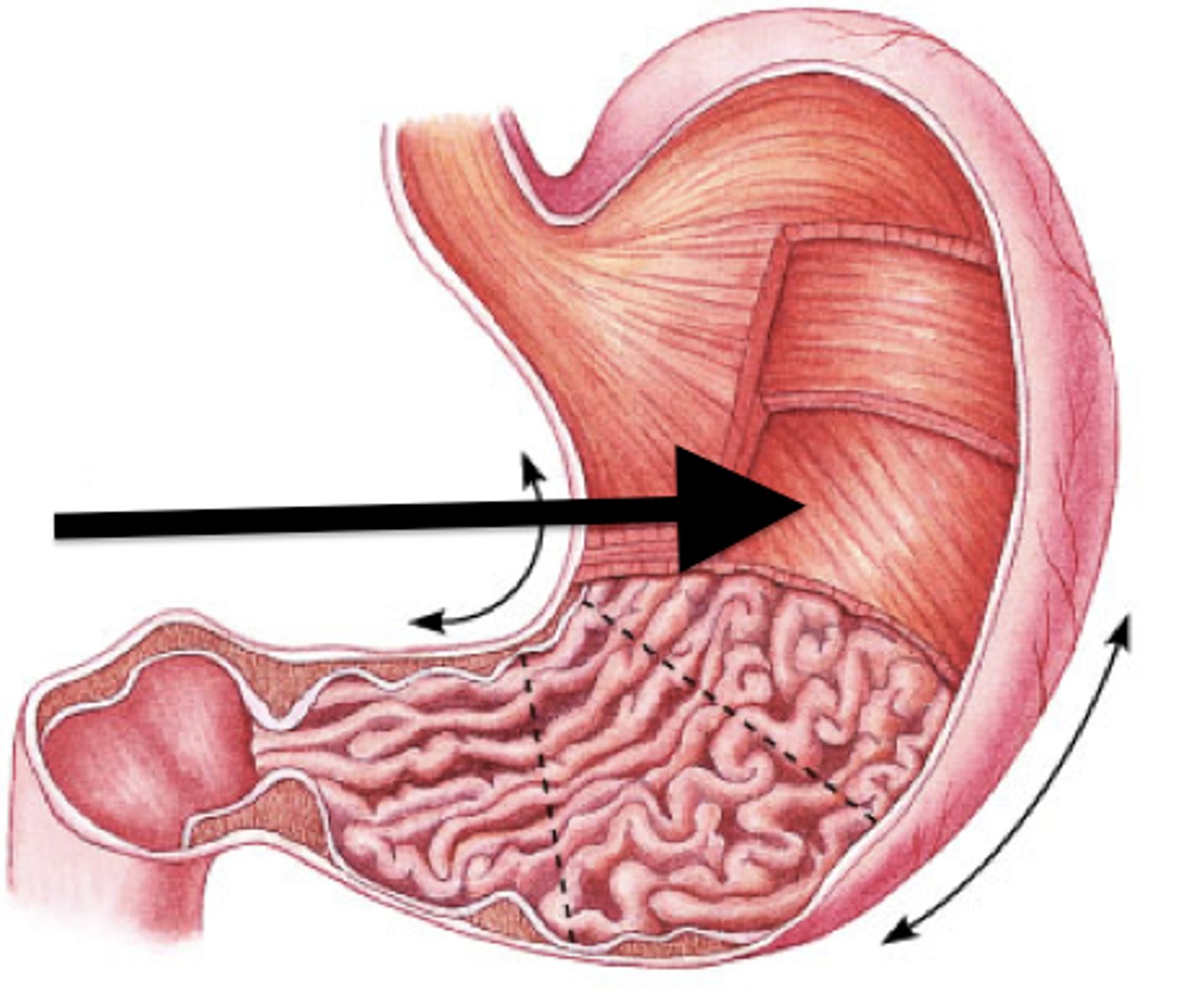
stomach muscles
crisscrossed longitudinal, circular, oblique layers create churning and mixing motions; functions in mechanical digestion
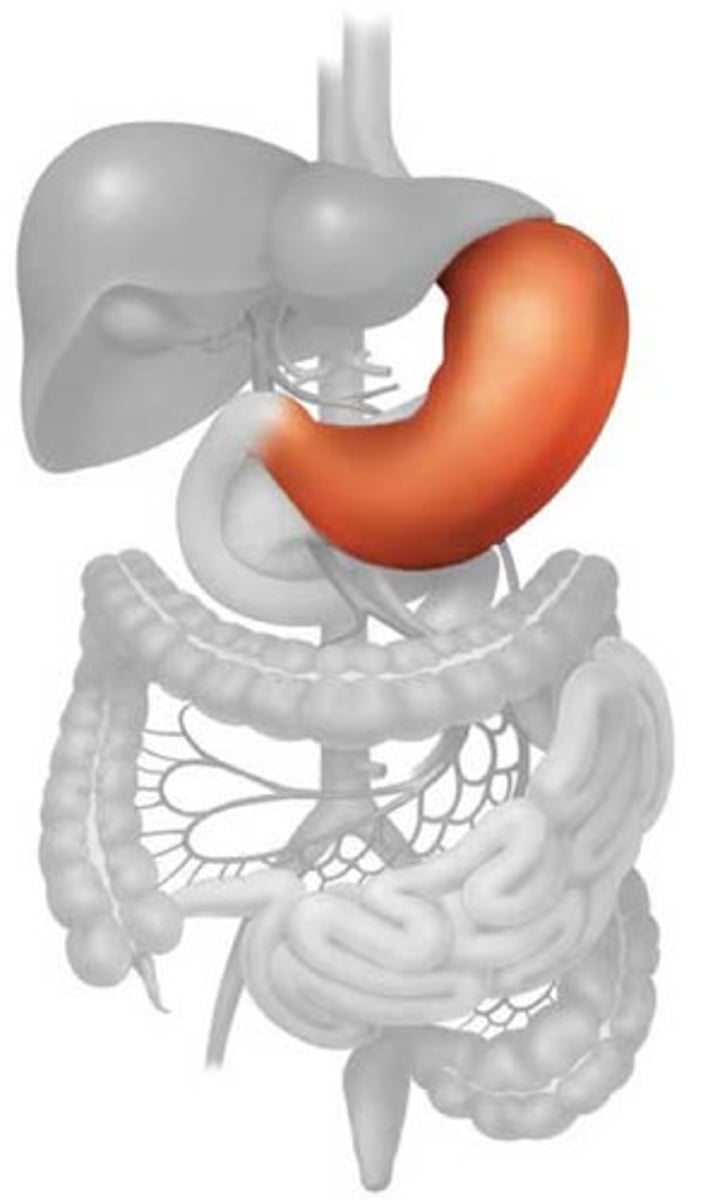
stomach
third part of the alimentary canal; large muscular sac that continues the mechanical and chemical digestion of food
Functions: food storage (stretch to fit ~2L of food), food disinfection (HCl), chemical digestion (pepsin), mechanical digestion (muscle jiggle)
Secretions: pepsinogen, hydrochloric acid (pepsin), mucus, intrinsic factor
pepsinogen
secreted from stomach's chief cells; inactive form of pepsin
hydrochloric acid
secreted from stomach's parietal cells; maintains acidic environment to convert pepsinogen to pepsin
pepsin
formed from pepsinogen becoming its active form in the presence of HCl; a protein-splitting enzyme
mucus
secreted from stomach's goblet cells and mucous glands; protective of the stomach wall and lining against HCl (so it doesn't digest itself)
intrinsic factor
secreted from stomach's parietal cells; required for vitamin B12 absorption
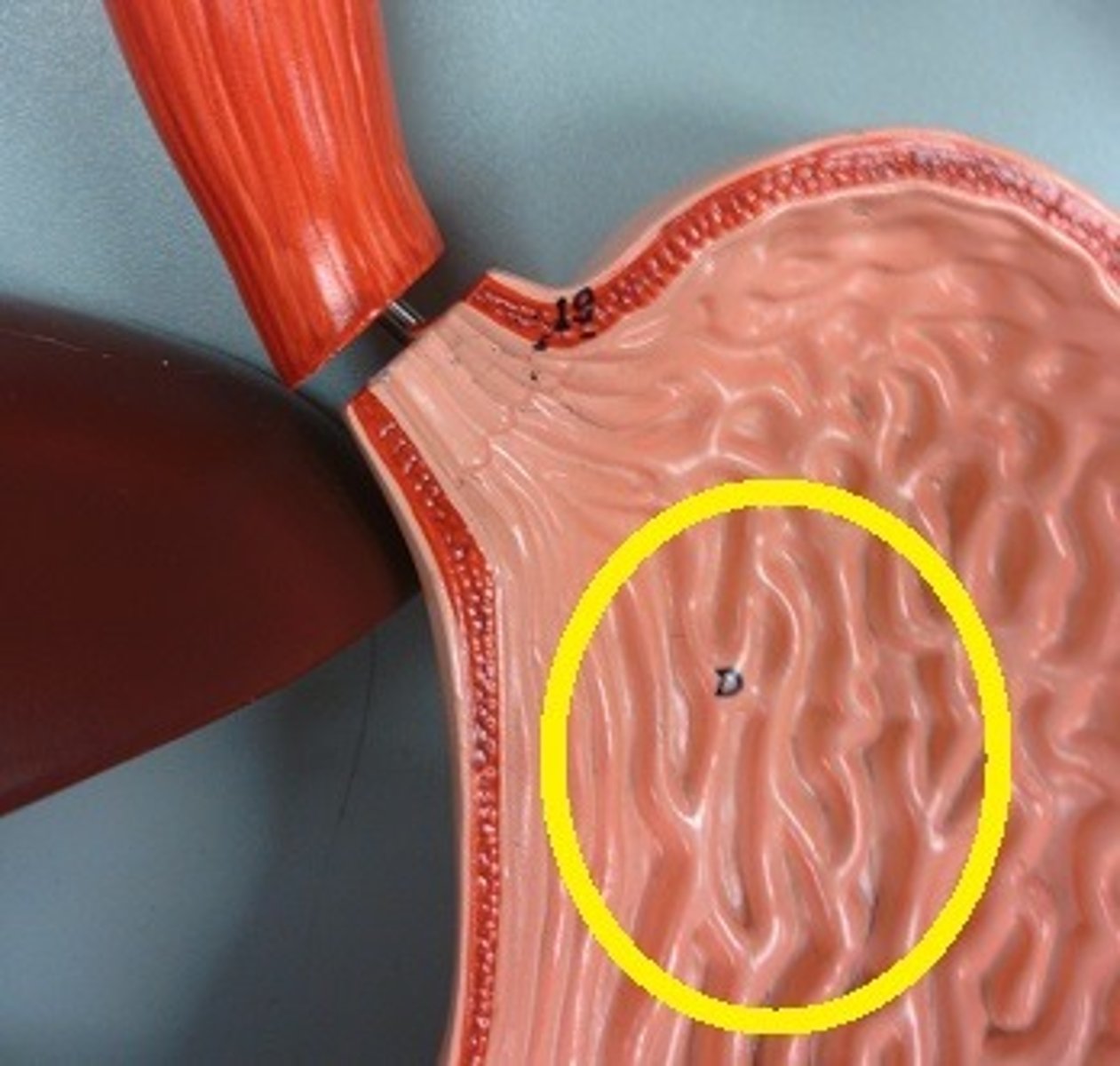
rugae
ridges/folds on the wall of the stomach
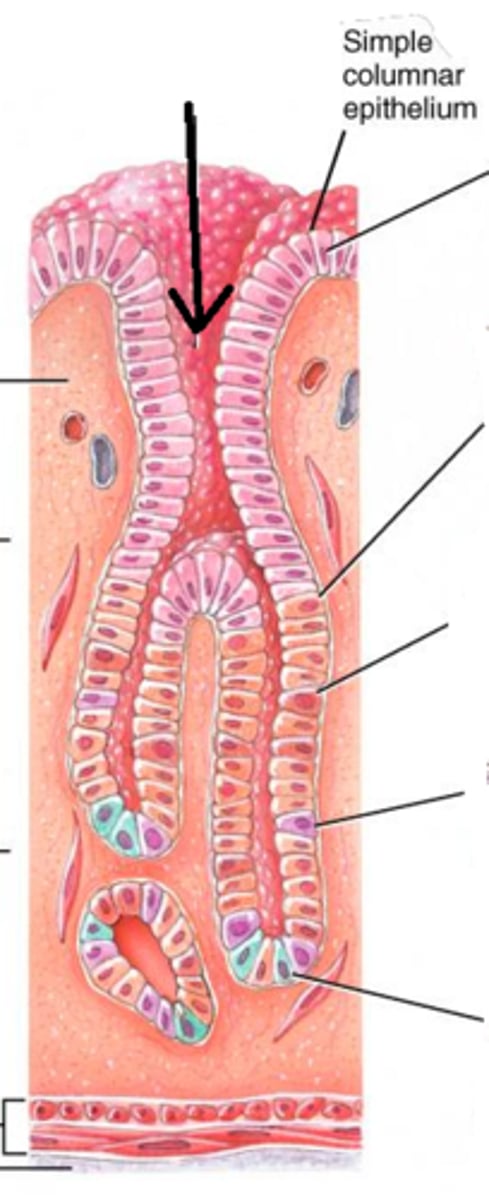
gastric pits
Gastric glands that release secretions into the stomach
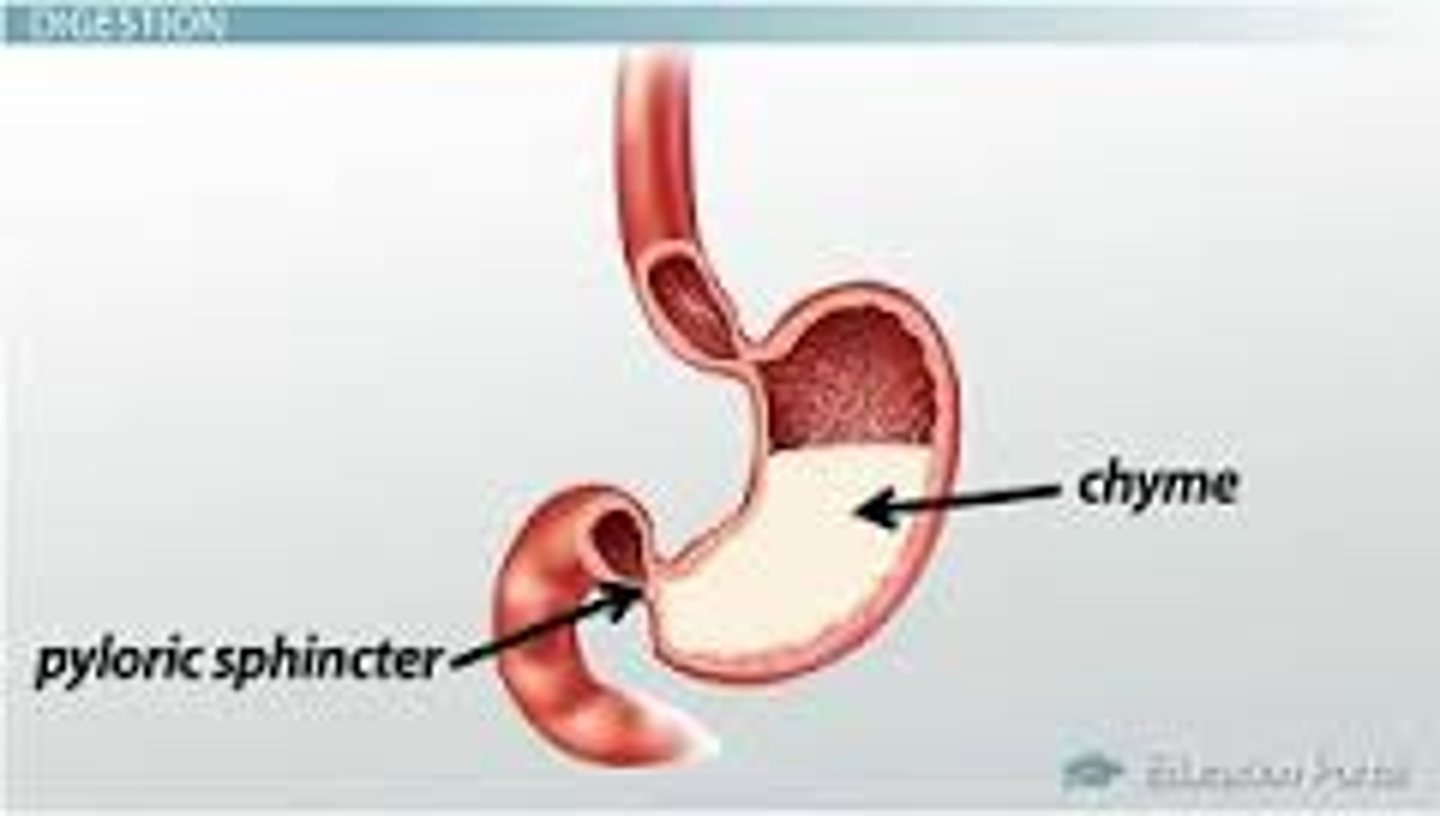
chyme
Partially digested, semiliquid paste made of food mixed with digestive enzymes and acids in the stomach; what becomes of the bolus after going through the stomach
released into duodenum of the small intestine via pyloric sphincter valve
accessory organs
pancreas (produce enzyme-rich pancreatic juice), liver (produce bile), gallbladder (store bile)
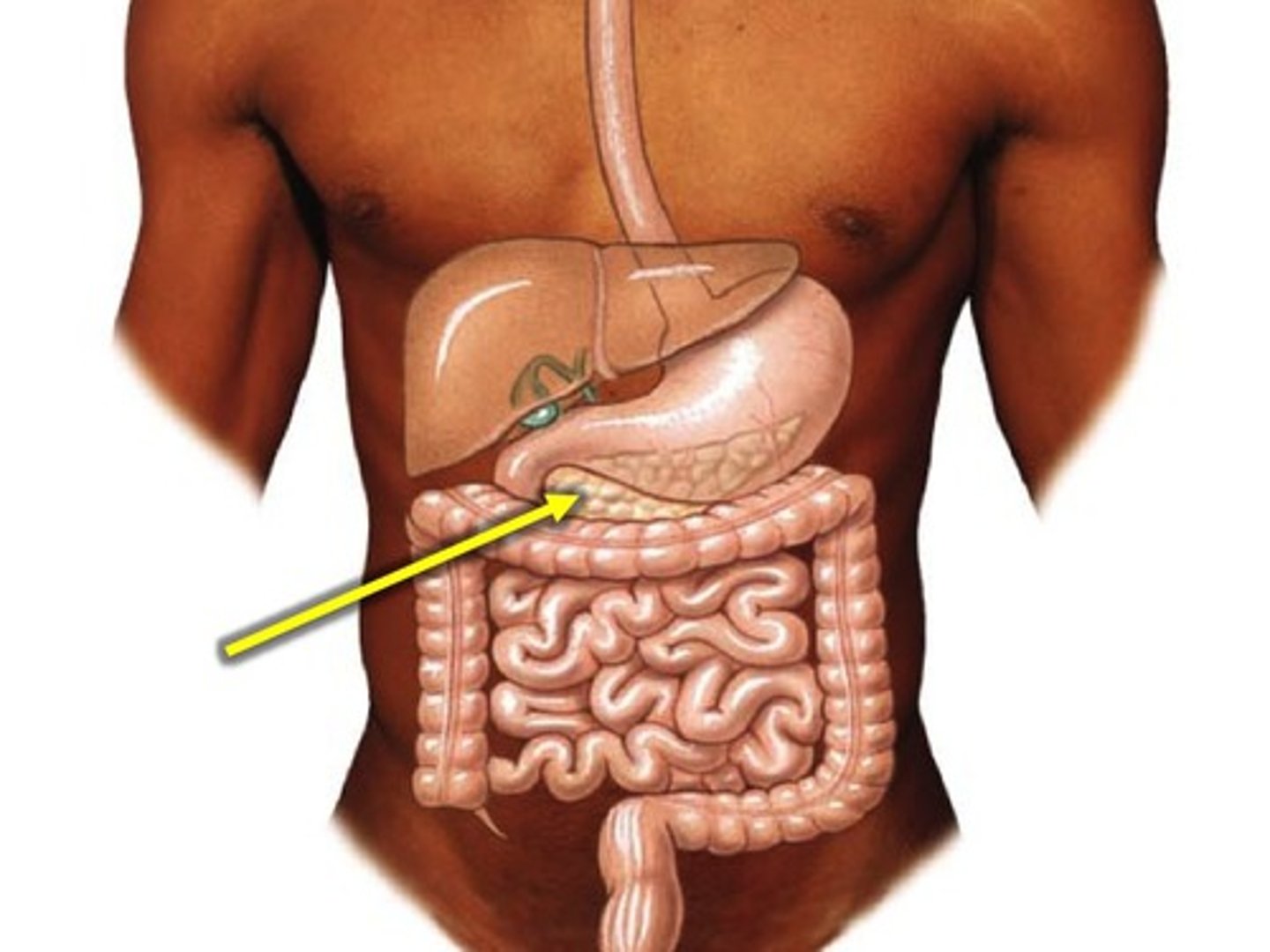
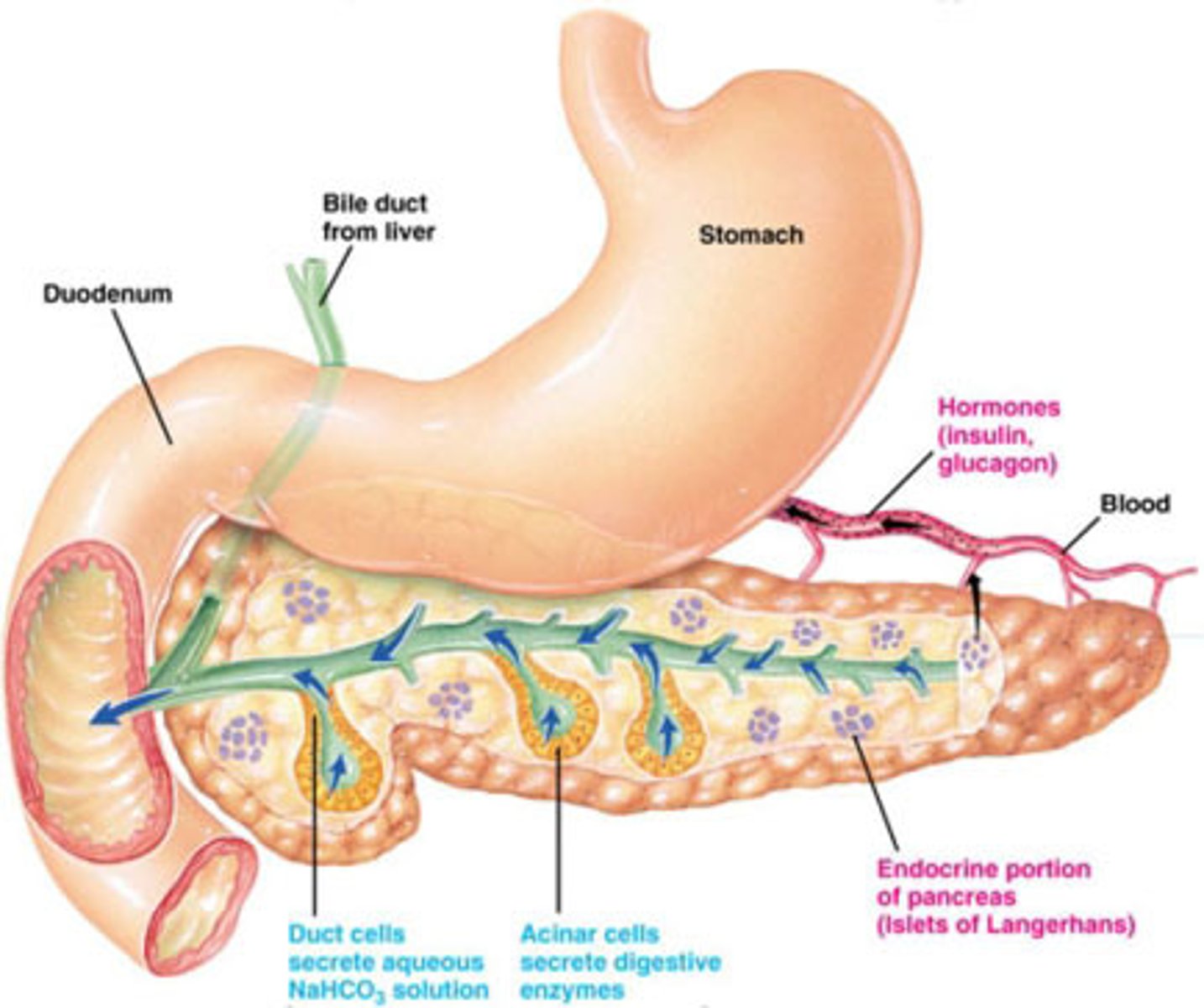
pancreas
accessory organ that secretes pancreatic juice into duodenum to support digestion
also secretes insulin/glucagon to regulate blood sugar (not digestive function)
pancreatic juice
made of enzymes, such as:
- pancreatic amylase: splits glycogen into disaccharides
- pancreatic lipase: breaks down triglycerides (lipids)
- trypsinogen, chymotrypsinogen, and carboxypeptidase: digest proteins
- nucleases - digest nucleic acids
- bicarbonate ions - make pancreatic juice alkaline (to neutralize acidic chyme)
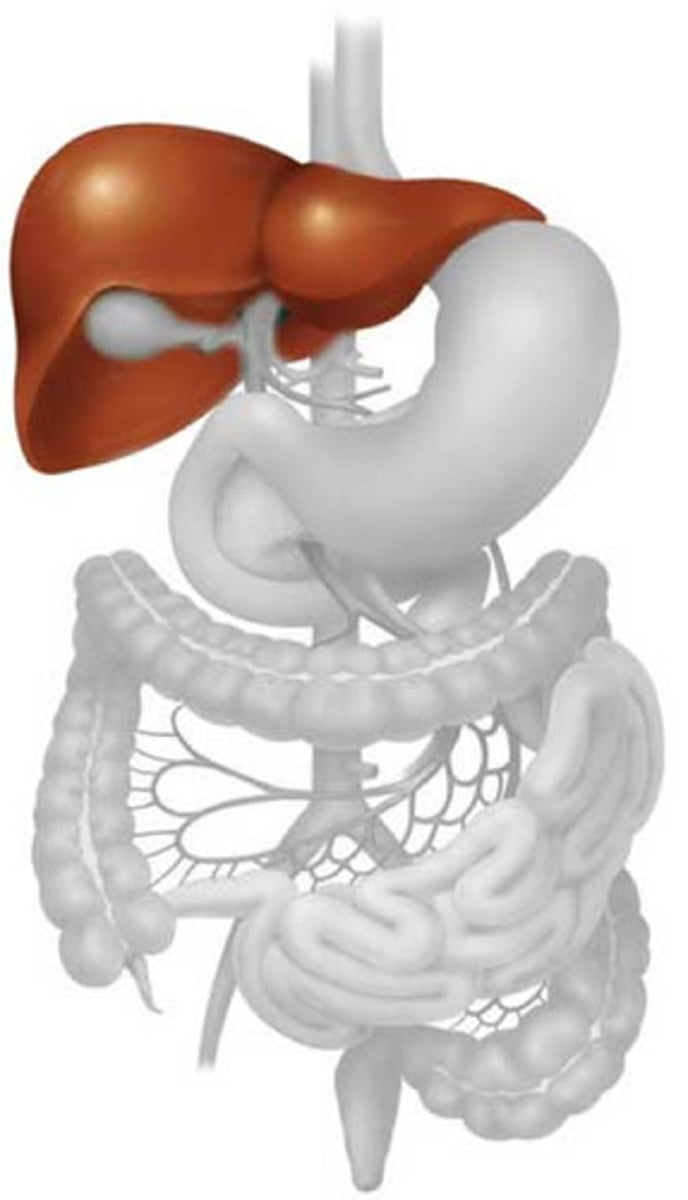
liver
accessory organ, divided into 1 large right lobe and 1 smaller left lobe, that secretes bile
also regulates blood glucose levels, synthesizes lipoproteins/phospholipids/cholesterol, protein metabolism, urea formation, stores glycogen, etc., hemolysis, and detoxification
bile
compound produced by the liver and stored by the gallbladder that emulsifies (physically breaks apart) lipids
-> bitter, greenish-yellow alkaline fluid that is discharged into the duodenum
-> made of water, bile salts, bile pigments, cholesterol, electrolytes
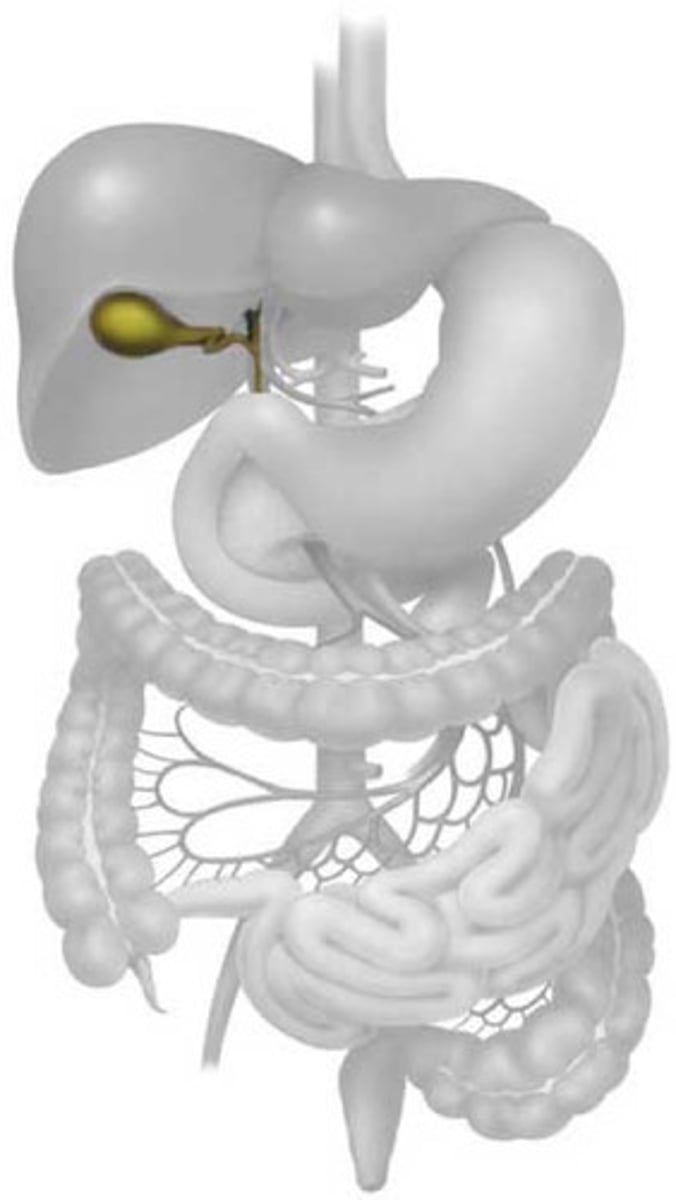
gallbladder
pouch structure located near the liver that concentrates, stores, and releases bile as needed
fills via the common hepatic duct
empties into small intestine via cystic duct, which leads to common bile duct
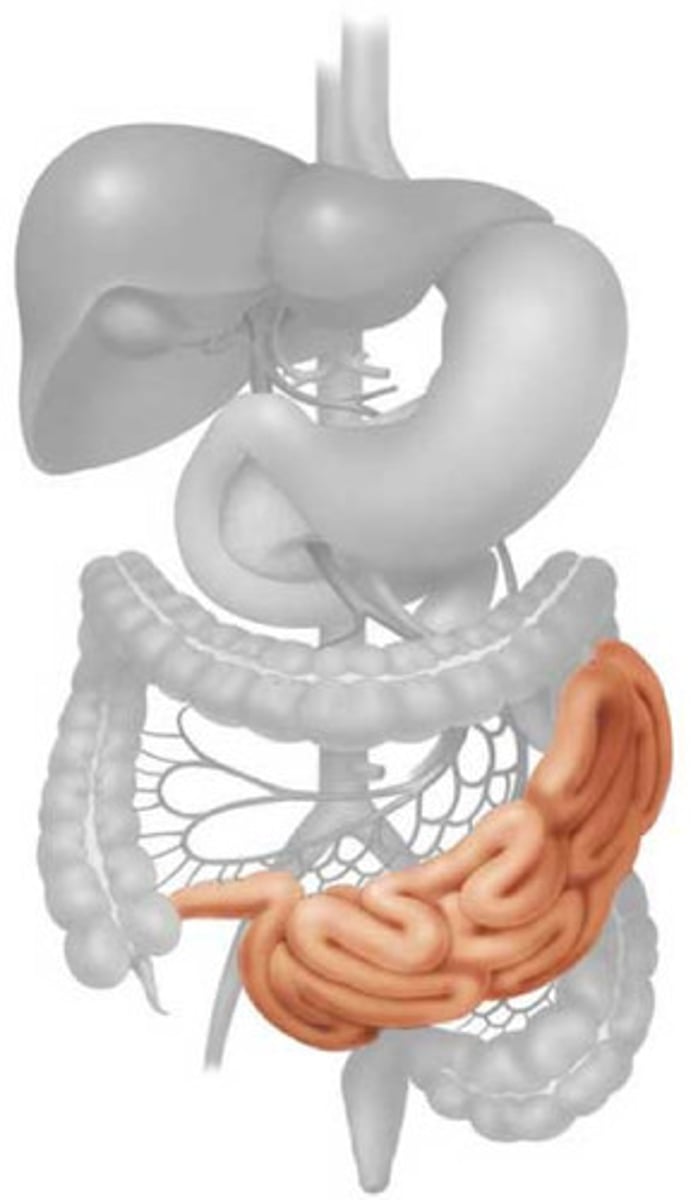
small intestine
fourth part of the alimentary canal that functions in digestion and absorption
Three Sections:
1. duodenum
2. jejunum
3. ileum
Mesentery: the membrane that holds the small intestines together and contains blood vessels
Most chemical digestion occurs here; absorption of sugars, proteins, fatty acids, etc. occurs here as well.
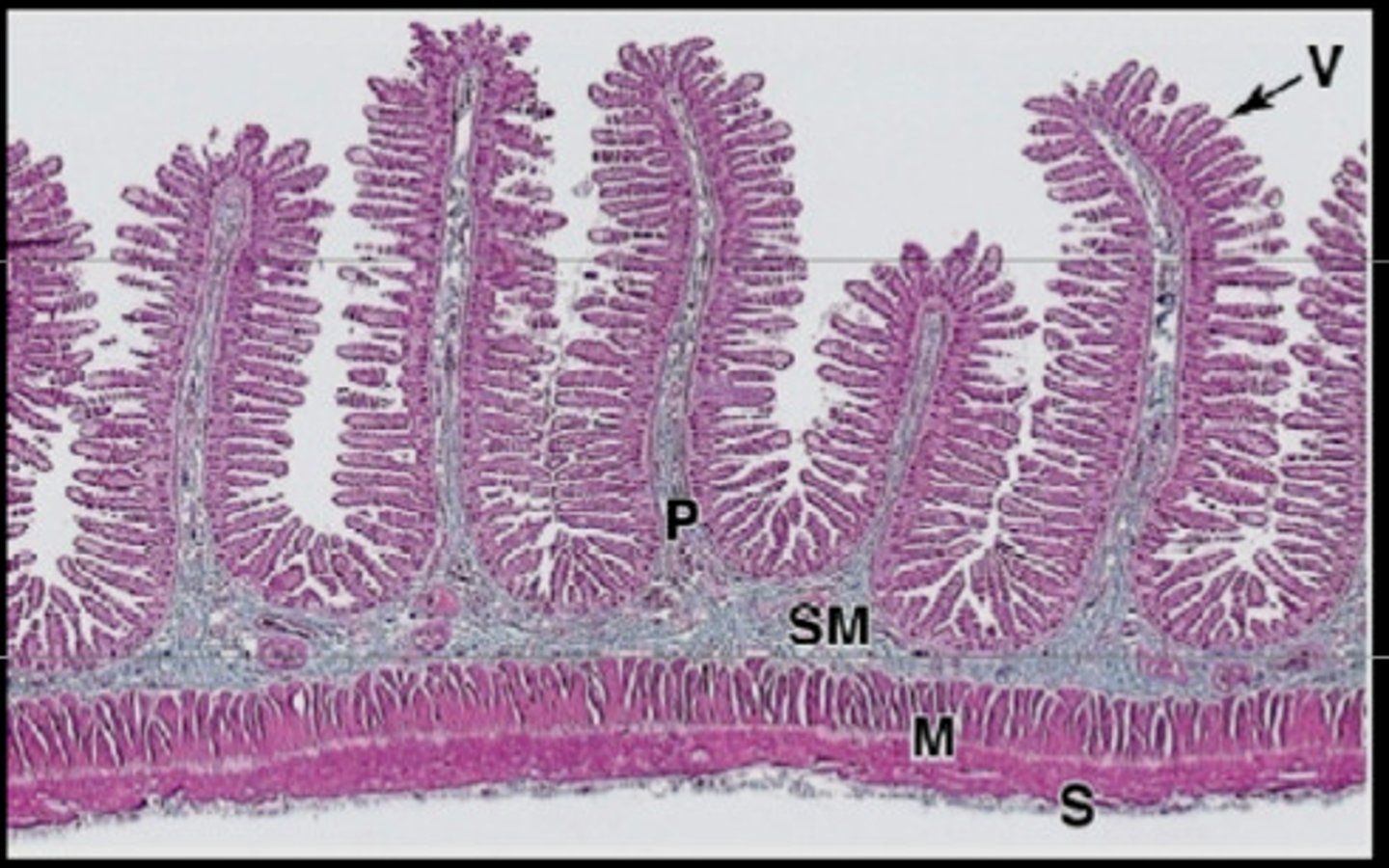
intestinal villi
finger-like projections of the small intestine; increase surface area for absorption of nutrients in the small intestine; connect to the vessels
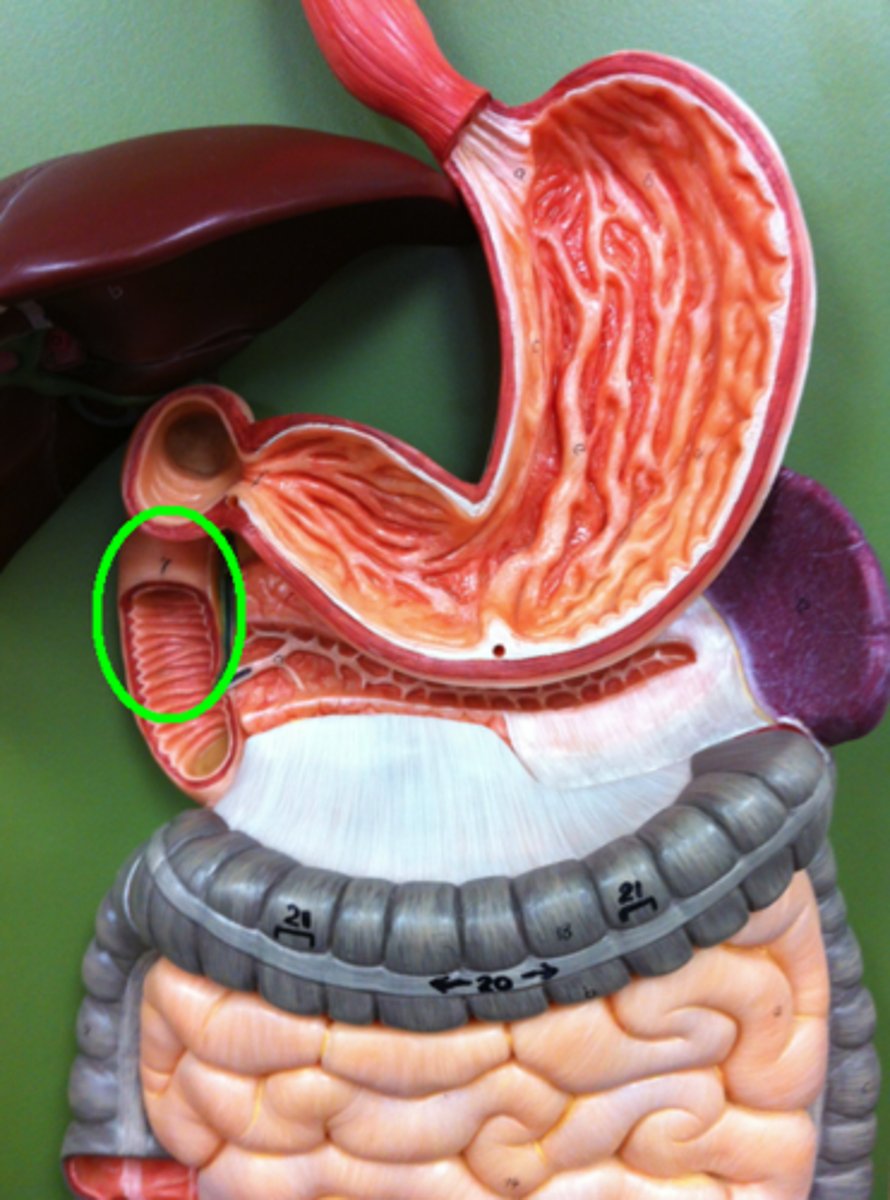
duodenum
first part of the small intestine that mixes chyme with digestive juices from the pancreas, liver, and gallbladder
secretions of small intestine
peptidase: breaks down peptides into amino acids
sucrase, maltase, lactase: break down disaccharides into monosaccharides
lipase: breaks down fats into fatty acids and glycerol
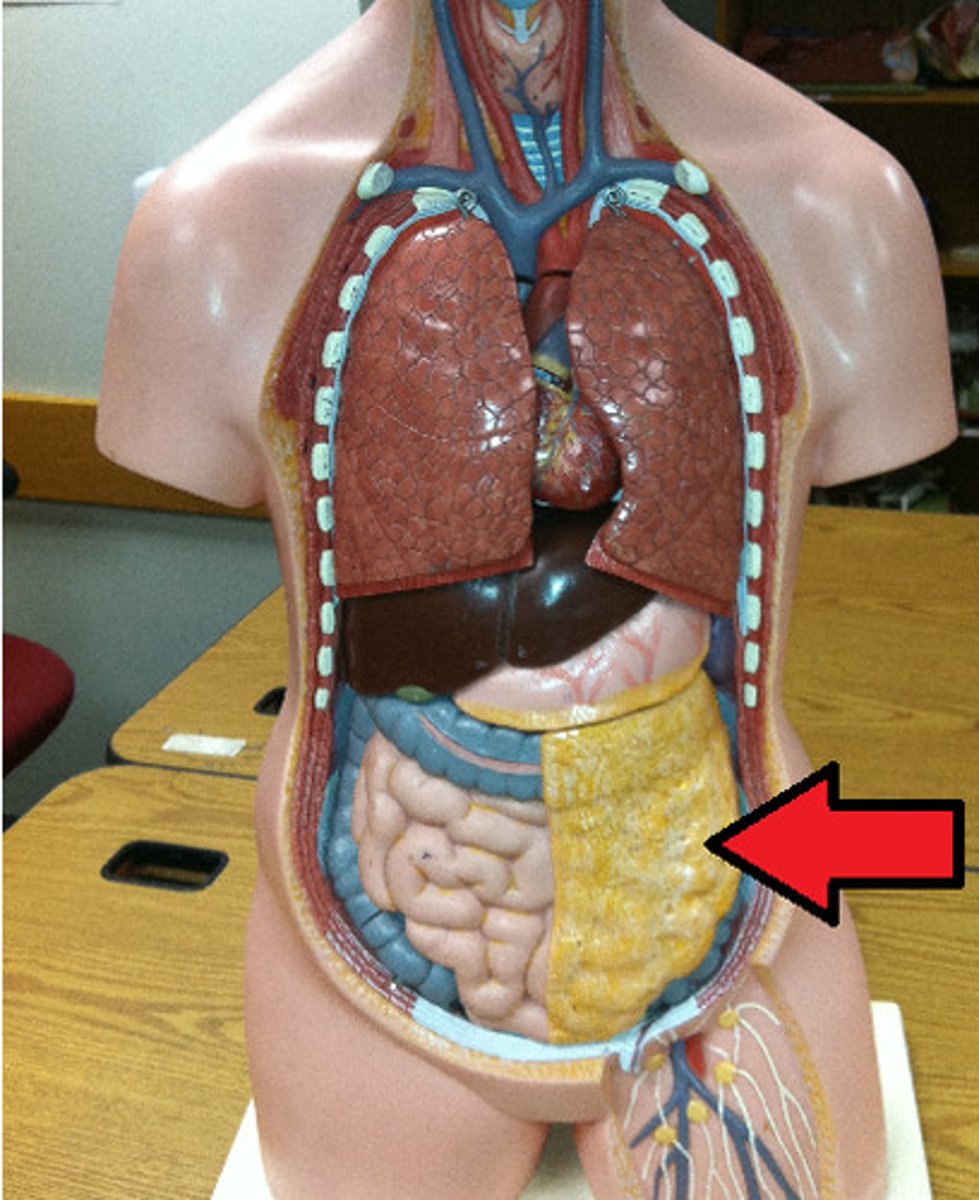
greater omentum
a "curtain-like" membrane that covers the intestines, stores fat, and lays like a drape over the intestines
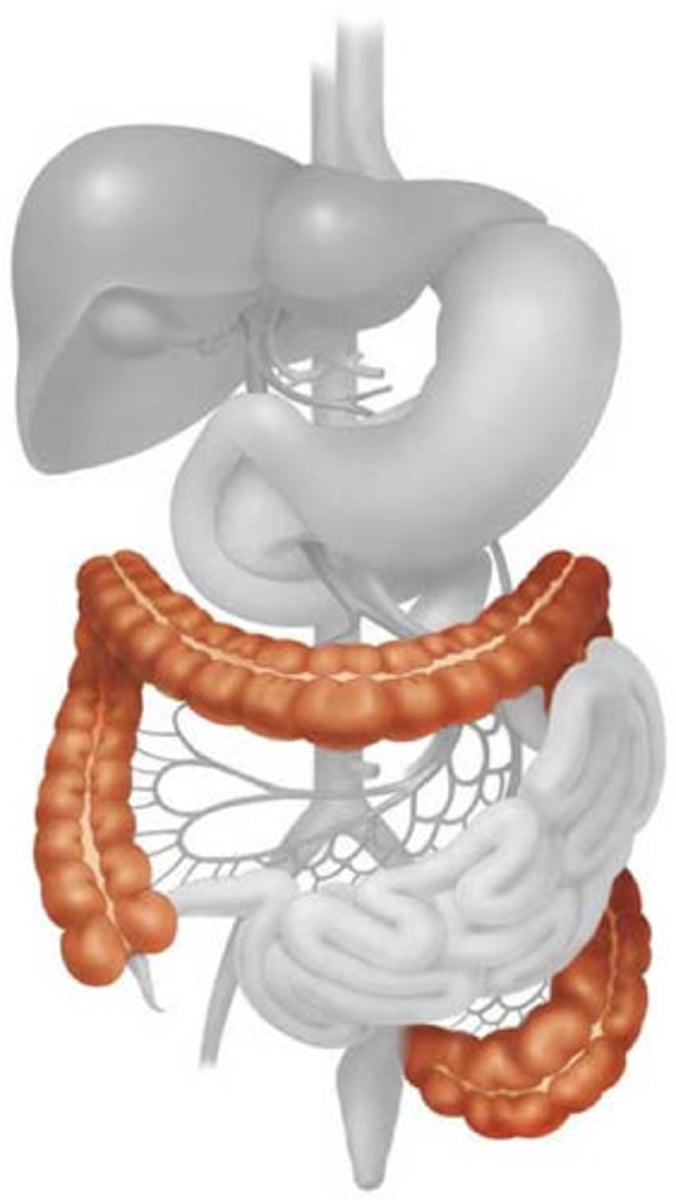
large intestine
the fifth/final part of the alimentary canal that functions in absorption and expulsion
4 Parts:
1. Cecum
2. Appendix: attached to cecum
3. Colon (4 parts)
-> ascending, transverse, descending, sigmoid
4. Rectum
5. Anus
Functions: water reabsorption, secretion of mucus, bacteria to aid in digestion, removes undigested food
water reabsorption
use 9L of water every day in digestive juices
not enough water absorbed: diarrhea
too much water absorbed: constipation
-> Vitamins K and B are reabsorbed with water
feces
made of water, electrolytes, mucus, bacteria, bile pigments; altered by bacteria to provide its color and smell