Cardiomyopathies and Heart Disease
 Call Kai
 Learn
Learn Practice Test
 Spaced Repetition
 Match
Match Flashcards
 Knowt Play
1/38

There's no tags or description
Looks like no tags are added yet.
Name | Mastery | Learn | Test | Matching | Spaced | Call with Kai | Chat |
|---|
No analytics yet
Send a link to your students to track their progress
39 Terms
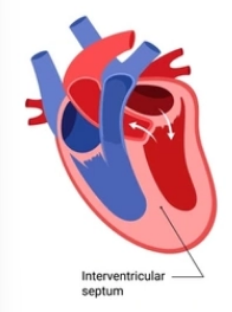
whats wrong
nothing, normal heart
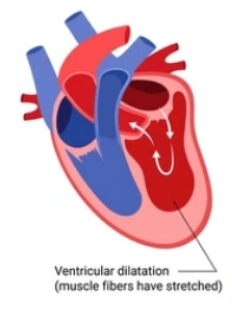
whats wrong
dilated cardiomyopathy
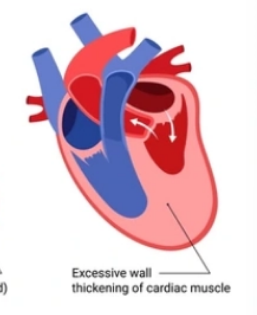
whats wrong
hypertropic cardiomyopathy
define heart failure
An inability of the heart to deliver enough blood to tissues to meet the metabolic demands of the tissues
define Congestive Heart Failure
The volume of blood delivered to the heart is more than the hearts capacity to move the blood along.
If the left ventricle is failing, the congestion occurs in the —
lungs, pulmonary edema
If the right ventricle is failing, the congestion occurs in the —-, and is known as
liver, ascites
define class A of Heart failure/disease
Patient at high risk for developing heart disease
define class B of Heart failure/disease
Structural heart disease (murmur) but no clinical signs
define class C of Heart failure/disease
Patient with past or current clinical signs of heart failure associated with structural heart disease
define class D of Heart failure/disease
Patients with end-stage heart failure exhibiting clinical signs that do not respond to therapy
define class B1 of heart failure/disease
asymptomatic patient, no radiographic or U/S evidence of heart enlargement
define class B2 of heart failure/disease
asymptomatic patient, radiographic or U/S evidence of heart enlargement
define Cardiomyopathy
a primary disease of the myocardium
cardiomyopathies are classified as (4)
Dilated cardiomyopathy
Hypertrophic cardiomyopathy
Arrhythmogenic right ventricular cardiomyopathy
Restrictive cardiomyopathy
— — is the Primary disease of heart muscle
Dilated Cardiomyopathy
Dilated Cardiomyopathy is more prominent in —(gender), — - — yrs
male, 4 - 10yrs
Canine Dilated Cardiomyopathy is caused by …
by thinning and weakening of the myocardium
Canine Dilated Cardiomyopathy decreases — —
cardiac output
Canine Dilated Cardiomyopathy increases — —
cardiac afterload
define cardiac afterload
blood left in the heart in diastole
clinical signs of Canine Dilated Cardiomyopathy (14)
Right-sided heart failure
Left-sided heart failure
Sudden Death
cough
Exercise intolerance
weakness
Anorexia
muscle wasting
weight loss
murmur
arrhythmia
weak pulses
pulse deficits
murmur
stage A treatment for Canine Dilated Cardiomyopathy
nothing
stage B1 treatment for Canine Dilated Cardiomyopathy
nothing
stage B2 treatment for Canine Dilated Cardiomyopathy (2)
Ace inhibitors
Pimobendan
stage C treatment for Canine Dilated Cardiomyopathy (3)
Diuretic such as furosemide
Ace inhibitors
Pimobendan
stage D treatment for Canine Dilated Cardiomyopathy (3)
Increase furosemide dose +/- spironolactone
Increase Ace inhibition dose
Increase pimobendan
define hypertrophy
the enlargement of an organ or tissue caused by an increase in the size of its existing cells, rather than an increase in the number of cells
define Feline Hypertrophic Cardiomyopathy
Left ventricular hypertrophy
clinical signs of Feline Hypertrophic Cardiomyopathy (7)
Soft, systolic murmur
Gallop rhythms or other arrhythmias
Sudden death
Dyspnea and cyanotic
Exercise intolerance
Syncope
Thromboembolic disease
how to treat Feline Hypertrophic Cardiomyopathy (7)
Treat signs of CHF
ACE inhibitors
Beta blockers
calcium channel blocker
Low dose heparin or aspirin
Furosemide
Felycin
Boxer Right Ventricular Cardiomyopathy presents with (5)
Ventricular arrhythmias
Syncope - may be associated with exercise
Heart failure
Sudden death
none
how to diagonse Boxer Right Ventricular Cardiomyopathy (11)
May have elevated cardiac biomarkers
VPC’s
Holter monitor may be useful
Typically normal but may have left ventricular dilation
Left ventricular dilation
systolic dysfunction
+/- right ventricular enlargement
Many will have normal PE
Tachyarrhythmia
Ascites
Heart murmur
how to diagnose Feline Hypertrophic Cardiomyopathy (11)
May show normal sized heart, or mild left atrial enlargement
May see a “valentine” heart shape in the DV view
Increased P-wave duration
increased QRS width
Sinus tachycardia
Increased left ventricular wall thickness
dilated left atrium
elevated BNP
elevated pro-BNP
CTn1 will be elevated
MRI
how to treat Boxer Right Ventricular Cardiomyopathy (3)
Mexiletine to decrease VPCs
Pimobendan
ACE inhibitors
define Arrhythmia
as deviations from the normal heart rate rhythm or rhythms originating from abnormal locations within the heart.
Deviations from normal rhythm result from either (2)
Abnormal impulse formation
Abnormal impulse conduction
Abnormal impulse formation can be from (5)
Ischemia
Hypo or hypercalcemia
Cardiomyopathy
Catecholamines
Reperfusion injury
Abnormal impulse conduction are from
Alternate pathways develop for depolarization of cardiac muscle