ComTIA Net+
 Call Kai
 Learn
Learn Practice Test
 Spaced Repetition
 Match
Match Flashcards
 Knowt Play
1/49

There's no tags or description
Looks like no tags are added yet.
Name | Mastery | Learn | Test | Matching | Spaced | Call with Kai | Chat |
|---|
No analytics yet
Send a link to your students to track their progress
50 Terms
What is a client?
Devices that users use to access the network (e.g., workstations, laptops, tablets)
What is a server?
Provides resources to the network (e.g., email servers, file servers)
What is a hub?
Older technology connecting devices but not commonly used due to limitations, such as lack of intelligence and network traffic management. Hubs broadcast data to all connected devices, which can lead to collisions.
What is a switch?
Smarter hubs that ensure security and efficient bandwidth utilization
What are Wireless Access Points (WAPs)?
Enable wireless devices to connect to a wired network using radio frequency waves
What are routers?
Connect different networks, make intelligent forwarding decisions based on IP addresses.
What are firewalls?
Security barrier between internal network and the internet, monitor and control traffic
What are Load Balancers?
Distribute network/application traffic across servers, preventing bottlenecks
What are Proxy Servers?
Act as intermediaries between user devices and the internet, enhancing security and privacy
What are Intrusion Detection Systems (IDS)?
Detect unauthorized access or anomalies
What are Intrusion Prevention Systems (IPS)?
Detect and take action to prevent intrusion
What are controllers?
Manage flow control in software-defined networking (SDN), offering flexibility and efficiency
What are Network-attached Storage (NAS) Devices?
Dedicated file storage systems providing data access to authorized clients
What Storage Area Networks (SANs)?
High-speed networks for consolidated block-level data storage, enhancing accessibility
What are media?
Physical materials for data transmission (e.g., copper cables, fiber optic cables)
What are Wide Area Network (WAN) Links?
Connect networks over large areas (e.g., between cities), essential for global connectivity
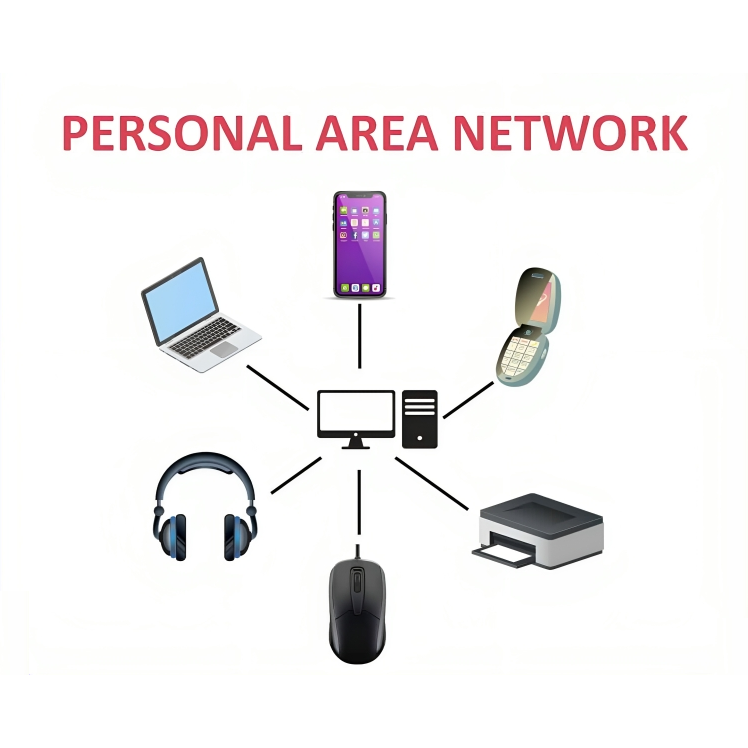
What is a Personal Area Network (PAN)?
Smallest network type
Covers about 10 feet or less
Connection within arm’s reach
Ex. Bluetooth and USB
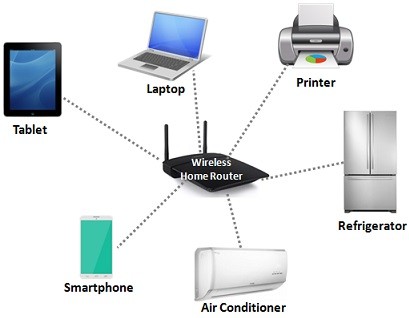
What is a Local Area Network (LAN)?
Common in office buildings
Limited distance (up to 100 meters, CAT cabling)
Can use WiFi (IEEE 802.11) or Ethernet (IEEE 802.3)
Ex. Office, school, and home
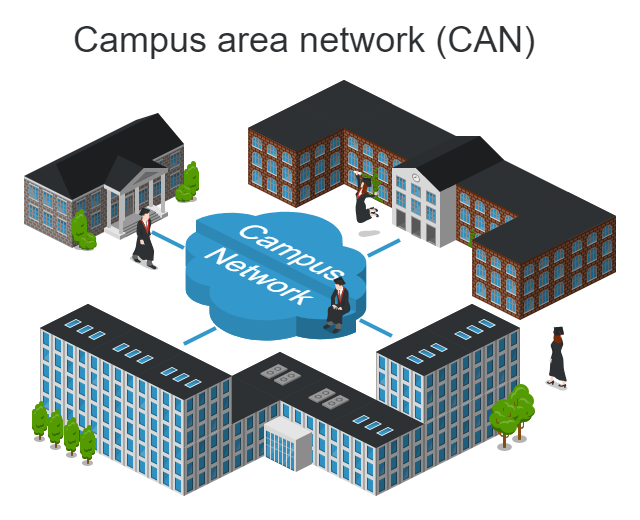
What is a Campus Area Network (CAN)?
Building-centric LAN
Spans numerous buildings in an area
Covers several miles
Ex. College campuses, business parks, military bases
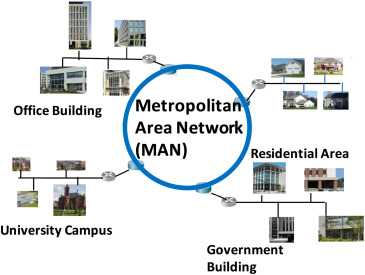
What is a Metropolitan Area Network (MAN)?
Connects locations across the entire city
Larger than CAN (up to 25 miles)
Ex. City departments, multiple campuses in a city
What is a Wide Area Network (WAN)?
Connects geographically disparate internal networks
Large geographic coverage (across states, countries, or globally)
Can consist of lease lines or VPNs
Ex. (Internet, private connections between offices across the country)
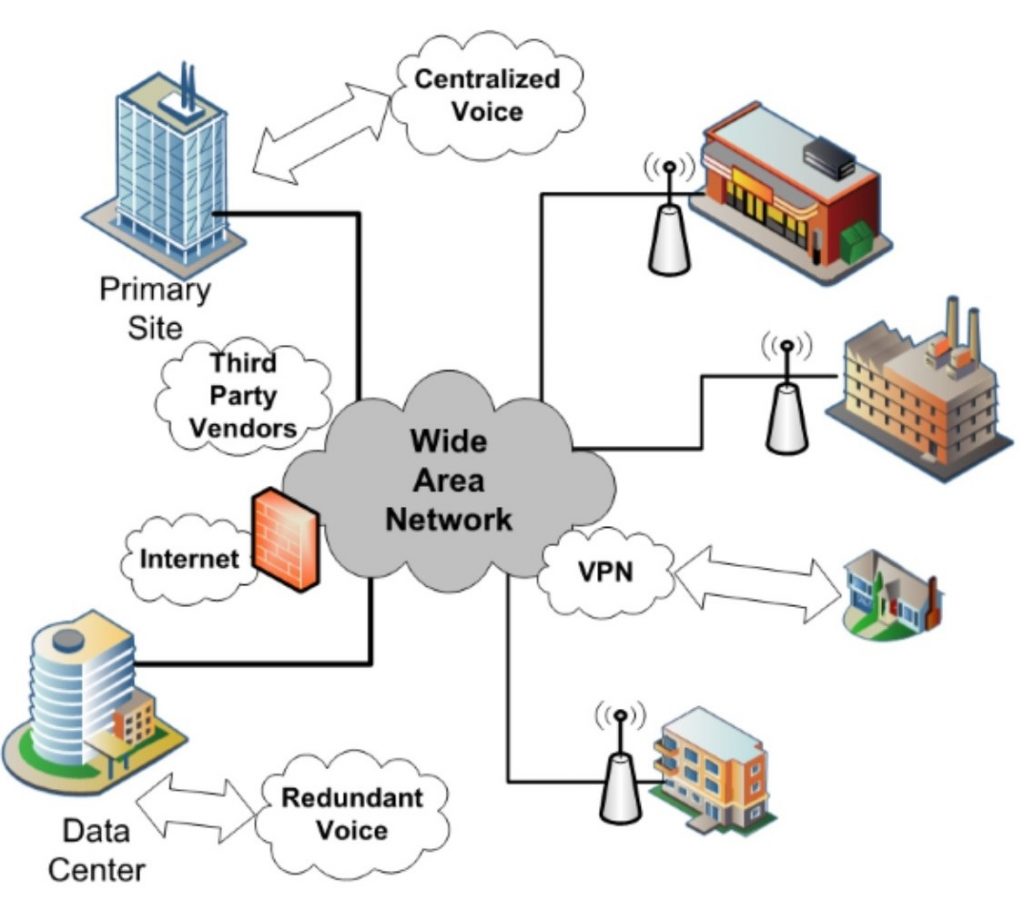
What is the Peer-to-Peer Model?
Direct sharing of resources among peers (laptops, desktops)
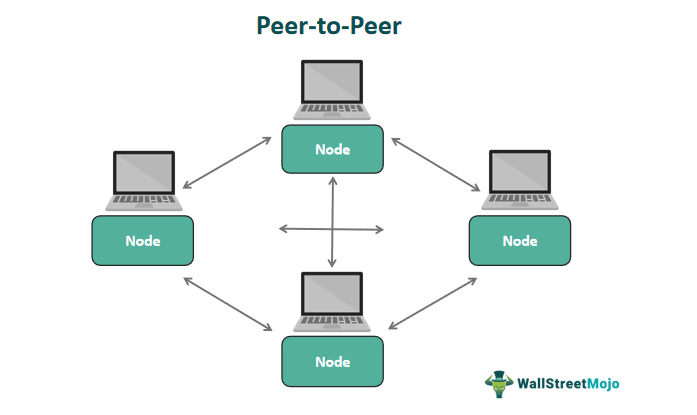
What are the cons of the Peer-to-Peer Model?
Redundancy
Complex management
Scalability issues
Decentralized management
Poor scalability for large networks
Difficult administration and backups
What are the pros of the Peer-to-Peer Model?
Low cost
No specialized infrastructure or hardware
What is the Client/Server Model?
It utilizes a dedicated server for centralized access to files, scanners, printers, and resources
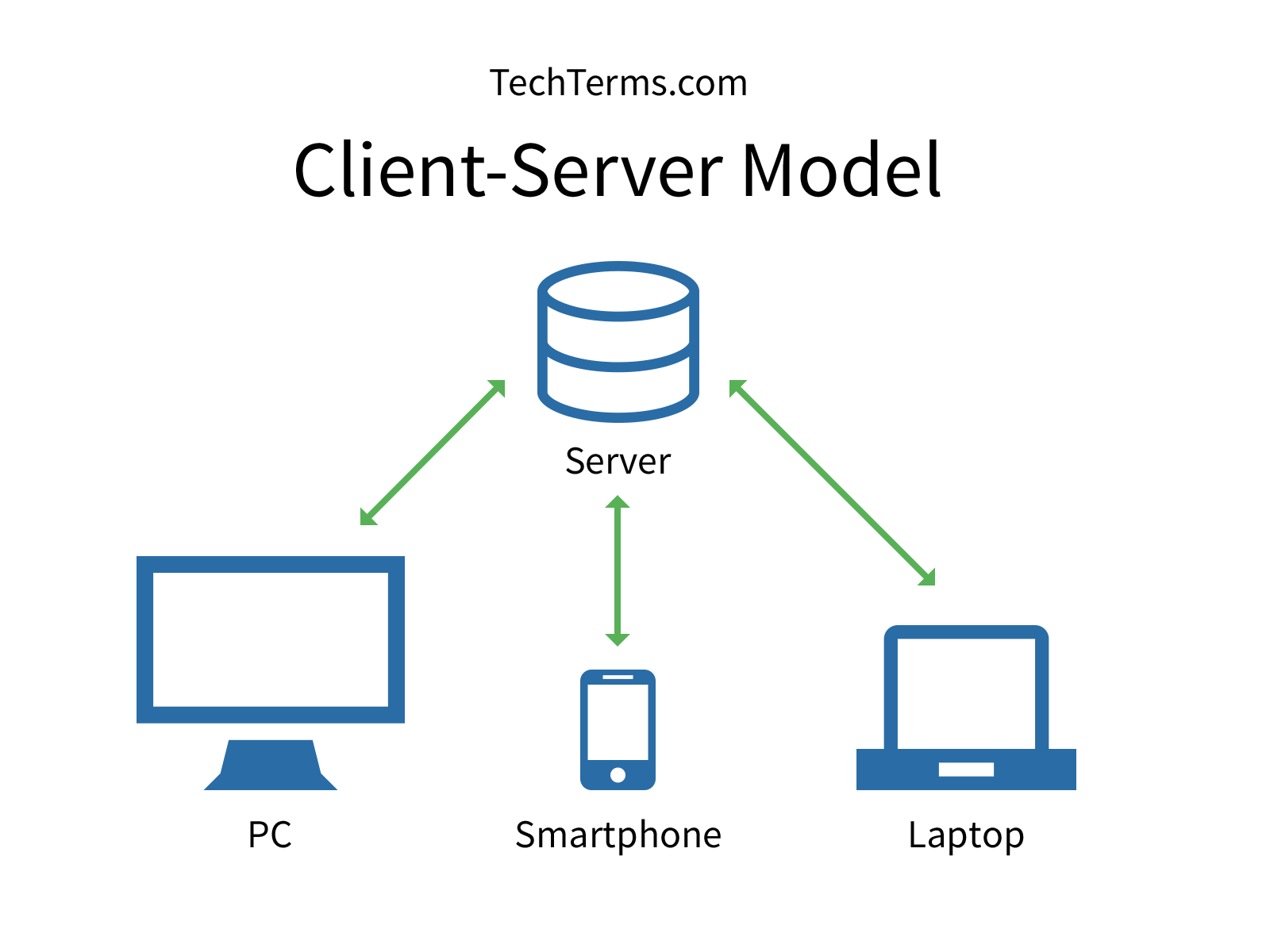
What are the pros of the Client/Server Model?
Centralized administration
Easier management
Better scalability
What are the cons of the Client/Server Model?
High cost
Requires dedicated hardware and specialized skillset
What is a Network Topology?
It refers to the arrangement of elements in a computer network. Includes links, nodes, clients, and servers.
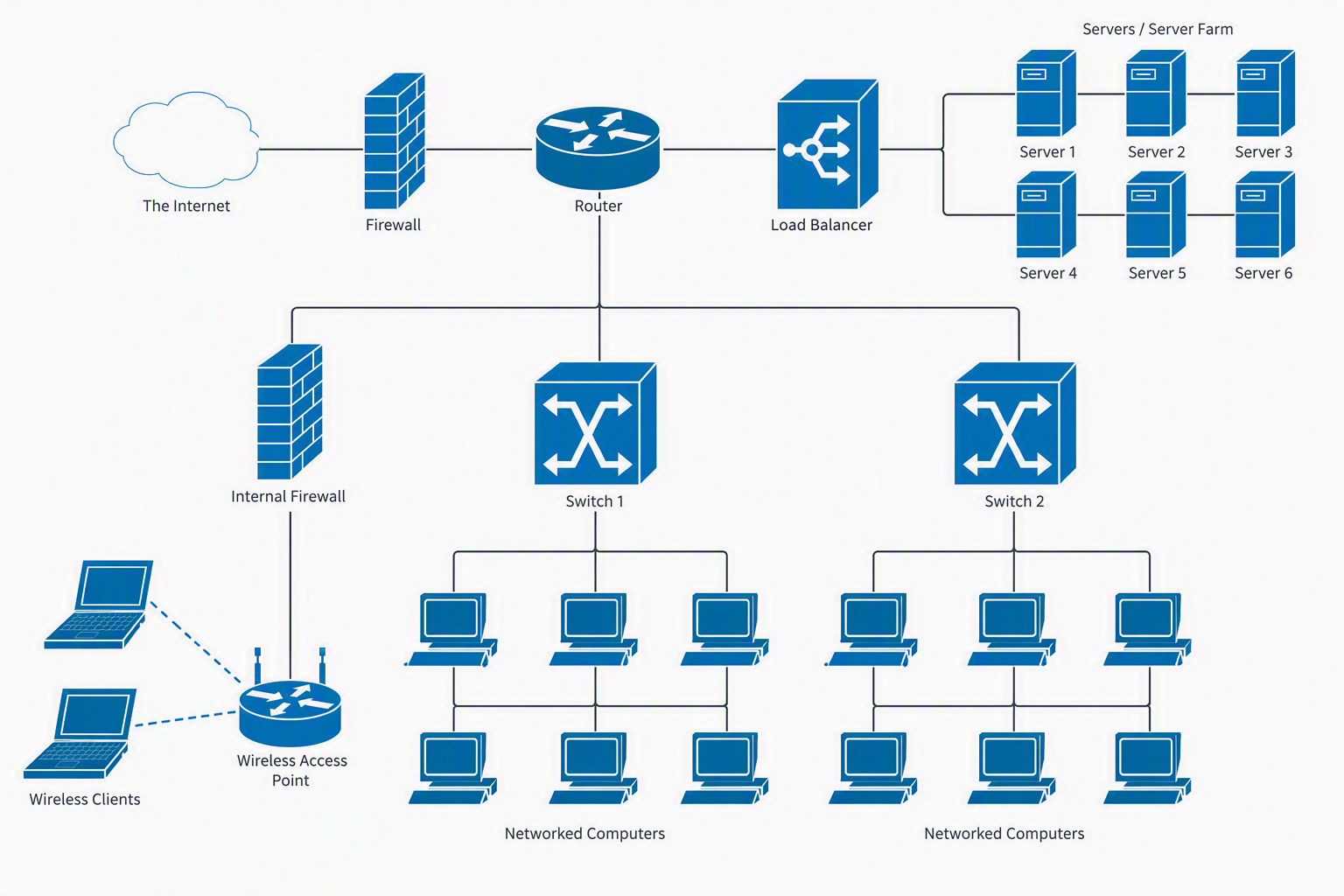
What is a physical topology?
It describes physical cabling and device connections. It represents real-world layout using floorplans.
What is a Logical Topology?
It describes how data flows in the network. It focuses on the logical connection rather than physical placement.
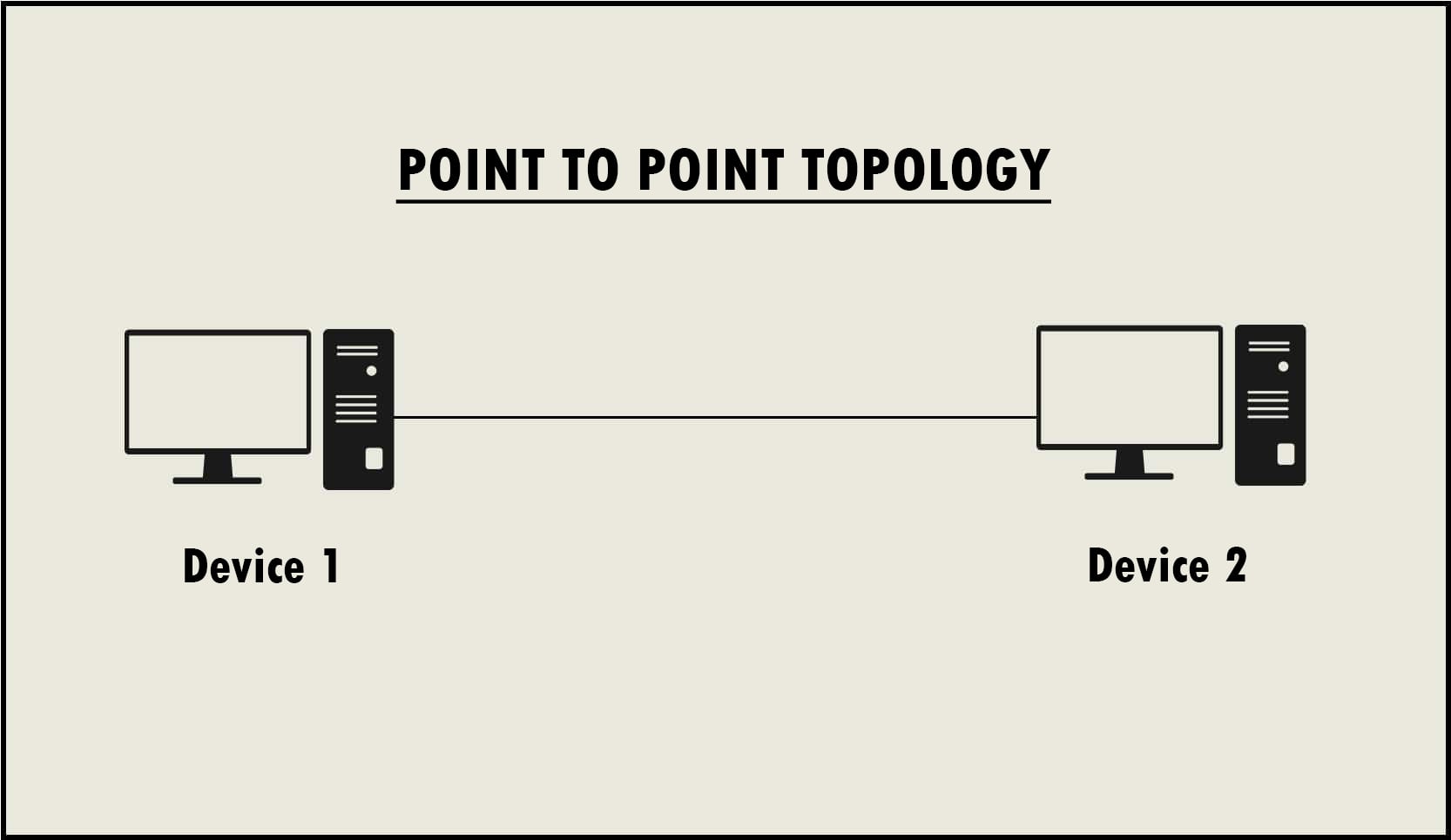
What is a Point-to-Point Topology?
It’s a direct connection between two devices that is simple and reliable for small-scale connections. It is not scalable and used in WAN connections for remote offices.
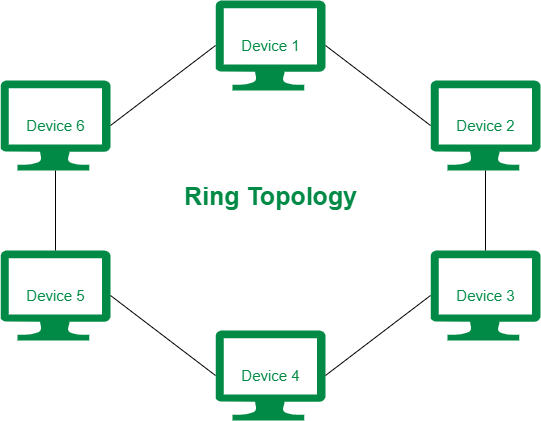
What is a Ring Topology?
It’s a circular path data where each device is connected to two others. It has unidirectional flow that prevents collisions. It creates a single point of failure situation unless there are redundant connections for failover. Very common in FDDI (Fiber Distributed Data Interface) for long-distance fiber optic networks.
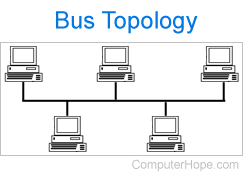
What is a Bus Topology?
All devices are connected to a central cable, called a bus. The data is accessible to all, but the only intended recipient to process it. It’s easy to install, but if the main cable fails the network won’t work. The more devices connected to the network, the more collisions will occur. It is an older technology, not common in modern networks.
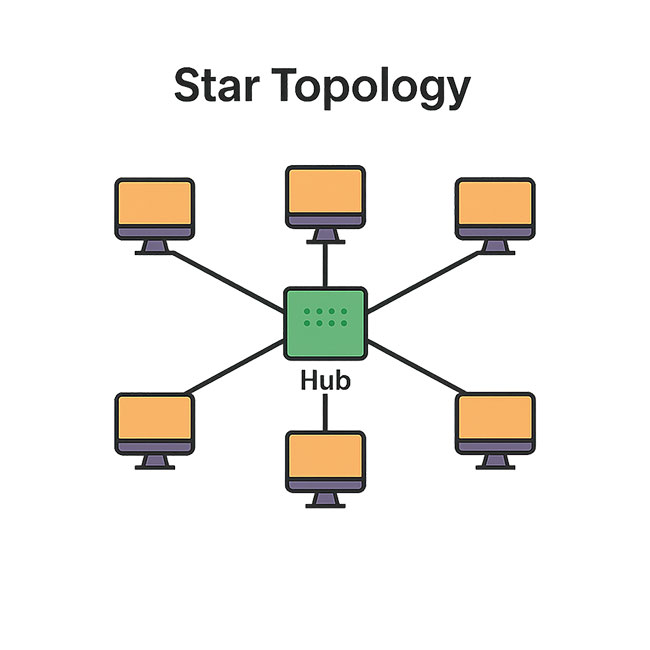
What is a Star Topology?
Each node is connected to a central point, called a network switch. It’s robust, however the network depends on the central point’s functionality. If the central point fails, then the entire network fails. It’s very common for home networks. Typically within a LAN.
What is a Hub-and-Spoke Topology?
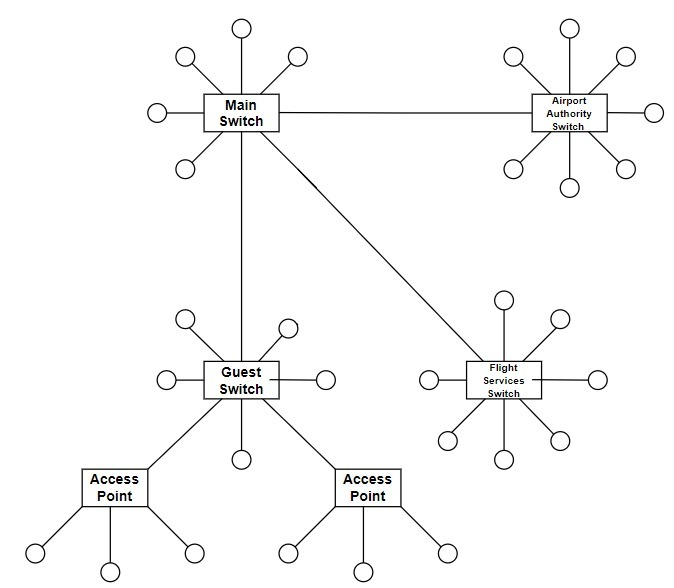
It’s variation of a star topology, but with a central hub that’s connected to multiple hubs. The nodes transmit data to the hub before reaching the final destination. Often used in airline and telecommunication networks. It’s less expensive for larger networks. Typically a WAN.
What is a Mesh Topology?
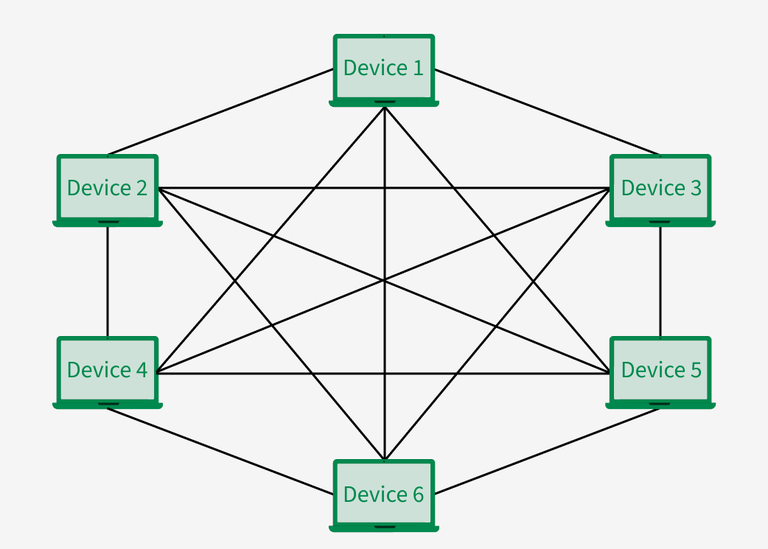
It’s a point-to-point connection between every device for redundancy. There are two types are full mesh and partial mesh. It provides robustness and redundancy but can complex and costly. The formula is n (n-1)/2. n stands for the number of nodes.
What is an Infrastructure Mode Topology?
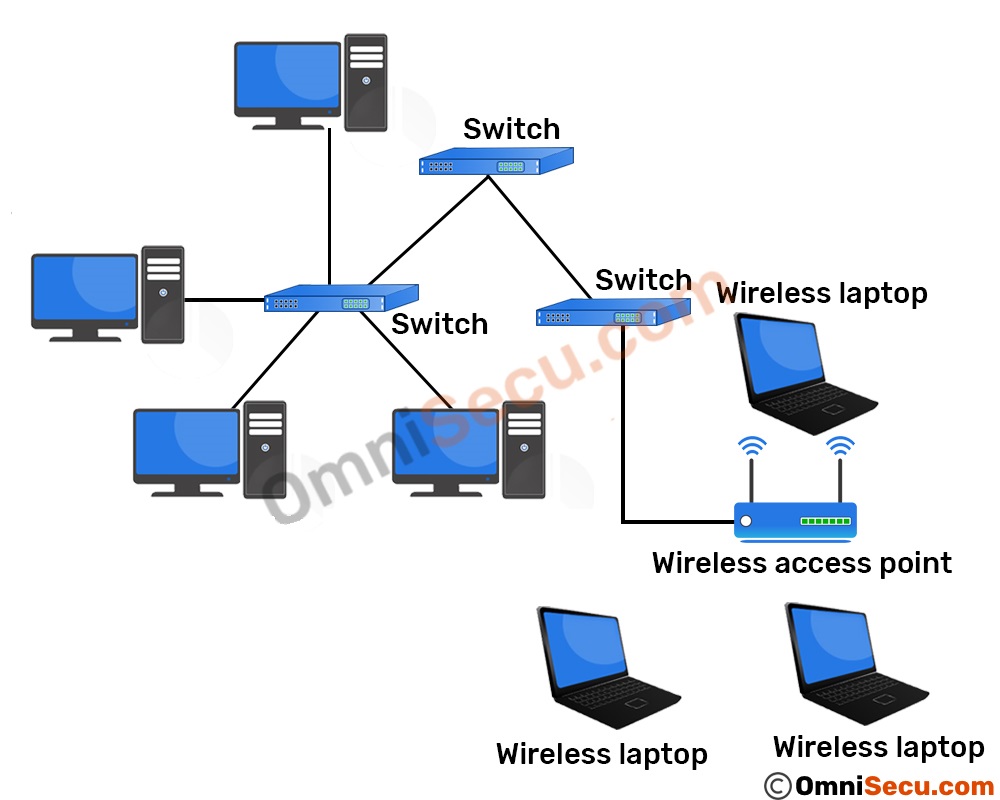
A centralized wireless network with a wireless access point. It’s similar to a star topology in a physical network. It’s common in homes because it connects to an outside provider through a cable or fiber modem. It supports wireless security controls.
What is Ad Hoc Mode Topology?
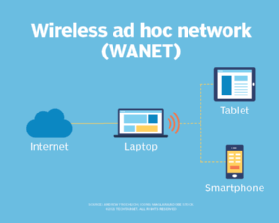
It’s a decentralized wireless network. It operates like a peer-to-peer network. There are no routers or access points, the devices connect directly. It makes dynamic routing decisions made on the fly. It allows for dynamic joining and leaving of devices, similar to old-school chat rooms.
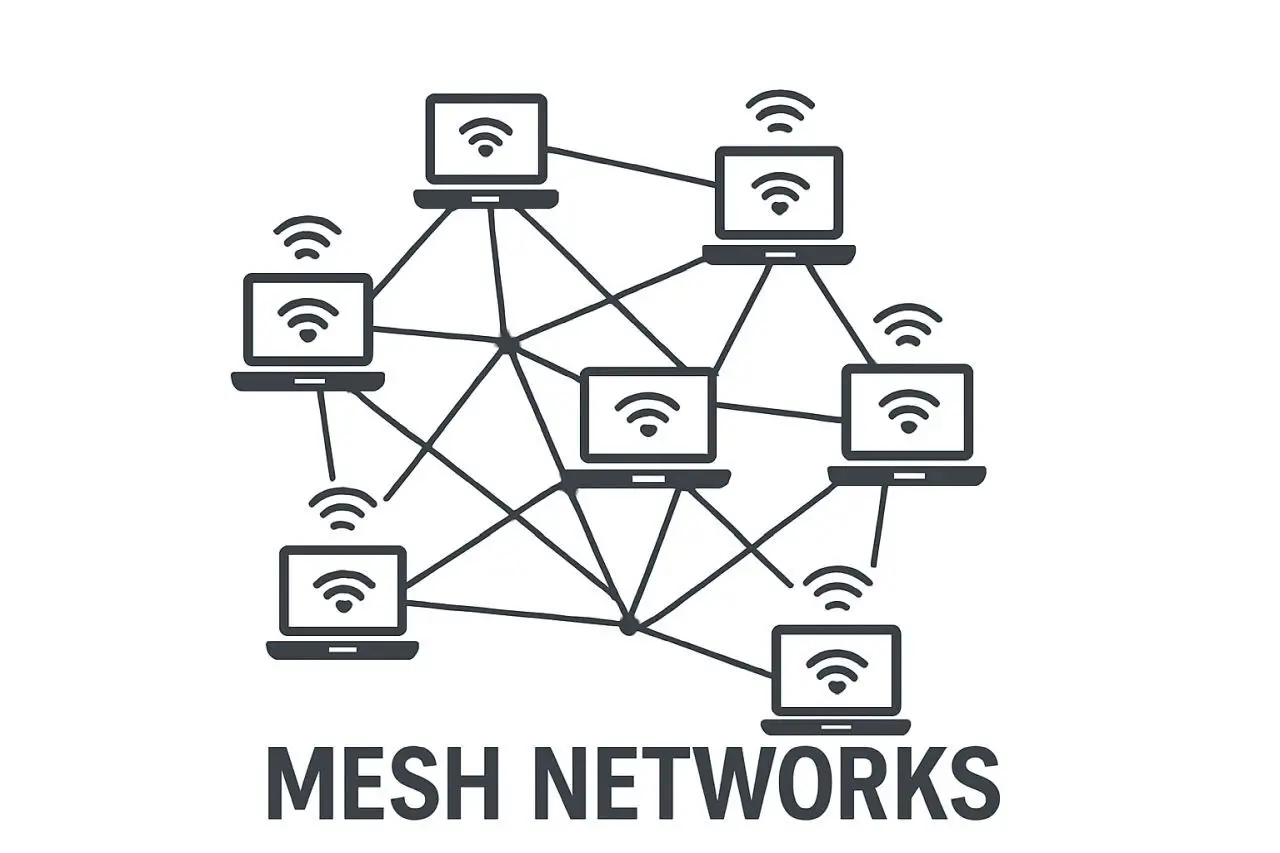
What is a Wireless Mesh Topology?
It’s a unique interconnection of different nodes, devices, and radios. It creates mesh topology for expansion and redundancy. It combines various technologies for connectivity. Examples are Bluetooth, WiFi, microwave cellular, and satellite. It enables large-scale networks access in harsh environments and uses different radio frequencies to establish reliable connections.
What is a Datacenter Topology?
Any facility composed of networked computers and storage that business and other organizations use to organize, process, store, and disseminate large amounts of data.
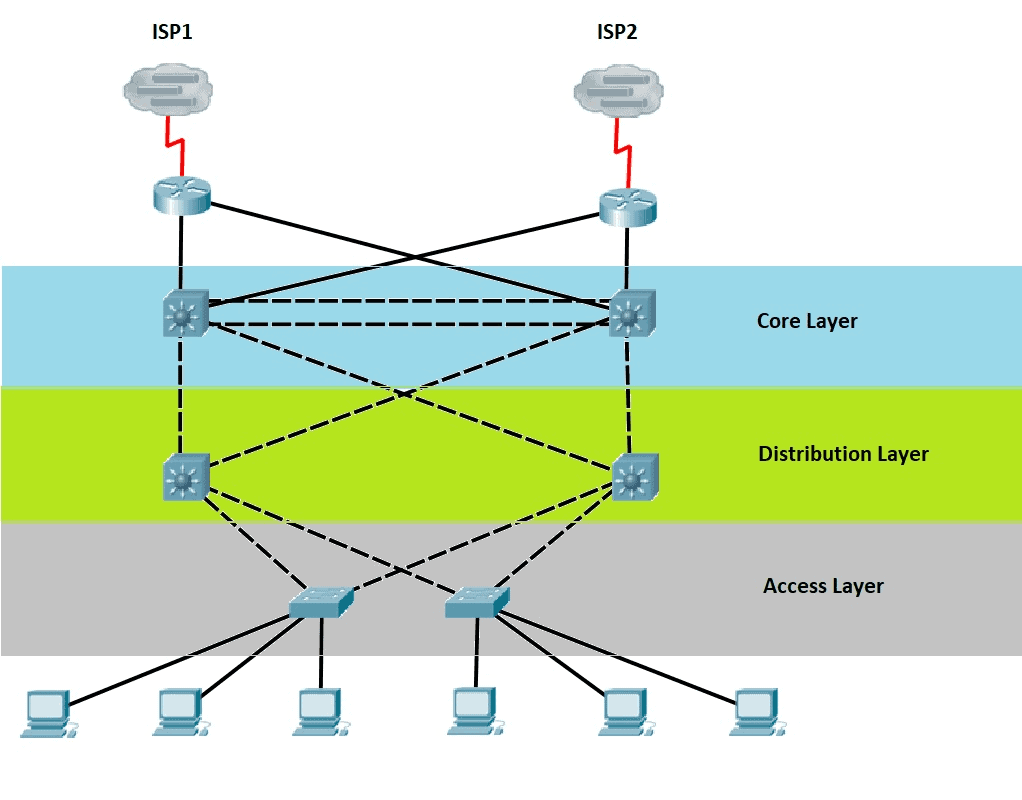
What are the tiers of the Three-Tiered Hierarchy?
The Core Layer
The Distribution/Aggregation Layer
The Access/Edge Layer
What is the Core layer?
It houses high-performance routers, merging geographically separated networks. It is considered the backbone of the network.
What is the Distribution/Aggregation Layer?
It provides boundary definition through access lists and filters. It defines policies for the network at large. It also uses 3-layer switches for routing between subnets. Because of that it ensures the packets are properly routed between different subnets and VLANs.
What is the Access/Edge Layer?
It connects endpoint devices using regular switches. It is used to ensure the packets are converted to frames and delivered to the correct end point devices.
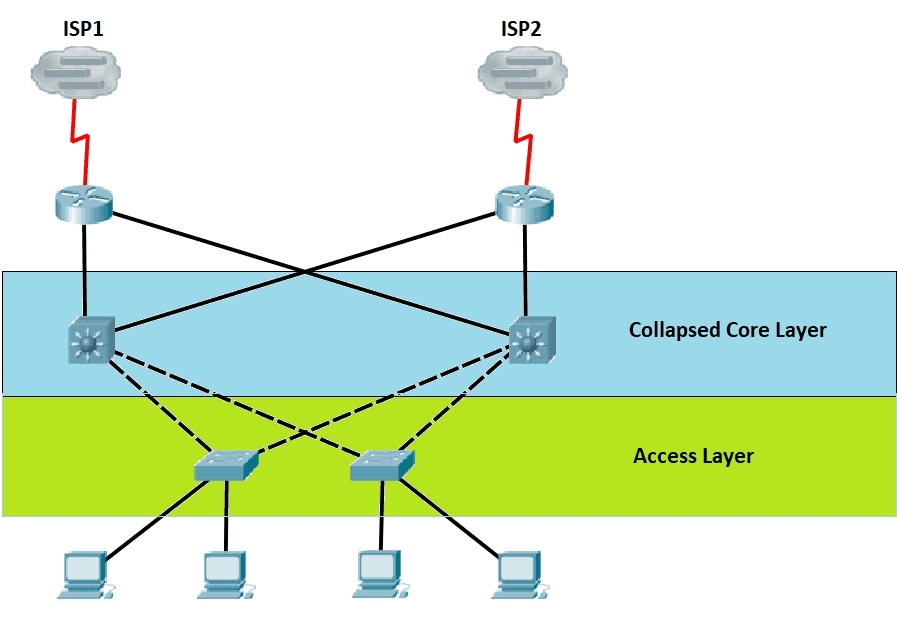
What is the Collapsed Core?
It is a network architecture where the core and distribution layers are merged into a single layer. It creates a two-tiered solid core. It’s more simplified for medium to small datacenters. It may not be suitable for larger and more complex networks.
What is a Spine and Leaf Architecture Topology?
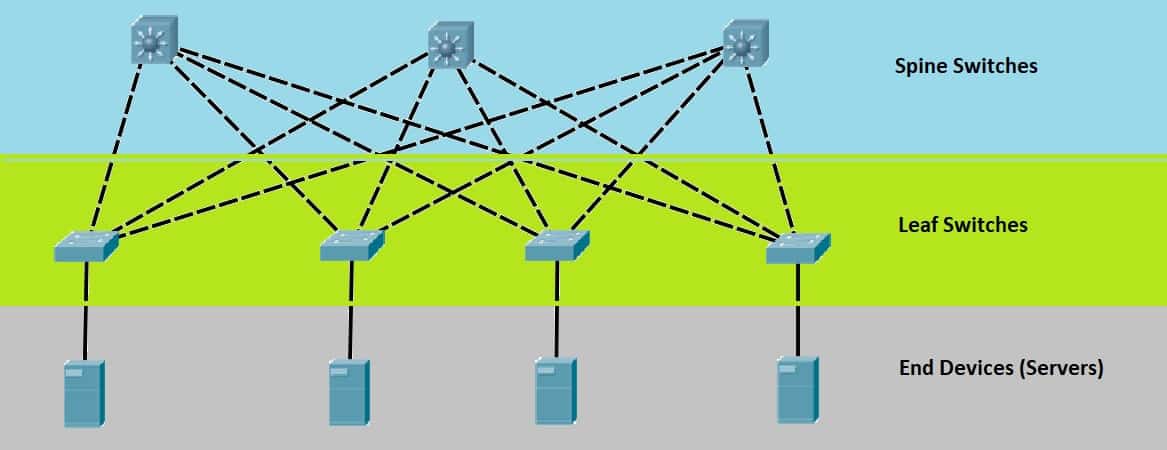
It’s an alternative type of network architecture that is used specifically within datacenters. It focuses on communication within datacenters, particularly server farms. It has enhanced speed, and reduces latency compared to traditional three-tiered hierarchy. It works well with a Software Defined Network (SDN). It can also be used in combination with the standard three-tiered hierarchy.
What is the leaf layer?
It consists of all the access switches that will aggregate traffic from the different servers and then connect directly to the spine layer.
What is the spine layer?
It contains switches that interconnect all the leaf layer switches into a full-mesh topology.
What are North-South Traffic Flows?
It’s traffic that enters southbound or leaves north bound from the data center from a system outside.
What are East-West Traffic Flows?
It is data that flows between servers called east-west traffic. It’s prevalent with SDN, virtualization, and converged networks.