Psychology Chapter 2: Research Methods
 Call Kai
 Learn
Learn Practice Test
 Spaced Repetition
 Match
Match Flashcards
 Knowt Play
1/62

There's no tags or description
Looks like no tags are added yet.
Name | Mastery | Learn | Test | Matching | Spaced | Call with Kai | Chat |
|---|
No analytics yet
Send a link to your students to track their progress
63 Terms
deductive reasoning
general → specific
general principles are tested against the real word
start with explanation/hypothesis and perform experiment to determine validity
all conclusions drawn from deductive reasoning are correct
ex. all living things require energy to survive. ducks are living things, so they therefore require energy to survive (test - true)
ex. all ducks are born with sight. quackers is a duck. therefore, quackers can see. (test - false)
the hypotheses may be false, but not the conclusion you make about them
inductive reasoning
specific → general
specifc facts are used to reach a broad generalization
start with data and form a broad explanation
not all conclusions drawn from inductive reasoning are correct
ex. apples, bananas, and oranges grow from trees. therefore, all fruit grows on trees (false)
how is deductive and inductive reasoning cyclic
inductive reasoning makes a theory
that theory generates a hypothesis
the hypothesis is used for deductive reasoning to prove/disprove
based on the conclusion from that, a general theory can be made for inductive reasoning

theory definition
set of ideas that propose an explanation for observed phenomena
hard to prove because of its complexity
ex. evolution by natural selection
importance of research methods
written in such a way that someone can repeat the exact process and get the same results
hypothesis
a testable prediction about how the world works
if-then statement
ex. if the amount of sunlight a tomato plant receives increases, then its fruit yield will increase
falsifiable - can be proven incorrect
difference between hypothesis and theory
hypotheses are easily testable while theories arent
importance of falsifiability
acts as a filter to ensure all proven information is correct
types of research
observational
case studies
survey research
archival research
longitudinal study
case study
research on one/few unique people
lots of data but hard to generalize to general population
naturalistic observation
seeing how people act when they’re not watched
observer has to blend in
easier to generalize
difficult to detect when/if behavior is observed due to observer bias (each having their own criteria) - why you set guidelines for what counts as a behavior
ex. the fidgeting in class
good with animals
surveys
big data → generalize
con: only getting from people who are willing to take the survey + they can lie
good for mode, median, mean
surface-level conclusions
archival research
using existing records for research - never interact with participants
less time and money
no guarantee of consistency, have to tailor research question to existing data
longitudinal research
long-term research with same participants
attrition - majority of people dropping out. have to start with big # of people knowing most of them will leave
protection from generational bias
good for psych experiments cause its the same mind changing over time
cross-sectional research
researcher compares multiple segments of population at the same time
ex. compare dietary habits of 20 yos to 30 yos instead of comparing when they’re 20 yo and then 10 years later
does not protect from generational bias
types of variables
independent
dependent
independent variables
the variable manipulated by the experimenters - the cause
the experimenters are the ones changing it
dependent variables
measured during the experiment - the effect
seeing how the independent variable influences it
experimenters arent directly manipulating it
which is independent and dependent variable: an experiment seeing how sunlight affects plant growth
independent: how mucsunlight being administered to the plant
dependent: plant height
confounding variable
an outside factor that affects both the independent variable and the dependent variable
making it falsely appear that a direct causal link exists between them
ex.
independent variable: amount of time studying
dependent variable: test scores
confounding variable: amount of prior knowledge on the subject
biases in research
experimenter bias
participant bias
single-blind
double-blind
experimenter bias
experimenter wanting their hypothesis to be true, so they refuse to look at their data without this bias influencing them (confirmation bias)
participant bias
placebo effect (they really want the medicine to work)

single-blind
participants are unaware of which experimental group/control they are part of
double-blind
researchers and participants are unaware of which group they are part of
people are numbered and assigned to each other and computers/researchers behind the scenes know who belongs to which group
helps combat experimenter bias
samples in research - definition and how they should be dealt with
number of participants = n
500 participants ; n=500
need enough to be accurate but not too much to where it does harm/waste of money
the amount depends on your personal goals with the study. case studies need a little bit but surveys/longitudinal need a lot
groups should be randomly assigned
dont put same gender/race/socioeconomic people in the same category
but also make your sample size inclusive to avoid confounding variable
remove bias through statistical analysis
further investigate into outliers
if a drug only works on 2% of people, find out why on them specifically
correlation does not determine causation
A and B are correlated, but to determine if A causes B, experimenters must change A and look at the outcome of B.
correlational research
only in performed simulations to prevent unethical experiments
measure the strength of relationship (r) of two variables without manipulating them (good for ethics/predictions)
attempt to predict the value of one based on the other
con: can’t establish cause-and-effect relationship using correlation because you can’t manipulate the variables in an experiment
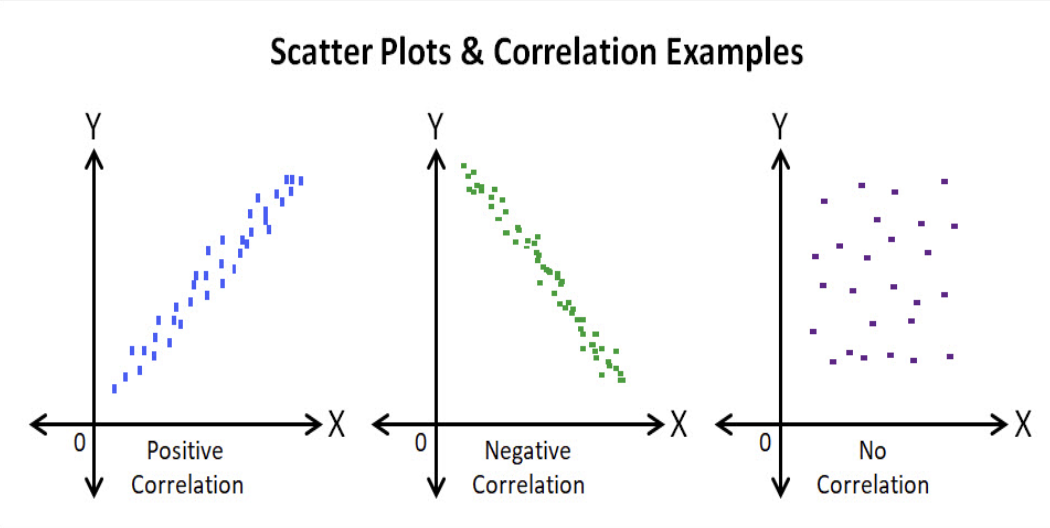
correlation coefficient (r)
a number from -1 to +1
indicates the strength/direction of the relationship between variables
the closer r is to ±1, the more strongly related/predictable the variables are
the tighter the dots are together, the closer they are to ±1
the closer r is to 0, the weaker the relationship/predictability is

statistical analysis
determines how likely any difference between experimental groups is due to chance (p-value)
to find out if there are meaningful differences between two groups
if your p-value is 0.05 or less, your data is NOT happening by chance and your data is statistically significant
how did they prevent confounding variable in baby lab
observer not knowing which toy is good and which is evil when having baby choose
switched shirt colors so the babies weren’t choosing certain shirt colors but actually who they thought were good
used previous research that proved that babies’ eyes look longer at stuff they like to prove that 3 mos can have morality
A researcher wants to determine if the color of an office has any effect on worker productivity. In an experiment, one group performs a task in a yellow room while another performs the same task in a blue room.
independent: color
dependent: productivity
Researchers want to learn whether listening to fast-paced music helps runners perform better during a marathon. In an experiment, one group of runners listens to fast-paced music while another group listens to slow-paced music.
independent: music choice
dependent: runner performance
Researchers want to determine if a new type of treatment will lead to a reduction in anxiety for patients suffering from social phobia. In an experiment, some volunteers receive the new treatment, another group receives a different treatment, and a third group receives no treatment.
independent: type of therapy
dependent: effects on anxiety
Imagine that you conducted an experiment to address the hypothesis that greater detail in a letter of recommendation would make the letter more persuasive. To address this hypothesis, you create two versions of a letter of recommendation that differ with respect to amount of detail. In one condition, the letter of recommendation has many details. In the other condition, the letter of recommendation has few details. Moreover, you randomly assign participants to conditions. In this experiment, you find that, on the average, the letter of recommendation is perceived to be more persuasive in the condition in which there are many details than in the condition in which there are few details.
independent: amount of detail
dependent: amount of persuasiveness
confounding: number of words
recs might like more words as opposed to amount of detail
charlie tries to lose weight over 2 months. the first week, he exercises vigorously. the second week, he gives up meat. the third week, he drinks large amounts of water. the fourth week, he eats just bananas. he continues to vary his approach each week. at the end of his 8-week experiment, he concludes that his best weight loss comes from exercise.
correlational study or experiment?
experiment
independent variable (type of exercise)
dependent variable (amount of weight lost)
ms. tucker wants to see which teaching method is best for her students. for the first half of the semester, she teaches using lecture. she sees what students have learned using a 50-point multiple choice test. for the second half, she teaches using demonstrations/active learning exercises. she evaluates using the same test again, and discovers that studies have better test scores through active learning strategies
experiment
independent: teaching style
dependent: test scores
a new movie shows teen violence against senior citizens. crime rates have increased since the movie release. a reporter compares crime rates before and after the movie to see if the movie causes teen violence.
correlational
no experiment actually conducted
confounding variables: time of year, not knowing who did/didnt watch the movie + whether they committed crime, etc.
violent movie and violence rates are maybe loosely correlated
physician flips a coin to see success of new expensive medicine compared to old cheap medicine. if heads, he administers expensive medicine. if tails, it’s cheap medicine. after 20 patients and 3 months, he asks them to rate the degree of improvement on a 10 point scale. he discovers that the new medicine has no real advantage over the old one.
experiment
randomized groups
independent: type of medicine
dependent: degree of impact
illusory correlation
when people believe that relationships exist between two things when no such relationship exists
ex. moon phases determine behavior
operational definition
precise description of variables
necessary for readers to understand criteria of what was measured
helps repeat the experiment
quasi-experimental
experiments where the independent variable isn’t necessarily controlled by the experimenters (ex. sex)
replication crisis
contemporary issue in higher academia. most well-known studies/scientists have made research that is impossible to replicate
reliability
the ability to produce a given result
doesnt have to be correct, it just has to consistently produce that result (within small margin of error)
types of reliability
inter-rater reliability
internal consistency
test-retest reliability
inter-rater reliability
how much observers agree on the observations
internal consistency
how much different survey items that measure the same thing correlate with one another
test-retest reliability
how much the outcome of a measure remains consistent through repetition
validity
how accurate an instrument accurately measures
answering the thing it was supposed to answer
types of validity
ecological validity
construct validity
face validity
ecological validity
how much results can be generalized/applied to the real world
construct validity
how much a variable actually measures what it’s supposed to
face validity
how seemingly valid a variable is on the surface
research guidelines with human/animal participants
informed consent
debriefing (if deception was used)
minimize harm/pain
informed consent
description of what you can expect during the study
includes risks and implications
TELL THEM THEY CAN LEAVE AT ANY TIME
confidential information
parents will sign for minors
deception
sometimes used if necessary, to maintain the integrity of the experiment
ex. if testing how people’s opinion of someone is affected by their clothes, you would not tell the participants that that is what they judge them on because it could make them respond inauthentically
debriefing
says the full experiment including the deception and why it was used
how is the baby lab still meaningful if it was 80% of babies producing results
it is still reliable, producing consistent results when people repeat it
though maybe it’s not necessarily valid
IRB - Institutional Review Board
ethics committee that approves/rejects proposed studies + gives feedback
Melissa is running a study to see if girls and boys average different amounts of participation in classrooms. She hypothesizes that girls participate more than boys and plans to observe students in various classes + record how often they raise their hands. For the first part of her data collection, Melissa selects two boys and two girls to study. She finds that the girls raise their hands an average of 4.7 times per week while th eboys only raise their hands an average of 1.3 times in the same classes. Do you think this difference is likely to be statistically significant? Why or why not?
Next, Melissa expands her study to 50 boys and 50 girls. She finds that girls raise their hands an average of 3.1 times per week and boys raise their hands an average of 3.0 times per week in their social studies class. Do you think this difference is likely to be statistically significant? Why or why not?
In a third data collection, Melissa studies another 50 boys and 50 girls. Girls raise their hands an average of 3.2 times per week and boys 2.4 times in math class. She finds out there is tremendous variability because some students (both boys and girls) raise their hands 15 times a week, while others don’t raise their hands at all. How does the variability in responses affect the likelihood of the difference between girls’ and boys’ participation to be statistically significant?
no because the sample size is too small. those 2 girls could’ve been super extroverted/confident about their capabilities compared to the boys. we also don’t know about the students’ prior knowledge of the classes and any learning differences any of them may have.
same as last question. sample size is hard to generalize and too many confounding variables. also it changed from all classes to just social studies, making it even harder to apply.
the outliers could screw the average and make the difference in raising hands statistically insignificant. use IQR to fix. also the class changed again to math…
tyrone wants to study the impact of watching sexually suggestive/explicit television on people’s attitudes toward sex. he plans to test ninth graders because he believes they are still young enough to be highly impressionable. he will solicit volunteers to come after school. half will be assigned to watch one hour of sexually explicit clips from a cable TV show while the other half will view an hour of clips from the same show that aren’t sexual. after watching the TV shows, all participants will fill out a questionnaire about the attitudes toward sex.
what additional information might you want to know as an IRB member to decide whether or not it should be supported?
benefits and harms?
what would your recommendation be?
research that proves 9th graders are impressionable, promise of parental consent, option to opt out, how many students in each group and how long the clips are
benefits: know impact of porn on young minds - harms: could further explore it when they shouldn’t, get groomed in those spaces, develop porn addiction → unhealthy relationship with sex
not do the study at all cause the harms outweigh the pros. you also need a bigger age range not just 9th graders. do a correlational study instead?
priya wants to see whether listening to music while working out makes people exercise harder. she plans to ask college students to come to the gym and run on a treadmill for half an hour either while listening to music or in silence. the dependent measure will be the number of miles run in that time period.
what additional information might you want to know as an IRB member to decide whether or not it should be supported?
benefits and harms?
what would your recommendation be?
what kind of music specifically? hertz level? what does “exercise harder” mean? how many students?
benefits: people who want to lose weight can use the results to help; harms: maybe someone falls/faints but not much harm
divide in gendered groups as well with similar heights/weights + address questions above
charlotte wants to see the effect of labeling students (gifted vs struggling) on their achivement in second grade. she proposes that students in an elementary school be divided into reading groups in whcih ability levels (determined by previous test scores) are evenly mixed. one group will be told they are gifted, another struggling, and another where they say nothing. charlotte theorizes that by the end of the second-grade year, the gifted group will outperform those in the struggling group on the same reading test.
what additional information might you want to know as an IRB member to decide whether or not it should be supported?
benefits and harms?
what would your recommendation be?
i feel like i know everything and confounding variables have been cleared up (like if the abilities are actually mixed but we know the test scores)
benefits: know the power of language in children; harm: the struggling group will internalize it for life, as proven by The Monster Study (1939)
reject it just because the harms have been proven to be permanent, more harm done than good