Cells
 Call Kai
 Learn
Learn Practice Test
 Spaced Repetition
 Match
Match Flashcards
 Knowt Play
1/127

There's no tags or description
Looks like no tags are added yet.
Name | Mastery | Learn | Test | Matching | Spaced | Call with Kai | Chat |
|---|
No analytics yet
Send a link to your students to track their progress
128 Terms
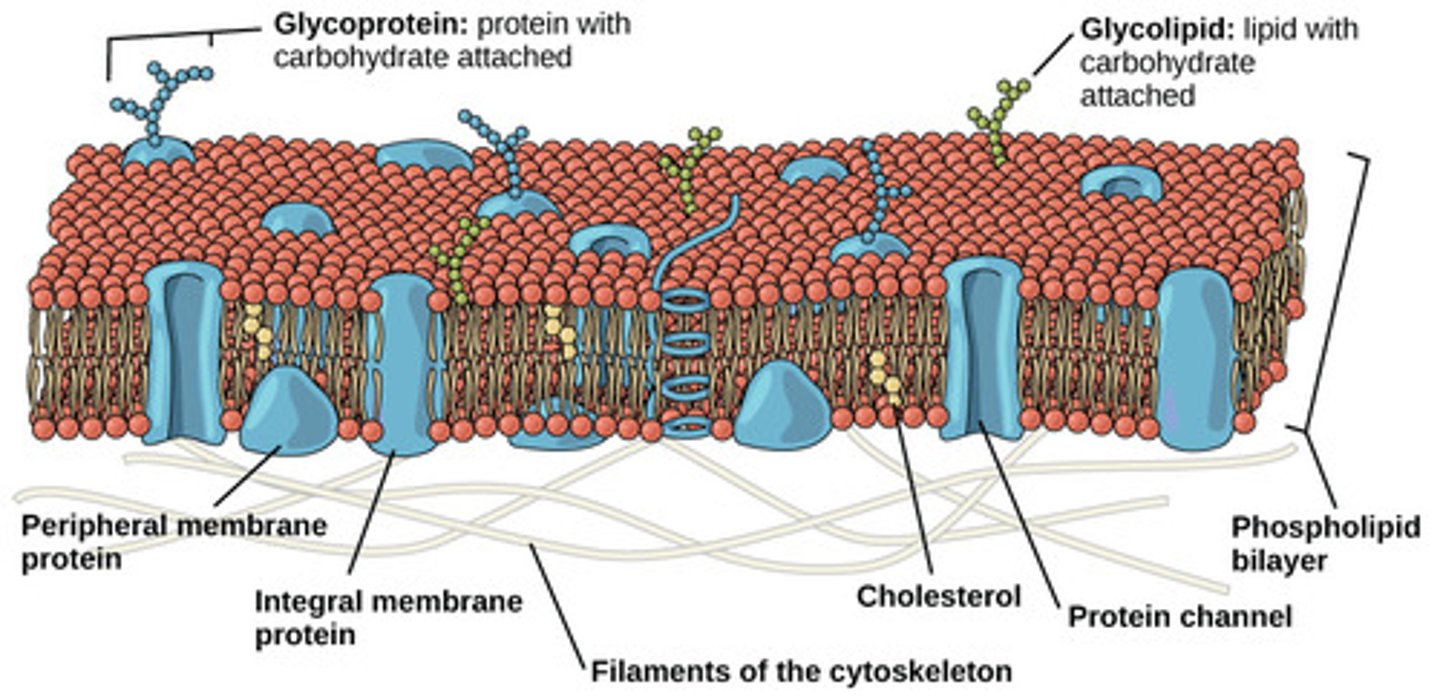
What are the 3 types of membrane proteins?
1. peripheral
2. integral
3. transmembrane
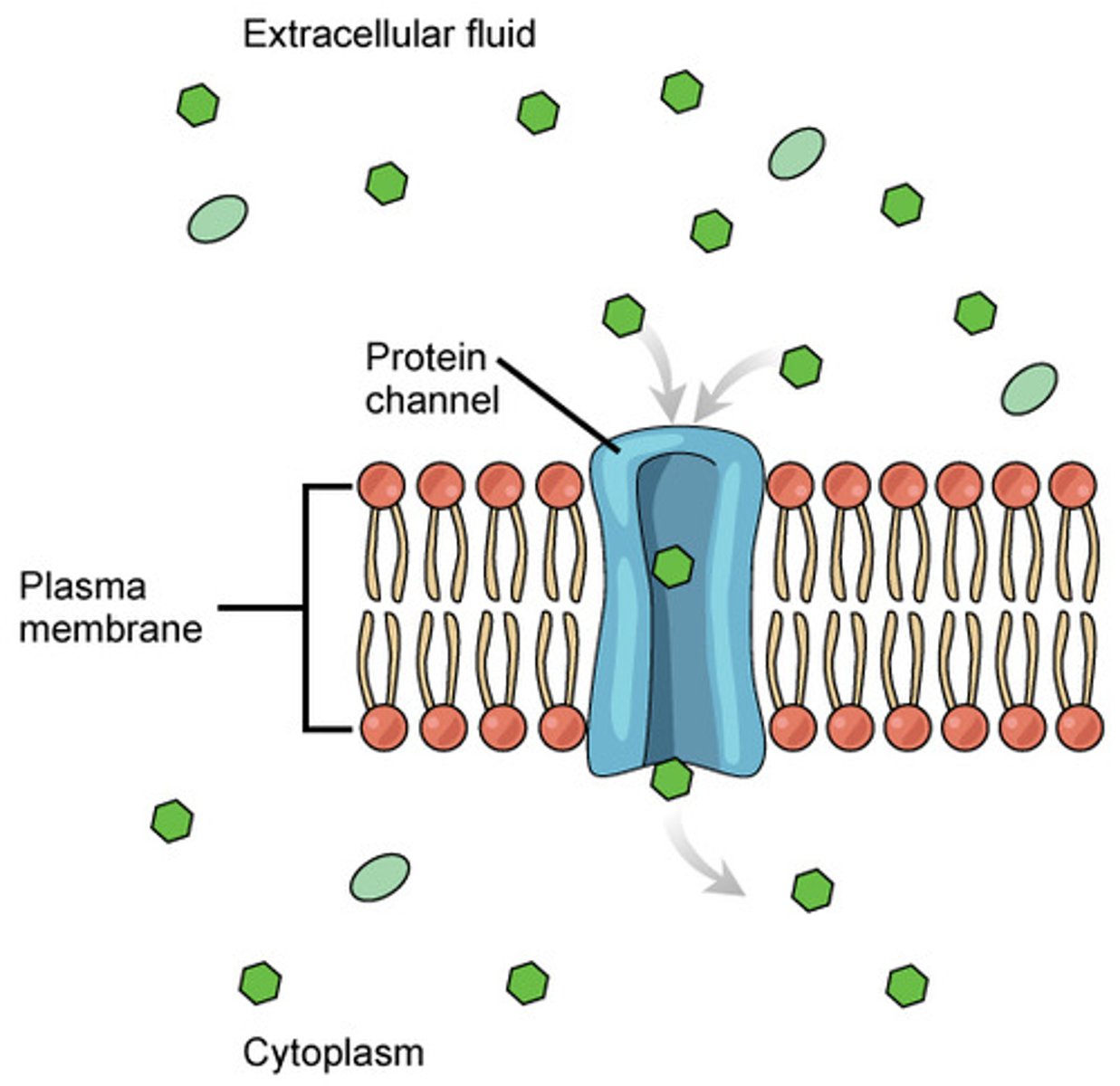
Which membrane proteins provide a passageway through the membrane for hydrophilic, polar, and charged substances?
channel proteins
Which membrane proteins are a type of glycoprotein that distinguish between self and foreign substances?
recognition proteins
(Note: MHC on macrophage)
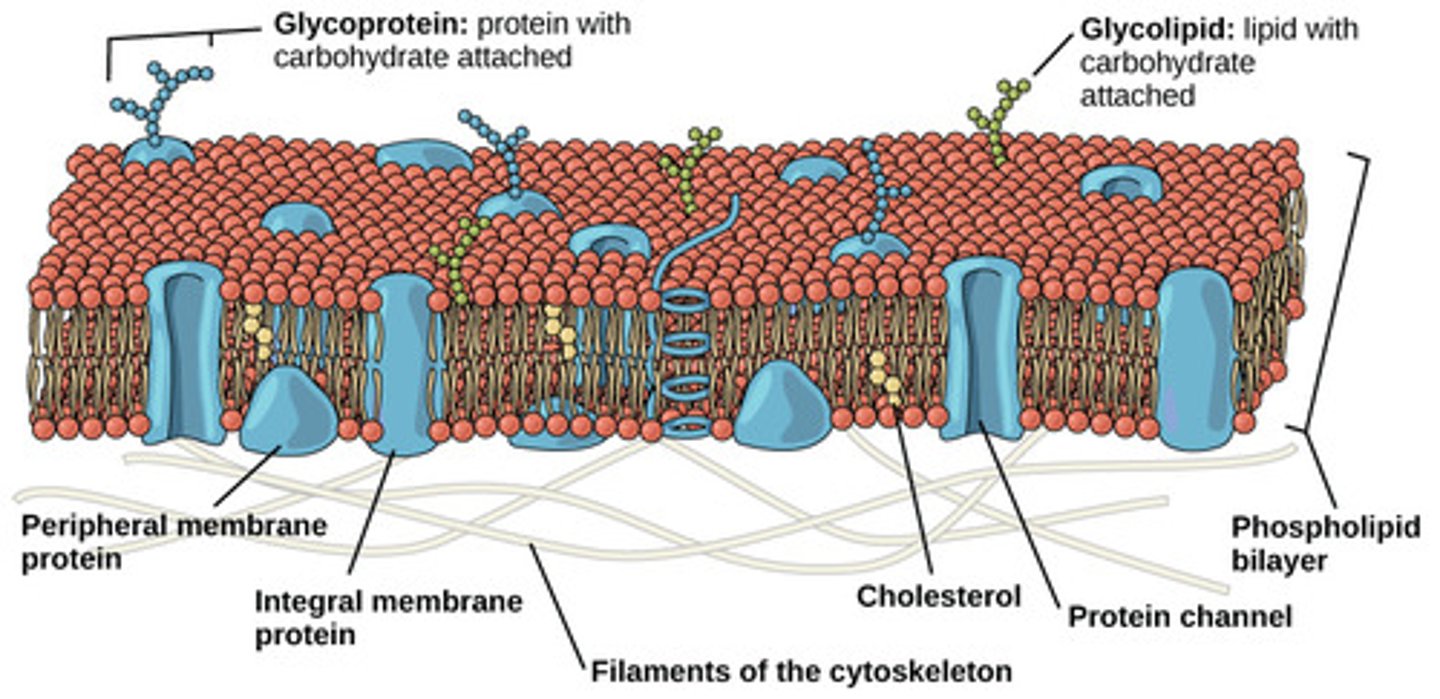
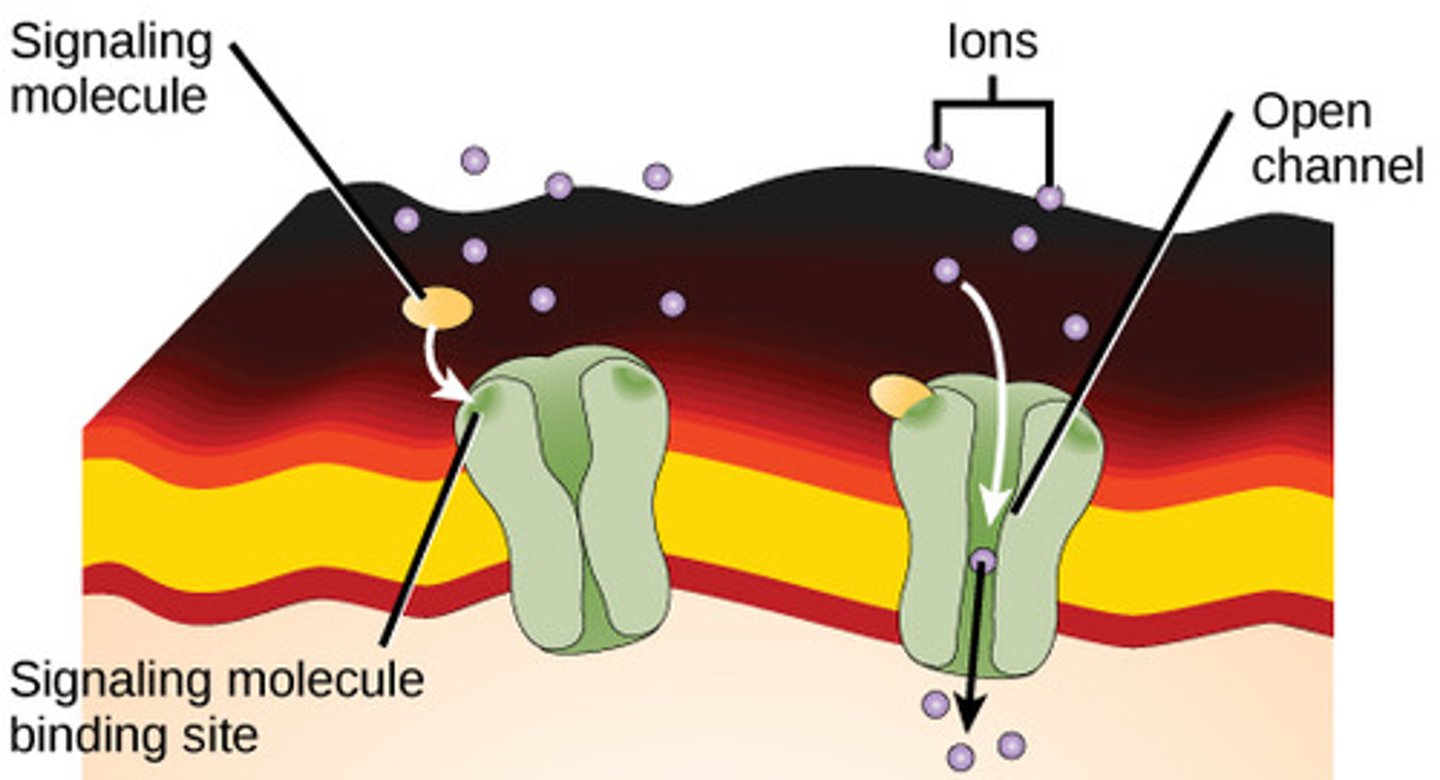
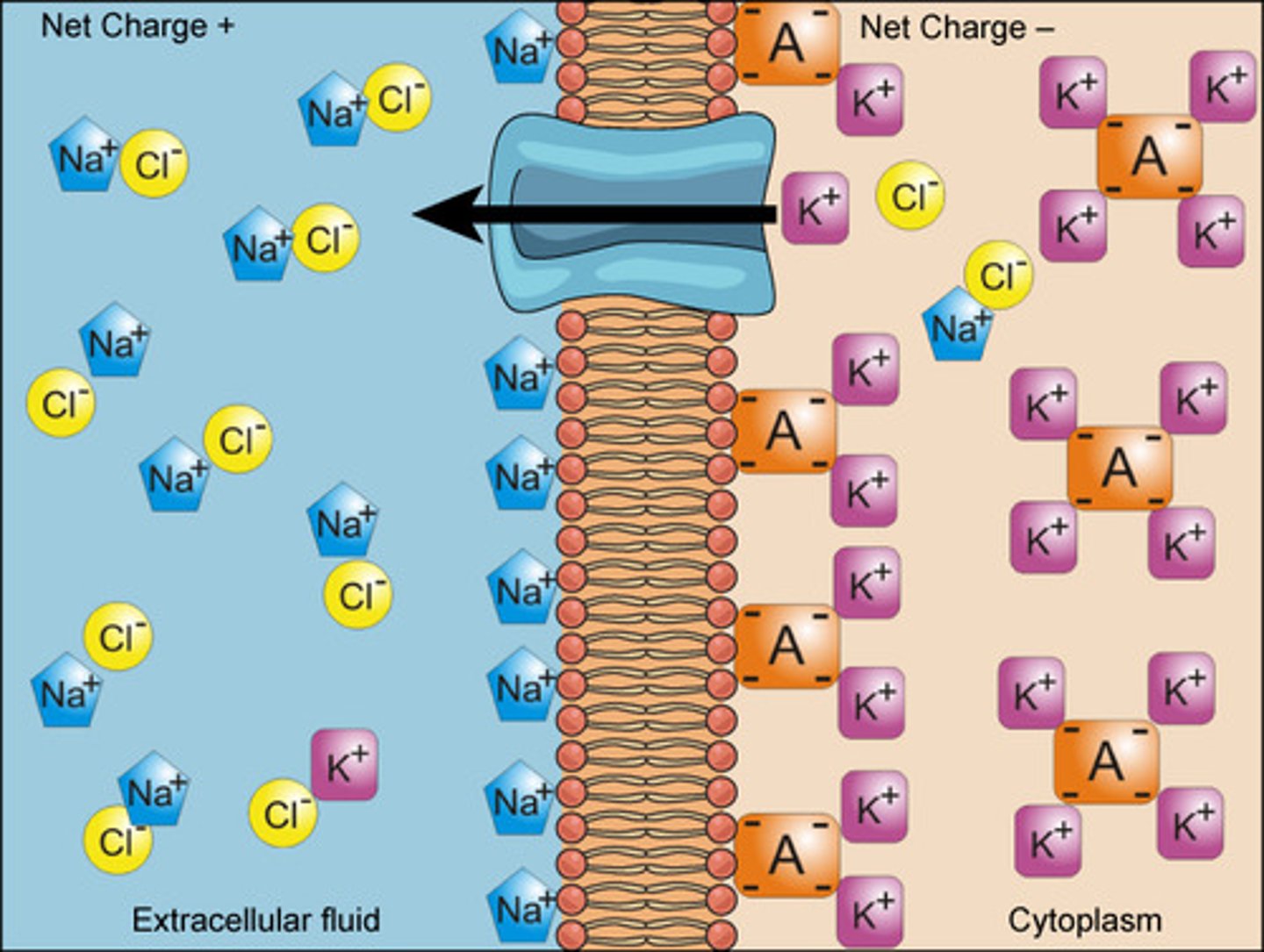
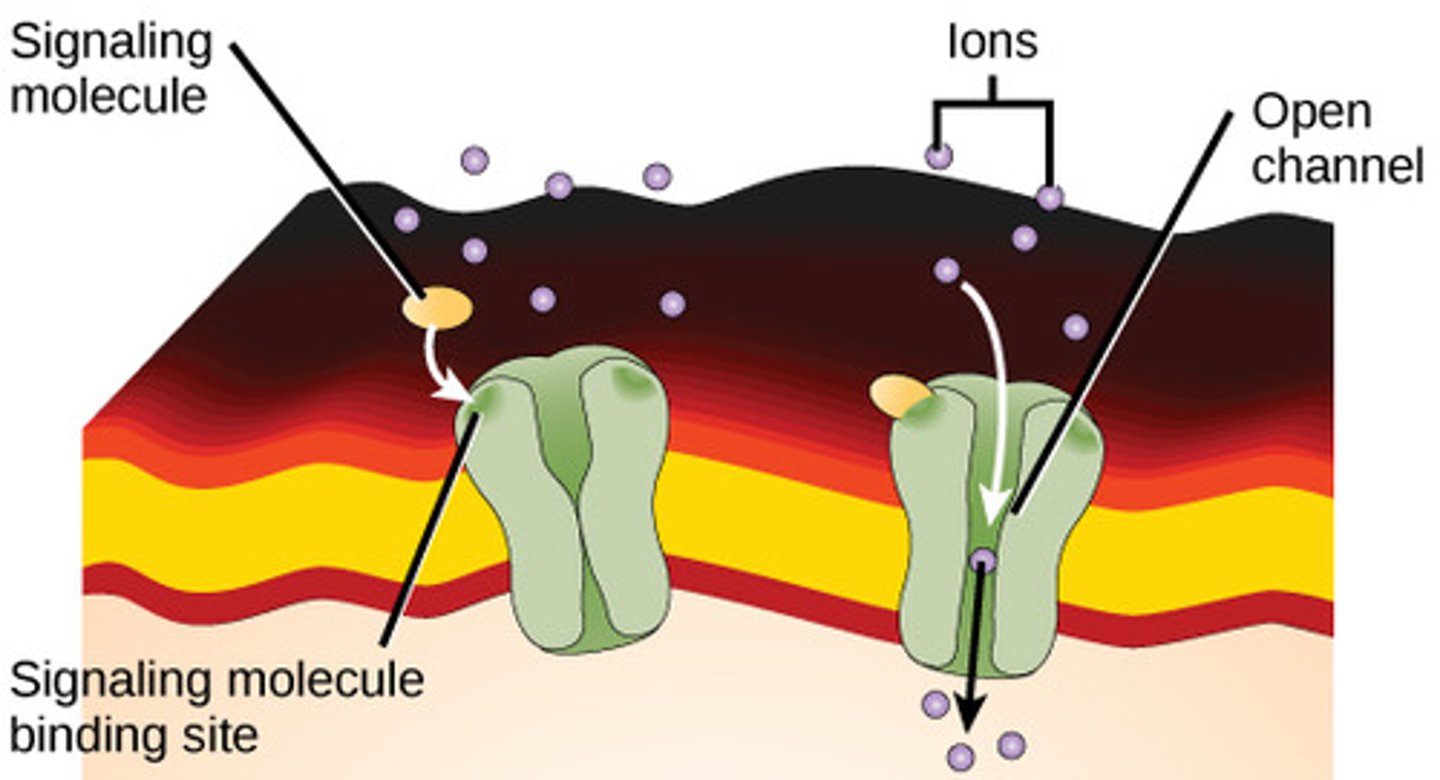
Which membrane proteins are used to pass ions across the membrane and referred to as gated channels in nerve and muscle cells?
ion channels
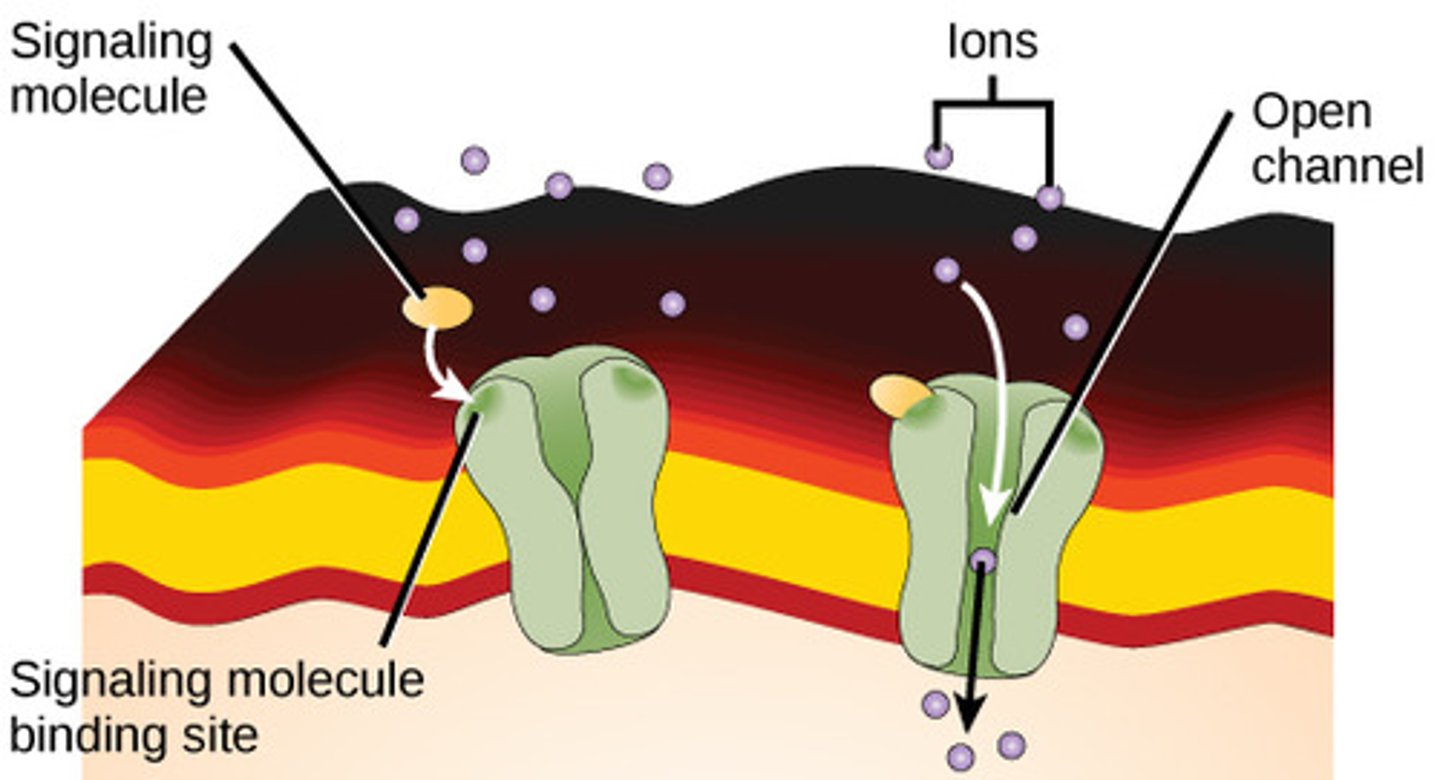
What are the types of ion channels?
1. voltage-gated
2. ligand-gated
3. mechanically gated
Which membrane proteins allow the passage of certain ions and small polar molecules, are less specific, and create relatively large openings?
porins
Which membrane proteins are specific to movement across the membrane via integral membrane proteins?
carrier proteins
How do carrier proteins allow specific molecules to pass across the membrane?
changes shape after
binding to specific molecule
Which membrane proteins can use ATP to transport materials across the membrane?
transport proteins
(Note: includes active
transport and facilitated
transport)
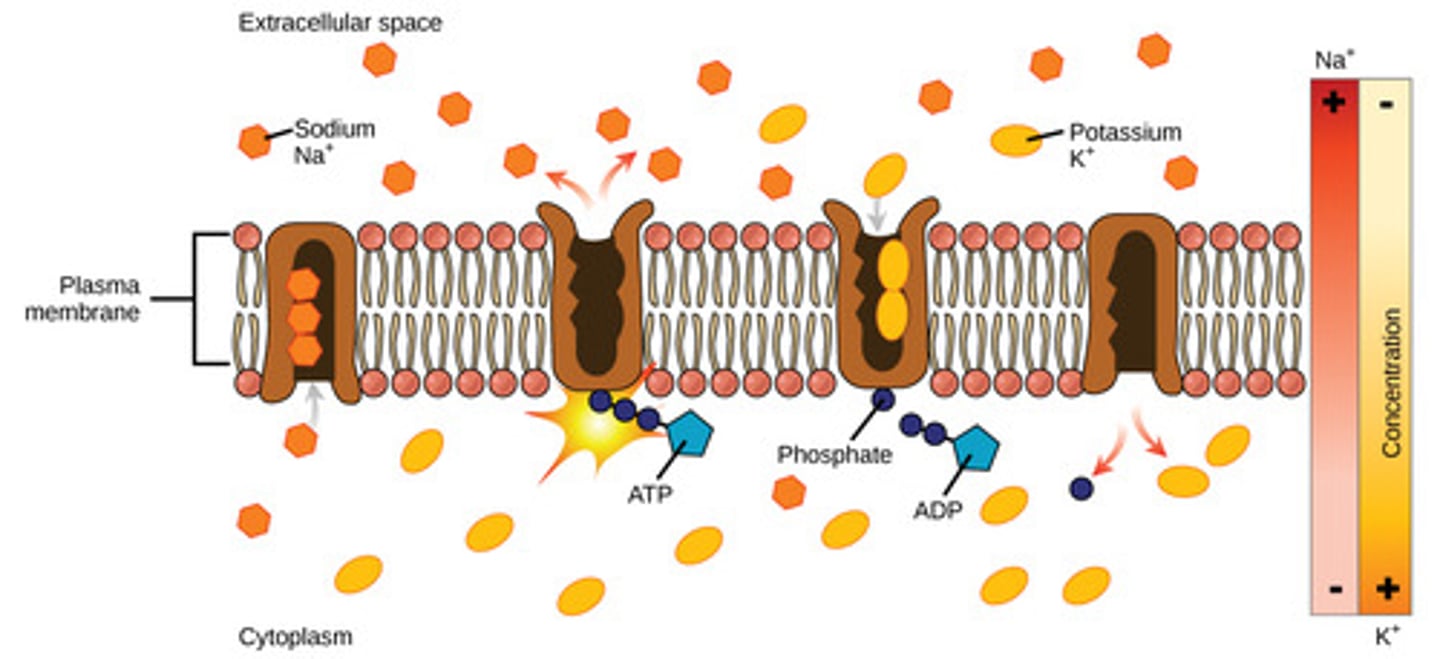
What is the difference between active transport and facilitated diffusion?
active transport requires energy and facilitated diffusion does not
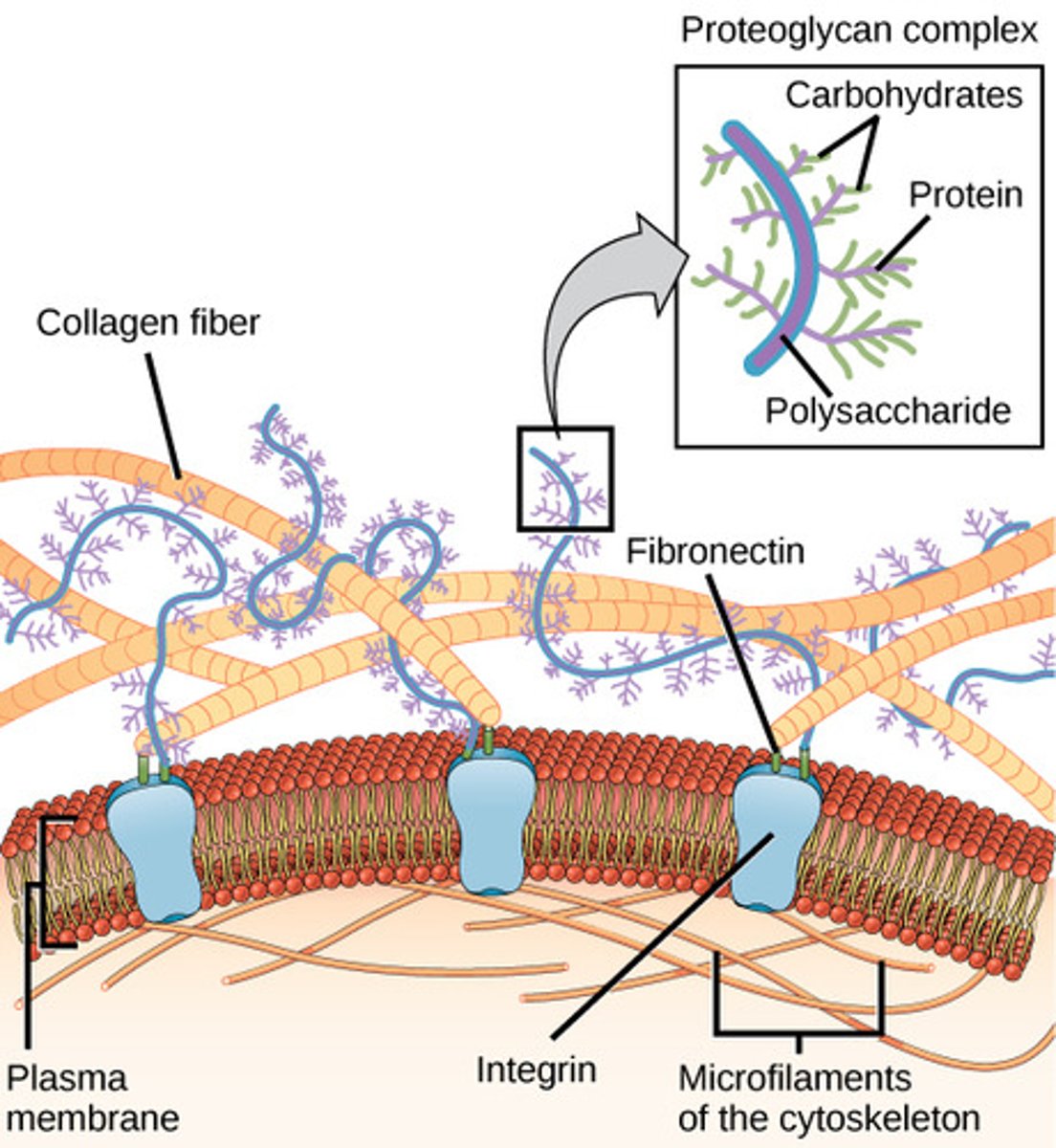
Which membrane proteins attach cells to neighboring cells and provide anchors for stability via internal filaments and tubules?
adhesion proteins
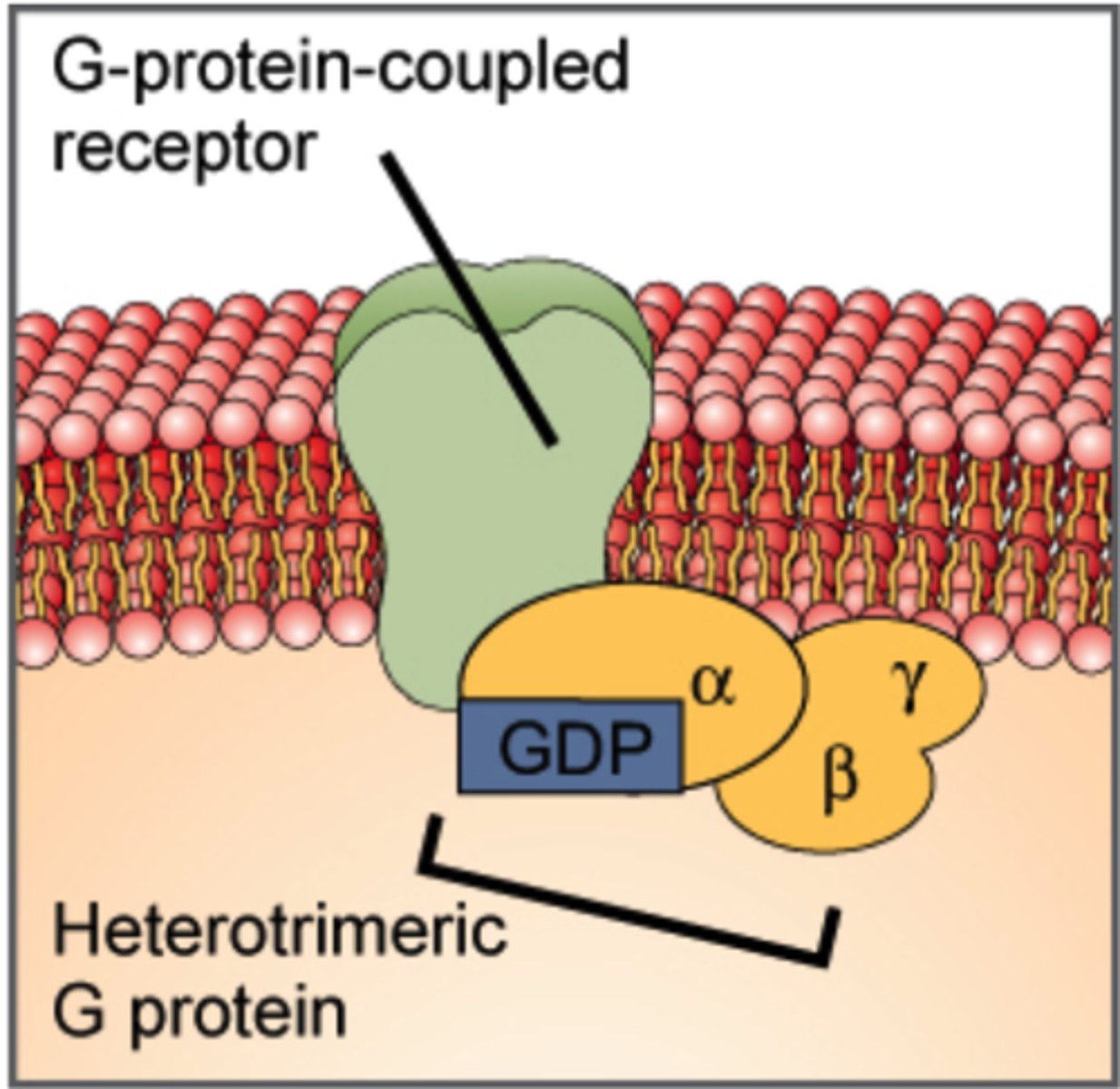
Which membrane proteins serve as binding sites for hormones and other trigger molecules?
receptor proteins
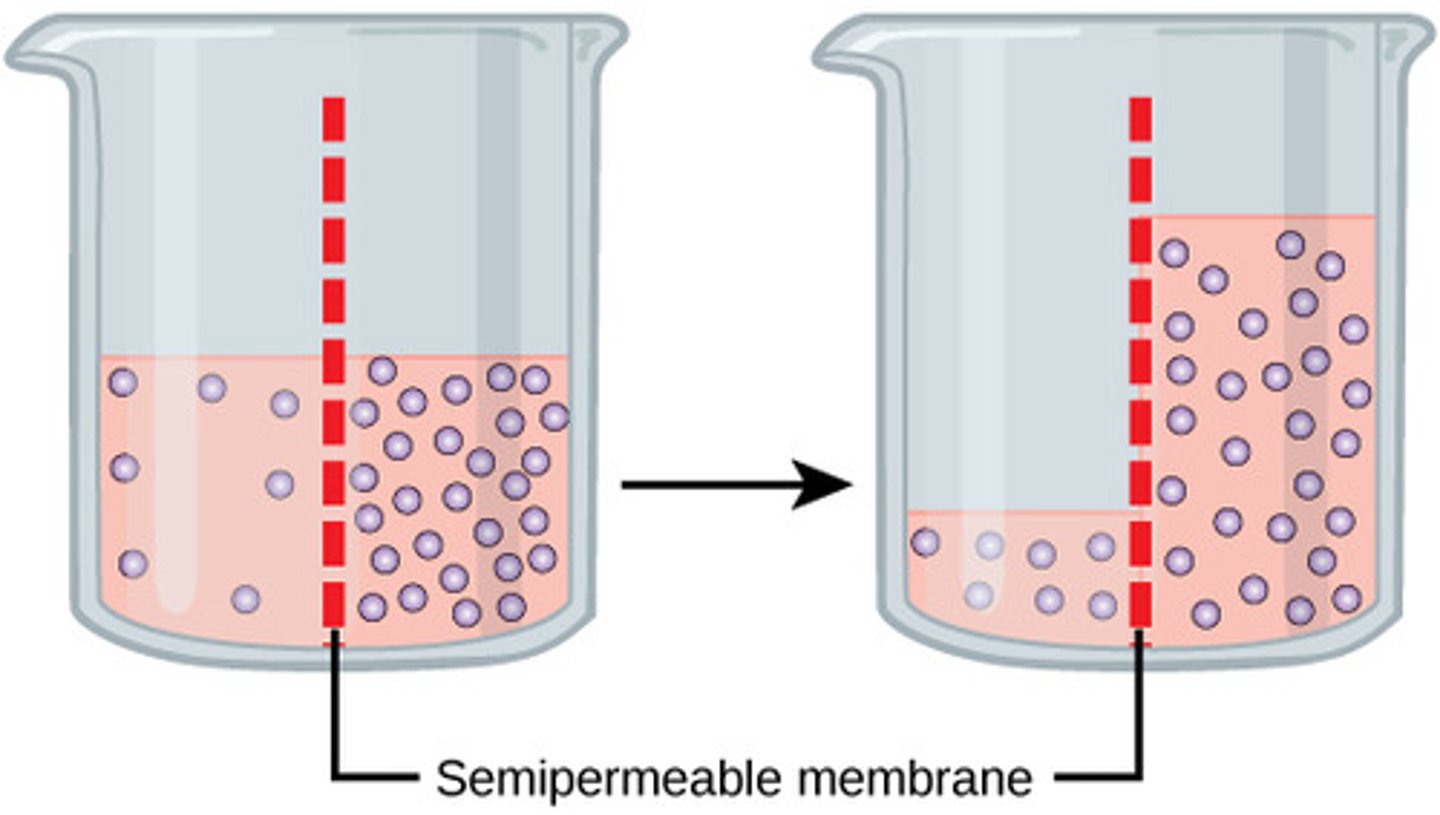
Which membrane property allows small uncharged molecules to cross the cell membrane?
phospholipid membrane
semi permeability
(Note: all other substances
require a transporter)
Which membrane component maintains membrane integrity over a range of temperatures?
cholesterol
(Note: sterols perform
similar functions in plants)
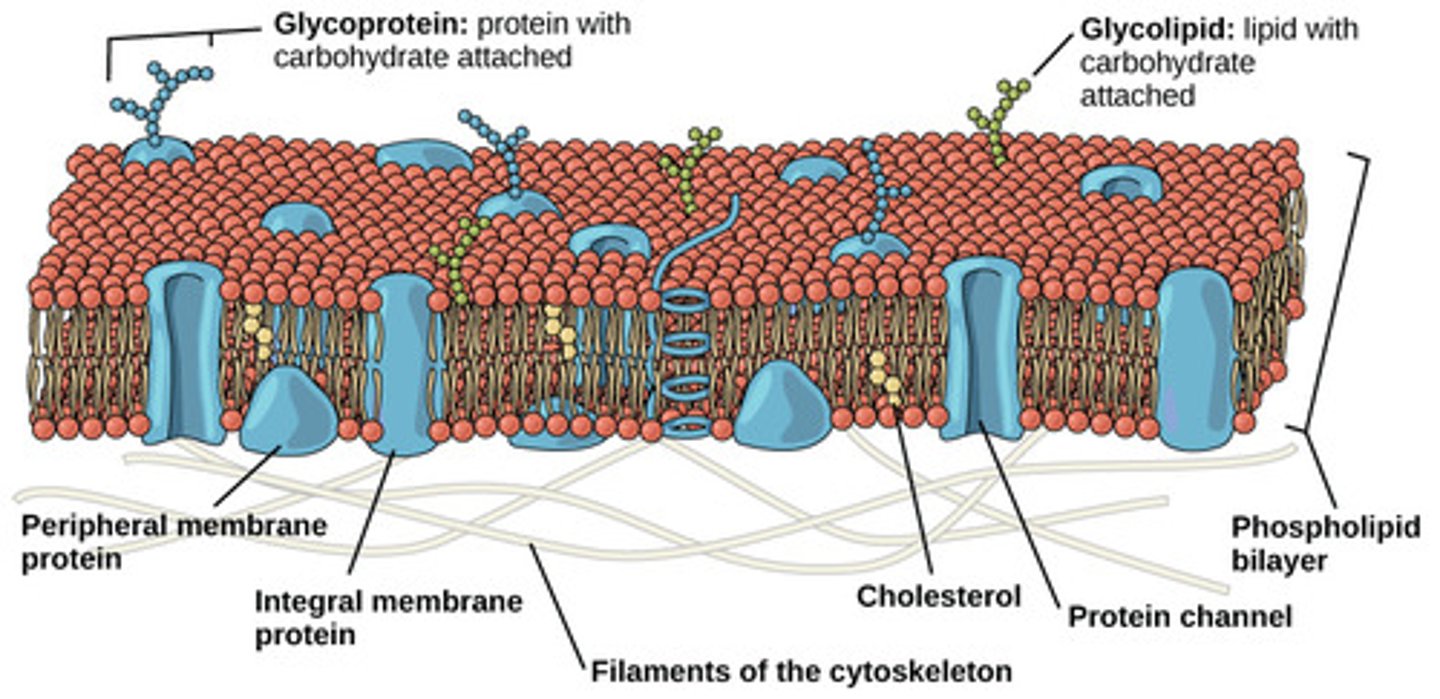
What do prokaryotic cells use instead of cholesterol in their membrane?
hopanoids
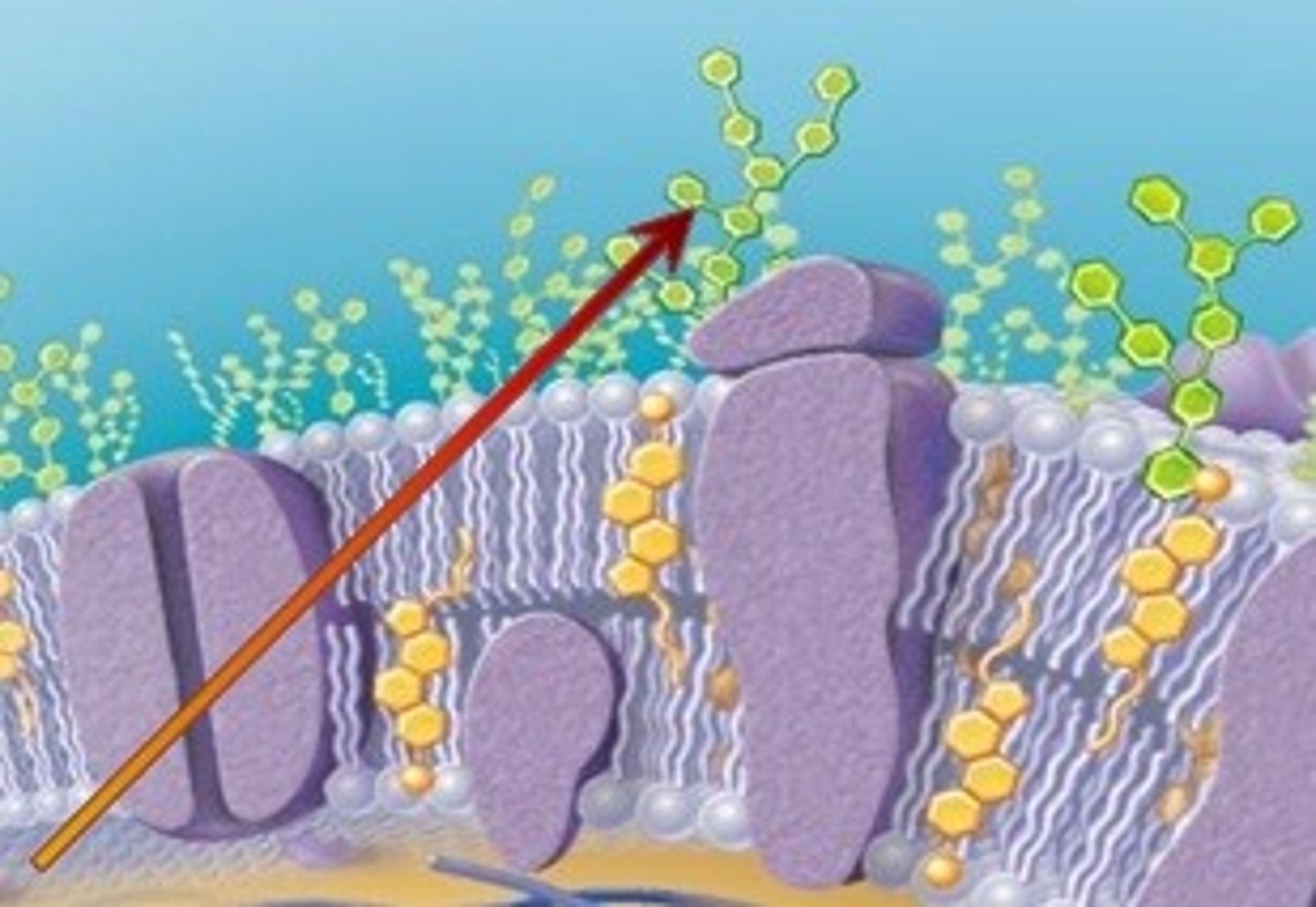
Which membrane component makes a carbohydrate coat that covers the cell wall of some bacteria and the plasma membrane of some animal cells?
glycocalyx
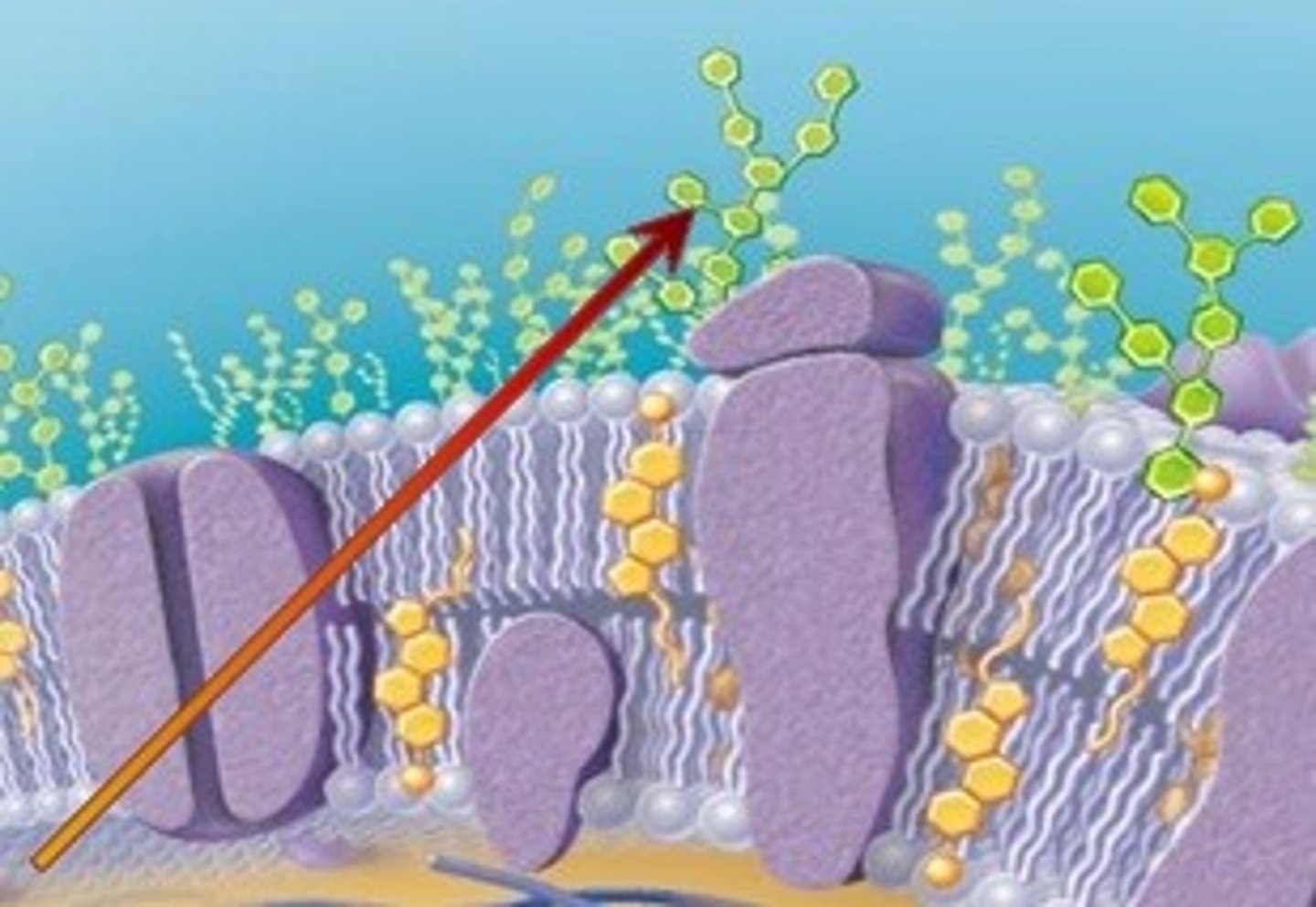
What are the components of the glycocalyx?
1. glycolipids attached
to the plasma membrane
2. glycoproteins serving
as recognition proteins
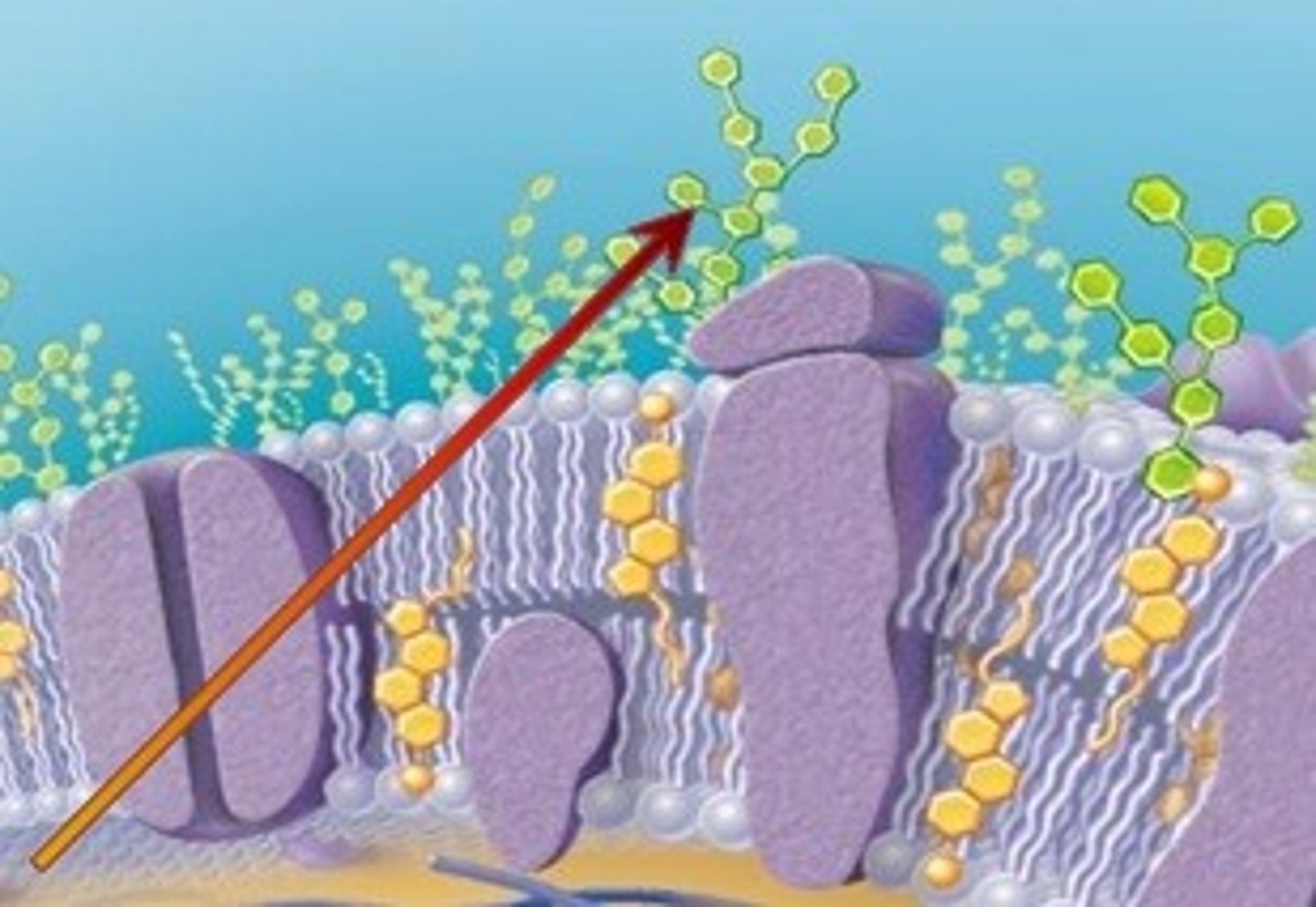
What are the functions of the glycocalyx?
1. adhesion
2. barrier to infection
3. markers for
cell-cell recognition
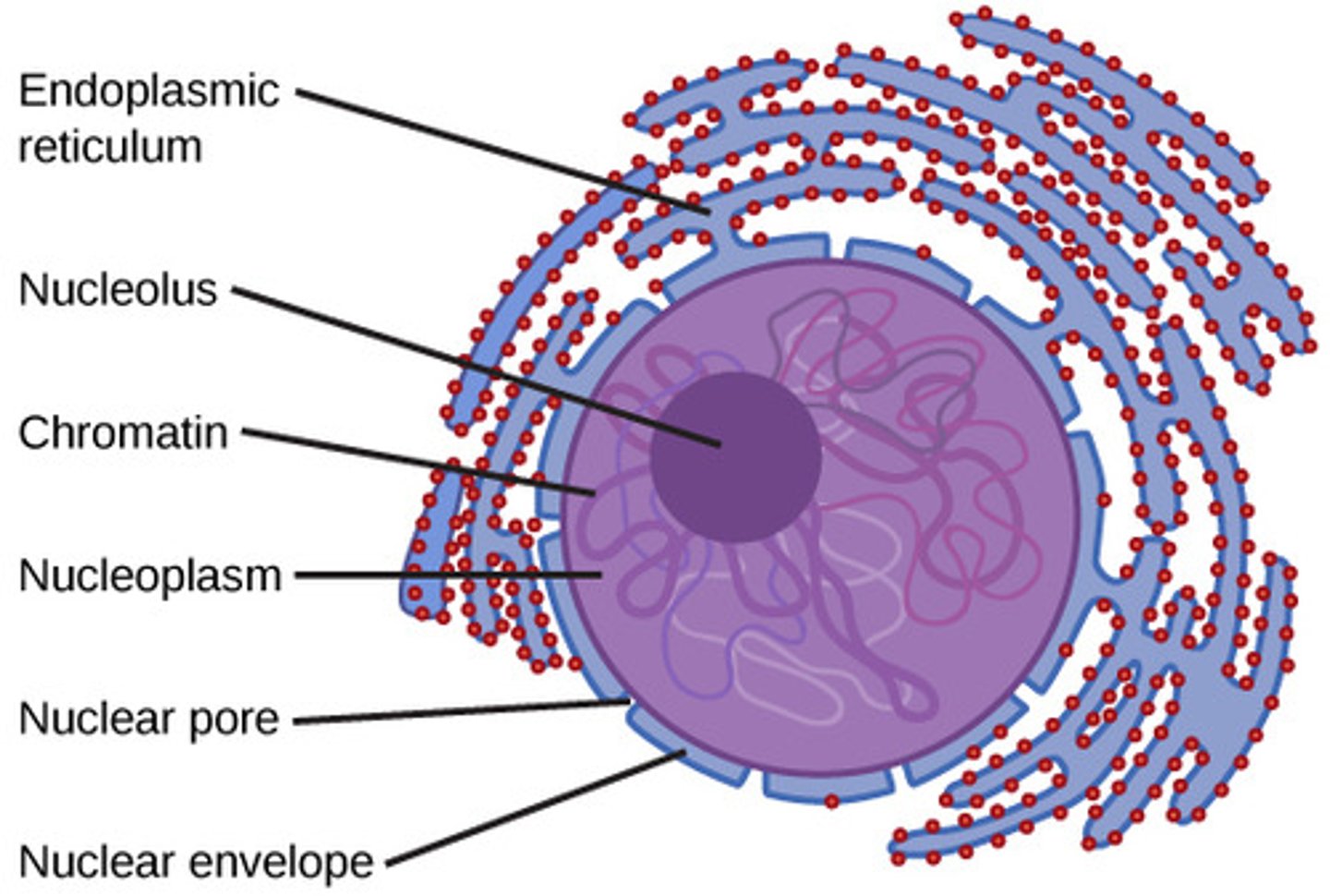
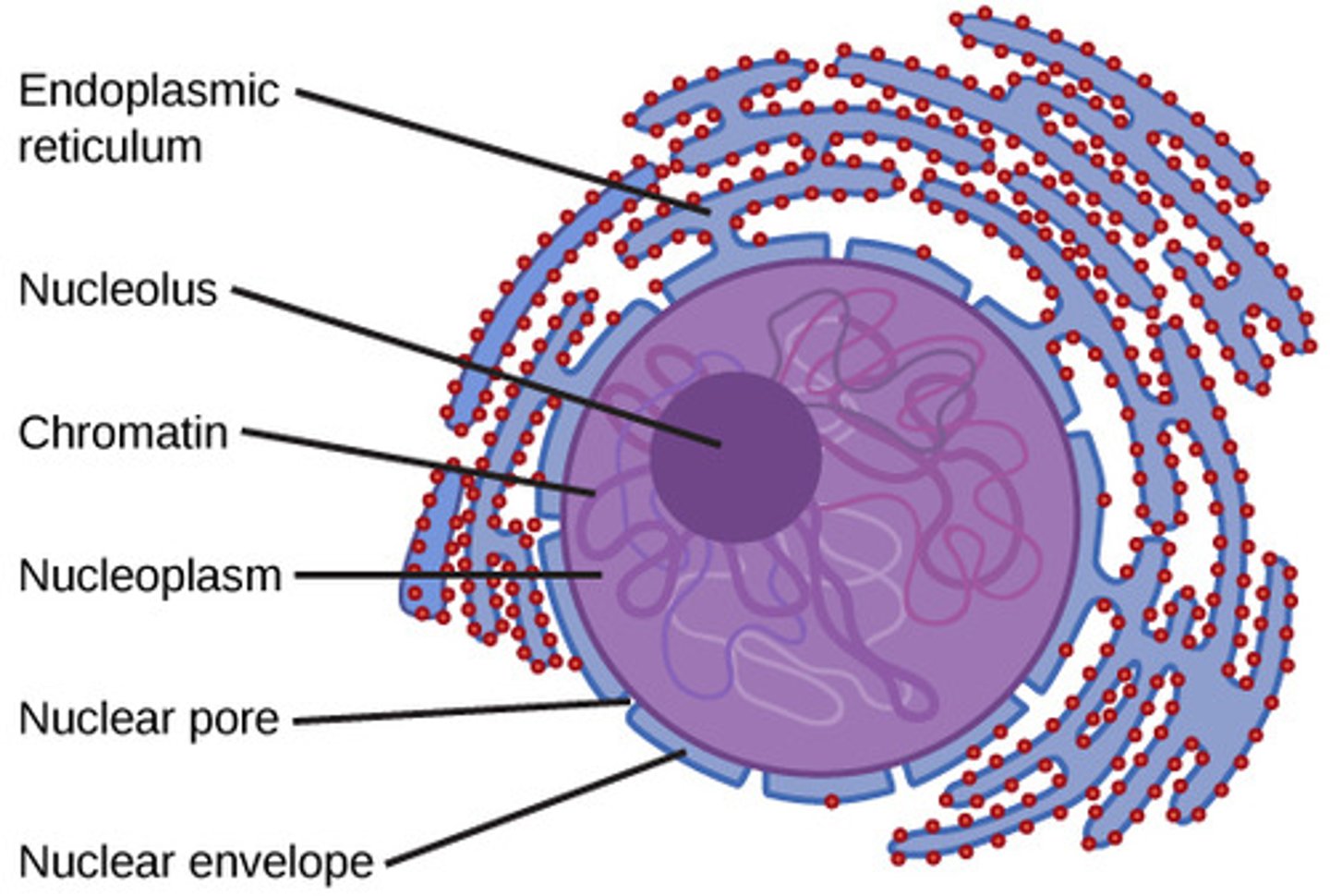
Which organelle contains chromatin, which is the general packaging structure of DNA around proteins in eukaryotes?
nucleus
(Note: tightness in
packaging depends
on cell stage)
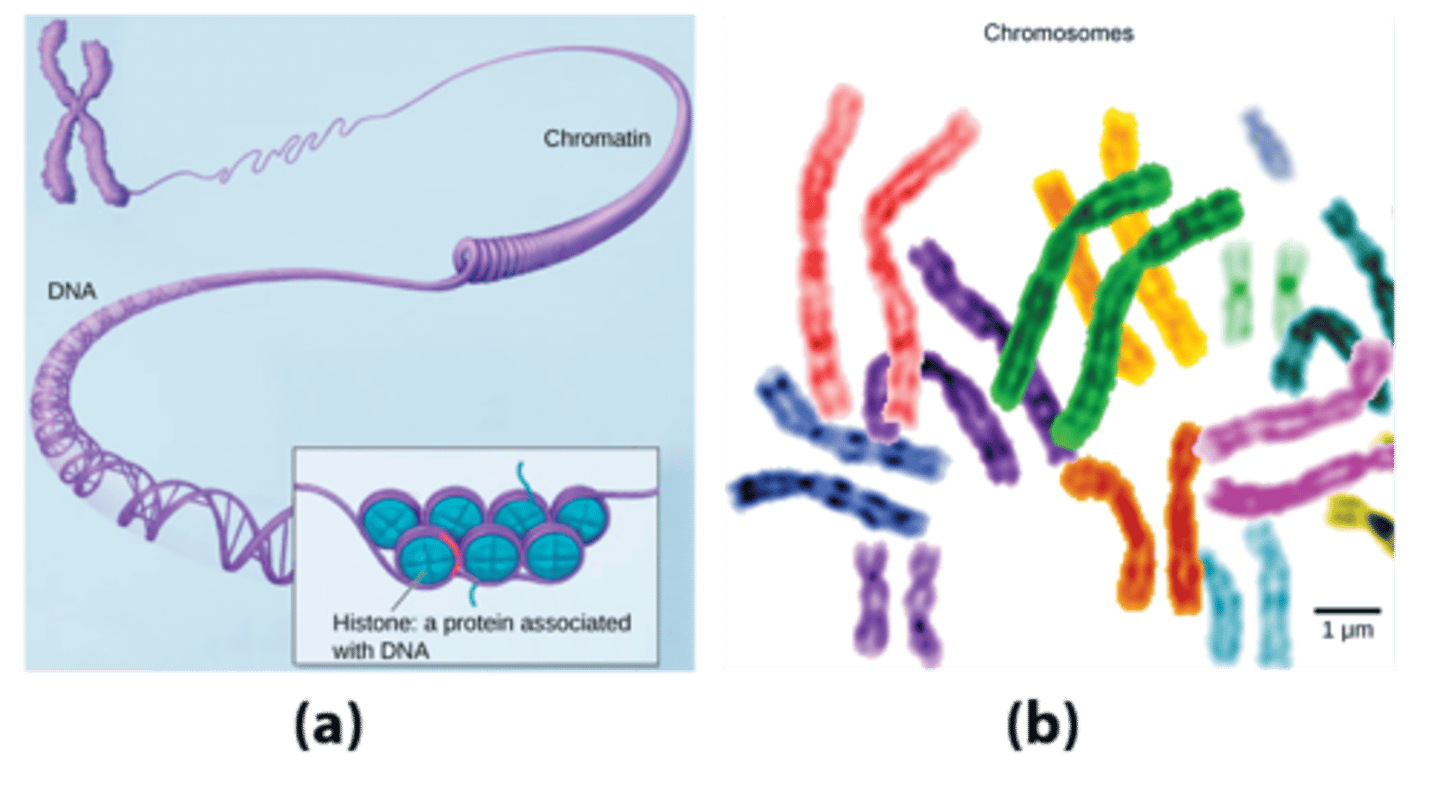
What are tightly condensed chromatin when the cell is ready to divide?
chromosomes
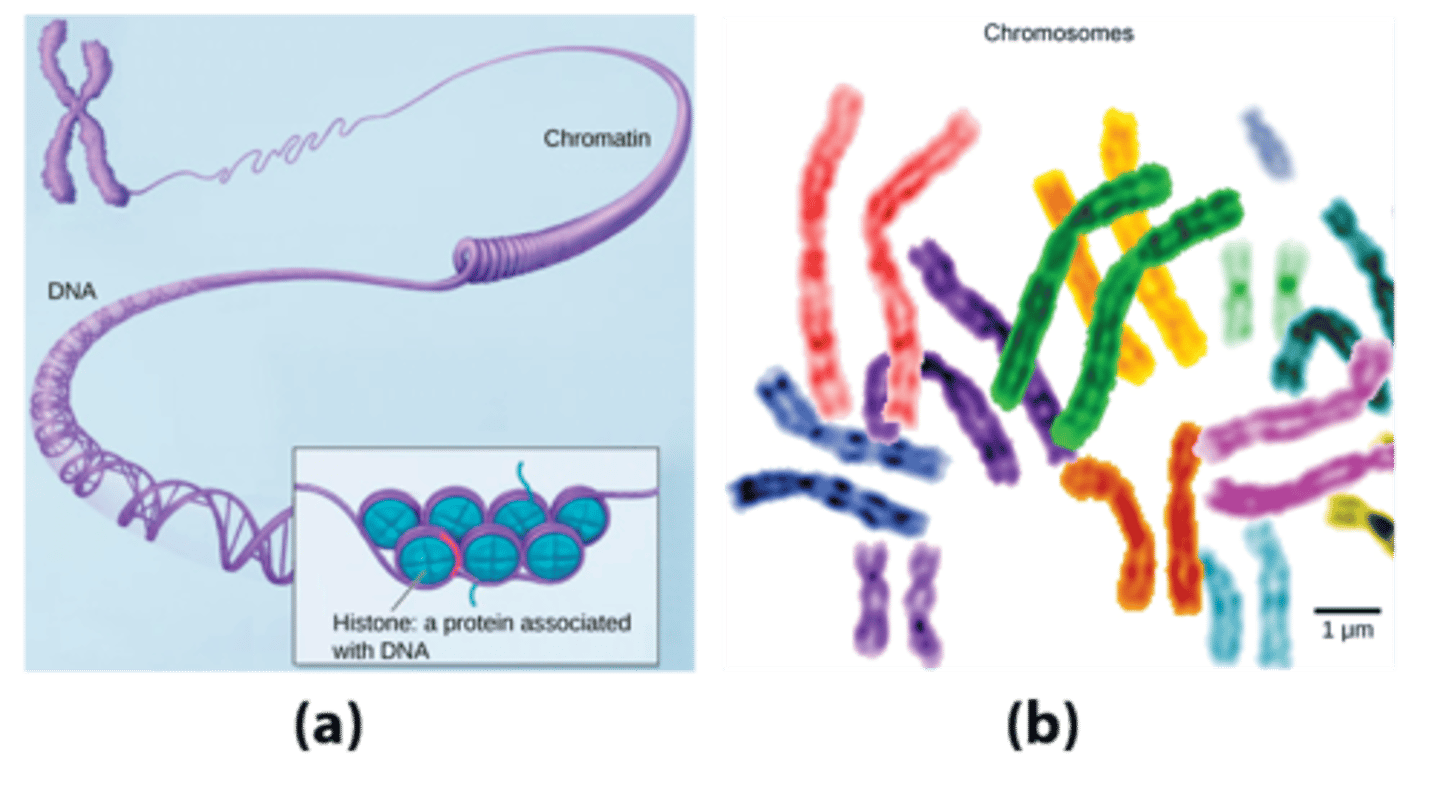
What structures serve to organize DNA which coil around it into bundles called nucleosomes?
histones
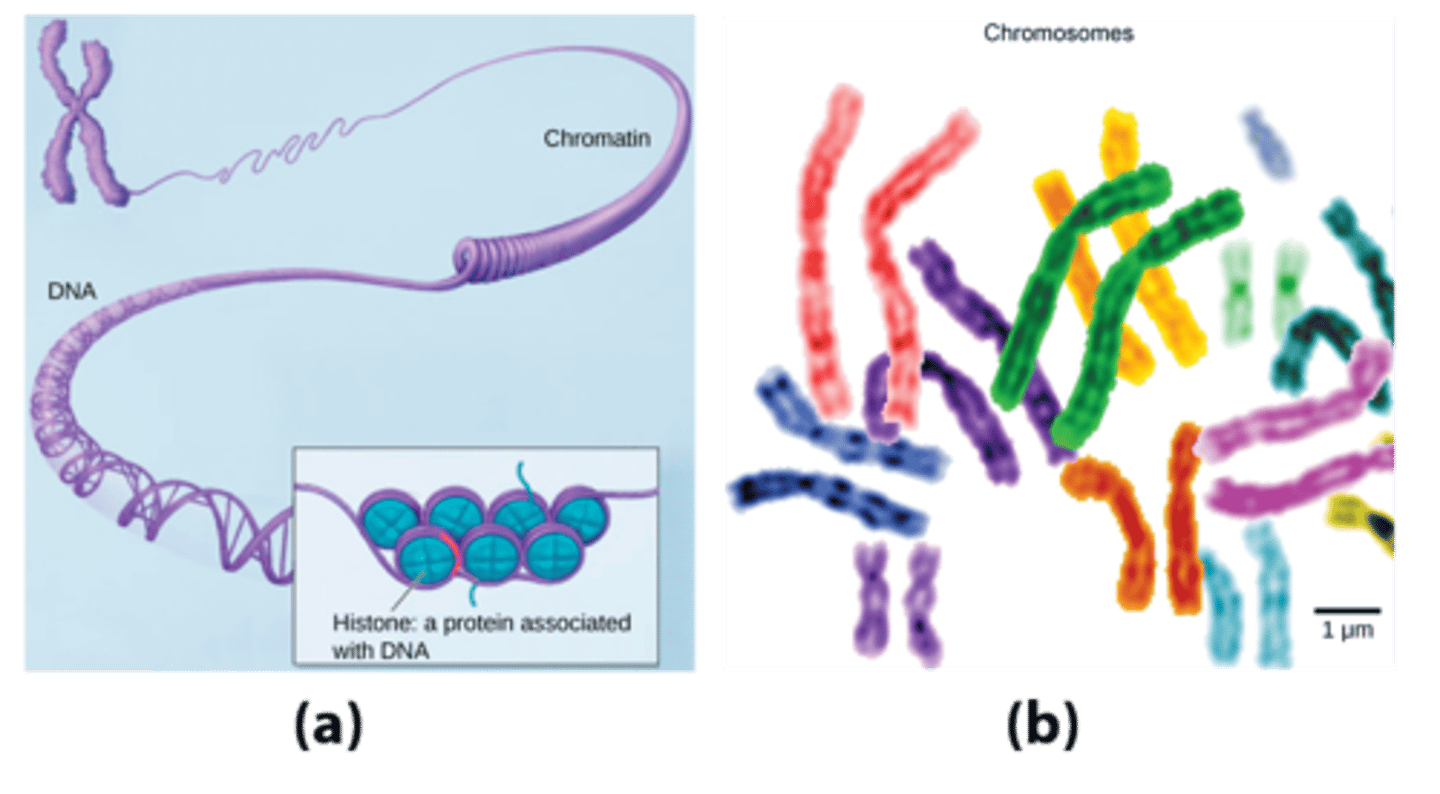
Nucleosomes are wrapped around what number of histone proteins?
8
Which structure is located inside the nucleus and serves as the site of ribosome synthesis?
nucleolus
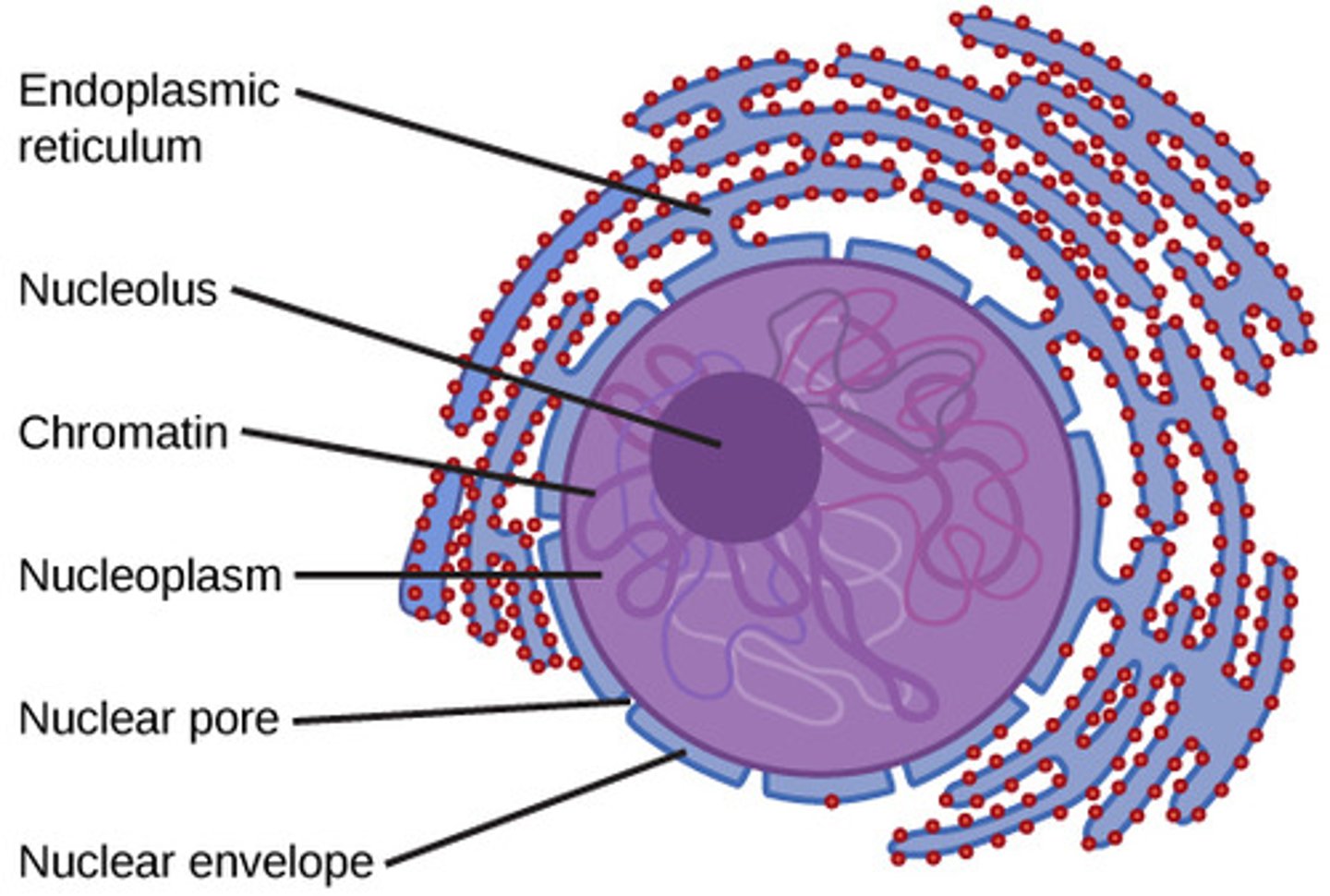
What organelles are synthesized using rRNA and proteins which are imported from the cytoplasm?
ribosomes
(Note: Once ribosomal
subunits form, they are
exported to the
cytoplasm for final
assembly into a
complete ribosome)
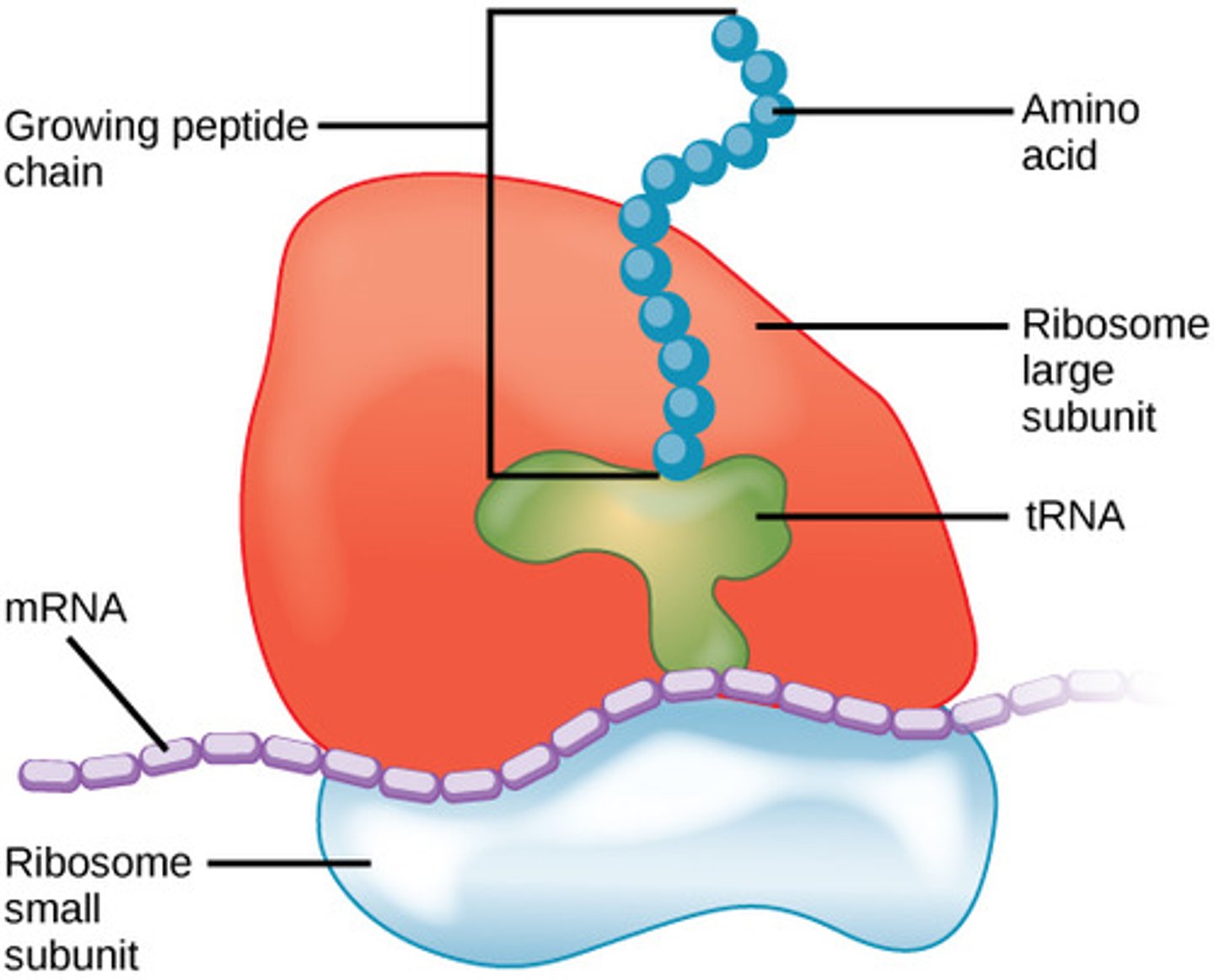
What is the double-layered boundary that binds the nucleus?
nuclear envelope
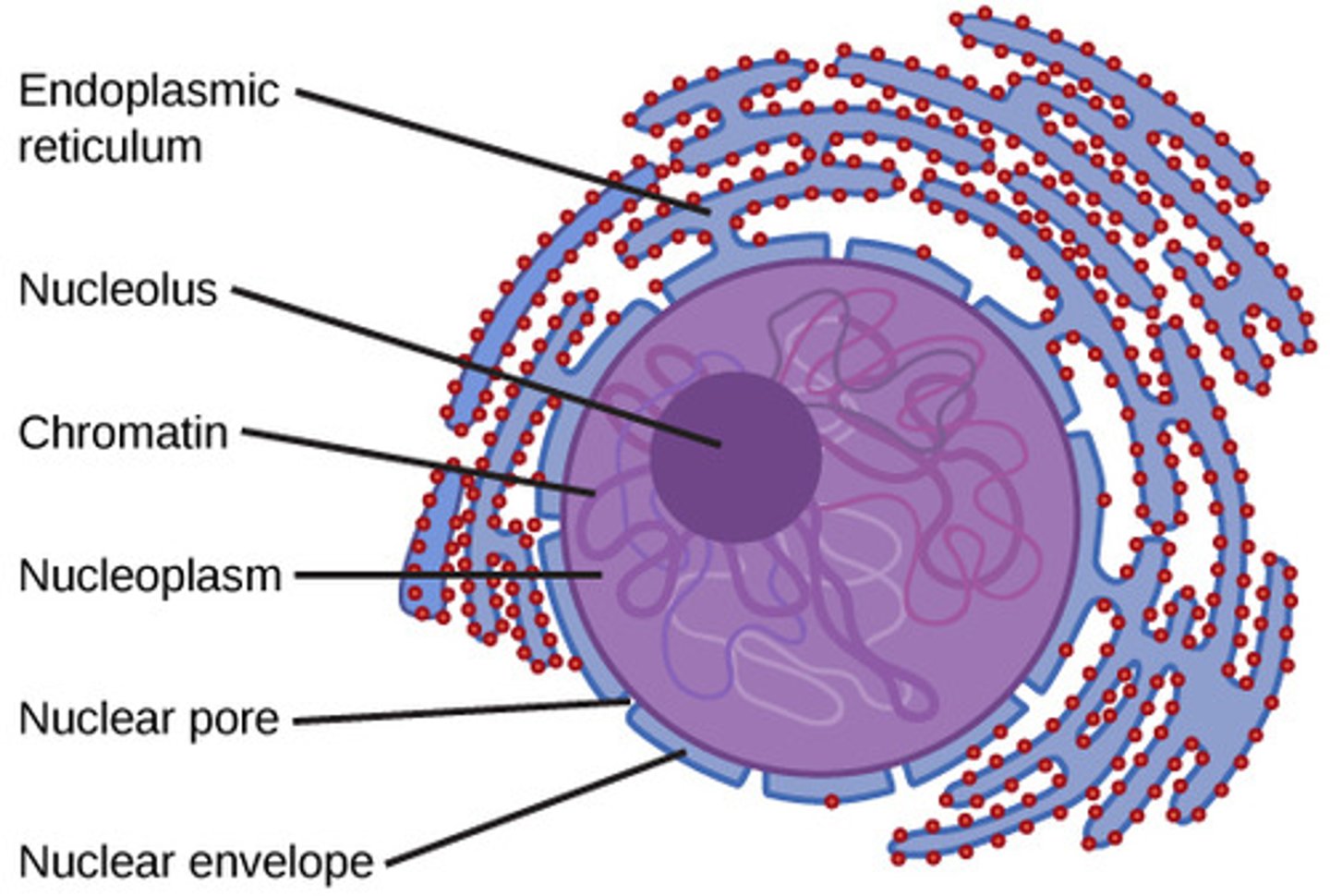
What structures allow transport across the nuclear envelope?
nuclear pores
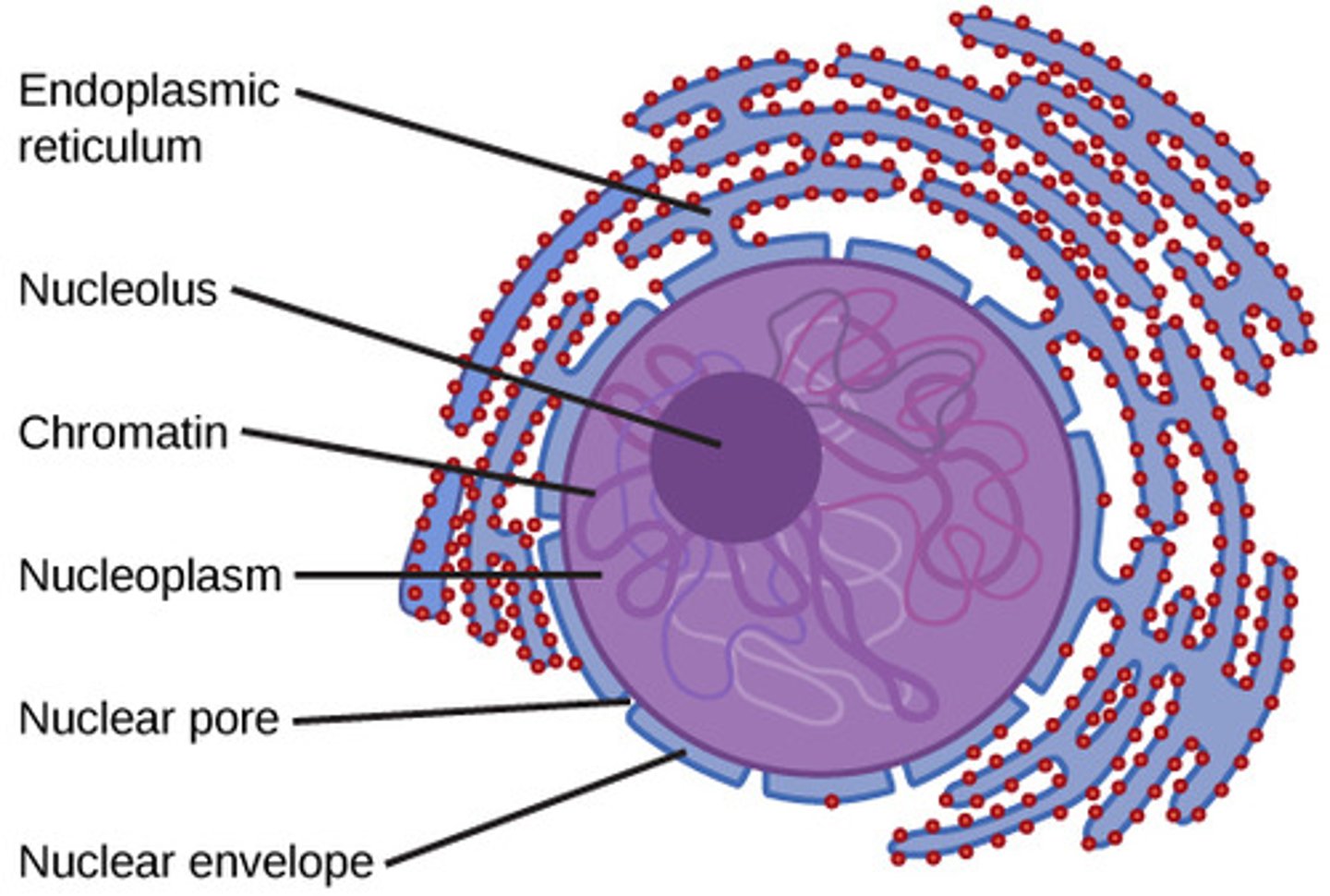
What is the cytoplasm-like substance within the nucleus?
nucleoplasm
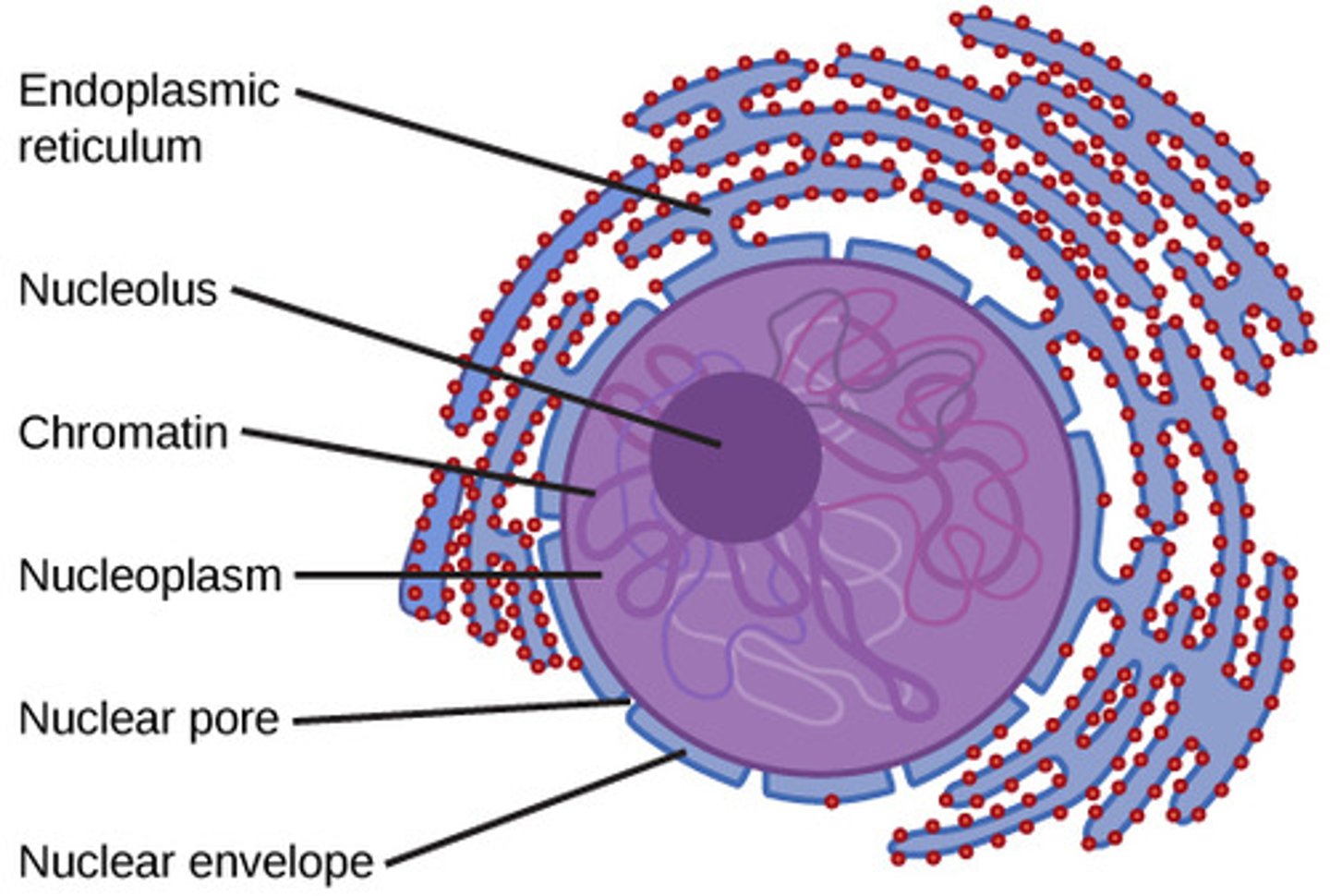
What is a dense fibrillar network inside of the nucleus of eukaryotic cells?
nuclear lamina
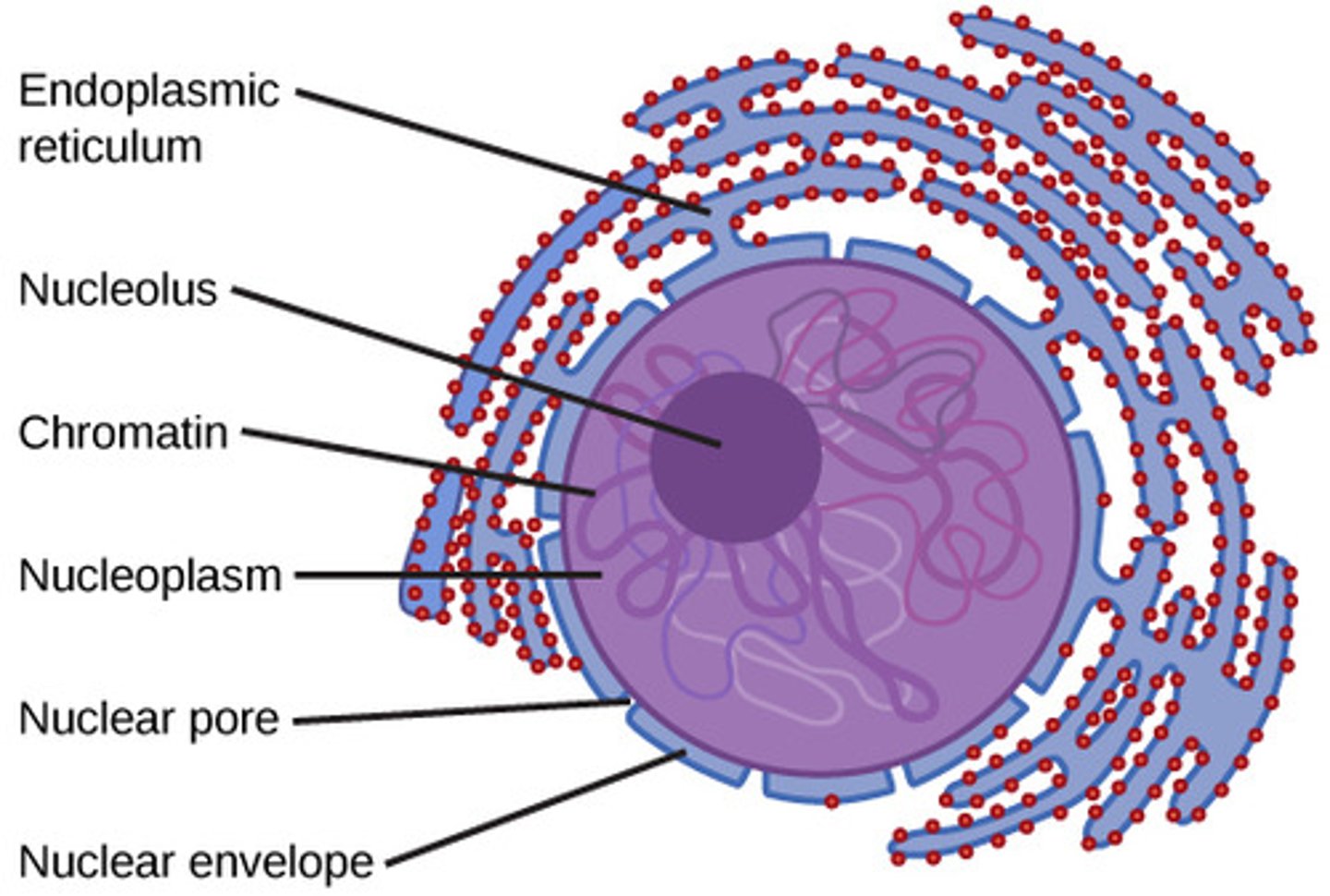
What are the components of the nuclear lamina?
1. intermediate filaments
2. membrane-associated proteins
What are the functions of the nuclear lamina?
1. mechanical support
2. regulation of DNA replication, cell division, and chromatin organization
Which organelle is the irregular shaped region within prokaryote cells that contains all or most of the cell’s genetic material?
nucleoid
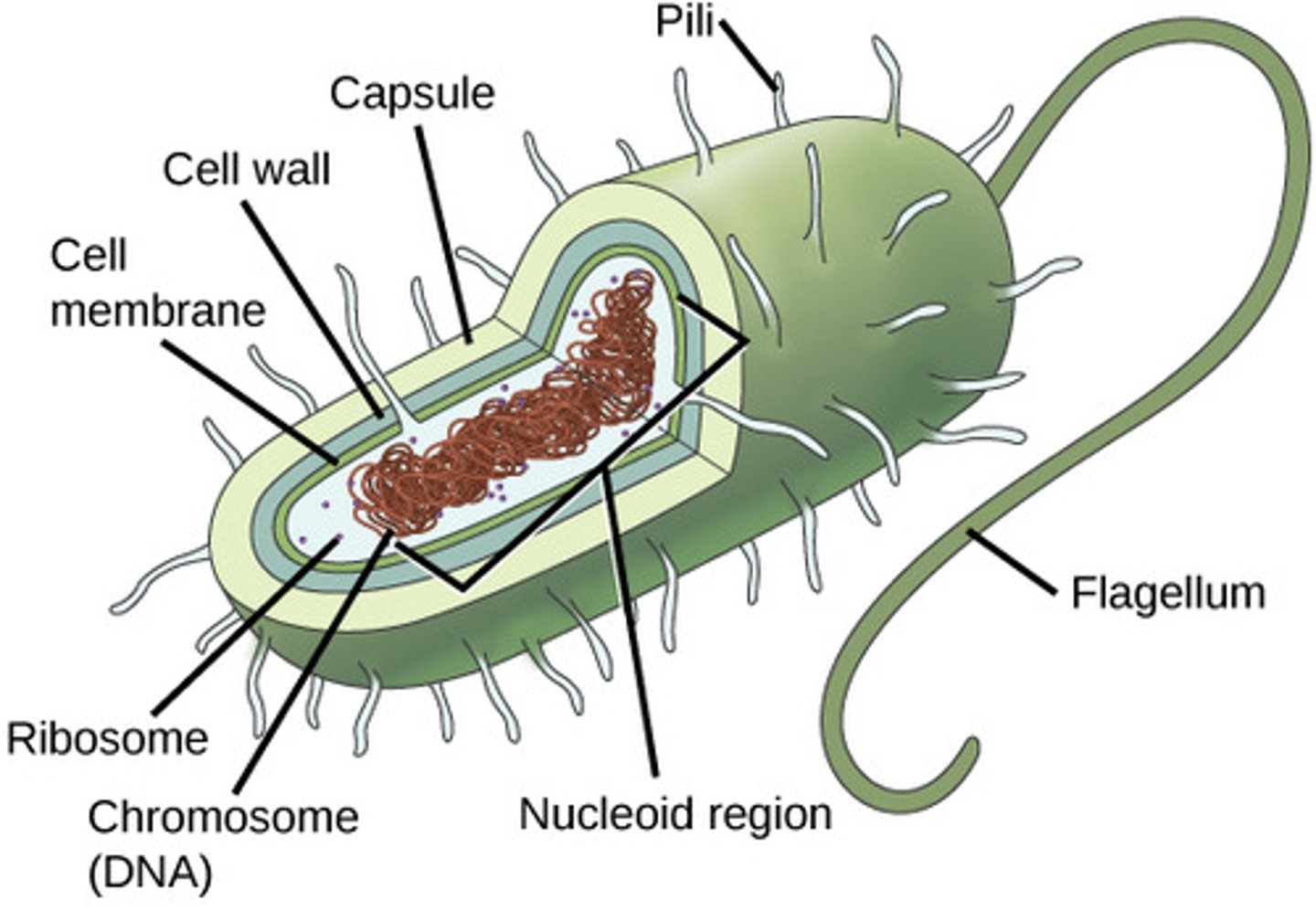
What is the area that contains the cell’s metabolic activity and transportation (cytosol and organelles)?
cytoplasm
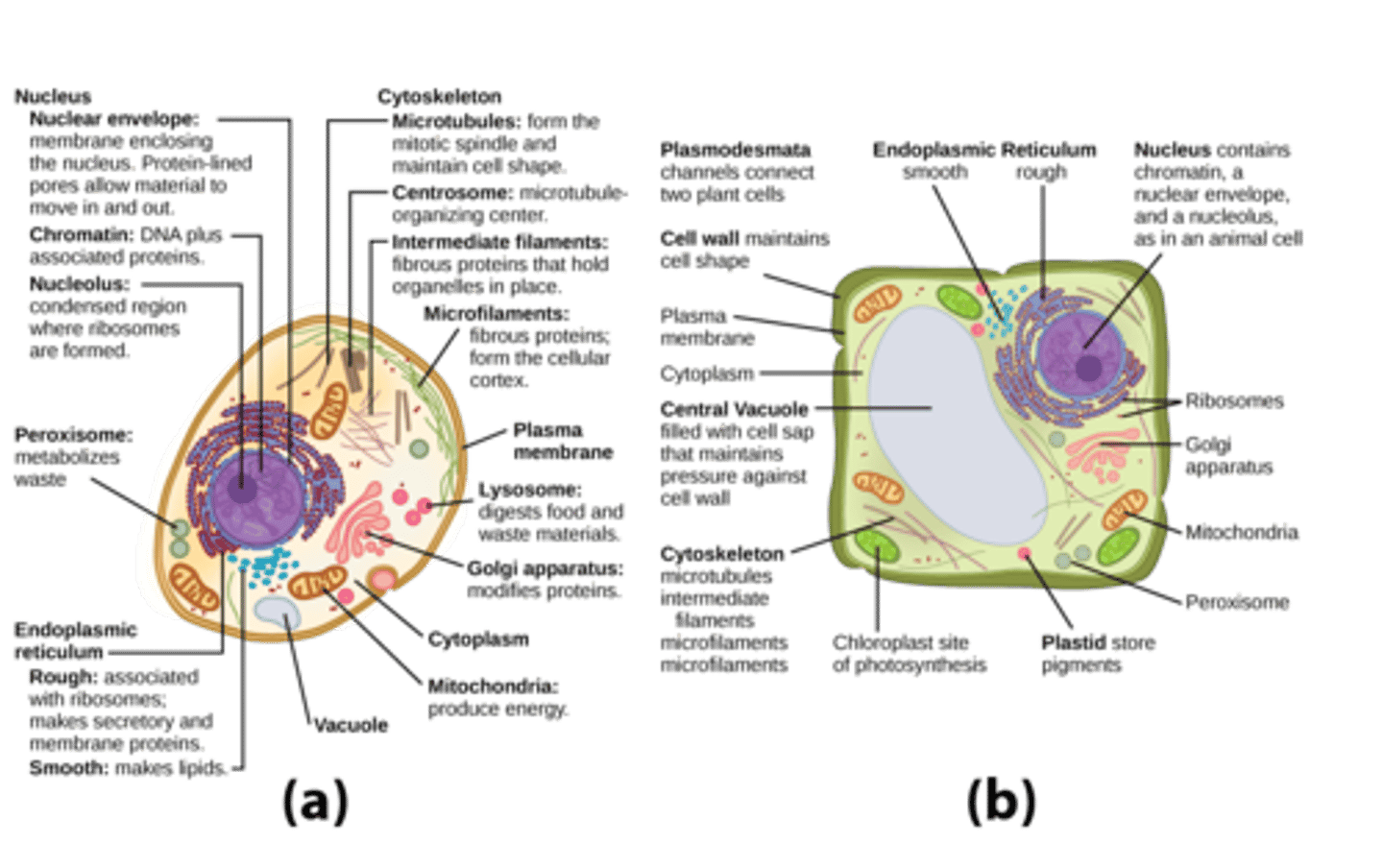
The streaming movement within the cytoplasm?
cytoplasmic streaming
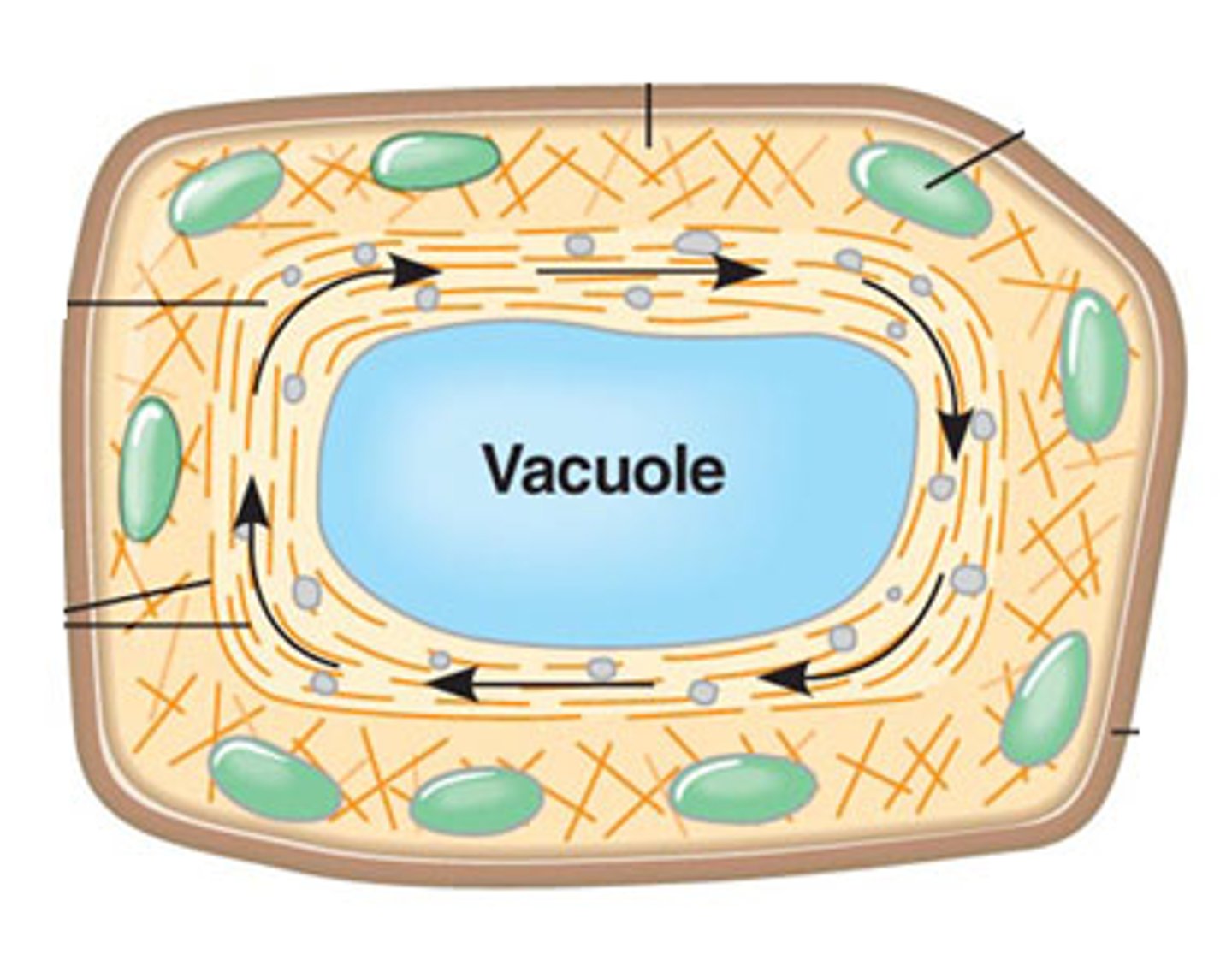
What is cytoplasm minus suspended structures?
cytosol
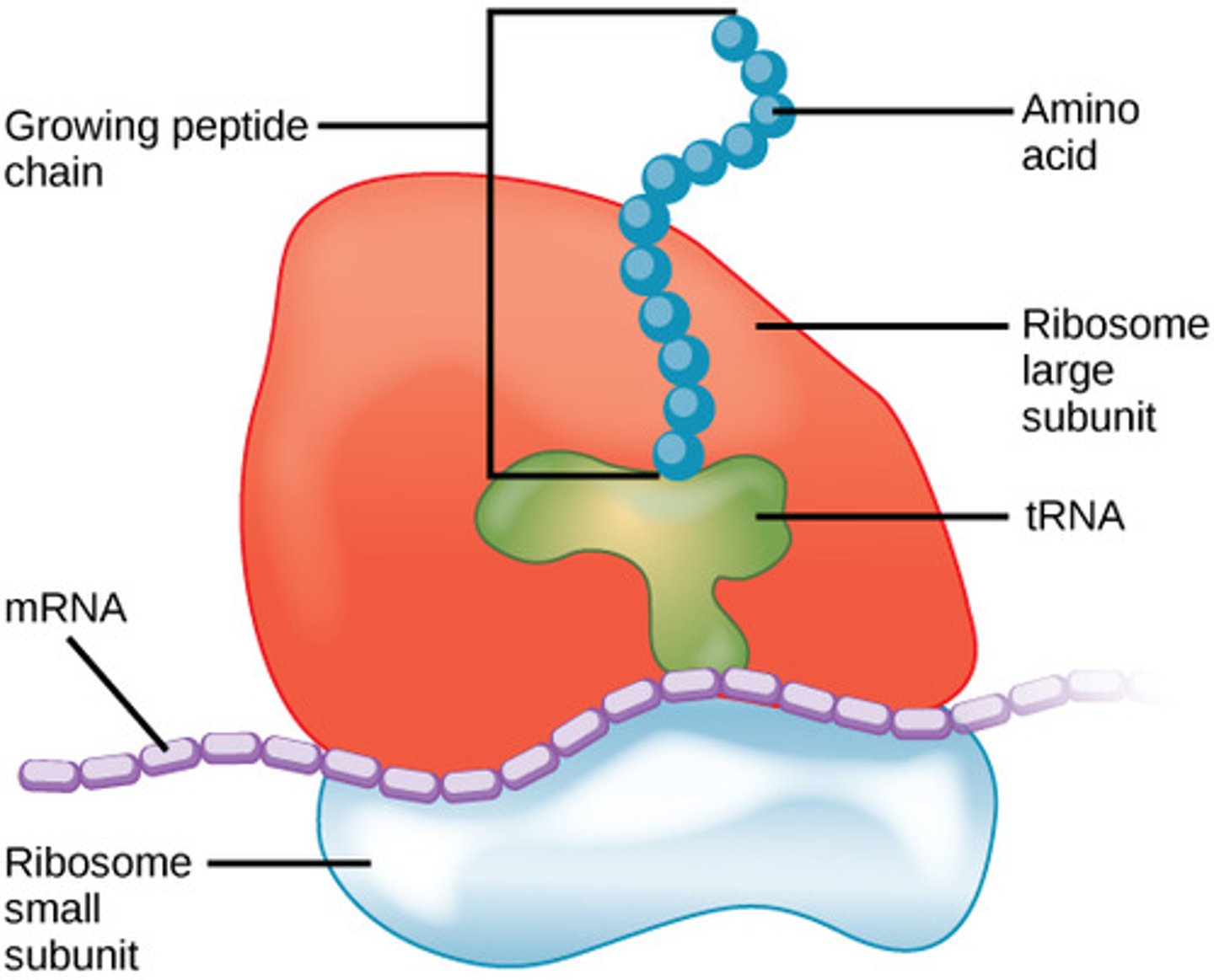
What are organelles made of rRNA that function to make proteins?
ribosomes
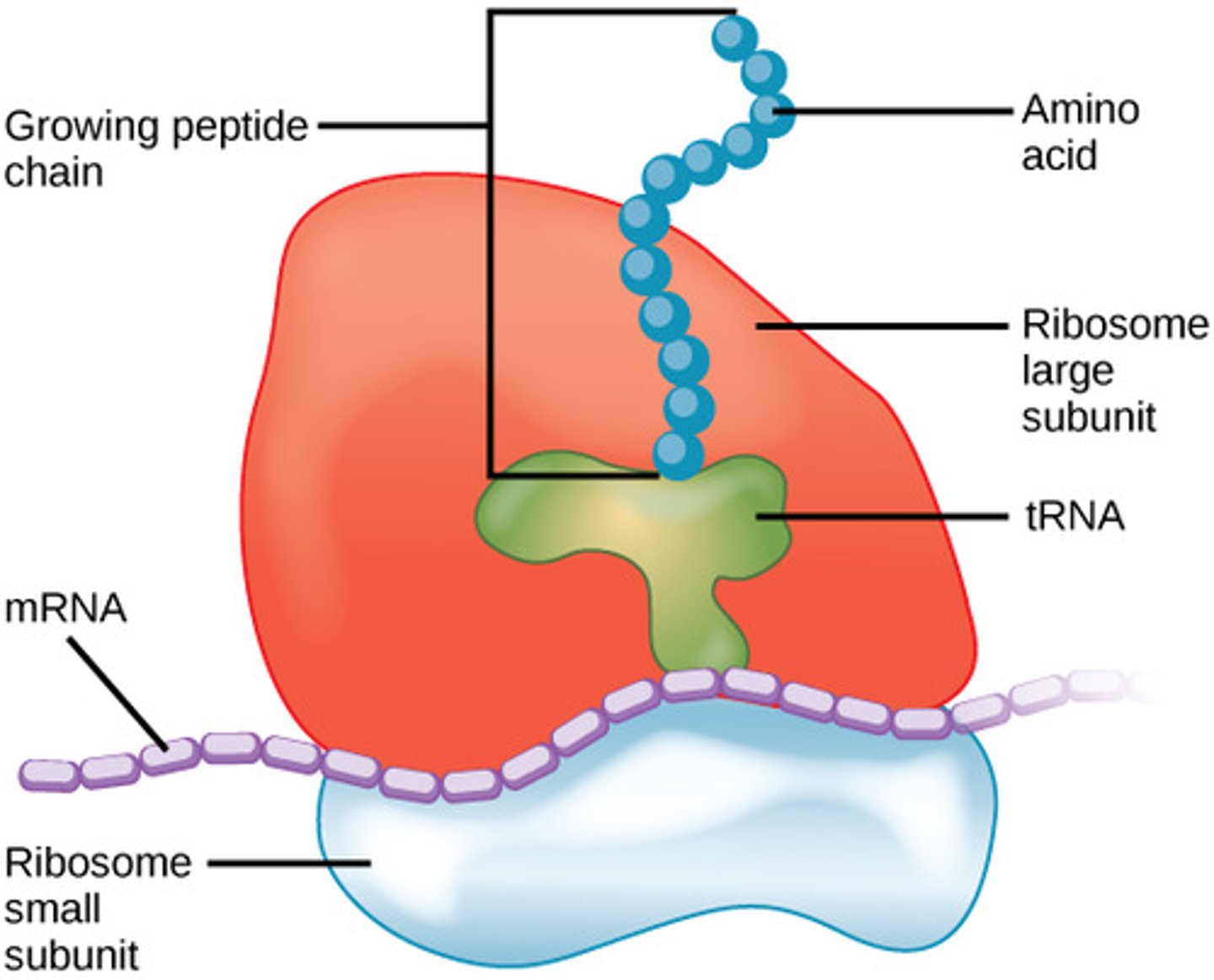
How many subunits make up ribosomes?
2
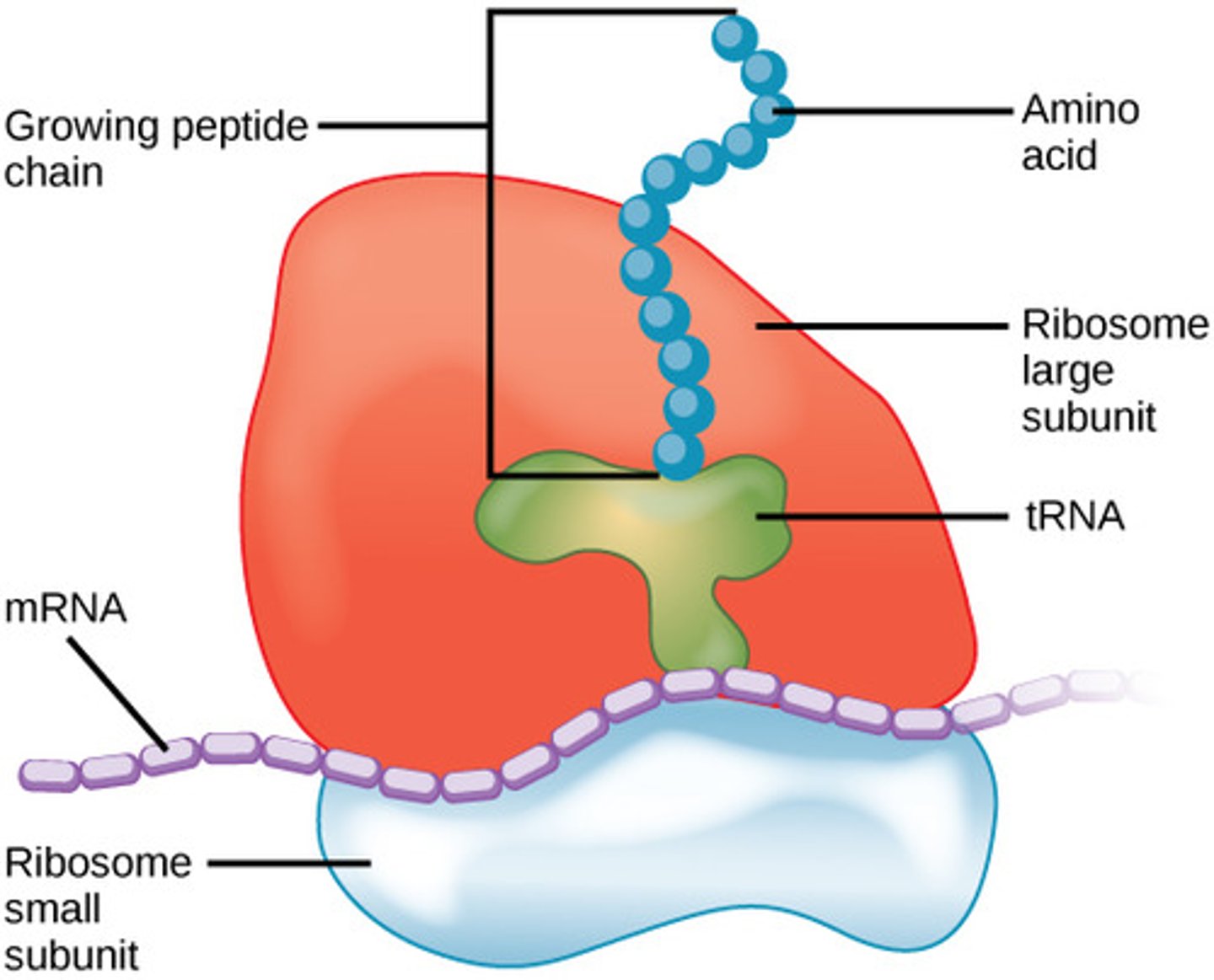
Which ribosomal subunits are particular to the eukaryotic cell?
60S + 40S = 80S
Which ribosomal subunits are particular to the prokaryotic cell?
50S+ 30S = 70S
Which organelle is a network of membranous tubules within the cytoplasm of a eukaryotic cell that is continuous with the nuclear membrane?
endoplasmic reticulum
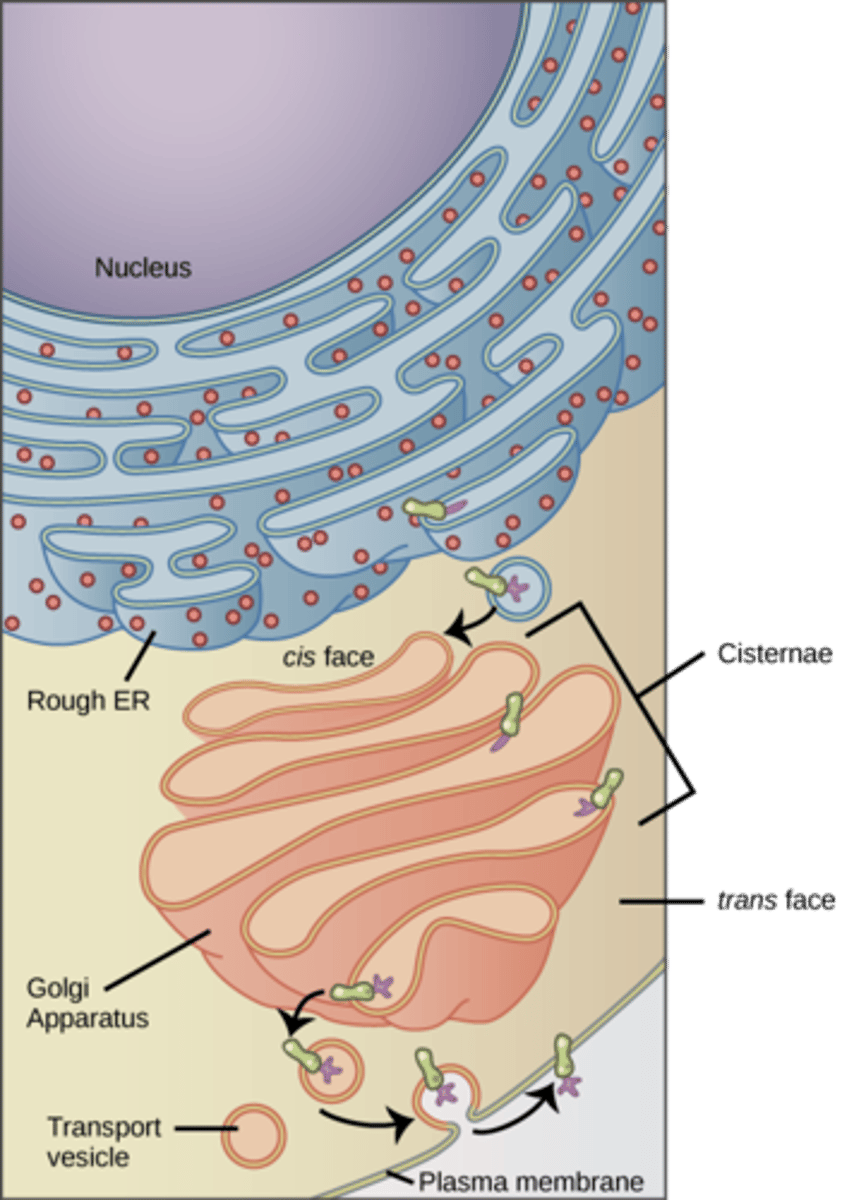
Which endoplasmic reticulum is studded with ribosomes and creates glycoproteins by attaching polysaccharides to polypeptides?
rough ER
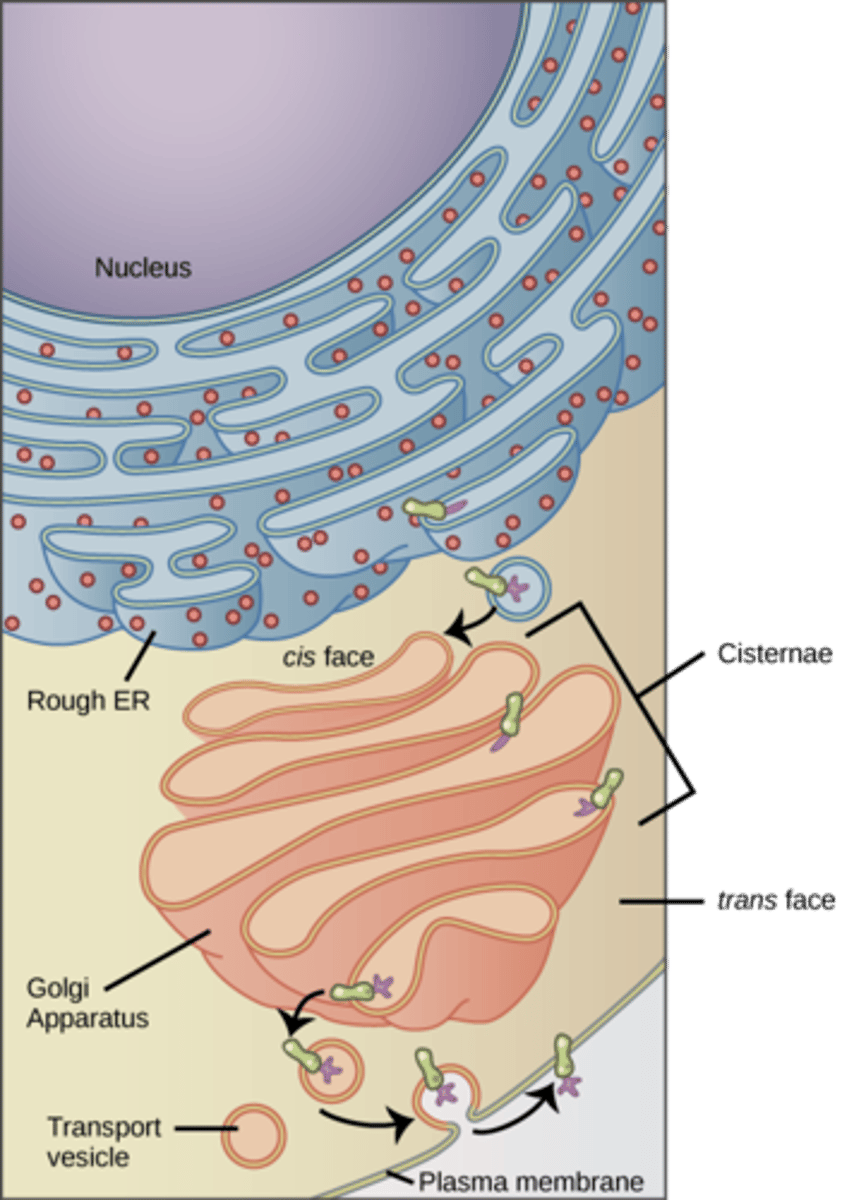
Which endoplasmic reticulum has no ribosomes and synthesizes lipids and steroid hormones for support?
smooth ER
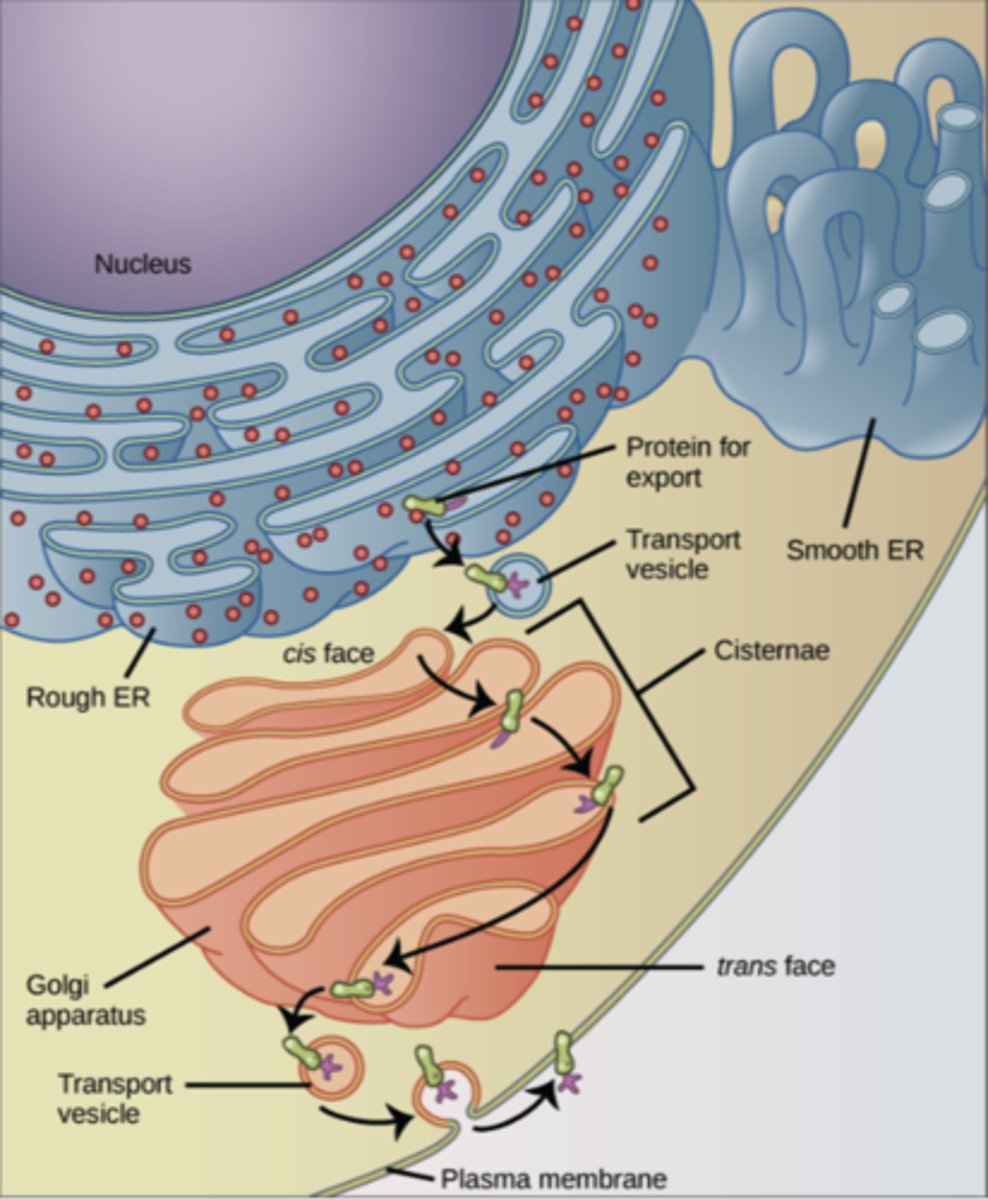
How does the smooth ER in the liver differ compared to other locations?
liver's smooth ER breaks down toxins, drugs, and toxic by-products from cellular reactions
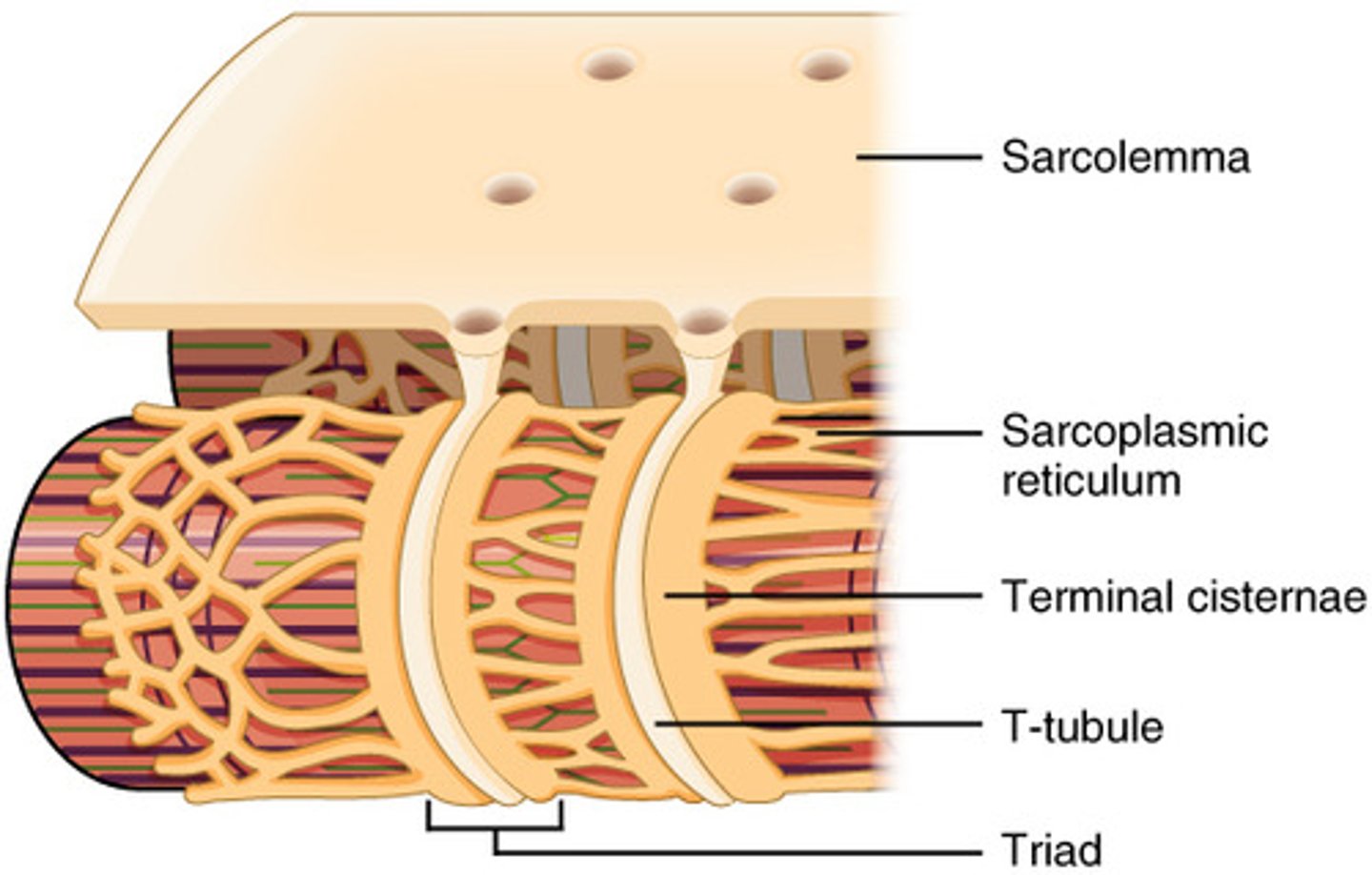
What is smooth and striated muscles' ER called?
sarcoplasmic reticulum
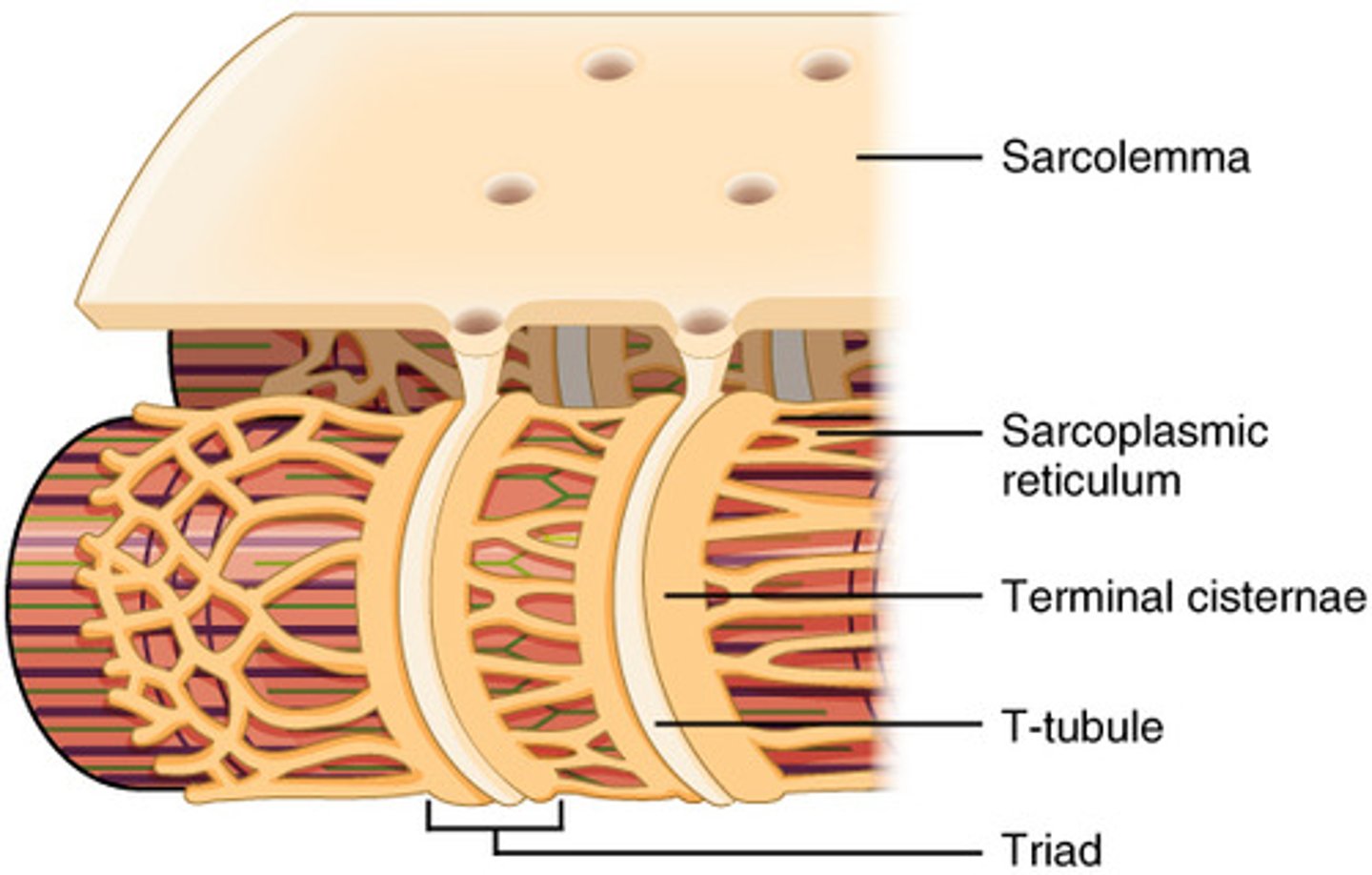
What is the function of sarcoplasmic reticulum?
store and release ions like Ca2+
Which organelle is a vesicle produced from the Golgi that contains digestive enzymes with low pH?
lysosomes
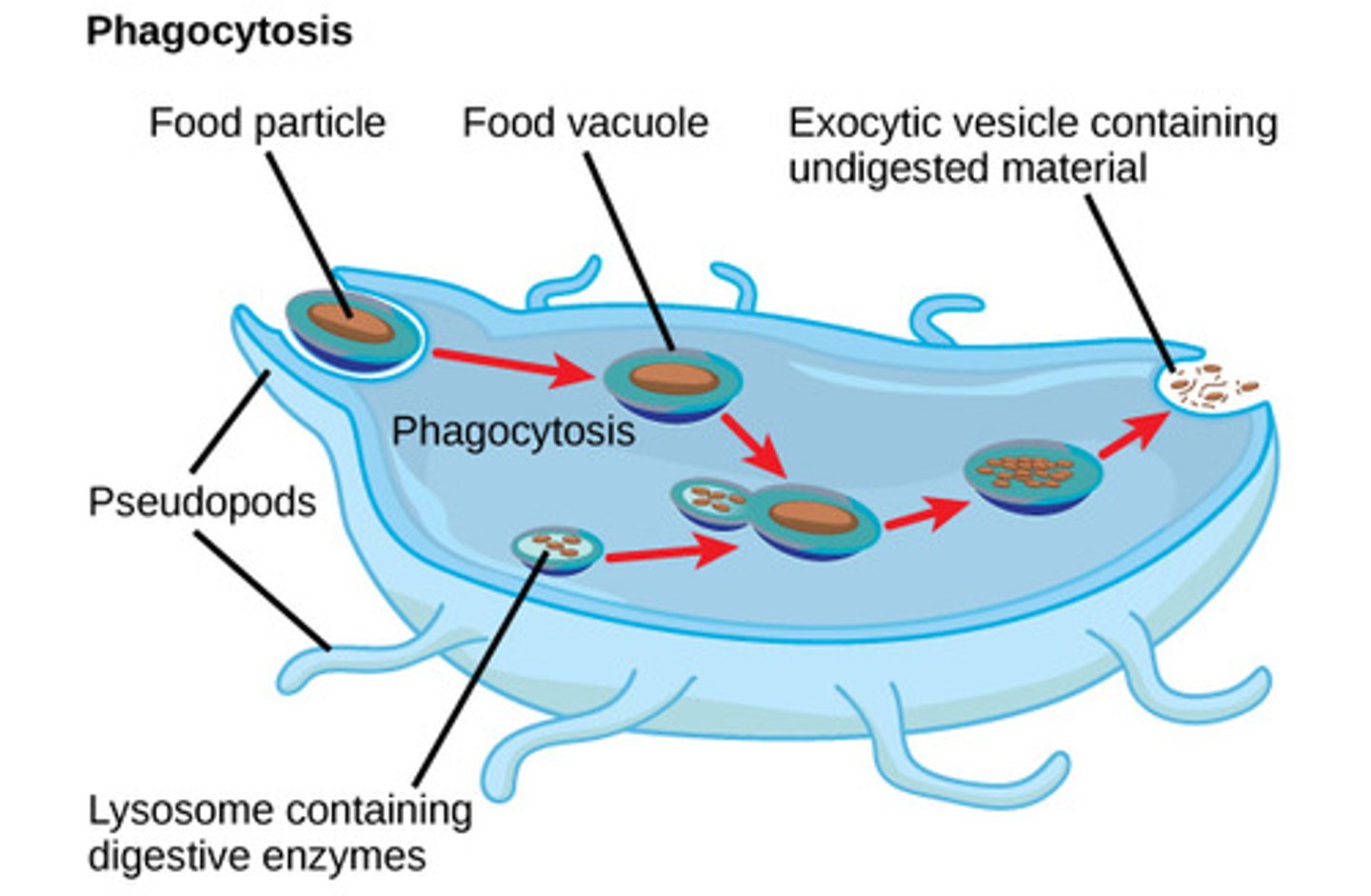
What is the function of lysosomes?
1. apoptosis
2. break down
nutrients, bacteria,
and cell debris
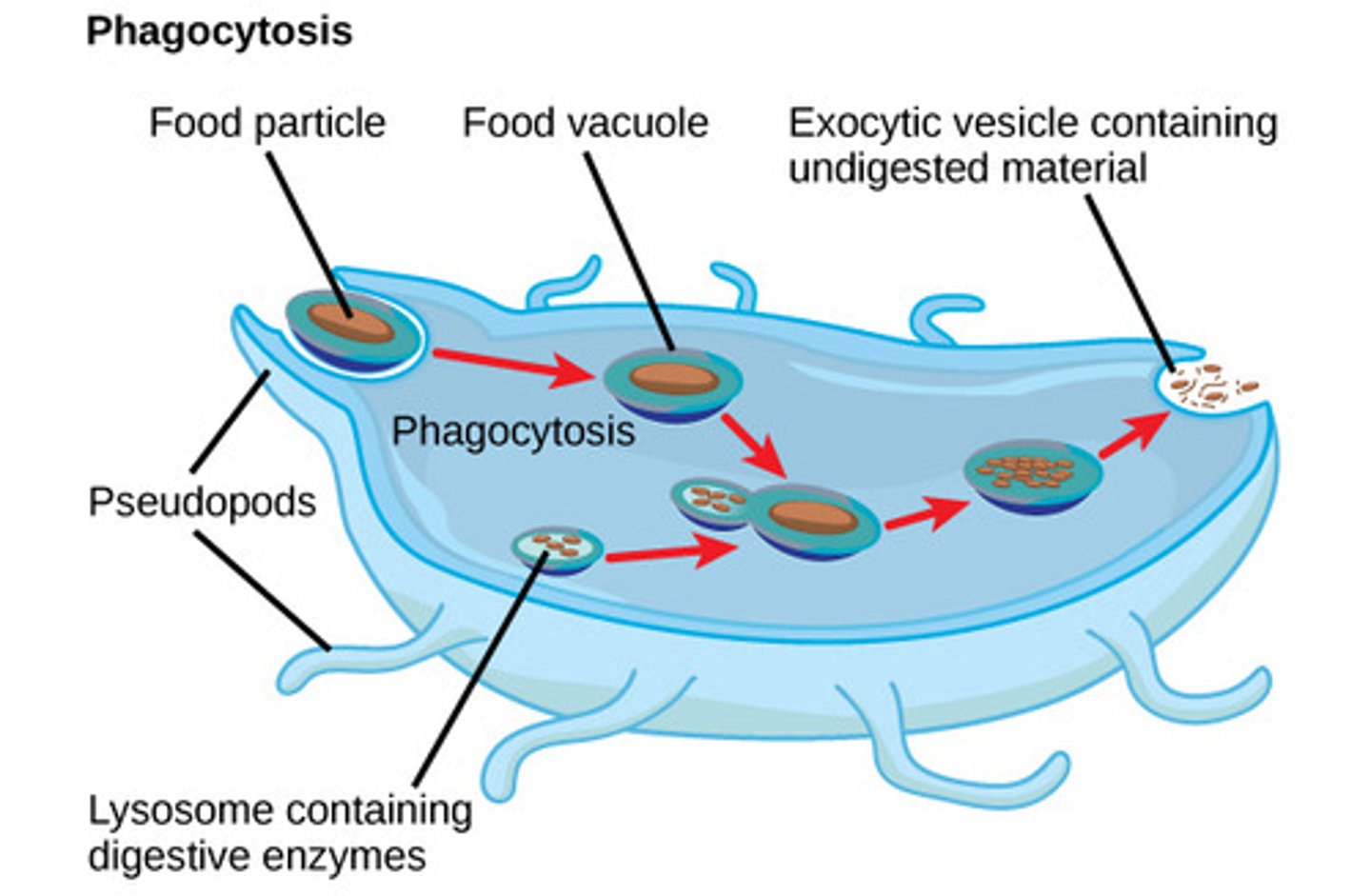
What is the relative pH of lysosomes?
low
(Note: Any enzyme that escapes from lysosomes remains inactive in the neutral pH of cytosol)
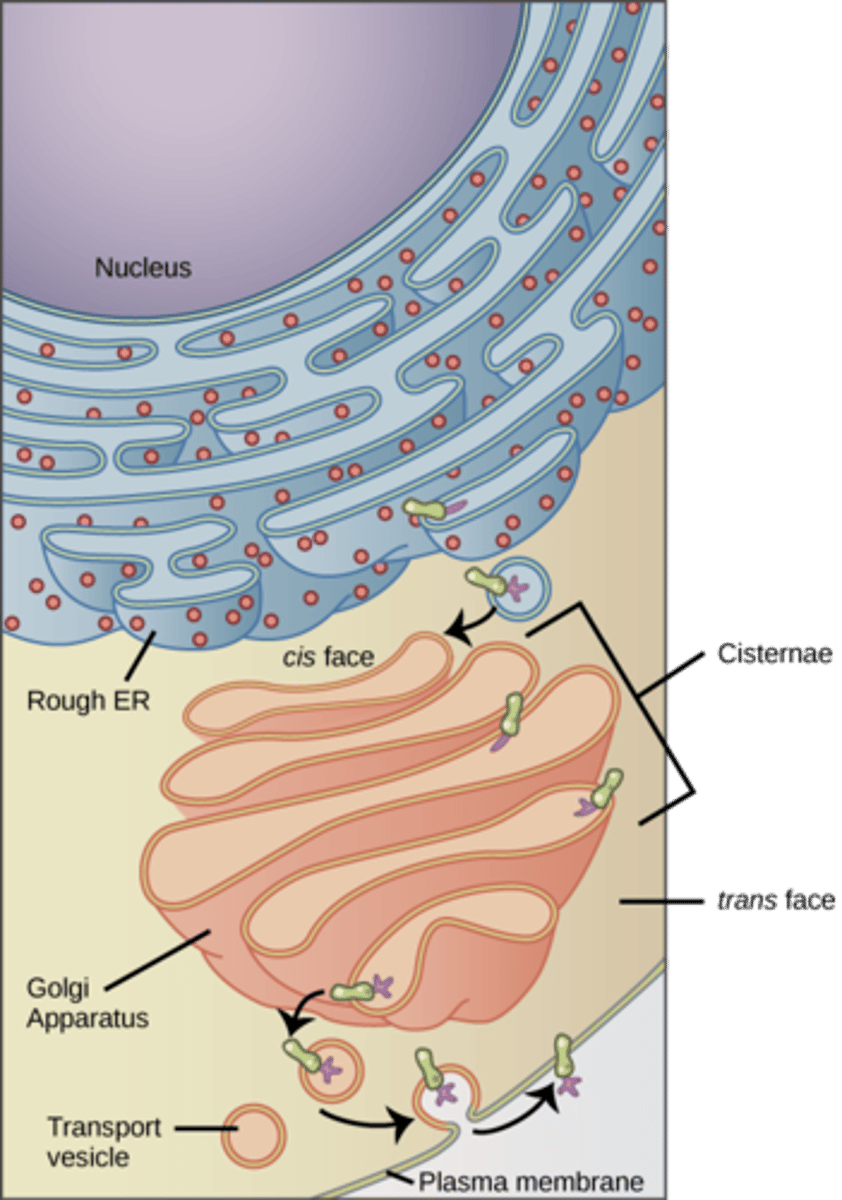
Which organelle transports various substances in vesicles and has flattened sacs known as cisternae?
Golgi
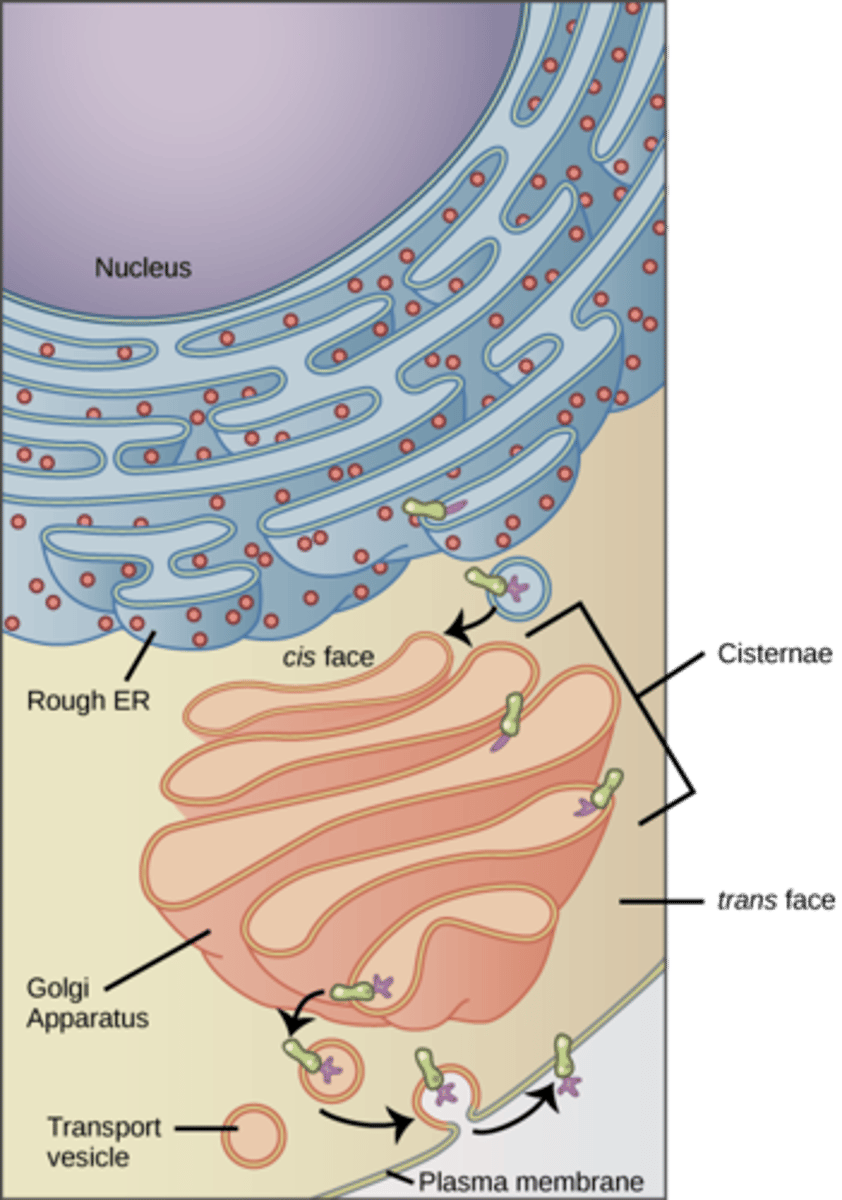
Which vesicles are associated with the cis face of the golgi?
incoming vesicles
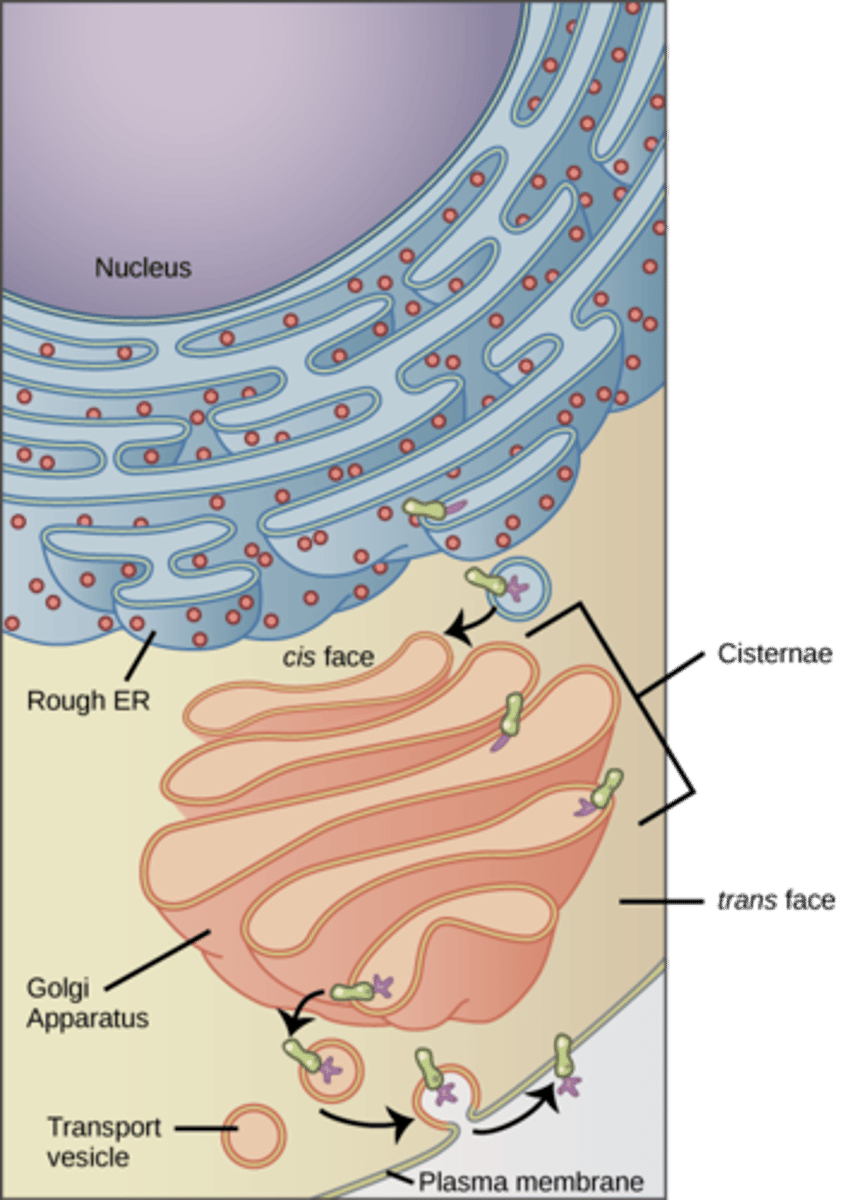
Which vesicles are associated with the trans face of the golgi?
secretory vesicles
Which organelle is common to the liver and kidney and breaks down substances, fatty acids, and amino acids?
peroxisomes
(Note: general reacition - H2O2 + RH2 → R + 2H2O)
In which type of cells do peroxisomes modify by-products of photorespiration?
plant cells
What is the name of peroxisomes in germinating plant seeds?
glyoxysomes
(Note: break down stored fatty acids to fuel growth)
What do peroxisomes produce to oxidize substrates?
H2O2
(Note: can also break down peroxide if necessary)
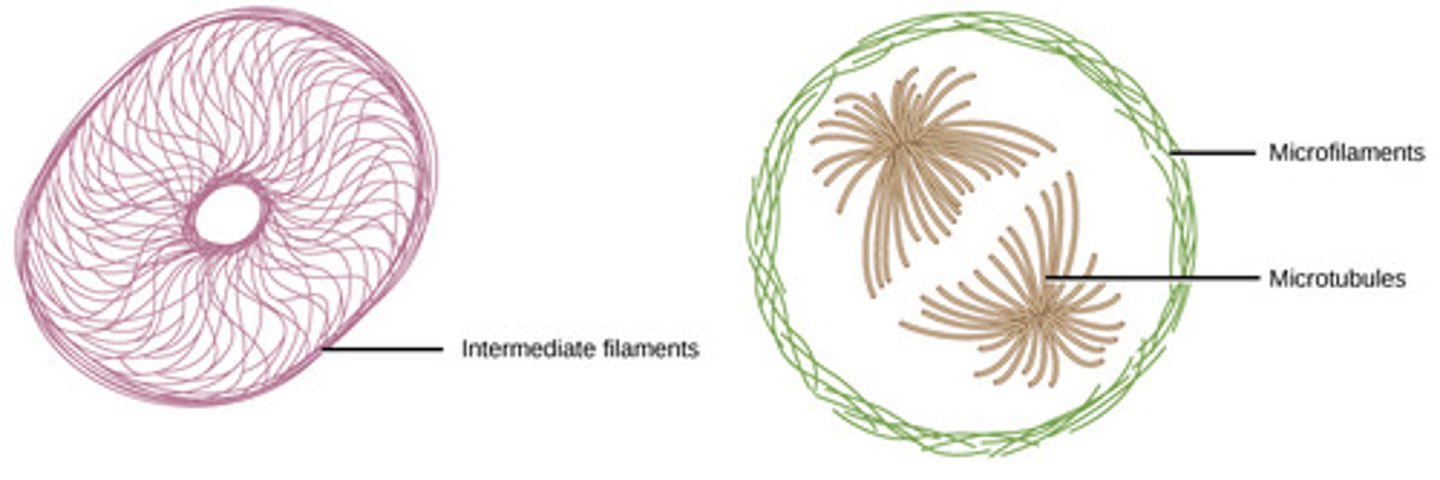
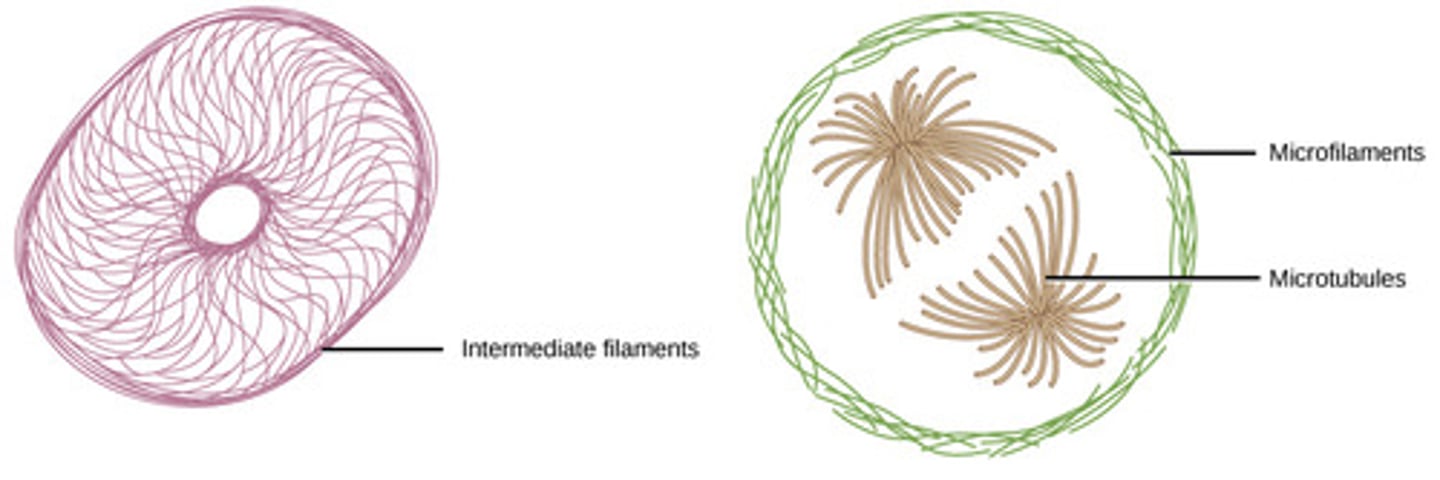
Which organelles are made up of the protein, tubulin and provide support and motility for cellular activities?
microtubules
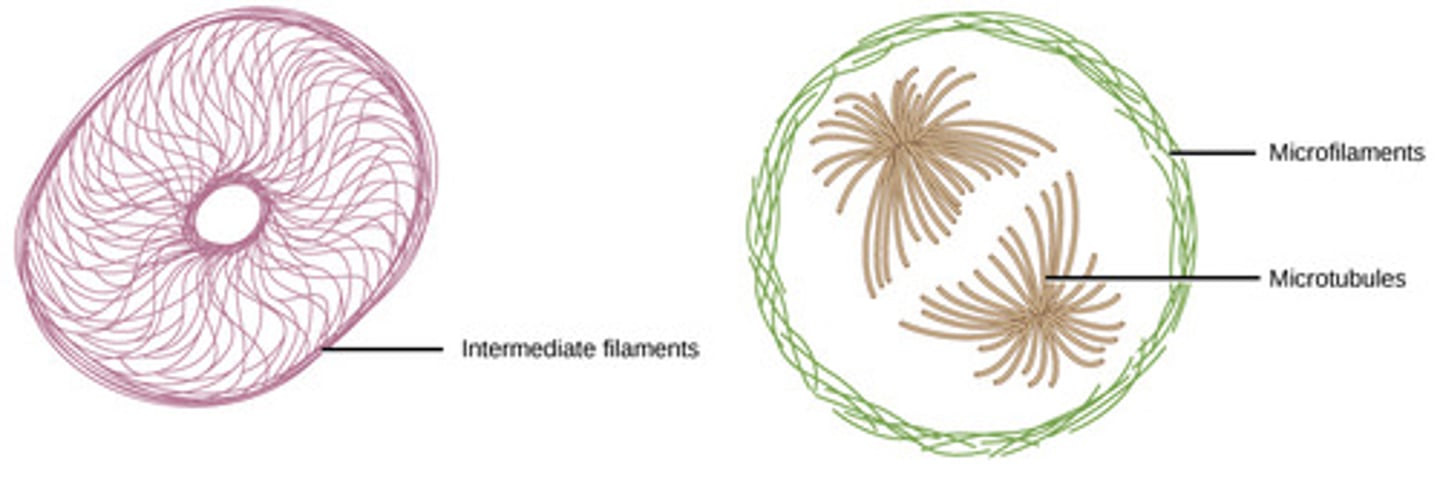
During cell division, what structure do microtubules act as to guide chromosomes?
spindle apparatus
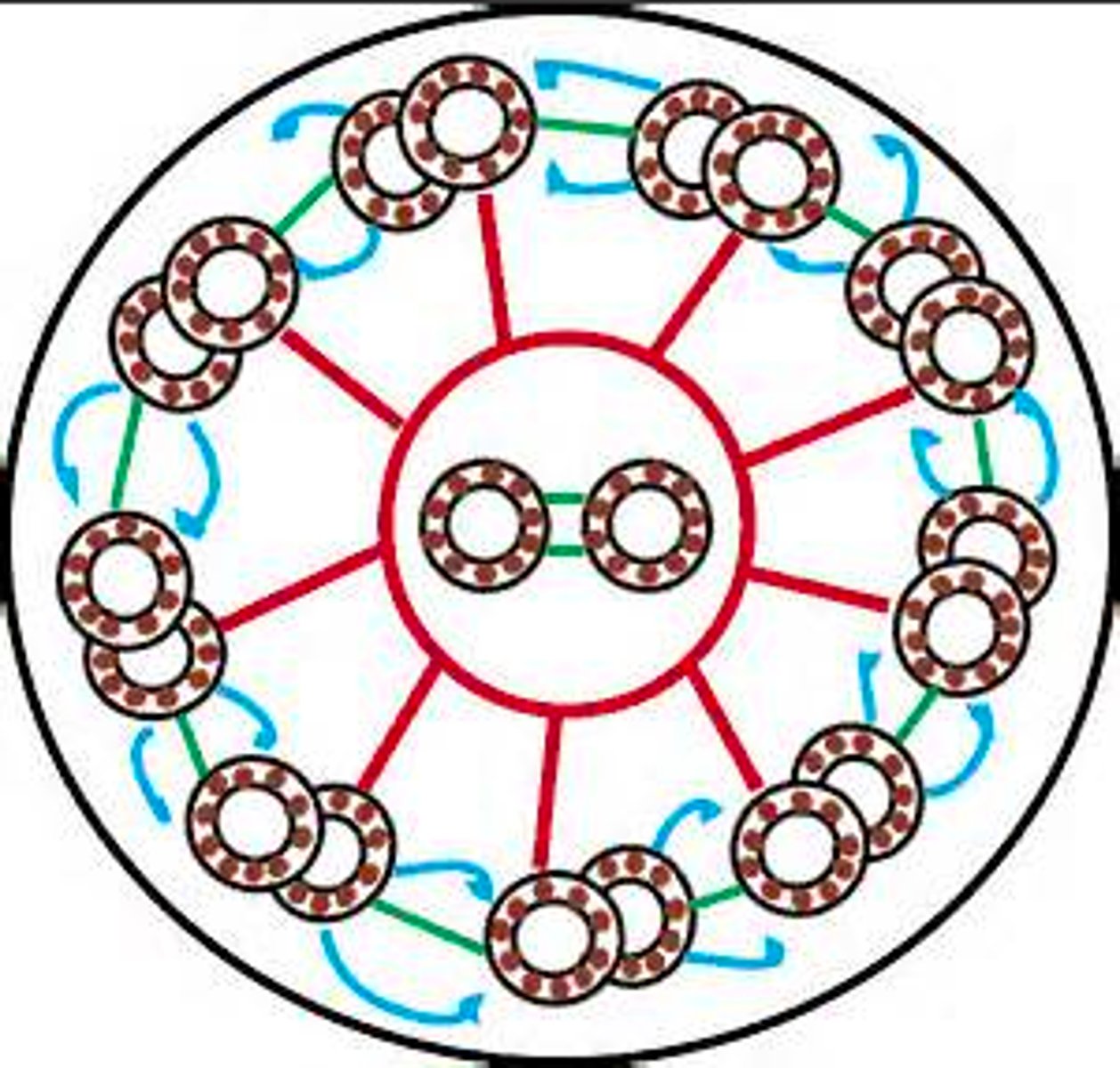
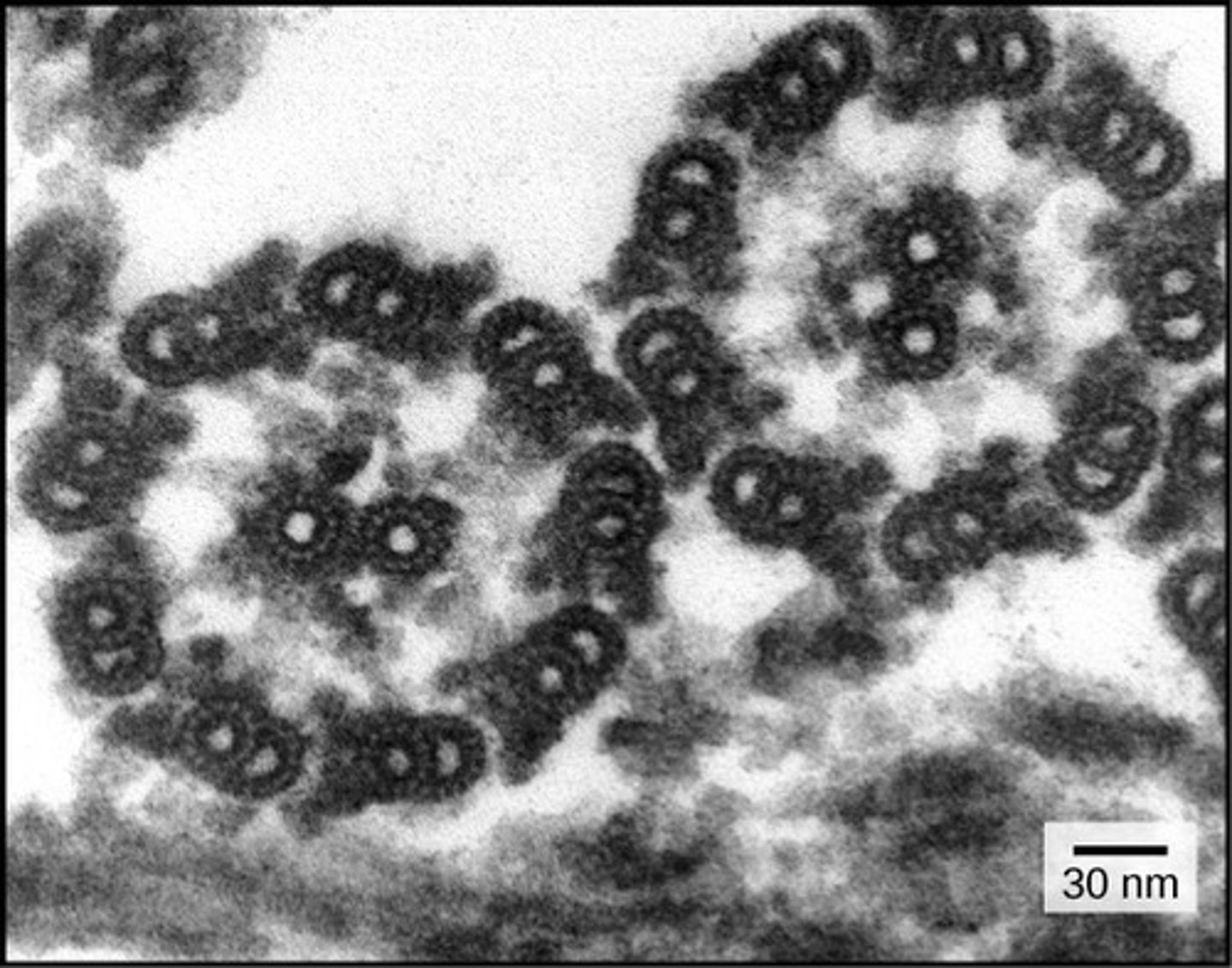
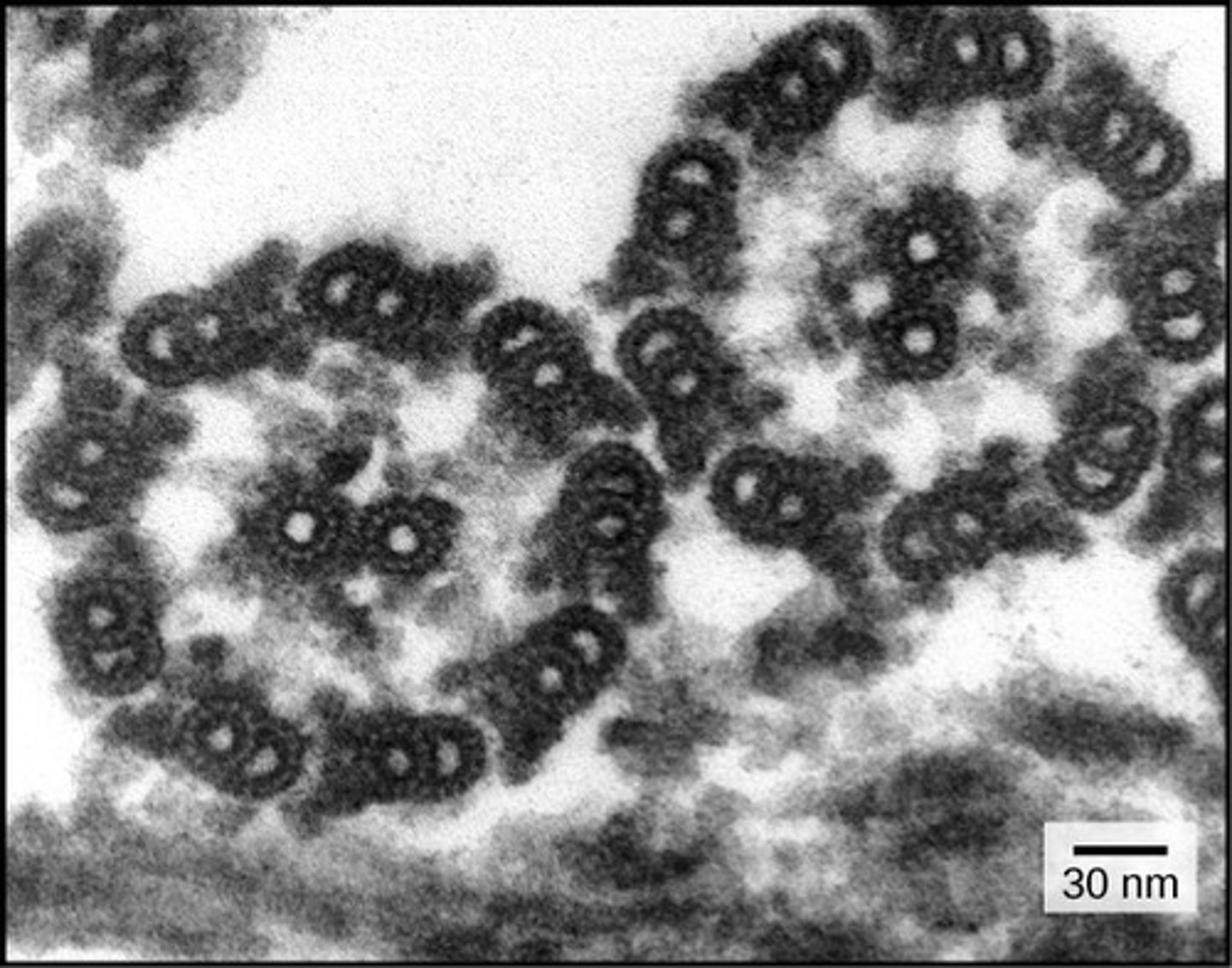
What is the arrangement of microtubules in the flagella/cilia of animal cells and lower plants (moss/ferns)?
9+2 array
(Note: 9 pairs of
microtubules arranged
in a circle with two
singlets in the middle)
Which organelle provides support for maintaining cell shape (ex: keratin)?
intermediate filament
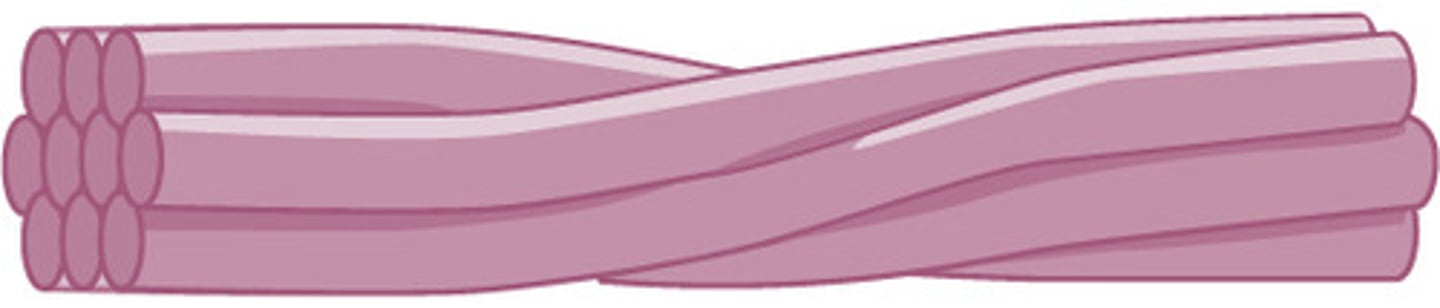
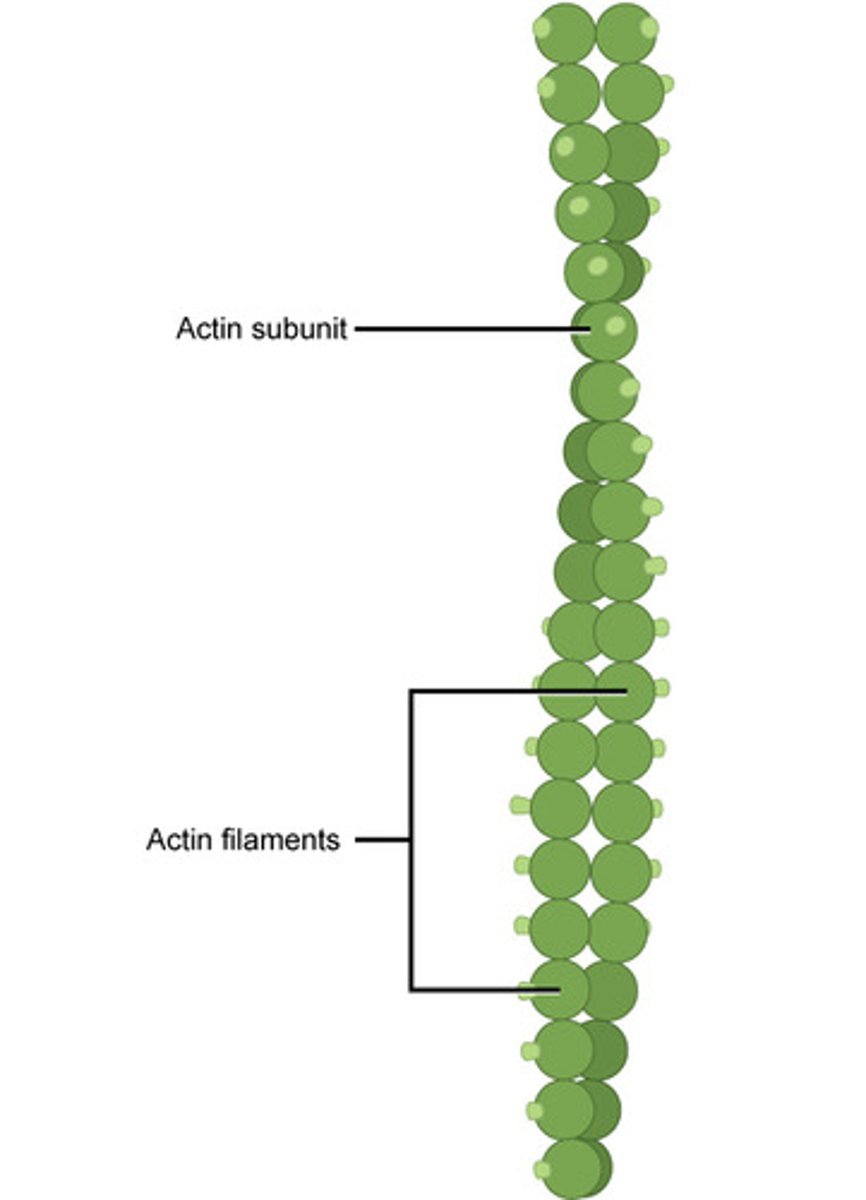
Which organelle is made of actin and involved in cell motility; found in skeletal muscle, amoeba pseudopod, and cleavage furrows?
microfilament
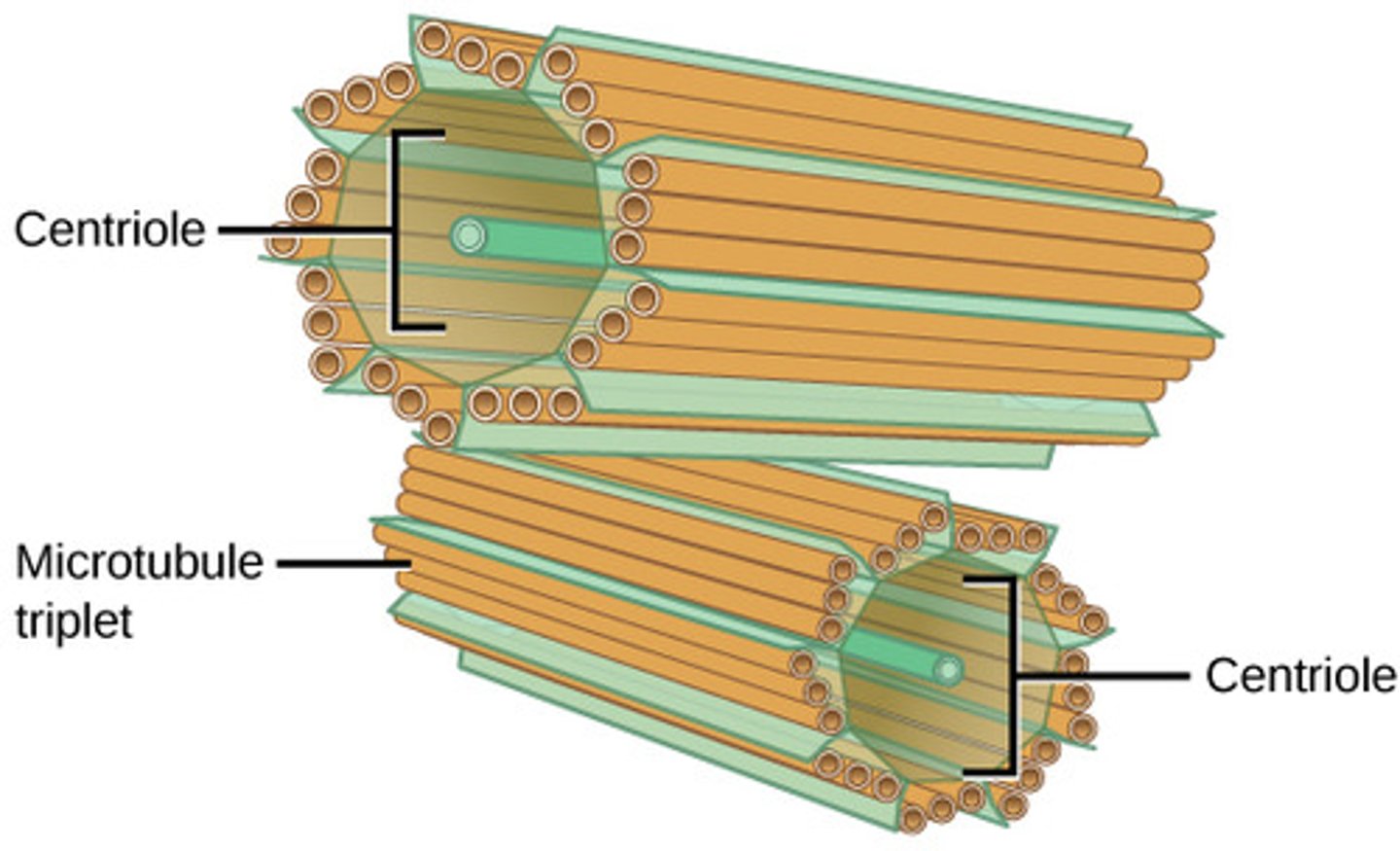
Which organelle includes centrioles and basal bodies, are found at the base of each flagellum and cilium, and organize their development?
microtubule organizing center (MTOC)
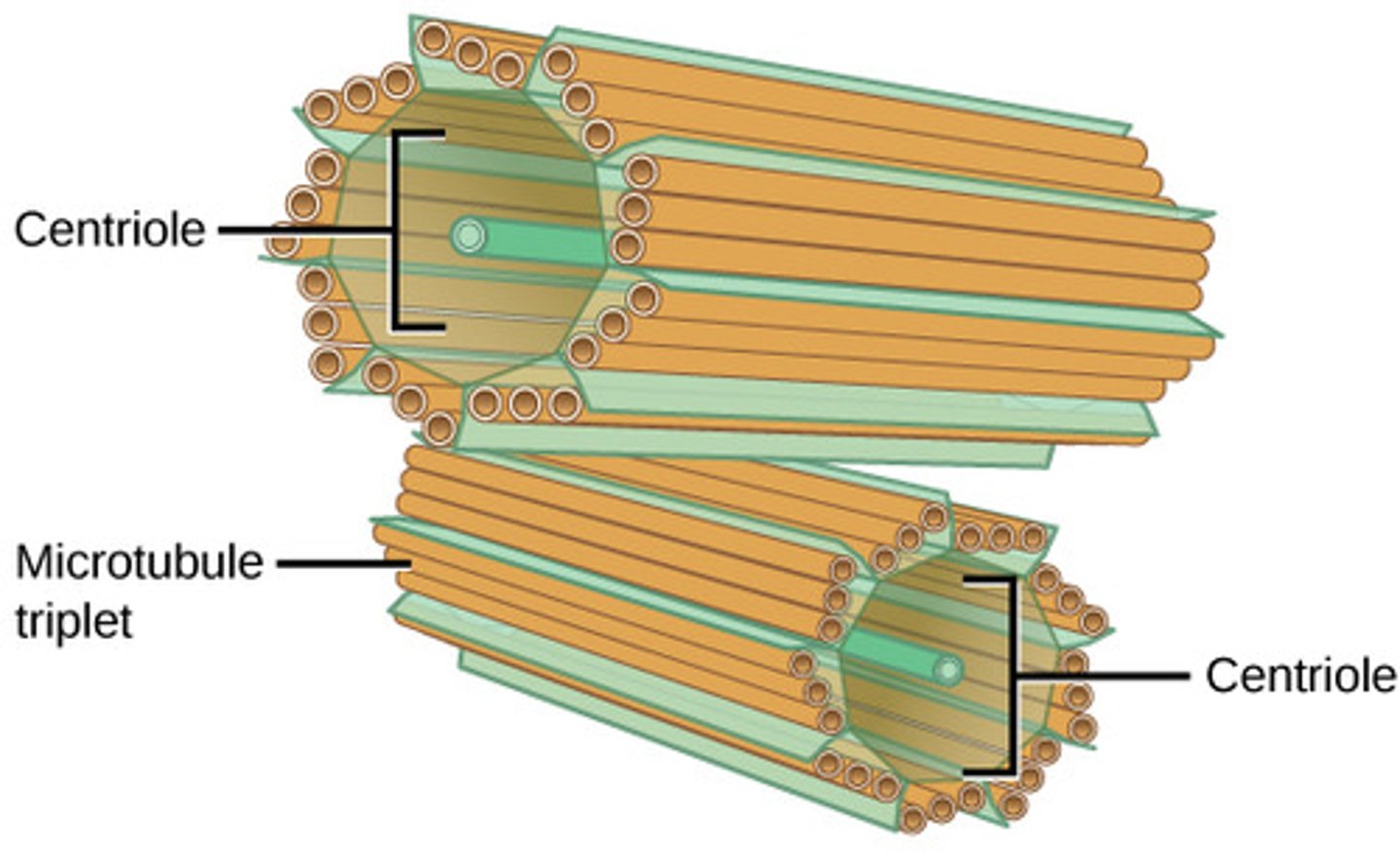
What is the arrangement of MTOCs?
9x3
Which organelle moves materials between organelles or between organelles and the plasma membranes?
transport vacuole
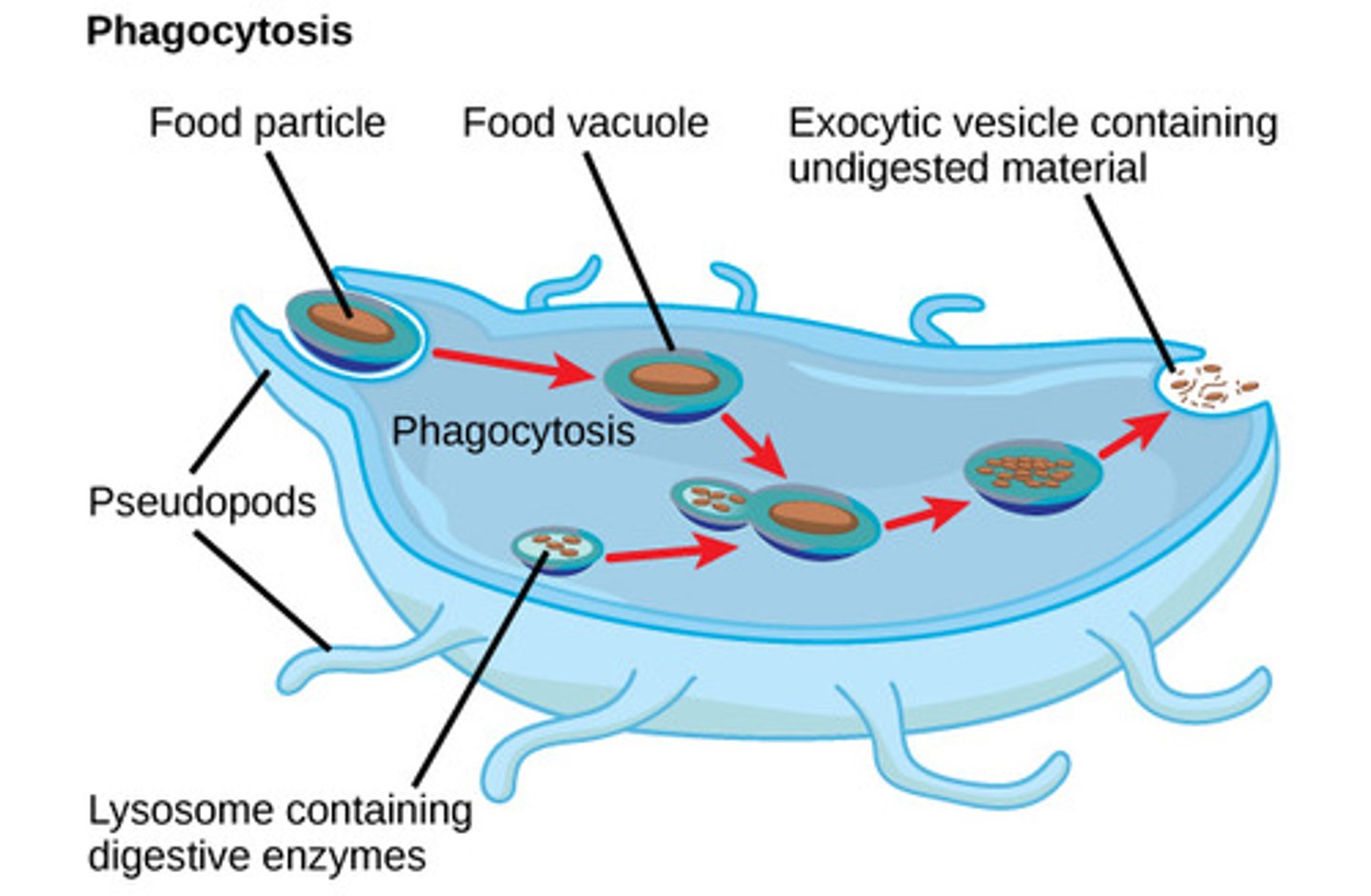
Which organelle acts as a temporary receptacles of nutrients that merge with the lysosomes in order to breakdown food?
food vacuole
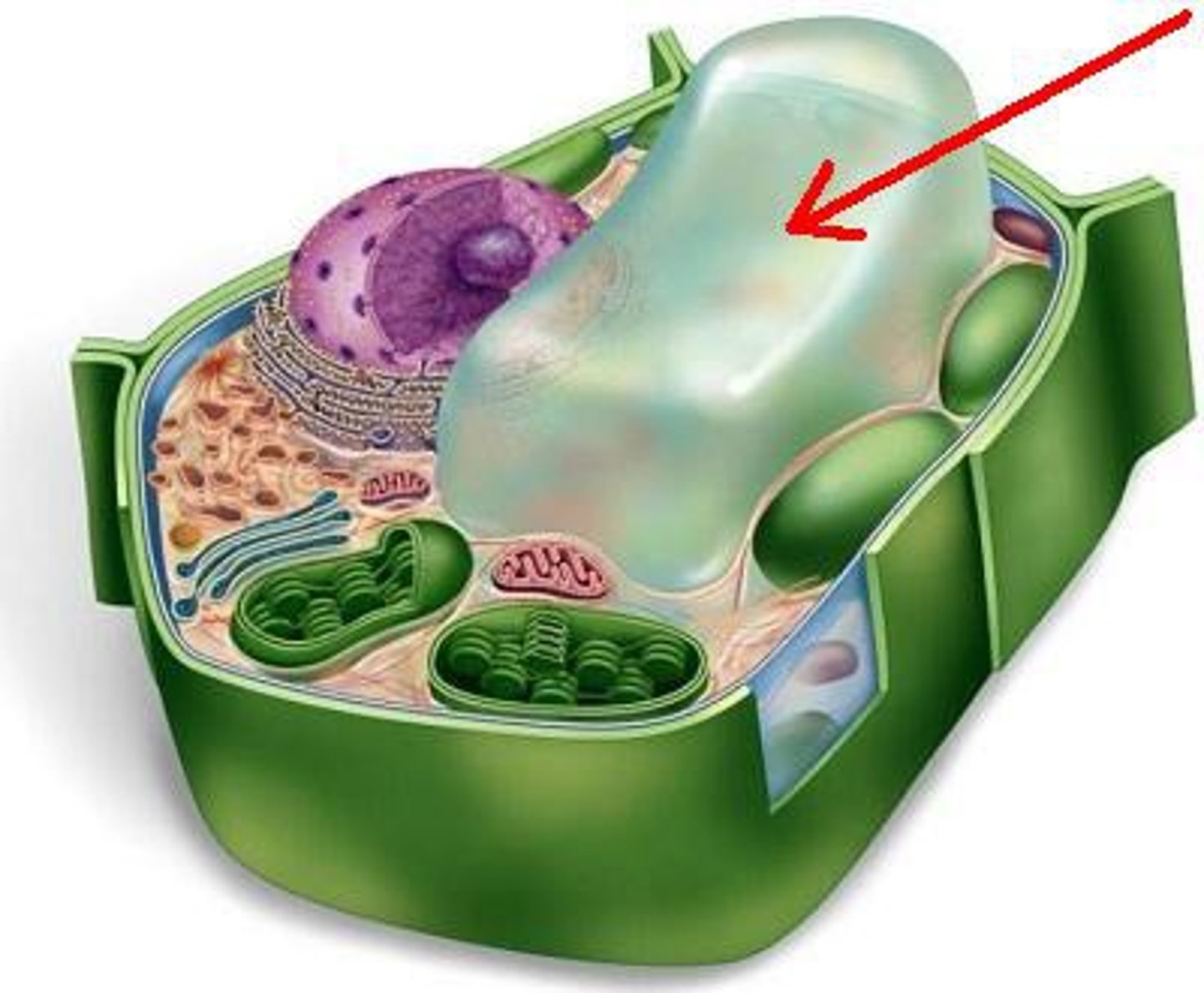
Which organelle is large and occupies most of the plant cell's interior?
central vacuole
What is the function of the central vacuole?
1. maintain rigidity
2. apoptosis
3. break down nutrients, bacteria, and cell debris
How does the central vacuole maintain rigidity in a plant cell?
exert turgor when fully filled
What is the central vacuole's specialized membrane?
tonoplast
Which organelle stores starch, pigments, and toxic substances such as nicotine?
storage vacuole
Which organelle functions to collect and pump excess water out of the cell via active transport to prevent bursting in protists?
contractile vacuole
Which organelle functions to provide a perimeter of support in plants, fungi, protists, and bacteria?
cell wall
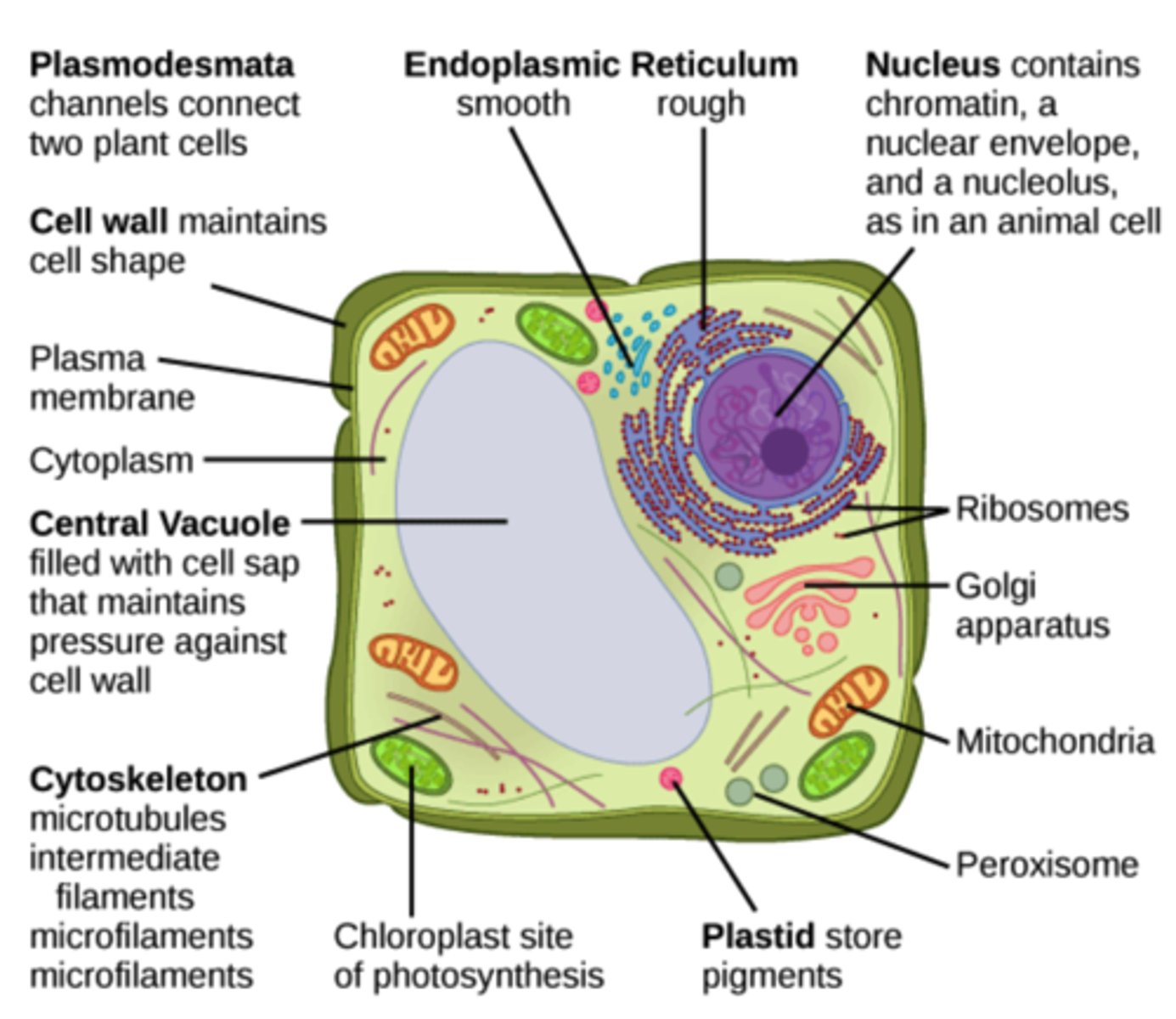
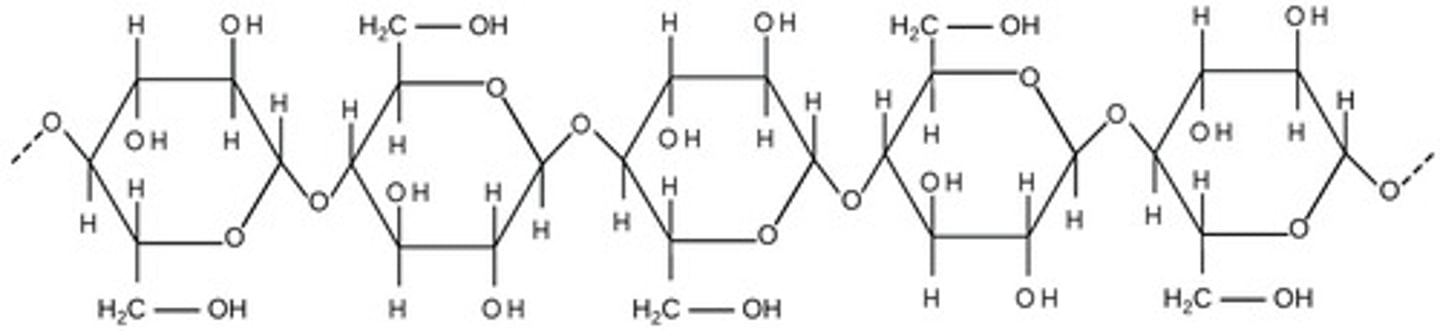
What substance composes plant cell walls?
cellulose
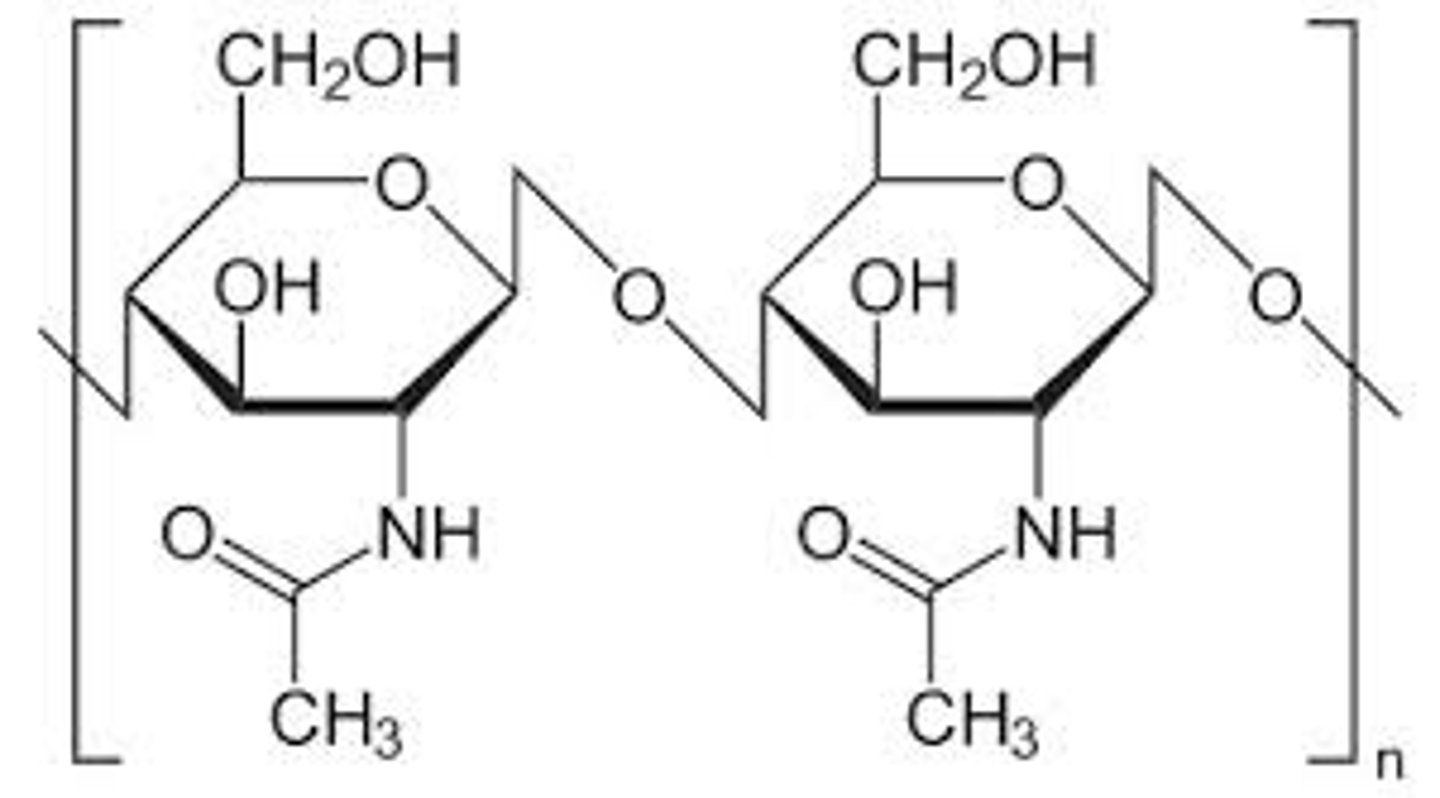
What substance composes fungal cell walls?
chitin
What substance composes bacteria cell walls?
peptidoglycan
What substance composes archaean cell walls?
polysaccharides
What substance is between adjacent cells and contains fibrous structural proteins, adhesion proteins, and polysaccharides?
extracellular matrix
What is the function of extracellular matrix?
1. provide mechanical support
2. help bind adjacent cells
3. help transmit chemical/mechanical signals
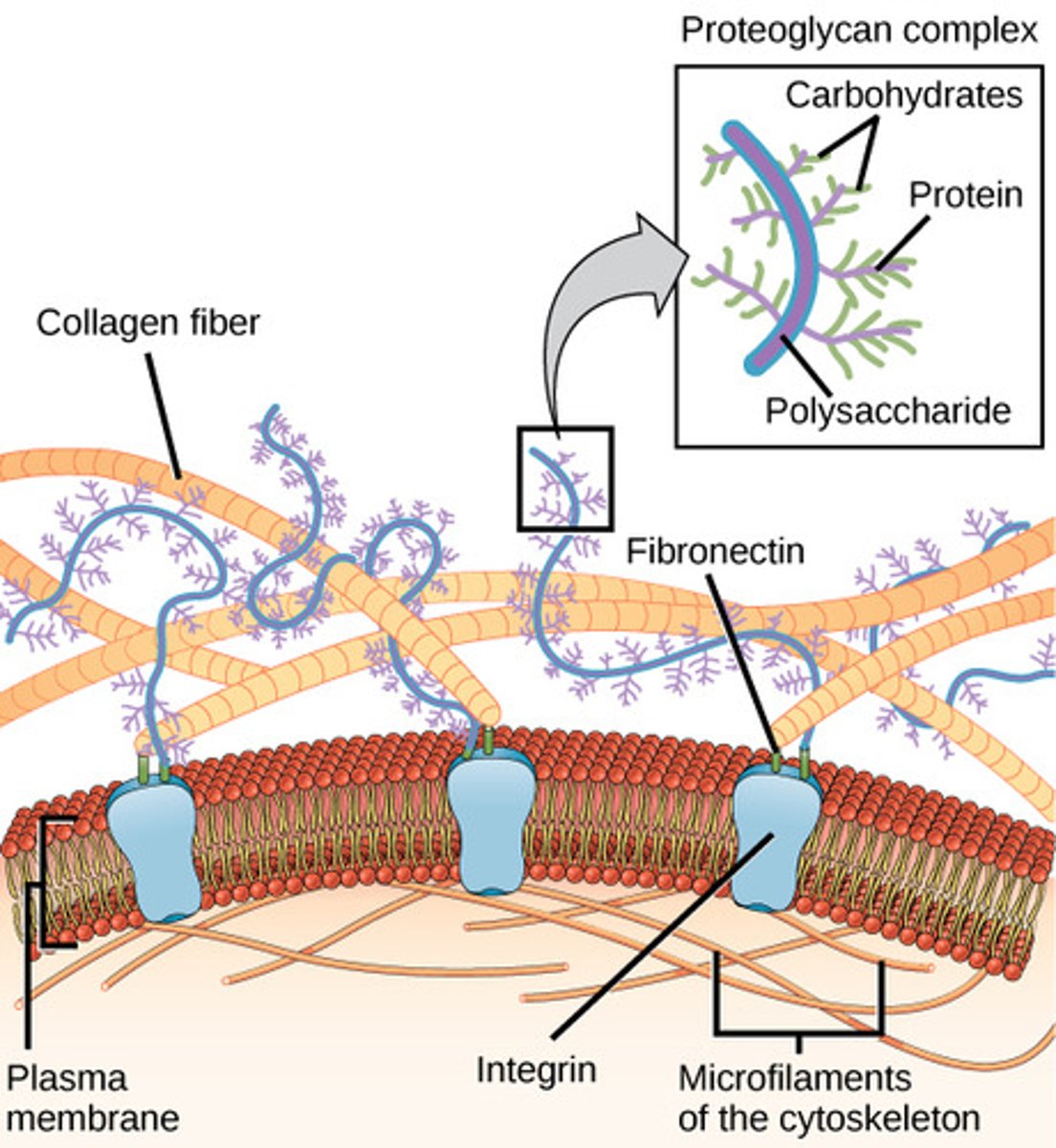
What are the common proteins that binds adjacent cells?
1. collagen (most common)
2. integrin
3. fibronectin
What are the ways cells adhere to the extracellular matrix?
1. focal adhesions
2. hemidesmosomes
What connections do focal adhesions create?
ECM to actin filaments
What connections do hemidesmosomes create?
ECM to intermediate filaments
Which organelle includes chloroplasts, leucoplasts, and chromoplasts?
plastids
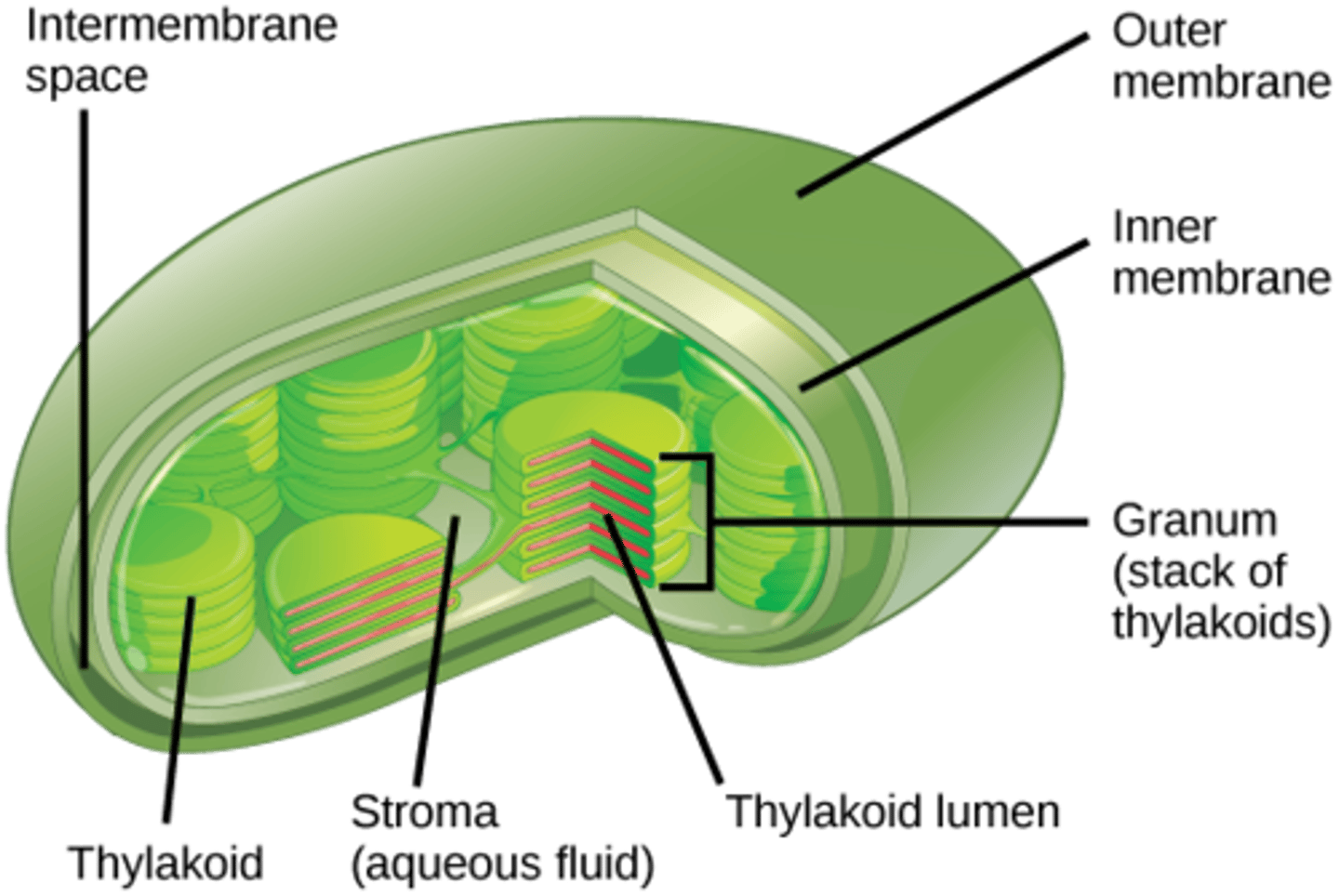
Which plant organelle is the site of photosynthesis?
chloroplast
Which plant organelle specializes to store starch, lipids, and proteins as amyloplasts, elaioplasts, and proteinoplasts, respectively?
leucoplast
Which plant organelle stores carotenoids?
chromoplast
Which organelle is double-layered, makes ATP, and performs beta-oxidation of fatty acids?
mitochondria
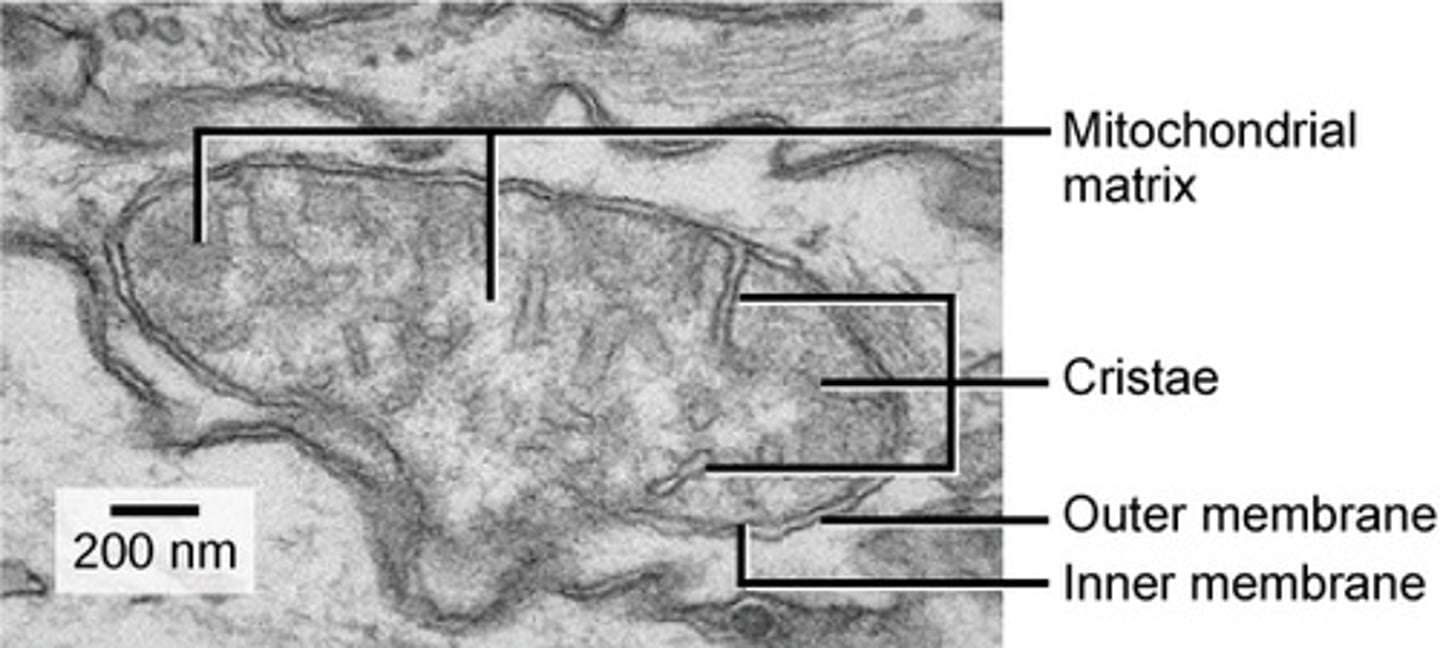
What shape is the DNA of mitochondria?
circular
Which protein making organelle are contained within mitochondria?
ribosomes
Which eukaryotic matrix includes microtubules, microfilaments, intermediate filaments, aids in cell division, and organelle/cytoplasm movement?
cytoskeleton
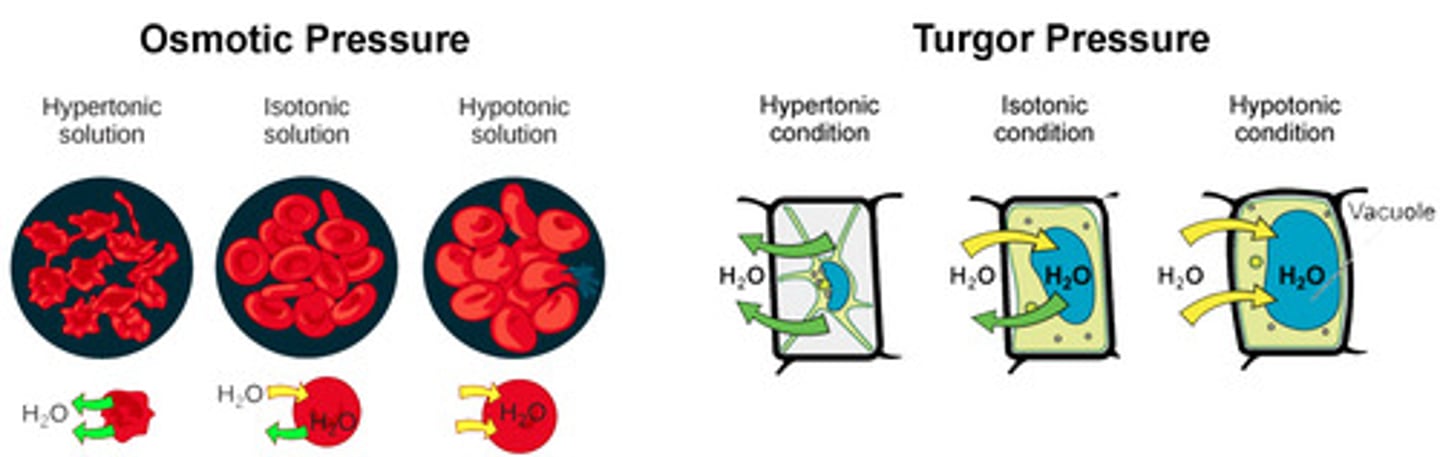
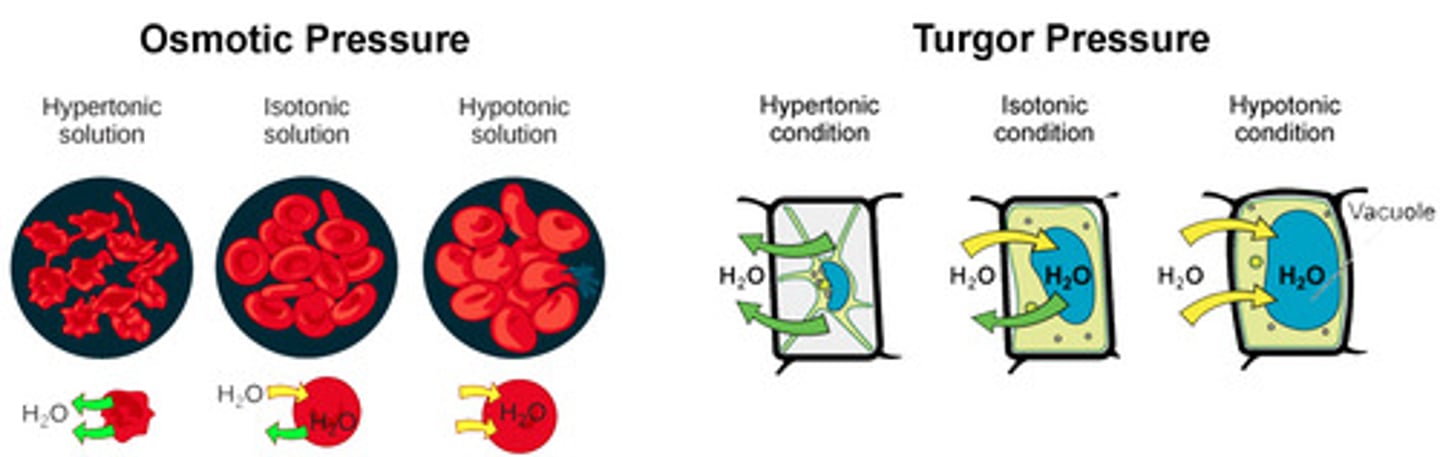
What action does the plant vacuole take take in a hypotonic environment?
swells
(Note: becomes turgid,
their natural state)
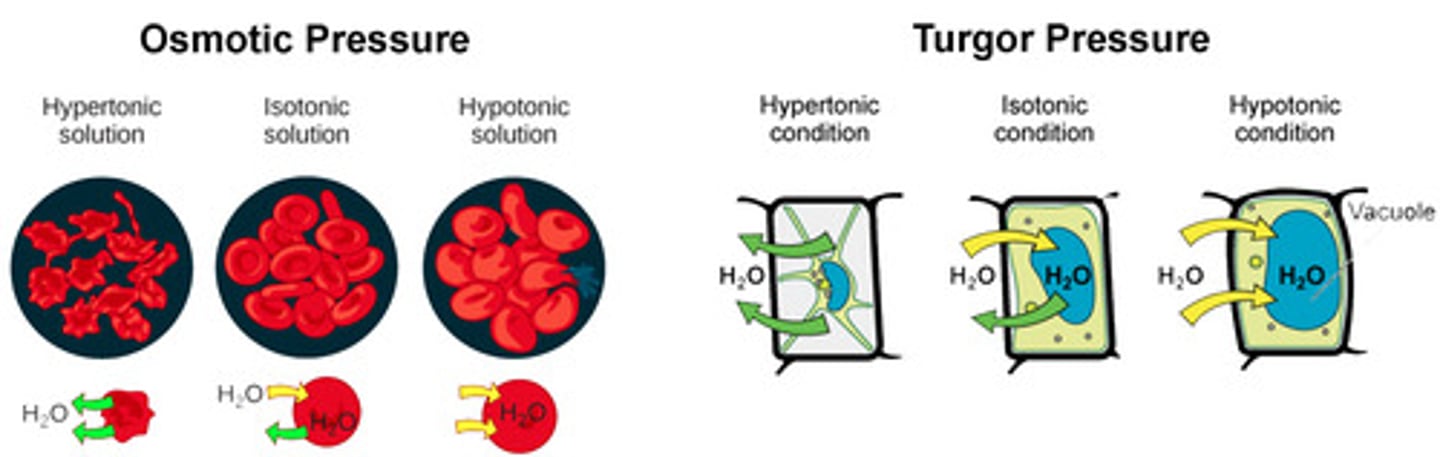
What state does a plant cell take in an isotonic environment?
flaccid
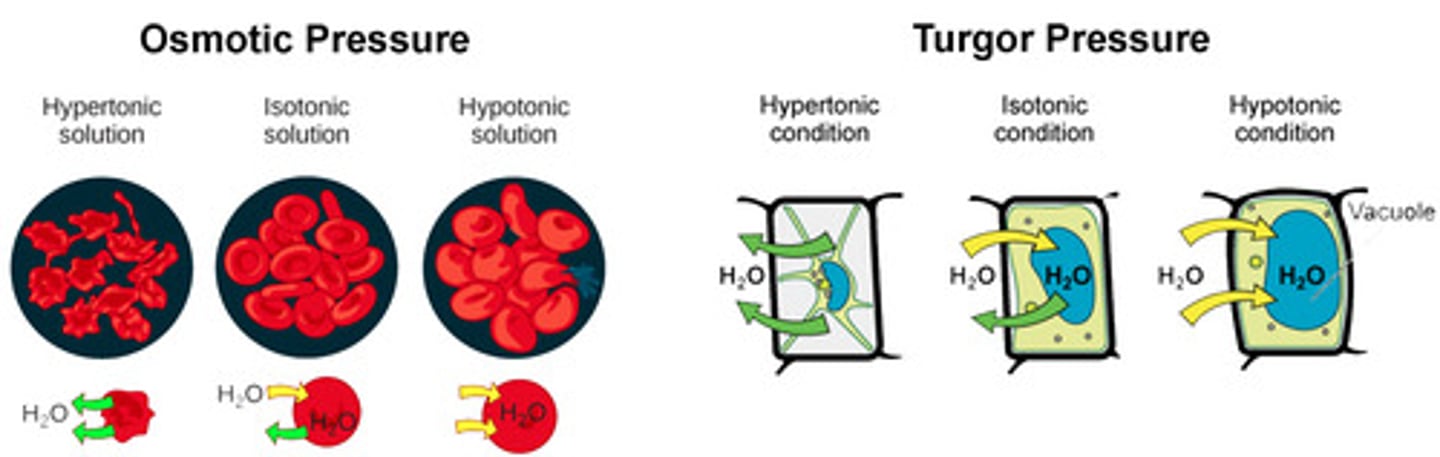
What occurs in a plant cell in a hypertonic environment?
plasmolysis
(Note: cytoplasm is
pulled away from
the cell wall)
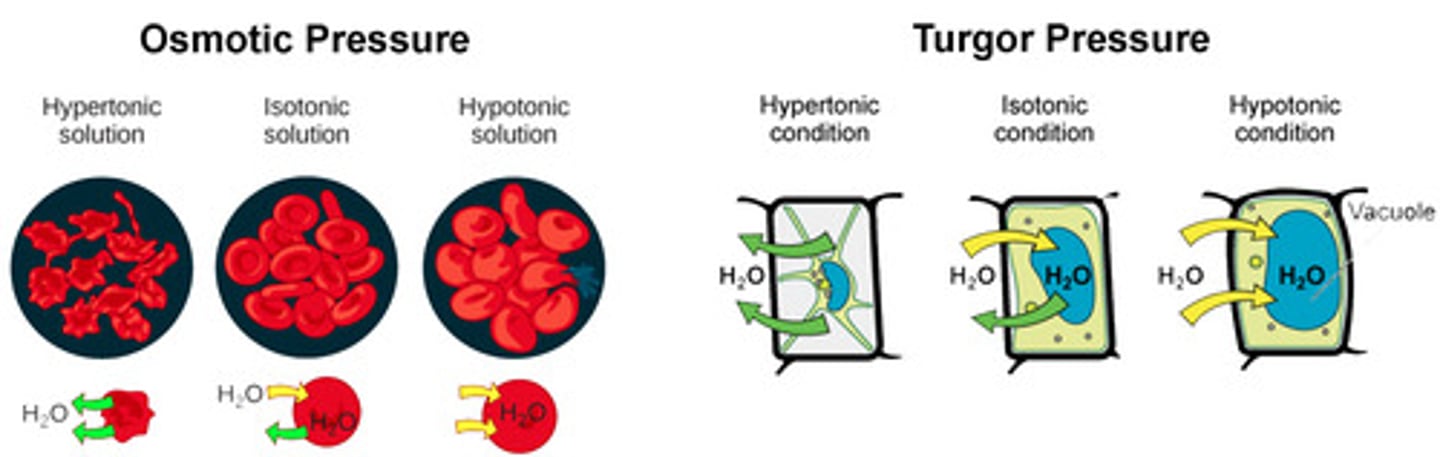
What occurs in an animal cell in a hypotonic environment?
cytolysis
(Note: burst)
What is the network of organelles and structures, either directly or indirectly connected that transport proteins and other macromolecules into or out of the cell?
endomembrane system
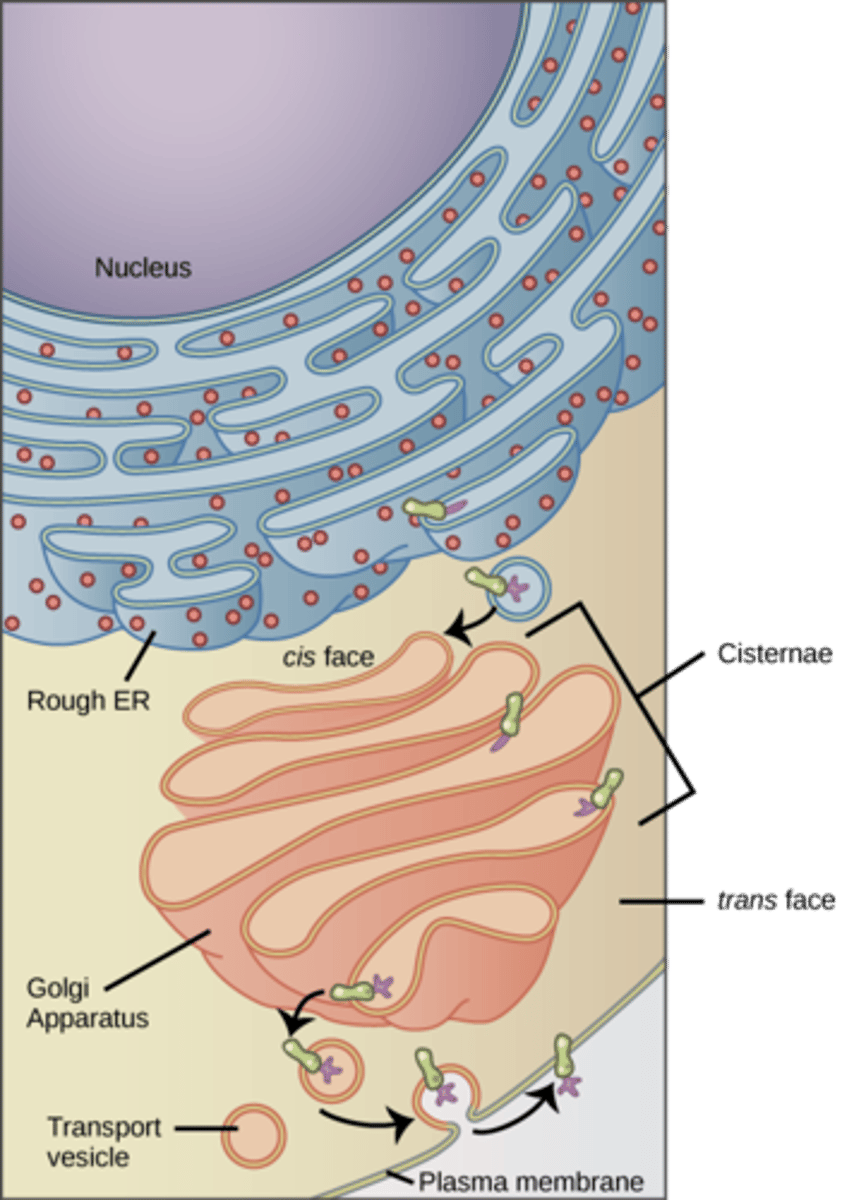
Which organelles compose the endomembrane system?
1. plasma membrane
2. ER
3. Golgi
4. nuclear envelope
5. lysosomes
6. vacuoles
7. vesicles
8. endosomes
Which mobility structure undulates like a snake?
flagella
Which mobility structure beats in a rapid back and forth pattern?
cilia
What are the two methods of circulation throughout the cell?
1. intracellular
2. extracellular
Which method of cell circulation involves Brownian movement?
intracellular
Which method of cell circulation involves circular motion of cytoplasm around cell transport molecules (cyclosis/streaming)?
intracellular
In intracellular cell circulation, which organelle provides a channel from the nuclear membrane to the plasma membrane?
ER