AP Biology Unit 1
 Call Kai
 Learn
Learn Practice Test
 Spaced Repetition
 Match
Match Flashcards
 Knowt Play
1/188

There's no tags or description
Looks like no tags are added yet.
Name | Mastery | Learn | Test | Matching | Spaced | Call with Kai | Chat |
|---|
No analytics yet
Send a link to your students to track their progress
189 Terms
glucose, fructose, sucrose, starch, glycogen, cellulose, monosaccharides, disaccharides, polysaccharides
Carbohydrate Examples

A double sugar, consisting of two monosaccharides joined by dehydration synthesis.
Disaccharide

A single sugar molecule such as glucose or fructose, the simplest type of sugar.
Monosaccharide
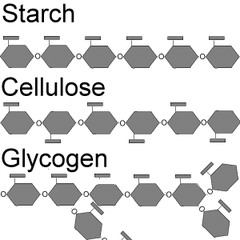
Carbohydrates that are made up of more than two monosaccharides
Polysaccharide

A covalent bond formed between two monosaccharides by a dehydration reaction.
Glycosidic Linkage

A storage polysaccharide in plants consisting entirely of glucose.
Starch

A substance (made of sugars) that is common in the cell walls of many organisms
Cellulose
fatty acids, fats, saturated fats, unsaturated fats, steroids, phospholipids, cholesterol, triglycerides
Lipid Examples

A lipid made from fatty acids that have at least one double bond between carbon atoms.
Unsaturated Fat

A lipid made from fatty acids that have no double bonds between carbon atoms
Saturated Fat
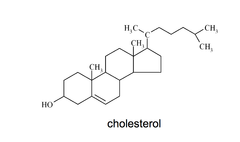
lipid molecule with four fused carbon rings
Steroid
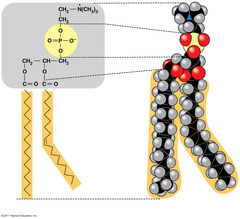
a lipid that contains phosphorus and that is a structural component in cell membranes
Phospholipid
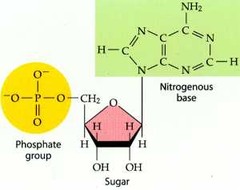
monomer of nucleic acids made up of a 5-carbon sugar, a phosphate group, and a nitrogenous base
Nucleotide
DNA, RNA, (ATP and ADP are modified nucleic acids)
Nucleic Acid Examples
amino acids, primary, secondary, tertiary, quaternary structures, collagen, hemoglobin, enzymes
Protein Examples

a lipid made of three fatty acid molecules and one glycerol molecule
Triglyceride
glutamine, proline, cysteine, lycine, ...
Amino Acid Examples
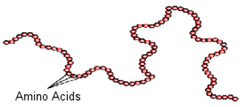
sequence of amino acids
Primary Structure of a Protein

protein structure is formed by folding and twisting of amino acid chain
Secondary Structure of a Protein

protein structure is formed when the twists and folds of the secondary structure fold again to from a larger 3D structure
Tertiary Structure of a Protein
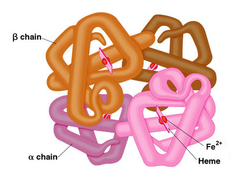
protein structure is a protein consisting of more than one folded amino acid chain
Quaternary Structure of a Protein

The covalent bond between two sulfur atoms (-S—S-) linking two molecules or remote parts of the same molecule.
Disulfide Bridge

Very weak bonds; occurs when a hydrogen atom in one molecule is attracted to the electrostatic atom in another molecule
Hydrogen Bonds

kind of macromolecule that stores, transfers, and expresses genetic information
nucleic acid
elements that make up a nucleic acid
Carbon, Hydrogen, Oxygen, Phosphorus, Nitrogen (CHOPN)
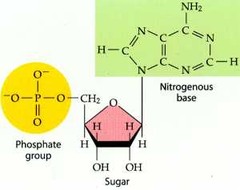
monomer of nucleic acids made up of a 5-carbon sugar, a phosphate group, and a nitrogenous base
nucleotide
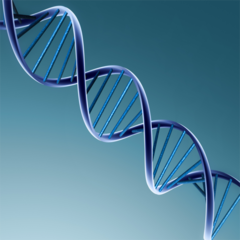
term used to describe the arrangement of a DNA strand
double helix
ribonucleic acid; a polymer of nucleotides that transfers genetic information
RNA
the sugar in RNA is ribose; Uracil bonds with Adenine; RNA is single-stranded
how RNA differs from DNA
Carbon, Hydrogen, Oxygen, Nitrogen, Sulfur (CHONS)
elements that make up a protein

building block (monomer) of proteins, composed of an amino group and a carboxyl group, a hydrogen atom, and an R-group
amino acid
a carboxyl group, an amino group, a central Carbon, a Hydrogen, and an R-group
structure of an amino acid
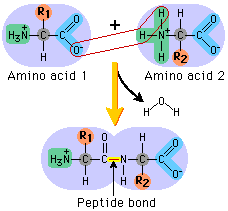
covalent bond formed between amino acids
peptide bond

a long line of amino acids bonded together by peptide bonds
polypeptide chain
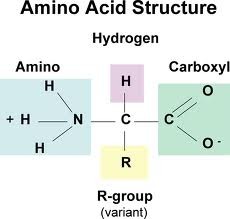
stands for the rest of the compound, different for each kind of amino acid, giving the amino acid its properties
R-group
hydrophilic or hydrophobic, polar or nonpolar, acidic or basic
properties the R-group may give the amino acid
primary structure, secondary structure, tertiary structure, quaternary structure
four levels of a proteins structure
move together to the interior of a protein, away from water
hydrophobic R-groups
macromolecule made of carbon, hydrogen and oxygen (CHO) that is mostly nonpolar not soluble in water;
lipids
elements that makeup both Carbohydrates and Lipids
Carbon, Hydrogen, Oxygen (CHO)
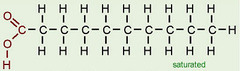
building block of a lipid made of a hydrocarbon chain and a carboxyl group
fatty acid
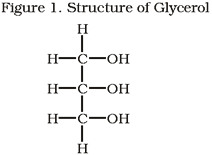
a carbon alcohol that is hydrophilic
glycerol
long-term energy storage, insulation, part of the cell membrane, chemical messenger, waterproofing
functions of lipids

lipid made of two hydrocarbon chains, glycerol, and a phosphate group
phospholipid
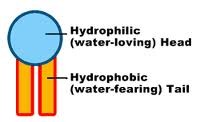
another name for the hydrocarbon chain in a phospholipid
hydrophobic tail

another name for the phosphate group in a phospholipid
hydrophobic head
suffix carbohydrates usually end in (gluc-ose, fruct-ose)
-ose

covalent bond that forms between a monosaccharide and another molecule (like another monosaccharide)
glycosidic linkage
large organic molecules
macromolecules
number of covalent bonds carbon can form with other elements
four

carbon and hydrogen atoms that are covalently bonded that make them stable and nonpolar
hydrocarbons
not soluable in water
nonpolar
soluable in water
polar
molecules that consist of many repeated monomers
polymer
molecules that consist of a single unit
monomer
reaction that links monomer molecules together, releasing a molecule of water for each bond formed
dehydration synthesis
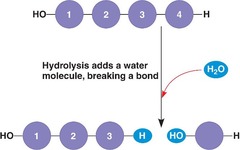
the process of adding a water molecule to break a polymer into monomers
hydrolysis
parts of organic molecules that are involved in chemical reactions
functional groups
slightly negative
charge of the oxygen atom in a water molecule
slightly positive
charge of the hydrogen atoms in a water molecule
Term for substances that dissolve in water.
hydrophilic
Term for substances that do not dissolve in water.
hydrophobic
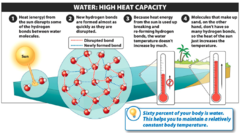
property of water in which water changes temperature very slowly with changes in heat due to hydrogen bonding
high specific heat
water carries the heat it absorbs away in sweat due to its high specific heat
evaporative cooling

less dense as a solid; hydrogen bonds form crystalline structure that keeps the water molecules separate
the reason ice floats in liquid water

the attraction of like substances; water molecules are attracted to other water molecules; this is due to the hydrogen bonding between water molecules
cohesion

the attraction of unlike molecules; water molecules are attracted to other polar surfaces
adhesion
Smallest form of an element that still displays its particular properties; consisting of a positively charged nucleus and a negatively charged electron cloud.
atom
Atomic particles with a positive charge (+) found in the nucleus of an atom.
protons
Atomic particles with a neutral (o) charge found in the nucleus of an atom.
neutrons
Atomic particles with a negative charge (-) found outside the nucleus of an atom.
electrons
atom becomes charged when it gains or loses an electron
ion
attraction between two atoms by transferring or sharing electrons to attain a stable electron configuration
chemical bond
Bond that forms when electrons are shared equally.
nonpolar covalent bond
Bond that forms when electrons between atoms are shared.
covalent bond
Bond that forms when electrons are shared unequally; like that between the oxygen atom and hydrogen atoms in a water molecule
polar covalent bond
Unequal sharing of electrons creating partial charges; polar bonds or molecules result. An uneven distribution of charge usually makes a molecule polar.
Polarity
Attraction between partial positive and partial negative charges; in water, hydrogen bonding occurs between the partially positive hydrogen of one molecule and the partially negative oxygen of another.
Hydrogen Bonding
Water sticking to water due to hydrogen bonding.
Cohesion
A property caused by cohesion and hydrogen bonding between water molecules at the surface.
Surface Tension
Water sticking to other polar surfaces.
Adhesion
The movement of water through narrow spaces, such as through plant xylem, caused by adhesion and cohesion.
Capillary Action
Water requires a large amount of energy to change its temperature because hydrogen bonds absorb heat.
High Specific Heat
The amount of heat energy required to raise the temperature of a substance by 1°C.
Specific Heat
The large amount of energy required to change water from a liquid to a gas because hydrogen bonds must be broken.
High Heat of Vaporization
Water can dissolve many polar and ionic substances because water is highly polar; like dissolves like.
Universal Solvent
A bond formed when electrons are transferred from one atom to another, creating oppositely charged ions.
Ionic Bond
Usually occur between metals and nonmetals; examples include NaCl and CaCl₂.
Ionic Bonds
A bond formed when two atoms share electrons.
Covalent Bond
Usually occur between nonmetals; examples include CH₄, C₆H₁₂O₆, and O₂.
Covalent Bonds
Ice is less dense than liquid water because hydrogen bonds hold water molecules farther apart in a crystal structure.
Solid Water Density
Temperature affects whether a substance exists as a solid, liquid, or gas.
Temperature and State of Matter
A measure of how far individual values tend to be from the mean.
Standard Deviation
Approximately 68% of data falls within 1 standard deviation, 95% within 2 standard deviations, and 99.7% within 3 standard deviations of the mean in a normal distribution.
68-95-99.7 Rule
A measure of how much the sample mean is expected to vary from the true population mean; smaller standard error means greater confidence in the sample mean.
Standard Error
Error bars that represent standard error and show the estimated variability of the sample mean.
Standard Error Bars
Overlapping error bars do not automatically mean there is no significant difference; a statistical test is needed to determine significance.
Overlapping Error Bars
A small molecule that can bond with other similar molecules to form a polymer.
Monomer
A large molecule made of repeating smaller units called monomers.
Polymer
A functional group consisting of an oxygen and hydrogen bonded together; written as -OH.
Hydroxyl Group