WCF exam 3
 Call Kai
 Learn
Learn Practice Test
 Spaced Repetition
 Match
Match Flashcards
 Knowt Play
1/340

There's no tags or description
Looks like no tags are added yet.
Name | Mastery | Learn | Test | Matching | Spaced | Call with Kai | Chat |
|---|
No analytics yet
Send a link to your students to track their progress
341 Terms
What are some pediatric GI differences?
Infant’s stomach empties in 2.5-3 hours, lipase isn’t adequately secreted until about 1 year, drugs in stomach are absorbed quicker and slower in small intestine, immature liver and pancreas (glucogenesis), and no need for solid foods until at least 4 months
What should be done if a newborn has a cleft lip and/or palate?
Focus on airway and sucking; CL repair around 2-6 months, CP repair around 9-18 months
What is an inguinal hernia?
Protrusion of part of the gut or bowel through the inguinal ring into the scrotal or labial area; treatment is outpatient therapy
What is an umbilical hernia?
Common in infants, umbilical ring doesn’t close at the end of the first trimester; no treatment unless persists after 5 years, and then they get surgery
What is rectal atresia?
Complete closure of the anal passage; needs immediate surgical intervention
What is rectal stenosis?
Narrowing/constriction of the rectal passage, can have ribbon-like stools
What is an imperforate anus?
No rectal opening, child may have a fistula going to the GU system
What are some manifestations and diagnostics for pyloric stenosis?
3-6 weeks old, projectile vomiting, olive-shaped mass and hungry after vomiting; diagnosis by U/S
What is the treatment for pyloric stenosis?
Rehydration, surgery (pyloromyotomy), early gradual feeds after surgery, and D/C home typically within 24 hours
What is intussusception?
Telescoping of a portion of the intestine, commonly at the ileocecal valve, diagnosed by barium or air enema and imaging
What are the manifestations of intussusception?
Currant jelly stools, sausage shaped mass in upper RQ, intermittent colicky cry, and fever
How is intussusception treated?
Enema (65-90% effective) or surgery if not corrected; stooling may indicate resolution
What is malrotation and volvulus?
Most common in first month of life; abnormal rotation of the intestine around the superior mesenteric artery during fetal development; may lead to malrotation of intestine; life-threatening if twisting of the intestine around itself (volvulus) occurs
What are the manifestations of malrotation/volvulus?
Intermittent bilious vomit, dehydration, abdominal distention/pain, lower GI bleeding, palpable epigastric mass, and shock
How is malrotation/volvulus diagnosed?
Barium enema or UGI series
How is malrotation/volvulus treated?
Surgery to either untwist bowel and/or remove necrotic bowel
What is Crohn’s disease?
Chronic inflammatory disease characterized by periods of exacerbations and remissions, can be ANY PART of the GI tract; has acute and slow onset in children
What are the manifestations of Crohn’s disease and how is it diagnosed?
Abdominal pain, diarrhea, blood/mucous in stool, urgency/tenesmus, weight loss, RLQ cramping and fatigue; diagnosed by EGD
What is the treatment for Crohn’s disease?
Reduce inflammation (5-ASA and steroids), immunomodulators (methotrexate), and biologics; surgical correction if not responsive to meds or if strictures, obstruction, perforation, etc
What is ulcerative colitis?
Acute or chronic inflammation of the COLON, characterized by recurring bloody diarrhea
What are the manifestations of ulcerative colitis and how is it diagnosed?
Abdominal pain, bloody diarrhea, tenesmus, LLQ cramping, and weight loss; diagnosed by EGD
How is ulcerative colitis treated?
Surgical correction if not responsive to meds; total mucosal proctocolectomy with the ileal-pouch-anal anastomosis
What are some IBD pediatric considerations?
Growth and development, body image, mental health, adherence, for school absences and bathroom breaks
What is the recommended diet for Crohn’s disease and Ulcerative colitis?
Crohn’s: High fat, high carb, low residue, smaller/frequent meals, and supplements
Ulcerative Colitis: High protein, high carb, normal fat, decreased roughage, and supplements
What is appendicitis?
Average age is 6-10 years in children; inflammation of appendix
What are the manifestations of appendicitis and how is it diagnosed?
Umbilical pain (RLQ), vomiting, fever, perforation; diagnosed by exam, lab work, and imaging
How is diarrhea defined for children?
Increased frequency and fluid content of the stool with or without associated symptoms; parents are asked about the presence of other signs and symptoms such as vomiting, fever and pain
What does rotavirus stool look like?
Explosive, watery, pale and odorous
What does E. coli stool look like?
Green and watery
What does salmonella stool look like?
Bloody
What is constipation and how is it diagnosed?
Delay or difficulty passing stool for 2 or more weeks; diagnosed with examinations and imaging
What are the manifestations of constipation and how is it treated?
Behavior modification, hardened stool, straining, rectal pain, encopresis (passing stool in inappropriate places, such as clothing, despite being potty-trained), withholding behaviors; treated with behavior modification, well-balanced diet, exercise, medication (suppositories, stool softeners, laxatives) and enemas
What is gastroesophageal reflux (GER)?
Return of gastric contents from the stomach through the lower esophageal sphincter back up into the esophagus; functional reflux, causes infrequent, episodic nonbilious undigested formula; non-pharmacological interventions
What is gastroesophageal reflux disease (GERD)?
Pathological reflux (choking, apnea, frequent OM/URIs, poor weight gain), common in premature infants and those with neurological issues; non-pharmacological and pharmacological interventions (PPIs, prokinetics)
What is some management and teaching recommended for children who have GER/GERD?
No intervention/tests needed if weight gain is adequate, may consider thickened formula or breast milk; may need lactose-free formula; smaller, frequent feedings that are slow; do not vigorously play after feeding; feed in upright position, and after feeds maintain 30-45 degree angle
What is failure to thrive?
A syndrome in which infants or young children fail to eat enough food to be adequately nourished and achieve age-appropriate weight gain as a result of: inadequate caloric intake, inadequate caloric absorption, and/or excessive caloric expenditures
What is Hirschprung’s disease?
Also known as aganglionic megacolon; the absence of ganglion cells results in lack of motility in the affected portion of the bowel
What are the manifestations of Hirschprung’s disease and how is it diagnosed?
Failure to pass meconium, chronic constipation, abdominal obstruction, explosive BMs, vomiting, and in older children foul smelling ribbon-like stools; diagnosed by imaging, barium enema, and rectal biopsy
How is Hirschprung’s disease treated?
Bowel program and/or surgical resection of affected bowel
What is short bowel (gut) syndrome?
Decreased mucosal surface area, usually from surgical resection of small bowel
What is short bowel syndrome treated?
Administration and monitoring of TPN, enteral feeding, and emotional/developmental needs
What is biliary atresia?
Idiopathic, progressive, inflammatory process (postnatal or fetal) that causes an absence of some or all major intrahepatic and extrahepatic biliary ducts resulting in fibrosis and obstruction
What are the manifestations of biliary atresia?
Jaundice (either at birth or 1-2 weeks), dark urine that stains the diaper, enlarged liver and spleen, and itchiness
What is cannabinoid hyperemesis syndrome (CHS)?
Severe bouts of vomiting in cannabis users (typically daily long-term users)
What is the treatment for CHS?
Abstain from cannabis, rehydration, and support
Why are children more at risk for fluid and electrolyte imbalances?
They have a greater body surface area, higher percentage of total body water, greater potential for fluid loss via GI and skin, increased incidence of fever, upper respiratory infections and gastroenteritis, greater metabolic rate, and immature kidneys
What is a urinary tract infection?
An infection of the urinary system caused by a bacteria, fungus or virus; can start distally (cystitis) and can be in the upper tract (pyelonephritis)
What are the signs and symptoms of UTIs?
Infant: poor feeding, fever, vomiting, diarrhea, colic irritability, dribbling urine
Older children: abdominal pain, flank pain, classic dysuria, vomiting, diarrhea, and fever
How are UTIs diagnosed?
Urine culture and sensitivity (clean catch vs cath based on age), ultrasound, and VCUG (Voiding Cystourethrogram)
What arae risk factors for UTIs?
Female sex, inadequate hygiene of uncircumcised penis, constipation, dysfunctional voiding pattern, indwelling catheters or intermittent catheterization, recent sexual intercourse, and urinary tract anomalies
How are UTIs treated?
Antibiotic therapy, hydration, education, acetaminophen for pain management
What are some education points for UTI patients/their family?
Teach signs of infection based on age, void frequently/change diapers frequently, avoid tight-fitting clothing/diapers, teach wiping front to back, teach foreskin cleaning, cotton underwear, prevent constipation, hydration, cranberry juice, and void after intercourse
What is vesicoureteral reflux?
Structural abnormality that causes urine to backflow from bladder to the ureters and kidneys
What is glomerulopnephritis?
Inflammation of the glomeruli causing interference w/ glomeruli filtering and intravascular coagulation; typically following a strep infection, can be acute, intermittent and chronic
What are the manifestations of glomerulonephritis?
Gross hematuria (tea colored or red urine), oliguria, edema (periorbital), HTN, headache, and ascites (severe)
How is glomerulonephritis diagnosed?
Serum ASO titer, serum complement C3 (positive), urinalysis (positive hematuria and proteinuria), BUN, and creatinine may be elevated
What is the treatment for glomerulonephritis?
Antibiotics, monitor I&O, urine volume and character, daily weight, monitor BP, monitor neuro status and behavior changes (possible seizure precautions), antihypertensives, diuretics, steroids, plasma exchange, and dietary restrictions of Na and K
What is hemolytic uremic syndrome (HUS)?
Toxins enter bloodstream and breakdown RBCs, breakdown of RBCs clog kidneys; main cause is acute renal disease
What are the causes of HUS?
E. Coli and Shigella dysenteriae; avoid undercooked meat, unpasteurized apple juice and unwashed veggies
What are the manifestations of HUS?
Gastroenteritis (vomiting, bloody diarrhea), clinical triad of thrombocytopenia (purpura), anemia, and acute renal failure; liver and/or pancreatic involvement
How is HUS diagosed?
Increased BUN/Creatinine, K+ and reticulocyte count; decrease in platelets and glucose, stool has E. Coli; urinalysis shows positive for hematuria and proteinuria
What is the treatment for HUS?
Fluid and electrolyte balance (I&O, daily weights, ABGs, EKG, electrolytes, and edema), nutritional support, treatment of anemia and bleeding, control HTN, watch for CHF, monitor LOC (watch ICP and control seizures), control azotemia (may need dialysis), and supportive care
What is nephrotic syndrome?
Alterations in glomerular membrane leads to excessive proteinuria causing hypoalbuminemia and hyperlipidemia; causes include immune responses, infections, malignant and vascular changes
What are the manifestations of nephrotic syndrome?
Edema (periorbital, facial, and extremities), decreased UO/oliguria, weight gain, HTN, anorexia, fatigue, V/D, growth failure, muscle wasting if prolonged
How do you diagnosed nephrotic syndrome?
Urinalysis positive for proteinuria, CBC (H&H and platelets can be normal or increased), and kidney biopsy
How is nephrotic syndrome treated?
Monitor fluid and electrolytes (weight, I&O, edema, and BUN), diuretics, albumin replacement, have a diet in moderate protein, low Na and low saturated fat, steroids until no proteinuria for 10-14 days (increased infection risk)
What is acute renal failure (ARF)?
Kidneys cannot excrete waste products, concentrate urine and conserve electrolytes; for prerenal, dehydration from diarrhea and vomiting, surgical shock and trauma, burns, and prolonged anesthesia; for intrarenal, damage to kidneys, nephrooxicity, and obstruction
What are the manifestations of ARF?
Oliguria, diuresis, edema, circulatory collapse, cardiac arrhythmias from hyperkalemia, seizures, tachypnea, and drowsiness
What are some nursing care actions for ARF?
Treat underlying cause, monitor I&O, limit fluids, assess fluid and electrolytes, monitor for HTN, assess for seizure activity, and implement seizure precautions
What is enuresis?
Bed wetting
What is the difference between primary and secondary enuresis?
Primary: child has never has a dry night, maturational delay, small functional bladder, no psychological cause
Secondary: child who has been reliably dry for at least 6 months begins bed-wetting, stress, infections, and sleep disorders
What is the treatment for enuresis?
DDAVP (desmopressin) for extreme cases, inform parents that it may improve as child grows
What are some useful techniques for parents?
Avoid fluids close to bedtime, urinate before, avid diuretic foods (coffee, chocolate, colas), reward charts, mattress pads with alarms, watches with reminders to void, books on staying dry, absorbent underwear, and evaluate self-esteem and coping
What is cryptorchidism?
Undescended or ectopic testicles; common, congenital (85% unilateral, right); hormonal or anatomical, may descend spontaneously in 1st 3 months of life, but unlikely after 1 year; surgery is beneficial for infertility, done at 6-12 months
What is testicular torsion?
Surgical Emergency! Must occur within 4-8 hours, risk of orchiectomy
What are S/S of testicular torsion?
Neonate: dusky scrotum, mass, no pain from motion
Older males: severe/persistent pain begins gradually; history of trauma or exertion; fever, N/V
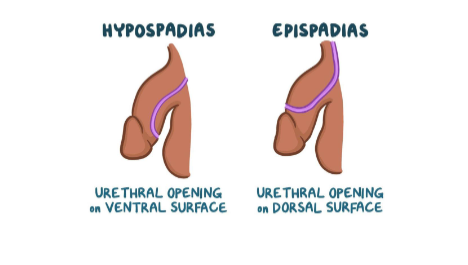
Hypospadias vs Epispadias
Urethral opening on VENTRAL surface VS urethral opening on DORSAL surface
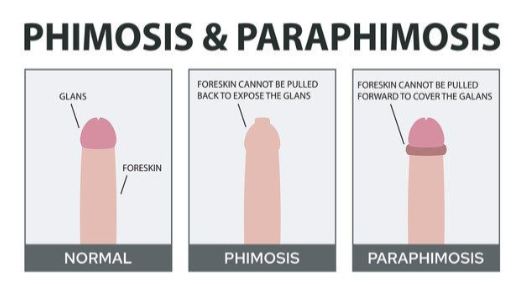
Phimosis vs Paraphimosis
Foreskin cannot be pulled back to expose the glans VS foreskin cannot be pulled forward to cover the glans
What is anemia?
Decreased circulating RBCs due to either decreased production or increased destruction; can be due to acute or chronic blood loss
What are the manifestations of anemia?
Lethargy, fatigue, SOB, complaints of headache, difficulty concentration, pale skin, irritability, tachycardia, and murmur
How is anemia diagnosed?
Routine H&H screening (once at 9-12 months and again 1-5 y/o), additional in late childhood (5-12) and adolescence (14-20)
How is anemia treated?
Diet and supplements if mild, if moderate to severe transfusions, and if due to decreased production then hematopoietic growth factors
What is iron deficiency anemia?
Decreased iron supply, most common nutritional disorder in infants and young children worldwide (microcytic hypochromic); iron is needed to make Hgb, decreased oxygen carrying capacity of blood
What are the causes of iron deficiency anemia?
Dietary, increased demands, blood loss, inability to form Hgb, impaired absorption, and lead poisoning (most common in preemies and those 6-12 months)
What are the manifestations of iron deficiency anemia?
Mild: asymptomatic, SOB, tachycardic during exertion; moderate: SOB, tachycardic, palpitations, dizzy, fainting, irritability, and PICA; severe: murmur, CHF, enlarged spleen
How is iron deficiency anemia diagnosed?
CBC, ferritin, TIBC, transferrin saturation levels, reitculocytes
How is iron deficiency anemia treated?
Breast milk or Fe formula for 1st 12 months, no cows milk until older than a year old, limit to 18-24oz/day, adolescents on vegetarian or weight reduction diets, eat beans, whole grains, and cereals; activity; Elemental iron supplements
How should elemental iron supplements be given?
Empty stomach with vitamin c juices (like orange juice); NO MILK OR TEA; use straw/dropper and rinse mouth (can stain teeth), keep locked and out of children’s reach, has some GI side effects such as constipation, GI upset, and black tarry stools
What is sickle cell disease?
Autosomal recessive genetic trait in which globin chain in normal Hgb A replaced with Hgb S; microvascular occlusions (clog up vessels), can lead to ischemia, infarcts and tissue death
What are the manifestations of sickle cell disease?
All organs affected, PAIN; weakness, fatigue, jaundice from hemolysis, chronic anemia, susceptible to infection, delayed growth an sexual maturation, avascular necrosis of shoulder or hip, cholelithiasis; all complications related to occlusion of blood vessels
What are sickle cell emergencies?
CVA, acute chest syndrome, splenic sequestration, and infection
What is the treatment for sickle cell disease?
Avoid hypoxic situations (MAINTAIN GOOD OXYGENATION), prophylactic antibiotics/immunizations (Hib, pneumococcal = decreased rates of sepsis), hydration, pain management, rest, folate supplement, chronic pRBC transfusions (iron chelation), hydroxyurea to increase Hgb F production
How is sickle cell disease diagnosed?
Newborn screen standard in all 50 states; lab work
What are some education points for sickle cell disease?
Fevers require immediate medical attention, report worsening S/S, avoid strenuous activities, avoid crisis with rest and adequate hydration, provide pain medication
What are some complications of sickle cell disease?
Vaso-occlusive crisis, aplasia, CVA, acute chest syndrome, splenic sequestration, and infection
What is a vaso-occlusive crisis?
Can occur anywhere in body; soft tissue swelling and PAIN; treated with hydration, pain management with opioids and NSAIDS
What is aplasia?
Temporary cessation of bone marrow function
What is the treatment for aplasia?
Supportive care, pRBC transfusions, treat infection, and monitor closely
What is a cardiovascular accident (CVA) for sickle cell disease patients?
Occurs in 7% of children with sickle cell disease, manifestations are convulsions, slurred speech, ataxia, weakness, paralysis; treated for symptoms and neuro management
What is acute chest syndrome?
Leading cause of death in sickle cell disease patients younger than 10; caused by infection, infarction, pulmonary fat embolus