BIO103 Chapter 3
 Call Kai
 Learn
Learn Practice Test
 Spaced Repetition
 Match
Match Flashcards
 Knowt Play
1/54

There's no tags or description
Looks like no tags are added yet.
Name | Mastery | Learn | Test | Matching | Spaced | Call with Kai | Chat |
|---|
No analytics yet
Send a link to your students to track their progress
55 Terms
Functional groups
Small molecular entities that confer specific chemical characteristics when attached to hydrocarbon. They react the same if different situations
Isomers
Organic molecules having the same molecular or empirical formula can exist in different forms.
Same number of elements but arranged differently in space.
Polymer
Long molecule built by linking together a large number of small, similar chemical subunits called monomers
Carbohydrates polymer and monomer
Polymer starch. Monomer monosaccharide
Nucleic acid polymer and monomer
Polymer DNA strand. Monomer nucleotide.
Protein polymer and monomer
Polymer polypeptide. Monomer amino acid.
Dehydration reaction
Condensation. To form a covalent bond between two monomers, an -OH group is removed from one monomer, and a hydrogen atom H is removed from the other.
(Monomers are joined to form polymer)
Hydrolysis reaction
A hydrogen atom is attached to one subunit and hydroxyl group to the other, breaking the specific covalent bond in the macromolecule. (Polymers are broken down to monomers)
Monomer
Single unit
Carbohydrates
the starches and sugars present in foods, composed of C,H, O
Monosaccharide
Simple sugar
Disaccharides
2 monosaccharide linked together by dehydration synthesis used for sugar transport or energy storage (sucrose, lactose, maltose)
Polysaccharaides
Used for energy storage (plants use starch, animals use glycogen)
Used for structural support (plants use cellulose, animals use chitin)
Nucleic acid function
Storage, transmission and use of genetic information, composed of C,H,O,N,P
DNA and RNA
two types of nucleic acids
Nitrogenous base includes
Purines: adenine and guanine (both is DNA and RNA)
Pyrimidine: tymine (DNA), uracil (RNA), and cytosine (both)
ATP
Primary energy currency of the cell
Protein functions
Enzyme catalyst
Defense
Transport
Support
Motion
Regulation
Storage
Amino acid structure
Central carbon atom surrounded by:
Amino group
Carboxyl group
Single hydrogen
Variable R group
R group
Dictates the chemical properties of amino acids.
Polar
Non polar
Charged
Aromatic
Special function
Proteins primary structure
Sequence of amino acids = polypeptide
Protein secondary structure
Interaction of groups in the peptide backbone (helix, sheet)
Protein tertiary structure
Folded shape of the polypeptide chain
Protein quaternary structure
Interaction between multiple polypeptide subunits
Amino acid
monomer of a protein; has a central carbon or alpha carbon to which an amino group, a carboxyl group, a
hydrogen, and an R group or side chain is attached; the R group is different for all 20 amino acids
Denaturation
loss of shape in a protein as a result of changes in temperature, pH, or exposure to chemicals
Nucleotide
monomer of nucleic acids; contains a pentose sugar, one or more phosphate groups, and a nitrogenous base, Made of C,H,O,N,P
Peptide bond
bond formed between two amino acids by a dehydration reaction
alcohol group
has an -OH group attached to one or more carbon atoms
carboxyl group
A -COOH group, found in organic acids.
carbonyl group
a chemical group consisting of a carbon atom linked by a double bond to an oxygen atom
methyl group
A chemical group consisting of a carbon atom bonded to three hydrogen atoms. (CH3)
amino group
a chemical group consisting of a nitrogen atom bonded to two hydrogen atoms (NH2) Found in all amino acids
sulfahydryl group
—SH : sulfur atom bonded to an atom of hydrogen (resembles a hydroxyl group in shape)
carbon polymers
large macromolecules made up of monomers
Carbon
Element with 4 valance electrons, easily forms polymers
Lipids
Energy-rich organic compounds, such as fats, oils, and waxes, that are made of carbon, hydrogen, and oxygen.
Phospholipids
A molecule that is a constituent of the inner bilayer of biological membranes, having a polar, hydrophilic head and a nonpolar, hydrophobic tail.
saturated fats
A fat that is solid at room temperature and found in animal fats, lards, and dairy products.
unsaturated fats
A fat that is liquid at room temperature and found in vegetable oils, nuts, and seeds.
Lipid

Carbohydrates/Sugar

Nucleic Acid/Nucleotide

Protein/Amino Acid

unsaturated fats

saturated fats

hydrolysis
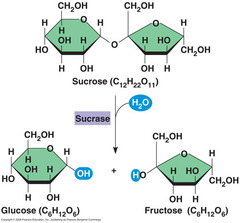
dehydration synthesis

phosphate group

sulfahydryl group

methyl group

carboxyl group

carbonyl group

hydroxyl group

amino group
