Procedures ROM

0.0(0)
Studied by 0 people
call kaiCall Kai
Locked
learnLearn
examPractice Test
spaced repetitionSpaced Repetition
heart puzzleMatch
flashcardsFlashcards
GameKnowt Play
Card Sorting

1/24

encourage image

There's no tags or description

Looks like no tags are added yet.

Last updated 2:16 AM on 9/6/26
Name
Mastery
Learn
Test
Matching
Spaced
Call with Kai
Chat

No analytics yet

Send a link to your students to track their progress

25 Terms

1
New cards

Capsular Pattern for Hip

IR > flex/abd

2
New cards

Hip Flexion

  • 120 degrees

  • End feels:

    • Soft caused by contract between anterior thigh and lower abdomen

    • Firm caused by tension of posterior joint capsule and glute max

  • Position/Alignment:

    • Pt supine; bring knee to chest and stabilize ipsilateral pelvis at ASIS and PSIS to feel for pelvic rotation

      • Fulcrum: greater trochanter

      • Proximal arm: lateral midline of pelvis

      • Distal arm: lateral midline of femur (lateral epicondyles)

  • Muscles:

    • Rectus Femoris

    • Iliopsoas


Ways to cheat:

  • ways to “cheat”: posterior pelvic tilt and lumbar flexion
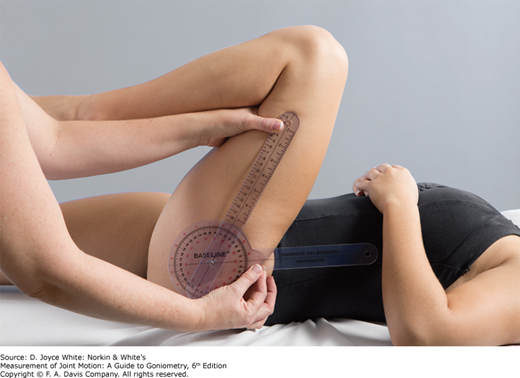

<ul><li><p>120 degrees</p></li><li><p>End feels:</p><ul><li><p><em>Soft</em> caused by contract between anterior thigh and lower abdomen</p></li><li><p><em>Firm</em> caused by tension of posterior joint capsule and glute max</p></li></ul></li><li><p>Position/Alignment:</p><ul><li><p>Pt supine; bring knee to chest and stabilize ipsilateral pelvis at ASIS and PSIS to feel for pelvic rotation</p><ul><li><p>Fulcrum: greater trochanter</p></li><li><p>Proximal arm: lateral midline of pelvis</p></li><li><p>Distal arm: lateral midline of femur (lateral epicondyles)</p></li></ul></li></ul></li><li><p>Muscles:</p><ul><li><p>Rectus Femoris</p></li><li><p>Iliopsoas</p></li></ul></li></ul><p><br>Ways to cheat: </p><ul><li><p><span style="background-color: transparent;">ways to “cheat”: posterior pelvic tilt and lumbar flexion</span></p></li></ul><p></p>
3
New cards
<p>Hip Extension</p>

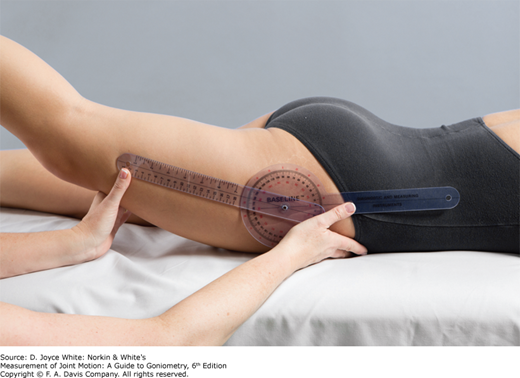
Hip Extension

  • 20 degrees

End Feel:

  • firm d/t anterior capsule and/or tension in the muscles that flex the hip such as iliopsoas, sartorius, TFL, gracilis, and adductor longus

  • Fulcrum: lateral aspect greater trochanter

  • Proximal: lateral midline of pelvis, using MP of ASIS and PSIS

  • Distal: lateral ML of femur, using lat epicondyle

  • Alignment: Prone, knee straight (takes rect fem out)


Ways to cheat:

  • hyperextension of lumbar spine (erector spinae can lift the thigh higher), anterior pelvic tilt (ASIS lifts off table), and hip abduction and ER (allows TFL to contract instead of looking at hip flexor ROM)


4
New cards
<p>Hip Abduction</p>

Hip Abduction

  • 45 degrees

  • End feels:

    • Firm due to femur moving medial capsule into inferior capsule and/or adductor magnus, adductor longus, adductor brevis, pectineus, and gracilis

  • Position/Alignment

    • Pt supine

    • Fulcrum: ASIS

    • Proximal arm: Straight line across abdomen to other ASIS

    • Distal arm: Anterior midline of thigh

  • Muscles:

    • Adductors

    • Pectineus

    • Gracilis


  •  “ways to cheat”: ER (allow for the use of hip flexors and abductors to drag the leg outward, pelvic hike (allows for the use of quadratus lumborum), lateral trunk flexion to opposite side (alters the angle of the pelvis to having a wider leg separation)


5
New cards

Hip Adduction

  • 15-20 degrees

  • End feels:

    • Firm due to superior/lateral capsule and/or tension of the glute med/min and TFL

  • Muscles

    • Glute med, glute min, TFL

  • Position/Alignment

    • Move opposite leg out of way

    • Use red number

    • Fulcrum: patella

    • Distal: Midline of femur

    • Proximal: ASIS to ASIS


  •   “ways to cheat”: lateral flexion (allows for the use of sartorius), pelvic rotation (allows for the use of the core to rotate entire pelvis), IR (allows for the use of TFL), pelvic hike (allows for the use of QL)


<ul><li><p>15-20 degrees</p></li><li><p>End feels:</p><ul><li><p>Firm due to superior/lateral capsule <span style="background-color: transparent;">and/or tension of the glute med/min and TFL</span></p></li></ul></li><li><p>Muscles</p><ul><li><p>Glute med, glute min, TFL</p></li></ul></li><li><p>Position/Alignment</p><ul><li><p>Move opposite leg out of way</p></li><li><p>Use <span style="color: rgb(239, 14, 14);"><strong>red number</strong></span></p></li><li><p>Fulcrum: patella</p></li><li><p>Distal: Midline of femur</p></li><li><p>Proximal: ASIS to ASIS</p></li></ul></li></ul><p></p><ul><li><p><span style="background-color: transparent; font-family: &quot;Times New Roman&quot;, serif;">&nbsp;&nbsp;</span><span style="background-color: transparent;"><u>“ways to cheat”:</u> lateral flexion (allows for the use of sartorius), pelvic rotation (allows for the use of the core to rotate entire pelvis), IR (allows for the use of TFL), pelvic hike (allows for the use of QL)</span></p></li></ul><p></p>
6
New cards

Hip External Rotation

  • 45 degrees

  • End feels:

    • Firm due to anterior capsule and/or tension in anterior gluteus medius, adductor longus, adductor magnus, pectineus, and piriformis

  • Position/Alignment:

    • Put towel underneath thigh

    • Fulcrum: Patella

    • Proximal arm: perpendicular to floor

    • Distal arm: On midline of tibia

  • Muscles:

    • Obturator externus and internus, quadratus femoris, piriformis, superior gemellus, inferior gemellus, post glute max, sartorius, biceps femoris long head, posterior glute med, psoas major


  •    “ways to cheat”: pelvic hike (swings leg further outward), lateral trunk lean (lean away from tested leg to create better leverage to swing inward)


<ul><li><p>45 degrees</p></li><li><p>End feels:</p><ul><li><p><em>Firm</em> due to <span style="background-color: transparent;">anterior capsule and/or tension in anterior gluteus medius, adductor longus, adductor magnus, pectineus, and piriformis</span></p></li></ul></li><li><p>Position/Alignment:</p><ul><li><p><span style="color: yellow;"><strong>Put towel underneath thigh</strong></span></p></li><li><p>Fulcrum: Patella</p></li><li><p>Proximal arm: perpendicular to floor</p></li><li><p>Distal arm: On midline of tibia</p></li></ul></li><li><p>Muscles:</p><ul><li><p>Obturator externus and internus, quadratus femoris, piriformis, superior gemellus, inferior gemellus, post glute max, sartorius, biceps femoris long head, posterior glute med, psoas major</p></li></ul></li></ul><p></p><ul><li><p><span style="background-color: transparent; font-family: &quot;Times New Roman&quot;, serif;">&nbsp;&nbsp;&nbsp;</span><span style="background-color: transparent;"><u>“ways to cheat”:</u> pelvic hike (swings leg further outward), lateral trunk lean (lean away from tested leg to create better leverage to swing inward)</span></p></li></ul><p></p>
7
New cards

Hip Internal Rotation

  • 45 degrees

  • End feels:

    • Firm due to posterior capsule and/or tension in piriformis, gemelli, obturator internus, quadratus femoris, glute med posterior fibers, and gluteus maximus fibers

  • Position/Alignment

    • Pt short sitting

    • Put towel underneath thigh

    • Fulcrum: Patella

    • Proximal arm: perpendicular to floor

    • Distal arm: On midline of tibia


  • “ways to cheat”: hip hike (tilts entire pelvis which allows leg to swing outward more); lateral trunk lean (lean away from tested leg to create better leverage to bring knee out more)


Nerves:

  • Inferior gluteal, NN to obturator internus, obturator, NN to quadratus femoris, NN to piriformis
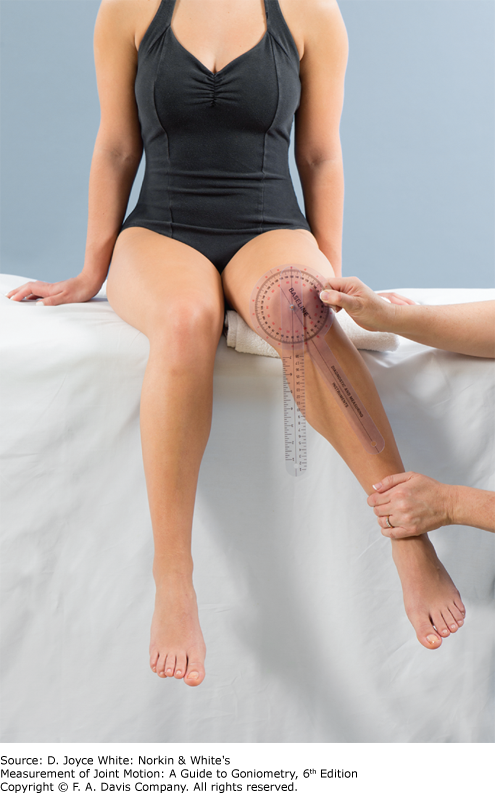

<ul><li><p>45 degrees</p></li><li><p>End feels:</p><ul><li><p><em>Firm</em> due to posterior capsule<span style="background-color: transparent;"> and/or tension in piriformis, gemelli, obturator internus, quadratus femoris, glute med posterior fibers, and gluteus maximus fibers</span></p></li></ul></li><li><p>Position/Alignment</p><ul><li><p>Pt short sitting</p></li><li><p><span style="color: yellow;"><strong>Put towel underneath thigh</strong></span></p></li><li><p>Fulcrum: Patella</p></li><li><p>Proximal arm: perpendicular to floor</p></li><li><p>Distal arm: On midline of tibia</p></li></ul></li></ul><p></p><ul><li><p><span style="background-color: transparent;"><u>“ways to cheat”:</u> hip hike (tilts entire pelvis which allows leg to swing outward more); lateral trunk lean (lean away from tested leg to create better leverage to bring knee out more)</span></p></li></ul><p></p><p>Nerves:</p><ul><li><p>Inferior gluteal, NN to obturator internus, obturator, NN to quadratus femoris, NN to piriformis</p></li></ul><p></p>
8
New cards

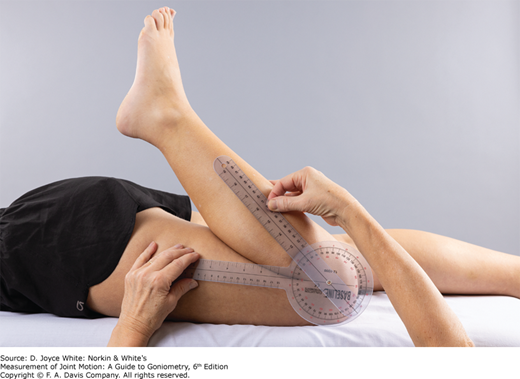
Knee Flexion

135 degrees

End feels:

  • Soft

    • Posterior calf and thigh

    • Heel and buttocks

  • Firm

    • Anterior joint capsule

    • VM

    • VL

    • VI

Position/Alignment:

  • Supine

  • Fulcrum:

    • Lateral epicondyle of femur

  • Proximal arm:

    • Lateral midline of femur (greater trochanter for reference)

  • Distal Arm:

    • Lateral midline of the fibula (lateral malleolus for reference)


  • Make sure leg is not externally rotated

  • Use a towel roll (calf mms may limit extension)


Muscles:

  • Semiten, Semimem, Biceps femoris long and short, gracilis, sartorius, gastrocs


Nerves

  • Tibial and common fibular divisions of sciatic


<p>135 degrees</p><p>End feels:</p><ul><li><p>Soft</p><ul><li><p>Posterior calf and thigh</p></li><li><p>Heel and buttocks</p></li></ul></li><li><p>Firm</p><ul><li><p>Anterior joint capsule</p></li><li><p>VM</p></li><li><p>VL</p></li><li><p>VI</p></li></ul></li></ul><p>Position/Alignment:</p><ul><li><p>Supine</p></li><li><p>Fulcrum:</p><ul><li><p>Lateral epicondyle of femur</p></li></ul></li><li><p>Proximal arm:</p><ul><li><p>Lateral midline of femur (greater trochanter for reference)</p></li></ul></li><li><p>Distal Arm:</p><ul><li><p>Lateral midline of the fibula (lateral malleolus for reference)</p></li></ul></li></ul><p></p><ul><li><p>Make sure leg is not externally rotated</p></li><li><p>Use a towel roll (calf mms may limit extension)</p></li></ul><p></p><p>Muscles:</p><ul><li><p>Semiten, Semimem, Biceps femoris long and short, gracilis, sartorius, gastrocs</p></li></ul><p></p><p>Nerves</p><ul><li><p>Tibial and common fibular divisions of sciatic</p></li></ul><p></p>
9
New cards

Knee Extension

10 degrees

End feel:

  • Firm

  • Posterior joint capsule

  • Oblique and arcuate popliteal ligaments

  • Collateral ligs

  • ACL and PCL

Position/Alignment

  • Fulcrum:

    • Lateral epicondyle of femur

  • Proximal arm:

    • Lateral midline of femur (greater trochanter for reference)

  • Distal Arm:

    • Lateral midline of the fibula (lateral malleolus for reference)

Muscles

  • Rectus femoris

  • VL

  • VI

  • VM

  • VMO

Nerves

  • Femoral


  • Make sure leg is not externally rotated

  • Use a towel roll (calf mms may limit extension)
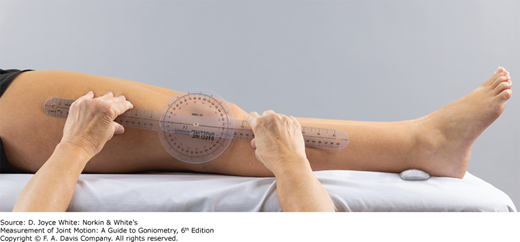

<p>10 degrees</p><p>End feel:</p><ul><li><p>Firm</p></li></ul><ul><li><p>Posterior joint capsule</p></li><li><p>Oblique and arcuate popliteal ligaments</p></li><li><p>Collateral ligs</p></li><li><p>ACL and PCL</p></li></ul><p>Position/Alignment</p><ul><li><p>Fulcrum:</p><ul><li><p>Lateral epicondyle of femur</p></li></ul></li><li><p>Proximal arm:</p><ul><li><p>Lateral midline of femur (greater trochanter for reference)</p></li></ul></li><li><p>Distal Arm:</p><ul><li><p>Lateral midline of the fibula (lateral malleolus for reference)</p></li></ul></li></ul><p>Muscles</p><ul><li><p>Rectus femoris</p></li><li><p>VL</p></li><li><p>VI</p></li><li><p>VM</p></li><li><p>VMO</p></li></ul><p>Nerves</p><ul><li><p>Femoral</p></li></ul><p></p><ul><li><p>Make sure leg is not externally rotated</p></li><li><p>Use a towel roll (calf mms may limit extension)</p></li></ul><p></p>
10
New cards

ELY Test

Muscles:

  • Tight Rectus femoris

Position:

  • Prone

  • Hip at 0 degrees

  • Should have 90 of knee flexion

  • Common for positive test after TKA

  • “Normal” for young adults = 125-132


<p>Muscles:</p><ul><li><p>Tight Rectus femoris</p></li></ul><p>Position:</p><ul><li><p>Prone</p></li><li><p>Hip at 0 degrees</p></li><li><p>Should have 90 of knee flexion</p></li><li><p>Common for positive test after TKA</p></li><li><p>“Normal” for young adults = 125-132</p></li></ul><p></p>
11
New cards

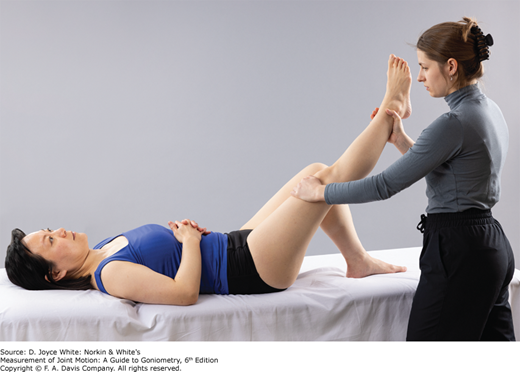
Hamstring Length Test

Muscles:

  • Tight Hamstring

Position:

  • Hip kept at 90

  • popliteal angle measured

  • Norms vary;

    • check “univolved” side if there is one

  • 70-80 is normal

  • (Goni reads 20 —> 90-20=70)


<p>Muscles:</p><ul><li><p>Tight Hamstring</p></li></ul><p>Position:</p><ul><li><p>Hip kept at 90</p></li><li><p>popliteal angle measured</p></li><li><p>Norms vary;</p><ul><li><p>check “univolved” side if there is one</p></li></ul></li><li><p>70-80 is normal</p></li><li><p>(Goni reads 20 —&gt; 90-20=70)</p></li></ul><p></p>
12
New cards

Straight Leg Raise Test (Hamstring 2nd test)

Looks at hamstring length if tight


Position

  • supine

Clinician

  • Hand on ankle on knee

  • Push leg towards body

  • Keep knee straight

  • Look for 70-80 degrees


13
New cards

Talocrural Capsular Pattern

PF > DF

14
New cards

DF/PF

PF = 50 degrees

DF = 20 degrees


Alignment

  • Short sitting (takes out gascrocs)

  • Fulcrum:

    • Lateral aspect lateral malleolus

  • Proximal Arm:

    • Lateral midlein of fibula with fibula head for reference

  • Distal arm:

    • Parallel to lateral aspect of 5th metatarsal


<p>PF = 50 degrees</p><p>DF = 20 degrees</p><p></p><p>Alignment</p><ul><li><p>Short sitting (takes out gascrocs)</p></li></ul><ul><li><p>Fulcrum:</p><ul><li><p>Lateral aspect lateral malleolus</p></li></ul></li><li><p>Proximal Arm:</p><ul><li><p>Lateral midlein of fibula with fibula head for reference</p></li></ul></li><li><p>Distal arm:</p><ul><li><p>Parallel to lateral aspect of 5th metatarsal</p></li></ul></li></ul><p></p>
15
New cards

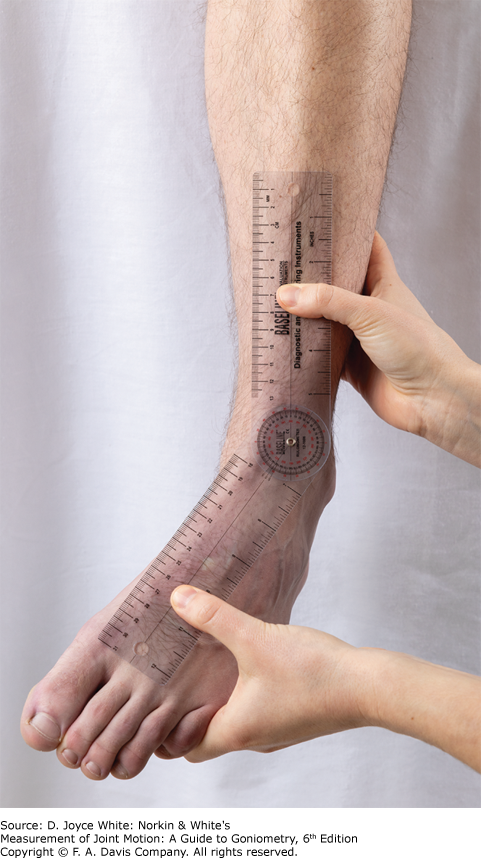
Inversion

15 degrees


Alignment:

  • Sitting on edge

  • Use small goniometer

  • Fulcrum:

    • Anterior aspect midway between malleoli

  • Proximal arm:

    • Anterior midline of lower leg with tibial tuberosity for reference

  • Distal arm:

    • Anterior midline of 2nd metatarsal


<p>15 degrees</p><p></p><p>Alignment:</p><ul><li><p>Sitting on edge</p></li><li><p>Use small goniometer</p></li><li><p>Fulcrum:</p><ul><li><p>Anterior aspect midway between malleoli</p></li></ul></li><li><p>Proximal arm:</p><ul><li><p>Anterior midline of lower leg with tibial tuberosity for reference</p></li></ul></li><li><p>Distal arm:</p><ul><li><p>Anterior midline of 2nd metatarsal </p></li></ul></li></ul><p></p>
16
New cards

Eversion

35 degrees


Alignment:

  • Sitting on edge

  • Use small goniometer

  • Fulcrum:

    • Anterior aspect midway between malleoli

  • Proximal arm:

    • Anterior midline of lower leg with tibial tuberosity for reference

  • Distal arm:

    • Anterior midline of 2nd metatarsal


<p>35 degrees</p><p></p><p>Alignment:</p><ul><li><p>Sitting on edge</p></li><li><p>Use small goniometer</p></li><li><p>Fulcrum:</p><ul><li><p>Anterior aspect midway between malleoli</p></li></ul></li><li><p>Proximal arm:</p><ul><li><p>Anterior midline of lower leg with tibial tuberosity for reference</p></li></ul></li><li><p>Distal arm:</p><ul><li><p>Anterior midline of 2nd metatarsal </p></li></ul></li></ul><p></p>
17
New cards

Thomas Test

Testing for tight rectus femoris or iliopsoas

If abduction and ER —> tight sartorius

If internal and adduction —> tight TFL


Position

  • Sit on edge of table

  • Grab under thing

  • Lay onto back and pull knee to chest

  • Look for 180 degrees on opposite leg hanging off

Clinician

  • Stand on test leg

  • Leg being tested

    • Knee flexed and doesn’t drop —> rect fem

    • If knee straight and doesn’t drop —> iliopsoas


18
New cards

Straight Leg Test (Knee Bent)

Position

  • Supine

  • Flex hip to 90

  • Take number —> subtract from 90


<p>Position</p><ul><li><p>Supine</p></li><li><p>Flex hip to 90</p></li><li><p>Take number —&gt; subtract from 90</p></li></ul><p></p>
19
New cards

Ober’s Test

Looks for tightness in TFL/IT Band


Position

  • sidelying

  • Flex lowermost leg for stability


Clinician

  • Stand on opposite side

  • Stabilize hand on pelvis

  • Other hand under knee


Test:

  • try to drop leg off table (behind other leg)
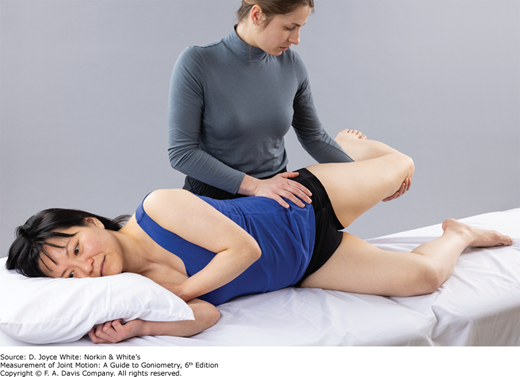

<p>Looks for tightness in TFL/IT Band</p><p></p><p>Position</p><ul><li><p>sidelying</p></li><li><p>Flex lowermost leg for stability</p></li></ul><p></p><p>Clinician</p><ul><li><p>Stand on opposite side</p></li><li><p>Stabilize hand on pelvis</p></li><li><p>Other hand under knee</p></li></ul><p><br>Test:</p><ul><li><p>try to drop leg off table (behind other leg)</p></li></ul><p></p>
20
New cards

Modified Ober Test

Looks for tightness in TFL


Position

  • sidelying

  • Flex lowermost leg for stability

  • Keep uppermost knee straight


Clinician

  • Stand on opposite side

  • Stabilize hand on pelvis

  • Other hand under knee


Test:

  • try to drop leg off table (behind other leg)

  • Flex the knee


21
New cards

Eli Test

  • Prone

  • Bend knee

  • Rectus femoris will stop knee if tight

  • Beyond 90 - Negative


22
New cards

Dorsiflexion

20 degrees

End feel:

  • Soleus (Knee will be bent to eliminate gastrocs)

  • Posterior capsule

Position

  • short sitting

  • Foot in 0 degree of Inv/Ev

Fulcrum

  • Lateral aspect lateral malleolus

Proximal arm

  • lateral midline of fibula, with fibula head for reference

Distal arm

  • Parallel to lateral aspect of 5th metatarsal


23
New cards

Plantarflexion

50 degrees

Fulcrum

  • Lateral aspect lateral malleoulus

Proximal arm

  • lateral midline of fibula, with fibula head for reference

Distal arm

  • Parallel to lateral aspect of 5th metatarsal


24
New cards

Inversion

35 degrees

End feels

  • Firm:

    • Joint capsule

    • Fib long, fib brev

    • ATFL, PTFL, CFL

  • Fulcrum

    • Between malleoli

  • Proximal

    • Anterior midline of lower leg with tibial tuberosity for reference

  • Distal arm

    • Anterior midline of 2nd metatarsal


<p>35 degrees</p><p>End feels</p><ul><li><p>Firm:</p><ul><li><p>Joint capsule</p></li><li><p>Fib long, fib brev</p></li><li><p>ATFL, PTFL, CFL</p></li></ul></li><li><p>Fulcrum</p><ul><li><p>Between malleoli</p></li></ul></li><li><p>Proximal</p><ul><li><p>Anterior midline of lower leg with tibial tuberosity for reference</p></li></ul></li><li><p>Distal arm</p><ul><li><p>Anterior midline of 2nd metatarsal</p></li></ul></li></ul><p></p>
25
New cards

Eversion

15 degrees

End feels:

Firm:

  • Joint capsule

  • Deltoid ligament

  • Tib post

  • FDL

  • FHL

Hard:

  • Contact because of calcaneus