ROA Written Assessment #1
 Call Kai
 Learn
Learn Practice Test
 Spaced Repetition
 Match
Match Flashcards
 Knowt Play
1/73

There's no tags or description
Looks like no tags are added yet.
Name | Mastery | Learn | Test | Matching | Spaced | Call with Kai | Chat |
|---|
No analytics yet
Send a link to your students to track their progress
74 Terms
R
Roentgen; unit of exposure. 1R = ~2 × 10⁹ ion pairs/cm3 or (2.58×10⁻⁴ C/kg of air) of dry air at STP
RAD
Radiation Absorbed Dose; unit of measuring energy absorbed from any radiation into a unit of mass (6.2 × 10⁷ MeV/gram)
REM
unit of biological dose equivalent; REM = QF * RAD
Dose limit for the public
100mREM/year or 2 mREM/hr
Stochastic effects
Probability of effect increases with dose (e.g. cancer, genetic mutations)
Non-Stochastic effects
Severity increases with dose (e.g. burns, ARS)
QF of gamma and x rays
1
QF of β-
1 - 1.7
QF of thermal neutrons
3
QF of fast neutrons
10
QF of heavy ions
20
Radiation area
Accessible area where radiation levels could give a person greater than 5 mrem in one hour at 30cm from the source or surface of shielding
High radiation area
Accesible area where radiation levels could give a person a dose greater than 100 mrem in one hour at 30 cm
Very high radiation area (grave danger)
accesible location where external radiation levels are intense enough to give an absorbed doze greater than 500 rads in one hour @ 1 meter from the source
Whole body dose limit for radiation workers
5 REM
Eye dose limit for radiation workers
15 REM
Extremity dose limit for radiation workers
50 REM
ALARA
As Low As Reasonably Achievable; risk mitigation philosophy commonly associated with exposure control
Simple dose minimization
Time, distance, shielding
Number of fuel assemblies
25 fuel assemblies
Fuel box material
Zircaloy-2
Fuel box outside dimensions (in.)
2.740 × 3.15
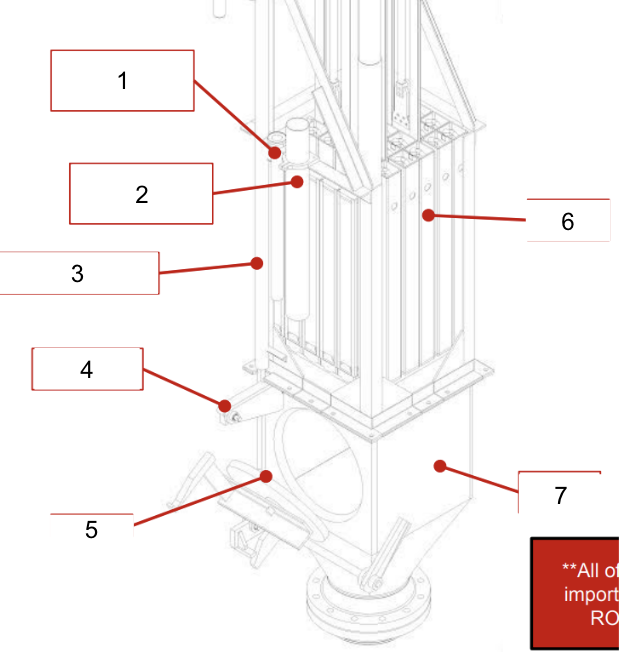
1
PuBe Startup Source Holder
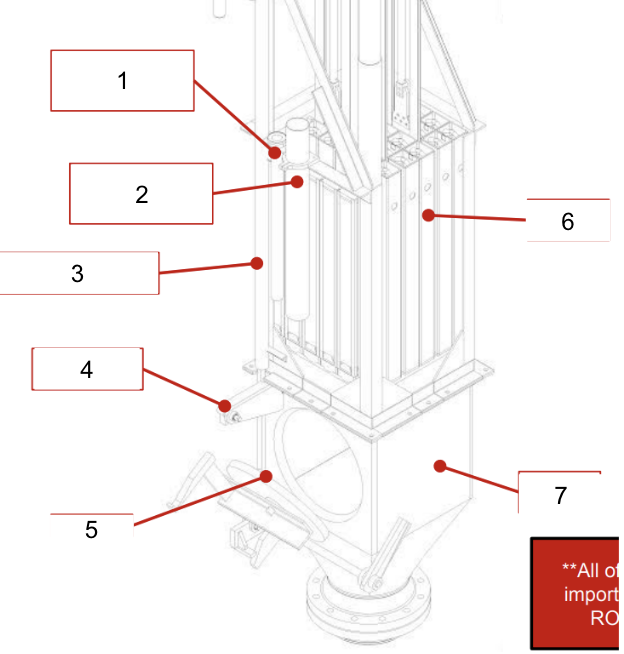
2
Pneumatic Transfer System (PN) Terminus

3
Flapper Limit Switch & Actuation Extension

4
Flapper Limit Switch Lever
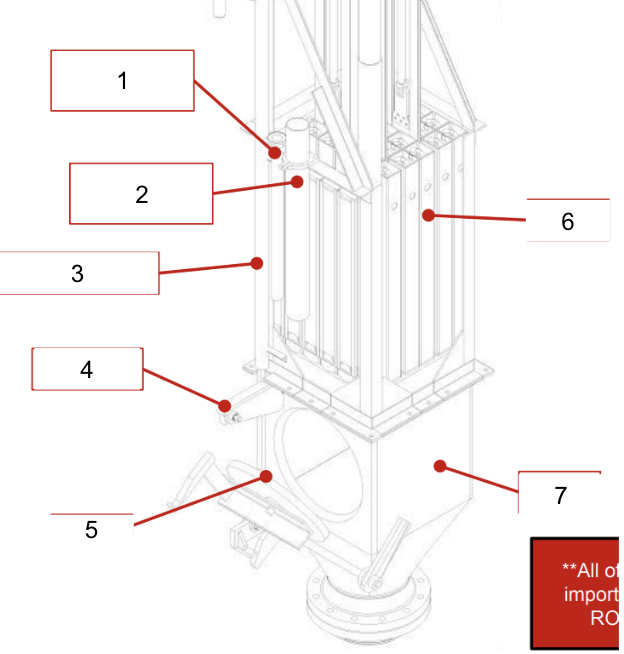
5
Flapper

6
Fuel Assembly

7
Outlet Plenum

8
Source Range Channel/Neutron Flux Monitor (NFM)
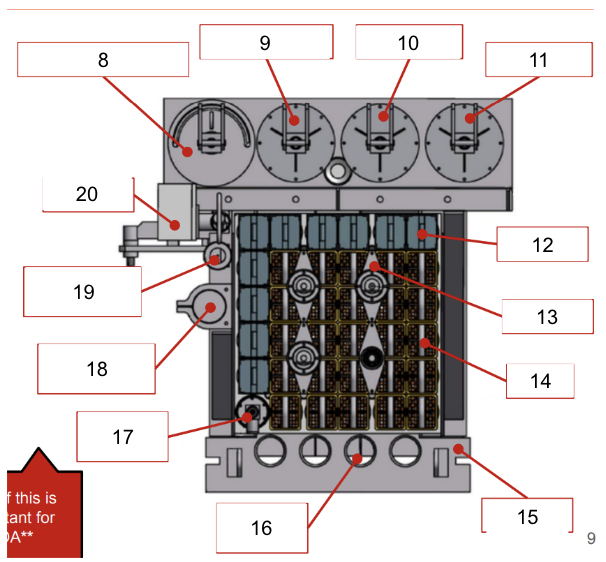
9
Log-N Linear Channel (LogN)
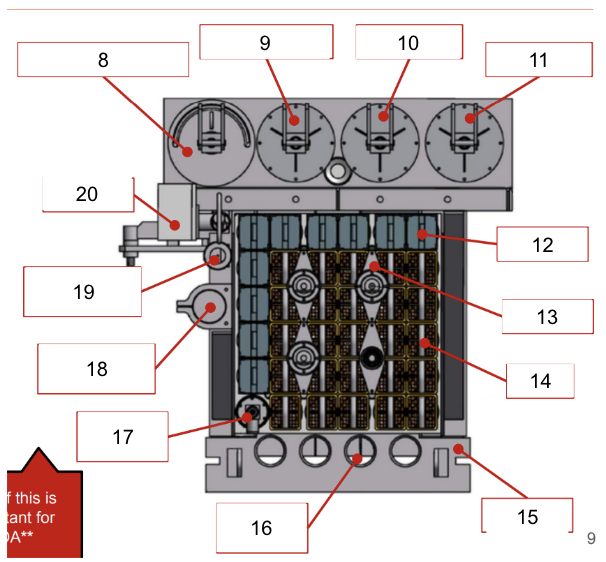
10
Linear Channel
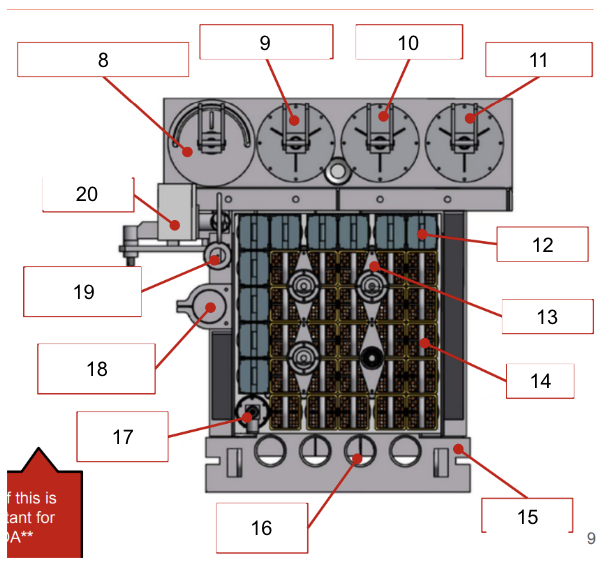
11
Safety Channel

12
Reflector Assembly

13
Control Rod Guide

14
Fuel Assembly

15
Grid Plate Extension

16
Rotating Exposure Port Location

17
Old Fission Chamber (not in use)

18
Pneumatic Transfer System (PN) Terminus

19
PuBE Startup Source Holder (in-core position)

20
Flapper Limit Switch
Fuel enrichment
4% or 6%
Control rod absorber material
Ag-In-Cd (80%, 15%, 5%)
Shape of control rods
Rectangular
Control rods absorber dimensions (in.)
4.85 × 0.18
Number of control rods
3
Number of non-scrammable rods
1

BT1
Fission Gas Measurement Loop Facility

BT2
Empty
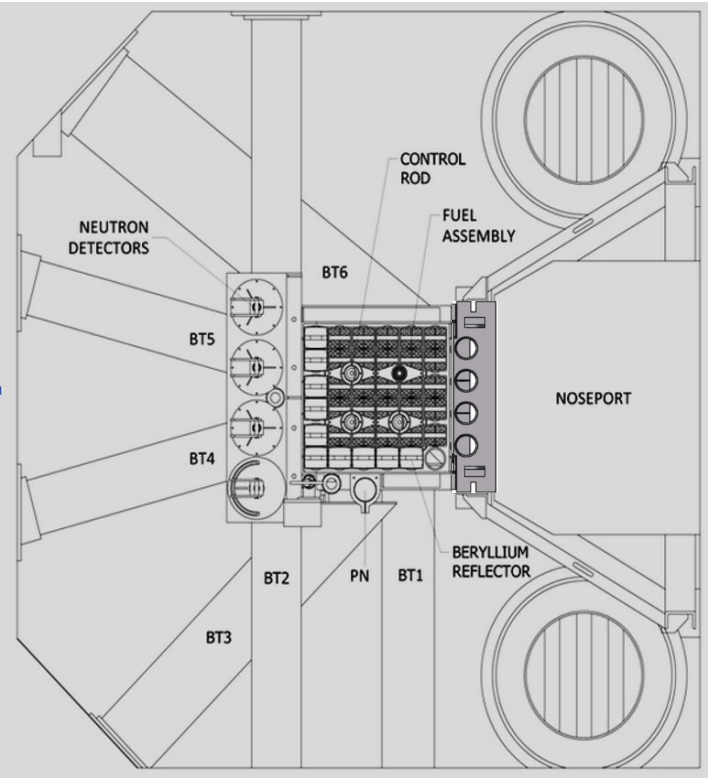
BT3
Empty

BT4
Neutron Diffractometer

BT5
Neutron Imaging Facility
BT6
Positron Intense Beam Facilities
Flow path of primary coolant
Core —> 16N Delay tanks —> Primary pump —> Heat exchanger —> Cooling tower
Purpose of 16N delay tanks
Allows for the decay of 16N in a sheilded vault prior to emerging in the Mechanical Equipment Room (MER)
Control room area monitor evac level
5 mR/h
Over-the-pool area monitor evac level
100 mR/h
West wall area monitor evac level
100 mR/h
Stack Gas effluent monitor evac level
5000 AEC-41Ar
Stack Particulate effluent monitor evac level
5000 AEC-60Co
Level 1 Organization
Administration: Chancellor, engineering dean, nuclear engineering dept. head
Level 2 Organization
Facility management: NRP Director
Level 3 Organiaztion
Manager of Engineering OperationsLev
Level 4 Organization
Operating and Support Staff
Role in organization that is independent of hierarchy
Reactor Health Physicist
4 roles comprise minimum staffing
Reactor operator (or senior reactor operator), ROA, designated senior reactor operator (DSRO), reator healthy physicist
Distance for ROA
5 minutes upon request
Distance for DSRO
30 minutes or 15 mile radius
Radiation Safety Committee
Makes sure use of radioactive material is in compliance wit state and federal regulation and NRC
Reactor Safety and Audit Committee
Ensures PULSTAR is operating correctly and adhering to technical specifications and rules of NRC
Tried experiment
Experiments that have been previously performed at this reactor
Recoards that need to be retained for at least 5 years
normal operations and maintence, repoertable events, surveillance activites, experimentation, changes to procedure, radiation and contamination surveys, audit summaries, RSC and RSAC meeting minutes
Recoards that need to be retained for facility lifetime
gaseous and liquid waste effluent records, off-site environmental monitoring surveys, radiation exposures for monitored personnel, fuel inventories and transfers, and drawings of the reactor facility