P4.2.4 Resistance
 Call Kai
 Learn
Learn Practice Test
 Spaced Repetition
 Match
Match Flashcards
 Knowt Play
1/3

There's no tags or description
Looks like no tags are added yet.
Name | Mastery | Learn | Test | Matching | Spaced | Call with Kai | Chat |
|---|
No analytics yet
Send a link to your students to track their progress
4 Terms
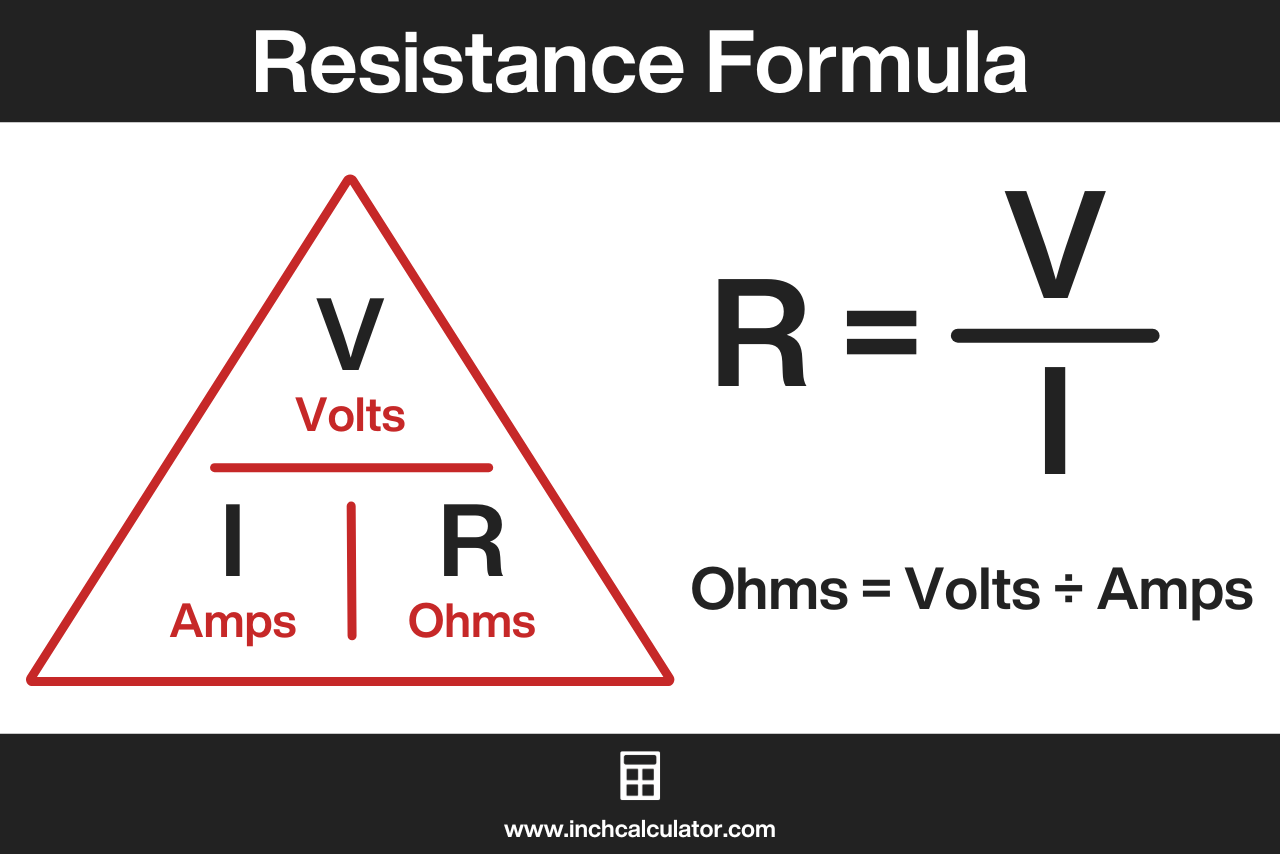
Recall and use the equation for resistance and state its relationship with current
Unit: Ohms (Ω)
Inverse relationship to current (as resistance goes up, current goes down)
Can be remembered with VIRUS
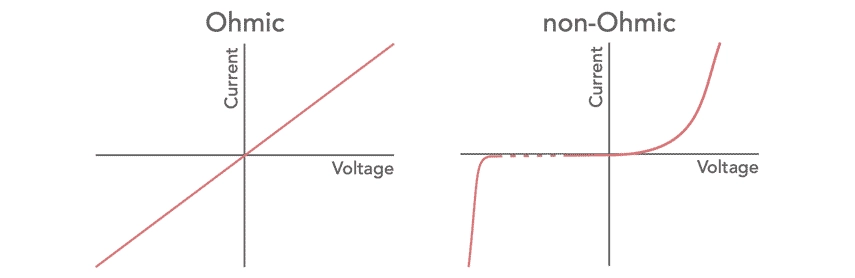
Describe relationship between current and voltage in ohmic and non-ohmic conductors (Ohm’s Law)
In ohmic conductors, current is directly proportional to the potential difference and linear
In non-ohmic conductors, current is not proportional to potential difference and non-linear
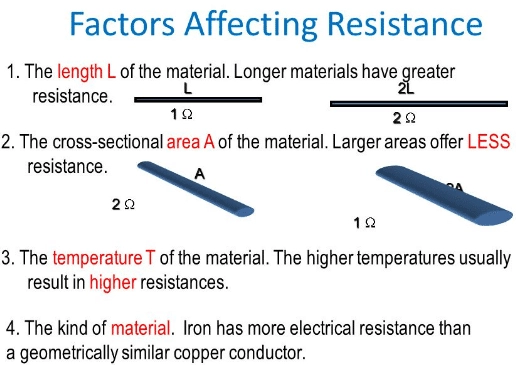
What are the factors which affect resistance?
Length of wire: longer wires have greater resistance, short wires have less (resistance is directly proportional to length)
Cross-sectional area of wire: thin wires have greater resistance, thick wires have less (resistance is inversely proportional to area)
Material of a wire: nichrome wires have more resistance, copper wires have less
Temperature: hot wires have greater resistance (since atoms vibrate more and electrons can move slower through it), cold wires have less
.