7 Endodontic Disease
 Call Kai
 Learn
Learn Practice Test
 Spaced Repetition
 Match
Match Flashcards
 Knowt Play
1/72

There's no tags or description
Looks like no tags are added yet.
Name | Mastery | Learn | Test | Matching | Spaced | Call with Kai | Chat |
|---|
No analytics yet
Send a link to your students to track their progress
73 Terms
Endodontics
this is the study of the basics and clinical sciences of normal *dental pulp*
Enamel
This is the hardest substance in the body
Hydroxyapatite
What is enamel mainly composed of?
true
TRUE OR FALSE: enamel is avascular
Thickest: crown
Thinnest: cementoenamel junction
Where is enamel the thickest? Thinnest?
CATS: 0.1-0.3 mm
DOGS: 0.1-0.6 mm
How thick is enamel in cats? Dogs?
Dentin
What does the enamel directly cover?
This just means that exposed dentin is VERY SENSITIVE
There are 29,000-52,000 dentinal tubules per mm^2 of cut dentin in the maxillary canine tooth in the dog. Who cares?
Primary: forms PRIOR TO eruption
Secondary: forms AFTER eruption (because remember the young dog has a wide pulp chamber and the older dog has a thin pulp chamber in health)
Tertiary: formed in response to trauma, discolored
How many types of dentin are there and what is the difference?
Pulp --> should be thought of together with dentin (as the dentin pulp complex)
This is the part of the tooth where tissue within the root canal consists of blood vessels, nerves, fibroblasts, collagen fibers, odontoblasts, and other connective tissue cells
Pulp narrows due to the continuous production of dentin
Why is the pulp wide in young dogs and narrow in old dogs?
Odontoblasts
What are the cells responsible for new production of dentin?
Cementum
This is the off-white colored substance that covers the root surface, which may cause tooth sensitivity
Cementoenamel junction
Where does cementum formation begin in the tooth?
Hypercementosis
This condition is common in cats, where the cellular cementum of the root apex increases in thickness overtime due to occlusal stresses of the tooth. May potentially cause bulbous thickening of the apex
1. Traumatic dentoalveolar injuries
2. developmental diseases
3. intrinsically stained teeth
What are the 3 broad categories of endodontic disease?
Traumatic dentoalveolar injuries
Alveolar fractures, enamel infraction, concussion, tooth fracture, tooth avulsion, tooth subluxation, and luxation are all examples of what type of endodontic disease?
Developmental disease
Enamel defects (hypoplasia, hypomineralization, dentinogenesis and amelogenesis imperfecta), pulp stones, and regional odontodysplasia are examples of what type of endodontic disease?
1. Uncomplicated crown fracture: only dentin exposed, only crown affected
2. Complicated crown fracture: pulp exposed, only crown affected
3. Complicated crown-root fracture: pulp exposued, crown and root affected
4. Root fracture: rare, root affected
Name the types of tooth fractures and the differences between each.
enamel infraction
What is this?
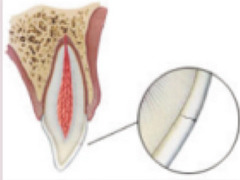
Extrusive luxation
What is this?
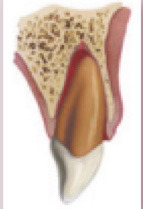
Intrusive luxation (pushed in)
What is this?
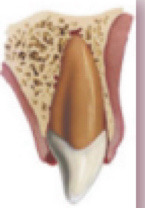
Uncomplicated crown fracture
What is this?
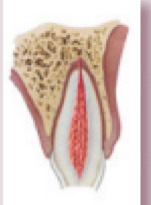
Crown-root fracture WITHOUT pulp involvement (uncomplicated)
What is this?
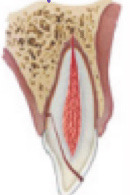
root fracture
What is this?
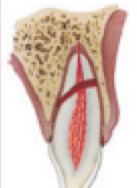
Complicated crown fracture
What is this?
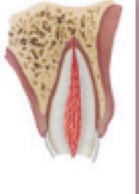
Complicated crown root fracture
What is this?
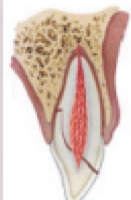
Alveolar fracture
What is this?
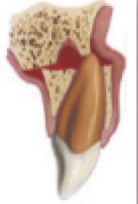
Avulsion (tell the client to put the tooth and milk, will still be viable 6-8 hours later)
What is this?
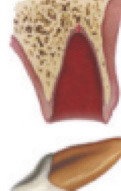
Enamel fracture
What is this?
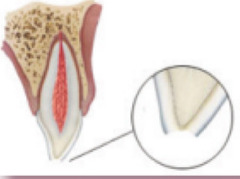
Traumatic dentoalveolar injuries
What is the second most common oral disease (second to periodontal disease)?
MOST COMMON OVERALL: canine then premolars
MOST COMMON LUXATION: canine and incisors
MOST COMMON FRACTURE: premolar (PM4) then canine
What teeth are commonly affected by traumatic dentoalveolar injuries? Which are the most commonly luxated? How about fractured?
enamel infraction
What is this?
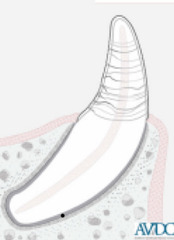
Uncomplicated crown root fracture
What is this?
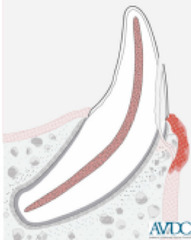
Complicated crown root fracture
What is this?
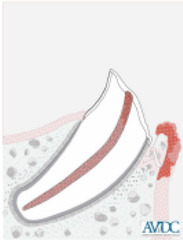
root fracture
What is this?
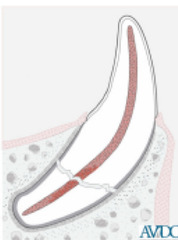
Enamel fracture
What is this?
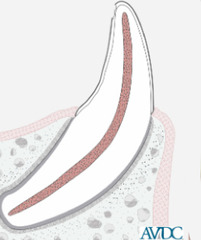
enamel infraction
this is defined as an incomplete fracture or crack of the enamel, no tooth structure is lost and you do not need to treat
enamel fracture
this is a fracture with loss of crown substance confined to the enamel. it is rare and treated with odontoplasty (basically just smooth the edges, same as uncomplicated crown fracture)
Enamel Defects: Hypomineralization
What is this?
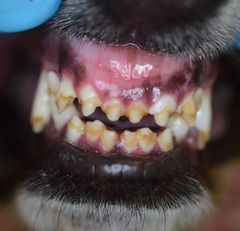
Enamel hypoplasia
This occurs when there is inadequate deposition of enamel matrix, resulting in normal density but thin enamel layer
Enamel hypomineralization
This occurs when there is inadequate mineralization of the enamel matrix resulting in white/yellow/brown spots in the enamel = crowns are softer and wear faster
Dentinogenesis imperfecta
This hereditary abnormality in the formation of the dentin causes the enamel to separate from the dentin easily
Amelogenesis imperfecta
This is a general term that includes any genetic/developmental enamel formation and maturation abnormality
Pink intrinsic staining but we don't know what causes it: trauma, thermal damage, etc.
What is happening here?
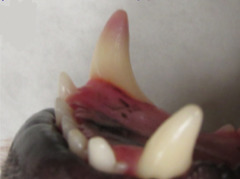
Pink, yellow, and grey
What are the three main shades that manifest the changes in the pulp of traumatized teeth?
Enamel discoloration is related to tetracycline antibiotics: tetracyclines bind Calcium --> byproducts incorporated into enamel and dentin = yellow/orange/brown staining
What is the deal with tetracycline staining in teeth?
Image A is NORMAL. Image B is ABnormal = tooth turns purple/pink with transillumination telling you there is pulp necrosis
Which one of these images is normal? Abnormal? What is this telling you?
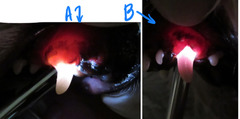
*root canal therapy* preferred
How do you treat intrinsically stained teeth?
Image 1 contains nonvital teeth = wide pulp means dead tooth in 404.
Image 2 shows a normal 304 pulp cavity
Which of these images contains nonvital teeth?
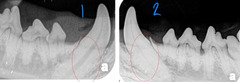
Vital pulp therapy (direct pulp capping)
What endodontic treatment can you do for complicated crown fractures UNDER 48 hours old in young dogs?
When did the trauma occur?
What is one of if not the most CRITICAL question to ask about traumatic dentoalveolar injuries?
With acute avulsion where the owner recovers the tooth = have owner PLACE IT IN MILK. If you replace the tooth in the alveolus WITHIN 24 HOURS there is a chance to save the tooth
What is the treatment option with tooth avulsion? What can you tell the owner when it happens and how long do you have to fix it?
Luxation injury, 2 fracture areas present in right image. Incisor missing and areas of active hemorrhage. 304 canine is asymmetric.
Splint tooth with wire to stabilize
Describe what you are seeing here. How do you fix it?
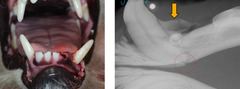
Enamel Fracture
What is this?
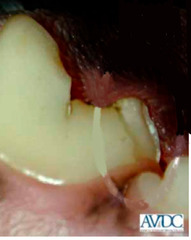
Uncomplicated crown fracture: bacteria can easily penetrate dentin via tubules because tooth structure is lost = odontoplasty to treat (same as enamel fracture)
What is this? What is the problem? How do you treat?
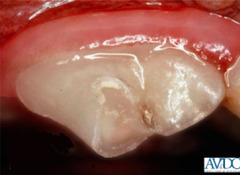
Premolar
Where is the most common location for uncomplicated crown fractures?
Complicated crown fracture = exposed pulp is black and dead meaning it is no longer functional
PROBLEM: VERY PAINFUL and may lead to pulp necrosis if left untreated
=treat with root canal or extraction
What is this? What are you seeing? What is the problem? How do you treat?
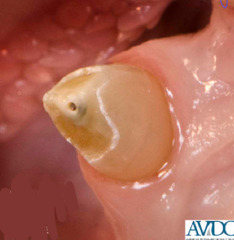
Uncomplicated crown root fracture = slab fracture when it occurs on buccal aspect of PM4 *MOST COMMON HERE*
What is this? What is another name for this?
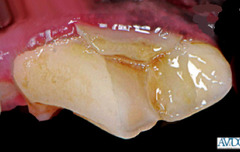
Same as complicated crown fracture AND complicated crown root fractures, with a root canal or extraction
How can you treat uncomplicated crown root fractures?
Complicated crown root fracture = commonly in canine of working dogs
Treat with root canal (very challenging) or extraction
What is this? Where do you most commonly see it? How do you treat?
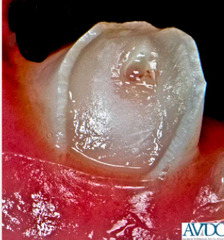
root fracture = involves cementum, dentin, and pulp
What is this? Name some structures involved
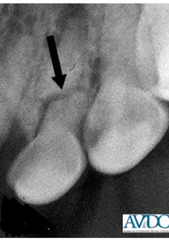
1. hard tissue union between fracture segments
2. connective tissue attachment only
3. localized resorption of alveolar bone and tooth
Name how root fractures heal
Splint (unless it is in apical third where you can do endodontic therapy)
How do you treat root fractures?
Class 1: endo (tooth) is primary problem with a fracture. periodontal tissue is secondarily infected
Tx: Root canal
Class 2: starts with periodontic disease and made its way to the pulp (BOTH endo + perio)
Tx: Extraction
Class 3: the disease is chronic so you don't know if the endo or perio portion came first (BOTH endo + perio)
Tx: Extraction
Name the endo-perio lesions. What are their treatments?
Fluoride FREE prophy paste (grey powder)
In preparation for an odontoplasty and dentin bonding, you must do radiographs and clean/polish the teeth with WHAT
REFERRAL
Standard root canal therapy and vital pulp therapy are both *referral or general practice* procedures.
Standard root canal therapy
This is a procedure that involves removal of the pulp to repair a decaying or infected tooth
Vital pulp therapy
This is the removal of infected pulp while allowing continued growth and tooth maturation in order to keep the tooth alive and allow for continued root closure and dentinal wall thickening
Odontoplasty and dentin bonding
What is all of this equipment for?
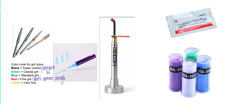
FALSE: if pulp becomes exposed, you must either refer for root canal therapy or extraction, CANNOT do odontoplasty and dentin bonding
TRUE OR FALSE: Odontoplasty and dentin bonding is recommended for exposed pulp teeth.
Cage-chewers, high anxiety dogs, working dogs, strong chewers because fracture will progress
Who is odontoplasty and dentin bonding are not recommended for (for fractures)?
Abscess formation, Endo-Perio Lesions, Pain, Infection
What are consequences of untreated TDIs?