Chapter 1: Introduction to Theories, Concepts & Models of Mass Communication, Media & Society
 Call Kai
 Learn
Learn Practice Test
 Spaced Repetition
 Match
Match Flashcards
 Knowt Play
1/17

There's no tags or description
Looks like no tags are added yet.
Name | Mastery | Learn | Test | Matching | Spaced | Call with Kai |
|---|
No analytics yet
Send a link to your students to track their progress
18 Terms
1. In This Chapter You Will Learn
What is a theory?
Concept of mass communication.
Models of mass communication.
2. What is Theory?
Definition: A scientific theory summarizes one or more hypotheses supported through repeated testing.
When enough evidence supports a hypothesis, it advances to a theory — an accepted explanation of a phenomenon.
Example: Agenda-Setting Theory
Media creates public awareness of issues.
Two key assumptions:
Media does not reflect reality — it filters and shapes it.
Media focus on specific issues, making the public perceive them as more important than others.
3. Early Perspectives on Media & Society
Media as a Tool of:
Power: Influences opinion and behavior (e.g., Nazi Germany, Soviet Union).
Integration: Creates cultural identity, trust, and national unity.
Enlightenment: Spreads information and ideas, contributing to societal progress.
4. Features of Mass Communication
Large-scale distribution and reception.
One-way communication flow.
Asymmetrical relationship between sender and audience.
Impersonal and anonymous audience.
Market-driven relationship between sender and audience.
Standardized and commodified content.
5. Characteristics of Mass Audience
Large and dispersed.
Anonymous and non-interactive with each other.
Heterogeneous (diverse in background).
Passive and managed by media.
6. Media as Problem or Scapegoat
Moral Panics: Media often blamed for society’s problems (e.g., violence, crime).
Media content linked to perceived moral and social decay.
7. Mass Media as a Social Institution
Produces and distributes information and culture.
Operates in the public sphere with self-regulation.
Ideally free from political or economic control — though this varies.
8. Mass Culture vs Popular Culture
Mass Culture:
Non-traditional content for mass consumption.
Often formulaic and driven by profit.
Homogenized to appeal to the largest audience.
Popular Culture:
Created through mass communication.
Often perceived as low quality or superficial.
9. McQuail’s 4 Models of Communication
1. Transmission Model
2. Ritual Model
3. Publicity Model
4. Reception Model
1. Transmission Model
Media relays content based on audience demand.
Communication exists to provide society with information and entertainment.
Audience feedback influences content.
Success = Audience satisfaction.
Media = Neutral, free-market service.
2. Ritual/Expressive Model
Communication = Shared beliefs and cultural expression.
Emphasizes participation and shared experiences.
Provides emotional and social connection.
Media celebrates cultural identity.
3. Publicity Model
Focus on attention-grabbing content.
Media content exists to attract and hold attention.
Quality is secondary to visibility.
Emotion and spectacle are key.
4. Reception Model
Meaning is created by the receiver, not just the sender.
Messages have multiple meanings (polysemic).
Meaning depends on context and cultural background of the receiver.
10. Important Communication Models
A. Harold Lasswell Model (1948)
B. Shannon-Weaver Model (1949)
C. Wilbur Schramm Model (1954)
D. Berlo’s SMCR Model
A. Harold Lasswell Model (1948)
Who? - Source
Says What? - Message
In Which Channel? - Medium
To Whom? - Receiver
With What Effect? - Outcome

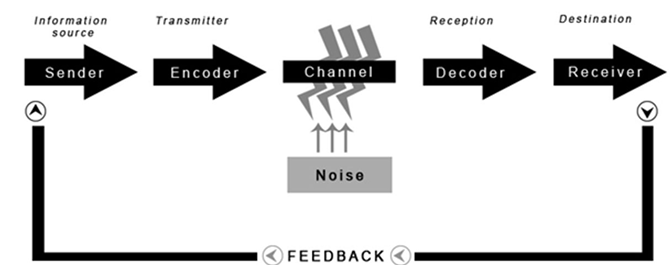
B. Shannon-Weaver Model (1949)
Elements:
Sender: Creates message.
Encoder: Converts message to signals (e.g., speech, text).
Channel: Medium used (e.g., TV, phone).
Noise: External interference (e.g., loud sounds).
Decoder: Converts signals back into message.
Receiver: Final audience.
Feedback: Receiver’s response.
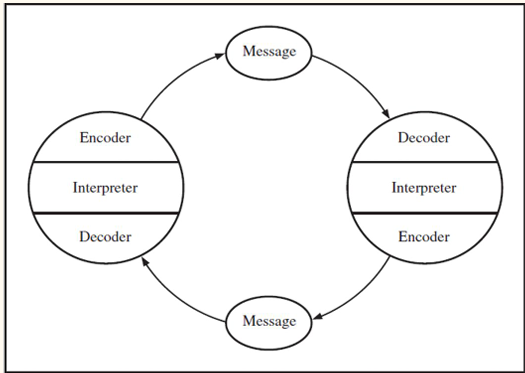
C. Wilbur Schramm Model (1954)
Focuses on the importance of shared experiences between sender and receiver for effective communication.
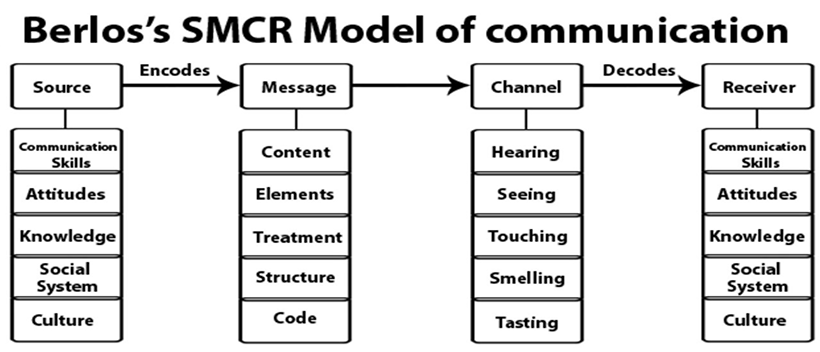
D. Berlo’s SMCR Model
Source (Sender):
Origin of the message.
Effective communication requires source and receiver to be on the same level.
Factors Influencing Source & Receiver:
Communication Skills (reading, writing, listening).
Attitudes (toward topic, audience, self).
Knowledge (about subject).
Social System (values, culture, beliefs).
Culture (broader cultural context).
Message Elements:
Content: What is said.
Elements: Language, gestures, body language.
Treatment: How the message is presented.
Structure: How the message is organized.
Code: Medium of expression (language, symbols, music).
Channels (5 Senses):
Hearing: Spoken communication.
Seeing: Visual communication (TV, books).
Touching: Physical communication (handshakes).
Smelling: Scents as communication (perfume, food).
Tasting: Food and drink can communicate cultural messages.

