Atomic Structure (notes, review ws)
 Call Kai
 Learn
Learn Practice Test
 Spaced Repetition
 Match
Match Flashcards
 Knowt Play
1/23

There's no tags or description
Looks like no tags are added yet.
Name | Mastery | Learn | Test | Matching | Spaced | Call with Kai | Chat |
|---|
No analytics yet
Send a link to your students to track their progress
24 Terms
Who first described/discovered: The atom?
Democritus
Who first described/discovered: Electrons?
Thomson
Who first described/discovered: Plum pudding model?
Thomson
Who first described/discovered: Protons?
Goldstein
Who first described/discovered: Neutrons?
Chadwick
Who first described/discovered: Nuclear atom?
Rutherford
Location, Charge, and Mass(amu) of a proton?
Location: nucleus
Charge: +
Mass (amu): 1 amu
Location, charge, and mass (amu) of a neutron?
Location: nucleus
Charge: 0
Mass (amu): 1 amu
Location, charge, and mass(amu) of a electron?
Location: outside nucleus (orbits)
Charge: -
Mass(amu): 0 amu
An experiment in which Rutherford fired alpha particles at thin gold foil to study the structure of the atom. Most particles passed through, but a few were deflected, showing that atoms are mostly empty space with a small, dense, positively charged nucleus
Gold Foil Experiment
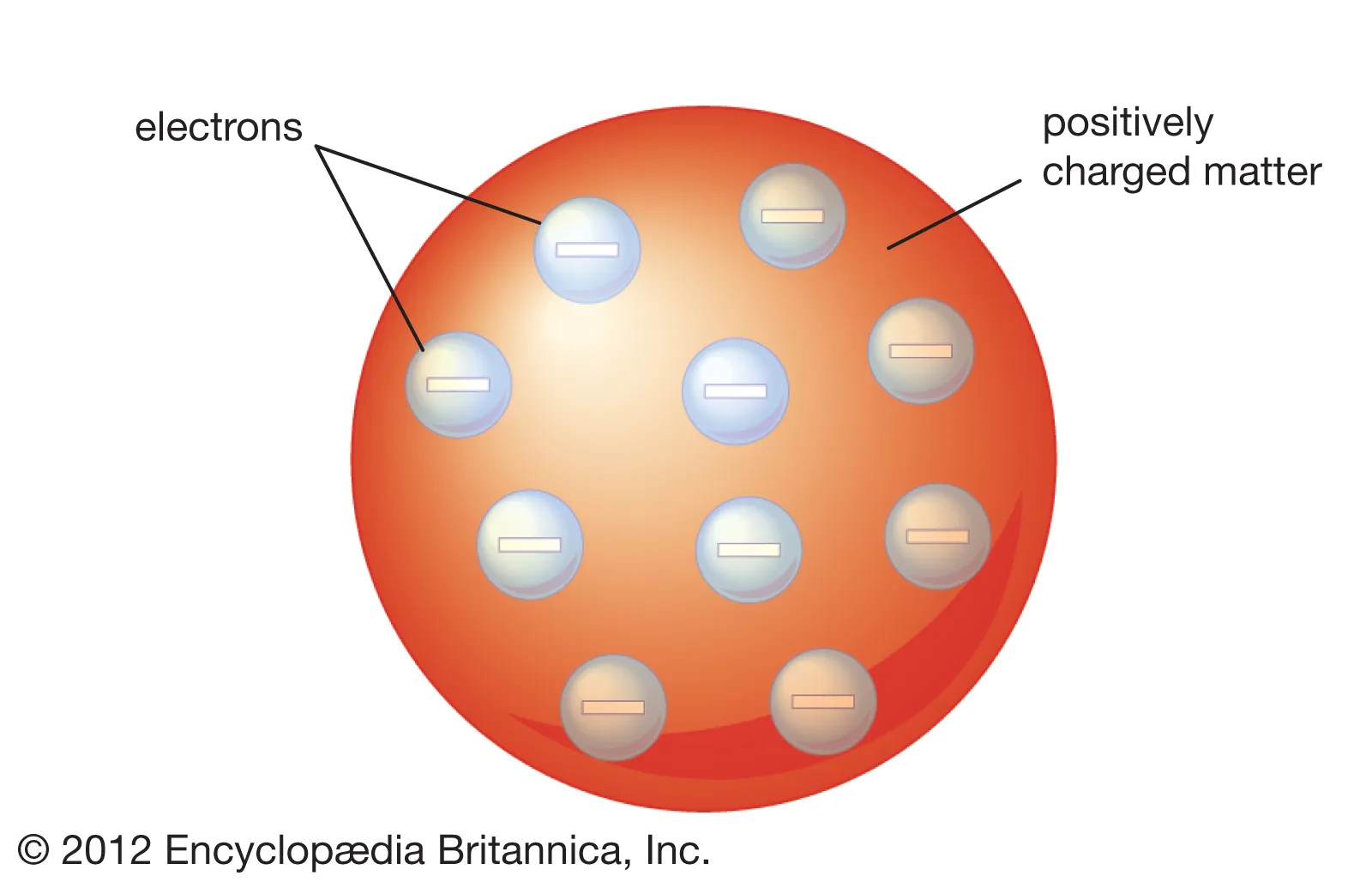
Thomson’s Atom

Rutherford’s Atom
How did Rutherford’s Gold Foil Experiment prove Thomson’s model incorrect?
Thomson’s model said positive charge was spread evenly throughout the atom, so alpha particles should pass through with little or no deflection. Rutherford found that some particles were strongly deflected, proving that positive charge and most of the mass are concentrated in a small, dense nucleus
Atom to molecules ratio:
100,000:1
The number of protons is the:
Atomic number
ex: Iodine’s atomic # is 53 (on P.T.)
The total number of protons + neutrons (for 1 particular atom) is the:
Mass number
Atoms with the same number of protons, but a different number of neutrons is an:
Isotope
The average weighted mass of all isotopes of an element is the:
Atomic mass (calculated the same as average atomic mass)
The basic building block of all matter in the universe is an:
Atom
What are the three isotopes of hydrogen?
Protium: 1 proton, 0 neutrons
Deuterium: 1 proton, 1 neutron
Tritium: 1 proton, 2 neutrons
What are the three most common isotopes of carbon?
C-12: 6 protons, 6 neutrons
C-13: 6 protons, 7 neutrons
C-14: 6 protons, 8 neutrons
Atoms that have a charge (atoms that have gained or lost an electron) (protons and electrons are different) is an:
Ion
What determines the identity of an atom?
The number of protons
Why does the nucleus have such a high density?
It contains almost all of an atoms mass in an extremely tiny space