Chap 3 - Water & its Spatial Distribution (geog)
 Call Kai
 Learn
Learn Practice Test
 Spaced Repetition
 Match
Match Flashcards
 Knowt Play
1/10

There's no tags or description
Looks like no tags are added yet.
Name | Mastery | Learn | Test | Matching | Spaced | Call with Kai | Chat |
|---|
No analytics yet
Send a link to your students to track their progress
11 Terms
Where does water come from?
Freshwater - Saltwater
glaciers oceans
rivers
lakes
groundwater
soils
IS water renwable? (both)
Water is renewable because it is recycled by the water cycle, which is powered by the Sun.
However, fresh water can still become scarce if it is overused or polluted faster than it can be naturally replenished.
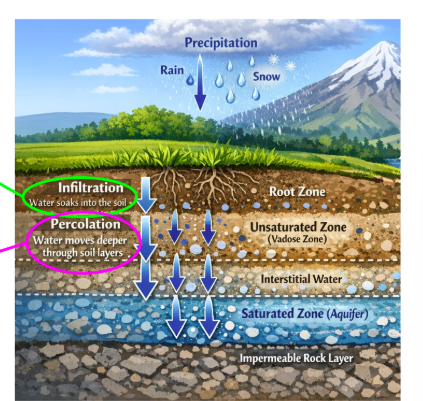
Hydrological cycle (steps and definition)
Precipitation_ water falls as rain, or snow if the air is cold enough
infiltration_ water enters the ground or soil
Percolation _ downward flow of water through soil into the groundwater due to gravity
Groundwater _ water that seeps into the ground may be absorbed by plants or stored as groundwater
Surface runoff_ water flows from highlands and over the ground surface into streams and rivers
Evaporation_ The sun’s heat causes water to evaporate. water changes into water vapour
Transpiration_ plants give out water vapour through their leaves
Condensation _ warm moist air cools as it rises . water vapour changes into water droplets . small droplets combine to form bigger droplets. larger amounts of water droplets gather to form clouds.
Do we have an unlimited supply of water to drink? (yes and no) must know both
yes - Water cycle is a continuous process
Water is a renewable source – it is naturally replenished over time within the same time period when it is used
No- Most of the Earth’s water is saltwater – Not suitable for drinking
Most freshwater is inaccessible –Around 68% is locked in ice caps and glaciers; some is deep underground and hard to reach
Pollution (Chap 4) reduces usable water – Human activities pollutes freshwater stores, making less clean water available for use.
What is a Water Budget? and waht is the equation
A water budget equation describes the flow of water in and out of a catchment area (area that receives water, and also contributes water to rivers)
Net change in water storage= input minus output
input-Processes that increase the amount of water in a catchment area (i.e. precipitation)
what does input mean?
input-Processes that increase the amount of water in a catchment area (i.e. precipitation)
what does output mean?
Processes that decrease the amount of water in a catchment area (i.e. evaporation)
What happens when there is more or less input
than output?
Water surplus = input more than output
water deficit= input less than output
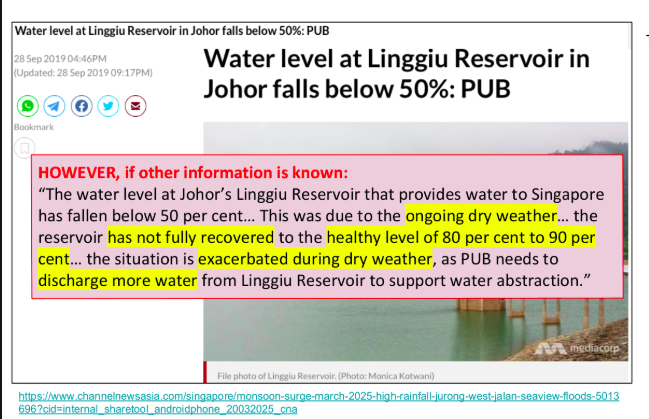
Is the water budget of this area balanced? (surplus / deficit)
This is a deficit because:
-Rainfall inputs are lower than water outputs (demand +
releases)
-Soil and reservoirs are losing water faster than they are
replenished.
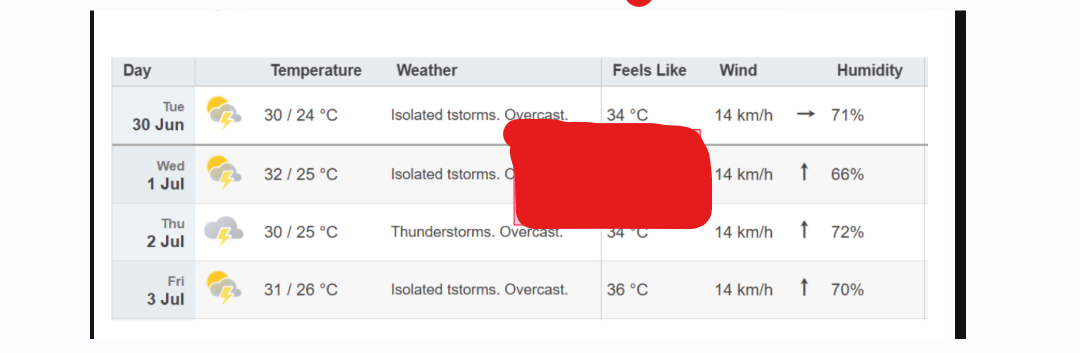
Based on today’s weather – is it water surplus or deficit in
Singapore’s catchment area?
Can’t tell as this is only input. No output stated.
An area receives 1000mm of rain per year. 700mm evaporates back to the atmosphere, and 200mm flows away as runoff to another area.
1. What is the storage change?
2. What would this storage change mean for this area?
3. If this was Singapore’s water budget where would the extra 100 mm of stored water likely go?
4. What might happen to this water budget during a very dry year?
5. If an area needs 150mm stored water to avoid shortages, is this area water-secure?
1. What is the storage change?
Storage change = 1000 - 700 - 200 = +100 mm
2. What would this storage change mean for this area?
+100mm is a positive storage change, means the water level would rise.
3. If this was Singapore’s water budget where would the extra 100 mm of stored water likely go?
It’ll go to reservoirs and underground storage.
4. What might happen to this water budget during a very dry year?
This would make storage change less positive or even negative.
5. If an area needs 150mm stored water to avoid shortages, is this area water-secure?
No, they only store 100mm but need 150mm, so they have a 50mm deficit and may face water shortages