Renaissance and High Renaissance
 Studied by 0 people
 Call Kai
 Learn
Learn Practice Test
 Spaced Repetition
 Match
Match Flashcards
 Knowt Play
1/15

There's no tags or description
Looks like no tags are added yet.
Name | Mastery | Learn | Test | Matching | Spaced |
|---|
No study sessions yet.
16 Terms
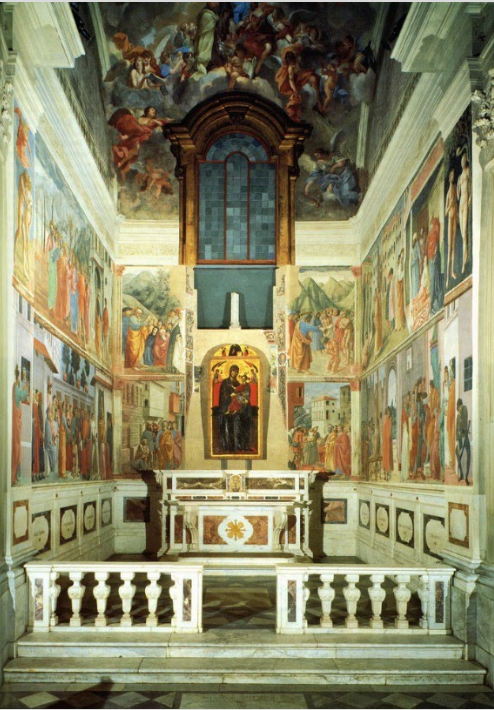
The Brancacci Chapel (1424-1427 AD)
Patron: Felice Brancacci a silk merchant and diplomat
Artists: Masaccio, Masolino, and Filippo Lippi
episodes from life of Saint Peter
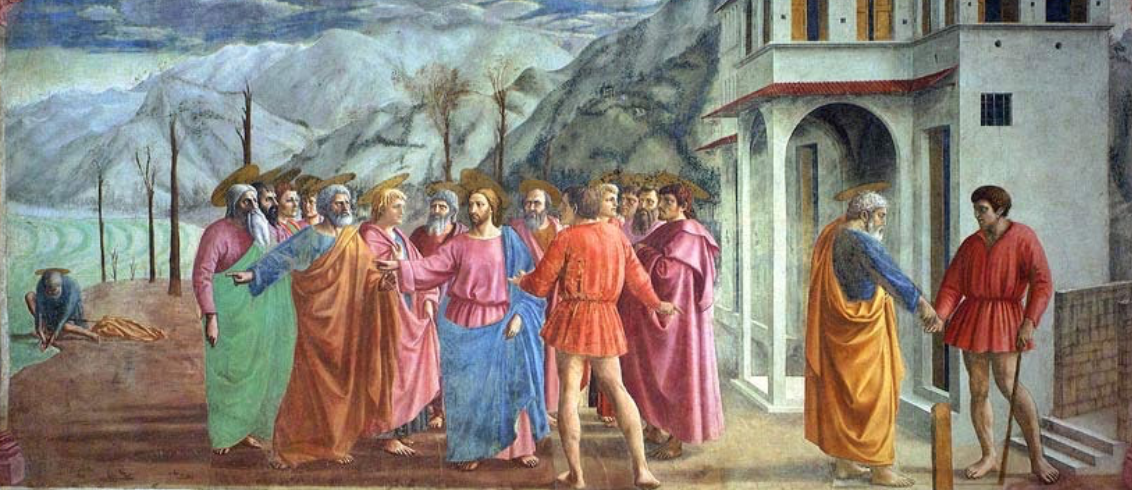
The Brancacci Chapel: Tribute Money
artist: Masaccio
Fresco
Linear perspective and atmospheric perspective
simultaneous narrative
Renaissance clothing and architecture
Contrapasso of Jesus and Peter
Landscape improved perspective and vanishing point on Jesus
Halos are like hats
32 days to make it
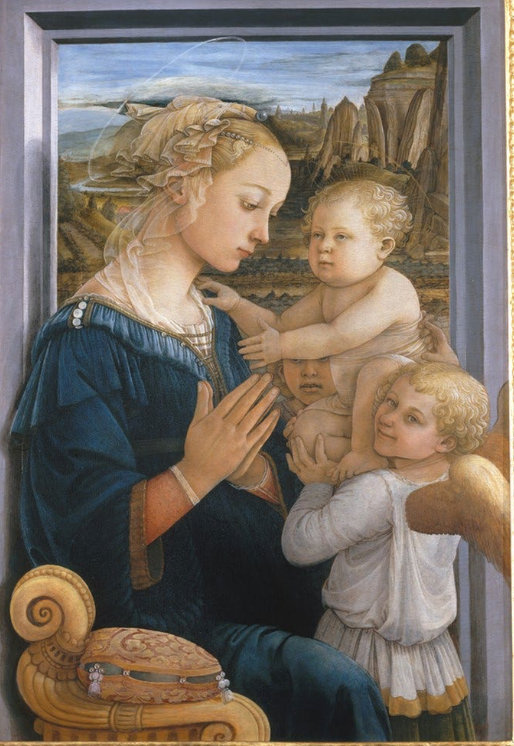
Madonna and Child with Angels, Florence (1460-1465)
artist: Fra Filippo Lippi
tempera on wood panel
realistic
Mary does not hold Jesus, angels hold him while she prays
one angel interacts with viewer
Jesus’ arm cuts off one angel
see-through halos and veil
humanity/dependence of Jesus
details in contemporary clothing
Mary and Jesus look past each other
Angels are playful while Mary and Jesus are somber
"Primavera” 1482
Botticelli
Altarpiece
Tempera on Wood Panel
very large
Venus/Mary as subject
Foliage halo
Distinguishes reason/faith (a light depiction of Mercury and Graces) from lust/violence (a dark depiction of North Wind and Nymph turned goddess)
Likely commissioned for a wedding
High Renaissance (1495-1520 AD)
cluster of extraordinary geniuses (LEONARDO, RAPHAEL, MICHELANGELO) they all worked in Rome
visual art raised to status of poetry
leading artistic centers of Florence and Rome
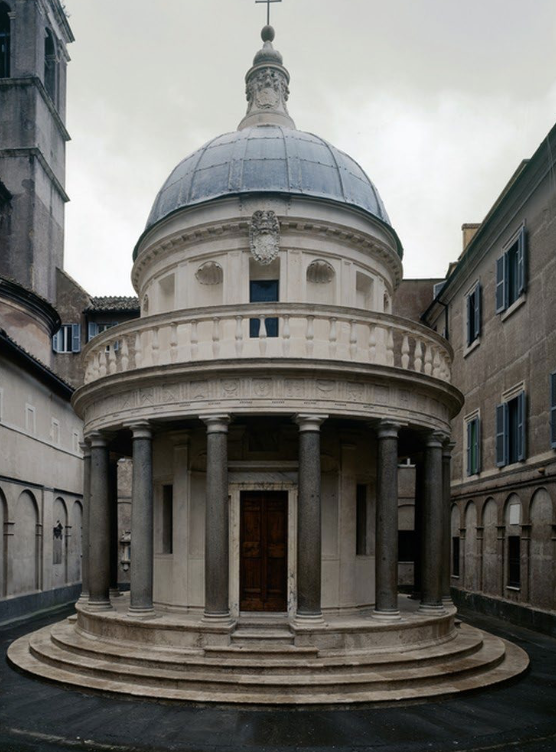
Tempietto, Bramante, 1502
Bramante
developed plan of a centrally-planned church in the Renaissance
where St. Peter was crucified presumably
ideal geometry/proportion
geometry linked to the Divine —> way of portraying perfection
martyrium
shrine to a Christian martyr
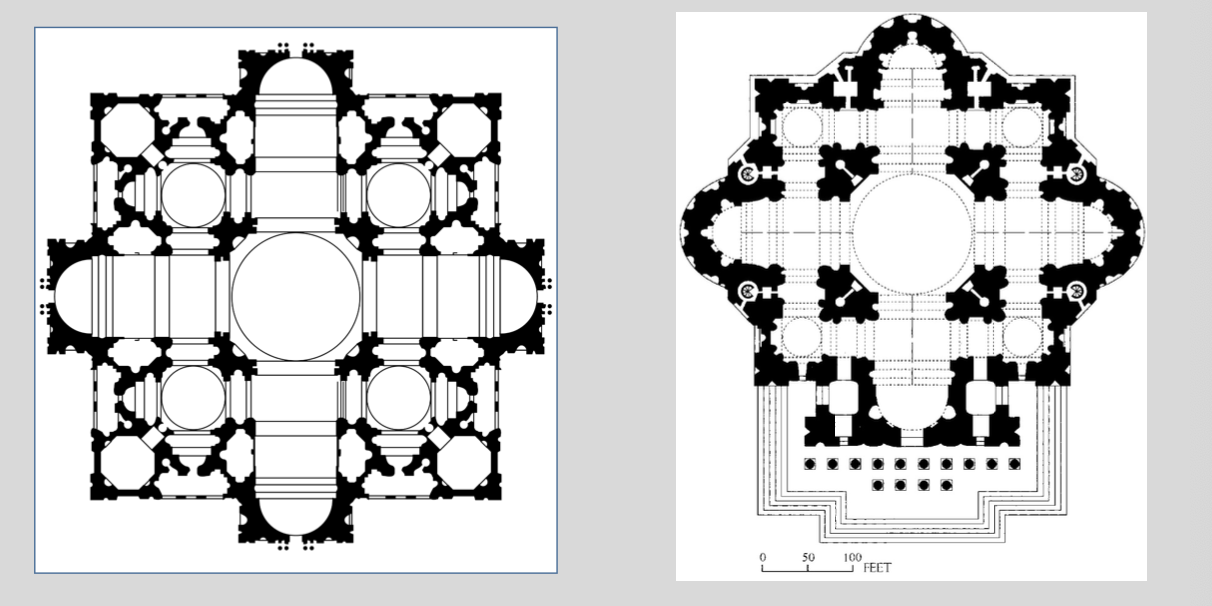
New Saint Peter’s Basilica: Chronology
1503-1513 : Pope Julius II was a patron of Bramante, Raphael, Michelangelo, and many others; he wanted Pope to be greater than Emperors!
1506: established Vatican Museums and initiated rebuilding of the 4th century Old St. Peter’s
Began with Bramante, then work passed through many architects including Michelangelo (under Pope Paul III)
Originally intended to be a Greek Cross without a long nave…but that changed
Michelangelo added portico and collossal order
Ogival Dome instead of Hemispherical Dome
oil paint
medium in which pigments are suspended in linseed or walnut oil; it is slow-drying but very durable when dry; offers effects of both transparency and brilliant color
poesia
a term describing “poetic” art, notably Venetian Renaissance painting, which emphasizes the lyrical and sensual
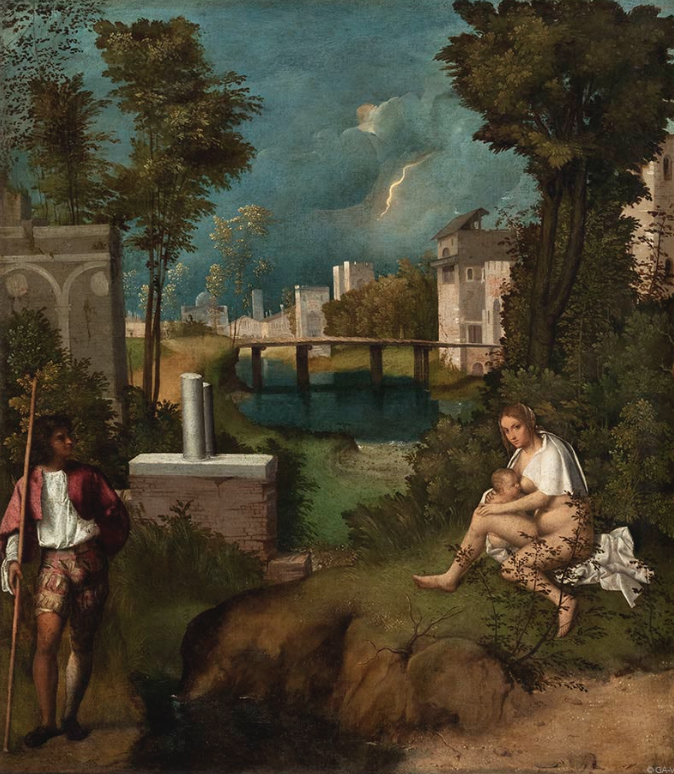
The Tempest, 1509-1510, Venice
artist: Giorgione
example of oil painting and poesia
hard to say what’s going on…who the subject is
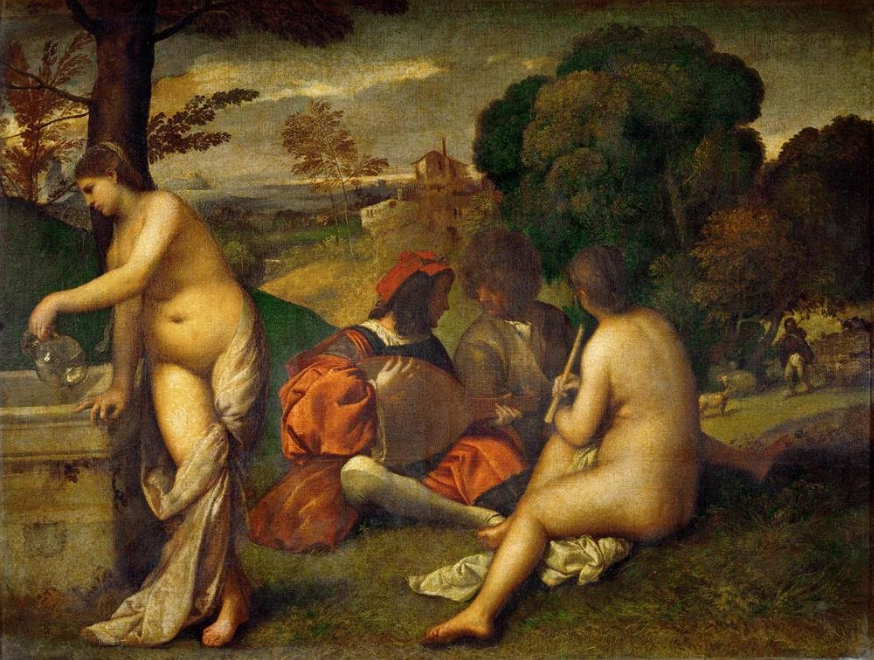
Pastoral Symphony 1501-1511, Venice
artist: Titian
oil on canvas, another example of poesia
colorito
glazing
hard to interpret…
colorito
characteristic of the application of paint of 16th century Venetian artists who emphasized application as an important element of the creative process
glazing
application of successive, thin layers, semi-transparent that are applied over a color to alter it slightly
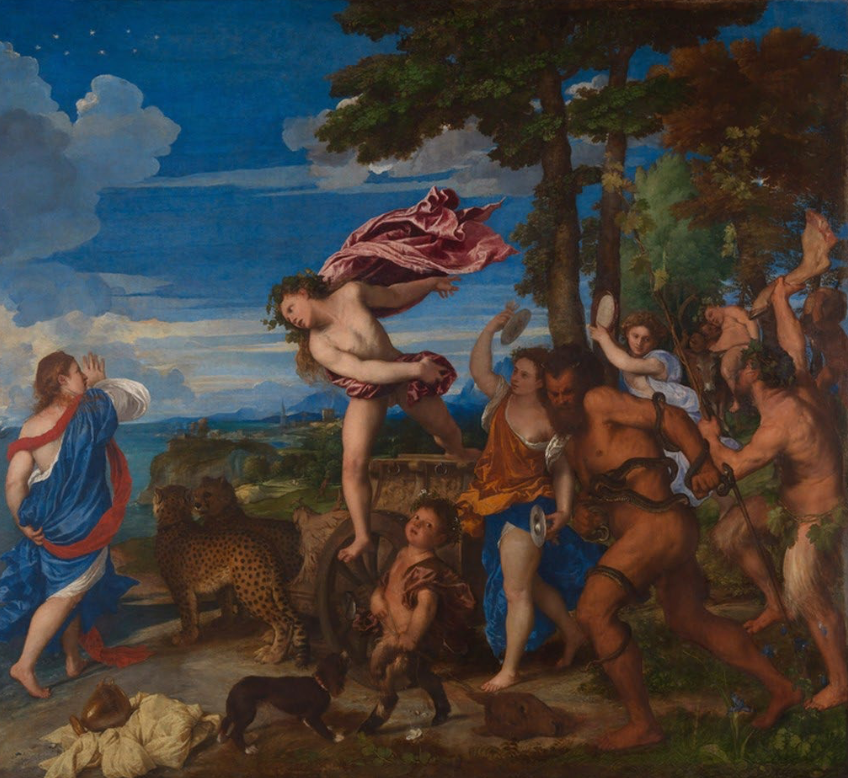
Bacchus and Ariadne, 1522-1523, Farrara (South of Venice)
artist: Titian
oil on canvas
patron: Alfonso d’Este
ultramarine
ultramarine
a brilliant deep blue pigment obtained from lapis lazuli; was the most expensive oil pigment