Cardiovascular (vessles&circulation) unit
 Call Kai
 Learn
Learn Practice Test
 Spaced Repetition
 Match
Match Flashcards
 Knowt Play
1/24

There's no tags or description
Looks like no tags are added yet.
Name | Mastery | Learn | Test | Matching | Spaced | Call with Kai | Chat |
|---|
No analytics yet
Send a link to your students to track their progress
25 Terms
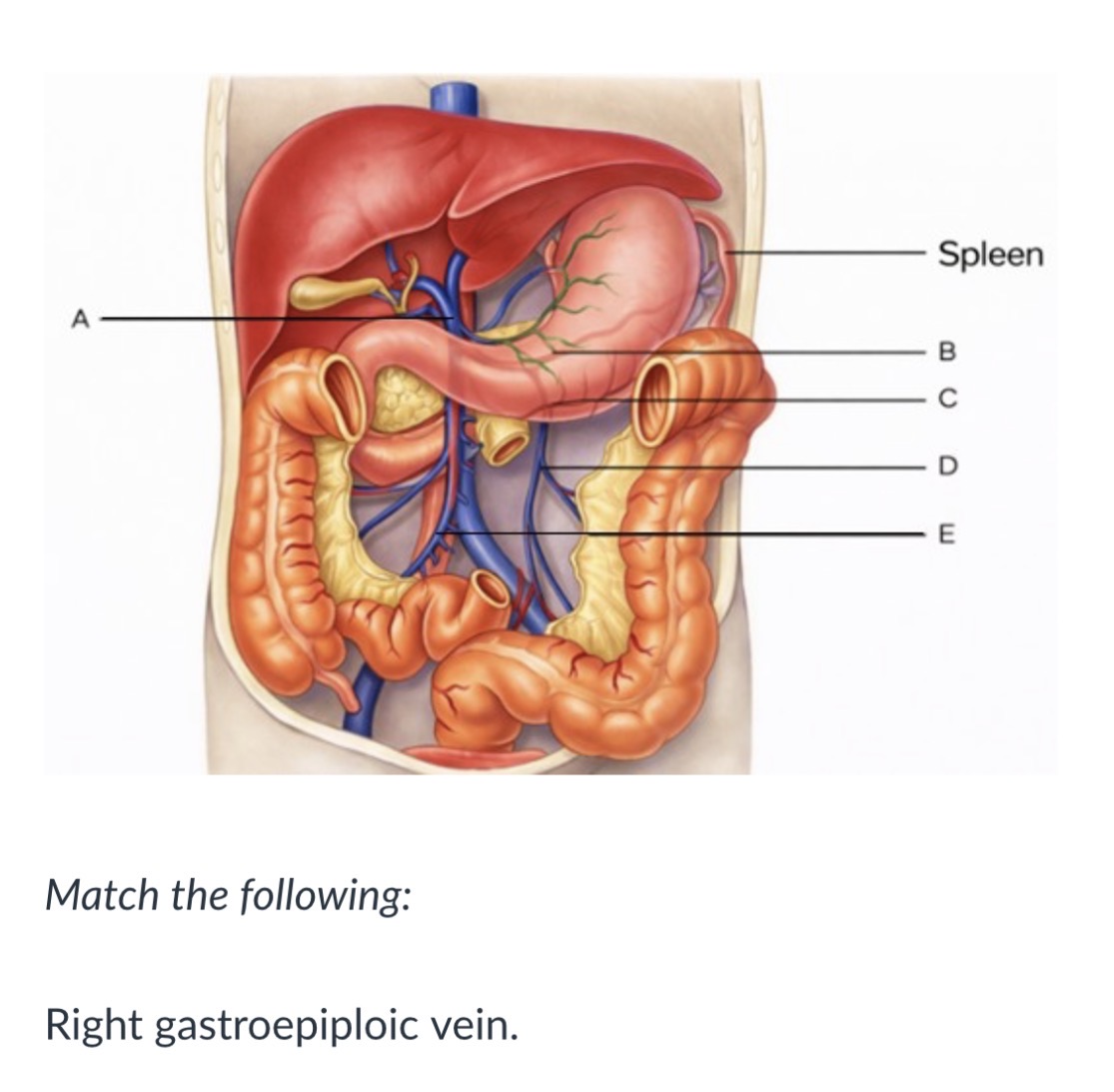
B
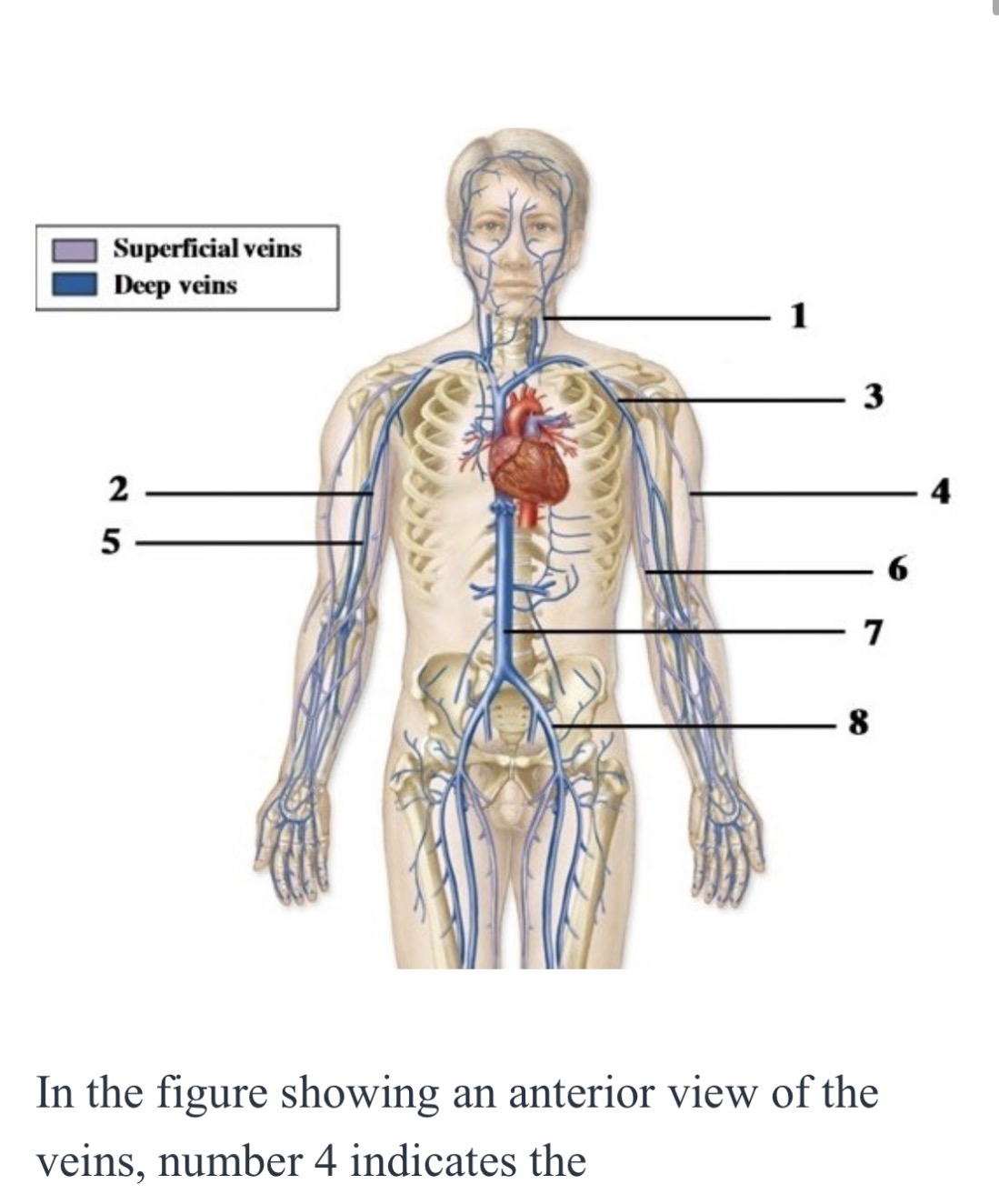
left brachiocephalic vein.
left internal jugular vein.
left cephalic vein.
left common iliac vein.
left cephalic vein.
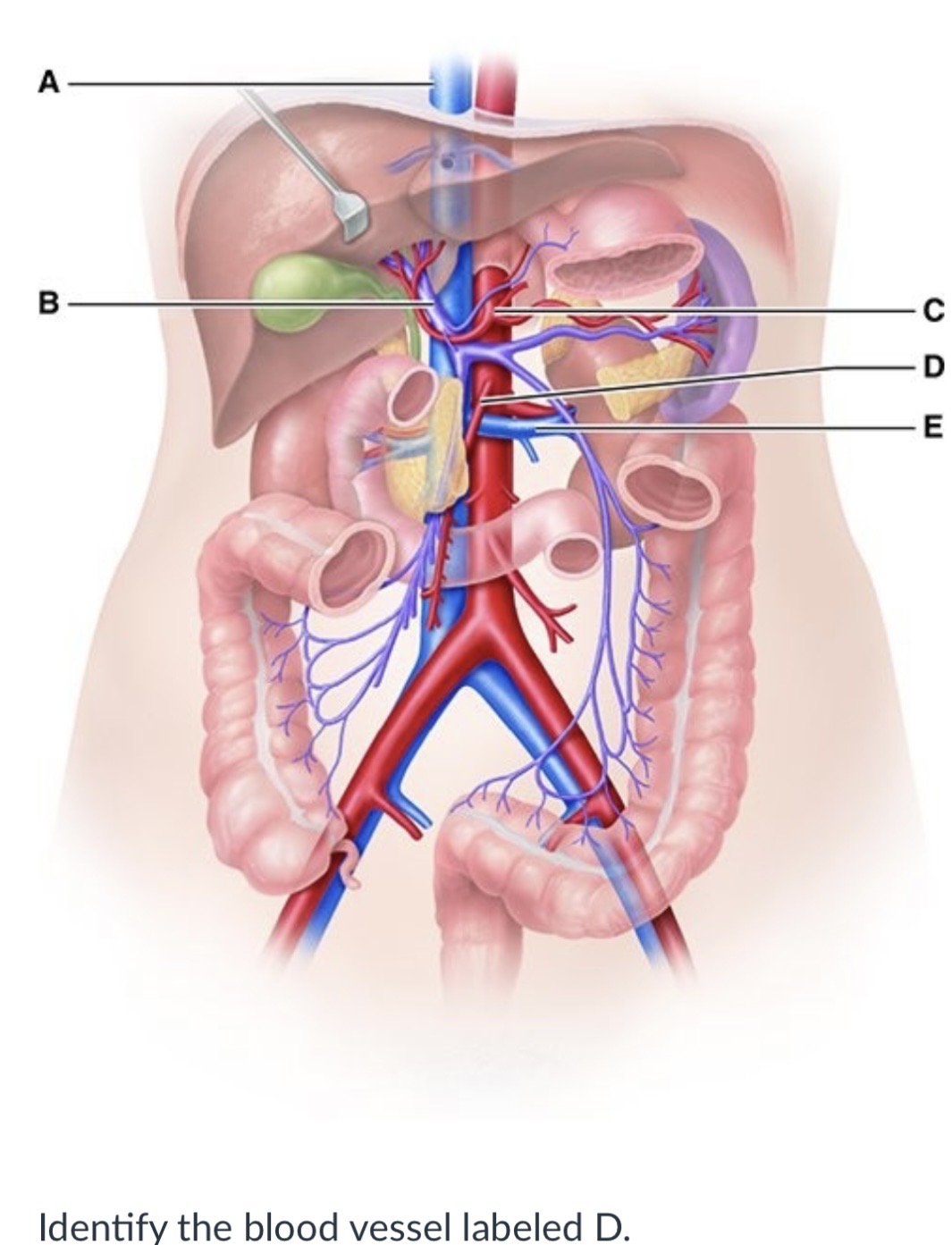
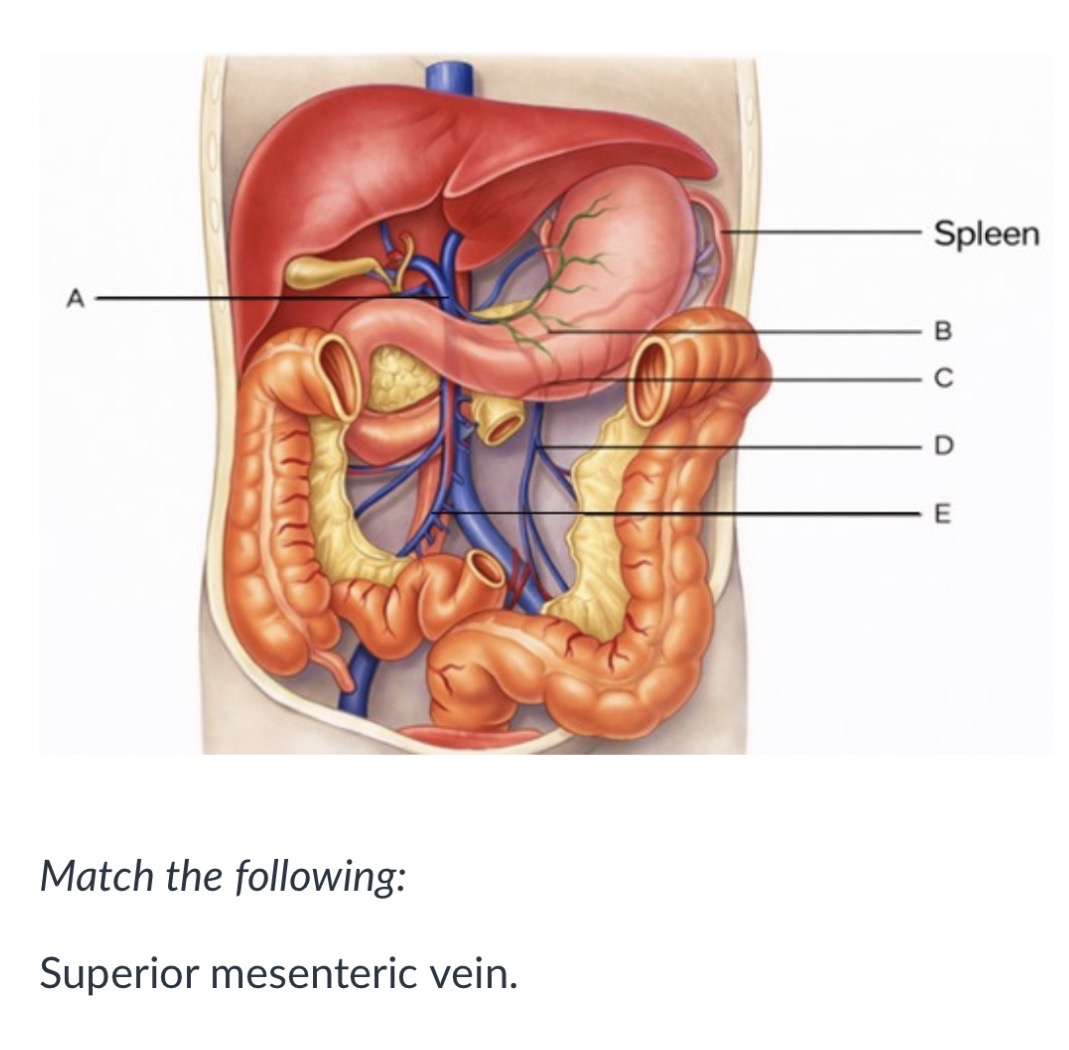
Hepatic portal
Renal
Superior mesenteric
Celiac trunk
Renal
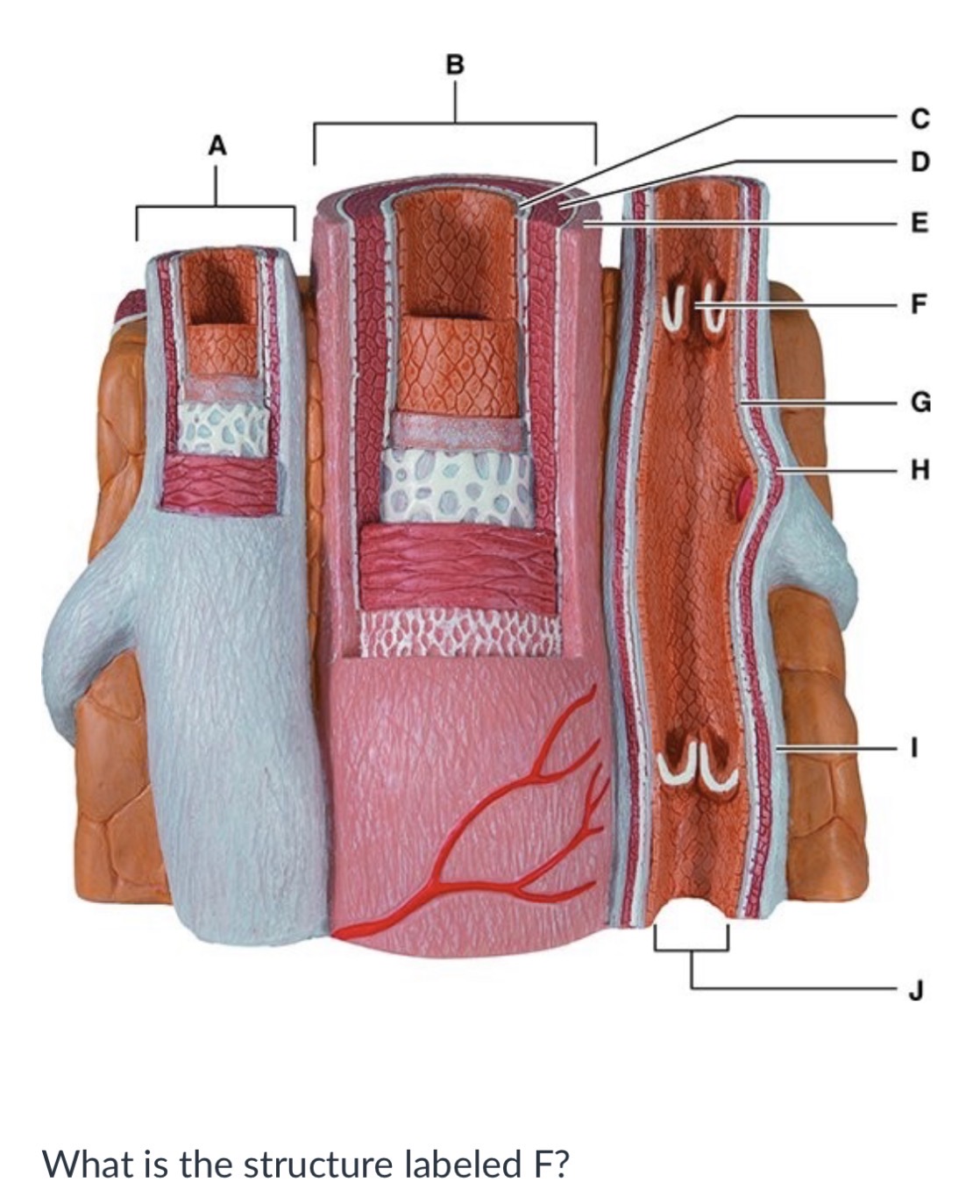
Valve
Artery
Vein
Tunica media of vein
Valve
E
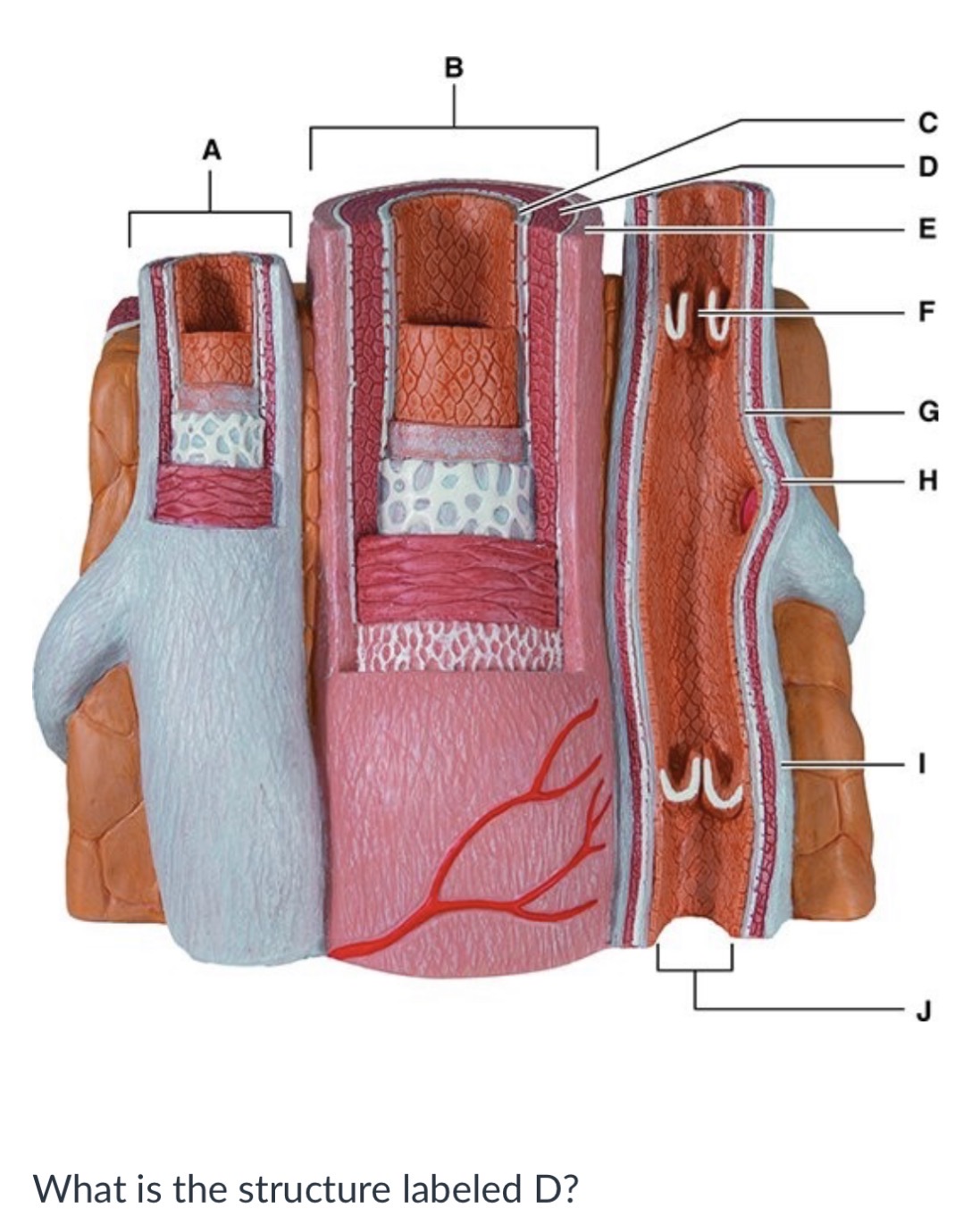
Vein
Tunica media of vein
Tunica media of artery
Artery
Tunica media of artery
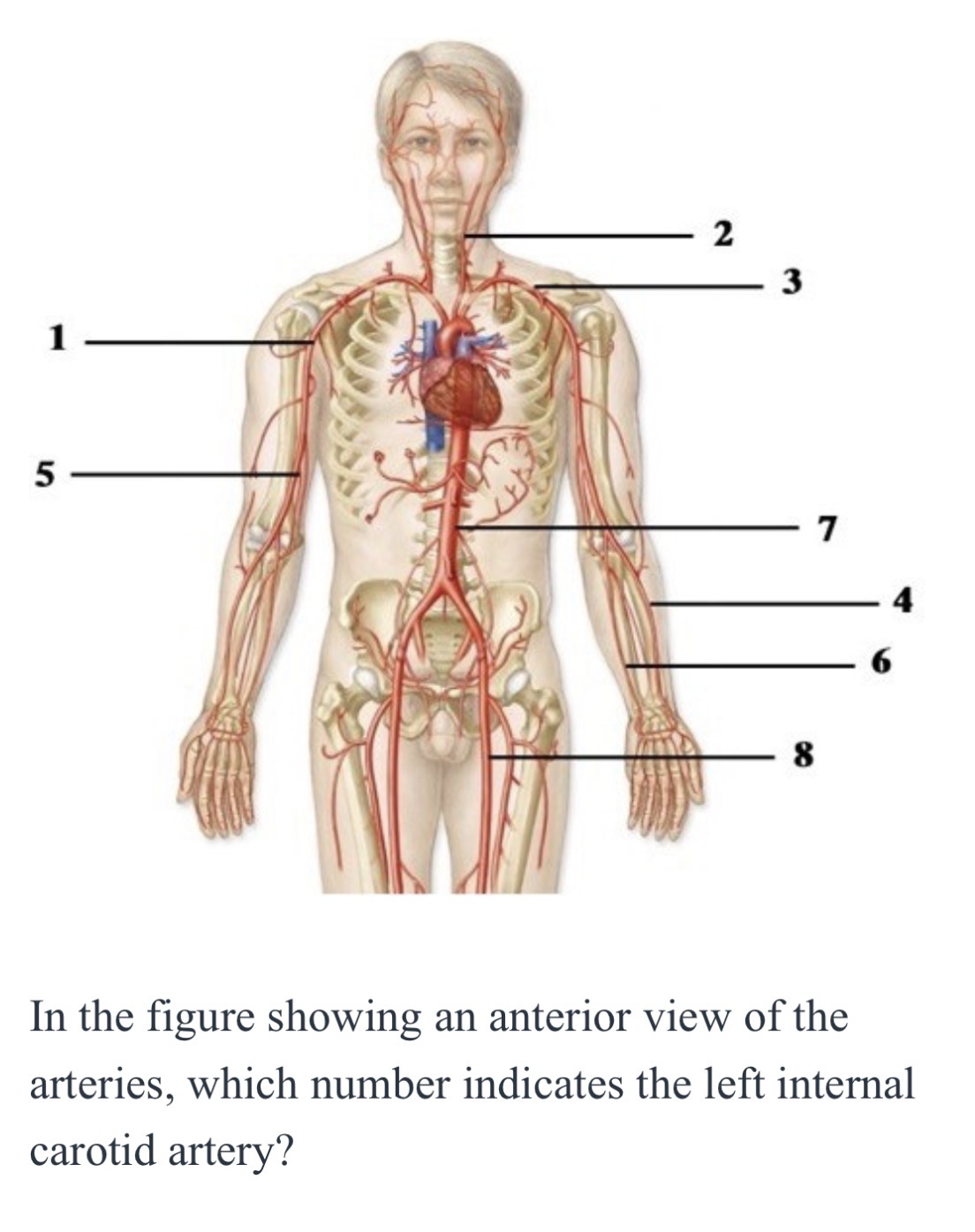
3
2
4
1
2
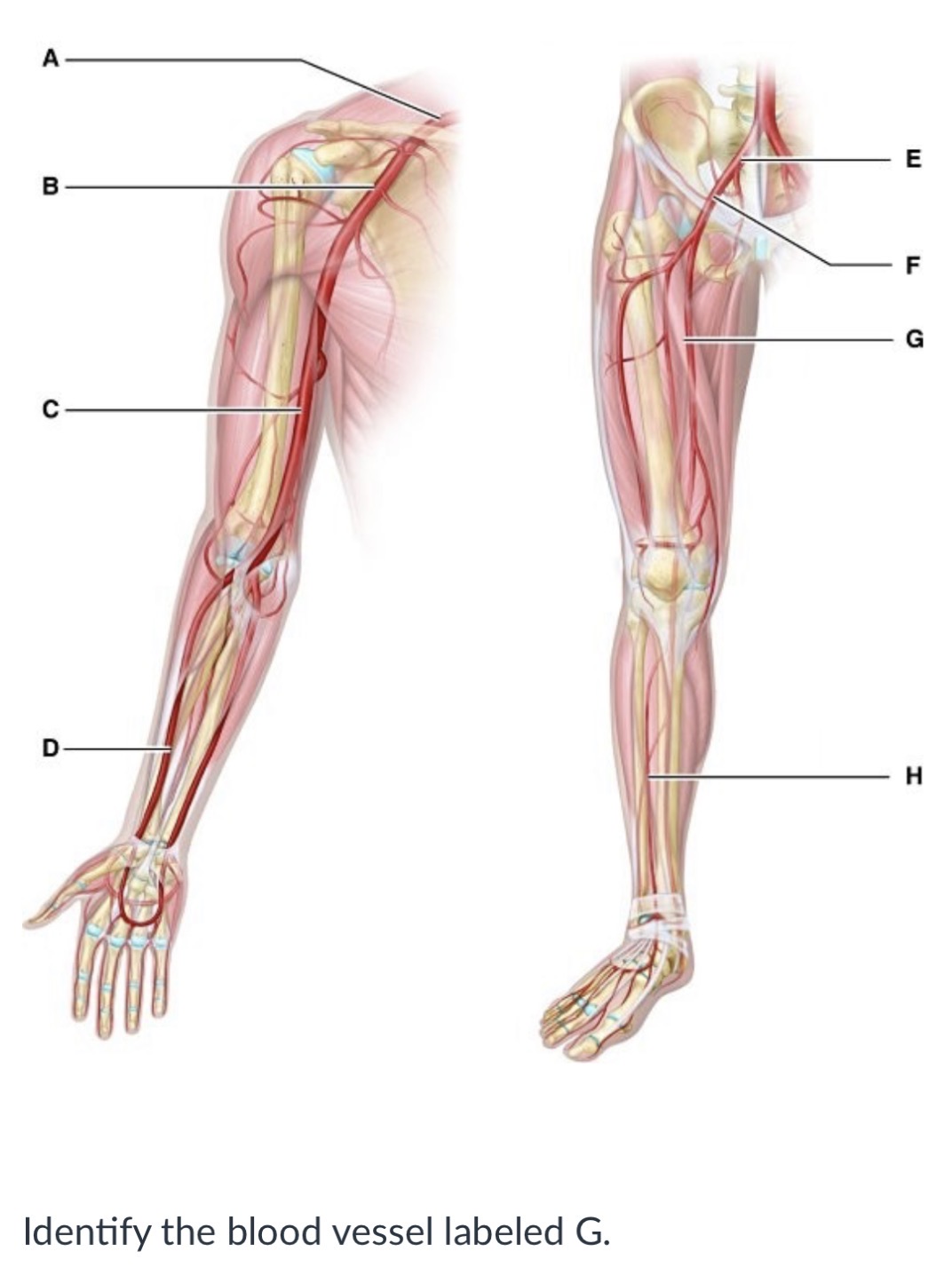
Femoral artery
Internal iliac artery
External iliac artery
Anterior tibial artery
Femoral artery
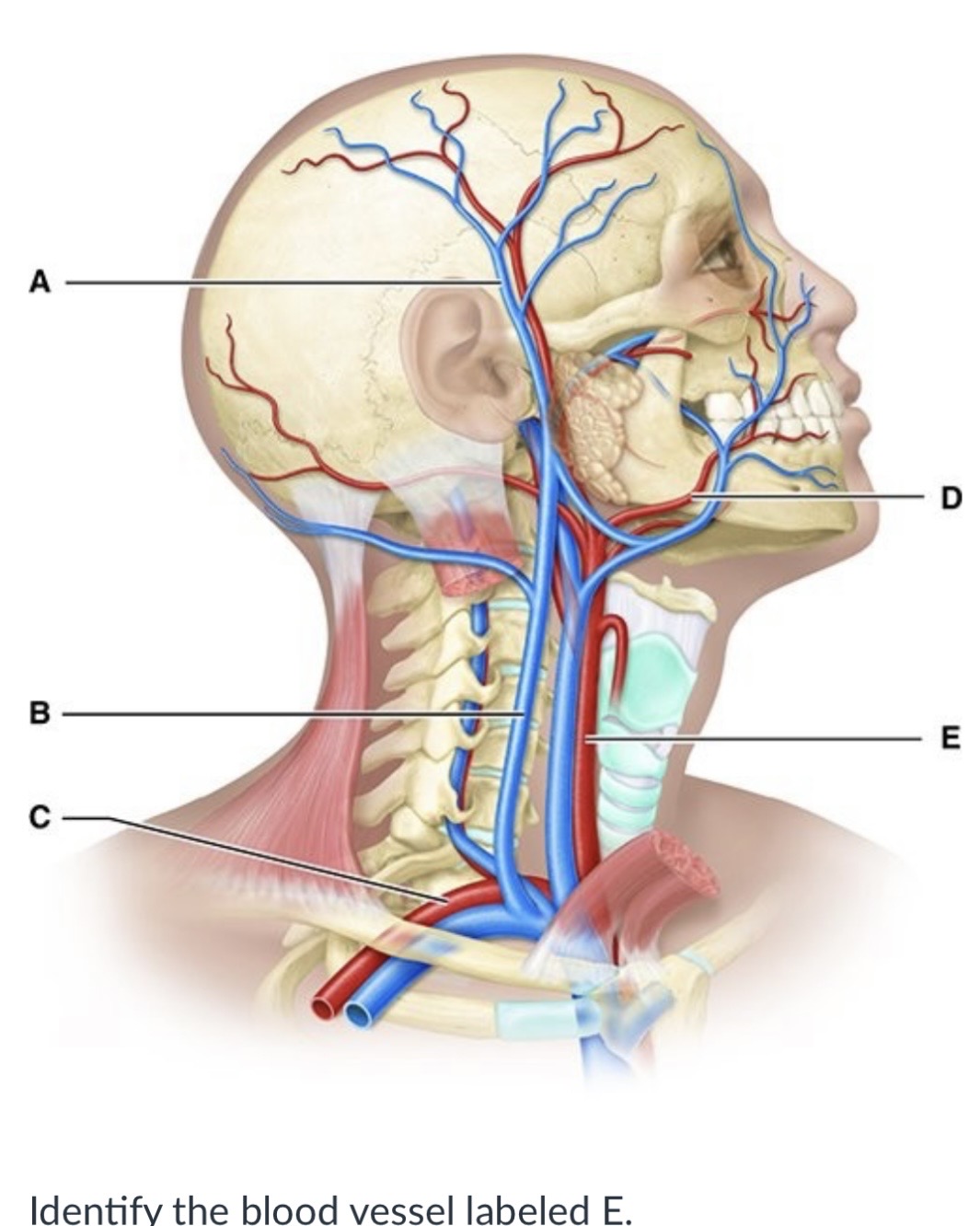
Superficial temporal
Subclavian
Common carotid
External jugular
Common carotid
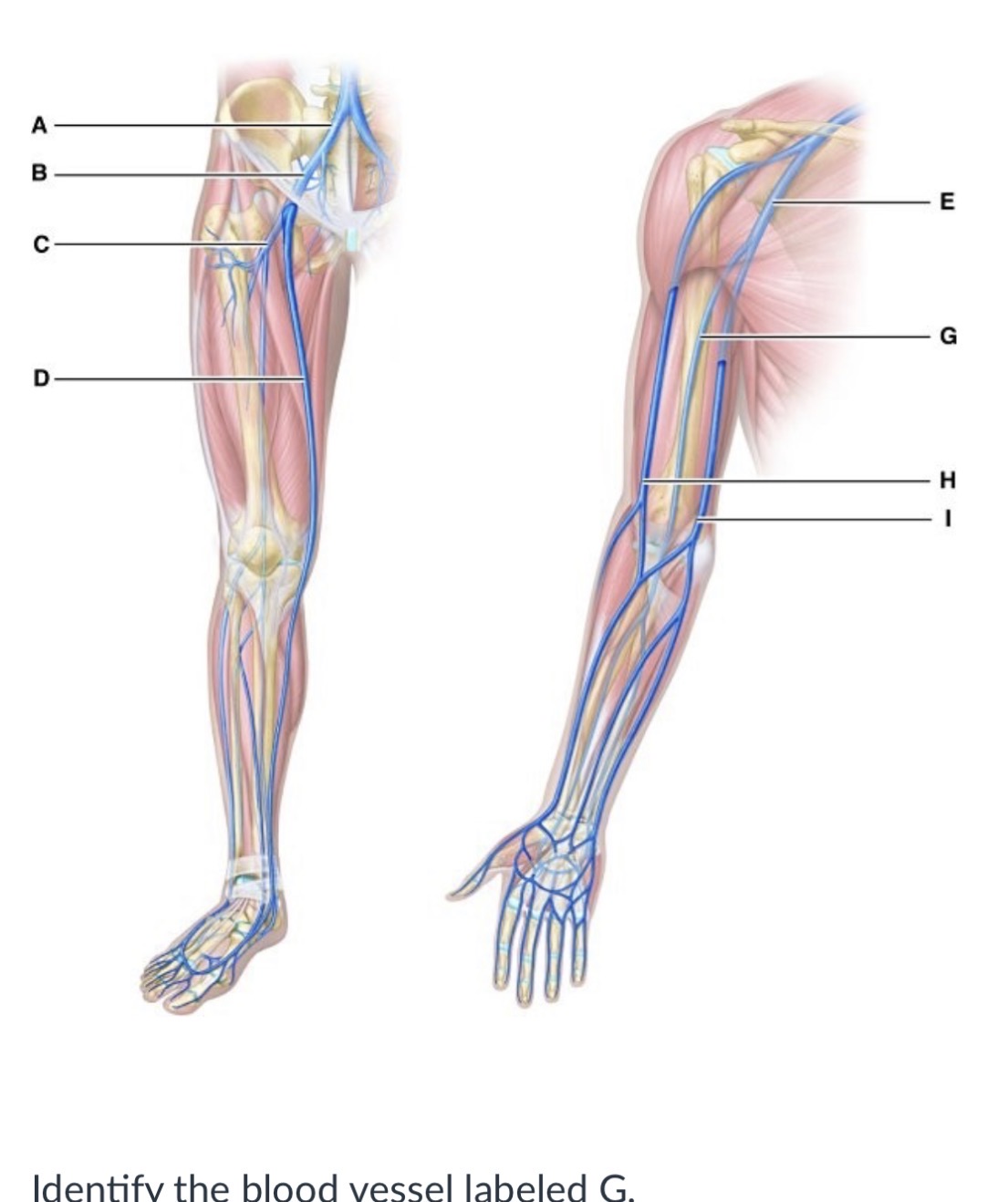
Radial vein
Cephalic vein
Axillary vein
Brachial vein
Brachial vein
The largest arteries of the body are classified as
muscular and elastic because they have the same dimensions.
elastic arteries.
arterioles.
muscular arteries.
elastic arteries.
The vessels that supply the lower limbs are the
common carotids.
vertebral arteries.
subclavian arteries
external iliac arteries.
external iliac arteries.
Tendons and ligaments have
a low degree of vascularization, therefore low perfusion and slow healing.
a high degree of vascularization, therefore high perfusion and slow healing.
a low degree of vascularization, therefore high perfusion and rapid healing.
a high degree of vascularization, therefore high perfusion and rapid healing.
a low degree of vascularization, therefore low perfusion and slow healing.
The ________ is composed of circularly arranged layers of smooth muscle cells.
tunica media
tunica intima
tunica externa
None of the answers is correct.
tunica media
Oxygen and carbon dioxide are transported between the blood and interstitial fluid by way of
diffusion from areas of higher concentration to lower concentration.
pinocytosis using fluid-filled vesicles.
exocytosis and endocytosis by endothelial cells.
active transport (using ATP) by protein carriers of endothelial cells.
diffusion from areas of higher concentration to lower concentration.
Gas, nutrient, and waste exchange occur between the ________ and the tissues of the body.
capillaries
veins
capillaries and arteries
capillaries and veins
capillaries
Precapillary sphincters will
cause blood to flow directly from the metarteriole into the postcapillary venule.
All of the answers are correct.
close when the tissue's needs have been met.
control blood flow into the true capillaries.
All of the answers are correct.
Which is the most common type of capillary?
Venules
Continuous
Fenestrated
Sinusoids
Continuous
The popliteal artery supplies the
hip joint.
knee joint.
elbow joint.
palmar region.
knee joint.
Which of the following is likely during vigorous exercise?
Blood flow to the kidneys increases.
The skin will be cold and clammy.
Blood will be diverted to the digestive organs.
Capillaries of the active muscles will be engorged with blood.
Capillaries of the active muscles will be engorged with blood.
The pulmonary trunk carries
deoxygenated blood from the right ventricle toward the lungs.
oxygenated blood from the lungs toward the left atrium of the heart.
oxygenated blood from the right ventricle toward the lungs.
oxygenated blood from the left ventricle toward the lungs.
deoxygenated blood from the right ventricle toward the lungs.
Which sequence indicates the correct pathway for blood in the arterial flow of the upper appendage?
Subclavian artery - axillary artery - brachial artery - ulnar artery
Brachial artery - subclavian artery - axillary artery - radial artery
Axillary artery - brachial artery - subclavian artery - ulnar artery
Axillary artery - subclavian artery - radial artery - ulnar artery
Subclavian artery - axillary artery - brachial artery - ulnar artery
Which fetal circulatory structure shunts blood from the pulmonary trunk to the aorta?
Ductus venosus
Ductus arteriosus
Foramen ovale
Umbilical artery
Ductus arteriosus
Blood pressure is lowest in
arterioles.
veins.
venules.
capillaries.
veins.
Valves in veins
are the leading cause of high blood pressure.
cause venous blood flow to go in only one direction.
are formed of the tunica media.
make the use of a skeletal muscle pump unnecessary for venous blood flow.
cause venous blood flow to go in only one direction.