Enzymes
 Call Kai
 Learn
Learn Practice Test
 Spaced Repetition
 Match
Match Flashcards
 Knowt Play
1/39

There's no tags or description
Looks like no tags are added yet.
Name | Mastery | Learn | Test | Matching | Spaced | Call with Kai | Chat |
|---|
No analytics yet
Send a link to your students to track their progress
40 Terms
What types of reactions do enzymes catalyze?
muscle contraction
nerve conduction
respiration
digestion
growth
reproduction
maintaining body temperature
The presence of enzymes in serum is typically due to:
the normal breakdown of body tissues
enzymes are biomarkers for certain diseases and conditions (because they can be found in certain tissues)
List 4 important properties of enzymes
enzymes are never permanently altered or consumed in reactions
only small amounts of enzymes are needed in reactions (they are reused)
they accelerate the rate of the reaction, but does not increase the product
when equilibrium is reached, the same enzyme catalyzes forward and reverse reactions
apoenzyme
the protein component of an enzyme, NOT active without a cofactor
cofactor
a compound required for an enzyme’s function that binds to the apoenzyme
holoenzyme
apoenzyme + cofactor (unit)
active site
where the substrate binds to the enzyme
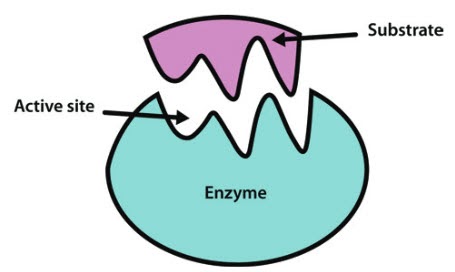
allosteric site
a specific location on an enzyme where regulatory molecules can bind, influencing the enzyme’s activity
Inhibitors decrease the rate of an enzymatic reaction. What are the 3 types of inhibitors?
competitive inhibitor
very similar to substrates, but competes with the substrate for the active site
increased concentrations of substrates can stop these inhibitors
noncompetitive inhibitor
inhibitor binds to an allosteric site, changing the structure of the enzyme so the substrate can’t bind
uncompetitive inhibitor
inhibitor binds to the enzyme-substrate complex and prevents the release of product
How does temperature affect enzyme activity? How is it controlled during lab testing?
low temperatures (<37) cause slow reactions
high temperatures (>37) cause denaturation of the enzymes
how is this controlled in the lab?
water baths keep cuvettes with samples at 37 C
How does pH affect enzyme activity? How is it controlled during lab testing?
pHs below 7 and above 8 lead to denaturation
how is it controlled?
reagents for enzyme tests have buffers to manage pH
How does substrate concentration affect enzyme activity?
substrate concentration and rate of enzymatic reactions are directly proportional
low substrate = slow reaction
high substrate = faster reaction
What is the Michaelis-Menton curve?
a graphical representation of the relationship between substrate concentration and reaction rate for enzymatic reactions
reaction velocity (Vmax) increases with substrate concentration until it reaches saturation (point when all enzyme binding spots are occupied)
first order kinetics
velocity of an enzymatic reaction is proportional to substrate concentration
as the substrate concentration increases, the rate of reaction increases linearly until saturation
zero order kinetics
a plateau that occurs during enzymatic reactions, indicates that enzyme saturation is reached
How are enzymes measured in the lab?
via absorbance methods
product formation (results in color change, which is measured)
or substrate depletion
What’s the difference between continuous assays and end-point assays for measuring enzyme activity?
continuous
detector continuously measures the reaction and plots data points
end-point
an initial point and end point are recorded, measurements are made after the reaction is completed
What are the three main classes of enzymes?
oxidoreductases
catalyzes redox reactions between two substrates
transferases
catalyzes the transfer of a group other than hydrogen between two substrates
hydrolases
catalyzes the hydrolytic cleavage of a substrate
What are the three types of enzyme tissue specificity?
high specificity
enzyme is predominantly found in one tissue
moderate specificity
enzyme is widely distributed in the body
low specificity
enzyme is found in most body tissues
isoenzyme
Different forms of an enzyme that catalyze the same reaction but have different properties
What type of enzyme is lactate dehydrogenase (LDH) and where can it be found?
oxidoreductase involved in anaerobic glycolysis
mostly found in the liver, heart, RBCs, and skeletal muscle
hemolyzed specimens increase LDH
When is LDH increased?
cardiac isoenzymes increased in:
after an MI
in myocarditis
shock
CHF
levels are also high in patients with megaloblastic anemia and pernicious anemia
How is LDH measured?
by a forward and reverse reaction
forward: lactate to pyruvate and NADH
reverse: pyruvate to lactate and NAD+
What type of enzyme is creatine kinase (CK) and where can it be found in the body?
transferase involved in phosphorylation of ATP
addition of phosphate to ATP
found in skeletal muscle, brain tissue, and heart tissue
List the 3 CK isoenzymes (m=muscle and b=brain)
CK-MM
found in skeletal and cardiac muscle
CK-BB
found in the brain and CNS
CK-MB
mostly found in cardiac tissue
How is CK measured?
assessment of the forward and reverse reaction
What is the purpose of measuring CK-MB?
to evaluate acute myocardial injury after an MI
peaks 24 hours after an MI and returns to normal 2-4 days after
In what conditions is CK increased?
myocardial infarction
muscular dystrophy
rhabdomyolysis
What is the function of aspartate aminotransferase (AST) and where in the body can it be found?
facilitates amino acid metabolism (synthesis and degradation)
found in the liver (high), heart, skeletal muscles, and kidneys
In what conditions is AST increased?
hepatocellular disorders
MI
muscle injury
may also be elevated in CHF
Where is alanine aminotransferase (ALT) mostly found?
the liver (small amounts are found in the heart, kidneys, and skeletal muscle)
When is ALT increased?
viral/toxic hepatitis
obstructive liver disease
hepatic cancer
cirrhosis
Where is alkaline phosphatase (ALP) found and when is it increased?
found in all tissues but is the highest in liver and bone
increased in:
liver disease
bone disease
renal disease
pregnancy
Where can the enzyme gamma-glutamyltransferase (GGT) be found? When is it increased?
liver, brain, prostate, pancreas, and kidneys
increased in:
alcoholism
hepatobiliary disorders
pancreatitis
diabetes
MI
What is the function of amylase? Where is it formed? What is the purpose of measuring it?
function: digest starch into smaller carbohydrates
formed by the salivary glands and pancreas
purpose: diagnosing pancreatitis
When is amylase increased?
acute pancreatitis
gastric and duodenal ulcers
renal disease
narcotics use
mumps
What is lipase and when is it elevated?
a pancreatic enzyme that hydrolyzes triglycerides into monoglycerol (alcohol and fatty acids)
elevated in acute pancreatitis, pancreatic carcinoma, kidney disease, duodenal ulcers, and intestinal obstruction
How is lipase measrued?
turbidimetrically and spectrophotometrically
cholenesterase (ChE)
An enzyme that breaks down esters, mainly in the liver
acetylcholenesterases are found in RBCs
pseudocholinesterases are found in serum and the liver
Causes of decreased cholinesterase
pesticide poisoning
abnormal genetic variants