Biomechanics: Levers and Vectors
 Call Kai
 Learn
Learn Practice Test
 Spaced Repetition
 Match
Match Flashcards
 Knowt Play
1/35

There's no tags or description
Looks like no tags are added yet.
Name | Mastery | Learn | Test | Matching | Spaced | Call with Kai | Chat |
|---|
No analytics yet
Send a link to your students to track their progress
36 Terms
mechanics
science of the effects of forces on matter
biomechanics
the application of the laws of mechanics to living structures, particularly regarding the interrelations of bones, muscles, and joints
kinesiology
study of muscles and muscle contraction; including factors affecting movement
kinematics
the study of possible motions of a system without regard to forces.
arthrokinematics
movements at the joint surfaces; roll, slide, spin, swing
osteokinematics
movements of the bones
kinetics
the study of relationships between the rate of change of a specific force, ie., gravity, surface friction, muscle contraction
statics
the equilibrium of bodies at rest
how do we move?
our nervous system signals muscles to contract which causes a bone to move around the axis of a joint
scalar
a physical quantity that has only magnitude, such as temperature, speed, and pressure
vector
a quantity possessing magnitude and direction
tensors
term for all quantities; zero, first, second order tensors
force
normal, tangential, tensile, compressive, shear, gravitational, friction
couple
a pair of equal and opposite parallel forces acting across a distance thus producing torque or moment
equilibrium
state where the net sum of all forces acting on an object equals zero. the object displays EITHER no movement OR a constant velocity.
stress
force per unit area of a structure and a measure of the intensity of that force. has magnitude and direction
strain
a measure of the degree of deformation of an object subjected to a load
translation
movement along an axis, x or y or z
torque
movement around an axis
lever systems
4 parts including a ridged beam, a fulcrum, a resistance, an effort
ridged beam
bones
fulcrum
joints
resistance
body mass, external load, gravity, inertia
effort
muscle workto move a load or resistance
first class levers
change the direction of the applied effort
second class levers
increase the force of the applied effort. (generally good at moving heavy objects)
third class levers
gain distance
resistance is between the fulcrum and the applied force
second class lever
applied effort is always between the fulcrum and the resistance
third class lever
mechanical advantage is always <1
third class lever
mechanical advantage is always >1
second class lever
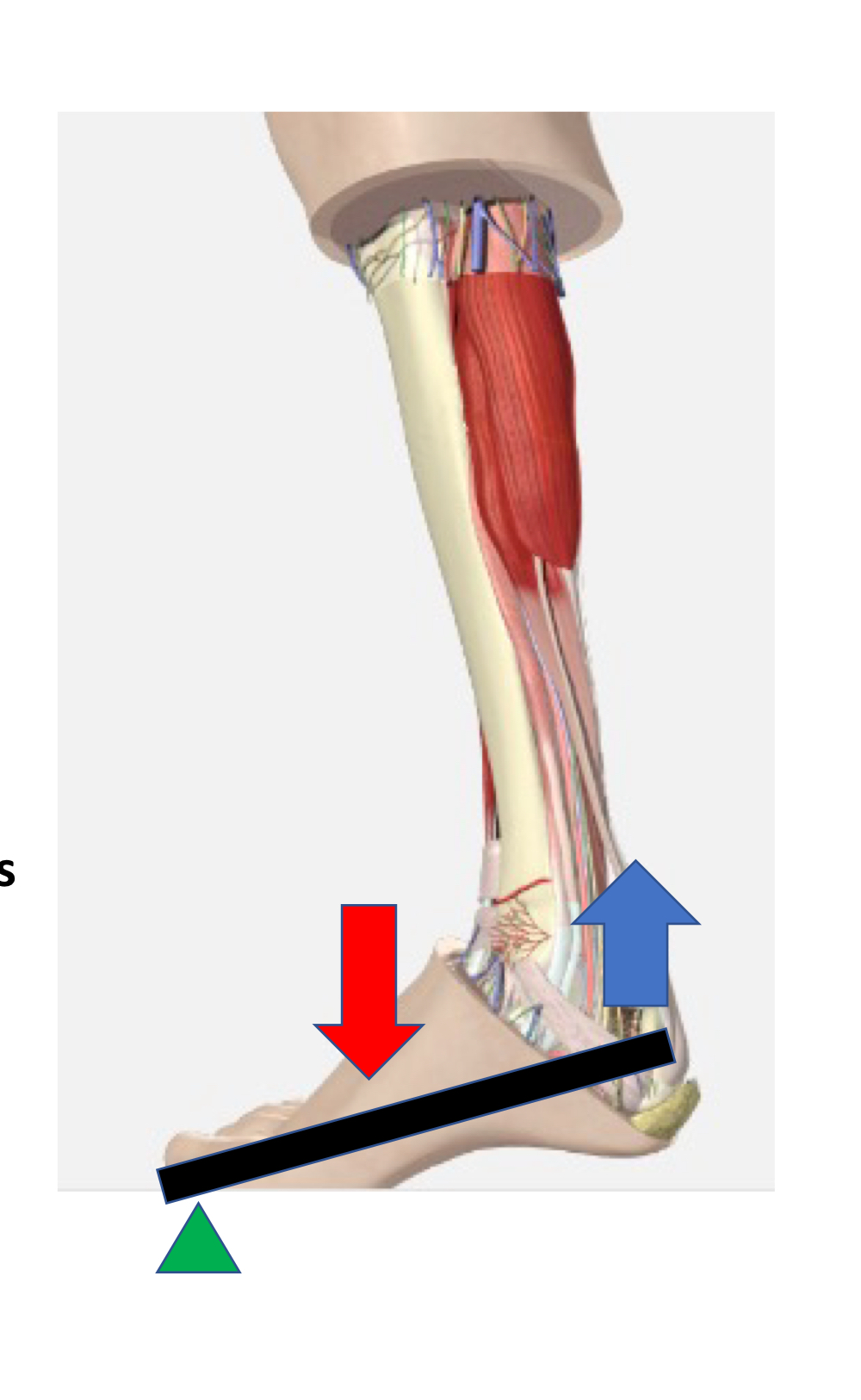
second class lever
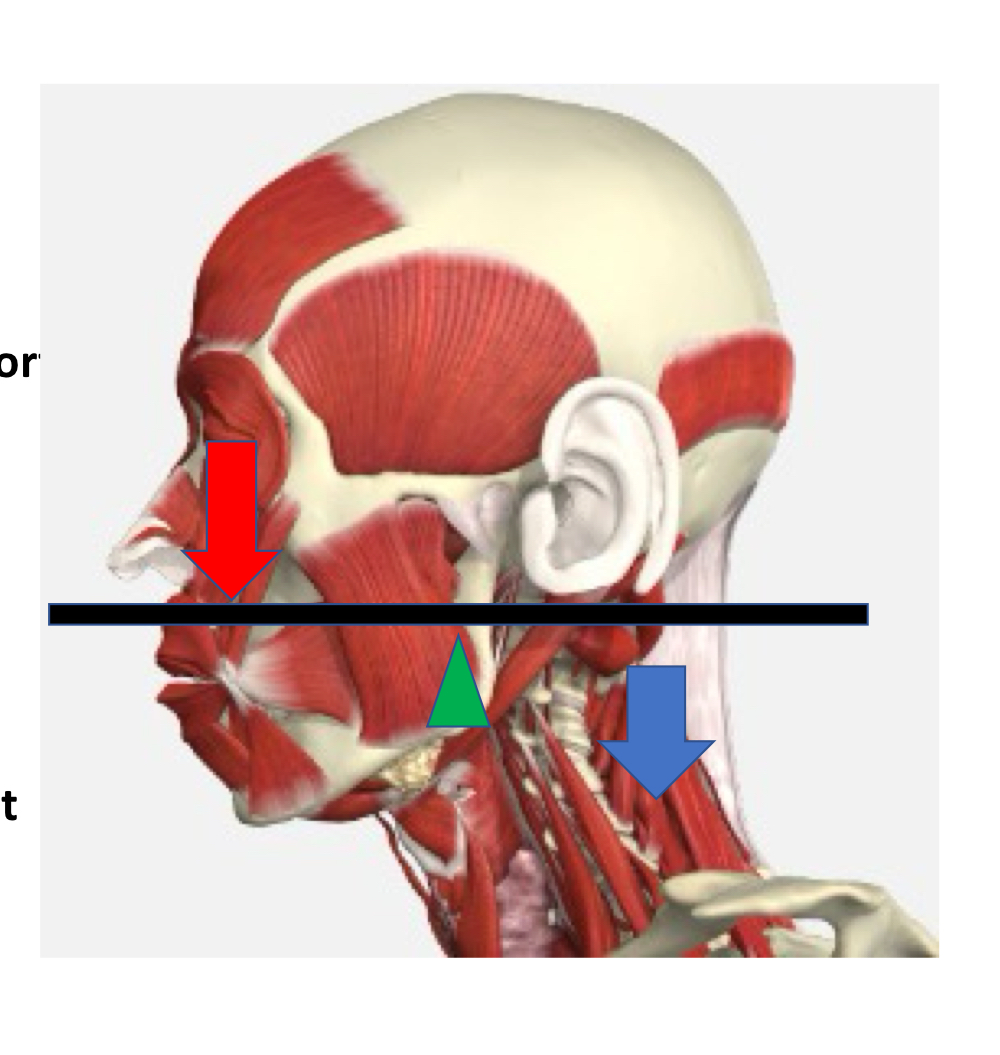
first class lever
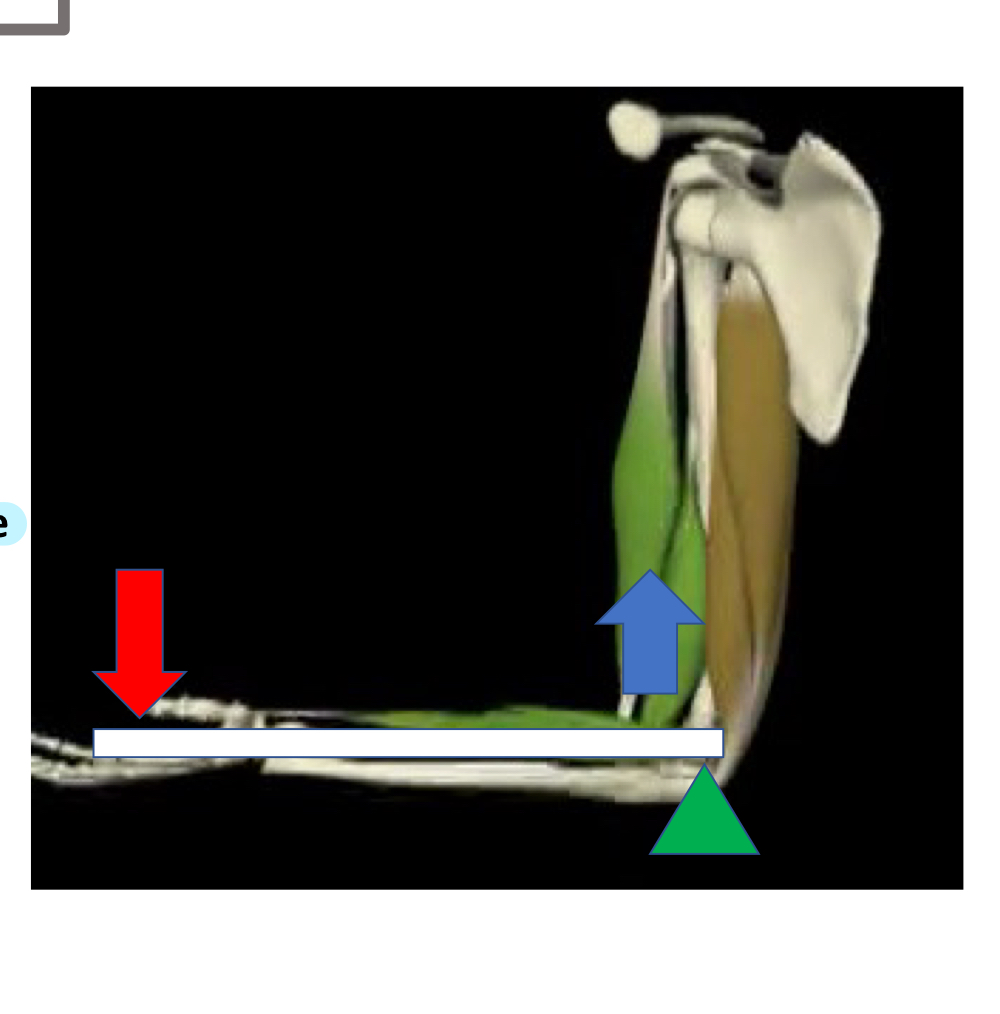
third class lever
vectors
force having both magnitude and direction