Chemistry U4 AOS 1

0.0(0)
Studied by 0 people
call kaiCall Kai
Locked
learnLearn
examPractice Test
spaced repetitionSpaced Repetition
heart puzzleMatch
flashcardsFlashcards
GameKnowt Play
Card Sorting

1/83

encourage image

There's no tags or description

Looks like no tags are added yet.

Last updated 11:48 AM on 8/14/26
Name
Mastery
Learn
Test
Matching
Spaced
Call with Kai
Chat

No analytics yet

Send a link to your students to track their progress

84 Terms

1
New cards
  • Organic compounds

  • T or F? An organic molecule can only be naturally produced 

  • What is the total number of bonds a carbon atom can form?

Organic compounds are identified as those where carbon is covalently bonded to other atoms 

  • Often this involves other carbon atoms, hydrogen, nitrogen, and oxygen 

  • False. In organic molecule can either naturally or synthetically produced 


Carbon atoms have a valence electron number of 4 (4 electrons in its outermost shell)  --> meaning each carbon atom can form a total of 4 bonds 

2
New cards
  • Saturated

  • Unsaturated

  • Saturated meaning it possesses only single bonds between carbon atoms (C-C bonds) 

  • Unsaturated meaning it possesses at least one double or triple bond between carbon bonds 

3
New cards
  • The bond strength of a particular carbon bond depends on the bond energy - what is the bond energy and what unit is it measured in?

  • What factors influence bond energy? Explain them.

  • energy required to break the chemical bond which is measured in kJ/mol


The are various factors that impact the energy of a chemical bond, including: 

  • Bond length - the distance between the nuclei of two bonded atoms 

  • The difference in electronegativity of the atoms involved 

  • Size of the atoms 


--> the length of the bond will vary depending on the strength of the electrostatic attraction between the nuclei of the bonded atoms and their shared electrons 

--> The size of the atoms involved also impacts the bond length; where bonds between larger atoms are expected to be longer (and hence weaker bond strength) 

In general, bond energy (and hence bond strength) increases as the length of a bond decreases 


Electronegativity how strongly an atom attracts electrons towards itself 

--> Bonds formed between elements with larger differences in electronegativity form stronger bonds 


Chem ½ link (don't need to remember the specific reasons, just where electronegativity increases and decreases in the table) 


Trend in electronegativity 

Explanation 

Down a group 

Decreases 

  • More electron shells, increased shielding (repulsion from inner electrons), greater distance from nucleus 

Across a period (left to right) 

Increases 

  • Increase in nuclear charge (positive charge of nucleus – as number of protons increase)--> increased electrostatic attraction 


  • Increase in electrons --> closer to full outer shell – attract electrons more strongly 

4
New cards

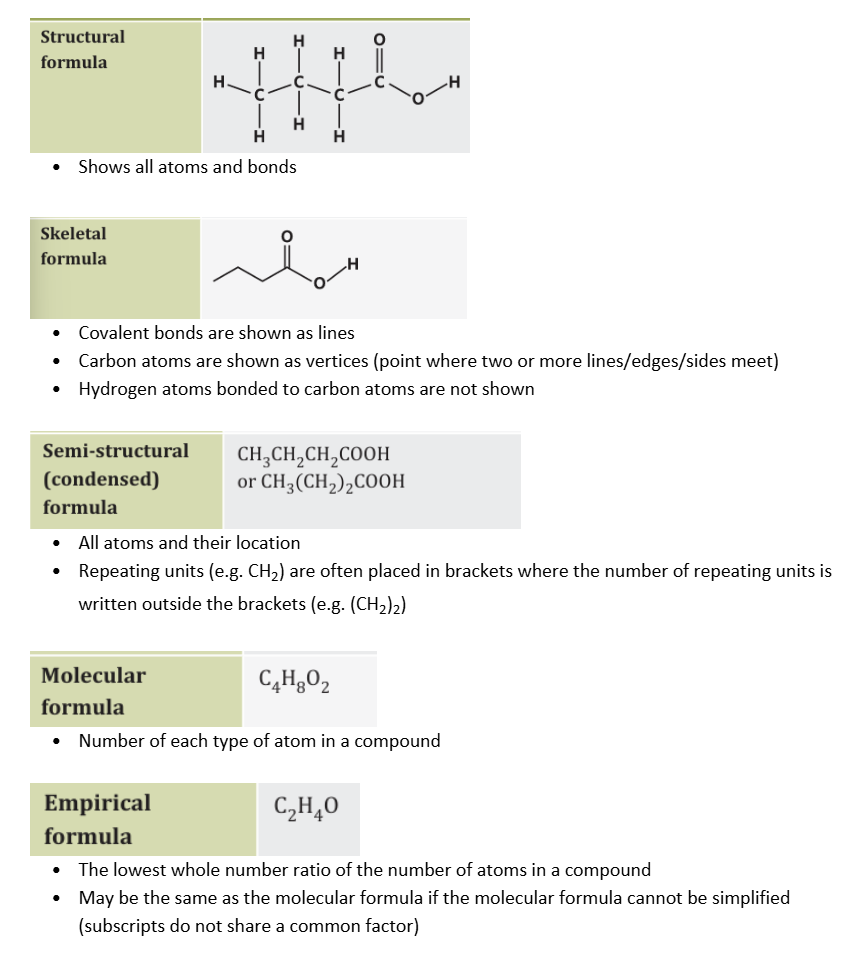
For butanoic acid, can you draw/write it in:

  • Structural formula

  • Skeletal formula

  • Semi-structural formula

  • Molecular formula

  • Empirical formula

knowt flashcard image
5
New cards
  • Homologous series

  • Functional group

A homologous series is a ‘family’ of compounds that have: 

²  a similar structure 

²  a pattern to their physical properties 

²  similar chemical properties 

²  the same general formula 

  • In homologues series, organic compounds in which each successive member differs by -CH2- from the previous one  


A functional group is an atom or group of atoms that largely determine the properties of a molecule 

6
New cards

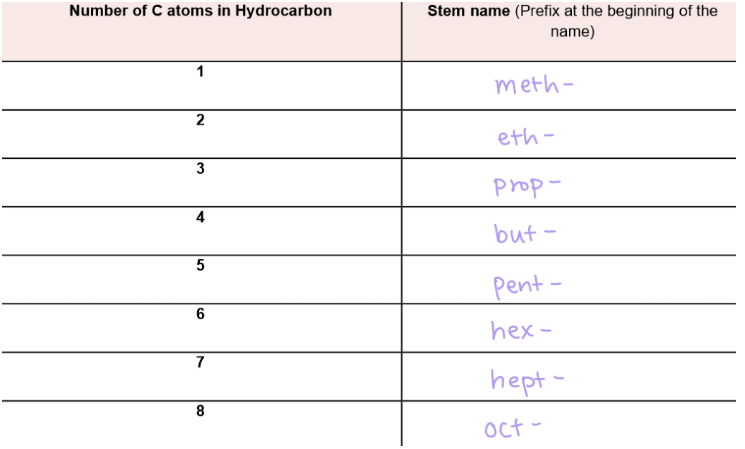
Write the stem name/prefix for the following number of carbons in a hydrocarbons:

1

2

3

4

5

6

7

8
knowt flashcard image
7
New cards
  • Alkyl group

  • Are they considered as functional groups. Why/why not?

Alkyl group containing only carbon and hydrogen atoms (e.g. −CH3, −CH2CH3) 

  • They are not considered as functional groups as FGs affect the chemical properties of a compound while alkyl groups only affect a molecule's physical properties ((including melting and boiling point) 

8
New cards
  • Alkanes

  • General formula

  • Is it saturated or unsaturated. Why or Why not?

  • Suffix

Alkanes are saturated hydrocarbons that only have single carbon-carbon bonds in their structures 

  • It's general formula is CnH2n + 2 (n represents the number of carbon atoms in the structure) 

  • They are said to be saturated because each carbon cannot bond with any more atoms 

  • The suffix (at the end of the name) of the alkane is –ane
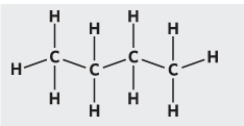
<p><span style="background-color: inherit; line-height: 20.7px; color: windowtext;"><strong>Alkanes </strong>are saturated hydrocarbons that only have single carbon-carbon bonds in their structures</span><span style="line-height: 20.7px; color: windowtext;">&nbsp;</span></p><ul><li><p class="Paragraph SCXO167853085 BCX0" style="text-align: left;"><span style="background-color: inherit; line-height: 20.7px; color: windowtext;">It's general formula is C<sub>n</sub>H<sub>2n + 2 </sub>(n represents the number of carbon atoms in the structure)</span><span style="line-height: 20.7px; color: windowtext;">&nbsp;</span></p></li><li><p class="Paragraph SCXO167853085 BCX0" style="text-align: left;"><span style="background-color: inherit; line-height: 20.7px; color: windowtext;">They are said to be <strong>saturated</strong> because each carbon cannot bond with any more atoms</span><span style="line-height: 20.7px; color: windowtext;">&nbsp;</span></p></li><li><p class="Paragraph SCXO167853085 BCX0" style="text-align: left;"><span style="background-color: inherit; line-height: 20.7px; color: windowtext;">The suffix (at the end of the name) of the alkane is <strong>–ane</strong></span></p></li></ul><p></p>
9
New cards
  • Alkenes

  • Functional group

  • General formula

  • Is it saturated or unsaturated. Why or Why not?

  • Suffix

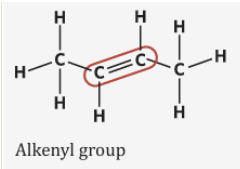
Alkenes are the homologous series that contains unsaturated hydrocarbons that have at least one carbon-carbon double bond in their carbon chain  

  • They contain the alkenyl functional group (C=C)  

  • They have at least one degree of unsaturation (due to the carbon-carbon double/triple blond) - as the carbon atoms can potentially form new bonds with other atoms (by breaking the double bond) 

  • The suffix (at the end of the name) of the alkane is –ene 

  • It's general formula is CnH2n 

<p><span style="background-color: inherit; line-height: 20.7px; color: windowtext;"><strong>Alkenes </strong>are the homologous series that contains unsaturated hydrocarbons that have at least one carbon-carbon double bond in their carbon chain&nbsp;</span><span style="line-height: 20.7px; color: windowtext;">&nbsp;</span></p><ul><li><p class="Paragraph SCXO38687128 BCX0" style="text-align: left;"><span style="background-color: inherit; line-height: 20.7px; color: windowtext;">They contain the <u>alkenyl functional group (C=C)</u>&nbsp;</span><span style="line-height: 20.7px; color: windowtext;">&nbsp;</span></p></li><li><p class="Paragraph SCXO38687128 BCX0" style="text-align: left;"><span style="background-color: inherit; line-height: 20.7px; color: windowtext;">They have at least one degree of unsaturation (due to the carbon-carbon double/triple blond) - as the carbon atoms can potentially form new bonds with other atoms (by breaking the double bond)</span><span style="line-height: 20.7px; color: windowtext;">&nbsp;</span></p></li><li><p class="Paragraph SCXO38687128 BCX0" style="text-align: left;"><span style="background-color: inherit; line-height: 20.7px; color: windowtext;">The suffix (at the end of the name) of the alkane is <strong>–ene</strong></span><span style="line-height: 20.7px; color: windowtext;">&nbsp;</span></p></li><li><p class="Paragraph SCXO38687128 BCX0" style="text-align: left;"><span style="background-color: inherit; line-height: 20.7px; color: windowtext;">It's general formula is <strong>C<sub>n</sub>H<sub>2n</sub></strong></span><span style="line-height: 20.7px; color: windowtext;">&nbsp;</span></p></li></ul><p></p>
10
New cards
  • Aromatic hydrocarbons/arenes

  • Cycloalkane

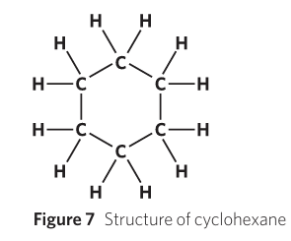
  • Cyclohexane + draw diagram

Aromatic hydrocarbons/arenes: are ring-shaped organic compounds with no terminal carbon made entirely of carbon and hydrogen – examples include cycloalkanes and benzene 

Cycloalkane: saturated alkanes arranged in a closed ring with no terminal carbon, with all carbon-carbon bonds being single bonds 

  • Each carbon atom is bonded to 2 adjacent carbon atoms and two hydrogen atoms 

  • 'cyclo' = ring 

  • 'ane' - saturated hydrocarbon 

  • It's general formula is CnH2n 


Cyclohexane: a cycloalkane with 6 carbon atoms joined in a ring  

  • 'Hex' = 6 carbon atoms 

  • It’s formula is C₆H₁₂ 

<p><span style="background-color: inherit; line-height: 20.7px; color: windowtext;">Aromatic hydrocarbons/arenes: are ring-shaped organic compounds with no terminal carbon made entirely of carbon and hydrogen – examples include cycloalkanes and benzene</span><span style="line-height: 20.7px; color: windowtext;">&nbsp;</span></p><p></p><p class="Paragraph SCXO155986469 BCX0" style="text-align: left;"><span style="background-color: inherit; line-height: 20.7px; color: windowtext;"><strong>Cycloalkane</strong>: saturated alkanes arranged in a closed ring with no terminal carbon, with all carbon-carbon bonds being single bonds</span><span style="line-height: 20.7px; color: windowtext;">&nbsp;</span></p><ul><li><p class="Paragraph SCXO155986469 BCX0" style="text-align: left;"><span style="background-color: inherit; line-height: 20.7px; color: windowtext;">Each carbon atom is bonded to 2 adjacent carbon atoms and two hydrogen atoms</span><span style="line-height: 20.7px; color: windowtext;">&nbsp;</span></p></li><li><p class="Paragraph SCXO155986469 BCX0" style="text-align: left;"><span style="background-color: inherit; line-height: 20.7px; color: windowtext;"><em>'cyclo' = ring</em></span><span style="line-height: 20.7px; color: windowtext;">&nbsp;</span></p></li><li><p class="Paragraph SCXO155986469 BCX0" style="text-align: left;"><span style="background-color: inherit; line-height: 20.7px; color: windowtext;"><em>'ane' - saturated hydrocarbon</em></span><span style="line-height: 20.7px; color: windowtext;">&nbsp;</span></p></li><li><p class="Paragraph SCXO155986469 BCX0" style="text-align: left;"><span style="background-color: inherit; line-height: 20.7px; color: windowtext;">It's general formula is C<sub>n</sub>H<sub>2n</sub></span><span style="line-height: 20.7px; color: windowtext;">&nbsp;</span></p></li></ul><p class="Paragraph SCXO155986469 BCX0" style="text-align: left;"><span style="line-height: 26.45px; color: windowtext;">&nbsp;</span></p><p class="Paragraph SCXO155986469 BCX0" style="text-align: left;"><span style="background-color: inherit; line-height: 20.7px; color: windowtext;"><strong>Cyclohexane: </strong>a cycloalkane with 6 carbon atoms joined in a ring&nbsp;</span><span style="line-height: 20.7px; color: windowtext;">&nbsp;</span></p><ul><li><p class="Paragraph SCXO155986469 BCX0" style="text-align: left;"><span style="background-color: inherit; line-height: 20.7px; color: windowtext;"><em>'Hex' = 6 carbon atoms</em></span><span style="line-height: 20.7px; color: windowtext;">&nbsp;</span></p></li><li><p class="Paragraph SCXO155986469 BCX0" style="text-align: left;"><span style="background-color: inherit; line-height: 20.7px; color: windowtext;">It’s formula is C₆H₁₂</span><span style="line-height: 20.7px; color: windowtext;">&nbsp;</span></p></li></ul><p></p>
11
New cards
  • Benzene

  • Does it undergo the typical reactions of alkenes (addition reactions)?

  • Draw a diagram of benzene

Benzene is a cyclic compound that has 6 carbon atoms in its ring structure, each bonded to one hydrogen atom and two adjacent carbon atoms 

  • One electron from each carbon atom is delocalised and shared equally between carbon atoms in the ring, resulting in a very stable structure that will not undergo the typical reactions of alkenes (addition reactions) 
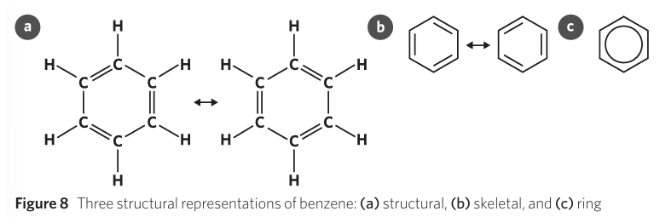
<p><span style="background-color: inherit; line-height: 20.7px; color: windowtext;"><strong>Benzene </strong>is a cyclic compound that has 6 carbon atoms in its ring structure, each bonded to one hydrogen atom and two adjacent carbon atoms</span><span style="line-height: 20.7px; color: windowtext;">&nbsp;</span></p><ul><li><p class="Paragraph SCXO81210547 BCX0" style="text-align: left;"><span style="background-color: inherit; line-height: 20.7px;">One electron from each carbon atom is delocalised and shared equally between carbon atoms in the ring, resulting in a very stable structure that will not undergo the typical reactions of alkenes (addition reactions)</span><span style="line-height: 20.7px;">&nbsp;</span></p></li></ul><p></p>
12
New cards
  • Haloalkane

  • Is there a polar bond in this molecule? Why/Why not?

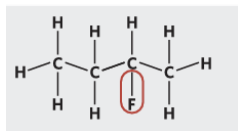
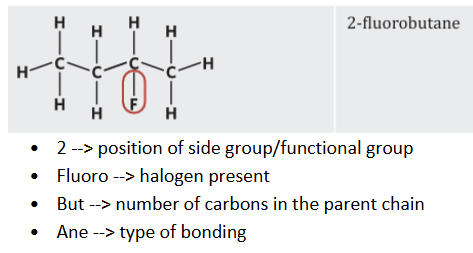
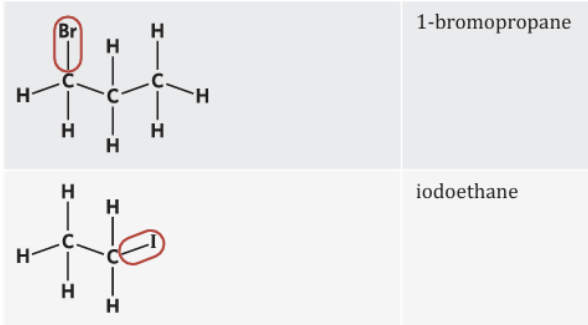
Haloalkane organic compound that has a halogen functional group (element in group 17 of the periodic table which include chlorine (Cl), bromine (Br), fluorine (F), and iodine (I)) 

  • The halogen atom replaces one or more H atoms attached to an alkane’s carbon chain 

  • X - often used as a general representation of a halogen 

As halogens are more electronegative than carbon atoms, they have a greater tendency to attract the shared pair of electrons to their own nucleus -->  this results in a polar bond: 

  • the carbon atom has a partial positive charge 

  • whilst the halogen atom has a partial negative charge 
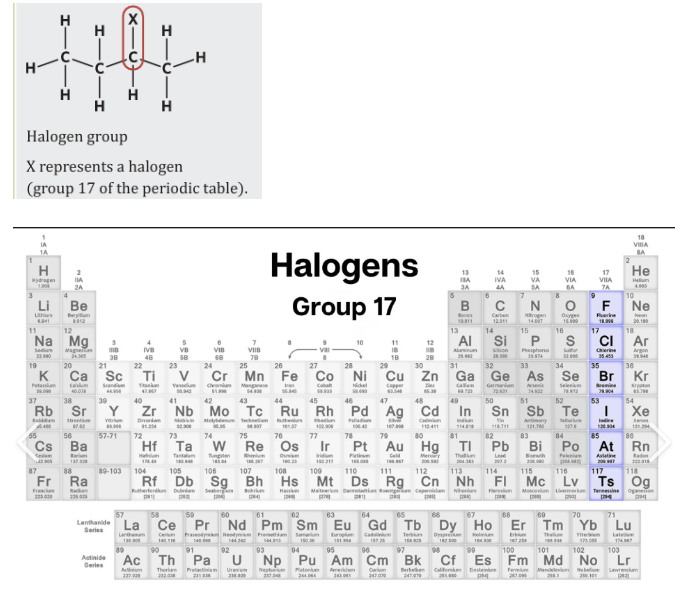
<p><span style="background-color: inherit; line-height: 20.7px; color: windowtext;"><strong>Haloalkane</strong> organic compound that has a halogen functional group (element in group 17 of the periodic table which include chlorine (Cl), bromine (Br), fluorine (F), and iodine (I))</span><span style="line-height: 20.7px; color: windowtext;">&nbsp;</span></p><ul><li><p class="Paragraph SCXO24787182 BCX0" style="text-align: left;"><span style="background-color: inherit; line-height: 20.7px; color: windowtext;">The halogen atom replaces one or more H atoms attached to an alkane’s carbon chain</span><span style="line-height: 20.7px; color: windowtext;">&nbsp;</span></p></li><li><p class="Paragraph SCXO24787182 BCX0" style="text-align: left;"><span style="background-color: inherit; line-height: 20.7px; color: windowtext;">X - often used as a general representation of a halogen</span><span style="line-height: 20.7px; color: windowtext;">&nbsp;</span></p></li></ul><p class="Paragraph SCXO24787182 BCX0" style="text-align: left;"></p><p class="Paragraph SCXO24787182 BCX0" style="text-align: left;"><span style="background-color: inherit; line-height: 20.7px; color: windowtext;">As halogens are <u>more electronegative</u> than carbon atoms, they have a greater tendency to attract the shared pair of electrons to their own nucleus --&gt;&nbsp; this results in a polar bond:</span><span style="line-height: 20.7px; color: windowtext;">&nbsp;</span></p><ul><li><p class="Paragraph SCXO207504228 BCX0" style="text-align: left;"><span style="background-color: inherit; line-height: 20.7px; color: windowtext;">the carbon atom has a partial positive charge</span><span style="line-height: 20.7px; color: windowtext;">&nbsp;</span></p></li><li><p class="Paragraph SCXO207504228 BCX0" style="text-align: left;"><span style="background-color: inherit; line-height: 20.7px; color: windowtext;">whilst the halogen atom has a partial negative charge</span><span style="line-height: 20.7px; color: windowtext;">&nbsp;</span></p></li></ul><p></p>
13
New cards
  • Amide

  • Draw it’s FG

  • Suffix

  • T or F? They are generally derived from ammonia

Amine organic compound with an amino functional group (−NH2) in replace of a hydrogen  

  • It has the suffix '-amine' 

  • True. They are generally derived from ammonia -->  a hydrogen atom may be removed from ammonia (NH3) to form an amino (or amine) functional group (−NH2)
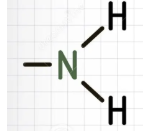
<p><span style="background-color: inherit; line-height: 20.7px; color: windowtext;"><strong>Amine </strong>organic compound with an amino functional group (−NH2) in replace of a hydrogen&nbsp;</span><span style="line-height: 20.7px; color: windowtext;">&nbsp;</span></p><ul><li><p class="Paragraph SCXO161345964 BCX0" style="text-align: left;"><span style="background-color: inherit; line-height: 20.7px; color: windowtext;">It has the suffix '-amine'</span><span style="line-height: 20.7px; color: windowtext;">&nbsp;</span></p></li></ul><ul><li><p class="Paragraph SCXO161345964 BCX0" style="text-align: left;"><span style="background-color: inherit; line-height: 20.7px; color: windowtext;">True. They are generally derived from ammonia --&gt;&nbsp; a hydrogen atom may be removed from ammonia (NH3) to form an amino (or amine) functional group (−NH2)</span></p></li></ul><p></p>
14
New cards

How are different structures of amines defined by? Is it the same as alcohols?

Unlike alcohols, primary secondary and tertiary amines are defined by the number of alkyl chains attached to the nitrogen not the carbon
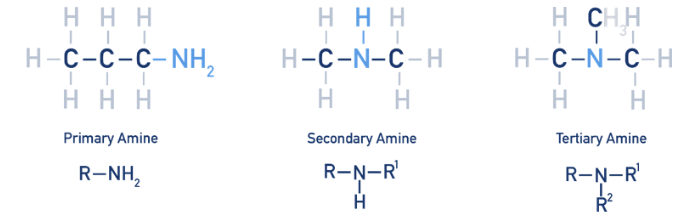
<p><span style="background-color: inherit; line-height: 20.88px; color: windowtext;">Unlike alcohols, primary secondary and tertiary amines are d<u>efined by the number of alkyl chains attached to the nitrogen</u></span><span style="line-height: 20.88px; color: windowtext;">&nbsp;not the carbon</span></p>
15
New cards
  • Amides

  • Draw it’s FG

  • Primary amide

Amides are organic compounds that contain the amide functional group (–CONH₂)  

  • Which includes a carbonyl group (C = O) attached to an amino FG – similar to carboxyl groups except replace the –OH with the –NH2 

  • Primary amide organic compound that contains an amide functional group at a terminal carbon atom (−CONH2) 
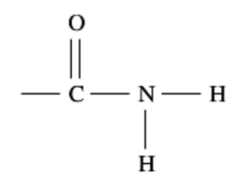
<p><span style="background-color: inherit; line-height: 20.7px; color: windowtext;"><strong>Amides</strong> are organic compounds that contain the amide functional group (–CONH₂)&nbsp;</span><span style="line-height: 20.7px; color: windowtext;">&nbsp;</span></p><ul><li><p class="Paragraph SCXO65800210 BCX0" style="text-align: left;"><span style="background-color: inherit; line-height: 20.7px; color: windowtext;">Which includes a carbonyl group (C = O) attached to an amino FG – similar to carboxyl groups except replace the –OH with the –NH2</span><span style="line-height: 20.7px; color: windowtext;">&nbsp;</span></p></li></ul><p class="Paragraph SCXO65800210 BCX0" style="text-align: left;"></p><ul><li><p class="Paragraph SCXO65800210 BCX0" style="text-align: left;"><span style="background-color: inherit; line-height: 20.7px; color: windowtext;"><strong>Primary amide</strong> organic compound that contains an amide functional group at a terminal carbon atom (−CONH2)</span><span style="line-height: 20.7px; color: windowtext;">&nbsp;</span></p></li></ul><p></p>
16
New cards
  • Alcohols

  • General formula

  • Suffix

Alcohols are hydrocarbons that have a hydroxyl (−OH) functional group bonded to a carbon atom in the carbon chain 

  • The hydroxyl group replace a hydrogen atom 

  • Alcohols have a general formula CnH2n+1OH 

  • Suffix is '-ol' 

17
New cards

The categorisation of an alcohol depends on - link this to primary, secondary and tertiary alcohols

The categorisation of an alcohol depends on the number of alkyl groups bonded to the carbon atom that the hydroxyl group is bonded to 


  • In a primary alcohol, the carbon atom bonded to the hydroxyl group is bonded to only one alkyl group 

  • In a secondary alcohol, the carbon atom bonded to the hydroxyl group is bonded to two alkyl groups 

  • In a tertiary alcohol, the carbon atom bonded to the hydroxyl group is bonded to three alkyl groups 
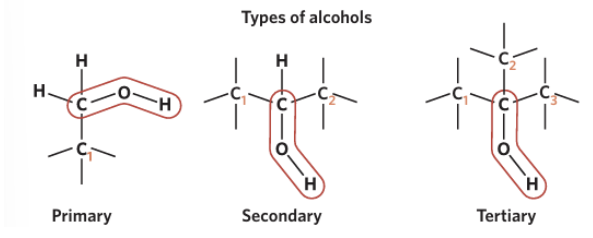
<p><span style="background-color: inherit; line-height: 20.7px; color: windowtext;">The categorisation of an alcohol depends on the <u>number of alkyl groups bonded to the carbon atom that the hydroxyl group is bonded to</u></span><span style="line-height: 20.7px; color: windowtext;">&nbsp;</span></p><p class="Paragraph SCXO159126462 BCX0" style="text-align: left;"><span style="line-height: 20.7px; color: windowtext;">&nbsp;</span></p><ul><li><p class="Paragraph SCXO159126462 BCX0" style="text-align: left;"><span style="background-color: inherit; line-height: 20.7px; color: windowtext;">In a <u>primary</u> alcohol, the carbon atom bonded to the hydroxyl group is bonded to only <u>one</u> alkyl group</span><span style="line-height: 20.7px; color: windowtext;">&nbsp;</span></p></li><li><p class="Paragraph SCXO159126462 BCX0" style="text-align: left;"><span style="background-color: inherit; line-height: 20.7px; color: windowtext;">In a <u>secondary</u> alcohol, the carbon atom bonded to the hydroxyl group is bonded to <u>two</u> alkyl groups</span><span style="line-height: 20.7px; color: windowtext;">&nbsp;</span></p></li><li><p class="Paragraph SCXO159126462 BCX0" style="text-align: left;"><span style="background-color: inherit; line-height: 20.7px; color: windowtext;">In a <u>tertiary</u> alcohol, the carbon atom bonded to the hydroxyl group is bonded to <u>three</u> alkyl groups</span><span style="line-height: 20.7px; color: windowtext;">&nbsp;</span></p></li></ul><p></p>
18
New cards

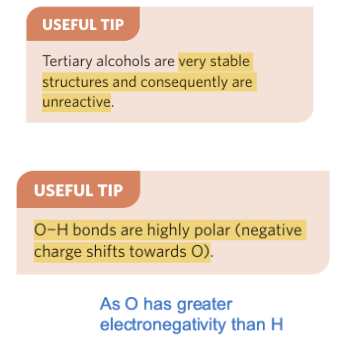
T or F?

  • Tertiary alcohols are very stable structures and consequently are unreactive.

  • O-H bonds are not polar.

knowt flashcard image
19
New cards
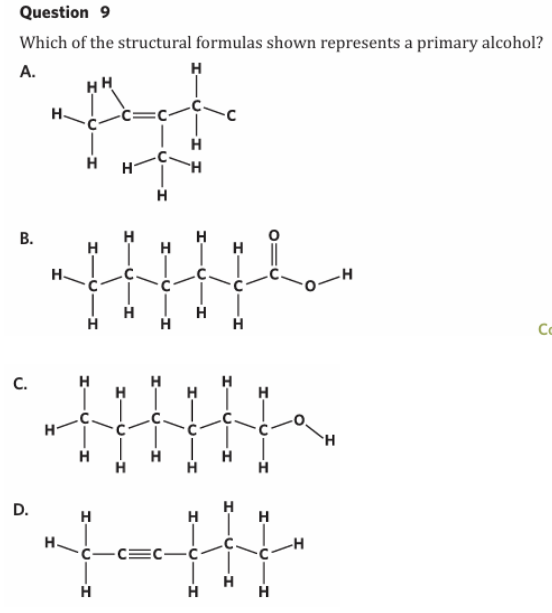
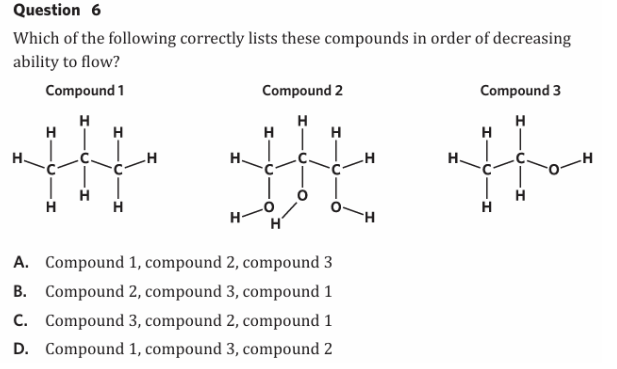
term image

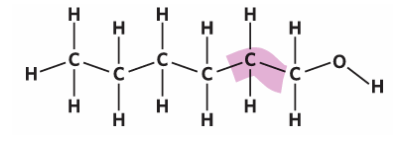
The answer is C 


Cannot be A as 

  • No oxygen atom and no –OH (hydroxyl group) --> so not alcohol at all 
 

Cannot be B as 

  • Contains a carboxyl (-COOH) --> so not alcohol at all 


It is C 

  • As there is a hydroxyl group on the terminal carbon and hence an alcohol 

  • The carbon atom bonded to the hydroxyl group is bonded to only one alkyl group 

Cannot be D 

  • No oxygen atom and no –OH (hydroxyl group) --> so not alcohol at all 

<p><span style="background-color: inherit; line-height: 20.7px; color: windowtext;">The answer is <strong><u>C</u></strong></span><span style="line-height: 20.7px; color: windowtext;">&nbsp;</span></p><p class="Paragraph SCXO212585462 BCX0" style="text-align: left;"><span style="line-height: 20.7px; color: windowtext;">&nbsp;</span></p><p class="Paragraph SCXO212585462 BCX0" style="text-align: left;"><span style="background-color: inherit; line-height: 20.7px; color: windowtext;">Cannot be A as</span><span style="line-height: 20.7px; color: windowtext;">&nbsp;</span></p><ul><li><p class="Paragraph SCXO212585462 BCX0" style="text-align: left;"><span style="background-color: inherit; line-height: 20.7px; color: windowtext;">No oxygen atom and no –OH (hydroxyl group) --&gt; so not alcohol at all</span><span style="line-height: 20.7px; color: windowtext;">&nbsp;</span></p></li></ul><p class="Paragraph SCXO212585462 BCX0" style="text-align: left;"><span style="line-height: 20.7px; color: windowtext;">&nbsp;</span></p><p class="Paragraph SCXO212585462 BCX0" style="text-align: left;"><span style="background-color: inherit; line-height: 20.7px; color: windowtext;">Cannot be B as</span><span style="line-height: 20.7px; color: windowtext;">&nbsp;</span></p><ul><li><p class="Paragraph SCXO212585462 BCX0" style="text-align: left;"><span style="background-color: inherit; line-height: 20.7px; color: windowtext;">Contains a carboxyl (-COOH) --&gt; so not alcohol at all</span><span style="line-height: 20.7px; color: windowtext;">&nbsp;</span></p></li></ul><p class="Paragraph SCXO212585462 BCX0" style="text-align: left;"><span style="line-height: 20.7px; color: windowtext;">&nbsp;</span></p><p class="Paragraph SCXO212585462 BCX0" style="text-align: left;"><span style="background-color: inherit; line-height: 20.7px; color: windowtext;">It is C</span><span style="line-height: 20.7px; color: windowtext;">&nbsp;</span></p><ul><li><p class="Paragraph SCXO212585462 BCX0" style="text-align: left;"><span style="background-color: inherit; line-height: 20.7px; color: windowtext;">As there is a hydroxyl group on the terminal carbon and hence an alcohol</span><span style="line-height: 20.7px; color: windowtext;">&nbsp;</span></p></li><li><p class="Paragraph SCXO212585462 BCX0" style="text-align: left;"><span style="background-color: inherit; line-height: 20.7px; color: windowtext;">The carbon atom bonded to the hydroxyl group is bonded to only one alkyl group</span><span style="line-height: 20.7px; color: windowtext;">&nbsp;</span></p></li></ul><p class="Paragraph SCXO212585462 BCX0" style="text-align: left;"></p><p class="Paragraph SCXO212585462 BCX0" style="text-align: left;"><span style="background-color: inherit; line-height: 20.7px; color: windowtext;">Cannot be D</span><span style="line-height: 20.7px; color: windowtext;">&nbsp;</span></p><ul><li><p class="Paragraph SCXO212585462 BCX0" style="text-align: left;"><span style="background-color: inherit; line-height: 20.7px; color: windowtext;">No oxygen atom and no –OH (hydroxyl group) --&gt; so not alcohol at all</span><span style="line-height: 20.7px; color: windowtext;">&nbsp;</span></p></li></ul><p></p>
20
New cards
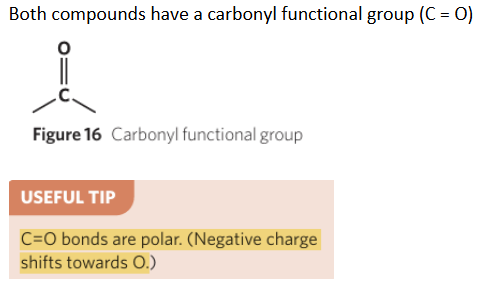
  • What do aldehydes and ketones have in common?

  • T or F? C--O bonds are polar.

knowt flashcard image
21
New cards
  • Aldehyde

  • T or F? It’s FG is never on the terminal carbon

  • Draw diagram of FG

Aldehyde organic compound that contains a carbonyl functional group where one of the remaining bonds on the carbon atom in the carbonyl group is bonded to a hydrogen atom (−CHO)

-->  False. The carbonyl group is only on the terminal carbon 

  • The remaining bond on the carbon atom in the carbonyl group can then bond with either a hydrogen atom or an alkyl group 
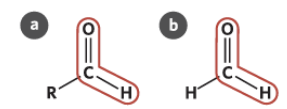
<p><span style="background-color: inherit; line-height: 20.7px; color: windowtext;"><strong>Aldehyde </strong>organic compound that contains a carbonyl functional group where one of the remaining bonds on the carbon atom in the carbonyl group is bonded to a hydrogen atom (−CHO) </span></p><p><span style="background-color: inherit; line-height: 20.7px; color: windowtext;">--&gt;&nbsp; False. The carbonyl group is only on the terminal carbon</span><span style="line-height: 20.7px; color: windowtext;">&nbsp;</span></p><ul><li><p class="Paragraph SCXO132537765 BCX0" style="text-align: left;"><span style="background-color: inherit; line-height: 20.7px; color: windowtext;">The remaining bond on the carbon atom in the carbonyl group can then bond with either a hydrogen atom or an alkyl group</span><span style="line-height: 20.7px; color: windowtext;">&nbsp;</span></p></li></ul><p class="Paragraph SCXO132537765 BCX0" style="text-align: left;"></p>
22
New cards
  • Ketone

  • T or F? It’s FG is never on the terminal carbon

  • Draw diagram of FG

Ketone organic compound that contains a carbonyl functional group (C=O), where each of the two remaining bonds on the carbon in the carbonyl group are bonded to an alkyl group (-CO-) 

  • Note that  the two alkyl groups bonded to the carbon in the CO group do not have to be the same 

  • Ketone functional groups can only exist within the carbon chain (so never on the terminal carbon) 
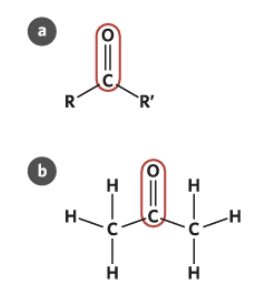
<p><span style="background-color: inherit; line-height: 20.7px; color: windowtext;"><strong>Ketone </strong>organic compound that contains a carbonyl functional group (C=O), where each of the two remaining bonds on the carbon in the carbonyl group are bonded to an alkyl group (-CO-)</span><span style="line-height: 20.7px; color: windowtext;">&nbsp;</span></p><ul><li><p class="Paragraph SCXO48674560 BCX0" style="text-align: left;"><span style="background-color: inherit; line-height: 20.7px; color: windowtext;">Note that&nbsp; the two alkyl groups bonded to the carbon in the CO group do not have to be the same</span><span style="line-height: 20.7px; color: windowtext;">&nbsp;</span></p></li><li><p class="Paragraph SCXO48674560 BCX0" style="text-align: left;"><span style="background-color: inherit; line-height: 20.7px; color: windowtext;">Ketone functional groups <u>can only exist within the carbon chain</u> (so never on the terminal carbon)</span><span style="line-height: 20.7px; color: windowtext;">&nbsp;</span></p></li></ul><p></p>
23
New cards

Are you required to know this stuff about aldehydes and ketones:

  • Naming them

  • Structural/semi-structural/skeletal formulas

Not required to know naming these hydrocarbons rules, only structural, semi structural and skeletal formula

24
New cards
  • Carboxylic acids

  • Where is the FG always found?

  • General formula

  • What happens when it reacts with water?

  • Suffix

An organic compound that contains a carboxyl functional group (−COOH) - which made up of two other functional groups: polar hydroxyl (−OH) and carbonyl (C = O) 

  • The carboxyl group is always found at the end of the carbon chain 

  • The carboxyl group may either bond to an alkyl group or a hydrogen atom 

  • They have a general formula Cn-1H2n-1 COOH or CnH2nO2 ---> where you must count the C atom in the functional group –COOH 


  • The highly electronegative O atoms draw electrons away from the H atom allowing it to form a H+ when it reacts with water.                                                             

  • The name of the carboxylic acids ends in ‘oic acid' 
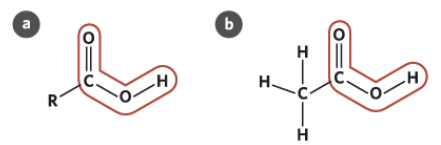
<p><span style="background-color: inherit; line-height: 20.7px;">An organic compound that contains a carboxyl functional group (−COOH) - which made up of two other functional groups: polar hydroxyl (−OH) and carbonyl (C = O)</span><span style="line-height: 20.7px;">&nbsp;</span></p><ul><li><p class="Paragraph SCXO208895979 BCX0" style="text-align: left;"><span style="background-color: inherit; line-height: 20.7px;">The carboxyl group is <u>always found at the end of the carbon chain</u></span><span style="line-height: 20.7px;">&nbsp;</span></p></li><li><p class="Paragraph SCXO208895979 BCX0" style="text-align: left;"><span style="background-color: inherit; line-height: 20.7px;">The carboxyl group may either bond to an alkyl group or a hydrogen atom</span><span style="line-height: 20.7px;">&nbsp;</span></p></li><li><p class="Paragraph SCXO208895979 BCX0" style="text-align: left;"><span style="background-color: inherit; line-height: 20.7px; color: windowtext;">They have a general formula <strong>C<sub>n-1</sub>H<sub>2n-1 </sub>COOH or C<sub>n</sub>H<sub>2n</sub>O<sub>2</sub> </strong>---&gt; where you <u>must count the C atom in the functional group –COOH</u></span><span style="line-height: 20.7px; color: windowtext;">&nbsp;</span></p></li></ul><p class="Paragraph SCXO208895979 BCX0" style="text-align: left;"><span style="line-height: 20.7px;">&nbsp;</span></p><ul><li><p class="Paragraph SCXO208895979 BCX0" style="text-align: left;"><span style="background-color: inherit; line-height: 20.7px; color: windowtext;">The highly electronegative O atoms draw electrons away from the H atom allowing it to form a H<sup>+ </sup>when it reacts with water.&nbsp;&nbsp;&nbsp;&nbsp;&nbsp;&nbsp;&nbsp;&nbsp;&nbsp;&nbsp;&nbsp;&nbsp;&nbsp;&nbsp;&nbsp;&nbsp;&nbsp;&nbsp;&nbsp;&nbsp;&nbsp;&nbsp;&nbsp;&nbsp;&nbsp;&nbsp;&nbsp;&nbsp;&nbsp;&nbsp;&nbsp;&nbsp;&nbsp;&nbsp;&nbsp;&nbsp;&nbsp;&nbsp;&nbsp;&nbsp;&nbsp;&nbsp;&nbsp;&nbsp;&nbsp;&nbsp;&nbsp;&nbsp;&nbsp;&nbsp;&nbsp;&nbsp;&nbsp;&nbsp;&nbsp;&nbsp;&nbsp;&nbsp;&nbsp;&nbsp;</span><span style="line-height: 20.7px; color: windowtext;">&nbsp;</span></p></li><li><p class="Paragraph SCXO208895979 BCX0" style="text-align: left;"><span style="background-color: inherit; line-height: 20.88px; color: windowtext;">The name of the carboxylic acids ends in <strong>‘oic acid'</strong></span><span style="line-height: 20.88px; color: windowtext;">&nbsp;</span></p></li></ul><p></p>
25
New cards
  • esters

  • Draw diagram of FG

  • General formula

  • What are esters used for usually?

Organic compounds that contain an ester functional group (−COO−) 

  • This functional group is found within the carbon chain 

  • One carbon atom in the ester group is linked to one oxygen atom through a double bond (a carbonyl) and to another oxygen atom through a single bond --> the oxygen atom is then itself bonded to an alkyl group 

  • General formula R-COO-R 


  • The low molecular mass esters tend to have pleasant, sweet, fruity odours, found in many flowers and fruits 

  • Esters are used as artificial flavourings, solvents, in paints and lacquers, perfumes and cosmetics 
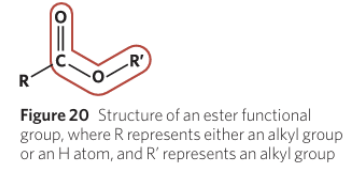
<p><span style="background-color: inherit; line-height: 20.7px; color: windowtext;">Organic compounds that contain an ester functional group (−COO−)</span><span style="line-height: 20.7px; color: windowtext;">&nbsp;</span></p><ul><li><p class="Paragraph SCXO195095724 BCX0" style="text-align: left;"><span style="background-color: inherit; line-height: 20.7px; color: windowtext;">This functional group is found within the carbon chain</span><span style="line-height: 20.7px; color: windowtext;">&nbsp;</span></p></li><li><p class="Paragraph SCXO195095724 BCX0" style="text-align: left;"><span style="background-color: inherit; line-height: 20.7px; color: windowtext;">One carbon atom in the ester group is linked to one oxygen atom through a double bond (a carbonyl) and to another oxygen atom through a single bond --&gt; the oxygen atom is then itself bonded to an alkyl group</span><span style="line-height: 20.7px; color: windowtext;">&nbsp;</span></p></li><li><p class="Paragraph SCXO195095724 BCX0" style="text-align: left;"><span style="background-color: inherit; line-height: 19.55px; color: windowtext;">General formula <strong>R-COO-R<sup>’</sup></strong></span><span style="line-height: 19.55px; color: windowtext;">&nbsp;</span></p></li></ul><p class="Paragraph SCXO195095724 BCX0" style="text-align: left;"><span style="line-height: 20.7px; color: windowtext;">&nbsp;</span></p><ul><li><p class="Paragraph SCXO195095724 BCX0" style="text-align: left;"><span style="background-color: inherit; line-height: 19.55px; color: windowtext;">The low molecular mass esters tend to have pleasant, sweet, fruity odours, found in many flowers and fruits</span><span style="line-height: 19.55px; color: windowtext;">&nbsp;</span></p></li><li><p class="Paragraph SCXO195095724 BCX0" style="text-align: left;"><span style="background-color: inherit; line-height: 19.55px; color: windowtext;">Esters are used as artificial flavourings, solvents, in paints and lacquers, perfumes and cosmetics</span><span style="line-height: 19.55px; color: windowtext;">&nbsp;</span></p></li></ul><p></p>
26
New cards

T or F? In carboxylic acids and primary amides, the carbon atom in the carbonyl group is always the first carbon in the parent carbon atom chain. Why/why not?

T as these groups are always found at a terminal carbon

27
New cards
  • Parent chain

  • When functional groups are present, the direction of numbering is selected such that the numbers indicating the position of functional groups are as ___ as possible

The parent chain is the longest sequence of bonded atoms that include the relevant functional groups 

  • e.g. all carboxyl groups must be part of the parent carbon chain. 

  • It is usually the longest continuous sequence of carbon-carbon bonds in a molecule  

When functional groups are present, the direction of numbering is selected such that the numbers indicating the position of functional groups are as small as possible 

28
New cards

Does methene exist? Why/why not?

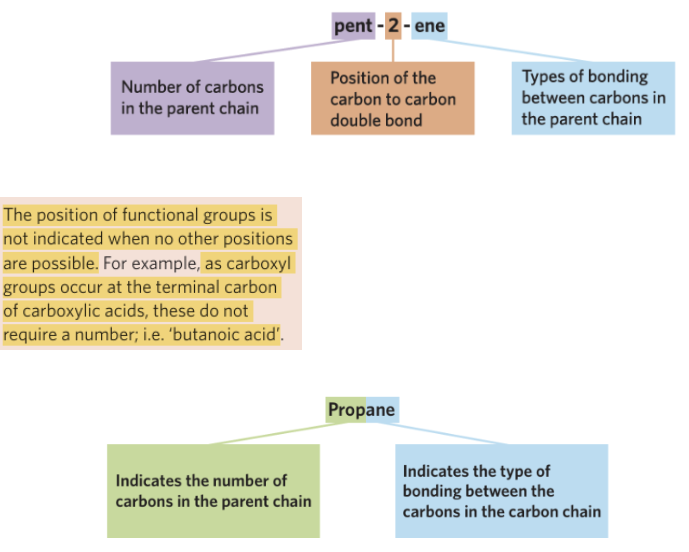
Methene doesn’t exist as double bonds between carbon atoms cannot occur with only one carbon atom present 
29
New cards
<p></p>

30
New cards
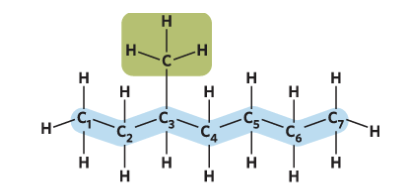
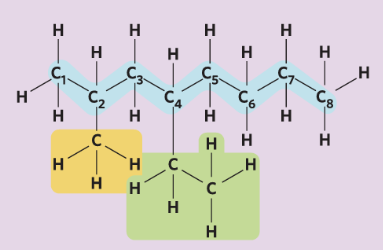
<ul><li><p><span style="background-color: inherit; line-height: 19.72px; color: windowtext;">Carbon branches are named by <strong>replacing the -ane</strong> ending with __</span></p></li><li><p><span style="background-color: inherit; line-height: 19.72px; color: windowtext;">Name this molecule</span></p></li></ul><p></p>
  • Carbon branches are named by replacing the -ane ending with __

  • Name this molecule

  • Carbon branches are named by replacing the -ane ending with –yl
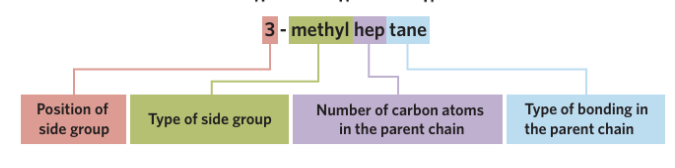
<ul><li><p><span style="background-color: inherit; line-height: 19.72px; color: windowtext;">Carbon branches are named by <strong>replacing the -ane</strong> ending with –<strong>yl</strong></span></p></li></ul><p></p>
31
New cards

How are alkyl side chains named (hint: position)

Their position is indicated by a number before their corresponding prefix 
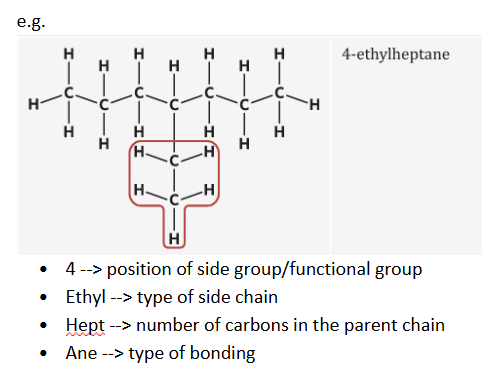
<p><span style="background-color: inherit; line-height: 20.7px; color: windowtext;">Their position is indicated by a <u>number before their corresponding prefix</u></span><span style="line-height: 20.7px; color: windowtext;">&nbsp;</span></p>
32
New cards
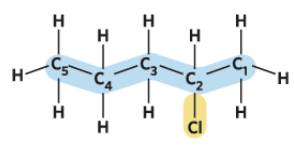
<p>Name</p>

Name

knowt flashcard image
33
New cards
<p>Name</p>

Name

knowt flashcard image
34
New cards
<p>For these molecules, explain why the first one requires the number and the other doesn’t?</p>

For these molecules, explain why the first one requires the number and the other doesn’t?
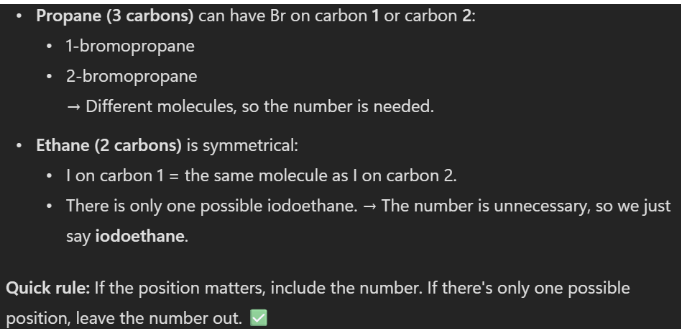
knowt flashcard image
35
New cards
<ul><li><p><span style="background-color: inherit; line-height: 18px; color: windowtext;">When compounds have more than one side group bonded to parent chain --&gt; alkyl groups prefixes are named in ___ order</span><span style="line-height: 18px; color: windowtext;">&nbsp;</span></p></li><li><p><span style="line-height: 18px; color: windowtext;">Name this:</span></p></li></ul><p></p>
  • When compounds have more than one side group bonded to parent chain --> alkyl groups prefixes are named in ___ order 

  • Name this:

When compounds have more than one side group bonded to parent chain --> alkyl groups prefixes are named in alphabetical order 


  • Molecule name: 4-ethyl-2-methyloctane ('e' goes before 'm') 

36
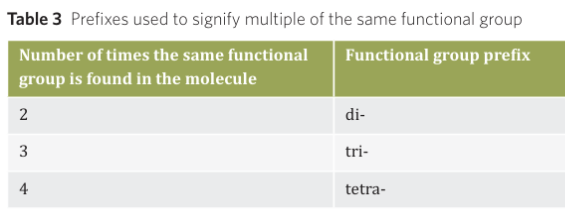
New cards

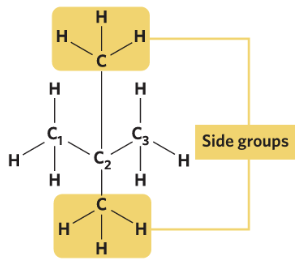
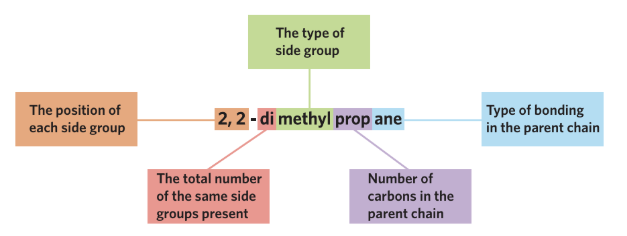
When multiple of the same functional group or side chain are present, a counting prefix is included

  • Outline the FG prefix for these molecules
knowt flashcard image
37
New cards
<p>Name</p>

Name

knowt flashcard image
38
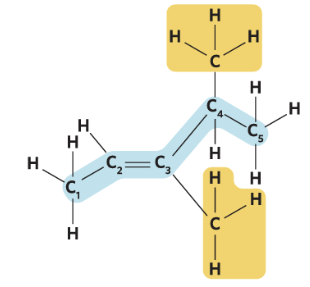
New cards

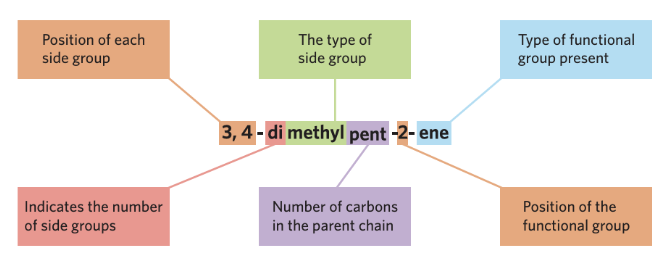
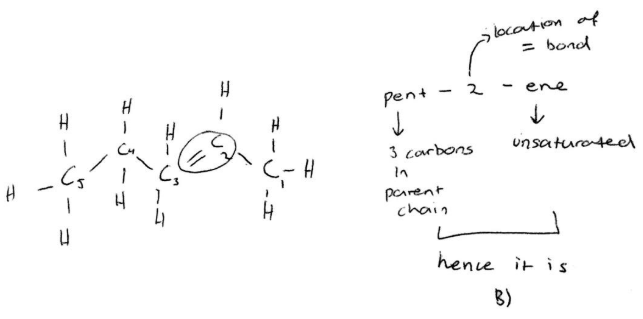
T or F? Numbering the carbons in the carbon chain is now based on the location of the double bonds instead of the functional groups – the chain should be numbered to allow the double bond to occur at the lower numbered carbon 

True
39
New cards
<p>Name</p>

Name

knowt flashcard image
40
New cards
term image
knowt flashcard image
41
New cards
  • The group with the ___ priority gets the lowest carbon number and maintains the suffix name 

  • __ priority functional groups indicated by a prefix or alternate name
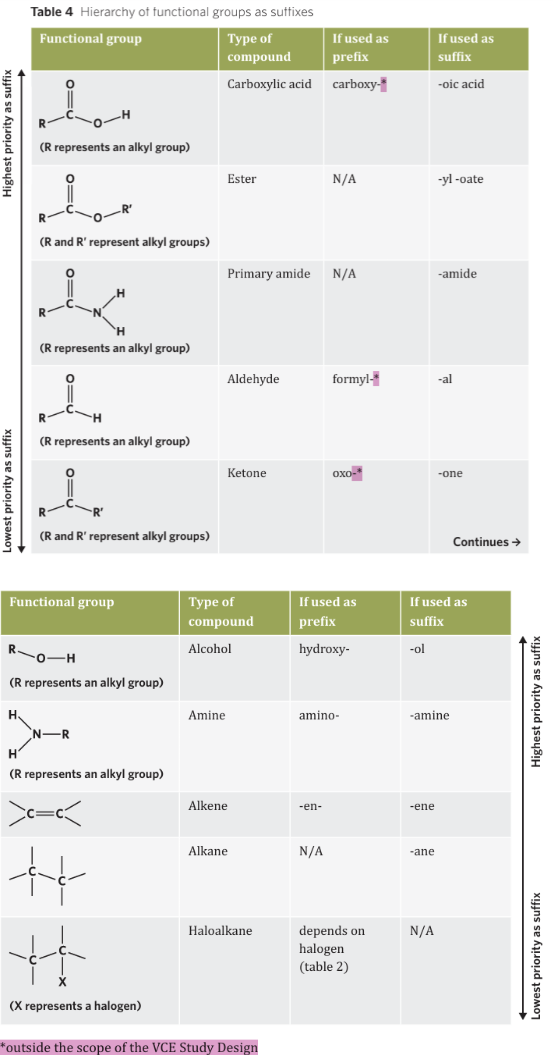
  • List FGs from highest priority to lowest priority 

The suffix of the name of the compound is derived from the functional group with the highest priority 

  • The group with the highest priority gets the lowest carbon number and maintains the suffix name 

  • Lower priority functional groups indicated by a prefix or alternate name 

<p><span style="background-color: inherit; line-height: 20.7px; color: windowtext;">The suffix of the name of the compound is derived from the <u>functional group with the highest priority</u></span><span style="line-height: 20.7px; color: windowtext;">&nbsp;</span></p><ul><li><p class="Paragraph SCXO231241220 BCX0" style="text-align: left;"><span style="background-color: inherit; line-height: 19.26px; color: windowtext;">The group with the highest priority gets the <u>lowest carbon number and maintains the suffix name</u></span><span style="line-height: 19.26px; color: windowtext;">&nbsp;</span></p></li><li><p class="Paragraph SCXO231241220 BCX0" style="text-align: left;"><span style="background-color: inherit; line-height: 20.88px; color: windowtext;">Lower priority functional groups indicated by a prefix or alternate name</span><span style="line-height: 20.88px; color: windowtext;">&nbsp;</span></p></li></ul><p></p>
42
New cards

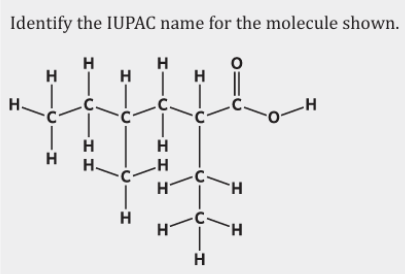
Note:

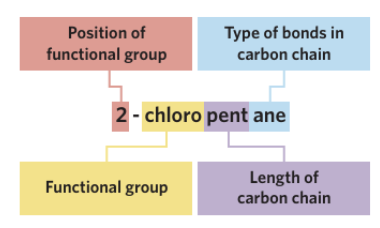
When writing the name of an organic compound, we need to ensure that we include the following conventions: 

  • Commas are used to separate numbers representing positions of functional groups 

  • Hyphens (-) are used to separate numbers from words.  

  • There is no space between names of functional groups and the parent chain name. 

  • Prefixes indicating functional groups need to be written in alphabetical order (not including prefixes such as di, tri, etc.) 
43
New cards
term image
knowt flashcard image
44
New cards

How to name esters:

  • The alkyl group that originally comes from the alcohol and is attached to the oxygen atom by a single bond is named first 

--> where –anol becomes –yl 


  • Which is then followed by the carbon chain that includes the carbon atom in the carbonyl of the ester bond and comes from the carboxylic acid 

--> where –oic becomes -oate 
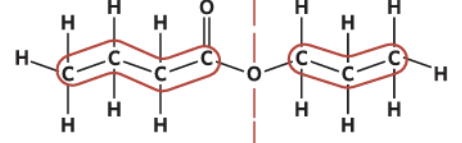
45
New cards
<p>Name:</p>

Name:

This is called 'Propyl butanoate' 

  • As the alkyl group that comes from the alcohol --> has 3 carbons --> 'prop' and this part has to end with 'yl' = 'propyl' 

  • This is followed by the alkyl group that contains the carbon atom in the carbonyl --> 'butan' and this part has to end with '-oate' = 'butanoate' 
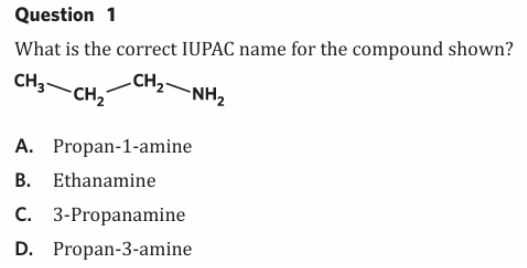
46
New cards
term image
knowt flashcard image
47
New cards
term image
knowt flashcard image
48
New cards

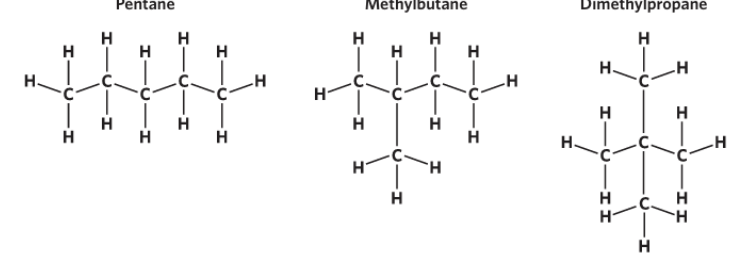
Structural isomers + show some for pentane

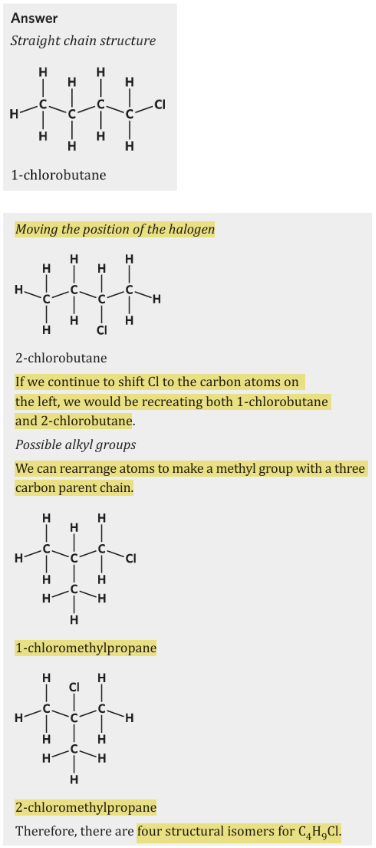
Structural isomers molecules with the same molecular formula but different spatial arrangement of atoms 

Example:

  • They have the same molecular formula: C5H12 --> however, their structural formulas differ, resulting in them having different names 

  •  Therefore, we can say that these three molecules are structural isomers of C5H12 


There are some strategies that can be used to determine possible structural isomers of a molecule: 

  • Changing the position of a functional group or side chain 

  • Arranging available atoms into a branch/side chain 

  • Changing the identity of the functional group 
<p><span style="background-color: inherit; line-height: 20.7px; color: windowtext;"><strong>Structural isomers</strong> molecules with the same molecular formula but different spatial arrangement of atoms</span><span style="line-height: 20.7px; color: windowtext;">&nbsp;</span></p><p class="Paragraph SCXO260841295 BCX0" style="text-align: left;"></p><p class="Paragraph SCXO260841295 BCX0" style="text-align: left;"><span style="background-color: inherit; line-height: 20.7px; color: windowtext;">Example:</span></p><ul><li><p class="Paragraph SCXO260841295 BCX0" style="text-align: left;"><span style="background-color: inherit; line-height: 20.7px; color: windowtext;">They have the same molecular formula: C<sub>5</sub>H<sub>12</sub> --&gt; however, their structural formulas differ, resulting in them having different names</span><span style="line-height: 20.7px; color: windowtext;">&nbsp;</span></p></li><li><p class="Paragraph SCXO260841295 BCX0" style="text-align: left;"><span style="background-color: inherit; line-height: 20.7px; color: windowtext;">&nbsp;Therefore, we can say that these three molecules are structural isomers of C<sub>5</sub>H<sub>12</sub></span><span style="line-height: 20.7px; color: windowtext;">&nbsp;</span></p></li></ul><p class="Paragraph SCXO260841295 BCX0" style="text-align: left;"><span style="line-height: 20.7px; color: windowtext;">&nbsp;</span></p><p class="Paragraph SCXO260841295 BCX0" style="text-align: left;"><span style="background-color: inherit; line-height: 20.7px; color: windowtext;">There are some strategies that can be used to determine possible structural isomers of a molecule:</span><span style="line-height: 20.7px; color: windowtext;">&nbsp;</span></p><ul><li><p class="Paragraph SCXO260841295 BCX0" style="text-align: left;"><span style="background-color: inherit; line-height: 20.7px; color: windowtext;">Changing the position of a functional group or side chain</span><span style="line-height: 20.7px; color: windowtext;">&nbsp;</span></p></li><li><p class="Paragraph SCXO260841295 BCX0" style="text-align: left;"><span style="background-color: inherit; line-height: 20.7px; color: windowtext;">Arranging available atoms into a branch/side chain</span><span style="line-height: 20.7px; color: windowtext;">&nbsp;</span></p></li><li><p class="Paragraph SCXO260841295 BCX0" style="text-align: left;"><span style="background-color: inherit; line-height: 20.7px; color: windowtext;">Changing the identity of the functional group</span><span style="line-height: 20.7px; color: windowtext;">&nbsp;</span></p></li></ul><p></p>
49
New cards
term image
knowt flashcard image
50
New cards
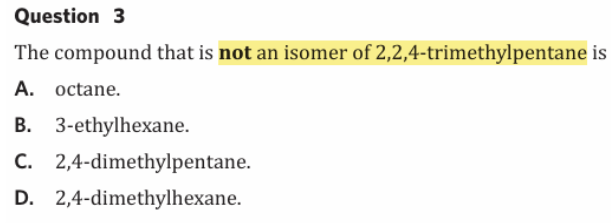
term image

TIP: Look at the number of carbons 

  • 2,2,4-trimethylpentane has the molecular formula C8H16  

  • Octane – has 8 carbons and hence 16 carbons 

  • 3-ethylhexane --> 6 c (hexane) + 2 c (1 ethyl) = 8 c 

  • 2,4-dimethylpentane --> 5 c (pentane) + 2 c ( 2 methyl) = 7 c --> thus C is the answer 

  • 2,4-dimethylhexane --> 6 c (hexane) + 2 c (2 methyl) = 8 c 

51
New cards

Intermolecular Forces

Intermolecular Forces: Forces of attraction between molecules 

  • Note not between atoms within a molecule – which is intramolecular bonds – its between molecules themselves 

52
New cards
  • Dispersion forces

  • Instantaneous dipole

  • T or F? All organic compounds experience dispersion forces between their molecules 

  • Which homologous series only experience dispersion forces

Dispersion forces : Weak intermolecular forces caused by the electrostatic attraction between instantaneous dipoles in adjacent molecules 

  • Instantaneous dipole is a partial positive and negative charge that suddenly appears in an atom or molecule due to the random movement of electrons 

  • True. All organic compounds experience dispersion forces between their molecules 

  • Alkanes and alkenes only experience dispersion forces between molecules 

53
New cards

What factors increase dispersion forces:
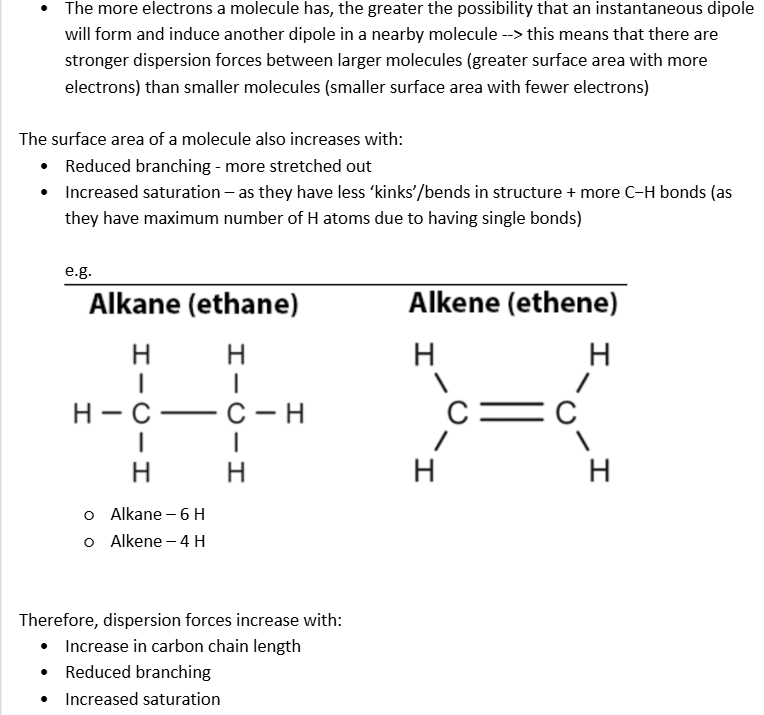
knowt flashcard image
54
New cards
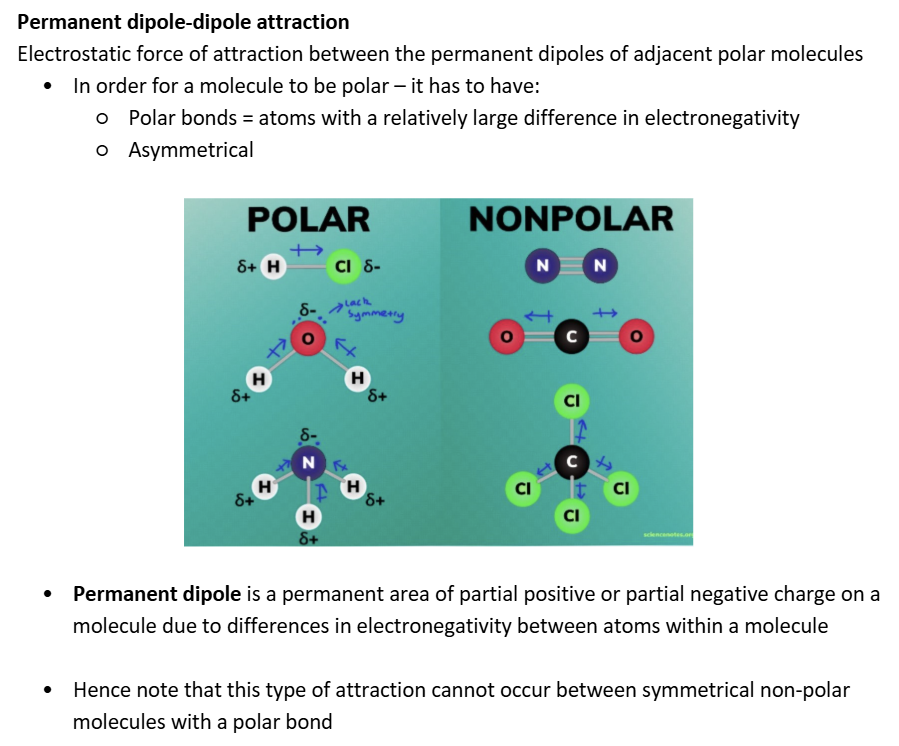
  • Permanent dipole-dipole attraction + in order for a molecule to be polar, what does it require

  • Permanent dipole

knowt flashcard image
55
New cards
  • What factor influences permanent dipole-dipole attractions

  • What homologous series experience permanent dipole-dipole attractions?

The strength of a permanent dipole-dipole attraction depends on the difference in electronegativity of the atoms involved in the relevant polar bonds – where greater difference means stronger dipole-dipole attraction 


The following organic compounds experience permanent dipole-dipole attraction in addition to dispersion forces: 

  • Aldehydes (polar C=O bond) 

  • Ketones (polar C=O bond)  

  • Esters (polar C=O bond)  

  • Haloalkanes (polar C−X bond, where X represents a halogen) 

56
New cards
  • Hydrogen bonding

  • In this type of bonding, which atom has a partial + charge and which atom has the partial - charge

A type of permanent dipole-dipole attraction that only occurs between molecules in which hydrogen is bonded directly to either nitrogen, oxygen, or fluorine (NOF) 

  • In all instances of hydrogen bonding, the hydrogen atom has a partial positive charge and is attracted to a nitrogen, oxygen, or fluorine atom with a partial negative charge on an adjacent molecule 

  • A common occurrence of hydrogen bonding is between water molecules 

57
New cards

What homologous series experience hydrogen bonding in addition to dispersion forces:

  • Alcohols (highly polar O−H bond)  

  • Carboxylic acids (highly polar O−H bond) (also experience dipole-dipole interactions due to C=O bond)  

  • Primary amines (highly polar N−H bonds)  

  • Primary amides (highly polar N−H bonds) (also experience dipole-dipole interactions due to C=O bond) 

58
New cards
  • Boiling point

  • Melting point

  • The stronger the electrostatic attraction between molecules, the more __ required to overcome them 

The boiling point of a liquid is defined as the temperature at which it changes from its liquid state to a gaseous state 


The melting point of a solid is the temperature at which it transitions from a solid to a liquid state 


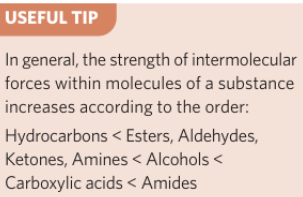
  • The stronger the electrostatic attraction between molecules, the more energy (often heat, or thermal energy) required to overcome them 
59
New cards
term image
60
New cards
  • Viscosity + give examples

  • Link viscosity with the strength of intermolecular forces

  • Explain a factor that affects viscosity

Viscosity measures a substance’s resistance to flow and reflects the substance’s structural properties 

  • Liquids with high viscosity, like honey, flow very slowly 

  • Whilst those with low viscosities, like water, flow more readily 


  • Liquids with stronger intermolecular forces have stronger attractive forces holding the molecules together, making it harder for the substance to flow 

  • While non-polar substances that mainly experience dispersion forces, like cooking oil, tend to be less viscous because their intermolecular forces are weaker, allowing them to flow more readily in comparison 


As viscosity is dependent on the intermolecular reactions between molecules, changes in temperature (and hence thermal energy) can affect the ability of substances to flow 

  • For example, an increase in temperature results in a decrease in viscosity as there is more energy available to overcome these forces, allowing substances to flow more readily 

  • Conversely, a decrease in temperature results in an increase in viscosity 

61
New cards

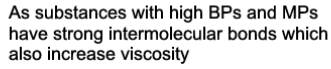
As melting and boiling points increase, so does viscosity. Explain why.
knowt flashcard image
62
New cards
term image

Answer is D 

This is because: 

  • The first molecule (in the order) will be the one which is the most able to flow – less viscous --> meaning that they have weaker intermolecular forces 

  • While the last molecule will be the one least able to flow – more viscous --> meaning that they have stronger intermolecular forces 


  • Compound 2 is the most polar due to its three highly polar (O−H) bonds and would experience hydrogen bonding between its molecules 

  • Compound 3 is the next most polar due to its singular (O−H) bond and would also experience (slightly less) hydrogen bonding between molecules 

  • Compound 1 only experiences weak dispersion forces between its molecules 

--> Thus the order from least viscous to most viscous is D 

63
New cards

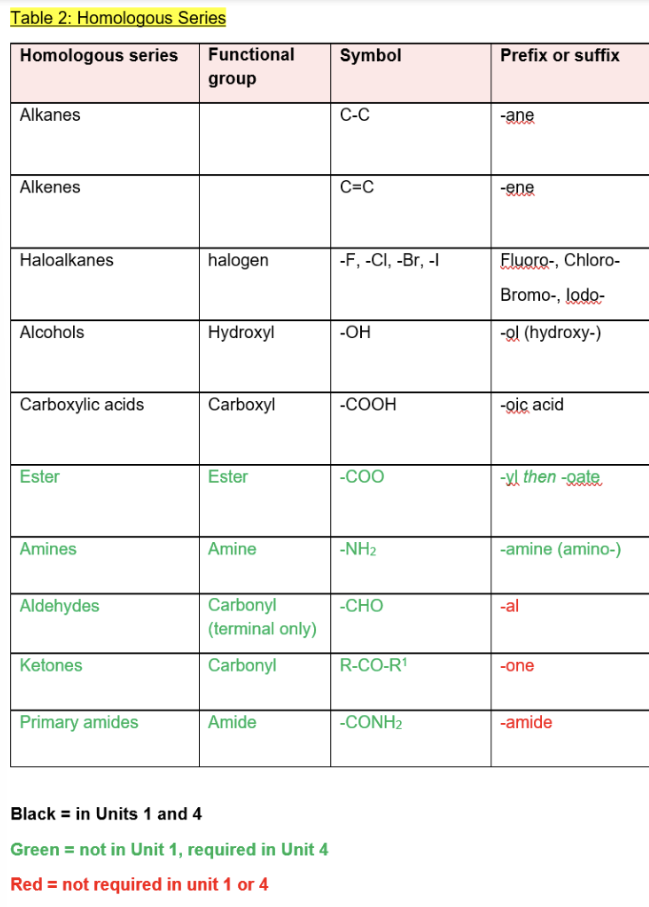
Draw a summary table for each of these:

  • Alkanes

  • Alkenes

  • Haloalkanes

  • Alcohols

  • Carboxylic acids

  • Ester

  • Amines

  • Aldehydes

  • Ketones

  • Primary amides

And include these (note that not all of these would be filled out for each series)

  • FG + symbol

  • Prefix/suffix

knowt flashcard image
64
New cards

Are alkanes and haloalkanes:

  • Saturated

  • Polar

  • Insoluble in water

  • Alkanes are saturated, non-polar and insoluble in water.  

  • Haloalkanes are saturated, polar and soluble in water 

65
New cards

Substitution reaction

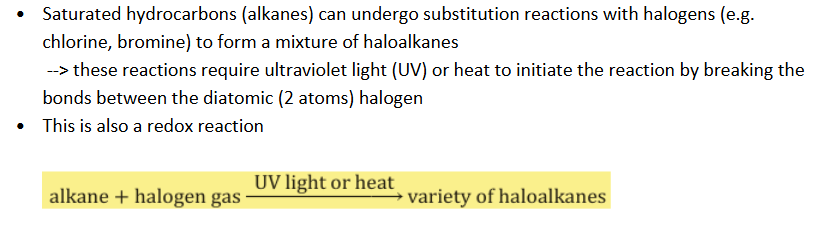
Substitution reaction chemical reaction where an atom, or group of atoms, is replaced by another atom, or group of atoms resulting in the formation of a new substance 

66
New cards

Substitution reaction between alkanes and halogens 
knowt flashcard image
67
New cards

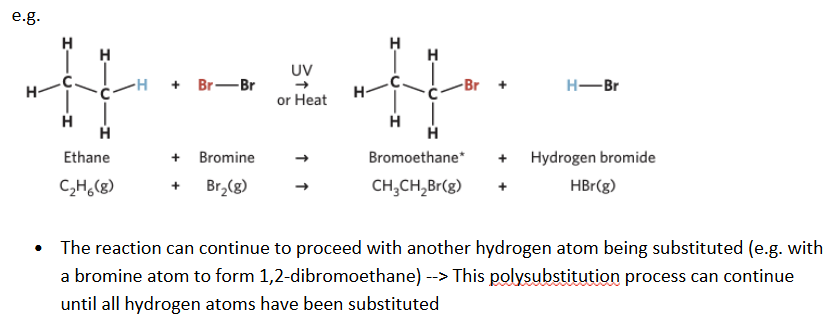
Complete this reaction: ethane + Bromine (Br-Br)
knowt flashcard image
68
New cards

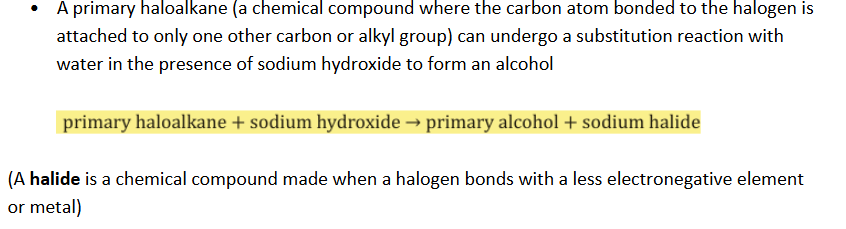
Substitution reaction between primary haloalkanes and an alkali (base soluble in water) 
knowt flashcard image
69
New cards

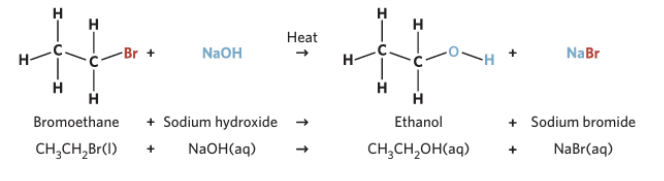
Complete this reaction: bromoethane + sodium hydroxide
knowt flashcard image
70
New cards


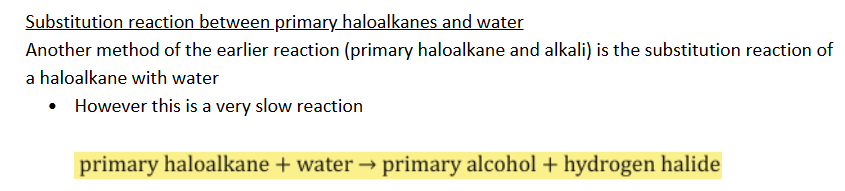
  • Substitution reaction between primary haloalkanes and water 

  • T or F? This reaction is very fast

knowt flashcard image
71
New cards

Complete this reaction:

Bromoethane + water

knowt flashcard image
72
New cards
73
New cards
74
New cards
75
New cards
76
New cards
77
New cards
78
New cards
79
New cards
80
New cards
81
New cards
82
New cards
83
New cards
84
New cards